Thursday, December 25, 2025
Home Blog Page 4011

Spokesman Rejects Trump’s ‘Erroneous’ Remarks against Iran

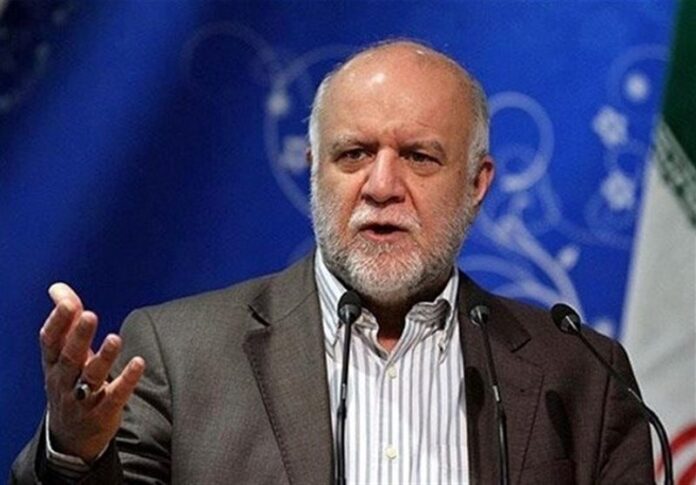
Bahram Qassemi

Speaking to reporters in Tehran on Monday, Qassemi pointed to Trump’s recent visit to Saudi Arabia and his allegation against Iran on supporting terrorism, saying that Trump’s trip to a country that is “a safe haven” for terrorists and promotes violence and terrorism invalidates his claims.

Trump should answer how Iran, which has recently held “glorious elections”, promotes terrorism and a country that has open legal cases in the US courts (on terrorism charges) becomes his destination, the spokesman added.

“These improper, erroneous and irrelevant stances… are nothing new,” he said, adding that the remarks are unbelievable and unacceptable and an attempt to divert attention.

During his trip to Riyadh, Trump made accusations that Iran is supporting terrorism and destabilizing the Middle East region.

In recent years, the Middle East has been plagued with Takfiri terrorist groups like Daesh (also known as ISIS or ISIL), which are believed to have been created and supported by the West and some regional Arab countries, including the Riyadh regime.

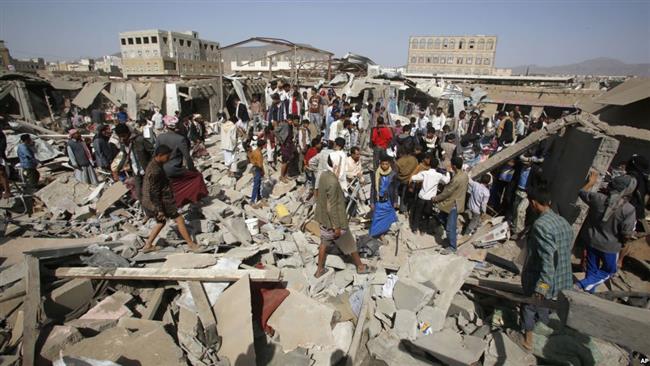
The remarks came as Yemen’s defenseless people have been under massive attacks by a coalition led by the Saudi regime for more than two years but Riyadh has reached none of its objectives in Yemen so far.

Yemen’s Legal Center of Rights and Development recently announced that the Saudi campaign has claimed the lives of over 12,000 Yemenis and left more than 20,000 others wounded.

Iran’s Versailles Palace Saved from Demolition for Now

sabet pasal

Farhad Nazari, the head of Cultural and Historical Heritage Registration Office at Iran’s Cultural Heritage, Handicrafts and Tourism Organization (ICHTO), was quoted as saying by the Shargh daily newspaper on Sunday that it is imperative to inscribe Sabet Pasal Mansion on the National Heritage List soon.

The registration is aimed at preventing the demolition of the mansion by its owner, who wants to build a high-rise building instead of the architectural masterpiece.

If the mansion is inscribed as a national heritage site, no development will be allowed in the site’s buffer zone.

However, according to Rajabali Khosroabadi, the head of the provincial office of ICHTO, the owner of the property has given a written pledge to safeguard the structure and not knock it down, IRNA reported.

He went on to say that a “cultural site and lodging facility will be constructed” to the west of the mansion.

“The demolition of Sabat Pasal was proposed two years ago, but ICHTO managed to prevent it after talks with the municipality,” he said, as reported by Financial Tribune.

The organization later started negotiations with the owner of the house and the two sides agreed to establish “cultural/lodging space” adjacent to the property, which would remain intact.

Iran's Versailles Palace Saved from Demolition for NowThe proposal is currently awaiting a permit from Tehran’s ICHHTO office.

The official noted that at present, there is no need for the national inscription of the site as the owner’s commitment will guarantee the safety of the house and its buffer zone.

Mehdi Chamran, the outgoing chairman of Tehran City Council, had recently said the building “is of no cultural value” and supported a proposal to construct a mosque in its place as well as a commercial centre “to cover the expenses of the mosque”.

Khosroabadi dismissed Chamran’s claims as baseless, stressing that the agreements with the owner are firmly in place.

Sabet Pasal Mansion, also known as the “Stone Palace” or “Iran’s Versailles Palace”, is Tehran’s largest historical house located to the north of Africa Boulevard in Elahiyeh neighbourhood. It was built in the second Pahlavi period across an area of over 11,500 square meters, modelled after Petit Trianon Chateau on the grounds of the Palace of Versailles.

It belonged to wealthy Iranian businessman Habibollah Sabet, known as Sabet Pasal, but was seized by Mostazafan Foundation after the 1979 Islamic Revolution. It is now owned by Ali Ansari, the managing director of Ayandeh Bank.

Iranian Candidate Wears Sweepers’ Uniform to Collect Election Flyers

The recent City and Village Councils elections were full of newsworthy wonders and phenomena; from the victory of a blind man and a street vendor in the cities of Bijar and Khorramabad, to the entry of 415 women into the councils of the deprived southeastern province of Sistan and Baluchestan.

The surprising victory of a street sweeper in the northern city of Rasht was also reported by IFP in an earlier story.

Nevertheless, Loqman Behrouzi, 29, who is about to obtain his PhD degree in political science and international relations from the University of London, has above all, stolen the spotlight.

Behrouzi, a young PhD student who contested Iran’s City and Village Councils elections in the city of Javanrud in Western Iran, in a symbolic move after the voting day, dressed up as a street sweeper and collected his election campaign flyers from the streets after his failure to win a seat in the Council.

Following the holding of the local election, he put on the uniform worn by street sweepers in Iran and collected all the flyers he had used during his electoral campaign from the streets and threw them into waste tanks.

Iranian Candidate Wears Sweepers’ Uniform The symbolic and valuable move by Behrouzi, who interestingly failed to win a seat in the local election, stole the social media spotlight following the election, as, indubitably, he is the very first Iranian candidate ever to have taken on such a responsibility one day after the election. His move came as, after the simultaneous holding of Iran’s presidential and local elections on May 19, streets in a large number of Iranian cities were covered with candidates’ posters and paper ads; a mess that could bring the country’s street sweepers enormous trouble.

Behrouzi’s beautiful move was aimed at preserving the urban environment and upholding the rights of his fellow citizens.

He said that his love to serve his countrymen had motivated him to come to Iran from Finland a few months before the local election to compete for a seat in Javanrud’s City Council and be able to improve the living condition of the people in the city.

Commenting on his move, Behrouzi said, “Seven people have managed to enter Javanrud’s City Council. I, however, only garnered 3,936 votes, 400 less than required, to stand ninth among the city’s candidates and failed to win a seat.

“Prior to the election, I had promised the people of the city that, in case of entering the council, I would convince Javanrud’s mayor as well as other members of the council to put on street sweepers’ uniform once in a month and clean the streets.”

“Such a move would both let people know that their officials are not used to sitting idle behind their desks in their offices and encourage them to play a more significant role in maintaining the cleanliness and hygiene of their city and preserving their urban environment. This will also help lighten the burden shouldered by street sweepers.”

He said he did not have any paper ads or posters, which make the city look ugly, and instead had only used flyers with a length and width of 100cm and 70cm, respectively.

“I had hung 600 flyers with the same size across the city. The law required all candidates to use only this size of banners. However, the size of others candidates’ ads, sometimes, reached 20 metres.”

Asked about why he has returned to his county, he said he always felt that to put his willingness to serve others into action, after reaching a certain level of knowledge, he should go back to his country and serve the people of his own city.

Behrouzi said, “I managed to obtain my MA in international law from the University of London and immediately was admitted to the same university in a PhD course in political science and international relations. I will soon defend my thesis.”

He also pointed to the opportunity he had for running in another election outside Iran. “I used to live in Turku [on the southwest coast of Finland]. The city has a population of about 180,000. Due to my cordial relations with Turku’s Municipality, I was offered, several times, to run in Finland’s local elections to win a seat in the Finnish town’s city council. Nevertheless, since I have always loved Iran, I, along with my wife and only child, decided to come back to Iran. This is while, my wife and I had a lot of social and job opportunities in Finland.”


Iranian FM Wishes Blessed Ramadan for All Muslim People

Mohammad Javad Zarif

Following is the full text of Zarif’s Sunday message to Muslim nations on the advent of Ramadan:

In the name of Allah; the Compassionate, the Merciful

As the gates of Heaven open and the gates of Hell close, let us mark the blessed month of Ramadhan by fasting not just with our stomachs, but also with our hearts, tongues, eyes and ears. Let us remember the far too many, of all faiths, who are less fortunate, and act in the way of expressing love for that which is good; always mindful of the Creator and the piety he has bestowed in us.

14 centuries after Revelation, Islam is alive on every continent, each day attracting new believers from an ever more numerous array of nations, colours and cultures. We are truly fortunate to be alive at a time when the practice of Islam — and the diversity of believers — is unprecedented in history.

Let us this year, though, seize Ramadhan as an opportunity to remind ourselves and our fellow man of that which brings us together as one Ummah under one Creator. And in doing so, let us not forget that the story of the advent of Islam is a magnificent lesson in the power of unity predicated on incredible diversity.

As the Muslim world remains torn by differences rooted in both internal disputes and external interventions, responsible leaders have a duty to come together in recognition of that the Ummah can only be dialogued—not fought—out of its dire straits. Each and every one of us also have a duty, as individuals, to be the change that we want to see in the world. As the Holy Quran commands, “Indeed, Allah will not change the condition of a people until they change what is in themselves.” [13:11]

To this end, we must transform the way we view what sets us apart. Unless we begin to see our differences as something to celebrate and a source of strength, they will remain open to be exploited as a point of weakness and division. We must not allow those who seek to turn Islam into a religion of exclusion to achieve that vision for those who foment phobia of our divine faith.

In this vein, let us take particular care this year to remember that which was revealed. The Holy Quran emphatically commands to believers, “Whoever kills a soul [… ] it is as if he had slain mankind entirely. And whoever saves one – it is as if he had saved mankind entirely.” [5:32] More than ever, each and every one of us, from ordinary citizens to responsible leaders, must join hands and come together to find solutions that will definitively address the injustices and bloodshed afflicting the Muslim world. If not for ourselves, we must undertake the momentous task before us to spare coming generations from being burdened with the afflictions of our world.

I extend to all of my brothers and sisters in Islam — truly, all — the best of wishes for a blessed Ramadhan.

“Almost Every Terrorist Attack Has Some Connection to Saudi Arabia”

“According to an analysis of the Global Terrorism Database […], more than 94 percent of deaths caused by Islamic terrorism since 2001 were perpetrated by the ISIS, Al-Qaeda and other Sunni jihadists. Iran is fighting those groups, not fueling them. Almost every terrorist attack in the West has had some connection to Saudi Arabia. Virtually none has been linked to Iran,” says Fareed Zakaria in an article in The Washington Post.

The article has been released in Farsi by the Fars News Agency, but it does not confirm Zakaria’s anti-Iran claims.

Here is the full text of his opinion piece:

This week’s bombing in Manchester, England, was another gruesome reminder that the threat from radical Islamist terrorism is ongoing. And President Trump’s journey to the Middle East illustrated yet again how the country central to the spread of this terrorism, Saudi Arabia, has managed to evade and deflect any responsibility for it. In fact, Trump has given Saudi Arabia a free pass and a free hand in the region.

The facts are well-known. For five decades, Saudi Arabia has spread its narrow, puritanical and intolerant version of Islam — originally practiced almost nowhere else — across the Muslim world. Osama bin Laden was Saudi, as were 15 of the 19 9/11 terrorists.

And we know, via a leaked email from former secretary of state Hillary Clinton, in recent years the Saudi government, along with Qatar, has been “providing clandestine financial and logistic support to [the Islamic State] and other radical Sunni groups in the region.” Saudi nationals make up the second-largest group of foreign fighters in the Islamic State and, by some accounts, the largest in the terrorist group’s Iraqi operations. The kingdom is in a tacit alliance with al-Qaeda in Yemen.

The Islamic State draws its beliefs from Saudi Arabia’s Wahhabi version of Islam. As the former imam of the kingdom’s Grand Mosque said last year, the Islamic State “exploited our own principles, that can be found in our books. . . . We follow the same thought but apply it in a refined way.” Until the Islamic State could write its own textbooks for its schools, it adopted the Saudi curriculum as its own.

Saudi money is now transforming European Islam. Leaked German intelligence reports show that charities “closely connected with government offices” of Saudi Arabia, Qatar and Kuwait are funding mosques, schools and imams to disseminate a fundamentalist, intolerant version of Islam throughout Germany.

In Kosovo, the New York Times’ Carlotta Gall describes the process by which a 500-year-old tradition of moderate Islam is being destroyed. “From their bases, the Saudi-trained imams propagated Wahhabism’s tenets: the supremacy of Shariah law as well as ideas of violent jihad and takfirism, which authorizes the killing of Muslims considered heretics for not following its interpretation of Islam. . . . Charitable assistance often had conditions attached. Families were given monthly stipends on the condition that they attended sermons in the mosque and that women and girls wore the veil.”

Saudi Arabia’s government has begun to slow many of its most egregious practices. It is now being run, de facto, by a young, intelligent reformer, Deputy Crown Prince Mohammed bin Salman, who appears to be refreshingly pragmatic, in the style of Dubai’s visionary leader, Sheikh Mohammed bin Rashid al Maktoum. But so far the Saudi reforms have mostly translated into better economic policy for the kingdom, not a break with its powerful religious establishment.

Trump’s speech on Islam was nuanced and showed empathy for the Muslim victims of jihadist terrorism (who make up as much as 95 percent of the total, by one estimate). He seemed to zero in on the problem when he said, “No discussion of stamping out this threat would be complete without mentioning the government that gives terrorists . . . safe harbor, financial backing and the social standing needed for recruitment.”

But Trump was talking not of his host, Saudi Arabia, but rather of Iran. Now, to be clear, Iran is a destabilizing force in the Middle East and supports some very bad actors. But it is wildly inaccurate to describe it as the source of jihadist terror. According to an analysis of the Global Terrorism Database by Leif Wenar of King’s College London, more than 94 percent of deaths caused by Islamic terrorism since 2001 were perpetrated by the Islamic State, al-Qaeda and other Sunni jihadists. Iran is fighting those groups, not fueling them. Almost every terrorist attack in the West has had some connection to Saudi Arabia. Virtually none has been linked to Iran.

Trump has adopted the Saudi line on terrorism, which deflects any blame from the kingdom and redirects it toward Iran. The Saudis showered Trump’s inexperienced negotiators with attention, arms deals and donations to a World Bank fund that Ivanka Trump is championing. (Candidate Trump wrote in a Facebook post in 2016, “Saudi Arabia and many of the countries that gave vast amounts of money to the Clinton Foundation want women as slaves and to kill gays. Hillary must return all money from such countries!”) In short, the Saudis played Trump. (Jamie Tarabay makes the same point.)

The United States has now signed up for Saudi Arabia’s foreign policy — a relentless series of battles against Shiites and their allies throughout the Middle East. That will enmesh Washington in a never-ending sectarian struggle, fuel regional instability and complicate its ties with countries such as Iraq that want good relations with both sides. But most important, it will do nothing to address the direct and ongoing threat to Americans — jihadist terrorism. I thought that Trump’s foreign policy was going to put America first, not Saudi Arabia.

All Iranian Draftees Must Pass Addiction Prevention Courses

The spokesman for Iran Drug Control Headquarters (IDCH), Parviz Afshar, says as per an MoU signed between Iran’s Military Service Organization and IDCH on May 27, taking addiction prevention training courses has become mandatory for those doing their military service.

Passing these courses is a prerequisite for issuing their military service completion certificate, he noted.

He went on to say that part of the course is offered online, but the other part requires draftees’ physical presence in the class.

“After undergoing the trainings and passing a related test, conscripts will be awarded a certificate which will be placed in their files. This certificate is needed for the issuance of their military service completion certificate.”

He stressed that in case a draftee is diagnosed as having addiction, which is a disorder, as stipulated in the MoU, he will undergo treatment.”

Currently, there are 1.325 million drug addicts in Iran.

AFC to Iran’s Junior Footballers: “Hold Your Heads up High”

AFC to Iran’s Junior Footballers

The governing body of association football in Asia and Australia (AFC) has posted a consolatory message on its Instagram page to raise Iran’s junior football players’ spirits after they were defeated by their European rival Portugal on May 27, and were forced into an early exit from the FIFA U-20 World Cup hosted by South Korea.

A dramatic 2-1 defeat to Portugal on Saturday – the last match-day of the tournament’s group stage – saw Iran finish bottom of Group C with only 3 points from their opener against Costa Rica.

Quoting a tweet by Fédération Internationale de Football Association (FIFA) about the match, AFC has told Iranians in its post: “Hold your heads up high Iran!”

FIFA’s message also reads: “Portugal came from behind to break Iran hearts and see them eliminated in a dramatic climax to Group C.”

AFC to Iran’s Junior Footballers: “Hold Your Heads up High”Iran opened the scoring just four minutes into the match when Reza Shekari found space at the near post to head in Ali Shojaei’s corner kick for his third of the tournament.

Portugal then were forced to take the initiative in searching for a goal while Iran sat in a compact defensive posture. That was effective until Diogo Goncalves scored a superb equaliser in the 54th minute. Portugal then created the majority of chances until in the 86th minute, they found the goal that kept their campaign alive.

Golestan Palace in Tehran Showcases Its Antique Carpets

The World Heritage Site Golestan Palace, in cooperation with the Research Centre of Iran’s Cultural Heritage, Handicrafts, and Tourism Organization (ICHTO), has put the Palace’s antique carpets on display.

Here are Tasnim’s photos of the exhibition, which is being held for the first time in Golestan Palace:

Isfahan Attracts Record-Breaking Number of Foreign Tourists

Isfahan -Foreign Tourists-2017

The director general of Isfahan Province’s Cultural Heritage, Handicrafts and Tourism Organization, Fereydoun Allah-Yari, says a record number of 208,810 foreign tourists visited the province’s tourist attractions as well as historical sites and buildings during the first two months of the current Iranian calendar year (started mid-March 2017).

Isfahan Attracts Record-Breaking Number of Foreign Tourists
Foreign tourist enjoying the warm weather of Isfahan’s Naqsh-e Jahan Sqaure along with his two children

Allah-Yari added this number of foreign tourists visiting an Iranian province in only 60 days has been unprecedented, not only in the past four years, but also during the contemporary history of Iran, particularly after the victory of the 1979 Islamic Revolution.

He put the number of the foreign visitors to Isfahan Province during the first and second thirty days of the 60-day period at 85,000 and 123,810, respectively.

The official added in the same period of time, France, Germany, Italy, Belgium, Spain, the Netherlands, the UK, Austria, China and Japan ranked first to 10 respectively, in terms of having the largest number of tourists to Isfahan.


“The number of tourists to Isfahan Province did not drop even during the days when Iran’s presidential and local elections was the country’s hottest topic and candidates had reached the peak of their electoral campaigns, holding campaign meetings and delivering stump speeches.”

Foreign Tourists
Foreign tourists in front of the traditional bazaar of Isfahan – a popular tourism site in the city.

He said many of the foreign visitors were shocked by Iranians’ massive turnout in the elections, adding they said this was the first time they were witnessing this level of democracy being practiced in a Middle Eastern country.

Allah-Yari noted that Isfahan Province is home to more than 22,000 historical buildings, sites and artifacts, of which 1,850 have been registered nationally and four including Naqsh-e Jahan Square, Chehel Sotoun Palace, Fin Garden and Jameh Mosque have been registered internationally in the UNESCO’s World Heritage List.

tourist
Naqsh-e Jahan Square

According to the figures by Iran’s Cultural Heritage, Handicrafts and Tourism Organization, the number of foreign visitors to Isfahan Province has grown five-fold since 2013, when the incumbent Iranian government took office.

A Look at Iranian Newspaper Front Pages on May 28

Almost all newspapers today covered the remarks made by the Leader of Iran’s Islamic Revolution Ayatollah Seyyed Ali Khamenei, particularly his harsh criticisms of the Saudi ruling system.

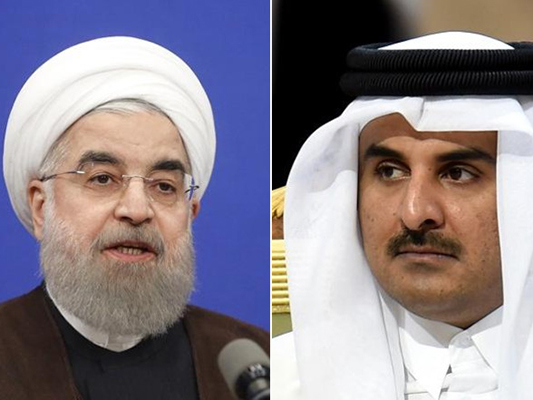
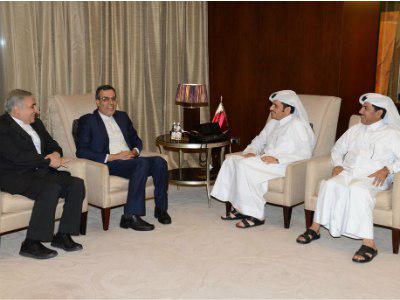
The phone conversations between Iranian President Hassan Rouhani and his Russian counterpart and the Emir of Qatar also received great coverage.

The Qatari Emir’s talks with Rouhani were particularly significant after the recent clash between Qatar and other major Arab countries like Saudi Arabia, the UAE, Egypt, and Bahrain, which blocked all Qatari media over their Emir’s pro-Iran comments.

The death of former US national security advisor Zbigniew Brzezinski, who was a top aide to President Jimmy Carter during the Islamic Revolution in Iran in 1979, was also a top story today.

The above issues, as well as many more, are highlighted in the following headlines and top stories:


Abrar:

1- Guardian Council to Declare Its View on Iran Elections Tuesday: Spokesman

2- Theresa May Urges Iran, Russia to Seriously Pursue Syria Truce

3- Disclosure of a Meeting Leads to Murder of North Korea Leader

A Look at Iranian Newspaper Front Pages on May 28 - abrar


Afkar:

1- Trump: We’ve Made Iran More Isolated

2- Ayatollah Khatami: Increase Your Tolerance towards Criticism

A Look at Iranian Newspaper Front Pages on May 28 - afkar


Aftab-e Yazd:

1- No Religious Barrier to Women’s Presence in Stadiums: Cleric

2- ISIS Seizes City in Philippines

A Look at Iranian Newspaper Front Pages on May 28 - aftab


Ebtekar:

1- Consultations for Taking Majority of Seats in Presiding Board of Iran Parliament

2- Rouhani, Putin Underline Continuation of JCPOA Implementation, Regional Cooperation


A Look at Iranian Newspaper Front Pages on May 28 - ebtekar


Emtiaz:

1- Samples Taken from 10,000 Criminals in Gene Bank

2- Russian Choppers Assembled in Iran


A Look at Iranian Newspaper Front Pages on May 28 - emtiaz


Etemad:

1- Iran Leader: Saudis Doomed to Decline, Collapse

2- Four Sensitive Years Ahead of Us: Academic

  • 60% of Iranian Society Are Reformists


A Look at Iranian Newspaper Front Pages on May 28 - etemad


Ettela’at:

1- Future Belongs to Young Believers: Iran Leader

2- Leader: Incompetent People like Saudi Rulers Control Destiny of Certain Muslim Societies

3- Rouhani: Iran’s Principled Policy is to Establish Close Ties with Moscow

4- 120 Terrorists Killed in Russian Jet Fighters’ Attack on ISIS Convoy in Syria

5- Bahraini Clerics in Reaction to Massacre of Protesters: We’re Ready for All Possibilities

A Look at Iranian Newspaper Front Pages on May 28 - etelaat


Ghanoon:

1- We Hope Ties with Iran Would Return to Pre-Sanctions Level

2- Efforts Underway to Let Women Go to Stadiums in Iran

A Look at Iranian Newspaper Front Pages on May 28 - ghanoon


Hemayat:

1- Clinton: Trump Will Be Finally Impeached

  • Bipolar Atmosphere of US Presidential Elections Goes on

2- Iran’s Shamkhani: Saudi Arabia Biggest Producer of Terrorists in Muslim World

3- Saudi Arabia Uses Banned Weapons against People of Al-Awamiyah


A Look at Iranian Newspaper Front Pages on May 28 - hemayat


Iran:

1- Reformists’ Decisive Victory in Local Elections of 20 Provincial Centres

2- Brzezinski Dies


A Look at Iranian Newspaper Front Pages on May 28 - iran


Javan:

1- Saudis Want to Gain Friendship of Islam’s Enemies Using Muslims’ Wealth: Iran Leader

2- Baghdad Warns about US Adventure against Iran

  • Iraq Not to Join Trump’s Anti-Iran Game

3- Israel Accepts Demands of 2,000 Palestinian Prisoners after 40-Day Strikes

A Look at Iranian Newspaper Front Pages on May 28 - javan


Jomhouri Eslami:

1- Holy Seeds of Quran Planted in Iran Thanks to 1979 Revolution: Leader

2- Day of Taking Revenge from Al Khalifa Will Come: Bahraini Clerics

3- Rouhani Urges Muslim Leaders to Counter Islamophobia

A Look at Iranian Newspaper Front Pages on May 28 - jomhori


Khorasan:

1- Iran Leader: Americans Will Milk Reactionary States, Kill Them at Last

2- New Allies in Mideast: Qatar May Turn to Iran after Recent Developments

3- Oil Minister Confirms Restrictions in Transfer of Money for Petchem Products


A Look at Iranian Newspaper Front Pages on May 28 - khoarasan


Quds:

1- Kremlin’s Footprint in Trump’s House

  • US President’s Son-in-Law in Contact with Russians

2- Saudi Gov’t Will Definitely Collapse: Iran Leader


A Look at Iranian Newspaper Front Pages on May 28 - qods


Resalat:

1- Sponsors of Terrorism Giving Prescriptions for Fight against Terror!

2- Minister: UNESCO’s 2030 Document Was Not Implemented; Gov’t Stopped it

3- Missile Power is Only Way to Deter Enemies: Senior MP


A Look at Iranian Newspaper Front Pages on May 28 - resalat


Shahrvand:

1- Qatari Emir Turns towards Iran: Rouhani, Emir Discuss Regional, Bilateral Issues


A Look at Iranian Newspaper Front Pages on May 28 - shahrvand


Shargh:

1- Serial Freezing of Iran’s Assets: Economy Minister Departs for China

2- Top Security Official: Iran Ready to Deploy Forces in Syria

3- Carter’s Aide during Iran’s Revolution Dies

A Look at Iranian Newspaper Front Pages on May 28 - shargh


Siasat-e Rooz:

1- Respect Civil Rights of Your Critics

  • Tolerance towards Criticism Prerequisite for Serving in Key Positions

2- Brzezinski: From Designing Operation Eagle Claw to Forming Al-Qaeda

A Look at Iranian Newspaper Front Pages on May 28 - siasatrooz