Thursday, December 25, 2025
Home Blog Page 4012

“Iran Providing 70% of Iraq’s Internet”

internet

Managing Director of Iran’s Infrastructure Communications Company Mohammad Javad Azari Jahromi says the country is the largest Internet service provider for Iraq and has a 70-percent share of its Internet market.

He went on to say that Iran has overtaken Turkey and Saudi Arabia in seizing the Iraq market.

“Iraq was connected to the World Wide Web through Turkey, Iran and Saudi Arabia, but Turkey was taken off the list of Iraq’s service providers due to geographical issues and activities by terrorist groups in Turkey,” he said.

With Turkey being removed from the list of Internet service providers for Iraq, the competition was left open for Iran and Saudi Arabia, he said, adding, “We managed to secure 70 percent of this market.”

However, he said, Turkey could get back onto the list of Iraq’s Internet service providers once security issues in Iraq are settled, tranquility makes a come back to the country, and terrorists are eliminated.

“Iran regards Turkey as a serious competitor in providing web services for Iraq, so it is necessary for Iran to improve its Internet services,” he said.

Iranian Film Wins Un Certain Regard Prize at Cannes Festival

Iranian Film Wins Un Certain Regard Prize at Cannes Festival

The Un Certain Regard sidebar of the 70th Cannes Film Festival announced its winners on Saturday, with the jury awarding the top prize to A Man of Integrity (Lerd) by Mohammad Rasoulof from Iran.

The film is a drama about endemic corruption and shows how it’s an uphill climb for a righteous man, according to the Hollywood Reporter.

“We are proud to present an aesthetically diverse and beautiful palmares,” said Uma Thurman, Un Certain Regard jury president, to open the ceremony.

Rasoulof’s win comes three months after Asghar Farhadi won the Best Foreign Language Film Oscar for “The Salesman”, also shot in Iran, and recognizes him as a major force in international cinema, Reuters reported.

“Un Certain Regard”, a separate section from the main contest at Cannes, recognizes younger talent and innovative filmmaking.

The top prizes for the main competition selection will be awarded Sunday night during the closing ceremony at the Palais des Festivals in Cannes.

Iran Calls for ‘Moderation, Wisdom’ in Ties between Mideast States

Iran Calls for ‘Moderation, Wisdom’ in Ties between Mideast States

In a telephone conversation with Emir of Qatar Sheikh Tamim bin Hamad Al Thani on Saturday, Rouhani highlighted Tehran’s interest in expansion of relations with its neighbouring countries, particularly Qatar, and stressed that the Islamic Republic wants “moderation and wisdom” to prevail in the relations among regional countries.

“One of the principles of our foreign policy is to continue cooperation with the neighbouring countries in the Persian Gulf, and we believe that we can remove the existing obstacles and strengthen brotherly bonds through firm determination,” Rouhani added.

He urged regional countries to make collective efforts to establish peace and calm in the region, saying stability and security of regional countries are closely intertwined.

“Regional countries need more convergence and consultation to solve regional crises, and we are ready to cooperate in this regard,” Rouhani said, Press TV reported.

The Iranian president also pointed to the spread of terrorism in the region and said, “Our region is faced with a big challenge named terrorism, which can threaten the security of all of us and joint cooperation is the [only] way to fight it.”

He also noted that sectarianism is among the main blights undermining security in the Middle East, stressing the importance of adopting measures to promote peace in the Muslim world.

The Qatari emir, for his part, offered his congratulations to President Rouhani on his landslide reelection victory and called for further expansion of mutual relations.

The Qatari emir said that there is no obstacle in the way of bolstering Tehran-Doha ties.

He also expressed confidence that dialogue would be the sole solution to the regional issues.

Iraq Will Never Join Anti-Iran Coalition: FM

Iraq Will Never Join Anti-Iran Coalition-FM

“Baghdad will never join the anti-Iran coalition,” he told the Spanish newspaper ABC, a translated version of which was published in various media outlets.

Ja’afari was apparently referring to the unofficial alliance between the United States and some Persian Gulf Arab states, most notably Saudi Arabia.

Iraq will not fall into line with the policy, which Washington has adopted against the Islamic Republic, the top Iraqi diplomat added.

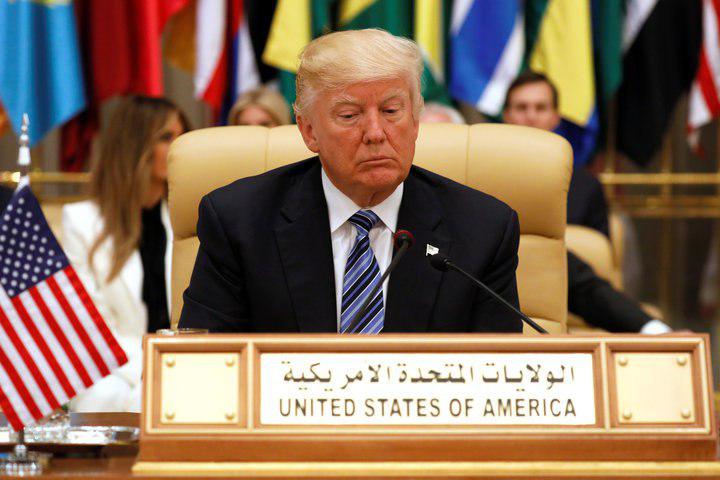
The remarks came days after US President Donald Trump traveled to Saudi Arabia on his first foreign visit, signing a $110-billion arms deal with the kingdom.

The US named Iran as the target of the deal and urged cooperative measures between the signatories and other Arab countries against what it calls an unfavorable regional role by Iran.

Iraq Will Never Join Anti-Iran Coalition: FM

Tehran rejects accusations of meddling in the region, saying instead that military interventionism there by Washington and its allies has brought about much regional bloodshed and destruction.

Ja’afari said Iran has not occupied even an inch of the Iraqi soil, while Turkey has advanced as far as 110 kilometers (68 miles) into the country’s territory.

Turkey has been maintaining a military presence in Iraq since December 2015 without the Arab country’s permission. Baghdad has repeatedly called on Ankara to withdraw its forces, describing Turkey’s military presence in Iraq as a violation of its sovereignty.

Relations between the two countries were strained last December, when Turkey deployed some 150 soldiers, equipped with heavy weapons and backed by about two dozen tanks, to the Bashiqa military camp on the outskirts of Mosul.

“Iran Supplying Turkey with Free Gas for Past Debts”

Iran Supplying Turkey with Free Gas for Past Debts

Zanganeh told reporters on Saturday that Iran is currently not receiving any money for exporting gas to Turkey, because a court ruling has forced Tehran to give Ankara a partial refund following a lengthy legal dispute.

Turkey had called for a 62.5 percent decrease in the price of gas it imported from Iran five years ago, but the International Court of Arbitration ruled that the price reduction should stand at 13 percent, the minister added.

Zanganeh explained that Iran fell into debt under the court ruling and, thus, is not currently being paid by Turkey for gas.

Turkey had brought a case to the International Court of Arbitration against Iran in 2012, claiming that the gas price was too high.

Iran is Turkey’s second supplier of gas after Russia, providing for one-fifth of the country’s consumption. Azerbaijan is another supplier.

Two Iranian Border Guards Killed by PJAK Terrorists

Two Iranian Border Guards Killed by PJAK Terrorists

The scuffles erupted on Saturday between Urmia border regiment forces and PJAK, an offshoot of Turkey’s Kurdistan Workers’ Party (PKK), Tasnim news agency said.

PJAK randomly carries out hit-and-run attacks on Iranian targets, after which they retreat to their lairs in Iraq and Turkey.

Earlier this month, Iran said it welcomed Turkey’s plan to build a 144-kilometer wall along its border. Ankara says the wall is aimed at halting the movement of PKK militants who are based in Iraq’s Qandil mountains bordering Iran and Turkey.

“We welcome any move that increases the security and stability of the border,” Iran’s Foreign Ministry spokesman Bahram Qassemi said.

The border wall is reportedly being constructed with three-meter concrete blocks topped off with razor wire, according to Turkish authorities.

Beside terrorists, smugglers also use the border to bring in bootleg goods such as alcohol into Iran from Turkey and northern Iraq.

Last month, 10 Iranian border guards were killed and two others wounded in an ambush attack near the town of Mirjaveh in the southeastern Iranian province of Sistan-and-Baluchestan.

The so-called Jaish ul-Adl terrorist group claimed responsibility for the attack. The assailants escaped into Pakistani territory immediately after the attack.

“Terrorists Serving to Advance US Policies in Mideast”

shamkhani

In an interview with the Russian Kommersant daily, Secretary of Iran’s Supreme National Security Council Ali Shamkhani weighed in on a range of issues, including the accusations leveled against Tehran by US President Donald Trump.


Trump’s Accusations

Shamkhani criticized Trump’s allegations that Iran is contributing to instability in the Middle East and supporting terrorism.

“These accusations are completely baseless and not true, and the international community will definitely not take them seriously,” said Shamkhani.

“We should see who really supports terrorism. Iran has been fighting terrorism for around 40 years now, and several thousand of Iranians have been killed during the course of combating terrorism,” the Iranian official added.

“Only after the September 11 attacks did US officials come to realize what terrorism is. This is while Trump has made his first overseas trip to a country which is the factory of producing terrorists,” Shamkhani noted.


Saudi Arabia, a Terrorist-Producing Factory

The senior Iranian official slammed Saudi Arabia as a breeding ground for terrorists.

He said the Wahhabi ideology, oil revenues and political discontent in Saudi Arabia have led to emergence of “extremist youths” who are not strong enough to destabilize the situation in the country, but can easily move to Syria, Yemen and Iraq.

“In fact, the terrorist-producing factory in Saudi Arabia keeps operating non-stop,” said Shamkhani.

“If you pay attention, none of the terrorists across the world are Shiites or Iranians. One should ask ‘Who organized the September eleven attacks? Who conducts terrorist bombings in Europe every now and then? Who is training extremists in the Caucasus to carry out terrorist operations in Syria?’” said Shamkhani.


Iran, Russia, Syria, Iraq Members of Anti-Terror Campaign

Shamkhani said terrorists in Syria and Iraq are in fact tools to implement Washington’s policies in the region.

He said the only coalition which is really fighting terrorism in the region is the alliance between Iran, Russia, Syria and Iraq.

“Within this framework, the first four-way meeting between secretaries of national security councils of the above-mentioned countries was held on the sidelines of the Russia security summit and constructive negotiations were held,” he said.

Shamkhani also referred to Iran’s role in implementing the agreement to create de-escalation zones in Syria.

“Iran is very serious in fighting terrorism and establishing peace and stability in Syria. If Iran is asked to redouble its efforts, for example to deploy its military troops to ensure order and security in de-escalation zones, we will be ready to study the proposal,” he noted.


Syria against US Presence on Its Soil

Shamkhani expressed his opposition to Washington’s contribution to the maintenance of security in de-escalation zones in Syria while touching upon talks conducted between Moscow and Washington on the issue.

“Syria has a legal government, and it is only Damascus officials that can make decisions on who has the right to be present on the country’s soil. The Americans blatantly support terrorism and instability in Syria, and the Syrian government wouldn’t like to see them on Syrian soil,” said Shamkhani.

He also pointed to Syria’s initiative to launch a collective campaign against intelligence crimes.

“We would like to know more about this initiative. We agree that cyberattacks on countries should be tackled,” said Shamkhani.

He said one of the key features of cyberattacks is that they go beyond borders and moral principles.

“It is very good that the UN Security Council is active in this domain,” said Shamkhani, adding Iran stands ready to contribute to the campaign against cyberattacks.

Saudi Regime Doomed to Collapse: Iran’s Leader

Leader of the Islamic Revolution Ayatollah Seyed Ali Khamenei

Speaking in a Quranic ceremony on Saturday, Ayatollah Khamenei warned the Muslim world against being deceived by the Saudi regime’s appearance, as they are doomed to collapse.

“They [Saudis] are illegitimate and will definitely decline and collapse sooner or later,” the Leader went on to say.

The time of their collapse depends on the actions of Muslim world, the Leader noted, adding that if Muslim people act correctly, their collapse would be accelerated, otherwise it would take some time.

“Unfortunately today, the Islamic society, like other societies, has faced problems and the fate of some Islamic societies is in the hands of incompetent individuals like [those] in the Saudi government,” the Leader noted.

Ayatollah Khamenei further referred to the last king that ruled Iran before the 1979 Revolution, and said the then Iranian regime and the current ‘mentally retarded’ rulers of Saudi Arabia both had similarly close relations with the US, and both were called by Washington ‘our gendarme in the region’.

However, the Leader added, the Iranian nation managed to overthrow that regime in spite of all the foreign support it had, and establish the Islamic Republic, which is a thorn in the sides of world powers today.

Who Will Rush to Stand by Qatar If War Breaks Out?

Abdel Bari Atwan, the editor-in-chief of Ray al-Youm, has weighed in on the recent clash between Qatar on the one hand, and Saudi Arabia, the UAE, Bahrain, and Egypt on the other hand.

Here is the full text of his article:

We must admit that this disagreement came as no surprise. What did surprise us, however, are its intensity, the manner in which it was expressed, and the measures and steps that have and may still result from it. After all, four of the aforementioned states are supposedly members of the GCC (Gulf Cooperation Council) and the Arab coalition that is fighting the Houthis and the General People’s Congress [Saleh] party in Yemen. In addition, the four states, or two of them at least, have pumped in billions of dollars and thousands of tons of weapons to fan the flames of the bloody conflict raging in Syria, Libya, and Yemen – and are still doing so.

The GCC has previously witnessed many disagreements, and in fact, political and border wars between its members – especially, Qatar and Saudi Arabia. But what is happening today between the abovementioned states may open a wound that would be difficult to close, and create a rift that will be difficult to bridge, at least in the foreseeable future.

The explosive developments began when the Saudi-owned al-Arabiya and the Emirati-owned Arab Sky News broadcast statements attributed to the Emir of Qatar, Prince Tamim bin Hamad Al Thani, during a graduation ceremony of a number of recruits. The Emir allegedly protested against the escalation of the disagreement with Iran, adding that it was unwise to be hostile to it. He also allegedly denounced including Hezbollah and Hamas on the list of terrorist organizations, since both are resistance movements. And he accused Saudi Arabia, the UAE, and Bahrain of inciting against Qatar and accusing it of sponsoring terrorism and its organizations. He also took a stab at Saudi Arabia by saying that ‘the states that claim to be fighting terrorism are those that are religiously most hard-line and are providing pretexts for the terrorists.’ In fact, he went even further by criticizing the hundreds-of- billions of dollars spent on the purchase of weapons rather than on developmental projects, and when he speculated that Trump’s days in office were now numbered.

Al-Arabiya and Arab Sky News picked up these alleged statements and hosted many Egyptian and Saudi analysts who attacked Qatar mercilessly, accusing it of what they portray as terrorism and hosting terrorist organizations, especially the Muslim Brotherhood. Moreover, al-Arabiya broadcasted an audiotape in which the father of Qatar’s Emir, Sheikh Hamad bin Khalifa, is allegedly heard in a phone conversation with late Libyan leader Mu’ammar al-Qadhafi attacking Saudi Arabia and predicting the collapse of the Al Saud regime. It also reported old statements by former Yemeni president Ali ‘Abdullah Saleh revealing that Qatar’s former Emir had asked him for help in waging sabotage campaigns deep inside Saudi Arabia.

Qatar’s giant media empire, of which Al-Jazeera television is the spearhead, was taken by surprise. It did not respond by issuing clarifications or retaliate in kind. Instead, it continued with its usual programs. This lent some credibility to the anti-Qatar campaign for some time. Then came the first clarification from a Qatari official after a number of hours, in the form of a very short statement claiming that the Qatari News Agency’s website had been hacked by unknown parties, and that the statements attributed to Prince Tamim were false.

But adding to the ‘lack of clarity’ was a ‘Breaking News’ item on al-Arabiya to the effect that Qatari Foreign Minister Sheikh Mohammad bin ‘Abderrahman has instructed the ambassadors of Egypt, Bahrain, the UAE, and Saudi Arabia to leave Doha within 24 hours. The Qatari foreign minister firmly denied this, and said that his statements had been taken out of context.

Saudi Arabia, the UAE, and Bahrain took an immediate decision to impose a blackout on Al-Jazeera’s websites and all Qatari newspapers on the Internet. In fact, it is not unlikely for them to resort to jamming Al-Jazeera on the grounds that Qatar’s denial of the statements attributed to Prince Tamim and its insistence that the Qatari News Agency’s website had been hacked were not ‘convincing.’ They did not alleviate the crisis’ intensity or end the campaign on Qatar.

It is worth noting that this crisis in relations between Qatar on the one hand, and the UAE and Saudi Arabia on the other, follows two important developments:

– The first is US President Donald Trump’s visit to Riyadh and his participation in three Saudi – Gulf, Arab, and Islamic – summits. These summits focused on the war on terrorism and on Iran’s role as the latter’s spearhead, accusing it of playing a major role in undermining the region’s stability. Moreover, the US president held a somewhat tense meeting with the Qatari Emir on the summits’ margins.

– The second development was the appearance of a number of articles in US and Western newspapers attacking Qatar. The latest was in Foreign Policy by John Hannah, a former official in the US defence and state departments and one of former US vice-president Dick Cheney’s advisors. He accused Qatar of backing terrorism, inciting the killing of Americans in Iraq, using Al-Jazeera effectively to transform the Arab Spring into an extremist Islamic Winter, and of financing Islamist groups with money and weapons to fight in Syria. He also accuses Qatar of covering up the presence in Doha of Khaled Sheikh Mohammad, the architect of the 9/11 attacks, and facilitating his escape to Afghanistan before the CIA arrested him.

Furthermore, Hannah accuses Qatar of ‘double-dealing’: Of hosting the ‘Udeid Air Base from which US warplanes that struck Iraq where launched, while also siding with Saddam Hussein’s regime and backing him in the media. Hannah also confirms that Cheney had discussed the possibility of moving ‘Udeid Air Base from Qatar, and says that Trump supports this option, while the UAE and Saudi Arabia are candidates for hosting it. He also demanded that Qatar should be punished for sponsoring terrorism.

Prince Tamim was given a ‘cold’ reception at the Riyadh summit. He only spoke with Mr. Fahd bin Mahmoud, the Deputy PM of the Sultanate of Oman and the head of its delegation. He also had a short word with Saudi Crown-Prince Mohammad bin Nayef. Sources inside the summit tell us that [Abu-Dhabi Crown-Prince] Mohammad bin Zayid did not speak to him or shake his hand at all; he bypassed Prince Tamim instead and stood next to President Trump in one of the official pictures.

The fact that the Qatari media empire in its various branches has confined itself to ‘clarifying’ the hacking of the Qatari News Agency’s website, denying the statements attributed to Prince Tamim, and ‘retracting’ the decision to expel the ambassadors of Saudi Arabia, the UAE, Egypt, and Bahrain, suggests that Qatar has uncharacteristically decided to resort to calming down the situation in an attempt to contain the crisis.

However, we believe that the other side may continue to escalate until Qatar ends its support for the Muslim Brotherhood and its media tools, adopt a more hostile attitude towards Iran, and identifies totally and literally with the policies of the Saudi/Egyptian/Emirati triangle.

Gulf sources have leaked reports of a supposed ‘scenario’ that enjoys a US green light for changing the top leadership in Qatar. They add that what is happening today is a prelude to this. However, there is nothing to confirm this scenario, even though it may not be totally unlikely. After all, a coup attempt did occur in 1996, aimed at toppling the former Emir of Qatar and restoring his father to power. It is ironic that the three states – Saudi Arabia, the UAE, and Egypt – were participants in that failed coup attempt, supporting it with money, weapons, and soldiers.

Will history repeat itself? We have no answer. But the crisis is serious and the estrangement is worsening. And nothing can be excluded these days, in light of the Emirati/Saudi alliance that has not refrained from fighting the war in Yemen and has continued to do so for over two years, and is now beating the drums of another war against Iran, threatening to carry the battle deep inside it.

Here, another question seems legitimate: Who will rush to stand by Qatar’s side and defend it? Will it be Iran, which Qatar and the factions allied with it in Syria and to a lesser extent in Iraq have been fighting? Or will it be Turkey, which is now in a state of hostility with all of its neighbours, as well as with the US and most of Europe’? Or will it be the US ‘Udeid Air Base, which together with its soldiers and warplanes, wants to leave Qatar?

At present, we can do no more than raise questions, and admit that Qatar is in a critical and unprecedented position, facing fierce enemies and having a very small number of allies, at a time when reason and wisdom have been set aside.

But please feel free to correct us if we are wrong.

IRGC-Made Tunnel to Revive Iran’s Shrinking Lake Urmia

Iran Lake Urmia

Iran’s Islamic Revolution Guards Corps (IRGC) is making serious effort to keep Lake Urmia from drying up.

IRGC-Made Tunnel to Revive Iran’s Shrinking Lake UrmiaBrigadier General Ebadollah Abdollahi, the commander of IRGC’s Khatam al-Anbia Construction Base, says a 36-kilometre tunnel is being dug to revive the shrinking lake.

“If there are no financial problems, it will be completed in 30 months’ time,” he noted, adding that the tunnel will supply the water needed by Lake Urmia.

“Today, the country is facing major challenges in the water sector, including water shortage, because there is no proper management for water consumption,” he said.

He added people demand Lake Urmia be revived.

“This lake had a miserable condition for years, and water levels had tremendously dropped there, leading to numerous environmental problems,” Abdollahi noted.

The project to supply water to Lake Urmia began in 2010. The tunnel is to take excess water from the Glaas River to the lake aimed at reviving the body of water.

Due to a lack of enough financial resources as well as the hard work involved, the project is not progressing according to the scheduled time frame.

Elsewhere in his remarks, Abdollahi touched upon a project to create a green belt along the borders through agricultural development work.

He said some three thousand projects are underway in northwest of the country covering some 500 thousand hectares of land which are to be turned into a “green agricultural belt” to boost agricultural development, create jobs and endure lasting security along the borders.