Saturday, April 11, 2026
Home Blog Page 3983

Iran, Italy Use Music to Build Bridge of Brotherhood

Iran, Italy Use Music to Build Bridge of Brotherhood 1

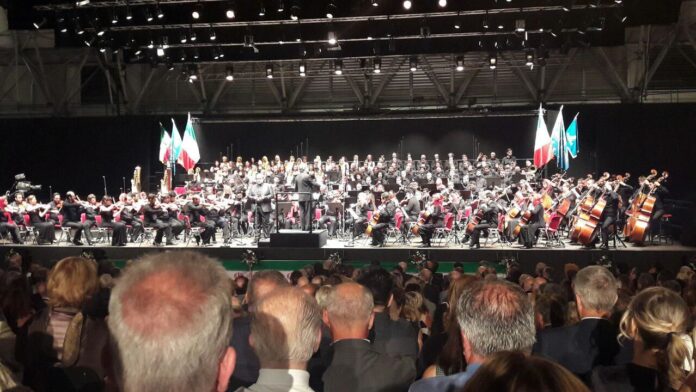
One week after a joint performance in the Iranian capital, the Giovanile Luigi Cherubini Orchestra and the Tehran Symphony Orchestra held a joint concert at the Pala de André Centre in Ravenna, Italy, on Saturday night.

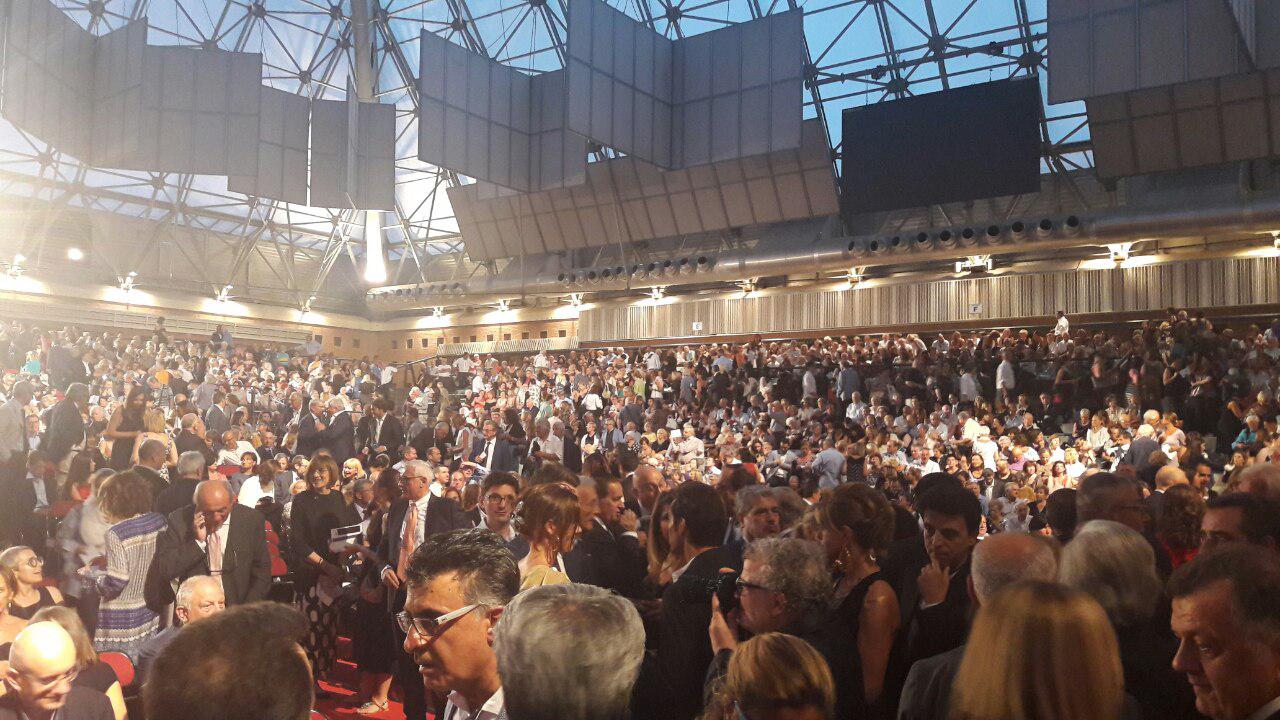
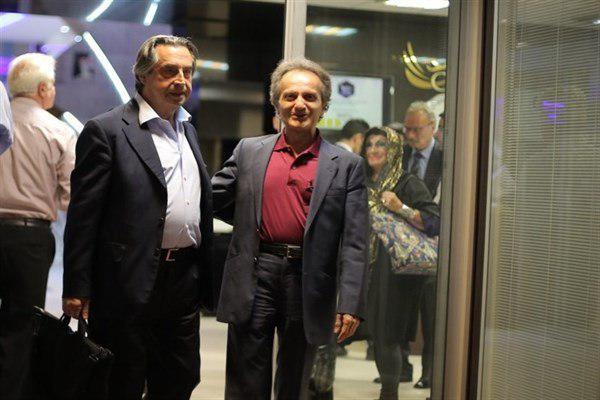
The joint concert attracted over four thousands of music lovers from Iran and Italy. The ensemble was composed of Italian as well as Iranian musicians conducted by Maestro Riccardo Muti from Italy and Maestro Shahrdad Rohani from Iran.

Iran, Italy Use Music to Build Bridge of BrotherhoodTitled ‘Roads to Friendship’, the event began by playing the national anthems of Iran and Italy. Then a repertoire of Italian composer Giuseppe Verdi’s pieces was performed at the concert.

The concert was one of the most prestigious events at the international level with good lessons for Iranian music lovers, according to a Farsi report by Honar Online.

Iran, Italy Use Music to Build Bridge of Brotherhood 2Earlier, the two orchestras performed at Tehran’s Vahdat Hall on 6 July. The event in Iran was attended by some leading diplomatic and cultural figures including Iranian Foreign Ministry Spokesperson Bahram Qassemi, Deputy Foreign Minister for European and American Affairs Majid Takht-Ravanchi, and Deputy Culture Minister Ali Moradkhani.

Rohani told the Mehr News Agency that the historic presence of such a great master in Iran is a turning point in Tehran symphony orchestra’s activities. He referred to the Iranian musicians’ performance in Ravenna, and said it is a source of honour for members of Tehran symphony orchestra to send a message of peace and friendship to the world through their performance in an Italian city at a time when the entire Middle East is grappling with war.

A Look at Iranian Newspaper Front Pages on July 10

Most Iranian newspapers today covered the final liberation of Mosul declared by Iraqi Prime Minister Haider al-Abadi on Sunday.

The inscription of the historical city of Yazd in central Iran as a UNESCO World Heritage Site was also a top story today.

The arrest of ex-president Mahmoud Ahmadinejad’s vice-president Hamid Baqaei also received great coverage, particularly in reformist and pro-government papers.

The above issues, as well as many more, are highlighted in the following headlines and top stories:


Abrar:

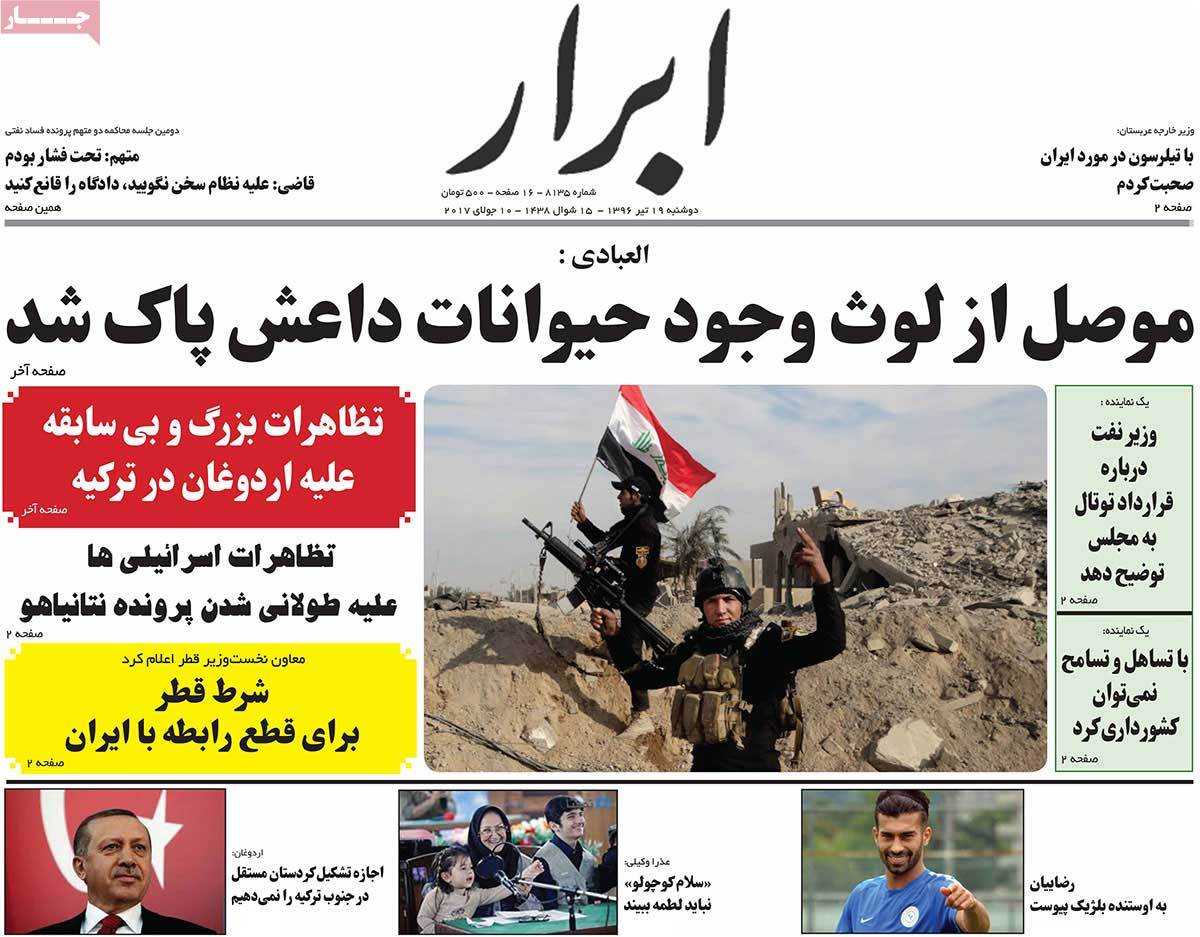
1- Iraqi PM: Mosul Cleansed of ISIS Animals

2- Unprecedented Protest Rallies against Erdogan in Turkey

3- Israelis Protest Foot-Dragging on Netanyahu Probe
A Look at Iranian Newspaper Front Pages on July 10 - abrar


Abrar-e Eqtesadi:

1- Iran Sells 2m Barrels of Oil in June

2- Iranian Refineries Ordered to Produce Euro-V Petroleum
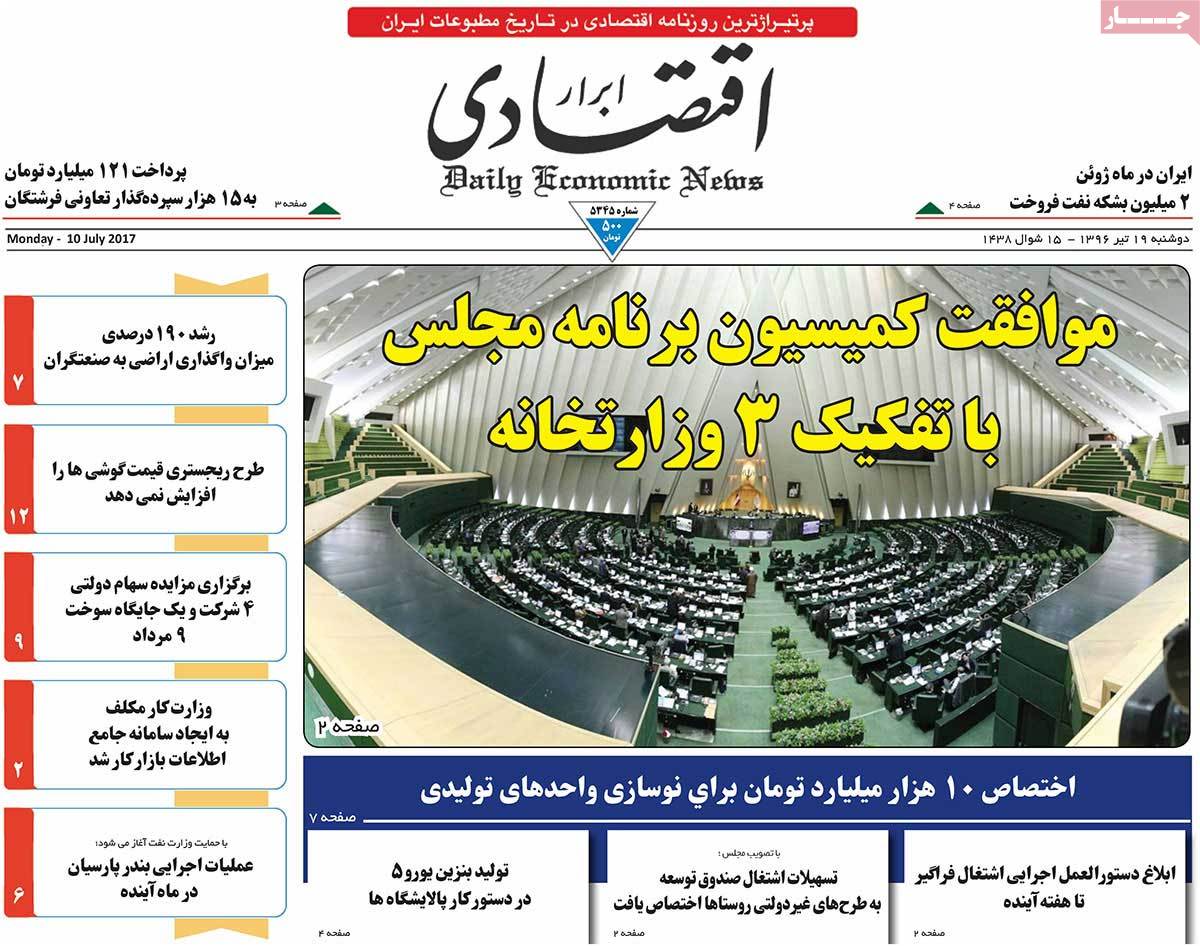
A Look at Iranian Newspaper Front Pages on July 10 - abrar eghtesadi


Aftab-e Yazd:

1- City of Yazd Inscribed as UNESCO World Heritage Site Thanks to Gov’t Efforts

2- Should Tehran Be Worried about Warming of Trump-Putin Ties?
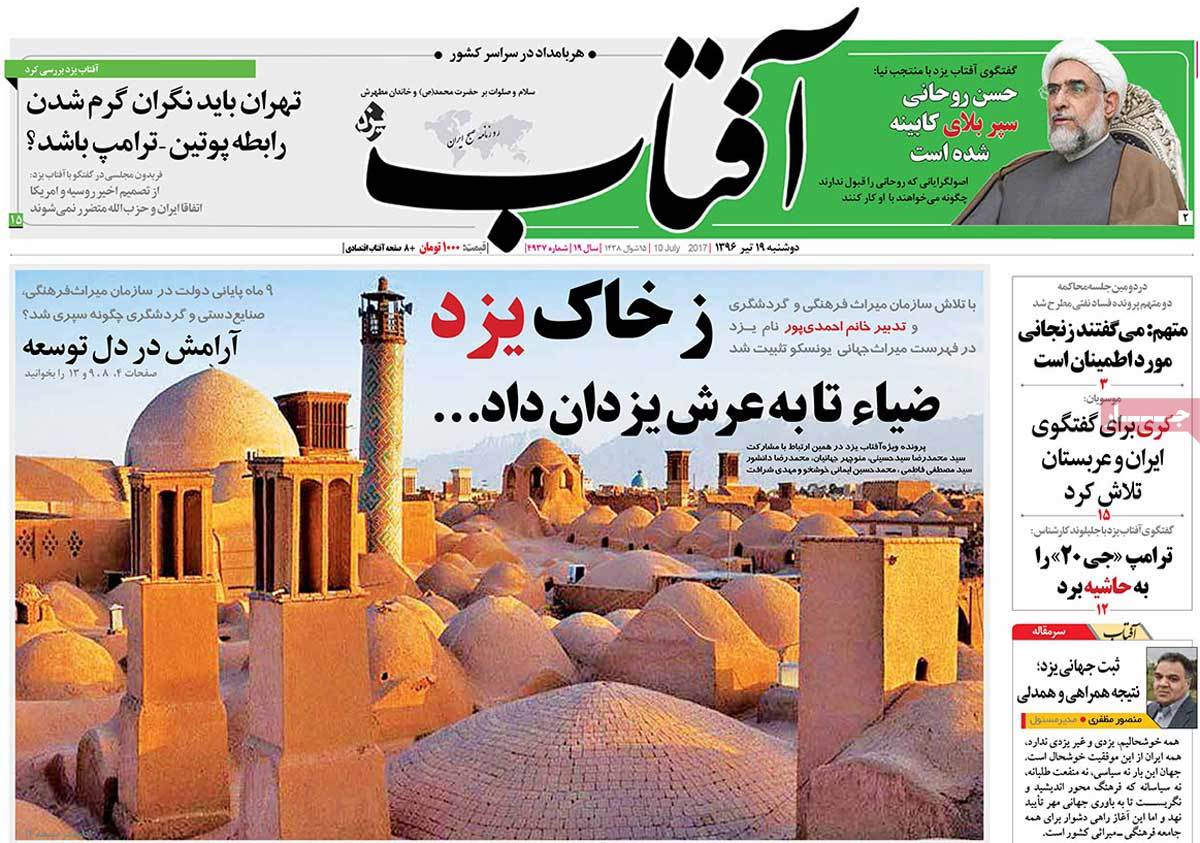
A Look at Iranian Newspaper Front Pages on July 10 - aftab


Arman-e Emrooz:

1- Analyst: Total Serves as Reputable Reference for Iran

2- Iran’s Oil Money in Pockets of Erdogan’s Son-in-Law: Lawyer

3- Three Ministers Sign Documents to Give Iran’s Oil to Babak Zanjani

4- Tajikistan’s Condescension in Ties with Iran

5- Suspicious Disease of Kimia Alizadeh [female Iranian taekwondo player who received Bronze medal in 2016 Olympics]
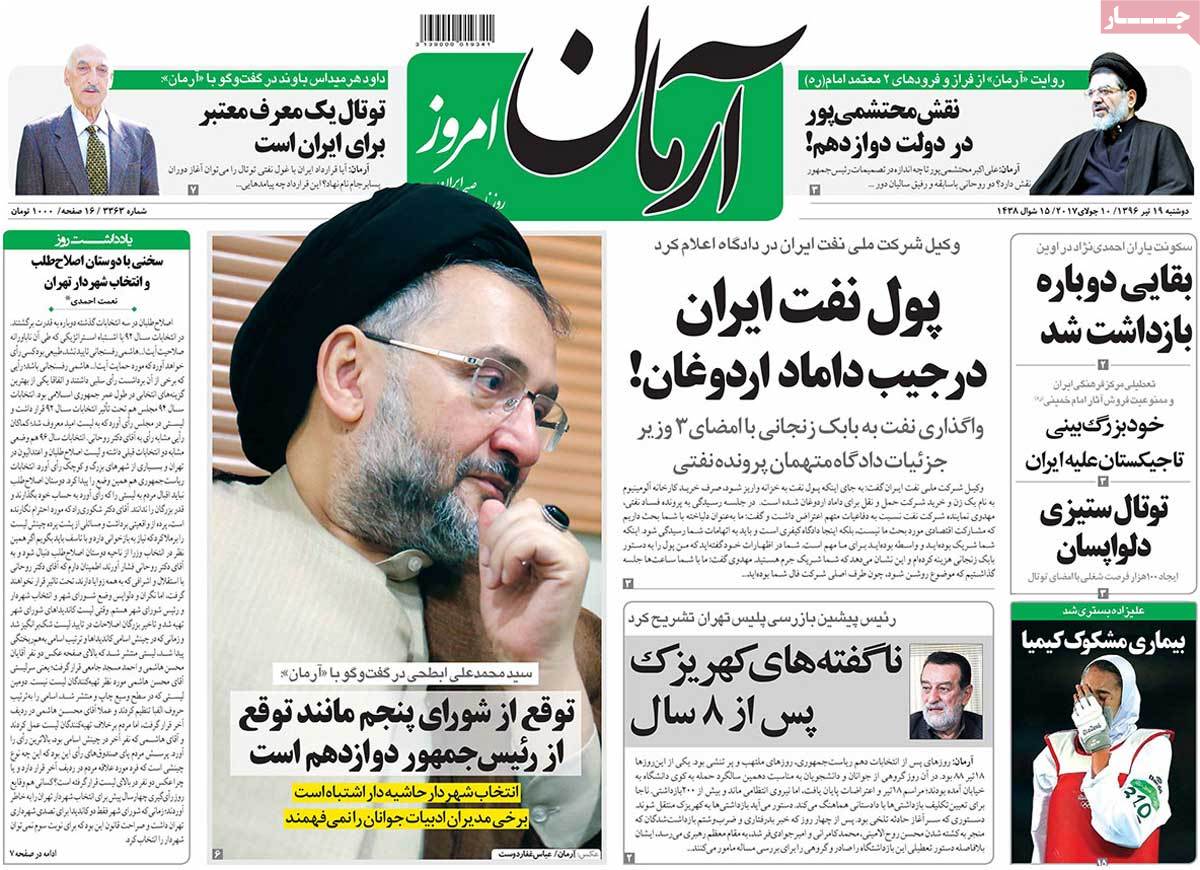
A Look at Iranian Newspaper Front Pages on July 10 - arman


Ebtekar:

1- Ahmadinejad’s Close Ally Once Again Arrested

2- Babak Zanjani Confirmed by Then Intelligence Minister
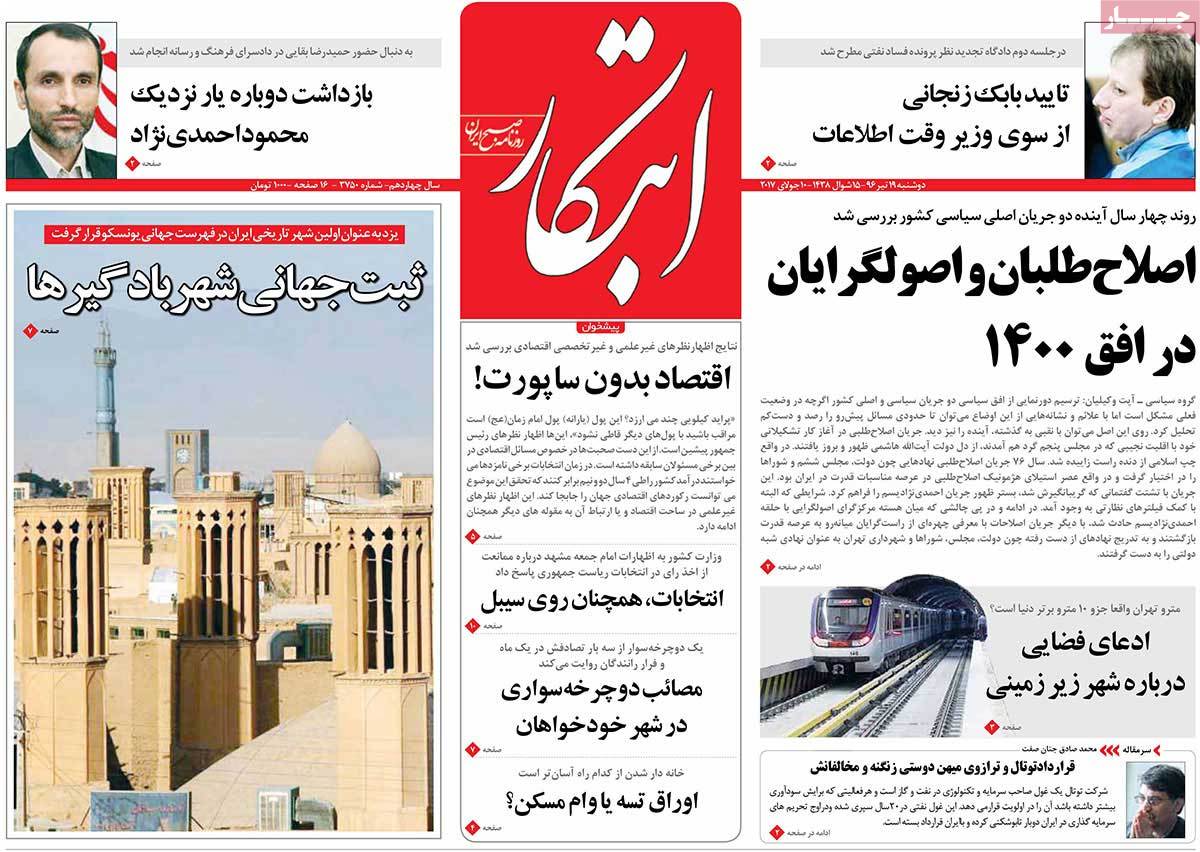
A Look at Iranian Newspaper Front Pages on July 10 - ebtekar


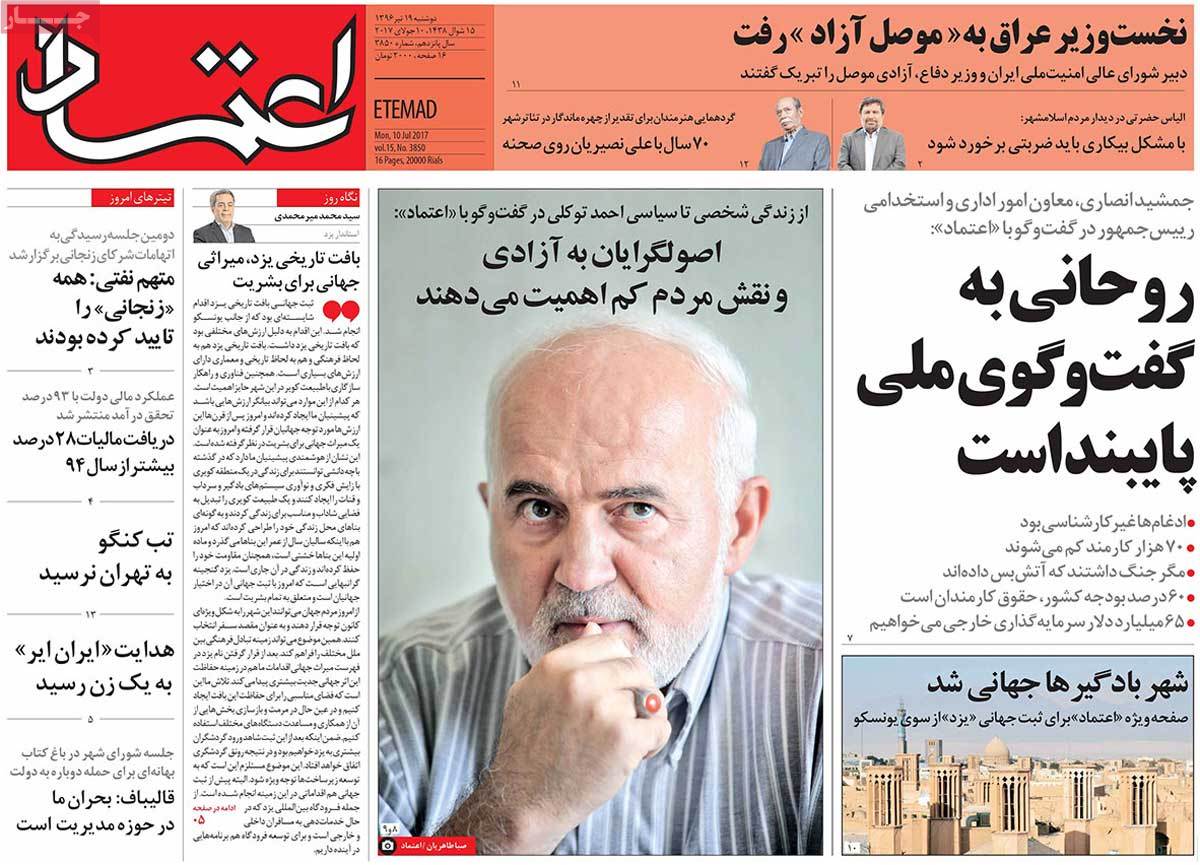
Etemad:

1- Rouhani Committed to National Dialogue: VP

2- Conservatives Don’t Care Enough about Freedom, People’s Role: Ex-MP

3- Yazd’s Historical Structure, World Heritage for Human Kind [Editorial]
A Look at Iranian Newspaper Front Pages on July 10 - etemad


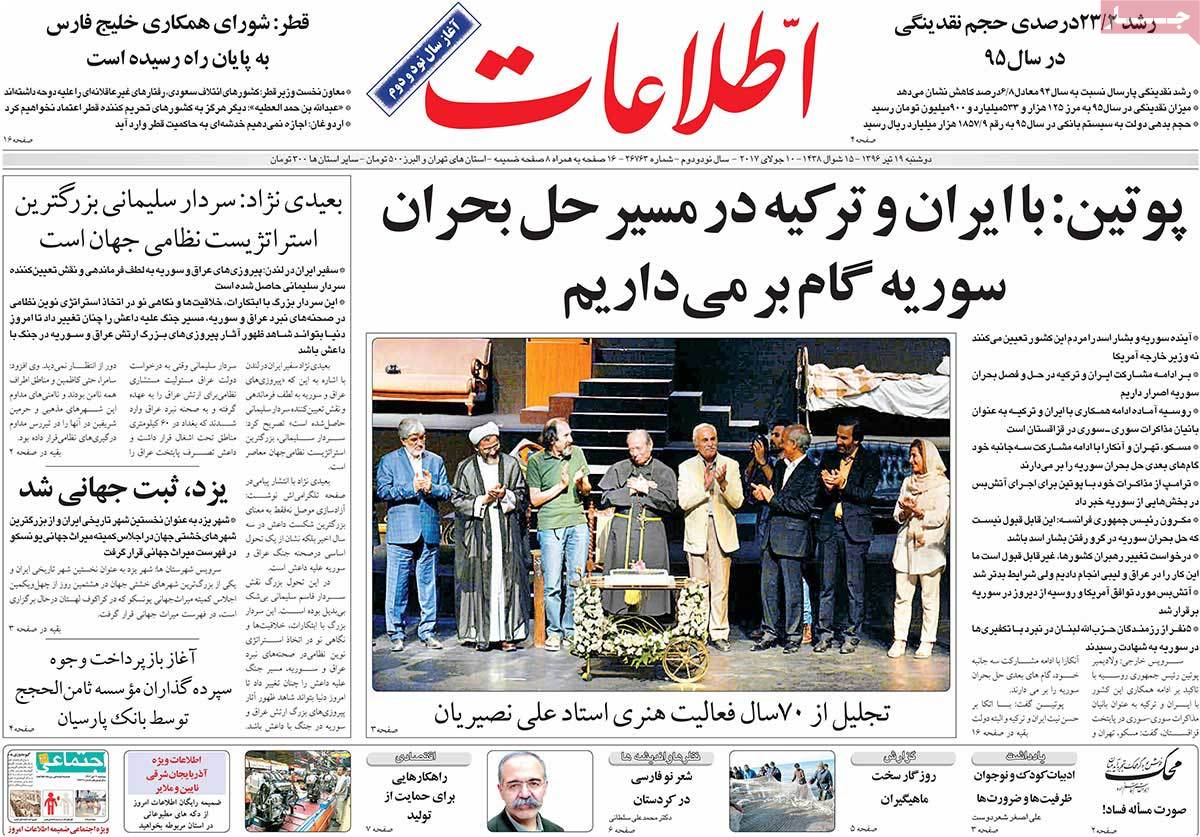
Ettela’at:

1- Putin: Russia, Iran, Turkey Moving forward in Path to Syria Peace

2- Qatar: Persian Gulf Cooperation Council Has Reached Its End

3- Iran Envoy to London: General Soleimani World’s Greatest Military Strategist
A Look at Iranian Newspaper Front Pages on July 10 - etelaat


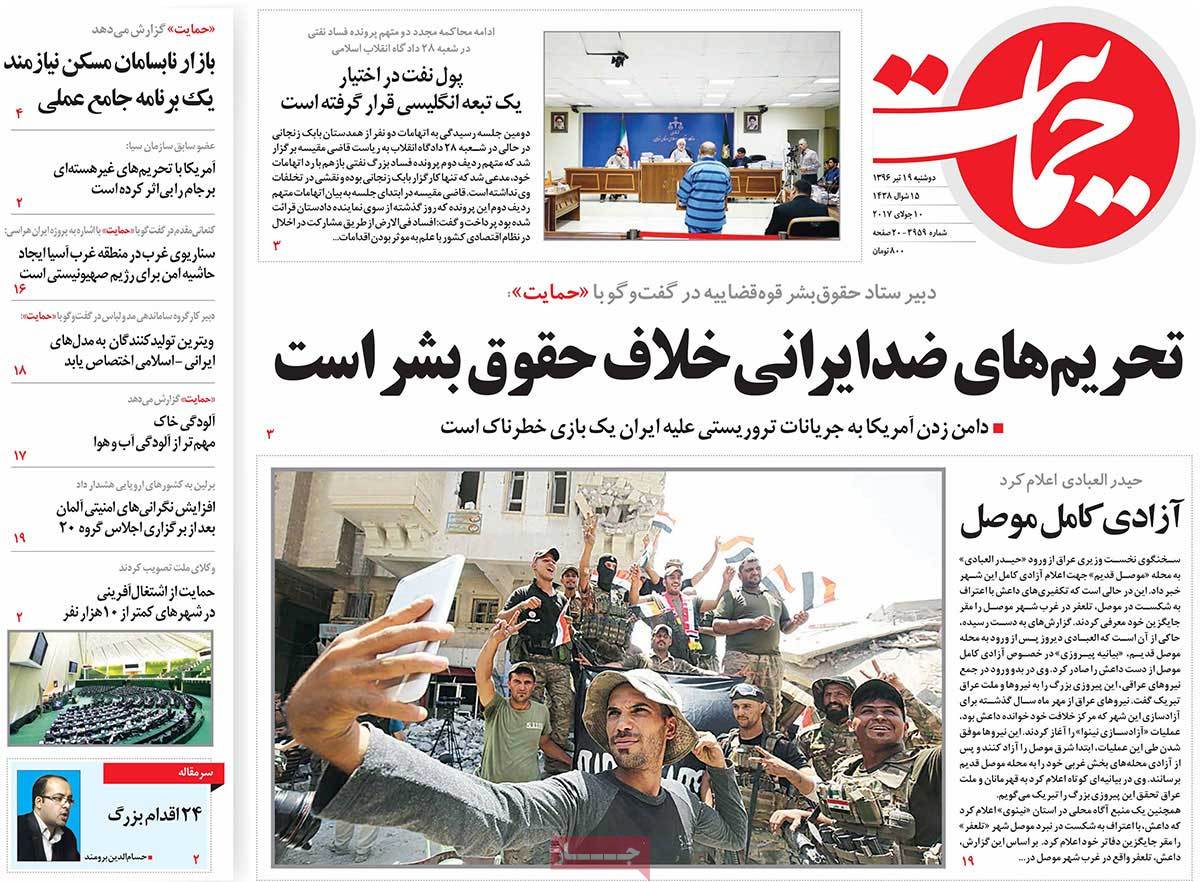
Hemayat:

1- Anti-Iran Sanctions against Human Rights: Official
A Look at Iranian Newspaper Front Pages on July 10 - hemayat


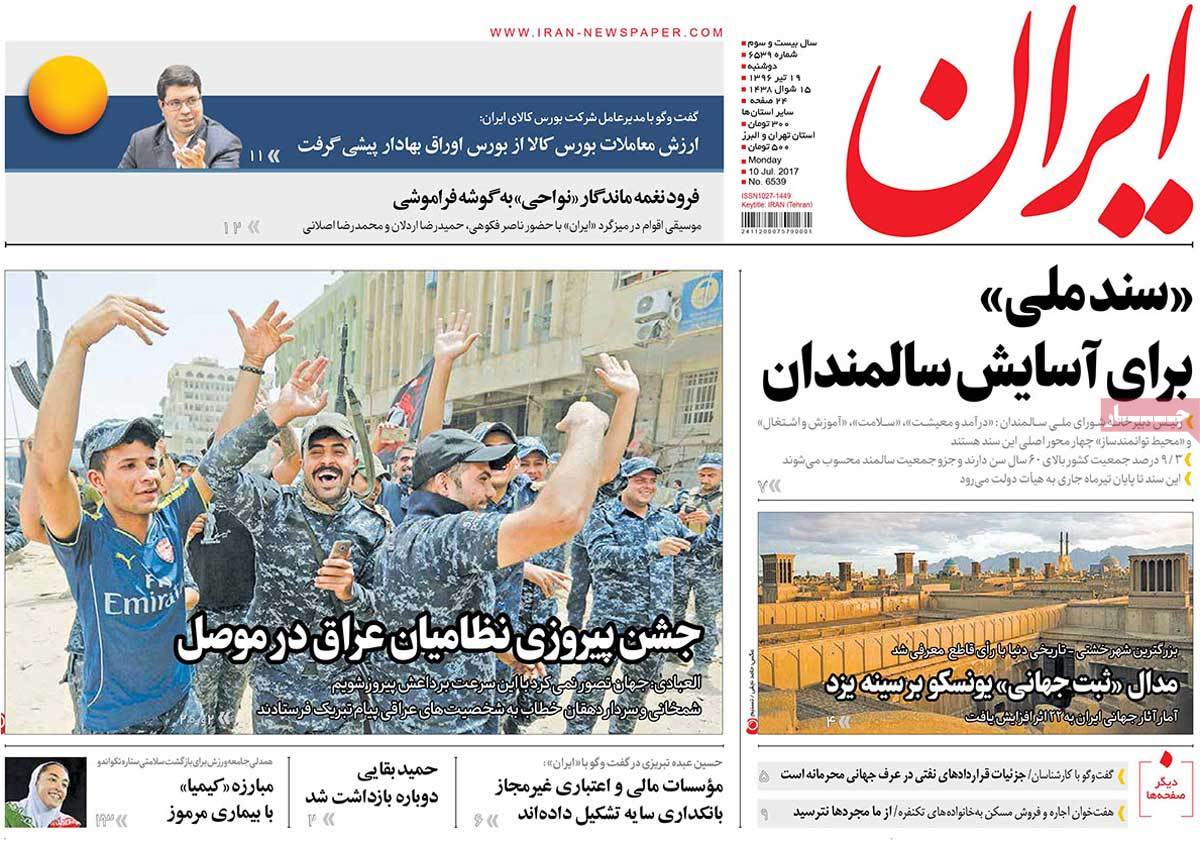
Iran:

1- Medal of ‘World Heritage Site’ on Yazd’s Chest

2- Iraqi Troopers Celebrate Mosul Liberation
A Look at Iranian Newspaper Front Pages on July 10 - iran


Javan:

1- Mosul Liberated through Resistance

2- Syria Ceasefire Not to Guarantee Israel Security
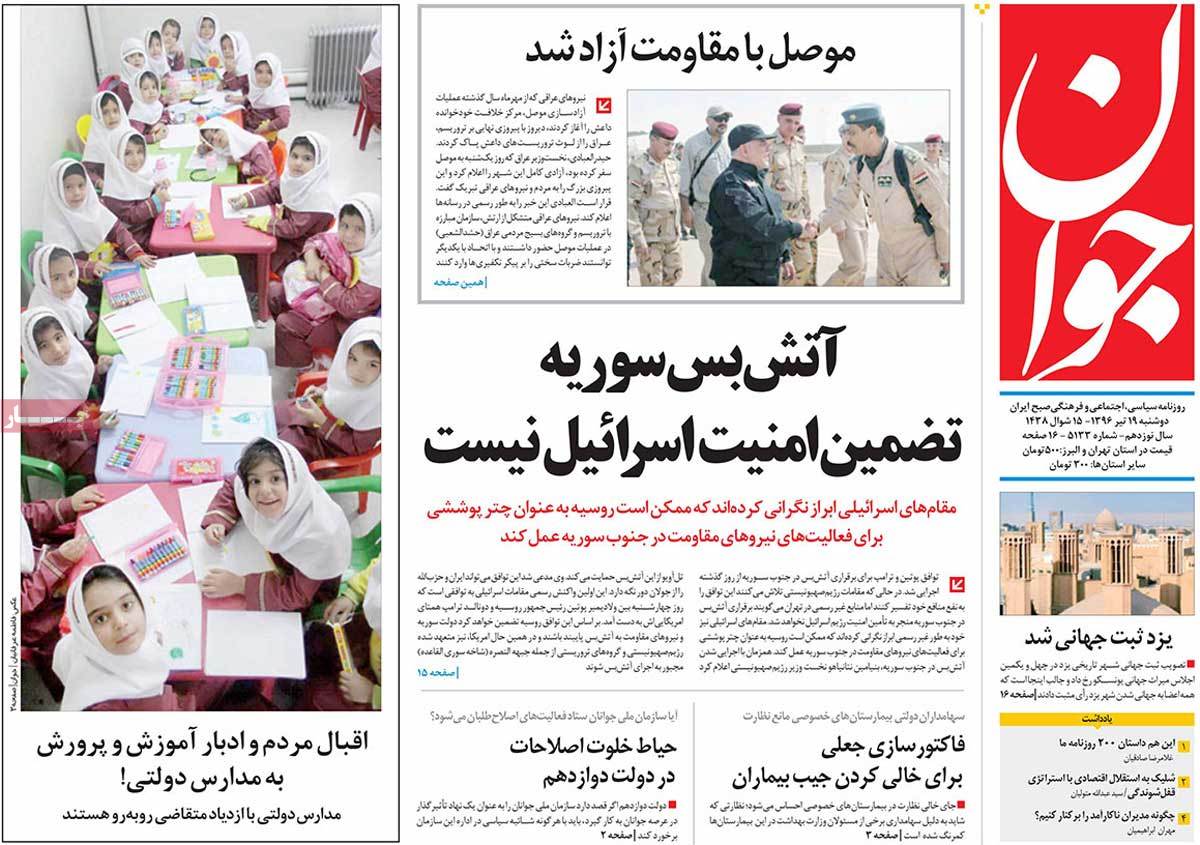
A Look at Iranian Newspaper Front Pages on July 10 - javan


Jomhouri Eslami:

1- Iran’s Power Network on Alarming Conditions

2- MP: Iran’s Deal with Total Goes through Legal Procedures
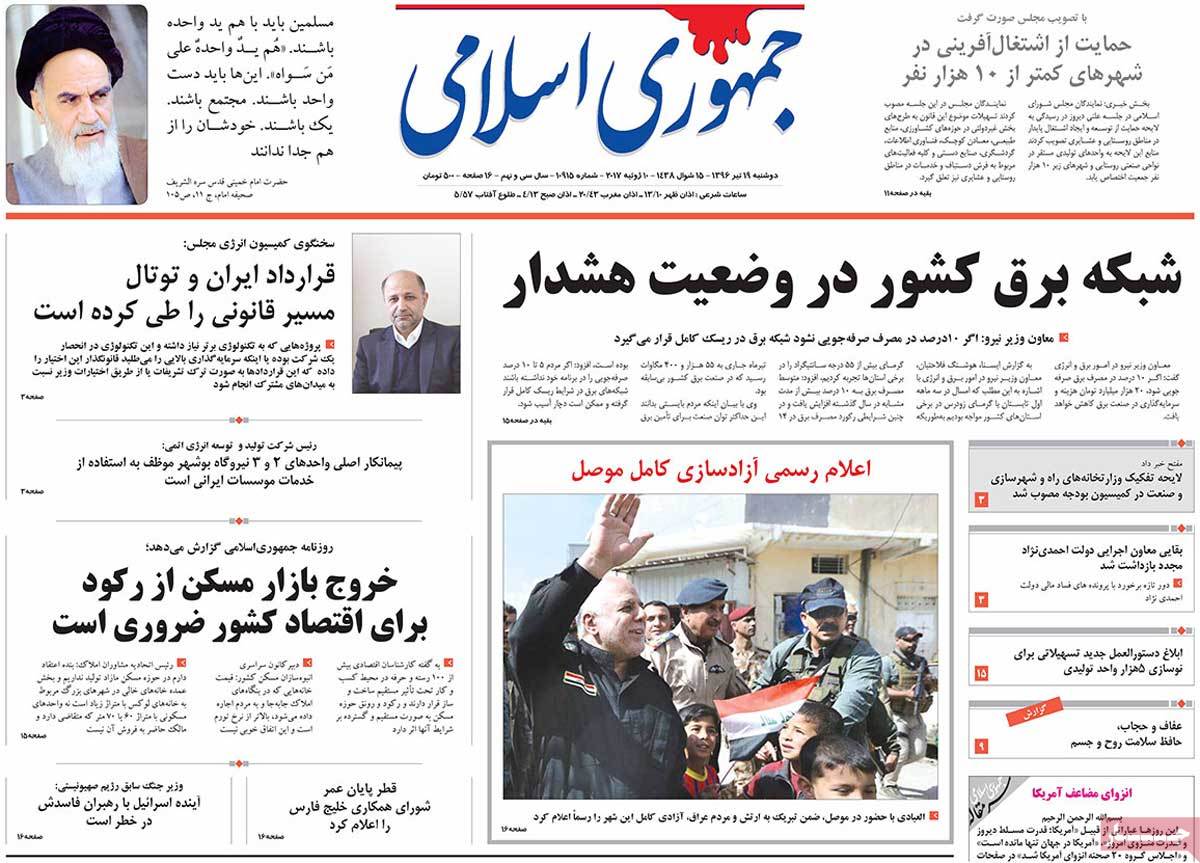
A Look at Iranian Newspaper Front Pages on July 10 - jomhori


Kayhan:

1- Parliament, Judiciary Should Deal with Total Case

2- Iraqi PM Officially Declares Mosul Liberation

3- Mosul Battle another Version of WWII

  • American Generals Talk about Great Job Resistance Axis Did in Mosul
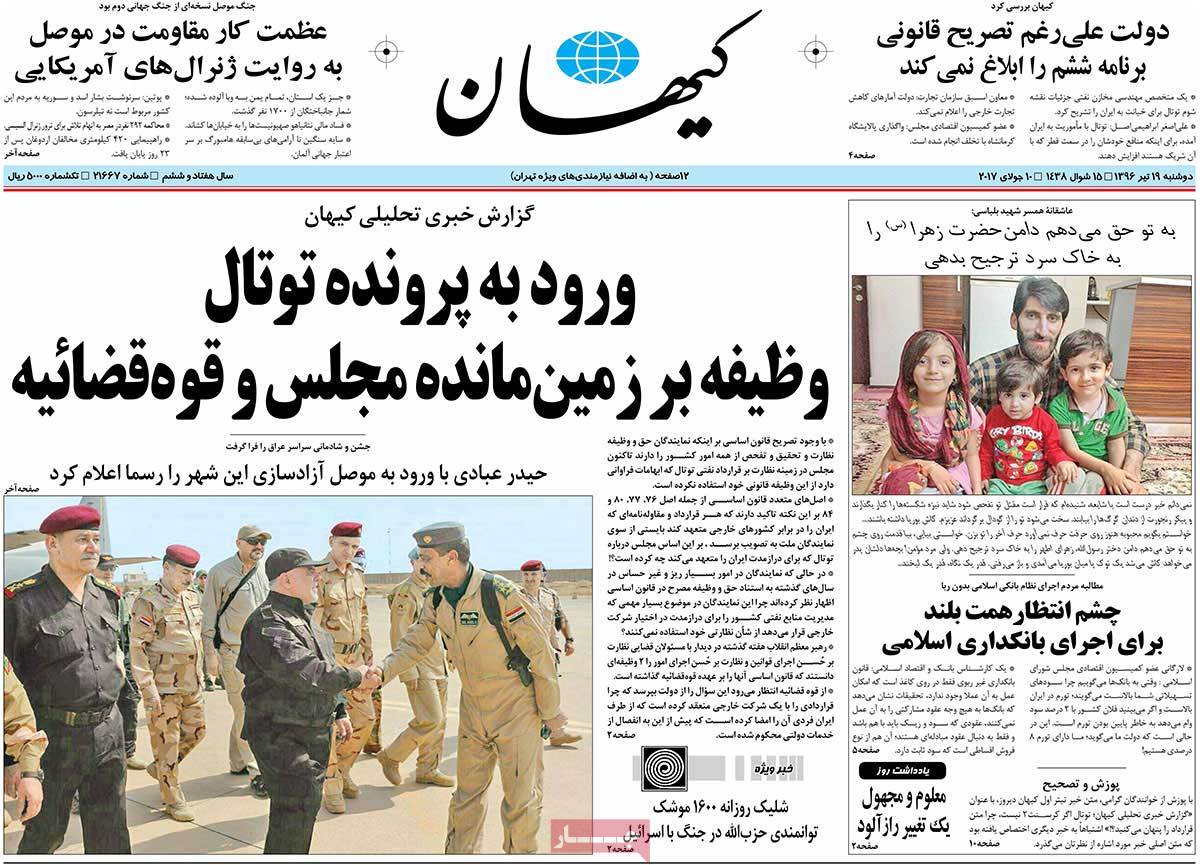
A Look at Iranian Newspaper Front Pages on July 10 - kayhan


Khorasan:

1- 78 Judges Suspended, 178 Lawyers Punished Last Year
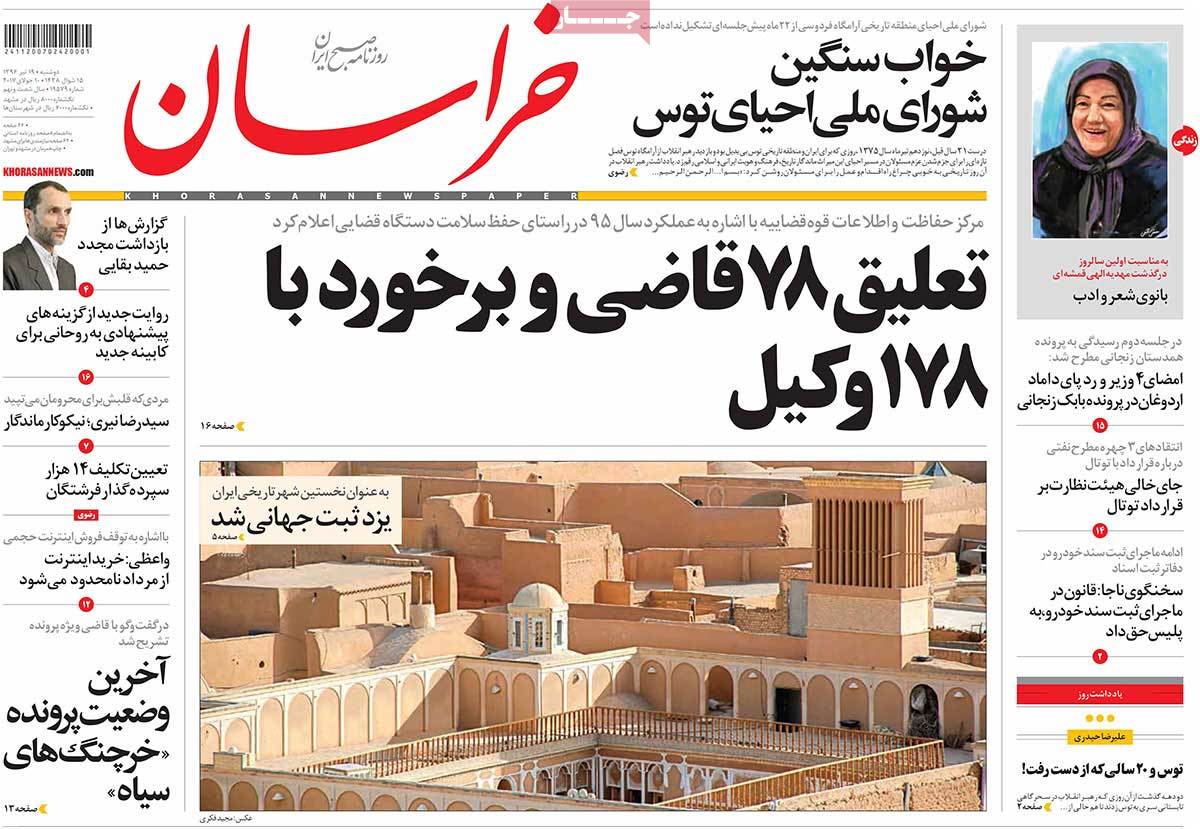
A Look at Iranian Newspaper Front Pages on July 10 - khorasan


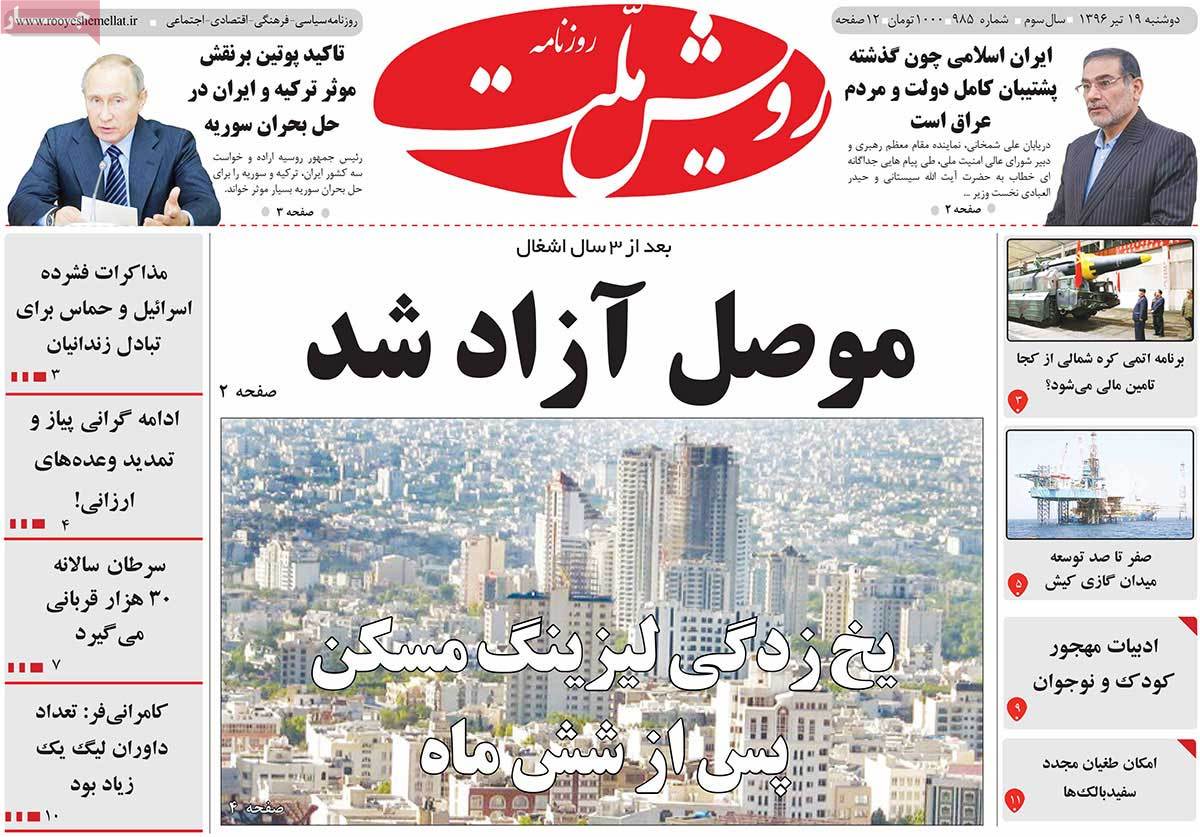
Rooyesh-e Mellat:

1- Shamkhani: Iran to Fully Support Iraqi Nation, Gov’t as It Did Before

2- Israel-Hamas Negotiations for Prisoner Swap
A Look at Iranian Newspaper Front Pages on July 10 - royesh mellat


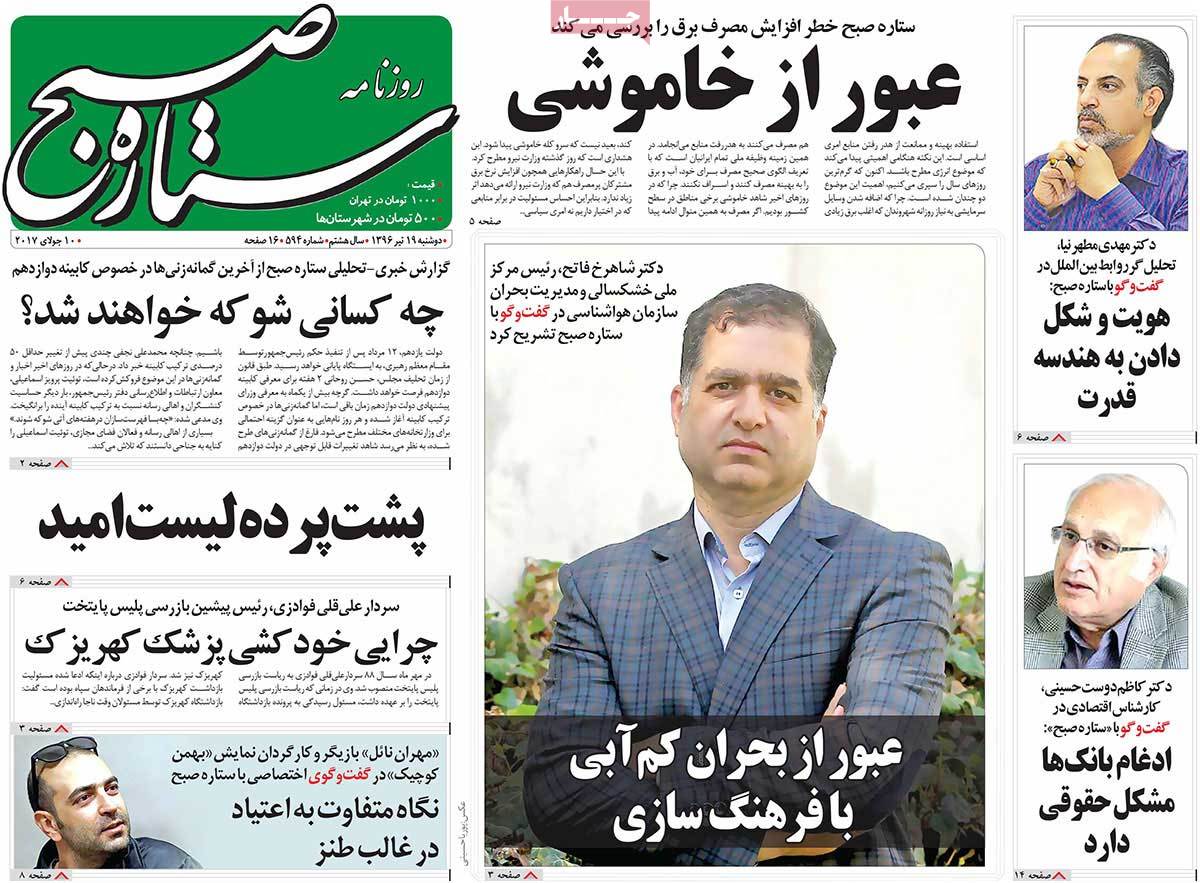
Setareh Sobh:

1- Who Will Be Shocked? Speculations about Rouhani’s Next Cabinet
A Look at Iranian Newspaper Front Pages on July 10 - setare sobh


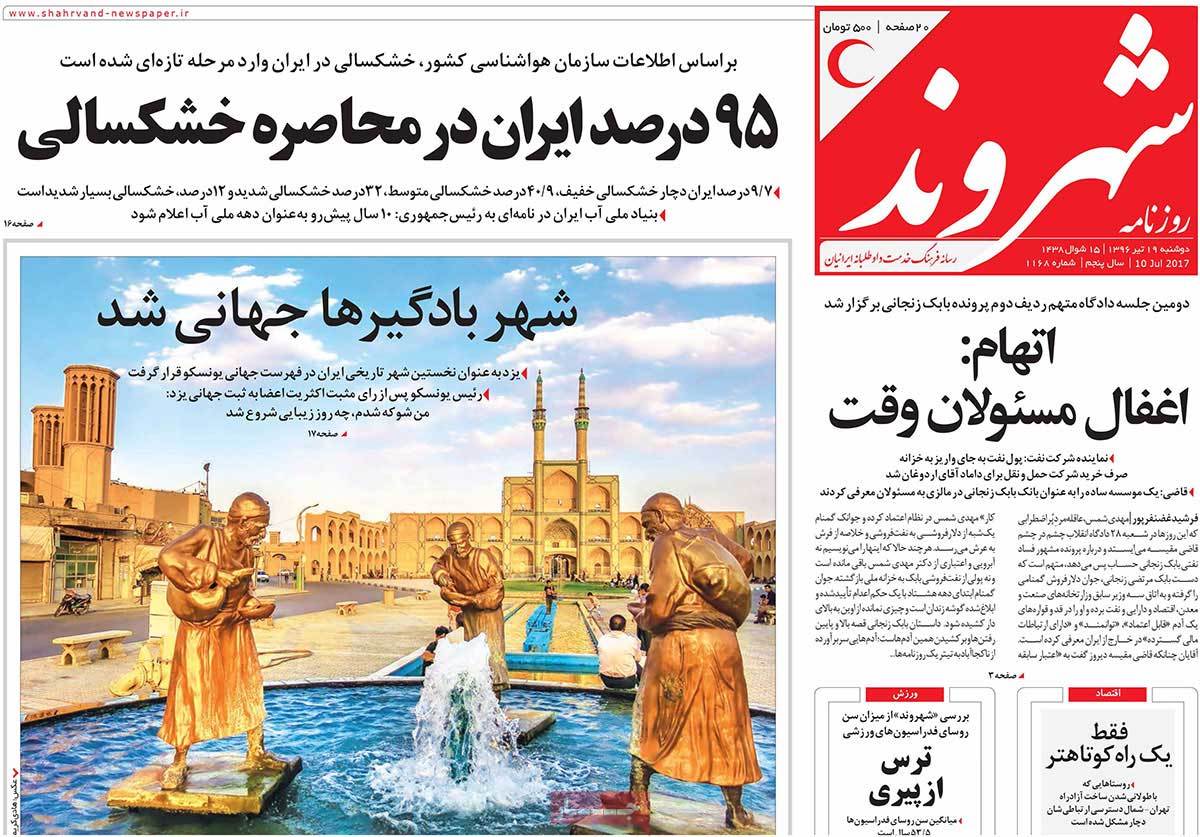
Shahrvand:

1- 95% of Iran Plagued by Drought: Water Crisis in New Stage

2- City of Wind-catchers Registered as World Heritage

3- UNESCO after Yazd’s Inscription: I’m Shocked! What a Beautiful Day!
A Look at Iranian Newspaper Front Pages on July 10 - shahrvand


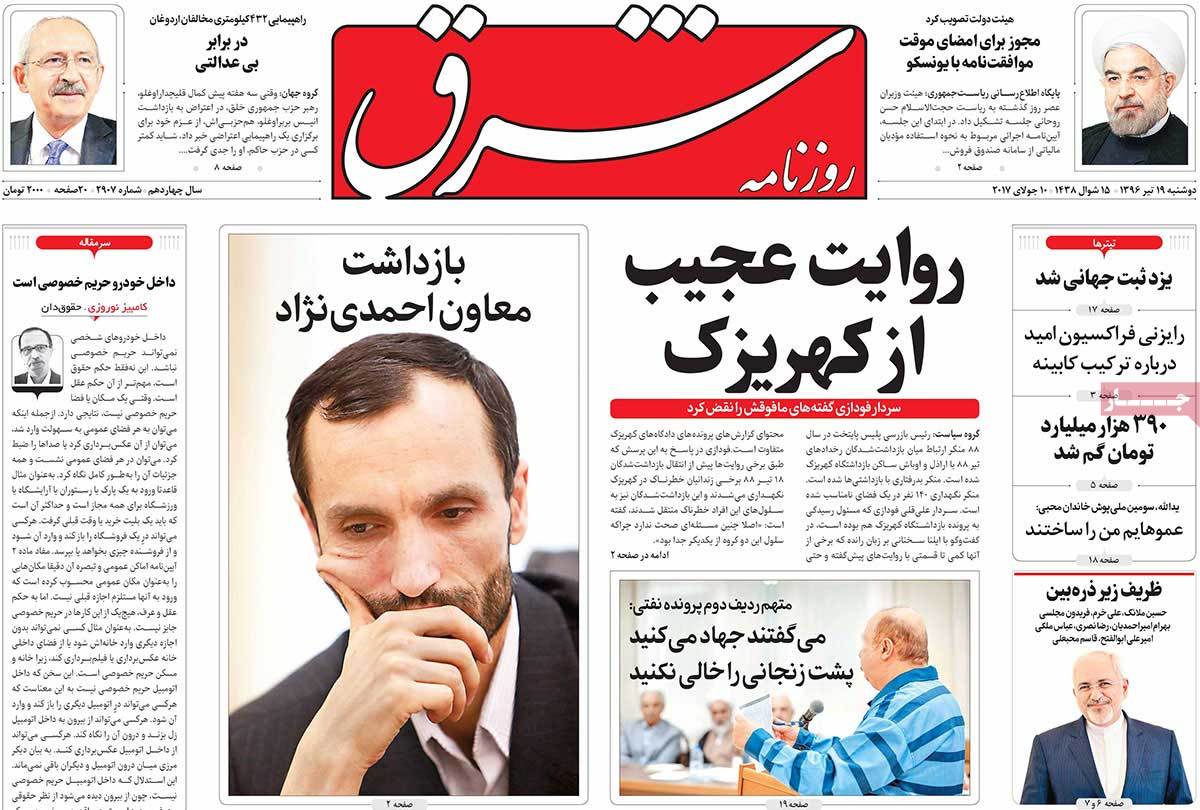
Shargh:

1- Ahmadinejad’s Vice-President Arrested

2- Jurist: Inside People’s Cars Part of Their Privacy [Editorial]

3- Anti-Erdogan Protesters Hold 432km Rally against ‘Injustice’
A Look at Iranian Newspaper Front Pages on July 10 - shargh


Siasat-e Rooz:

1- You Have as Much Rights in the World as You Have Power: Advisor to FM

2- In Iraq’s Arms
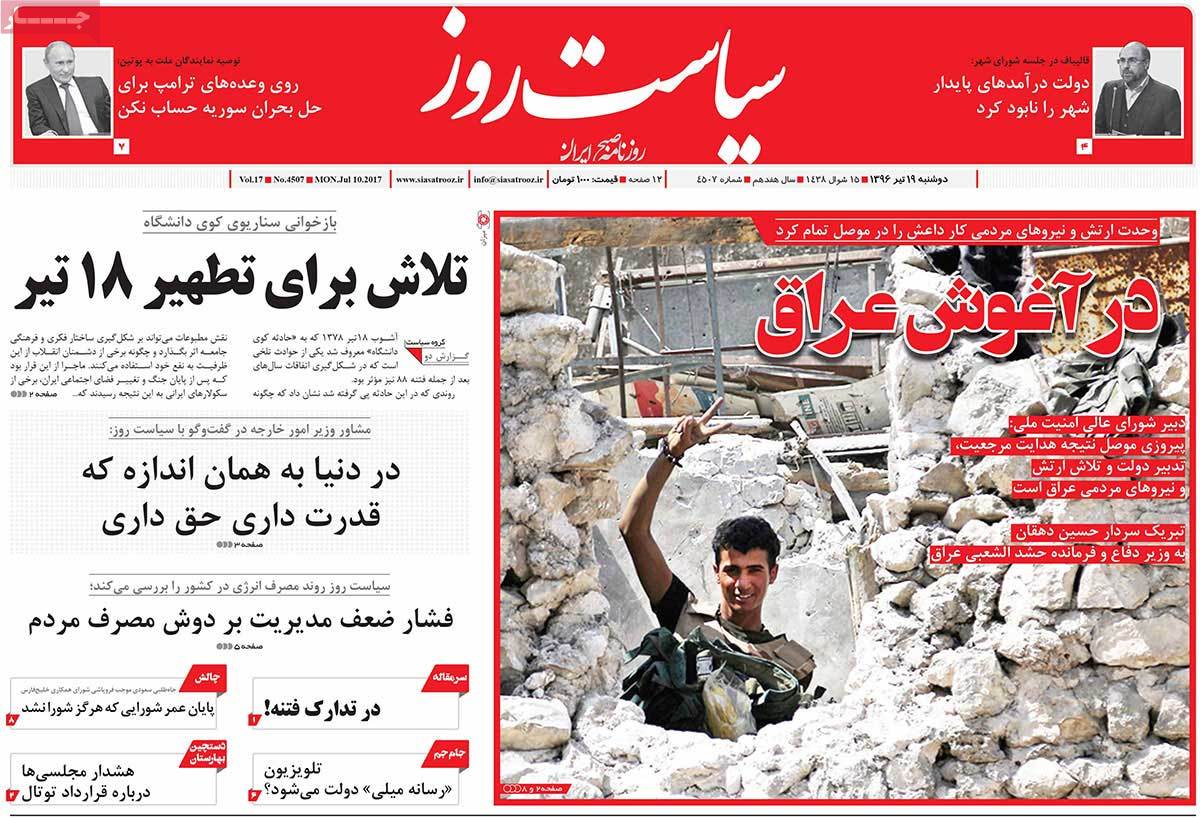
A Look at Iranian Newspaper Front Pages on July 10 - siasat rooz


Tejarat:

1- Consultations for Choosing Members of Next Cabinet
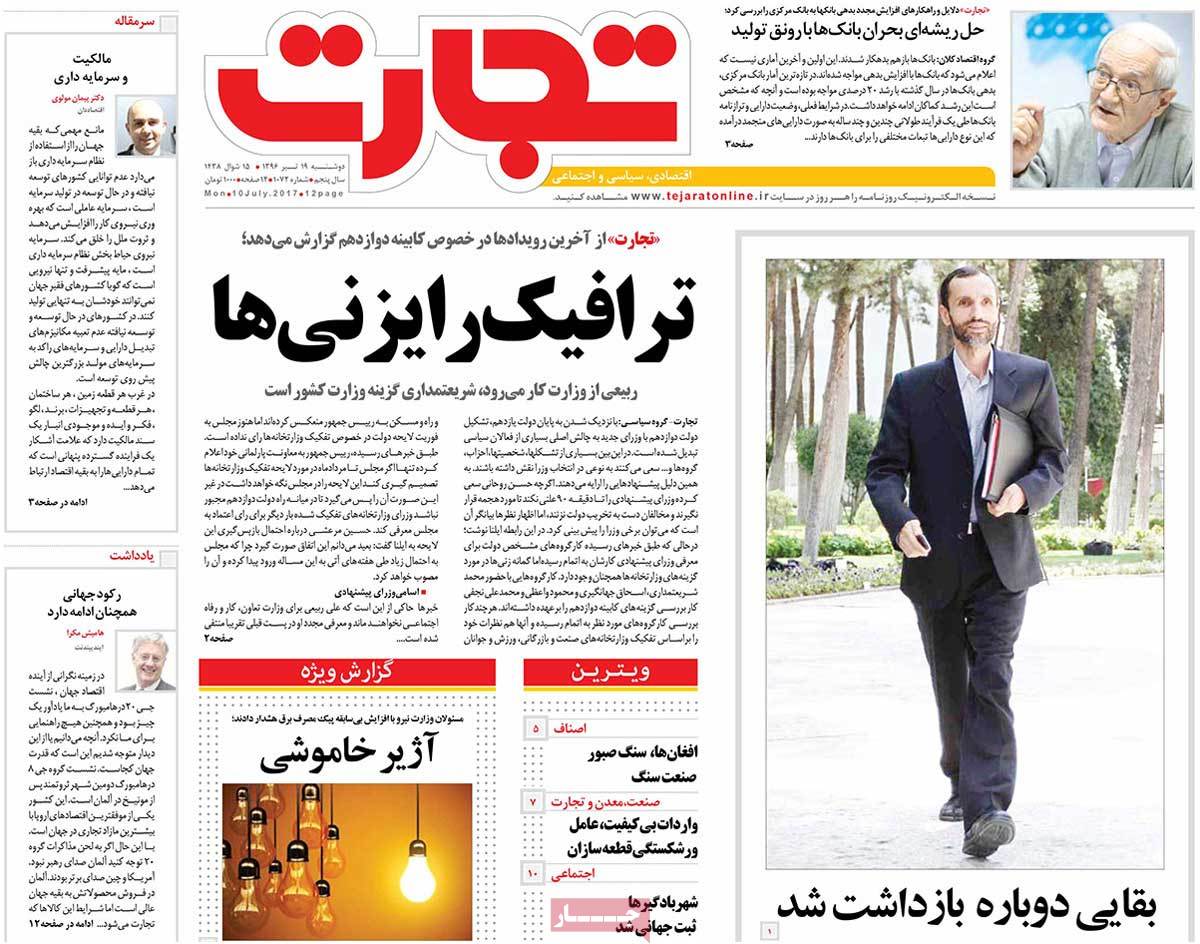
A Look at Iranian Newspaper Front Pages on July 10 - tejarat


Vaghaye Ettefaghieh:

1- ISIS Women Shouldering Burden of Suicide Attacks in Mosul

2- Saudi Guarantee: Riyadh Committed to Safeguard Iranian Pilgrims’ Security

3- Will Iran-Qatar Ties Become Strategic? Iranian Protection for Qatari Throne
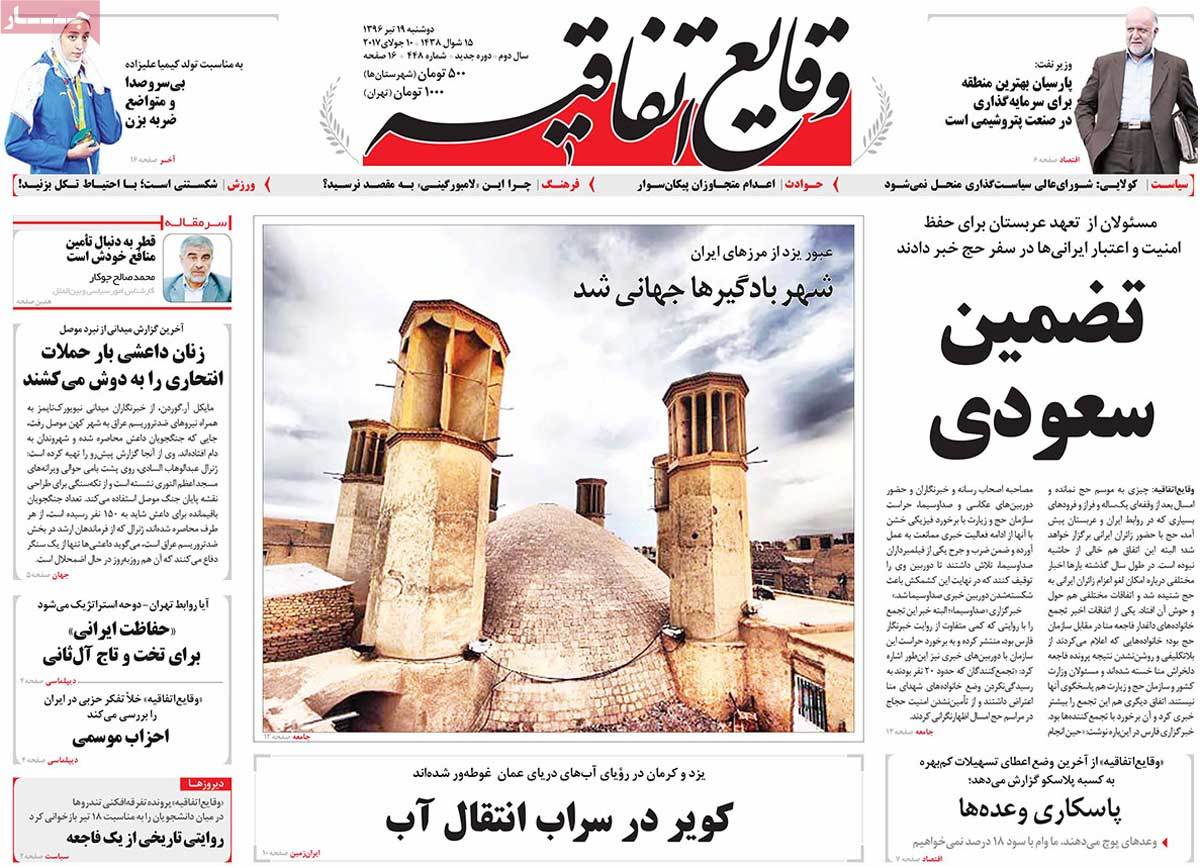
A Look at Iranian Newspaper Front Pages on July 10 - vaghaye

Iran Hosts Interpol Regional Meeting

Counter-terrorism experts from 29 countries have attended the meeting in Tehran to discuss the ways to strengthen regional and international cooperation in the fight against foreign terrorist fighters (FTFs).

Sponsored by Iran’s Police, the two-day meeting is attended by Interpol Secretary General Jurgen Stock, Iran’s Interior Minister Abdolreza Rahmani Fazli, Iran’s Police Chief Brigadier General Hossein Ashtari, and 75 guests representing the Interpol offices in the other countries.

Speaking at the opening of the meeting, head of the Interpol office of the Iranian police, Massoud Rezvani, said participants in the working group will focus on the ways to share and consolidate police capabilities, hinder the terrorist activities, and to detect and cut off the financial resources of terrorism.

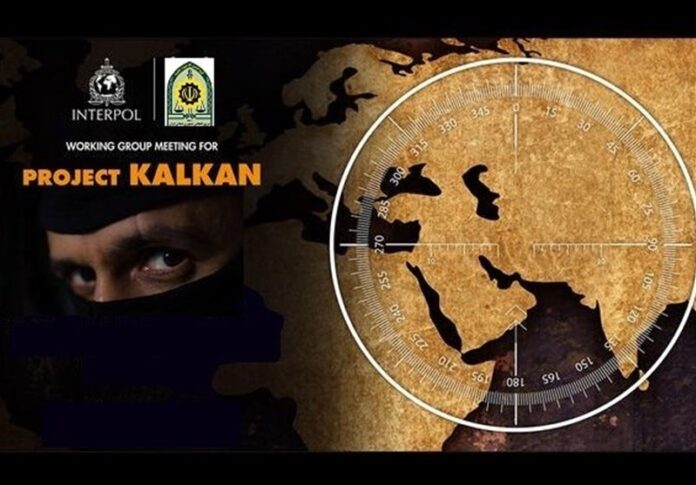
Known as an example of Interpol’s multifaceted approach to international police cooperation, Project Kalkan aims to assist Interpol member states to obtain an overview of both individual foreign terrorist fighters and associated networks, as well as mechanisms used to detect and counter their recruitment and travel.

Supported by Interpol’s FTF Analysis File, social media intelligence software and other tracking tools, Project Kalkan has produced a number of reports highlighting previously unidentified connections between investigations.

Since the start of 2017, Project Kalkan member countries have generated more than 1,500 alert messages, and have provided Interpol with nearly 50 percent of records of more than 14,500 foreign terrorist fighter entities, according to Interpol.

Confrontation with Iran Could Result in Global Crisis: Qatar

qatar and saudi arabia

Qatari Ambassador to Spain Mohammed bin Jaham Al-Kuwari has warned about the risk of militarization of the Middle East due to conflict that has emerged between some Arab states.

He also said a plan has been drawn up for direct confrontation with Iran, and added, “Confrontation with Iran could lead to a global crisis.”

He made the comments in an address to a host of politicians, businesspeople and journalists at a royal research centre for strategic and international studies in the Spanish capital, Madrid.

The Qatari diplomat cautioned that the current crisis could lead to the militarization of the Persian Gulf region.

“If this happens, it will result in adverse consequences for the region and the world,” he noted.

Meanwhile, Qatar’s Deputy Prime Minister Abdullah bin Hamad al-Attiyah said in a televised program that Doha stands ready to sever ties with Iran only if all member states of the Persian Gulf Cooperation Council cut off their relations with the Islamic Republic.

He then took a swipe at the Persian Gulf Cooperation Council members for accusing Qatar of supporting terrorism simply because of its strong relationship with Tehran.

Cutting ties with Iran was one of the main preconditions set by Saudi Arabia and its allies for normalization of relations with Doha. Qatar, however, has refused to accept their demands.

Iranian Officials Congratulate Iraq on Mosul Liberation

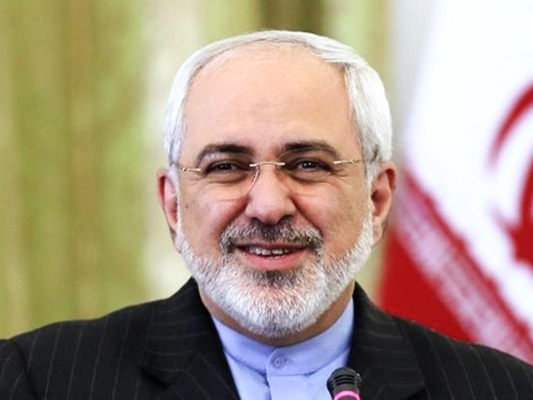
Mohammad Javad ZarifIn a message on his Twitter account on Sunday, Iranian Foreign Minister Mohammad Javad Zarif extended his “congratulations to brave people and Government of Iraq upon liberation of Mosul.”
“When Iraqis join hands, [there is] no limits to what they can achieve,” he added.


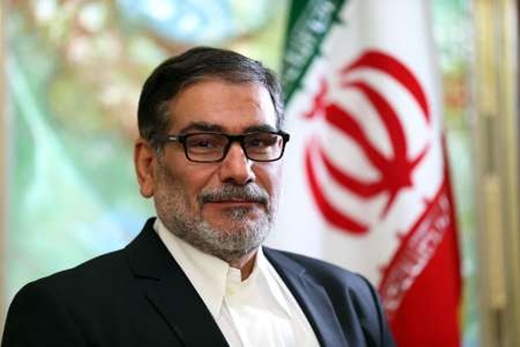
Secretary of Iran’s Supreme National Security Council (SNSC) Ali Shamkhani also extended his messages of felicitation to Iraqi Prime Minister Haider al-Abadi and top Shiite cleric, Grand Ayatollah Ali al-Sistani, over the Iraqis’ success to completely take over Mosul from ISIS terrorists.

Ali ShamkhaniShamkhani said the great victory in Mosul was achieved thanks to the leadership of top Shiite clerics, prudence of the Iraqi government and bravery of the country’s army and popular forces.

It has been once again proved that the use of Iraq’s domestic capacities was a “successful and reliable” experience in the fight against terrorism, he added.

The SNSC secretary emphasised that despite the demand of certain powers and regional countries who were interested in the “long-term existence of contained terrorism in Iraq,” the liberation of Mosul and restoration of security to the city brought happiness to the country’s people.

He added, however, that the roots of terror-nurturing ideology still remain in the region and the sentiments of the youth are abused by the intelligence services of extra-regional countries and the rulers of some regional states, Press TV reported.

Under such circumstances, it is necessary to pay attention to the “cultural and intellectual confrontation with terrorism more than security and military confrontation” with it, the senior Iranian official pointed out.

Chief of Staff of the Iranian Armed Forces Major General Mohammad Hossein Baqeri also sent separate congratulatory messages to Iraq’s Prime Minister Abadi, Defence Minister Erfan Mahmoud al-Hayali, Commander of Iraq’s Badr Brigade Hadi al-Ameri, and Abu Mahdi al-Mohandes, the deputy head of the Arab country’s Popular Mobilization Units, also known as Hashd al-Shaabi.

Mohammad Hossein BaqeriIn his message to Abadi, Iran’s Major General Baqeri described the liberation of Mosul as the manifestation of national unity and resistance, expressing confidence that close cooperation between the armed forces of Iran and Iraq would foil the plots by the “hegemonic and trans-regional powers and enemies of the Islamic community.”
In the message to Hadi al-Ameri, the senior Iranian general hailed Mosul liberation as a result of “historic acts of devotion” by the Hashd al-Shaabi forces, stressing the need for plans to maintain and strengthen the Popular Mobilization Units for the sake of Iraq’s future, Tasnim reported.

In another message to the Iraqi defines minister, the Iranian commander said the operation in Mosul marked a great victory against the Takfiri terrorists, the Zionist regime of Israel, and the regional reactionary regimes.

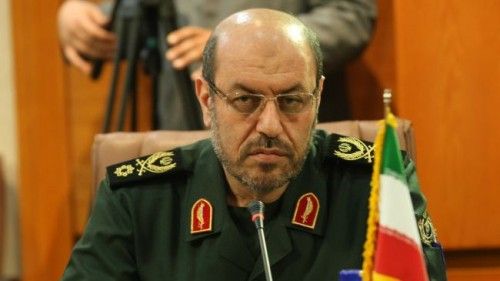
Separately, Iran’s Defence Minister Brigadier General Hossein congratulated his Iraqi counterpart and Badr Brigade’s Ameri on the liberation of Mosul.

Iran DM - Hossein Dehqan

“This great victory which foiled the plots by the US and the usurping Zionist regime (of Israel) in Iraq will lead to the complete defeat of the strategy of proxy war waged by the hegemony in the region, God willing,” Dehqan said in the message to his Iraqi counterpart.

In his message to Ameri, the Iranian defines minister expressed the hope that the brave Hashd al-Shaabi forces would preserve their preparedness and solidarity “in the post-ISIS era” to contribute to Iraq’s security and progress.

The Iraqi PM on Sunday announced final “victory” over the ISIS Takfiri terrorist group in Mosul after eight months of combat against the extremists, which has left parts of the country’s second largest city in ruins.

The recapture of Mosul, located some 400 kilometres (250 miles) north of the capital, Baghdad, would mark the effective end of ISIS in the Arab country.

Iran, Turkey Can Boost Trade Value to $50bn

Iranian Minister of Communications and Information Technology Mahmoud Vaezi said Iran and Turkey are currently trying to boost the value of their trade exchanges to $30bn per year.

“We believe the figure can increase even more reaching $50bn,” the minister said during his meeting with Turkey’s Minister of Economy Nihat Zeybekci in Tehran.

The Iranian official also called the meeting a constructive opportunity to expand economic and industrial ties between Tehran and Ankara and added the annual joint commission has been convened regularly.

“In our meeting, we decided to hold the 26th session of Iran-Turkey joint commission in November. The two sides are working hard to remove the obstacles to holding the meeting,” he noted, according to a Farsi report by ISNA.

Vaezi praised the preferential trade agreement between Iran and Turkey as a huge step in expansion of economic ties between the two sides.

“We need to bring about some reforms in the agreement to make it more inclusive. Meanwhile, we need to turn the agreement into a free trade agreement in the future.”

He referred to the facilitated banking relations between Iran and Turkey, saying Turkey’s Central Bank governor is expected to visit Tehran in the near future to remove the current barriers in the way of expanding bilateral ties.

Vaezi also said Iran and Turkey have agreed to hold a meeting before the joint commission’s annual meeting with the aim of discussing in detail the remaining differences on various issues.

“Expansion of ties between Iran and Turkey contributes to the regional peace and instability,” he said, stressing that Iran attaches great importance to its ties with Turkey and views the relations as an effective factor in the regional developments.

He underlined that the two sides have put discussions on energy and transportation high on their agenda.

“We as the heads of the joint commission have to take heavy responsibilities,” he noted.

He cited as important the current bilateral relations between Tehran and Ankara saying the two sides have been trying to expand their ties beyond economic fields.

Iranian Inventor Receives Award for Solution to Urban Dust

The Merit Award and Gold Medal Award of Merit of America’s Invention and New Product Exposition (INPEX 2017) have been presented to Khalil Nazari, an Iranian inventor from the northwestern city of Tabriz, for his invention, HL herbal glue, which can replace oil mulch in solving the problem of urban haze.

According to a Farsi report by the Kayhan newspaper, INPEX is America’s largest invention trade show held annually in Pittsburgh, Pennsylvania, in June which provides a forum for inventors to exhibit their inventions and pitch their ideas with companies interested in licensing, marketing or manufacturing their new products. The trade show also hosts contests for domestic and international inventors in 45 different categories.

Commenting on his invention, Nazari said it is a plant-based material which is a suitable and environment-friendly replacement for oil mulch in settling the problem of urban haze and dust particles.

He added his invention has no domestic or foreign counterpart.

“Oil mulch is made of waste oil in fractionating column. A layer of the material is applied to the surface of soil or sand dunes to temporarily help stabilize them. Although oil mulch is a valuable and expensive material, it blackens the dunes and gives off an unpleasant odour that, as wind blows, fills the whole surrounding region. It also raises the temperature of the region and destroys its ecosystem. However, the HL herbal glue is made of herbs and has produced favourable result after being applied to the surface of all kinds of soil and sand.”

The Tabriz-based inventor stressed that his HL herbal glue is absolutely environmentally-friendly and way cheaper than oil mulch.

He noted that the material is also resistant against wind, different climatic conditions and ultraviolet radiation.

“After being applied to the surface of the soil, its temperature plummets [quickly] and, thus, it fails to harm insects and other living creatures. It is not flammable and does not pollute groundwater. It is colourless and odourless.”

Nazari said after holding talks with the crisis management organization of Khuzestan Province, the material has been decided to be tested in one of the lands in the southwestern Iranian province from which haze and dust particles originate.

He added following the mass production and use of the HL herbal glue the problem caused by urban haze and dust particles will be resolved.

UN Hails Iran’s Pioneering Role in Resolving Environmental Woes

Director of the United Nations Environment Programme, Erik Solheim, says the Islamic Republic has good faith in its efforts to tackle the current environment woes in the region.

“I believe that the problem of the sand and dust storms in the Middle East should be resolved by the regional states themselves,” he said on the sidelines of ‘International Conference on Combating Sand and Dust Storms: Challenges and Practical Solutions’ recently held in Tehran.

In response to a question on Saudi Arabia’s absence from Tehran conference, the UN official noted the world body is expected to issue a resolution drawing on discussions raised during Tehran conference.

“All countries including Saudi Arabia are obliged to observe the resolutions,” he added.

Solheim went on saying that the solutions found at Tehran conference are helpful for all states including Saudi Arabia.

“So, the UN would follow it up to make sure all states implement the UN resolutions on environmental crises in the Middle East.”

The UN official also added most of the environmental woes can be resolved if each regional state fulfils its own environmental commitments.

“I don’t play down the role of regional and international cooperation, but to me, sticking to the local environmental standards is more important when it comes to resolving the current problems,” he noted.

Solheim went on saying that the UN can settle the differences between the regional states on the environmental issues, adding the differences could be resolved through dialogue.

He recommended that regional states draw on the UN’s technological and scientific capabilities in combating environmental crises and added the environmental woes of the region cannot be resolved by holding just one single international conference.

He referred to the instability in Iraq and Syria and said the two countries have turned into main sources of the dust and sand storms hitting the whole region over the past few years.

“Now with the retreat of ISIS from the two countries, we hope new efforts can resolve the problem.”

Representatives of 43 countries attended the International Conference on Combating Sand and Dust Storms, which was co-hosted by the United Nations (UN) and the Iranian Department of Environment. The international conference was aimed at reviewing the challenges and practical solutions to the dust pollution that has plagued Iran and several other countries in the Middle East.

Saudi Arabia and its regional allies including Bahrain, Yemen, United Arab Emirates and Egypt refused to take part in the conference. Observers say this is part of the countries’ reluctance to shoulder their responsibility to resolve regional and international problems.

The absence grabs more attentions when it is known that the mentioned countries are the main source of dust and sand storms across the region.

Former Iraqi President in Iran for Talks

Leading a delegation, Talibani is visiting Iran at the invitation of Iranian officials.

The Kurdistan Regional Government’s (KRG) representative in Tehran, Nazim Dabagh, said Talabani received Iran’s official invitation about one month ago.

“We were waiting for an appropriate opportunity to make the arrangements for his visit. This is not a political visit but an ordinary one,” he said.

A member of PUK Political Office, Rozgar Ali, said Iran is very important for Kurdistan Regional Government (KRG) because of its historic standing in the region.

“The visit of Talabani to Iran should be viewed from this point of view,” he said.

He went on saying that the Islamic Republic of Iran has established long-time and deep relations with the KRG over the past decades.

This is Talabani’s first visit to Iran after his brain stroke in 2013, he said, adding the visit is made at the invitation of Iranian officials.

The member of PUK Political Office also went on saying that the relations between Iran and the KRG date back to the fighting between the Kurds and the former regime of Ba’ath in Iraq.

“The relations have become deeper after the Islamic Revolution and Mr. Talabani played a key role in the expansion of ties between the two sides,” he concluded.

Latest Round of Astana Talks, Major Step towards Syria Peace

Participants of this round of talks on Syria could not reach consensus on details of specific zones and participating forces. Tthere was no agreement but the process helped all sides to come closer.

Analysts believe that reaching a conclusion for hammering out de-escalation zones is a time-consuming complicated process after six years long civil war in the region.

However, the Syrian government representatives and the opposition have reached agreement on establishment of ceasefire in the eastern Damascus suburb and northern parts of Homs province and there are only trivial differences on management of Idlib and Dara’a provinces after the ceasefire.

It is expected that differences on management of Idlib and Dara’a provinces is resolved in the upcoming expert level conference due to be held in Tehran on August 1-2.

The achievements came while none of the international meetings held on Syria crisis before the Astana talks made positive effect on resolution of the crisis.

Fifth Round of Astana Talks in Detail

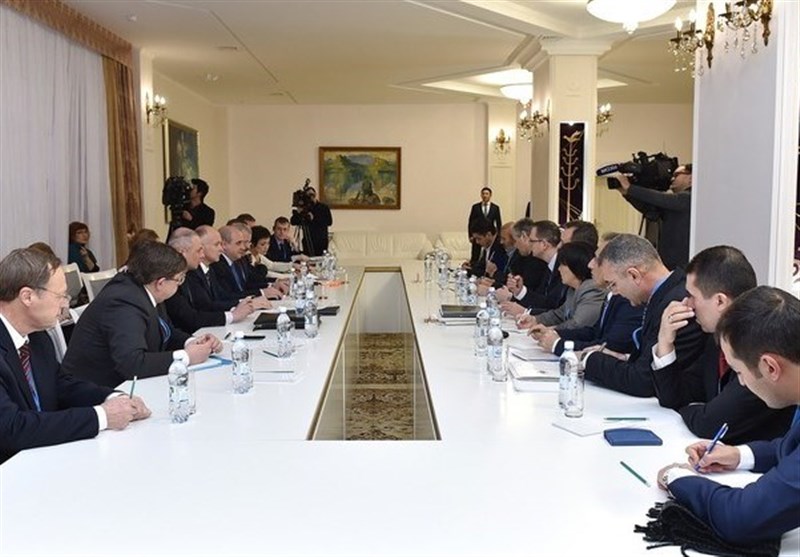
The plenary and final session of the fifth round of Syria peace talks, brokered by Iran, Russia and Turkey, was held in the Kazakh capital on last Wednesday.

Following several rounds of expert-level meetings over the past few days, the final session was attended by diplomatic delegations from Iran, Russia and Turkey, as well as observers in the peace talks. The previous round of Astana talks in May had produced a memorandum of understanding on de-escalation zones in Syria, sharply reducing fighting in the country.

Latest Round of Astana Talks, Major Step towards Syria Peace

The agreement—initiated by Iran, Russia and Turkey—also envisages the creation of conditions for the delivery of medical assistance, restoration of damaged infrastructure and return of displaced civilians to their homes.

According to a joint statement after the Wednesday meeting, the three states formed a working group to finalize an agreement on creating de-escalation zones in Syria.

Sputnik quoted a source at the talks as saying that the parties reached an agreement on only two out of the four de-escalation zones, but will adopt the whole package of documents related to the issue in the next round of negotiations.

“An agreement has been reached on two zones already, on Eastern Ghouta and north of Homs. There is still no agreement on Idlib,” the source said.

According to the source, Turkey had a position different from that of Syria and Iran on the issue of detainees’ release. In the meantime, Al Jazeera quoted Russia’s representative, Alexander Lavrentiev, as saying that documents outlining how the four zones should work “need finalizing” despite being “essentially agreed” between the three key mediators.

Lavrentiev noted that there had been no definitive agreement over the contentious issue of “which specific forces” would police the zones.

New Developments after Fifth Astana Talks

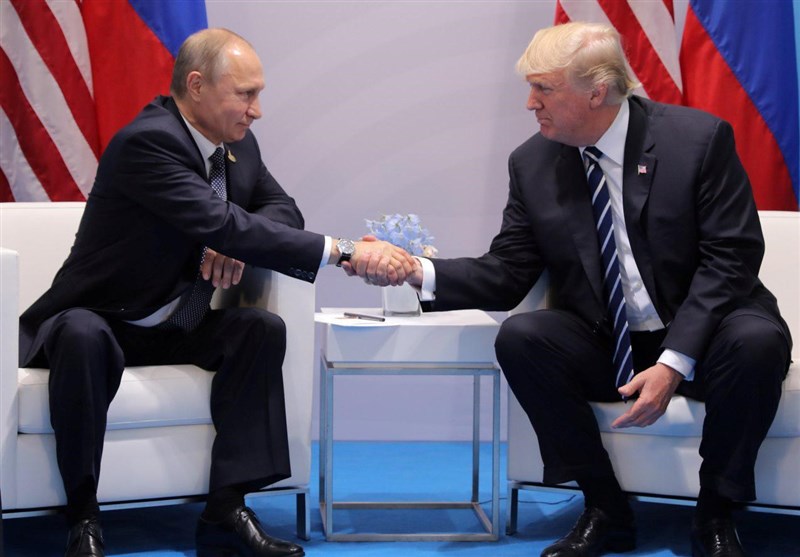
According to US Secretary of State Rex Tillerson, US President Donald Trump and Russian President Vladimir Putin reached an agreement on curbing violence in southwest Syria during their sit-down at the G20 meeting Friday in Germany.

Tillerson, who sat in on the discussion between the two leaders, told reporters the ceasefire was a “defined agreement” and could be a precursor to further cooperation in Syria.

Latest Round of Astana Talks, Major Step towards Syria Peace

“This is our first indication of the US and Russia being able to work together in Syria,” Tillerson said.

The two leaders had a “lengthy discussion of other areas in Syria where we can work together,” he added.

After the meeting concluded, Russia’s Foreign Minister Sergey Lavrov, who was also present at the meeting, said that the US, Russia and Jordan have issued a joint memorandum on establishing a de-escalation zone in southwest Syria, in the regions of Dara’a, Quneitra and Suwayda.

A ceasefire came into effect in this de-escalation zone starting at noon Damascus time on July 9.

The US and Russia “promised to ensure that all groups there comply with the ceasefire” and “provide humanitarian access” Lavrov said. Russian military police — coordinating with the US and Jordan — will initially ensure security around the de-escalation zone.