Friday, December 26, 2025
Home Blog Page 3970

Georgia Interested in Promotion of Ties with Iran: President

Georgia Interested in Promotion of Ties with Iran: President

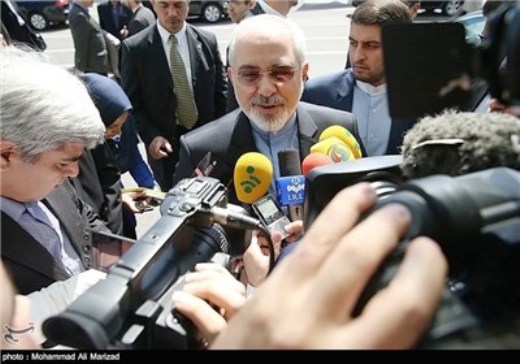
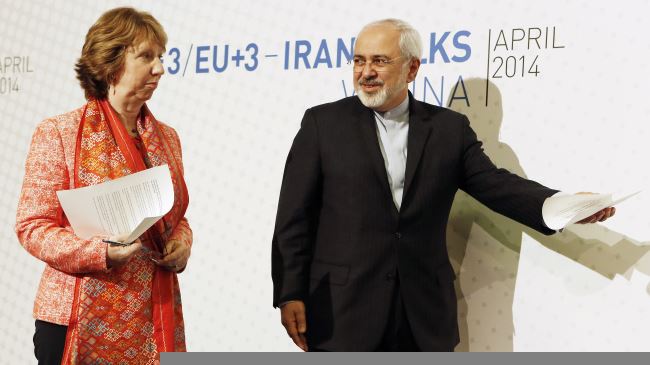
Since the establishment of relations between Iran and Georgia 25 years ago, there has been “very good progress” in the ties, Margvelashvili said in a meeting with Iranian Foreign Minister Mohammad Javad Zarif in Tbilisi on Tuesday.

“We are eager for development of the relations to a level higher than the current one,” he added.

Margvelashvili also praised Iran’s “rich culture” and its effects on Georgia and called for enhancement of cultural cooperation between the two countries.

Zarif, for his part, highlighted the close bonds between the people of Iran and Georgia and voiced Tehran’s readiness to expand and deepen its ties with Tbilisi in various fields.

During his stay in the Caucasian country, the Iranian foreign minister also held talks with Georgia’s prime minister, foreign minister and parliament speaker earlier on Tuesday.

Heading a mainly business delegation, Zarif is taking a tour of regional countries that took him earlier to Turkmenistan.

The senior Iranian diplomat will next travel to Kyrgyzstan

“Cultural Conflict in Iran Should Turn into Cultural Diversity”

Cultural Conflict in Iran Should Turn to Cultural Diversity

Mohammad Beheshti, the head of the Iranian Cultural Heritage Research Centre, has, in an interview with the Khabar Online news agency, weighed in on the problems which exist in preserving cultural heritage in the country.

The interview seems to be a kind of comparison between the performances of the tenth and eleventh administrations [that of former president Mahmoud Ahmadinejad and incumbent president Hassan Rouhani] in the cultural heritage domain at a time when the Iranian presidential election is around the corner.

In this rather short interview, Beheshti touches upon the mismanagement of the cultural heritage sector during the tenure of Esfandiar Rahim-Mashaei and Hamid Baqaei as former heads of the Iranian Cultural Heritage, Handicrafts and Tourism Organization under Ahmadinejad’s presidency.

The problems concerning the preservation of the country’s cultural heritage during the tenure of previous administrations are also highlighted in the interview.

The following is Beheshti’s answer to just one of the several questions asked during the interview:


Interviewer: I have a question regarding cultural heritage and tourism. A tourist goes to a location of his or her choosing, one with a certain cultural texture which suits the tourist’s taste. Then the tourist imposes on the locality the kind of items he or she wants to buy based on his or her taste. For example, there is a village which has its own product, one inspired by local culture. But when large numbers of tourists visit the area, they change everything. After some time, the village adapts the cultural texture of its product to one which appeals to tourists’ taste. As a result, the cultural heritage of that village becomes similar to that of any other place. UNESCO calls this phenomenon the cultural Americanization of the world. Now, given that more and more tourists are showing an interest to visit Iran, what should be done to stop this trend?

Beheshti: If we look at tourism from an economic perspective only and see it as a commodity, many of the problems already mentioned as well as other complicated issues that you cannot imagine will emerge. At the moment, we needn’t think about future. A clear example is the issue of domestic visitors and their trips to [northern] Gilan and Mazandaran [provinces].

It’s a commonplace type of trip to ancient regions with a rich culture. The huge number of travellers to the north of Iran has destructive effects, especially in Mazandaran province. The journeys have continued on a large scale over the past half a century. Some families make the trip several times during the summer. And heavy traffic [both on the roads to the northern provinces as well as in provincial towns and cities due to the large number of visitors] has become an indispensable part of the trip.

This is an example of tourism seen as a commodity, which has not only turned Mazandaran into a place for simply spending time and having fun at the seaside, but brought about grave consequences. Figures show some 40 million holiday-makers visit Mazandaran each year. In fact 40 million people go there to NOT see Mazandaran and its ancient culture! They travel there just to go to a famous restaurant or simply have fun. One of the repercussions of these visits is that they have turned farmland into townships. Owners of farmland were first happy to sell their property. They sold their paddy fields at very high prices, and with that money, they went on pilgrimages to holy cities and reached out to their children. But what next? These locals saw that their share of that fortune was just a meagre home. They saw that the money was soon gone, and instead, they had to work as janitors for rich merry visitors with pricey clothes and luxury cars [in the houses and villas the visitors had built on those paddy fields].

This is not tourism. There is something wrong with our assumption. We assume that tourism means changing hospitality to commodity. Since [former despotic Iranian ruler] Reza Shah’s reign, until today, we have been witnessing cultural mismanagement in the country. Iran enjoys cultural diversity. Its cultures are not less diverse than those of Europe. Unfortunately, mismanagement has turned this cultural diversity into a cultural conflict in the past century. That’s why no two adjacent towns or villages are found in the country that are not enemies. These feuds are not a historical issue. The grudges caused by mismanagement have emerged in the contemporary era.

The fallout from that mismanagement is that in the recent 100 years, most towns and cities except metropolises such as Tehran, Tabriz, Mashhad, Isfahan etc, have been side-lined and neglected. And whatever place is marginalized will be deprived of development and will be gripped by poverty, insecurity and unpleasant events. Now what should be done if we are to turn this cultural conflict into cultural reconciliation?

Cultural diversity is one of the successful international experiences in this regard. This way, people would visit one another’s homes and meet each other. So, even local travellers will get familiar with different local cultures if cultural conflict is turned into cultural diversity. Economic benefit could be a spin-off of the process, but economic gain should not be the main objective.

Iran, EU Sign First-Ever Nuclear Safety Cooperation Project

Iran, EU Sign First-Ever Nuclear Safety Cooperation Project


Iran-EU relations have been through different stages and most recently, over the last decade, conditioned by the international dispute over Iran’s nuclear programme, and the consequent sanctions regime that was in place against Iran. The lifting of sanctions against Tehran recently has opened the way for a renewal of broader relations.

The European Commission declared on April 18 that it has inked the first-ever project for nuclear safety cooperation with Iran under the framework of nuclear deal signed between Tehran and world powers.

The €2.5 million project aims to enhance the capabilities of the Iranian Nuclear Regulatory Authority (INRA), the Commission said, adding that it will do so by preparing feasibility study for the Nuclear Safety Centre foreseen in the JCPOA.

It will support the INRA in developing a nuclear regulatory framework, working toward the accession by Iran to several international nuclear conventions, including the Convention on Nuclear Safety, and reviewing the results of the stress test to take place in the Bushehr nuclear power plant.

The project is the first of a €5 million action approved by the European Union in 2016 under the Instrument for Nuclear Safety Cooperation. A second project for the stress test at the Bushehr nuclear power plant is going to be signed in the coming weeks.

Georgian PM to Visit Iran in Coming Days: FM Zarif

Giorgi Kvirikashvili - Zarif

Speaking in a meeting with his Georgian counterpart, Mikheil Janelidze, in Tbilisi on Tuesday, Zarif announced that Georgian PM Giorgi Kvirikashvili will visit Tehran later this week.

During his meeting with Janelidze, Zarif underlined the Islamic Republic’s resolve to boost bilateral relations in various areas.

“In today’s meeting, [we] explored different fields of cooperation, including transit, industry and education as well as cooperation in international organizations and regional issues,” he said.

Zarif also touched on a multi-national transit project, called the International North-South Transport Corridor (INSTC), which connects the Persian Gulf to both the Black Sea.

If it becomes operational, the corridor will bring regional countries closer to each other and reduce the costs of transferring goods, he added.

The INSTC is a 7,200-kilometer multi-mode network of ship and route for moving freight between India, Russia, Iran, Europe, and Central Asia, Press TV reported.

Janelidze, for his part, expressed his country’s readiness to develop closer relations with Iran, which he said are already at a good level.

He also emphasized the need for making preparations with the neighboring countries of Azerbaijan and Armenia to implement the transit corridor with the participation of China and India.

After Georgia, Zarif will travel to Kyrgyzstan as part of his three-day tour to Central Asia and the Caucasus which has already taken him to Turkmenistan.

ISIS Leader’s Whereabouts Identified: Iraqi Official

ISIS Leader’s Location Identified: Iraqi Official

A head of the Iraqi Interior Ministry’s Special Forces has announced that they have identified the location of the ISIS Leader Ibrahim al-Samarrai, also known as Abu Bakr al-Baghdadi, adding he is still alive and in Syria, going back and forth on the borderline between the country and Iraq.

According to a Farsi report by Al Alam News Network, he said the northern Syrian city of Raqqah has been the ISIS’ latest hideout following their annihilation in Iraq, adding, the terrorist group’s name will be wiped out from the region after the liberation of Raqqah.

The remarks by the Iraqi military official came as certain reports alleged that al-Baghdadi had been arrested by the Federal Security Service of the Russian Federation.

Lake Urmia Inflow Boosted Thanks to Heavy Rainfall

Lake Urmia Inflow Boosted Thanks to Heavy Rainfall

According to Kamran Daneshjou, director of West Azarbaijan’s Regional Water Company, this amount is expected to reach 100 mcm should the trend hold.

“The lake’s inflow in the past three days has been at 660 cm per second,” he told IRNA on Sunday.

On April 14, the lake had 2.08 billion cubic meters of water.

The province’s dam reservoirs have benefited from showers as well. The water level in Boukan Dam, which occasionally feeds the lake, reached 724 mcm.

“The dam’s inflow has reached 680 cm per second and its level is still on the rise,” the official said.

Since the beginning of the current water year (started Sept. 22, 2016) up until April 14, Urmia Lake’s catchment area has received 241 millimeters of rain, indicating a 20% decline compared with the same period of a year ago and a drop of 9% compared with the long-term average.

The average precipitation across the province has seen a 22% decrease in the same period, from 319 mm last year to 249 this year.

The average rainfall in the current month has been registered as 63 mm across the province. It has been 67 mm, 115 mm and 42 mm in the catchment areas of Lake Urmia and Zab and Aras rivers respectively.

Despite government efforts since 2013 to restore the imperiled lake, Urmia Lake will most likely fail to reach an ecological balance by 2023, as it was planned, due to the drying up of funds for related projects.

Ecological balance is defined by researchers as a state of dynamic equilibrium within a community of organisms in which genetic, species and ecosystem diversity remains relatively stable, subject to gradual changes through natural succession.

Nevertheless, Isa Kalantari, a former agriculture minister and head of the Urmia Lake Restoration Program, is adamant that failing to meet the 2023 deadline “does not mean the program has failed”.

Set up in 2013 shortly after President Hassan Rouhani took office, the ULRP set out to stabilize the lake’s water level (Phase 1) before embarking on the more challenging task of restoring its water level to what it was more than a decade ago (Phase 2).

The first phase was completed in September and the second phase started shortly after, with the initial goal of increasing the water level by 40 centimeters in a year.  The target is to restore the ecological level (1,274 meters above sea level) within 10 years.

Mideast Nations Can Rely on Iran’s Armed Forces: President

Mideast Nations Can Rely on Iran's Armed Forces

Delivering a speech to Army units attending the National Army Day parades in Tehran on Tuesday, President Rouhani underscored that Iranian Armed Forces would not present a threat to any party and would not look for military action against any country as the first resort.

“Our trend is avoiding tensions and encounters, but we need to remain vigilant in the face of plots hatched by the others and increase deterrent power,” the president added.

The regional countries can rely on the Iranian Armed Forces, he noted, stressing that Iran’s military power is defensive and deterrent in nature.

Unlike the armies of certain countries which represent aggression against the other nations, support terrorism, and ignore the law, the Iranian Army is the embodiment of order, faith, legitimate defense, and respect for law and national interests, Rouhani explained.

The president also highlighted his administration’s efforts to boost the country’s defense power, saying statistics show that Iran’s military budget has risen by %145 during his term.

Rouhani further noted that his administration is proud to have equipped the Armed Force with one of the major air defense systems that has been imported.

In 2016, Iran took delivery of S-300 air defense missile system it had purchased from Russia several years ago.

Following the presidential speech, various units of the Army put their latest achievements on display during parades.

The military parades saw units from the Ground Force, Navy, Air Force and Air Defense Force displaying a broad range of advanced equipment such as missiles, tanks, armored vehicles, rifles, Unmanned Aerial Vehicles (UAVs), fighter jets, radar systems and air defense missile systems.

Mideast Nations Can Rely on Iran's Armed Forces: President

Iranian Tourists Can Visit Russia’s Far East without Visa

Iranian Tourists Can Visit Russia’s Far East without Visa

Moscow announced on Monday that the citizens of 14 Asian states, including Iran, as well as a South American country and 3 North African states are allowed entry into Russia’s Far East without a visa.

According to media reports, for an eight-day visit to the Far East of Russia, Iranian tourists will not need to obtain a visa.

The Russian new travel law applies to the nationals of Iran, Algeria, Bahrain, Brunei, India, Qatar, China, North Korea, Kuwait, Morocco, the UAE, Oman, Saudi Arabia, Singapore, Tunisia, Turkey, Japan and Mexico.

The announcement was made by Russia’s Prime Minister Dmitry Medvedev as reported by Sputnik news agency.

“I have recently approved the list of countries, whose nationals can take advantage of the preferential regime. Businessmen and tourists will not need to undergo the traditional procedure of Russian visas receipt,” the Prime Minister said. It will be enough for foreigners “to enter their data on a special website in the Internet,” Medvedev said.

“We are proactively forming the modern infrastructure and creating special regimes in the Far East; the law on visits to the Vladivostok free port was approved in March,” Medvedev said.

Cancellation of visa procedures for tourists and businessmen “will promote growth of investment and tourist attractiveness of the Far East,” the prime minister said.

The region will earn more money from tourist traffic growth, he added. Eighteen countries from various regions selected by the reciprocity principle were included into the list, Medvedev said.

“This is not because these states are situated at a closer or longer distance – we are appropriately introducing bilateral agreements on visa-free travel for those ready to use such an approach for us,” he added.

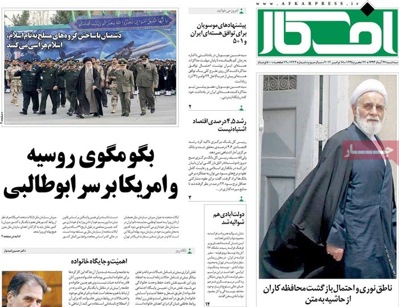
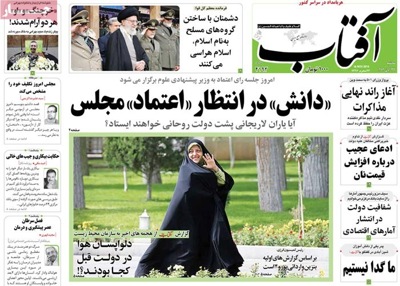
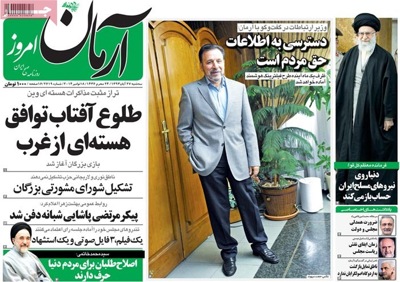
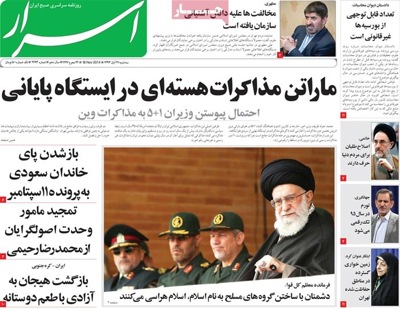
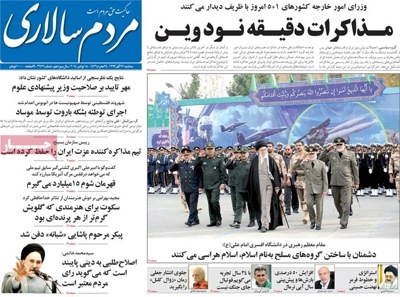
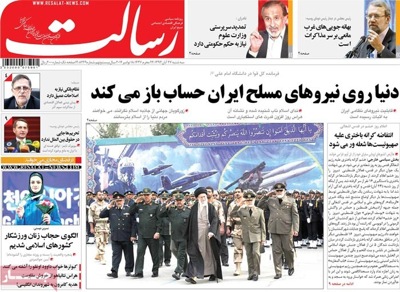
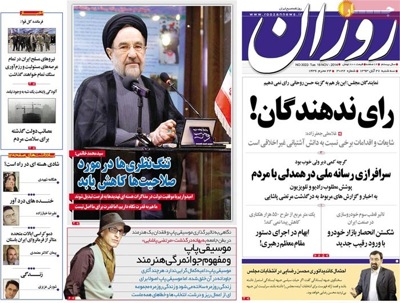
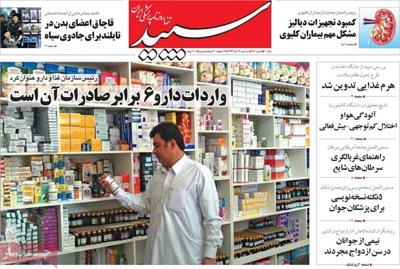
A Look at Iranian Newspaper Front Pages on April 18

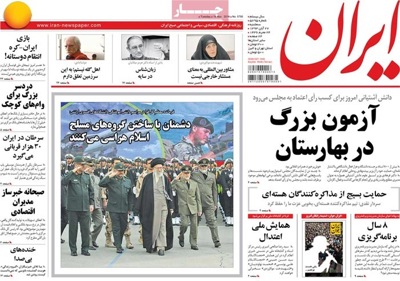
Turkey’s referendum on constitutional changes and the worldwide reactions to its disputed results was widely covered by Iranian newspaper today.

The upcoming presidential and local elections, particularly the candidacy of Iran’s First VP Es’haq Jahangiri as an alternative for incumbent president Rouhani, was also a top story today.

Several newspapers also covered the National Army Day and the military parades due to be held on Tuesday.

The above issues, as well as many more, are highlighted in the following headlines and top stories:


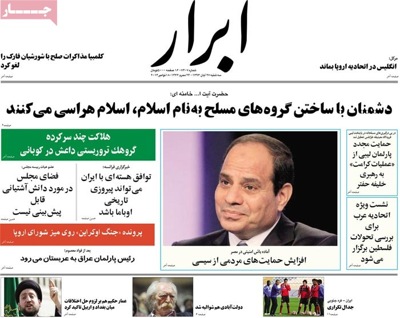
Abrar:

1- Iran’s Strategy is to Destroy ISIS before It Reaches Our Borders: Army General

2- ISIS Beheads 17 Citizens in Iraq

3- Trump’s Deputy: All Options on Table about North Korea

4- Iraqi Interior Ministry: ISIS Leader Still Alive, Hiding in Syria

5- We Won’t Let Anyone Threaten Iran’s Exemplary Security: IRGC on Army Day

A Look at Iranian Newspaper Front Pages on April 18 - abrar


Abrar-e Eqtesadi:

1- Britons Poised to Use Opportunity for Making $600-Billion Investment in Iran

2- Trend of Decrease in Iranian Families’ Income Started under Ahmadinejad

3- 250-Billion-Toman ($67m) Investment in Iran’s Oil-Rich Regions to Improve Welfare

4- Central Bank of Iran to Send Delegation to IMF Summit in US

A Look at Iranian Newspaper Front Pages on April 18 - abrar eghtesadi


Aftab-e Yazd:

1- Telegram Voice Call Totally Blocked in Iran

2- 10 Billion Tomans ($2.6m) Allocated to Decrease Divorce in Iran

3- Tehran-Ankara Ties Will Not Improve [Editorial]

A Look at Iranian Newspaper Front Pages on April 18 - aftabe yazd


Arman-e Emrooz:

1- Reformist Politician Urges Rouhani to Disclose Untold Stories

2- MP Once Again Raises Old Topic of [legalising] Private TV [which is now illegal in Iran]

A Look at Iranian Newspaper Front Pages on April 18 - arman emruz


Asrar:

1- Judiciary Chief: It’s Illegal, Illegitimate to Attack Rivals in Election

A Look at Iranian Newspaper Front Pages on April 18 - asrar


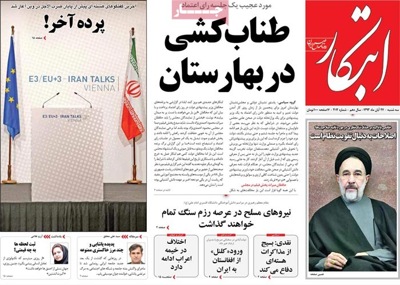
Ebtekar:

1- Judiciary Chief Calls for Restriction of Registration in Presidential Race

2- Emergency Situation in Turkey after Disputed Referendum

3- Rafsanjani’s Brother: Rouhani is Main Candidate of Moderates, Reformists

A Look at Iranian Newspaper Front Pages on April 18 - ebtekar


Emtiaz:

1- All Changes in Turkey Benefit Erdogan

A Look at Iranian Newspaper Front Pages on April 18 - emtiaz


Etemad:

1- Choosing Female Ministers is One of Rouhani’s Promises: VP

2- Conservative Figure Calls for Ahmadinejad’s Disqualification [from Running for President]

3- Bitter Victory: Turkish President Surrounded by Opposition Groups’ Coordinated Protests

4- Erodgan to Increase His Interference in Syria, Iraq: Analyst

A Look at Iranian Newspaper Front Pages on April 18 - etemad


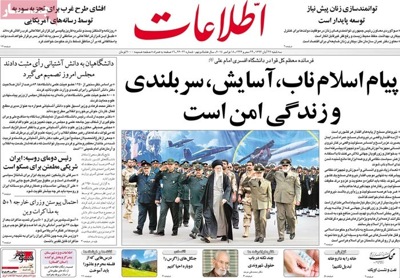
Ettela’at:

1- In Unprecedented Move, US Deploys 3 Aircraft Carriers in Korea

2- Russia: We Won’t Let Overthrow of Assad Happen

3- Iran Foreign Ministry: US Should Pay for Its Mistakes on Expansion of Terror

4- 9,288 Candidates Qualified to Run for Tehran City Councils Election

A Look at Iranian Newspaper Front Pages on April 18 - etelaat


Iran:

1- Turkey: Half Happy, Half Sad

  • Referendum Supporters, Protesters Pour into Streets

2- Nonstop Attacks against Rouhani’s Gov’t

  • Attackers Damaging National Interests by Spreading False Claims

3- Any Gov’t in Iran Will Continue JCPOA Implementation: Foreign Ministry

A Look at Iranian Newspaper Front Pages on April 18 - iran


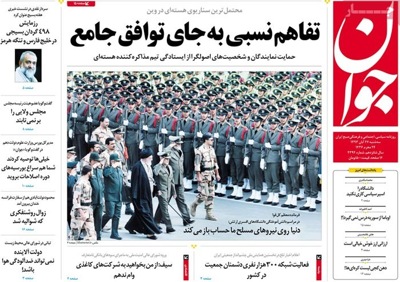
Javan:

1- ‘Alternative Candidate’, a New Development in 2017 Election

2- 1,500 Palestinian Prisoners in Israeli Jails Go on Rare Hunger Strike

3- Rumours of Erdogan’s Cheating in Referendum: Protesters Pour into Streets

A Look at Iranian Newspaper Front Pages on April 18 - javan


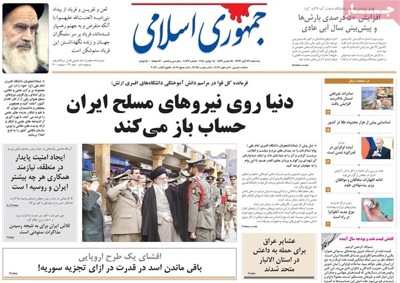
Jomhouri Eslami:

1- Deputy Health Minister: Iran Self-Sufficient in Production of 98 Medical Goods

2- New Copper, Iron Ore Reserves Discovered in Iran

3- Turkey’s Disputed Referendum Widely Covered in World Media

A Look at Iranian Newspaper Front Pages on April 18 - jomhori


Kayhan:

1- Iran’s Largest Bicycle Factory Shut Down

2- Supporters of Presidential Candidates Plunge Paris into Chaos

3- Turkish President’s Narrow Victory in Referendum: Erdogan Dreams of Ottoman Empire!

4- Rouhani Government’s Fiscal Discipline: From Slogan to Truth

A Look at Iranian Newspaper Front Pages on April 18 - keyhan


Setareh Sobh:

1- Turkey Split into Two Parts after Sunday’s Referendum

2- Erdogan’s Neo-Ottomanism Wins: Analyst

A Look at Iranian Newspaper Front Pages on April 18 - setare sobh


Shahrvand:

1- Tehran Managed by Nouveau Riches: Councillor

2- In Grief of Flood: Survivors of Recent Flood in NW Iran Talk about Their Sad Stories

3- Gap within One Nation: A Report on Result of Turkey Referendum

A Look at Iranian Newspaper Front Pages on April 18 - shahrvand


Shargh:

1- President Rouhani Sympathises with Flood-Hit People

  • Government to Stand by Flood-Hit People until Final Relief

2- First VP Calls for Conditional Engagement of Armed Forces in Economic Plans

3- Conservatives Would Win Presidential Race in Run-Off Round

4- Army and Iran Revolution [Editorial on Army Day]

A Look at Iranian Newspaper Front Pages on April 18 - shargh


SMT:
1- Iran, Turkmenistan to Use National Currencies in Mutual Cooperation
2- Iranian Ministers Banned from Getting Involved in Election Campaigns
3- Forex Reserves of National Development Fund to Reach $40bn

A Look at Iranian Newspaper Front Pages on April 18


Vatan-e Emrooz:

1- What Reformists Say about First VP Jahangiri’s Candidacy: Emergency Situation

A Look at Iranian Newspaper Front Pages on April 18 - vatane emruz

US State Dept. Criticises Turkey While Trump Congratulates Erdogan!

Trump Congratulates Erdogan on Victory in Referendum

Trump on Monday called to congratulate Erdogan hours after the Turkish president claimed a narrow victory in a contested referendum that will grant him sweeping new powers, according to the White House, The Guardian reported.

Trump’s congratulatory message strikes a starkly different tone than the statement issued by the US state department on Monday, which urged Erdogan to respect his citizens’ fundamental rights and noted the report’s findings of “irregularities on voting day and an uneven playing field during the difficult campaign period”.

In its statement, the State Department said, “We look to the government of Turkey to protect the fundamental rights and freedoms of all its citizens — regardless of their vote on April 16 — as guaranteed by the Turkish Constitution and in accordance with Turkey’s international commitments, such as under the Helsinki Charter.” That document compels its signatory nations, including Turkey, to uphold human rights, according to The New York Times.