Sunday, April 12, 2026
Home Blog Page 3969

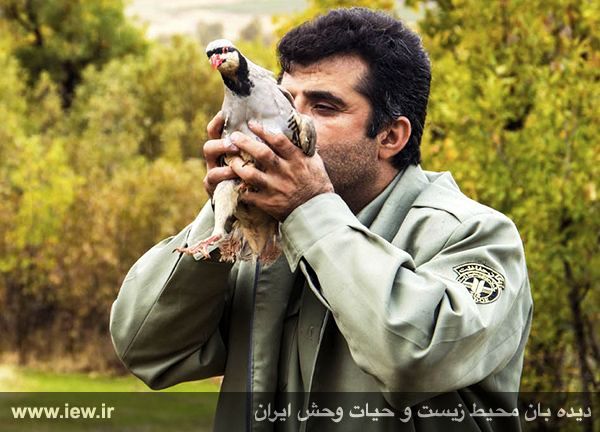
Kiss captivity goodbye

rahasazikabk-2

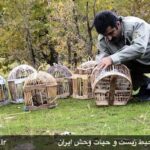
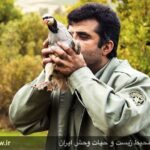
Environmental police in Marivan [a western city in Kurdistan Province] have seized seven wild partridges while searching the house of a poacher. They later released the birds in the wilderness.

On November 12, the website of Iran Environment and Wildlife Watch posted two photos of the birds before saying goodbye to captivity and becoming free as a bird, literally.


Moderation, the dire need of today’s world

Moderation Conference

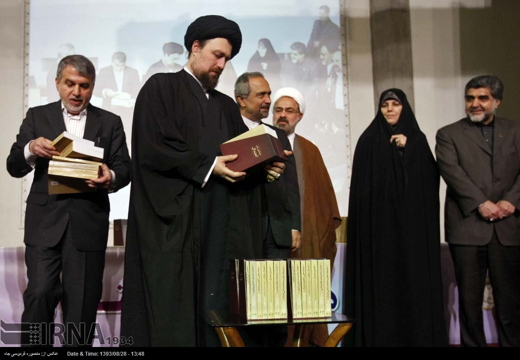
The National Moderation Conference opened in the National Library of Iran in Tehran on November 19. The Islamic Republic News agency (IRNA) and the Iranian Student News Agency (ISNA) posted two separate reports about the conference which started off with a message from President Rouhani followed by a keynote address by Seyyed Hassan Khomeini, the grandson of the late Imam Khomeini. What appears below is a partial translation of the reports the two news agencies carried:


President Rouhani’s Message
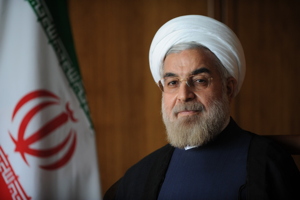
 

President Hassan RouhaniIn today’s world man and society have grown weary of extreme acts and radicalism, and the necessity to develop an understanding of and resort to moderation in all aspects of life is strongly felt in Iran, the world of Islam and the international community more than before.

No approach is more transparent than moderation, in theory and in practice alike, when it comes to efforts to minimize the intertwined risks of extremism in thinking, words and deeds.

The onus is on thinkers, scientists and researchers to explain the principles and concepts of social, cultural and political moderation in such meetings, and clear the way for policymakers, executive officials and the public to promote and institutionalize the culture of moderation.

Moderation is naturally linked with wisdom- and science-based, all-inclusive activities about which university scholars are better-positioned to talk. When politics, which is expected to administer justice and support spirituality and human solidarity, turns into efforts to grab power, it will be very much disposed toward extremism. In today’s world, this phenomenon has degenerated into an existential threat in the [Middle East] region. So the responsibility lies with scholars to maximize the social and political potential of moderation.

Moderation in governance signals the following message: it is far from possible to run a country with diverse tastes in the absence of science, dialogue and tolerance. That’s why we have always urged those who are interested in the country and the Islamic revolution to deal with different questions in a tolerant way. We should let people speak their mind; we should not marginalize big figures for small blunders.

Moderation in politics calls for heeding people’s vote and making office holders work within the framework of sagacity, integrity and ethics and stay clear of arrogance and self-centeredness.

In science, moderation translates into a link between scientific and theoretical foundations and experiences gained from society’s social and political life. Therefore, it would be justifiable if we expect scientists and scholars to analytically and critically study the correlation between the concept of moderation and public demands and the Iranian-Islamic culture, and to unlock the potential to provide what is needed for comprehensive, sustainable development.

Generally, moderation is inseparable from constructive political activism. Particularly, it is inevitable for an exit strategy from the current conflicts and extremist acts in domestic and international policies. No doubt, university scholars should thoroughly think through the idea of moderation in order to open up its layers.

Although moderation is, by definition, keeping distance from going to extremes, this fails to define an important concept which is to lead the government’s all-out efforts as well as the nation’s progress and development. I think moderation can entail all the following:

Developing a new insight into Iran’s modernity

Introducing sustainable economic development as something which comes with individual, collective and regional justice

Striking a balance between idealism and realism

Establishing constructive interaction with the world

Identifying the historic limitations and possibilities of a nation

Focusing on science-based activities and respecting science

Recognizing plurality

Striking a balance in measures to exploit the environment

Striking a balance between the government’s power and society

And, setting out on a balanced march toward all-out development.

What is of vital importance here is that we try to wipe violent and extremist acts from the compassionate face of Islam.


Seyyed Hassan Khomeini’s speech
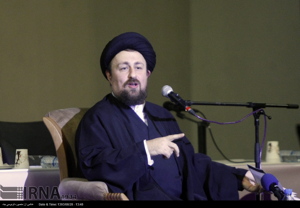
 

Seyyed Hassan KhomeiniIn this day and age, those who make acerbic comments harm themselves more than others. Justice and moderation are what our society pursues today.

Moderation promotes national unity and a moderate society won’t grapple with disunity.

Forgiveness is one of the missing links of our society. We should let bygones be bygones. One of the pillars of a moderate society is the presence of forgiveness whereas an extremist society gives rise to spite.

The absence of moderation might result in infamy for a religion. At the moment, what ISIL has done has taken a heavy toll on religion. If we have faith in religion, we should adorn the religion [with virtues]. If we are really concerned about our religion or country, we need to refrain from going to extremes.

Moderation can be practiced through dialog in which no one should think of themselves as superior to the other side, nor should they seek to impose their ideas on others. No one should regard themselves as the absolute right.

In a dialog, it is possible to like someone and disagree with them at the same time. In a dispute there is a presumption that the other side is wrong, while a dialog does not entail such a premise. Throughout a dialog, efforts are made to explore the truth.

Iran’s Rouhani proposes fifth nominee for science minister

iran-minister-farhadi

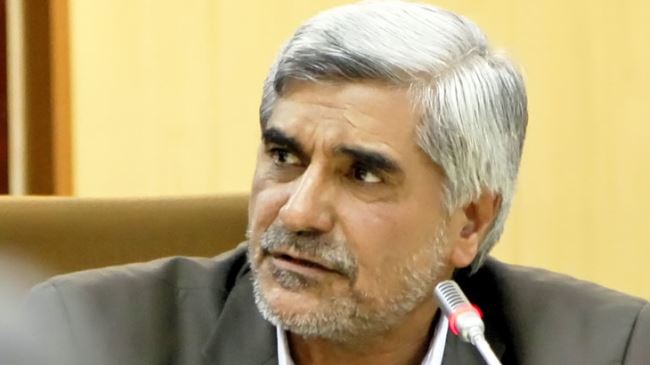
Iranian President Hassan Rouhani has proposed Mohammad Farhadi as the new nominee for minister of science, research and technology.

Farhadi was nominated through a letter to Majlis Speaker Ali Larijani on Wednesday.

Majlis has 10 days to examine the qualifications and programs of the proposed minister and the lawmakers are to hold a vote of confidence on the proposed minister next Wednesday.

Farhadi, an otolaryngologist, is currently the head of Iran’s Red Crescent Society.

He served as the Minister of Health in the cabinet of former President Mohammad Khatami.

Farhadi is the fifth nominee proposed by President Rouhani for the minister of science, research and technology.

On November 18, Iranian lawmakers voted down Fakhroddin Ahmadi Danesh-Ashtiani, the fourth nominee for the post.

On October 29, Iranian lawmakers also rejected Mahmoud Nili Ahmadabadi, Rouhani’s third nominee for the position.

Back in August, Iran’s parliament had also voted former minister Reza Faraji-Dana out of office in an impeachment session.

Rouhani’s first choice, Jafar Mili Monfared, was given the vote of no confidence by the MPs over his alleged ties to 2009 post-election unrests.

A memorable lesson from donkeys on an Iranian island

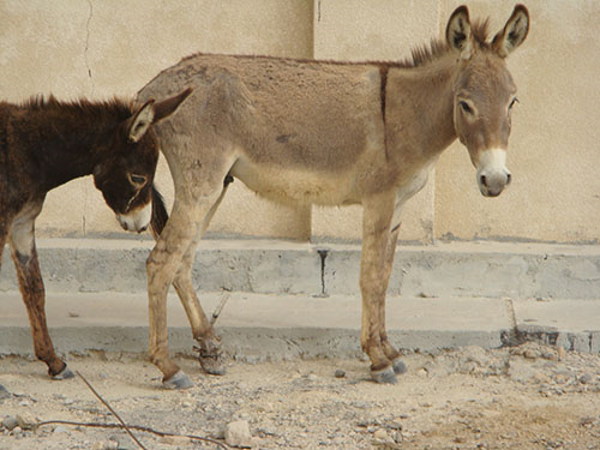
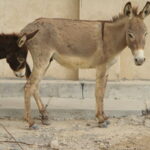
Donkey

The website of Iran’s Environment Protection Organization (www.doe.ir) filed a report on October 18 about a thought-provoking incident which occurred during a training workshop the organization held on a southern Iranian island. The following is the translation of part of a story narrated by Director General of Training and Public Cooperation at the Environment Protection Organization Mohammad Darvish:

Hengam is a beautiful island with exceptional coral beaches and a population of no more than 2,500. This small expanse of land – 10 km by 5 km – has been standing for at least 200,000 years as an island in the Persian Gulf.


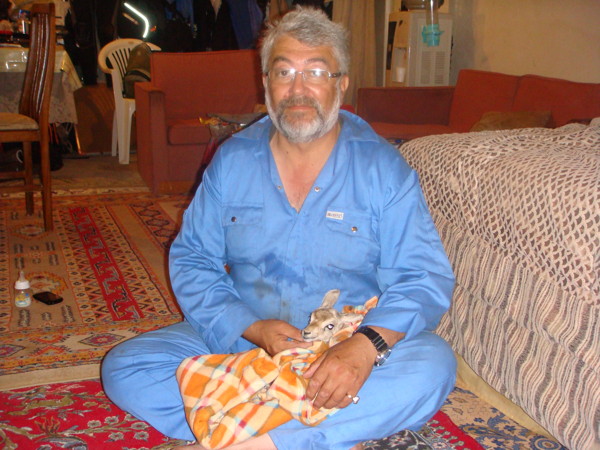
Donkey-1Last month, I went on a trip there to attend a training workshop designed to educate locals in Minab, a city in Hormozgan Province. During the journey, I met Hossein Aghakhani, an environmentalist and a scuba diving expert who has been trying for a few years to help boost tourism in the region and protect natural attractions of the island from irresponsible behaviors of some tourists.

He tries to plant and repair corals, clean up beaches and rescue and help injured animals. What I am going to tell you is an incredible experience of Hossein Aghakhani’s:

In early 2012, when Hossein was driving on a road in a remote corner of the island, he saw a donkey sitting in the middle of the road, obstructing his way. To figure out what was wrong, he stopped the car and saw that a piece of metal from a metal can, which had been most probably littered by tourists, had injured the poor donkey’s foot. Although he tried to help the beast, the donkey limped away.

He did not see the donkey until a few days later when he was informed that the injured animal had showed up on a schoolyard. He rushed there and with the help of his colleagues, they managed to extract the piece of metal and bandaged the wound.

One month later when Hossein was working in his office, some strange noise drew his attention. The same donkey was there with some other injured donkeys suffering from the same problem, infection and pain as a result of injury thanks to metal pieces of cans. They had turned to the person who had once proved his kindness to one of their kind.

I really adore Hossein Aghakhani, a selfless volunteer who has put in a lot of time and efforts in protecting the environment for his fellow compatriots who may never find a chance to tell him: God bless you.


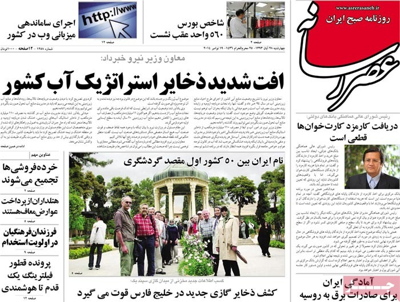
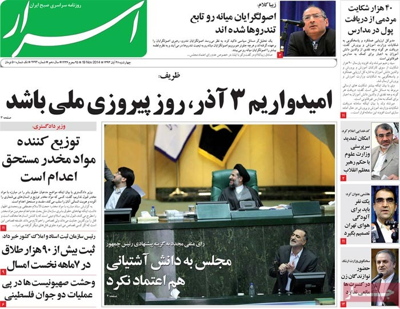
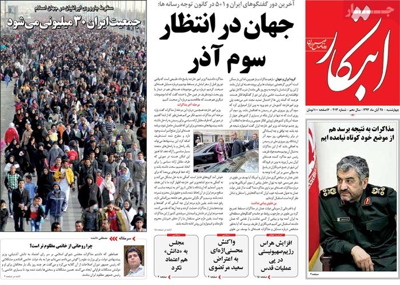
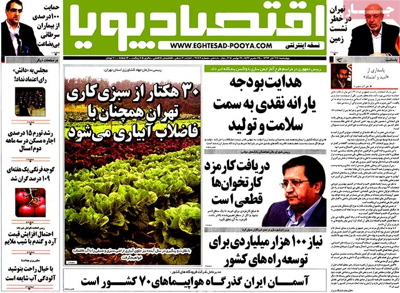
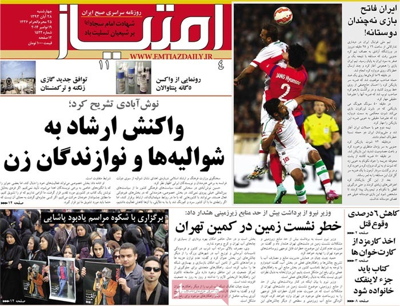
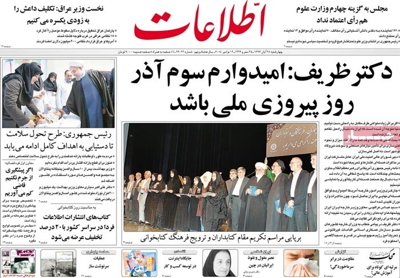
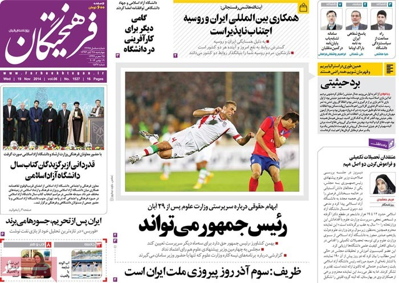
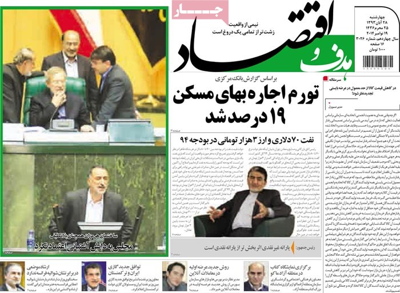
A look at Iranian newspaper front pages on Nov. 19

Iranian Newspapers Headlines

Failure by the Islamic Consultative Assembly on Tuesday to confirm President Rouhani’s fourth nominee for the Ministry of Science, Research and Technology Fakhreddin Ahmadi Danesh-Ashtiani dominated the front-page headlines of most Iranian newspapers on Wednesday. A final round of nuclear talks between Iran and P5+1 in Vienna only days before the November 24 deadline was also given a lot of front-page attention in Iranian dailies. Also in the news were remarks by President Rouhani on his Cabinet’s determination to press ahead with the Health Transformation Plan and the victory the Iranian national soccer team pulled out in a friendly against South Korea in Tehran, Iran’s third win in a row.

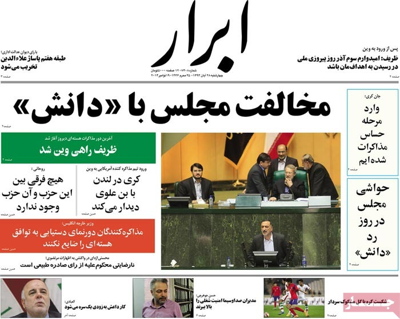
Abrar: “The Islamic State of Iraq and the Levant [ISIL] is very close to meeting its end,” said the Iraqi prime minister.


Iran - Abrar Newspaper-11-19


Asr-e Rasaneh: Iran has landed on the list of the world’s top 50 tourist destinations.


Iran - Asre Resaneh Newspaper-11-19


Asrar: “A decree by the Supreme Leader will allow the acting science minister to be reinstated,” said Abbas Ali Kadkhodaei, the spokesman for the Guardian Council.

Asrar: “Female musicians can perform at concerts,” said the spokesman of the Ministry of Culture and Islamic Guidance.


Iran - Asrar Newspaper-11-19


Ebtekar: Commander of the Islamic Revolution Guard Corps Major General Mohammad Ali Jafari has said that if the nuclear talks result in a final deal, everyone will see that we have not given up [our rights].


Iran-Ebtekar Newspaper-11-19


Eghtesad-e Pooya: Airplanes from 70 countries use Iran’s airspace to fly to their destinations.


Iran - Eghtesad Pouya Newspaper-11-19


Emtiaz: “Iran defeat South Korea 1-0 in a not-so-friendly friendly match,” read the paper’s front-page headline, in reference to verbal disputes on the pitch.


Iran - Emtiaz Newspaper-11-19


Ettela’at: “The government will pursue the Health Transformation Plan until it produces the intended objectives,” said President Hassan Rouhani.


Iran-Ettelaat Newspaper-11-19


Farhikhtegan: “The president is entitled to naming an acting [science] minister for another three months,” said Bahman Keshavarz, a prominent defense lawyer.


Iran - Farhikhtegan Newspaper-11-19


Hadaf va Eghtesad: “The government will have to draft next year’s budget based on oil prices of $70 per barrel, with rial [Iranian currency] trading at around 30,000 to the greenback,” said Chairman of Tehran’s Chamber of Commerce, Industries, Mines and Agriculture (TCCIMA) Yahya Al-e Eshagh.


Iran - Hadaf va Eghtesad Newspaper-11-19


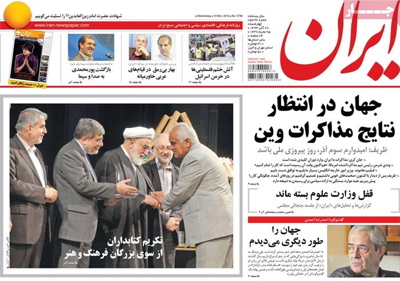
Iran: “The Ministry of Science remained padlocked,” wrote the daily in a report on a heated debate on Tuesday in the Islamic Consultative Assembly on President Rouhani’s fourth pick for the Ministry of Science, Research and Technology.


Iran Newspaper-11-19


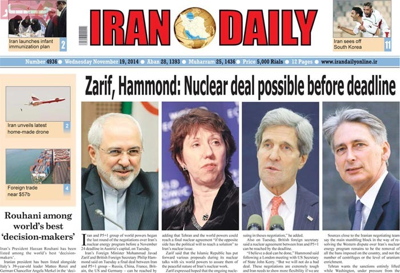
Iran Daily: “Rouhani among world’s best decision-makers”.


Iran Daily Newspaper-11-19


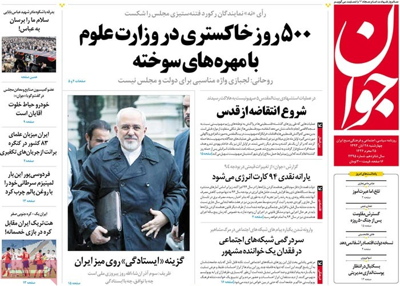
Javan: The monthly cash handouts [Iranian households are given under the Targeted Subsidies Act] will be replaced with energy cards next year [starting March 21, 2015].


Iran - Javan Newspaper-11-19


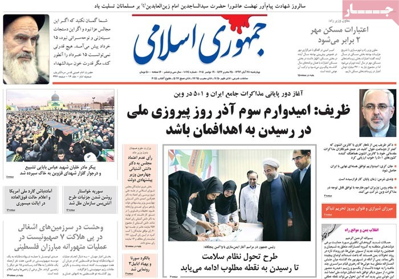
Jomhouri Islami: A state of emergency has been declared in the US state of Missouri with the National Guard on alert.


Iran - Jomhouri Eslami Newspaper-11-19


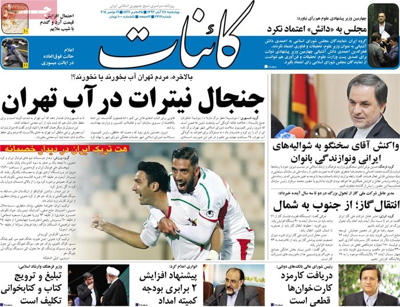
Kaenat: “Charging fees for debit card readers is sure to happen,” said the president of the Supreme Council on State-run Banks.


Iran - Kaenat Newspaper-11-19


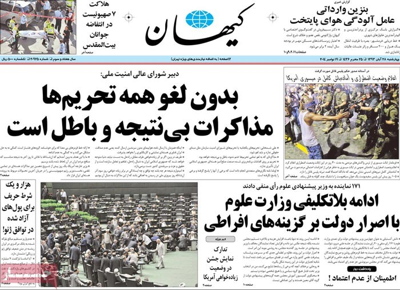
Kayhan: “Nuclear talks would be inconclusive and invalid if all sanctions are not lifted,” said Secretary of Iran’s Supreme National Security Council Ali Shamkhani.


Iran - Kayhan Newspaper-11-19


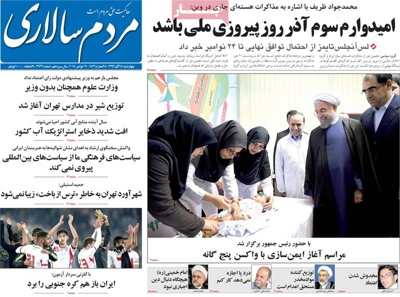
Mardomsalari reports that Iran’s water resources are depleting, adding that the country’s water deposits will be revived next year [starting March 2015].


Iran - Mardom Salari Newspaper-11-19


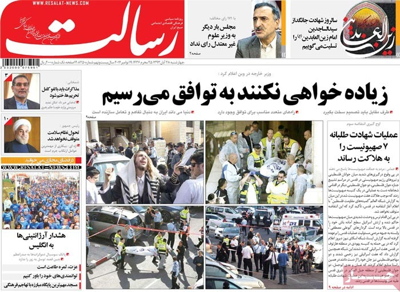
Resalat: “If the other party does not insist on its excessive demands, we will arrive at a [final nuclear] deal,” said Iran’s Foreign Minister Mohammad Javad Zarif.


Iran - Resalat Newspaper-11-19


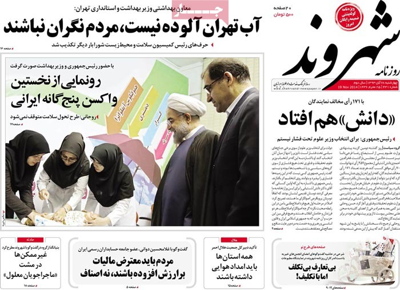
Shahrvand: “Tehran’s water is not contaminated. People [in the capital] should not be concerned,” said a deputy health minister. His remarks come after the head of the Health and Environment Commission of Tehran’s City Council said that tap water in the capital is not suitable for drinking.

Shahrvand: Iran has unveiled its first locally-produced Pentavalent vaccine in a ceremony with President Hassan Rouhani and Health Minister Seyyed Hassan Hashemi in attendance. The vaccine protects children against Haemophilus Influenza type B (the bacteria that causes meningitis, pneumonia and otitis), Whooping Cough, Tetanus, Hepatitis B and Diphtheria. [A Pentavalent vaccine is five individual vaccines conjugated in one intended to actively protect infants from these potentially deadly diseases.]


Iran - Shahrvand Newspaper-11-19


Iran FM slams Tel Aviv’s provocative measures in Quds

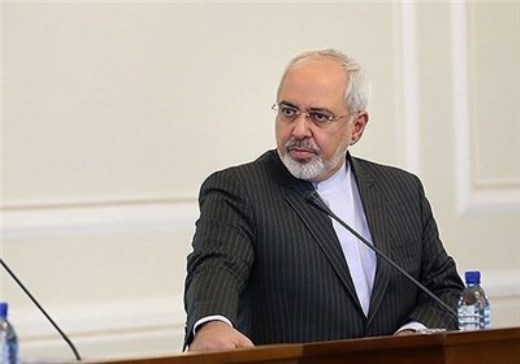
Mohammad Javad Zarif

Iran’s Foreign Minister Mohammad Javad Zarif condemned the Zionist regime of Israel’s incendiary actions in the holy city of al-Quds and the al-Aqsa Mosque.

In a message sent to foreign ministers of the Organization of Islamic Cooperation (OIC) member states, Zarif censured Tel Aviv for its “illegal and provocative” actions in al-Quds and the al-Aqsa Mosque.

He criticized the silence shown by the international organizations over such aggressive measures, and said these actions are part of Israel’s continuous policy of Judaizing Palestine.

The Iranian top diplomat further underlined the Islamic Republic’s full preparedness to consult and cooperate with other Muslim countries to adopt necessary measures for immediate and effective support for al-Quds and the al-Aqsa.

Tensions have been running high in al-Quds in recent weeks.

Last month, Israel imposed restrictions on the al-Aqsa mosque in East al-Quds, a move that gave rise to clashes between Palestinian worshippers and Israeli settlers and troops.

Tens of Palestinians have been arrested in the area since then.

Zionist troops have also killed a number of Palestinians amid a harsh crackdown on Palestinian people in the holy city.

Meanwhile, a recent hanging of Hassan Yousef Rammouni, a young Palestinian bus driver, by Israeli settlers has further enraged Palestinians.

Rammouni, 32, was driving back home from work on November 16 when he was abducted and then hanged by Israelis in his bus in the Ras al-Amud neighborhood of East al-Quds.

Iranian drama to go on screen in Argentina

Melbourne-Mar-del-Plata-festival

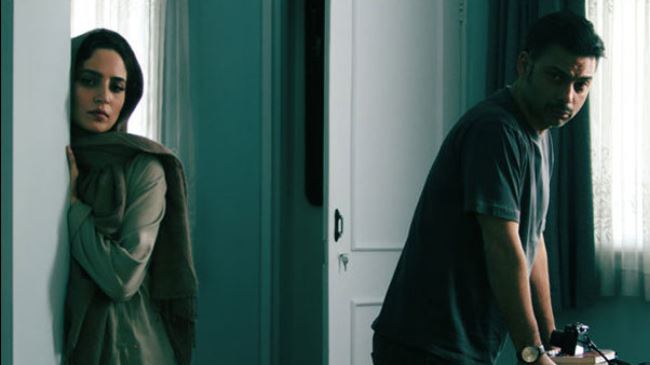
Acclaimed Iranian drama, Melbourne, has been selected to compete at the 29th edition of Mar del Plata International Film Festival in Argentina.

Directed by Nima Javidi, the film will represent Iranian cinema at the competition section of the festival.

Melbourne chronicles the story of a young couple on their way to the eponymous Australian city to continue their education, but just a few hours before their departure, they become involved in a tragic event.

The movie recently garnered two awards at the 2014 Stockholm International Film Festival in Sweden.

Melbourne also received critical acclaim at the 71st Venice International Film Festival in Italy. The film had its international premiere at the festival.

“Some international critics participated in the festival believe that Melbourne conjures up the mood and tone of the British film director Alfred Hitchcock’s works,” said Javidi.

Mar del Plata International Film Festival is scheduled to take place from Nov 22 to 30, in various categories including documentary, experimental and narrative fiction.

Kish Air Show: Investment Opportunities

Kish-Air-Show
Kish-Air-Show

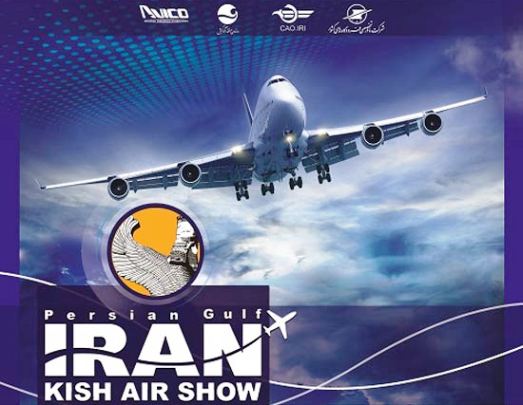
The 7th Biennial Kish Air Show opened on November 18 on the Persian Gulf Island. The 4-day exhibition is aimed at helping participants understand changes in the Iranian aviation industry, discover business opportunities and meet new partners as well as competitors. More than 100 local and foreign companies – namely from the UAE, China, Russia, Germany, Italy, Sweden, France, Ukraine and the Czech Republic – are taking part in the event.

As talks on forging a comprehensive nuclear deal between Iran and P5+1 are approaching a November 24 deadline, both Iranian and foreign aviation corporations are modifying their strategy for an era of no sanctions against the industry, after recently signed deals between Boeing and Iran Air.

Foreign investors and companies who are interested in this market can forge partnerships and seal deals in four major categories. First, there is an operational, economic requirement to re-fleet the Iranian airlines with more efficient aircraft, creating an unprecedented opportunity for noted aircraft manufacturers, such as Boeing and Airbus, to sell their products.

Second, the availability of competitive maintenance, repair and overhaul (MRO) choices for aircraft engines and components is a challenge to the airlines. To expand their business in this regard, MRO centers in Iran are eager to launch joint projects or firms with globally recognized MRO service providers.

Third, when sanctions are lifted, the airports face an increasing trend of cargo and passenger traffic and are forced to deliver value enhancement through operational and structural improvements. Some business plans have been approved for the development of airports such as Tehran Imam Khomeini International Airport (IKA) and authorities are looking for potential investors.

Finally, aviation finance is currently a challenging topic in Iran due to scarce liquidity and increased difficulty in accessing the securities market and banks’ resources. Thus, new investors entering this space are able to enjoy enticing returns which are secured by an underlying asset.

Despite the challenges, Iran’s aviation industry is an opportunity for domestic and foreign companies and investors to earn attractive profits. So, by attending the Kish Air Show, foreign companies can interact with leading airlines, MRO service providers and specialists in Iran and discover new investment opportunities. And the timing is right.


Iranian foreign minister describes talks with Ashton as positive

Zarif in Vienna
Zarif in Vienna

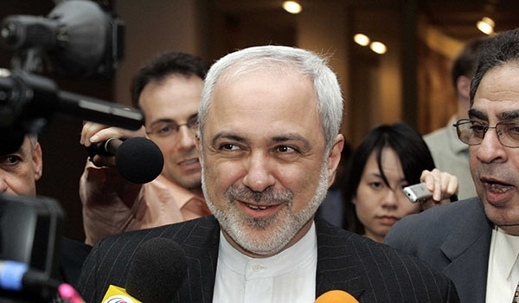
Iran’s Foreign Minister Mohammad Javad Zarif and the country’s chief nuclear negotiator said his talks with P5+1 chief negotiator Catherine Ashton in Vienna were positive.

“We had good negotiations but the progress (of the talks with world powers) will depend on the political will of the other side,” Zarif told reporters after attending a working lunch in the Austrian capital of Vienna on Tuesday.

Zarif and Ashton met to discuss how to hold the final round of talks on Tehran’s peaceful nuclear program in the following days.

Diplomats from Iran and P5+1 (Russia, China, the US, Britain, France and Germany) are in Vienna to hammer out a final, long-awaited agreement to resolve the West’s decade-old standoff over Iran’s civilian nuclear work.

Earlier on Tuesday, Zarif expressed hope that this round of nuclear negotiations would mark a “national victory” for the Iranian nation and result in the achievement of Iran’s objectives.

Tehran and the world powers on November 24, 2013, signed an interim nuclear deal in the Swiss city of Geneva.

The Geneva deal (the Joint Plan of Action) came into effect in January and expired in July, when the parties decided to extend negotiations until November 24 in the hope of clinching a final, lasting accord.

Media reports said the main stumbling block in the way of resolving the Western dispute over Iran’s nuclear energy program remains to be the removal of all the bans imposed on the country, and the scope of the uranium enrichment.

Tehran wants the sanctions entirely lifted while Washington, under pressure from the pro-Israeli lobby, insists that at least the UN-imposed sanctions should remain in place.

Iran unveils latest home-made drone, Ababil 3

Iran-drone
Iran-drone

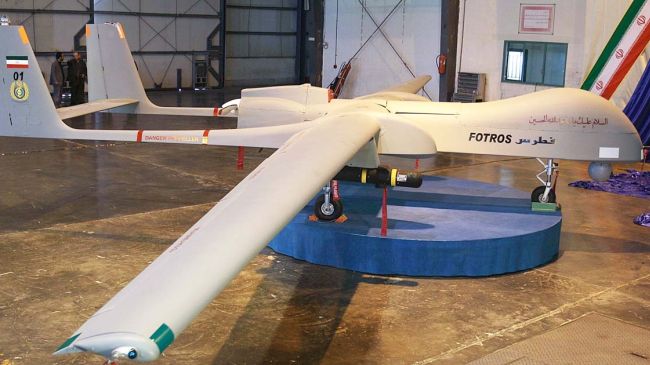
Iran has unveiled its latest domestically-manufactured state-of-the-art unmanned aerial vehicle (UAV), which can be used in reconnaissance operations.

Ababil 3, which was put on display in the 7th International Aviation Industry Exhibition in the southern island of Kish on Tuesday, has a flight endurance of eight hours and effective operational radius of 250 kilometers.

The UAV can fly at an altitude of 15,000 feet and transmit images simultaneously to ground control stations or any other platforms.

In recent years, Iran has made major breakthroughs in its defense sector and attained self-sufficiency in producing important military equipment and systems.

Last week, Iran put into operation a final version of the sophisticated US RQ-170 stealth aircraft, which was downed with minimal damage by the Iranian Armed Forces’ electronic warfare unit in December, 2011, while flying over the Iranian city of Kashmar, some 225 kilometers (140 miles) from the Afghan border.

The domestically produced version of the unmanned aerial vehicle (UAV) made a successful maiden flight a few days ago. The footage has just been released.

Iran unveiled its first domestically-manufactured long-range combat drone, the Karrar (Striker), on August 23, 2010. Since then the country has manufactured a variety of other high-tech surveillance and combat unmanned aerial vehicles.

The Islamic Republic has repeatedly assured other countries that its military might poses no threat to other countries since its defense doctrine is based entirely on deterrence.