Friday, December 26, 2025
Home Blog Page 3971

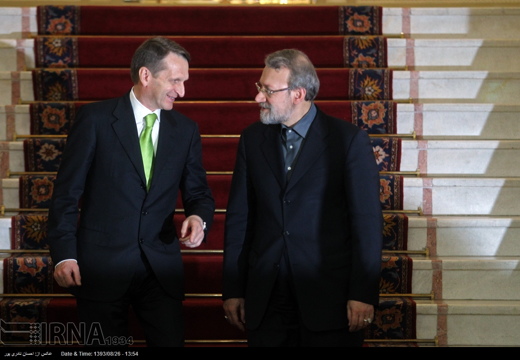
Iran Blasts US Senator’s Meeting with MKO Terrorists

Iran Blasts US Senator’s Meeting with MKO Terrorists

Speaking at a news briefing on Monday, Foreign Ministry Spokesman Bahram Qassemi said US officials have shown in recent decades that they have not learned from their previous experiences and have consistently contributed to the escalation of terrorism in the region through their wrongful policies and indecent behaviour.

Qassemi said that Washington’s policy continued under the new administration, Press TV reported.

“This is a mistake, which the US government should pay for, like its other mistakes,” the official asserted.

As a case in point, he cited Republican US Senator John McCain’s meeting with the head of the terrorist anti-Iran Mujahedin-e Khalq Organization (MKO), Maryam Rajavi, in the Albanian capital Tirana on Friday.

The MKO has carried out numerous terrorist attacks against Iranian civilians and government officials over the past three decades. Out of the nearly 17,000 Iranians killed in terrorist assaults since the victory of the 1979 Islamic Revolution, about 12,000 have fallen victim to MKO’s acts of terror.

The meeting, which also featured some other members of the notorious group, saw the senator praising Rajavi by saying, “You have stood up, fought, and sacrificed for freedom, for the right to live free, for the right to determine your future.”

“This contact serves the same purpose (of terror expansion). These types of contacts are nothing new,” Qassemi analysed.

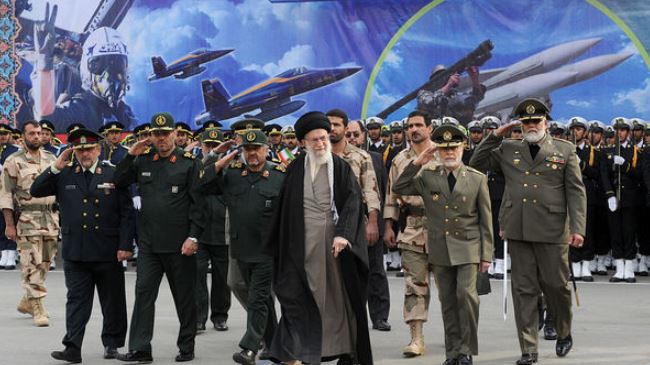
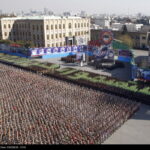
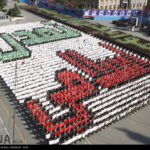
Iran Marks National Army Day with Military Parades

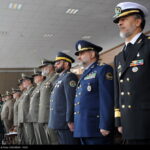
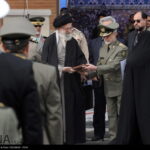
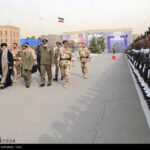
In capital Tehran, a ceremony was held near the mausoleum of the late founder of the Islamic Republic of Iran, Imam Khomeini, with high-ranking officials and senior military commanders in attendance.

President Hassan Rouhani delivered a speech before beginning of the parades.

army day


Army Commander Major General Ataollah Salehi, Chief of Staff of the Iranian Armed Forces Major General Mohammad Hossein Baqeri, Defense Minister Brigadier General Hossein Dehqan, Army Ground Force Commander Brigadier General Kiomars Heidari, and ranking commanders of the Islamic Revolution Guards Corps (IRGC) attended the ceremony.

A host of Army units put their latest achievements on display during the parades, known as an annual showcase for the Iranian Army’s latest achievements and equipment.

The military parades saw units from the Ground Force, Navy, Air Force and Air Defense Force displaying a broad range of advanced equipment such as missiles, tanks, armored vehicles, rifles, Unmanned Aerial Vehicles (UAVs), fighter jets, radar systems and air defense missile systems.

Iranian military experts and technicians have in recent years made great headways in manufacturing a broad range of indigenous equipment, making the armed forces self-sufficient in the arms sphere.

Iran maintains that its military might poses no threat to the regional countries, saying that the Islamic Republic’s defense doctrine is entirely based on deterrence.

Iran FM Congratulates Turkey on Yes Vote in Referendum

In a phone conversation on Monday afternoon, Zarif felicitated Turkey’s Foreign Minister Mevlüt Çavuşoğlu on the Turkish nation’s ‘yes’ vote to certain changes in the country’s Constitution.

The Iranian foreign minister also expressed the hope that the achievement would further reinforce peace and stability in Turkey, according to a Farsi report by the Foreign Ministry’s website.

Turkey held the referendum on Sunday. The turnout was high with more 86 percent of the country’s 55 million eligible voters casting ballots that were simply marked Yes or No, according to media reports.

A slim majority of voters agreed to grant sweeping powers to their president, in a watershed moment that the country’s opposition fears may cement a system of authoritarian rule within one of the critical power brokers of the Middle East.

With nearly 99 percent of votes in a referendum counted on Sunday night, supporters of the proposal had 51.3 percent of votes cast, and opponents had 48.7 percent, the country’s electoral commission announced.

‘US Impeding Probe into Alleged Chemical Attack in Syria’

US Impeding Probe into Alleged Chemical Attack in Syria

In an interview with the Etemad daily, Iran’s former ambassador to Syria Mohammad Reza Raouf Sheibani weighed in on the past and current developments in Syria and made predictions about the future course of events in the Arab country. Here are excerpts from his remarks in the Farsi interview.


No Reason Syria Might Have Conducted Chemical Attack

[Concerning the chemical incident in Khan Shaykhun in Syria’s Idlib province, he said] If it is the Syrian government that carried out the attack and knew what the consequences would be, then why did Damascus do it after all? Back in 2013 and in a period of time from one and a half years to two years, all of Syria’s chemical weapons were shipped out of the country under the supervision of the UN. Afterwards, the international body officially announced that Syria was no longer in possession of chemical arms.

Still, before the chemical arms dossier was put forward, some of the country’s chemical weapons depots had fallen into the hands of militants. Even the UN envoy had announced in a report that the world body, due to security reasons, was unable to go to those places and dismantle the chemical arms which might have been stored there. At the same time, the Syrian government released reports suggesting militant groups were sending chemical materials and ammunition from Iran and Turkey into Syria. Damascus sent the reports in detail to the UN as well as countries such as Iran.


Militants’ Chemical Depots May Have Been Hit by Mistake

One of the possible scenarios concerning the suspected militant attack in Khan Shaykhun is that militants’ chemical arms depots might have been mistakenly targeted by the Syrian army. Russia is of the same opinion. Moscow says the area bombarded was the place where terrorists stored chemical arms, and that Damascus was not aware of that. On the other hand, given that the newly installed Trump administration, militants and the opposition in Syria as well as countries supporting them seek to put the ouster of Syrian President Bashar Assad high on Washington’s agenda, they might have hatched a plot to set up the Syrian government.

Moreover, the scope of terrorists’ activities in Syria has no limits and they use whatever means available to them to achieve their objectives. Recently, we witnessed terrorists operating in an area on the outskirts of Damascus. They had threatened to contaminate drinking water in Damascus with poisonous materials. This is the danger of terrorism, one which threatens the international community.


US Impeding Probe into Chemical Incident

[Concerning Washington’s attempts to hamper an international investigation into the Khan Shaykhun incident] The question is why the US government did not allow a probe to be conducted on the ground before its missile attack on a Syrian airbase. Americans first carried out the attack, then spoke of the necessity to carry out such a probe. The foreign ministers of Iran and Russia also asked why the White House had conducted the attack without the UN’s consent. If the whole thing is a pre-planned scenario, naturally the US would not allow an investigation team to be formed within this context.

The US missile attack only emboldens armed militants and prompts them to violate the ceasefire. One of the repercussions of the US missile strike is that it will encourage militants to commit more acts of terror. Militants feel they are strengthened. Now the military option to settle the Syria crisis is on the table again.


Russia’s Stance on Syria

[As for the possibility of Moscow ending support for Syria in return for receiving certain political concessions] It’s impossible to read Russians’ minds. Since the Syria crisis started, Moscow has proved that it is ready to pay the price and stand firm behind their approach. It is not the first time that Russia comes under pressure. When Russia decided to seriously play a part in settling the Syria crisis, Moscow’s economic interests were jeopardized and it was warned as well. For instance, Arabs, who had a lot of economic interests, made numerous threats behind the scenes.

Russians were offered many incentives. I believe Moscow has adopted a strategic approach on the Syria conflict, and that is not specific to Syria, but rather, a strategic macro-policy that Moscow has adopted as a whole.

The United States’ recent missile strike on Syria was conducted on a limited scale and will not be repeated on a larger scale. Due to different reasons, the White House cannot increase its involvement in Syrian developments. The US attack on Syria, which was met with international reactions, was similar to a test. That is why the Americans gave the necessary signals to Russia before carrying out the attack. Then Russia informed Syria, which accordingly evacuated its troops and equipment from the area.


West’s Policy on Syria

[As for the US and Europe’s policy on the future of Syria] Washington’s approach, both before and after Trump, vis-à-vis Damascus is crystal clear. They seek a change of the ruling system in Syria. Their second policy is to create well-managed chaos in the sensitive Middle East region, so that turbulence would grip the region and they would be able to dictate their plans on the Mideast.

Another player in Syria developments is Europe, which does not have a clear strategy on the Syria conflict. Unfortunately, Europe made big strategic mistakes during the course of the crisis in the Arab country, causing terrorism, which was thousands of miles away, to be dragged into European countries. The US and Europe have no choice but to choose one of these two options: either to fight terrorism and reinforce the central government, or undermine the central government and allow terrorism to grow.


Syria Opposition Led by Certain Countries

As for why the opposition in Syria is so weak, I can say they are dependent. If we take a quick look at the opposition’s performance since the beginning of the crisis, we’ll find out that they received their instructions by countries which supported them. Some opposition groups were dependent on Saudi Arabia, some on Turkey, some on Qatar and others on the United Arab Emirates. It was these countries that led the opposition.


Opposition Asked to Join Talks

The Syrian government and some other countries invited the opposition to enter into talks with Damascus. President Bashar Assad commissioned Vice-President Farouk al Sharaa to hold talks with all opposition groups where decisions would be made and implemented.

At the same time, Assad addressed demands by Kurds. He reformed the Constitution and drew up the new election law for the presidential vote. He changed the presidential term and annulled the State of Emergency Law. My reading of the developments is that the opposition had made up their mind and didn’t want to back down from their demands. They wanted either Assad or the Syria crisis to go. Iran made numerous efforts as a goodwill gesture to create a calm atmosphere that would help bring about a political settlement of the conflict. Iran even established contacts with some opposition groups and the Muslim Brotherhood.

Dr. Salehi held direct negotiations with a top opposition figure. Moreover, we held meetings in Tehran where members of the opposition reached preliminary agreements with representatives of the Syrian government. But the opposition did not intend to help work out a political solution to the crisis. Rather, they wanted to assume power. Even now, if opposition groups are attending Geneva or Astana talks, they seek to take the helm of affairs in the country. Unfortunately, the opposition deviated from the peaceful path and political dialog and turned to arms. Using weapons set the stage for the infiltration of terrorist and armed groups into Syria.


Damascus-Opposition Standoff

The reason why the opposition turned to arms was that the Syrian government cracked down on peaceful protests. The first armed conflict happened in Jisr ash-Shugur where some 20 Syrian troops were captured and decapitated by opposition forces and displayed before cameras. Naturally, Syrian security forces retaliated with inappropriate actions. But we should not put all the blame on the opposition. Definitely, the government didn’t act appropriately either, further deepening divisions within society. Moreover, provocations by certain media outlets and different scenarios further fuelled tension both at home and in the international community.

Terrorist Attack on al-Foua, Kefraya Encouraged by US Military Action

Terrorist Attack on al-Foua, Kefraya Encouraged by US Military Action

Terrorist Attack on al-Foua, Kefraya Encouraged by US Military ActionThe Iranian Parliament speaker’s special advisor on international affairs, Hossein Amir-Abdollahian, has severely criticized the US recent missile attack on a Syrian air base, saying it inspired the terrorists in the Middle Eastern state to carry out another brutal attack on innocent people.

According to a Farsi report by ICANA, Amir Abdollahian said, “It was the US military move that emboldened the terrorists to commit terrorist crimes against the innocent women and children of al-Foua and Kefraya who had just been liberated from the terrorists’ control.”

Expressing gratitude to the Syrian government for its efforts to rescue people in al-Foua and Kefraya, both located in the northwestern Syrian province of Idlib, Amir-Abdollahian lauded the heroic resistance of the Syrians, particularly that of the patient people of the two villages, against the terrorist and their sponsors.

On Saturday (April 15), as the Syrian army was evacuating residents from the villages of al-Foua and Kefraya to transfer them to the city of Aleppo, a powerful bomb explosion struck near the buses carrying people and killed at least 126 people.

In late March, the Syrian government and militant groups struck a deal that envisaged the transfer of 16,000 people from al-Foua and Kefraya in exchange for the evacuation of militants and their families from al-Zabadani and Madaya towns in the southwestern province of Rif Dimashq.

Residents of al-Foua and Kefraya were agreed to be transferred to the outskirts of Aleppo City, the coastal province of Latakia or Damascus, while the gunmen and their families would leave for Idlib City.

Ahmadinejad, Baqaei’s Cases Still Open: Judiciary Spokesman

ejei

Speaking to reporters on Sunday, Gholam Hossein Mohseni-Ejei said the lawsuits were filed against Ahmadinejad in the capacity of president and have not yet led to the delivery of a verdict.

Asked whether a court would be determined to probe Ahmadinejad’s case in the current Iranian calendar year, Mohseni-Ejei said he could not comment on this issue as long as a hearing has not been scheduled.

A number of lawsuits have been filed with Iran’s judicial officials after Ahmadinejad’s term in office concluded among which cases of malfeasance are more prominent.

Out of major cases filed against the former president are three complaints by the Iranian Parliament’s Article 90 Commission.

The commission filed lawsuits against the former administration, which included failure to set up the merged Ministry of Sport and Youth and name its minister on time, refusal to submit the articles of association of the National Iranian Oil Company and failing to allocate the necessary budget to the Tehran subway.

A court hearing for seeing into complaints filed against Ahmadinejad has been postponed on several occasions.

Mohseni-Ejei further pointed to lawsuits against Baqaei and said his “case is pending and under investigation.”

Ahmadinejad, Baqaei's Cases Still Open: Judiciary Spokesman
Former Iranian president Mahmoud Ahmadinejad (R) and his vice president, Hamid Baqaei, lock hands during a press conference in the Iranian capital, Tehran, on April 5, 2017. (Photo by AFP)

The Judiciary spokesman added that Baqaei’s “innocence or guilt has not been definitively established,” rejecting Baqaei’s claim that he had been acquitted by the court and an apology was made to him.

On Wednesday, Ahmadinejad, Iran’s former two-time president starting in 2005, registered to take part in the 12th round of Iran’s presidential election.

Ahmadinejad was accompanying Baqaei, who also went through the registration process. He has already thrown his weight behind his former aide.

Erdogan Urges Other Countries to Respect Turkish People’s Vote

Erdogan

A slim majority of Turkish voters agreed on Sunday to grant sweeping powers to their president, in a watershed moment that the country’s opposition fears may cement a system of authoritarian rule within one of the critical power brokers of the Middle East.

With nearly 99 percent of votes in a referendum counted on Sunday night, supporters of the proposal had 51.3 percent of votes cast, and opponents had 48.7 percent, the country’s electoral commission announced.

Striking a conciliatory tone following the bitter contest, Turkey’s president Erdogan called on foreign powers to respect the outcome – which will mean 18 constitutional changes – as he thanked the Turkish people.

He said, “April 16 is the victory of all who said yes or no, of the whole 80 million, of the whole of Turkey of 780,000 square kilometres.

“We would like other countries and institutions to show respect to the decision of the nation.”

But as he addressed thousands of flag-waving supporters in Istanbul a short time later, he was more defiant.

“There are those who are belittling the result. They shouldn’t try, it will be in vain,” he said.

“It’s too late now.”

Shortly afterwards, the main opposition party demanded the cancellation of the result, saying the referendum had been won through “illegal acts”.

But speaking to reporters in Istanbul, Erdogan said results showed a winning margin of 1.3 million votes in what he described as a “historic decision”.

The head of the country’s electoral board confirmed the win shortly after Mr Erdogan spoke and said the final results would be known in 11-12 days.

The “yes” vote means Turkey’s parliamentary system of government will be replaced with a presidential one and could see Mr Erdogan remain in office until 2029.

The office of prime minister is also set to be abolished, allowing the president to draft the budget, declare a state of emergency and issue decrees overseeing ministries without parliamentary approval.

The changes are due to come in after the next election, scheduled for 2019.

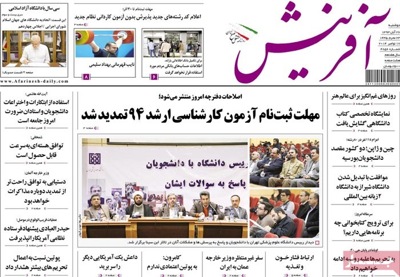
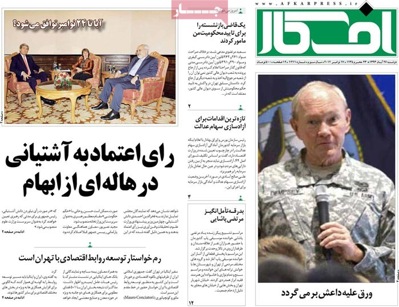
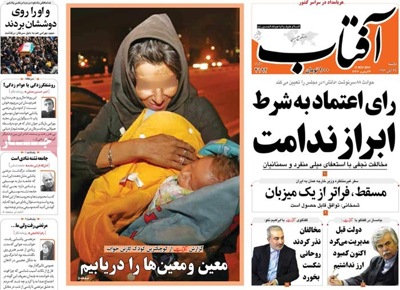
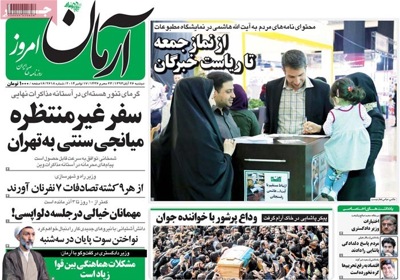
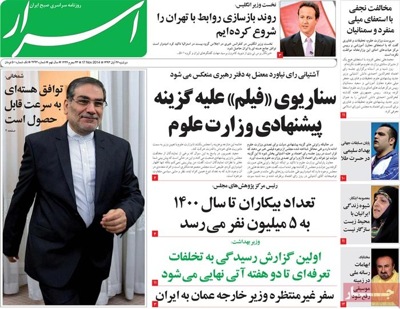
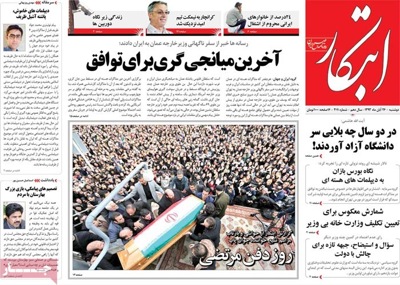
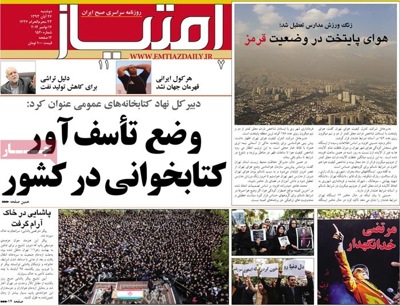
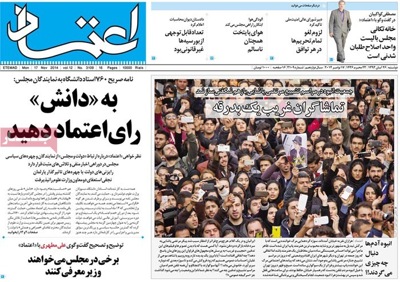
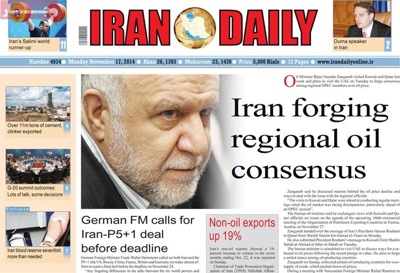
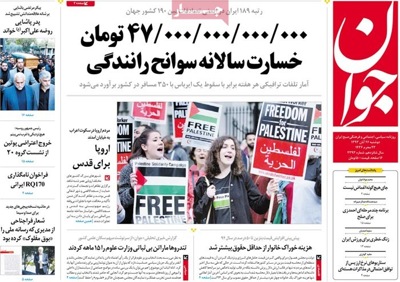
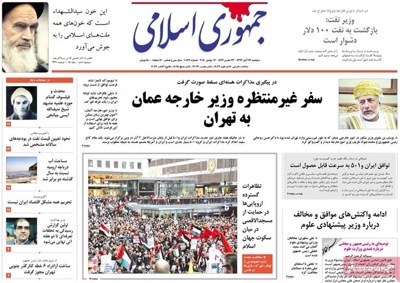
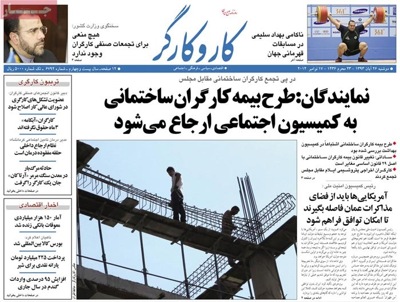
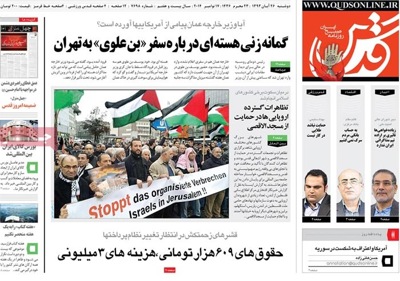
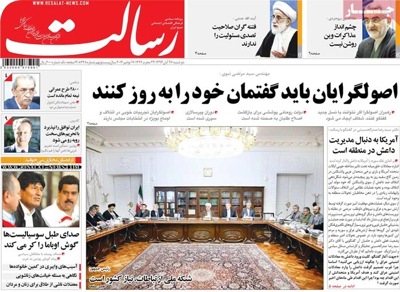
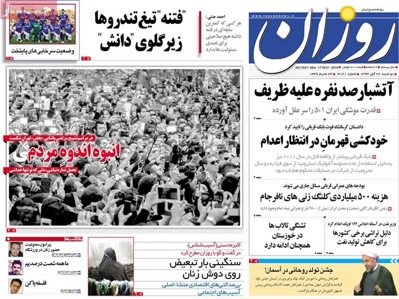
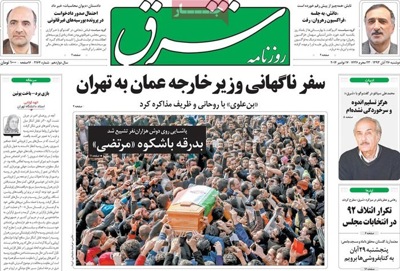
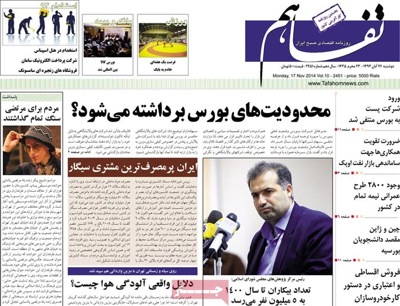
A Look at Iranian Newspaper Front Pages on April 17

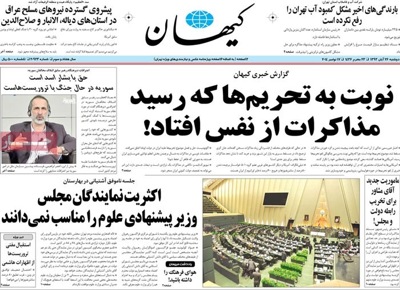
The majority of Iranian newspapers on Monday covered the inauguration of several mega projects in South Pars (SP) Gas Field in southern Iran, including the launch of SP Phases 17, 18, 19, 21 and 22 – with an investment of $20 billion – by Iranian President Hassan Rouhani, as a national historic victory and achievement.

Turkish President Recep Tayyip Erdogan’s victory in the country’s nationwide referendum on Sunday (April 16), winning 51.5 per cent of the votes, was also a main focus of the Iranian daily newspapers.

The deadly flood in northwestern Iran, which killed at least 41, and the criticisms raised against the government’s aid delivery to the flood-hit people, also received wide coverage by Iranian newspapers.

Also in the limelight were Iran’s May 19 presidential elections, candidate hopefuls’ remarks as well as policies and strategies and the stances held by reformists and conservatives towards their nominees. One newspaper quoted a reformist analyst as saying that the conservative party’s main candidate Seyyed Ebrahim Raisi has not been received very well by his fellow partisans as they know that he is not going to win the election.

International reactions to the brutal massacre of the Syrian children and women of the Shiite-populated villages of al-Foua and Kefraya while being transferred by buses to the city of Aleppo constituted the other major portion of the news stories in today’s papers.

Among the other news stories were Russia’s preconditions for selling Sukhoi airplanes to Iran, the ISIS’ chemical attack on the western part of the northern Iraqi city of Mosul, the release of $37 billion worth of Iranian assets, the Iranian Foreign Ministry’s submission of a three-month report about the implementation of the nuclear deal, US President Donald Trump’s secret negotiations with North Korea, and the comments made by the Iranian judiciary spokesman, Gholam Hossein Mohseni-Ejei, concerning the  lawsuits filed against the country’s former president, Mahmoud Ahmadinejad, and his vice president, Hamid Baqaei.

The above issues, as well as many more, are highlighted in the following headlines and top stories:


Abrar:

1- ISIS Launches Chemical Attack on Western Mosul

2- United Nations Condemns Attack on Civilians in on al-Foua, Kefraya

3- Turkey’s Referendum, Constitutional Reform all to Benefit One Person

A Look at Iranian Newspaper Front Pages on April 17


Afkar:

  1. Victims of Azarbaijan Flood Need Immediate Help


A Look at Iranian Newspaper Front Pages on April 17


Aftab-e Yazd:

1- Raisi Receives Cold Welcome from Conservatives

2- Russians’ Excessive Expectations from Iran


A Look at Iranian Newspaper Front Pages on April 17


Arman-e Emrooz:

1- Redemption in South Pars: President Inaugurates Six New Phases

2- Everybody Ready to Harangue Rouhani

3- 43 killed, Several Missing in Flood in East, West Azarbaijan Provinces


A Look at Iranian Newspaper Front Pages on April 17


Ebtekar:

  1. Iran Overcomes Qatar in South Pars Gas Field


A Look at Iranian Newspaper Front Pages on April 17


Etemad:

1- Glorious Day: Iran Catches up With Qatar in SP Gas Extraction after 2 Decades

2- Erdogan Wins Turkey’s Vote with Narrow Lead


A Look at Iranian Newspaper Front Pages on April 17


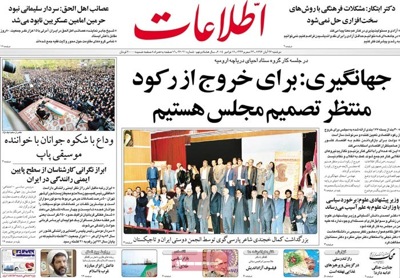
Ettela’at:

1- 10 Mega Oil, Gas, Petchem Projects Launched in South Pars

2- International Community Widely Condemns Terrorist Attack on Shiites in Syria


A Look at Iranian Newspaper Front Pages on April 17


Iran:

1- $37bn of Iranian Assets Released

2- Largest Projects in Iran’s History Inaugurated in South Pars


A Look at Iranian Newspaper Front Pages on April 17


Jame Jam:

  1. Judiciary Spokesman: Electoral Offenders Will Be Punished
  2. Iran Reclaims its Gas Share from Qatar


A Look at Iranian Newspaper Front Pages on April 17


Javan:

1- World Witnesses Bloodshed in Kefraya

2- Erdogan in Power until 2029

3- South Korean Sources: Trump Holds Secret Talks with Pyongyang amidst Tensions


A Look at Iranian Newspaper Front Pages on April 17


Kelid:

1- Judiciary Spokesman Urges President to Take Action against Corruption


A Look at Iranian Newspaper Front Pages on April 17


Kayhan:

1- Selfie with Projects Others Have Implemented!

  • Over 90% of South Pars Projects Was Constructed before Rouhani’s Presidency

2- Protest and Chaos in 150 US Cities: Trump Fans, Opponents Clash with Each Other

3- A Report on Reformists’ Tactic for Election


A Look at Iranian Newspaper Front Pages on April 17


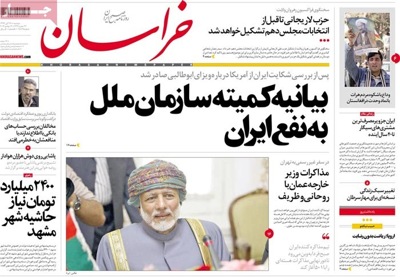
Khorasan:

1- Erdogan Notches up Narrow Win in Referendum

2- Inauguration of Mega Projects Iran’s South Pars Marks Historic Day for Iran


A Look at Iranian Newspaper Front Pages on April 17


Resalat:

1- Gas Extraction from South Pars Begins

2- Guardian Council Head: Recognizing Enemies, Main Characteristic of Best Presidential Candidate

3- Americans, Takfiris Kill Children in Syria


A Look at Iranian Newspaper Front Pages on April 17


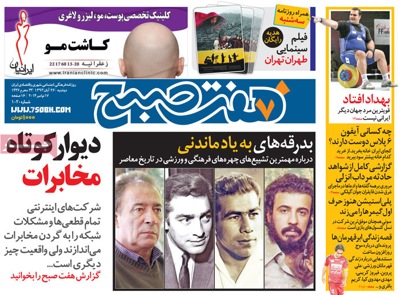
Setareh Sobh:

1- Rouhani: Iran’s Export of Oil, Gas Condensates Doubled in This Gov’t

2- Oil Minister: 100,000 Jobs Created Thanks to New Oil Contracts


A Look at Iranian Newspaper Front Pages on April 17


Shahrvand:

1- Victory in Asalouyeh

2- Tangible Changes: People in Social Media Writing about Their Lives in Past 4 Years [under Rouhani’s gov’t]


A Look at Iranian Newspaper Front Pages on April 17


Shargh:

1- Ahmadinejad, Baqaei’s Cases Still Open: Judiciary Spokesman

2- Rouhani, Jahangiri Divide Labour in Presidential Debates


A Look at Iranian Newspaper Front Pages on April 17


Siasat-e Rooz:

1- South Pars, Symbol of Trusting Domestic Capabilities

2- Erdogan Following Ataturk’s Path

3- MKO Terrorist Group Implementing US Scenarios in Region

4- Anti-Establishment Media Attacking Revolutionary Presidential Candidates

A Look at Iranian Newspaper Front Pages on April 17


Christians in Tehran Celebrate Easter

Christians in Tehran Celebrate Easter (24)

This year the Orthodox churches celebrate Easter on the same Sunday when Roman Catholics and Protestants mark the holy festival.

Here are Tasnim’s photos of Christians celebrating Easter at Saint Gregory the Illuminator (Surp Grigor Lusavoritch) Church in the Iranian capital:

Iran Respects Turkish People’s Vote in Referendum

bahram

Speaking to reporters at his press conference in Tehran on Monday, Qassemi pointed to Turkey’s referendum on constitutional changes that would replace the current parliamentary system with a presidential one, saying, “This an internal issue (in Turkey) and we will respect whatever the people vote for.”

He further emphasized that in order to see the referendum’s effects patience is needed.

Qassemi also expressed the hope that the referendum will lead to “peace, stability, security, and a national consensus in Turkey”.

Turkey held the referendum on Sunday. The turnout was high with more 86 percent of the country’s 55 million eligible voters casting ballots that were simply marked Yes or No, according to media reports.

Turkey’s state-run news agency said “Yes” votes were leading in the referendum.

But the main opposition party, CHP, said they will demand a recount of 37 per cent of the vote, claiming that 1.5 million “illegal” ballots were counted.

The pro-Kurdish People’s Democratic Party (HDP) also said they had information there was between three and four per cent voter fraud during the vote.

The “Yes” side took an early lead during vote counting and stood at more than 51 per cent with 98 percent of ballots tallied, The Anadolu Agency said.

However, there was also confusion over the number of votes that had been counted, with the Supreme Election Commission reporting that only 65 to 70 per cent of ballots had been opened.