Friday, December 26, 2025
Home Blog Page 3597

“Trump’s Decision on Iran Deal May Prompt N. Korea to Leave Talks with US”

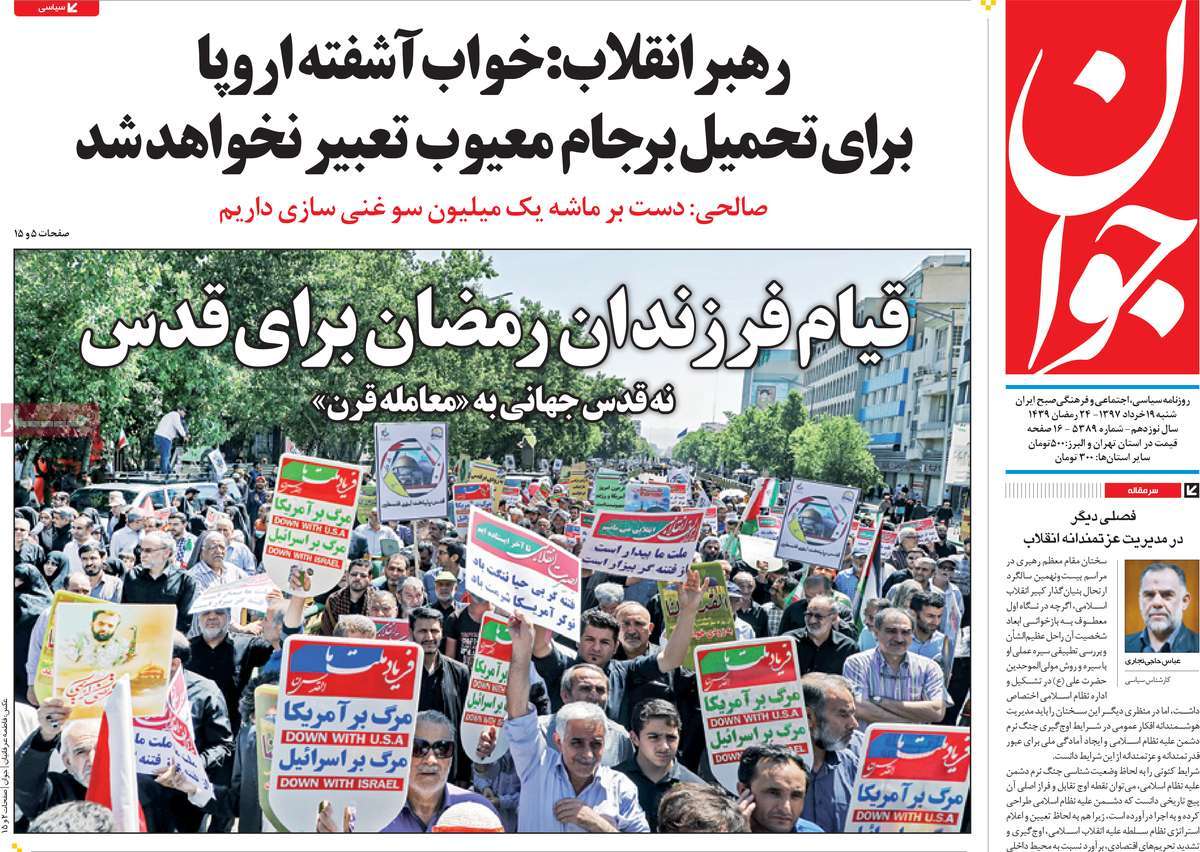
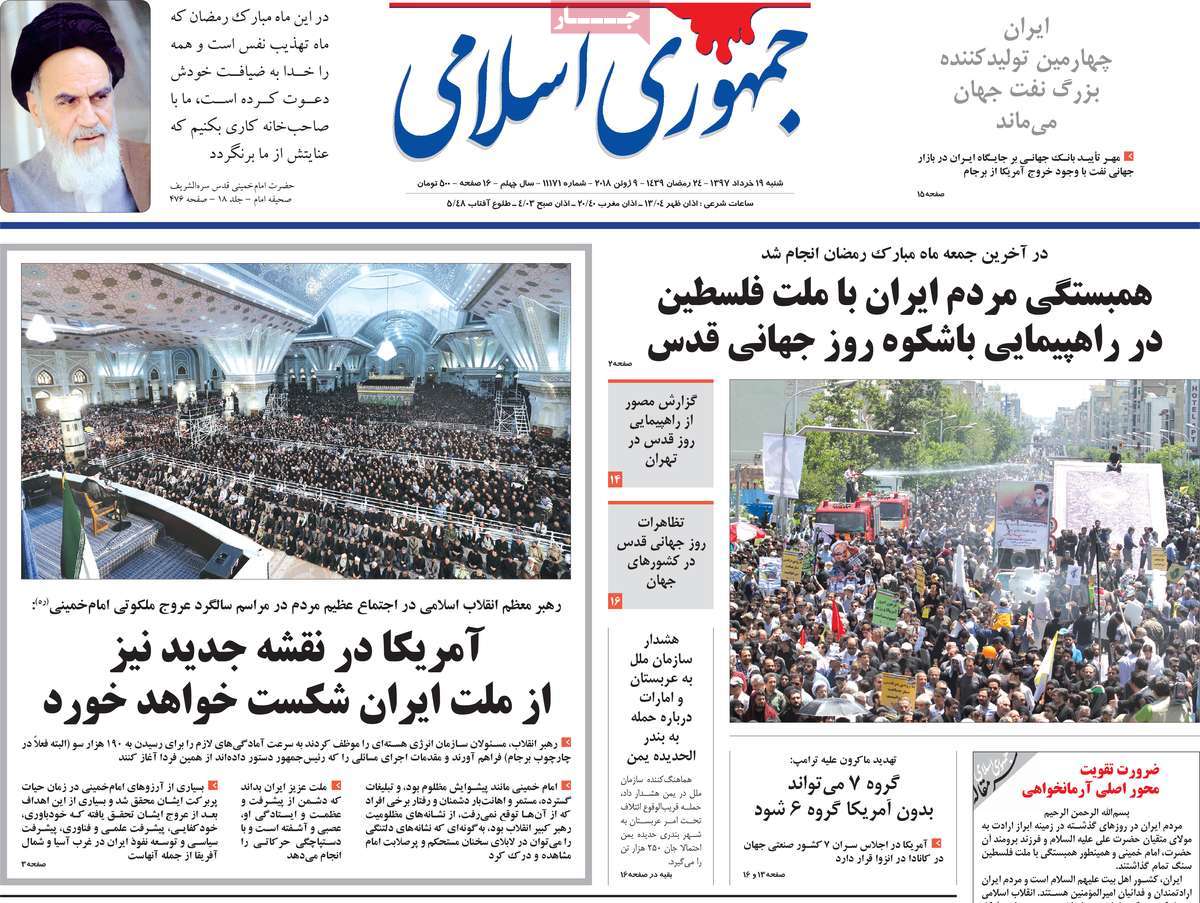
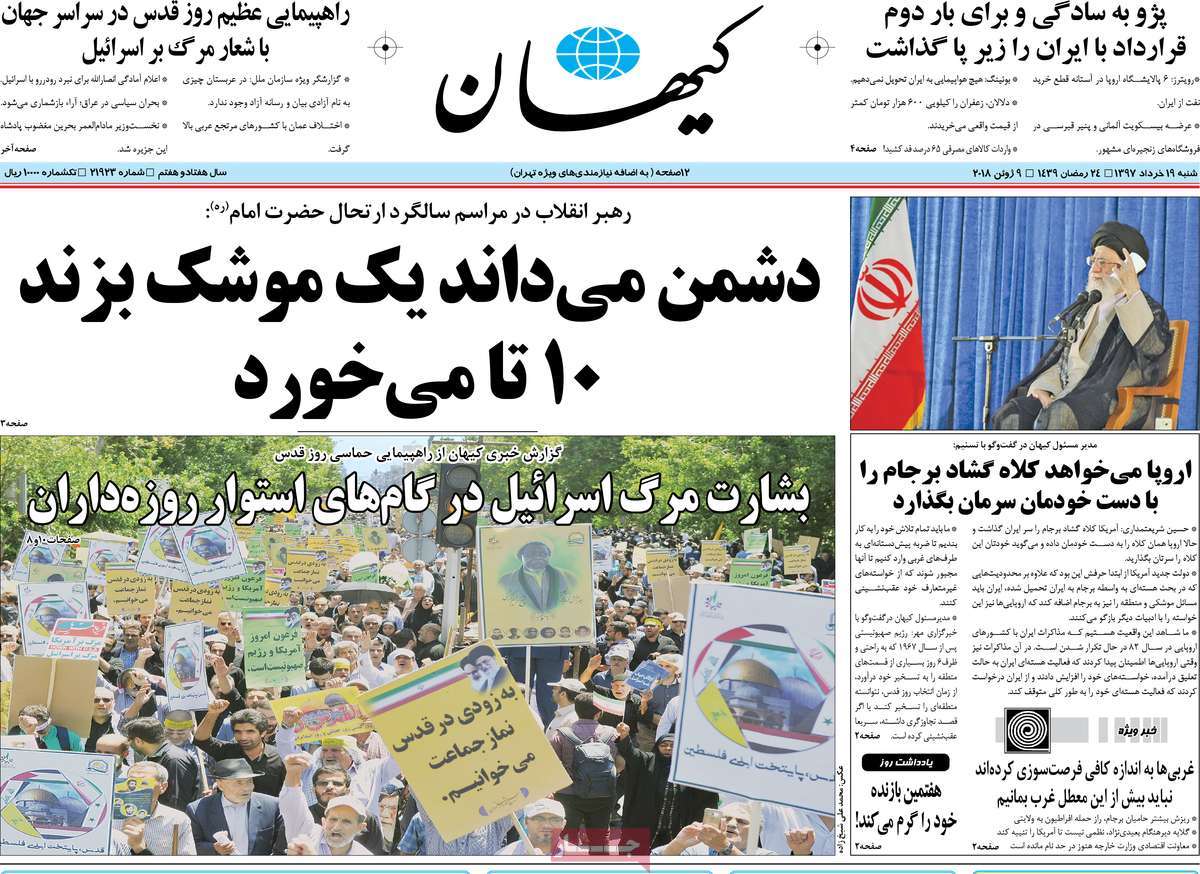
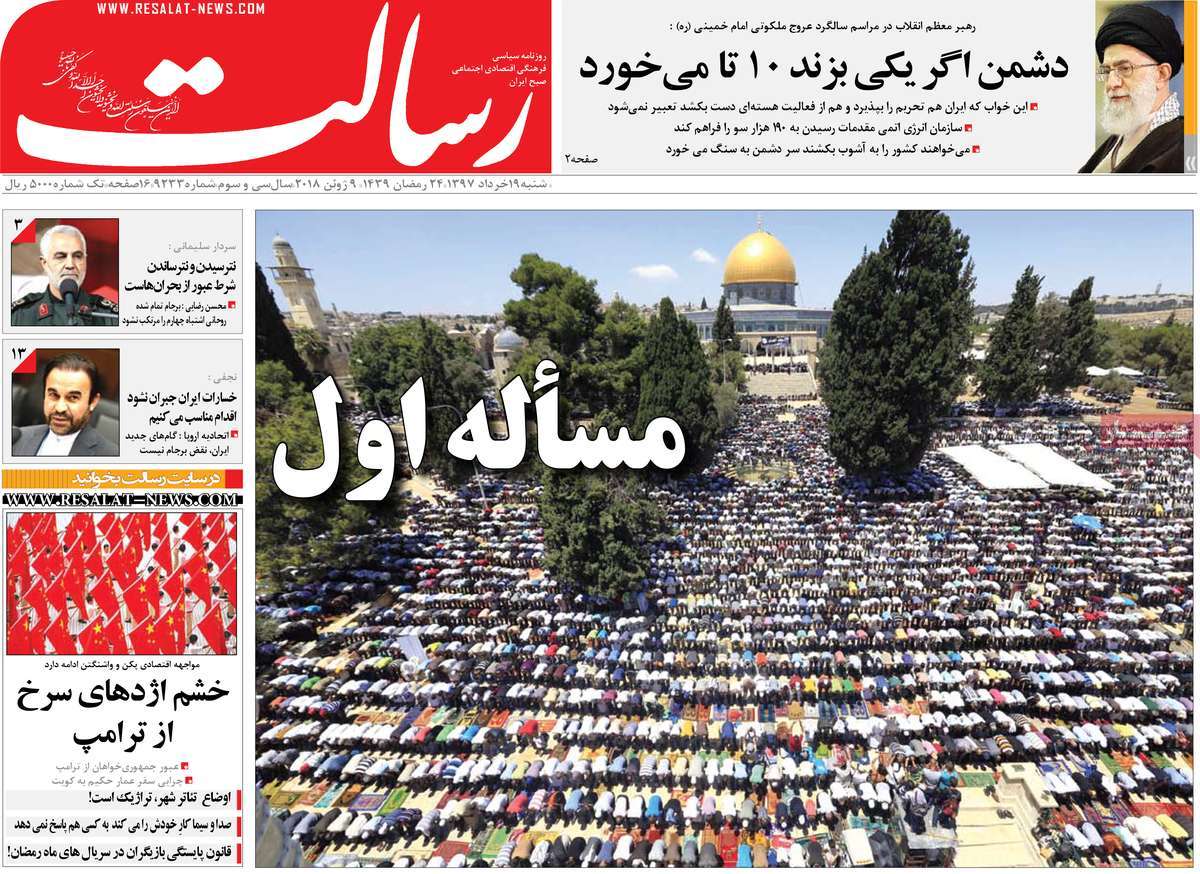
Political commentator Jafar Boloori has, in an article published in the Persian-language Kayhan newspaper, weighed in on the possible reasons behind North Korea’s suspension of planned talks between the leaders of the two Koreas, and its threat to cancel a meeting with US President Donald Trump. The full text of the analytical piece follows:

North Korea suddenly announced that it would stop talks and cancel a meeting with South Korean President Moon Jae-in, ending the happiness and joy of the United States and its allies, i.e., Seoul and Tokyo, fueling uncertainty over whether or not Pyongyang has actually trusted US President Donald Trump, the epitome of evil and breach of promise.

The North Korean Foreign Ministry has attributed the cancellation of negotiations with Seoul to the United States’ excessive demands, and announced that the White House has not stopped pressuring and making harsh remarks against Pyongyang despite recent talks between the two Koreas and a thaw in relations and even the emergence of signs of rapprochement between the South and North Korea.

The White House National Security Advisor John Bolton made humiliating comments about North Korea as the US and South Korea were going to hold joint military exercises, which are against Pyongyang in nature.

He said North Korea mustn’t dismantle its missiles and atomic weapons inside the country; rather, Pyongyang should hand them over to the US!

Anyway, North Korea has reiterated that it would not destroy its nuclear weapons in return for trade with the US, and that Pyongyang may suspend talks between North Korea’s Leader Kim Jong-un and the US and South Korea.

To what extent should we take the remarks seriously? Is the announcement by North Korea really because of Washington’s excessive demands, or is it that North Korea had no intention of dismantling its nuclear weapons from the very beginning?

Put it simply, were all the meetings and talks between the leaders of the two Koreas just a show?! In the current article, we will be trying to find logical answers to that.

The first hypothesis is that North Korea had no intention of dismantling its nuclear arms and facilities from the very beginning. The reason is that Kim Jong-un is not a naïve and immature young man like Mohammed bin Salman despite all anti-Kim propaganda.

This can be understood by reviewing the trend of North Korea’s talks with its enemies over the past months. Kim, who is just more than 30 years old, drew on the history of winter sports events in South Korea to kick off very good talks. The most important message of the talks, at least until now, has been to send a message to the world that North Korea is not an isolated country and favours logic and dialogue.

North Korea has made headlines across the world over the past months.

Secondly, the North Korean leader knows well that South Korea, Japan and even the US, with the economy and status that they have, have much to lose if war breaks out between them, but North Korea does not have much to lose!

A threat or nuclear test by North Korea would disrupt these countries’ stock exchanges and seriously challenge their economies. When Kim says in his first meeting with the leader of South Korea, a key US ally, that “Don’t worry any more, you will get a good night’s sleep from now on,’ he knows well that his southern neighbour cannot sleep at night fearing Pyongyang’s nuclear power.

Thirdly, the survival of North Korea and its people is based on these very nuclear arms and military might. Pyongyang has no doubt that if it were not a big military power, it would have been swallowed by the US long ago.

So, it does not seem logical at all that this country would accept such a risk and destroy its nuclear and deterrent arms in front of the United States, especially when the US is led by a person like Trump, who easily reneges on his commitments.

Another hypothesis is that we should accept that North Korea did actually intend to sit down for talks with the US and its allies due to the harsh sanctions imposed against it, but decided not to continue the talks due to the reasons mentioned below.

If we regard this hypothesis as true, we should see what special incident could have happened since negotiations between Seoul and Pyongyang started, an incident which could have made North Korea lose its half-baked trust in the US and dissuade it from continuing the talks.

The events which happened during that period include the continuation of threats against North Korea, the continuation of joint maneuvers by the US and its allies on the Korean peninsula, US authorities’ humiliating remarks against Pyongyang (such as the comments made by John Bolton about North Korea’s nuclear weapons), and more importantly, United States’ breach of commitments and its withdrawal from the JCPOA.

Every one of the above-mentioned events could have increased North Korea’s distrust of the US and prompted it to leave the negotiations in the middle of the way. Nevertheless, it seems the most important reason that could have made Kim abandon the talks is Washington’s non-compliance with the JCPOA, which led to ever-growing mistrust of the US.

A senior US senator says Trump’s pullout from the JCPOA proved Iran’s argument that the US is unreliable.

In the case with North Korea and the US, there is no “Europe” involved. So, Kim cannot say, like some people in Iran, that he will continue with Europe if the US pulls out.

Seoul and Washington have identical positions on North Korea. Both say the same thing and pursue the same objective. So, by taking a look at the developments surrounding the JCPOA, Pyongyang has probably arrived at the conclusion that if it dismantles its nuclear weapons, which serve as a deterrent, there will be no guarantee that the US will not violate its obligations.

Moreover, Pyongyang knows that destruction of its nukes equals the destruction of North Korea!

And the third hypothesis; maybe the reason North Korea abandoned the talks is what it has officially announced, i.e., growing pressure and threats against Pyongyang by the US and its allies amid negotiations, and humiliating comments like the ones made by John Bolton as well as the war games which were supposed to halt with the start of the talks. North Korea has witnessed such behaviour and, hence, has decided to abandon the negotiations.

Before halting the talks, North Korea released several American prisoners and began to dismantle key installations related to its nuclear tests as a goodwill gesture.

It seems the first hypothesis is closer to reality, i.e., North Korea had no intention of dismantling its nuclear weapons and missiles from the outset. The reason for this claim is what we mentioned earlier.

The survival of North Korea depends, more than anything else, on its military might and deterrence capability. Moreover, the part to the talks with Pyongyang is someone like Trump. Kim also has the JCPOA in mind; so, Pyongyang will not risk dismantling its nukes in exchange for trade with the US.


Moreover, North Korea, with the features it has today, is one of China’s key levers to pressure the United States. Furthermore, North Korea’s economy is heavily dependent on China.

Beijing will definitely not lose this lever easily, no matter what it says in word. Now, it begs the question why North Korea entered into talks if had no intention of dismantling its nukes?

In fact, North Korea’s young leader cashed in on Trump and his associates’ foolishness, notoriety and breach of promises, and played the “dialogue” game very well to show Pyongyang favours talks and peace unlike what has been said about it.

North Korea began to destroy the main facilities for its atomic tests to show that it is serious in talks, but left the negotiations right when the US went back on its word under the JCPOA and continued its threats and humiliation and wargames. This way, Pyongyang told the world that it is the US that is dangerous, isolated and unreliable.

Of course, we should wait and monitor both countries’ future reactions. The days ahead are of special significance and will show with hypothesis is more precise. We should wait and see whether North Korea will choose a fate like that of Muammar Qaddafi or will continue on the same path.

Over 100 Killed in Cuba Plane Crash

Cuba’s state-run media report that three female passengers are in critical condition after surviving the crash into thick vegetation just miles from the runway.

The state-run newspaper Granma earlier said one of the three survivors had died. Shortly afterward, Granma issued a correction, saying that all three women are alive.

Flight DMJ 0972 was headed to the eastern Cuban city of Holguin when it plummeted into in an agricultural area in the Santiago de Las Vegas neighbourhood at 12:08 p.m., according to Granma. Vice Minister of Transportation Eduardo Rodríguez Dávila said there were 105 passengers on board, including one infant. Five passengers were foreigners and 100 were Cuban, he said.

Argentina’s Foreign Ministry said two passengers were Argentine.

Five crew members on board were Mexican nationals, according to Mexico’s Civil Aviation Authority. Global Airline, which operated the flight, said there were six crew members, all Mexican nationals.

The nearly 40-year-old Boeing 737-200 was owned by the Mexican airline Aerolíneas Damojh and leased to Cubana de Aviacion, the Civil Aviation Authority said in a statement. The charter flight “suffered a failure” and crashed about six miles from the airport.

Search and rescue personnel descended on the area — with some residents helping — as fire-fighters tried to extinguish the flames, according to photos and video from the scene.

Cuban President Miguel Diaz-Canel was at the scene of the accident, the newspaper reported.

Diaz-Canel later offered his condolences to the victims’ families and told reporters the cause of the crash was under investigation.

Cuban State TV announced two days of mourning, during which flags will fly at half-staff.

Former Cuban President Raul Castro, recovering from recent hernia surgery, is aware of the crash and is staying informed about the situation, the government said.

Mexican President Enrique Pena Nieto offered his condolences via Twitter.

Boeing issued a statement of condolence and said, “A Boeing technical team stands ready to assist as permitted under US law and at the direction of the US National Transportation Safety Board and Cuban authorities.”

Holguin is more than 700 km (about 435 miles) east of the Cuban capital. Cuban state media originally reported the flight was bound for Guyana.

“Europe Incapable of Securing Iran’s Interests under Nuclear Deal”

Political analyst Yadollah Javani has, in an article published by Basirat news website, weighed in on the possible stance of the European countries regarding the JCPOA, and whether or not Europe can be trusted to secure Iran’s interests under the nuclear deal. The full text of the analytical piece follows.

When the US government pulled out of the Iran nuclear deal known as the Joint Comprehensive Plan of Action (JCPOA) days ago, it had not lived up to any of its commitments under the deal since the agreement went into effect on January 16, 2016. Trump’s pretexts were, in fact, the same excessive demands that the Americans thought would be met through the JCPOA. It should not be forgotten that Obama, too, said Iran would reap the benefits of the JCPOA only if it complied with the “spirit” of the deal! Therefore, there is no difference between Trump and Obama in this respect; rather, the difference is in the methods used by them to achieve their domineering and excessive objectives. From Obama’s standpoint, among the measures that could prove Iran’s abidance by the spirit of the JCPOA would be a change in Iran’s policies and behaviour on defense and military issues, especially the missile domain, and regional issues, as well as on support for oppressed nations, the resistance front and human rights. In addition to these, Trump has also called for the revision of the JCPOA in a bid to make restrictions on Iran’s nuclear activities permanent. To put it in a nutshell, the Americans believed that with the nuclear JCPOA, Iran would have no other choice but to accept missile, regional, human rights and other JCPOAs, would deviate from the path of the Revolution (whose spirit is the Iranian nation’s independence and freedom) and would step onto the path desired by the West.

Nevertheless, with the vigilance of the Iranian nation and under the guidelines of Leader of the Islamic Revolution Ayatollah Seyyed Ali Khamenei, not only did this disaster not happen and the dignity and independence of the Iranian nation were preserved, but also Iran has, in recent years, secured major and strategic achievements and victories in the region.

The United States’ failure prompted the country to withdraw from the JCPOA upon Trump’s order, though Washington had practically never entered the agreement as it had not made good on its obligations under the deal. In a brazen speech where Trump announced the United States’ pullout from the JCPOA, he said, “I am announcing today that the United States will withdraw from the Iran nuclear deal. In a few moments, I will sign a presidential memorandum to begin reinstating U.S. nuclear sanctions on the Iranian regime. We will be instituting the highest level of economic sanction. Any nation that helps Iran in its quest for nuclear weapons could also be strongly sanctioned by the United States.”

When the Trump administration came to power and it reiterated that Washington would withdraw from the Iran nuclear deal, a viewpoint emerged in Iran that it would be possible to stay in the JCPOA with the Europeans. Accordingly, Iranian President Hassan Rouhani reacted to Trump’s announcement that the US would leave the agreement, and said, “From this moment, the JCPOA would be between Iran and the five countries. From this moment, the ‘P5+1’ has lost the ‘1’ and under the current circumstances we should wait to see how major world countries will act vis-à-vis the agreement. I have instructed the Foreign Ministry to conduct the necessary consultations and talks and make the necessary arrangements with the European countries as well as two other big countries. If at the end of this deadline and short period of time we come to the conclusion that with the cooperation of all five countries we will be able to secure the Iranian nation’s demands under the JCPOA, the agreement will remain in place despite the United States and Israel’s will and their efforts and the discourteous remarks made by Trump tonight, and we can take steps to advance peace and security in the region and across the world.

Now, the question is whether or not the Europeans will act independently from the US and deliver on their commitments under the JCPOA protect our national interests or not. The answer is “No” due to two reasons:

  1. Since the JCPOA came into force, the Europeans have, like the Americans, called for a shift in Iran’s policies and behaviour in different domains. In other words, Europe and the US have both wanted Iran over the past year to accept a second, third, or fourth JCPOA. Now, with the withdrawal of the US from the JCPOA, the heads of the three European states have stressed the need to remain in the agreement while emphasizing the same excessive demands that they themselves and Washington have had. In fact, Europe’s policy, in word, will be to stay in the JCPOA, and in deed, will be to get on board with the US in pressuring Iran.

This important point can be understood from a statement of leaders of Britain, France and Germany issued after Washington’s pullout from the JCPOA. The statement highlights a few points:

  • We three European countries will remain committed to the JCPOA.
  • Iran should remain committed to its obligations under the JCPOA.
  • The International Atomic Energy Agency (JCPOA) should be able to continue its long-term monitoring and verification work without any obstacles and restrictions.
  • While the JCPOA should be preserved, we still agree that other issues need to be addressed. A long-term framework should be defined for some of the regulations of the JCPOA which expire after 2015.
  • Our commitment to ensure the security of our partners in the Middle East region is unconditional, and we should, in a meaningful way, address common concerns regarding the ballistic missile program and destabilizing activities in the region, especially in Syria, Iraq and Yemen.

Pondering upon the above-mentioned excerpts from the joint statement by the three European countries show that Europe is stressing the same demands that Washington has from Iran. In a phone conversation with President Rouhani, German Chancellor Angela Merkel underscored some of Washington’s demands such as talks on Iran’s missile program and the country’s activities in the region. Incontrovertibly, the Europeans will, in their talks with Iran, announce that Iran’s reaping the economic benefits of the nuclear agreement is conditioned upon Tehran’s accepting to attend negotiations what would lead to second, third, and fourth JCPOA without the presence of the US. From Europe’s point of view, increasing US sanctions on Iran, especially the secondary sanctions, will be the driving force behind these negotiations. This means that the US and Europe have shared the tasks to be done for the era following Washington’s withdrawal from the JCPOA, and Europe will not adopt an independent policy vis-à-vis Iran.

  1. The European governments’ resistance against Washington’s secondary sanctions will be the sine qua non for securing Iran’s economic interests via Tehran-Europe cooperation within the framework of the JCPOA. Will Europe enter and economic war with the US for the sake of Iran? Will European governments reciprocate by fining American firms in retaliation for Washington fining European companies? Such a thing will definitely not happen. Under no circumstances will the Europeans prioritize Iran over the US.

So, the Islamic Republic of Iran should be realistic when it comes to securing its national interests and dignity and not to fall for the joint scheme engineered by the US and Europe. This reality has, time and again, been stressed by Leader of the Islamic Revolution Ayatollah Seyyed Ali Khamenei. He once again highlighted the point after Washington’s withdrawal from the JCPOA.

“From day one, I kept telling not to trust the US! … The result is what you are seeing now,” said the Leader.

“Two and an half years have passed, and we have fulfilled all our commitments, and now this guy says he does not accept the deal and will withdraw from it and will do such and such. And now some are saying that they want to keep the JCPOA with the three European countries. I do not trust these three countries, either. I’m telling you not to trust them, either. If you want a deal, get guarantees, tangible guarantees; otherwise, they will do the same thing that the US did … If you cannot secure such a definitive guarantee, and I think you are highly unlikely to be able to get guarantees, then it will not be possible to keep moving on the path we are now,” the Leader noted.

Ayatollah Khamenei elaborated on the current situation based on a realistic view while shedding light on the intentions of the Western governments, saying, “Today, the country’s officials are facing a major test; Will they secure the dignity and power of this lovely nation or not? The dignity of this nation must be ensured. The nation’s interests must be secured.”

Muslim World Today Hates US More than Ever: Rouhani

In comments before departing Tehran for Istanbul to attend the extraordinary summit of the Islamic Cooperation Organization (OIC), President Rouhani said the summit provides the Islamic states with an opportunity to express their full support for the oppressed nation of Palestine, denounce the crimes by the Zionist regime and condemn the illegal relocation of the US embassy from Tel Aviv to Jerusalem al-Quds.

“Defending the Palestinian nation and the holy Quds means defending the Islamic values and expressing sympathy with the great and civilized nation of Palestine who are suffering from such severe conditions,” Rouhani said, as quoted in a report by Entekhab news website.

He vehemently condemned the US move to relocate its embassy to Jerusalem al-Quds and said it is against all international laws and the UN resolutions. “Doubtlessly, the move has sparked outrage among Muslim states making the US hated among Muslims more than ever.”

The Iranian President then slammed the Zionist regime for the recent brutal massacre of Palestinians in the Gaza Strip and said this is not the first time that the occupying regime is conducting such heinous crimes.

“They have been committing the aggressions against the Palestinians over the past seven decades.”

Elsewhere in his comments, he added the Islamic Republic has always stood by the Palestinian nation in the face of the Zionists’ crimes and noted it is up to all Muslims particularly the government of the Islamic states to defend the oppressed nation of Palestine.

President Rouhani added the US and the Zionist regime create chaos in the Muslim world to distract the public opinion from the issue of Palestine.

The OIC will convene at an extraordinary summit in Istanbul later Friday to show solidarity with the Palestinian people and to denounce the relocation of the US embassy to Jerusalem al-Quds as well as the Israeli attacks that killed over 60 civilians in protests on May 14.

The extraordinary summit of the 57-member OIC is held at the invitation of Turkish President Recep Tayyip Erdogan, the chairman of the 13th session of the OIC.

The Israeli forces killed 63 Palestinians on Monday, including a baby girl, and injured over 2,700 during a protest in the Gaza Strip against the transfer of the US Embassy to the occupied city of Jerusalem al-Quds.

Turkey also declared a three-day mourning period for those killed in Gaza on Monday, and called its ambassadors in Washington and Tel Aviv for consultations.

“Arab Intelligence Report Says Bin Salman Could Be Dead”

“This intelligence service in a confidential report to the country’s top official insists that at least two bullets have hit bin Salman in April 21 clashes in Riyadh and it is even possible that he is dead,” said Hossein Shariatmadari, the daily’s editor-in-chief, in an editorial published on Thursday.

The editorial came following a similar report by Fars News Agency on Wednesday which raised questions about the whereabouts of the 32-year-old heir to the Saudi throne, known to be highly active on the political scene.  

The report said bin Salman hadn’t appeared in public since April 21, when videos were posted online in social media purporting to show areas around royal palaces ringing with heavy gunfire.

Saudi authorities firmly denied any major security breach, saying Saudi forces had “dealt with” an unauthorised toy drone near the royal palaces.

But footage circulating on social media showed heavy gunfire, tanks and armed vehicles around palaces, giving rise to speculations about a possible coup attempt or a retaliation by the House of Saud’s adversaries.

As a proof, Fars News Agency pointed to the fact that bin Salman made no media appearance during the April 28 visit of the newly-appointed US Foreign Secretary Mike Pompeo to Riyadh, his first foreign trip as the top US diplomat.

This is while the state-run outlets used to publish images of meetings in Riyadh between bin Salman and former US secretary of state Rex Tillerson.

Mysterious Disappearance of Crown Prince: Where Is Bin Salman?

Bin Salman Absent from another Major Ceremony in Saudi Arabia


Kazeroon Division Plan Stopped, Iran Interior Ministry Says

In a statement published on the ministry’s website on Thursday, it said the ministry’s experts have travelled to the city several times to listen to the concerns of the people in Kazeroon and take them into account.

Considering demands by the people, the plan has been stopped and won’t be implemented until logical and genuine concerns of the Kazerooni people are addressed.

Wednesday night, the city was a scene of clashes between security forces and people demanding the release of people arrested in small demonstrations held Wednesday afternoon.

The protests in front of a police station took a violent turn after people masking their face tried to enter the police station, leaving at least one dead and six wounded, Fars News Agency reported.

Kazeroon Division Plan Stopped, Iran Interior Ministry Says
Casualties Reported in Southern Iran after Protests Turn Violent

Some protestors set fire to parts of the station and police vehicles.

The Interior Ministry expressed regret over the deadly incident, saying the protests do not have much to do with the division plan and could be rooted in efforts by anti-revolution forces to incite violence in the country.

“[The ministry] asks the aware and religious people of Kazeroon to keep calm and exercise vigilance against plots by adversaries and anti-revolution websites and do not allow the region’s security to be endangered,” the statement reads.

Located over 1,000 kilometers south of Tehran, a group of Kazeroon citizens held protest gatherings against a parliamentary motion to separate cities of the Kazeroon county to form another country.

Fars News Agency reported that the Wednesday afternoon protests were strange, as the city had seen no major protests since Kazeroon Friday Prayer Leader Mohammad Khorsand, who himself opposes the division plan, paid a visit to Tehran three weeks ago to discuss the issue with government officials.

The visit led to announcements by First Vice President Es’haq Jahangiri and provincial officials that the separation plan was stopped.

“Muslim Communities Indifferent to Palestine Plight Don’t Believe in Quran”

Ayatollah Seyyed Ali Khamenei made the comment at a gathering dubbed “Affinity with the Quran” held on the first day of the holy month of Ramadan.

“Today, the scourge gripping the Muslim world is alienation from the Quran,” said the Leader.

“Look at the situation of Palestine; a nation is stranded away from its homeland; those who’ve stayed in their homes are under different types of pressure; a lot of people have been killed and thousands wounded,” said Ayatollah Khamenei.

“Some complain why the US does not take a stance. The US and some Western countries are hand in glove with each other. How do you expect them to take a position? It is the Islamic governments that should take a stand. It is the Islamic community that should adopt a position. It is they (Muslims nations) that should resist, but they don’t! Why? Because they have distanced themselves from the Quran; because they don’t believe in the Quran,” said the Leader.

Ayatollah Khamenei underlined that Palestine will, by God’s grace, get rid of the enemy.

“[Jerusalem] Al-Quds is the capital of Palestine, and the US, and its cronies, and those weaker or stronger than the US, cannot do a damn thing vis-à-vis the truth and the divine tradition, when it comes to Palestine,” he said.

Iran President, Qatari Emir Denounce Israel’s Atrocities

In a Thursday phone conversation with Sheikh Tamim bin Hamad Al Thani, Rouhani described as “provocative” the US government’s relocation of its embassy from Tel Aviv to Jerusalem al-Quds.

The president also dismissed the Israeli regime’s killing of innocent Palestinians as a criminal act and regrettable for the international community.

He also touched upon an extraordinary meeting of the Organization of Islamic Cooperation (OIC) in Istanbul, saying, “In this meeting, Islamic countries should give a proper response to this tyranny and major crime.”

He further noted that he is pleased to see most world countries have condemned the United States’ unilateral withdrawal from the Iran nuclear deal.

President Rouhani said Trump’s pullout from the JCPOA will not be in the interests of the US and other signatories to the deal.

The president also congratulated the Qatari nation and government on the arrival of the holy month of Ramadan.

“The Islamic Republic of Iran regards the blockade on the Qatari government and nation as an inappropriate and unfair move, and welcomes the promotion of cooperation and relations with Qatar as a friendly country and a neighbor,” said President Rouhani.

He said the Iranian government and nation have stood by the Qatari government and nation under any circumstances, and will continue to do so. He also embraced the idea of holding an Iran-Qatar joint cooperation commission in a bid to promote mutual relations on all fronts.

Rouhani noted that there is no way to settle differences other than dialogue, adding, “Iran always stands ready for talks with the Persian Gulf countries on regional issues, but unfortunately, some countries think they should choose a path other than negotiations.”

Sheikh Tamim, in turn, congratulated the Iranian nation and government on the arrival of the holy month of Ramadan.

He touched upon the cordial relations between Doha and Tehran in different areas and praised the constructive positions adopted by Iran vis-à-vis the Qatar crisis, calling for all-out enhancement of ties between the two sides.

The Qatari Emir denounced the US government’s relocation of its embassy to al-Quds as well as the Israeli regime’s blockade of Gaza and killing of Palestinian people.

He said the OIC summit would be an ideal opportunity for consultations and talks on regional issues and problems.

He also referred the recent tension created against Iran, saying Iran is a powerful country in the region, and his country believes international issues and differences should be resolved only through dialogue.

Iran Becomes Permanent Member of Int’l Cancer Research Centre

After Iran gained the permanent membership of the IARC, the country’s flag was hoisted in the headquarters of the centre in the French city of Lyon, the Research Department of Iran’s Health Ministry said.

The membership of Iran in the IARC as the 26th country in the world and third country from Asia came after a vote by the members of the governing council of the IARC on May 17, a report by Mehr News Agency said.

Before the vote, a report on the studies conducted in Iran on cancer was distributed among the delegates of the governing council members and then Iran’s membership document was read out.

For a brief review of Iran’s achievements in various fields of science and technology, check the book “Science and Technology in Iran: A Brief Review

Then, Iran’s Deputy Health Minister, Reza Malekzadeh officially took part in the meeting of the governing council.

As the new member of the IARC, Iran has made great achievements in research on cancer including the first report on cancer across Iran which have been approved by the most prestigious institution in the world, Cancer Incidence in Five Continents, in terms of scientific accuracy and quality. The report is the first practical step taken so far to diagnose cancer and treat it at its earliest stages.

Among other major reports by Iranian scientists which have been approved internationally, one can refer to two separate reports on the carcinogenic nature of hot drinks and opium. These reports are the fruits of two decades of extensive research conducted by Iranian scientists and their foreign counterparts.

Dr. Malekzadeh received a medal of honour from the IARC back in January for his contribution to the report on the carcinogenic nature of opium.

The International Agency for Research on Cancer (IARC) was established in 1965 as the specialized cancer agency of the World Health Organization. The objective of the IARC is to promote international collaboration in cancer research.

The IARC Medals of Honour are awarded to acknowledge and reward the work of scientists whose research has made an outstanding contribution to advancing our understanding of the biology or of the epidemiology of cancer, identifying causes and ways of prevention and helping to relieve the burden of this disease.

Eurasian Economic Union to Create Free Trade Zone with Iran

The economic block also signed an interim trade deal with Iran during talks on Thursday in the Kazakh capital of Astana, Kazakh sources said.

The deal comes as the US is snapping economic sanctions on the country back into place following its withdrawal from the Iran nuclear deal.

It has also warned companies about doing business with Iran saying they will face sanctions.

Iran is now engaged in extensive talks with the five remaining signatories to the JCPOA -Russia, China, France, Germany and Britain – to decide about the future of the nuclear deal.

Iranian Foreign Minister Mohammad Javad Zarif made a tour of the countries over the past days and sat for talks with their top diplomats over the future of the JCPOA.

Iran says it will pull out of the deal if its benefits under it is not safeguarded.

The EEU is comprised of Russia, Armenia, Belarus, Kazakhstan and Kyrgyzstan. It is an international organization created with the aim of encouraging regional economic integration through the free movement of goods, services and people within the union.

The bloc was established in 2015, after it superseded the Eurasian Economic Community that functioned from 2000 to 2014. The union has an integrated single market of 183 million people and a gross domestic product of over $4 trillion.