Thursday, December 25, 2025
Home Blog Page 3530

Iran Gov’t Promises Transparency on Jamming Satellite Signals

In a recent interview with ISNA, Azari Jahromi said the ministry is neither involved in the jamming operation nor has granted any licenses for that.

“The ICT Ministry is not involved in the jamming. There are no licenses for jamming and the ministry has not issued any organization with such licences,” he said.

The jamming of satellite channels, usually targeting channels accused of spreading propaganda against the Islamic Republic, has caused controversies in Iran in recent months.

There are concerns among people over the negative health impacts of the local jamming operations, which are rumoured to cause a wide range of health problems, from headaches to cancer and birth defects.

In 2017, hundreds of people in Shiraz in central Iran held protests outside the headquarters of the governor of the Fars Province against the use of broadcast jamming.

Some government organs, including the Health Ministry, have also warned against health risks of exposure to jamming signals.

But the source of the jamming is still a mystery, with no one in the Establishment admitting to be behind the operation.


Iran Meeting Radiation Standards

Azari Jahromi told ISNA that officials are concerned over health impacts of electromagnetic radiation, particularly those caused by mobile towers.

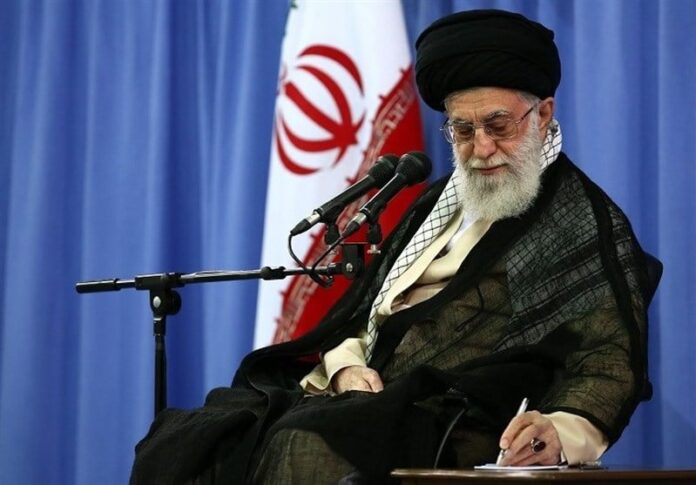
These concerns have led the Leader of Islamic Revolution Ayatollah Seyyed Ali Khamenei to order the Supreme National Security Council to set a working group to investigate whether standards in radiation are met, the minister said.

As part of the investigation, Jahromi said, the ministry has been tasked with installing equipment for monitoring “electromagnetic emissions” in five Iranian metropolitans, including Shiraz and Tehran.

The minister said the equipment have so far shown the level of emissions in the country are about a third of maximum level under global standards.

“Fortunately, world standards are met in Iran in this regard,” he said, adding that people need not to be concerned about the health risks of exposure to emissions.

The minister said governments organizations including Atomic Energy Organization of Iran are in charge of preventing health problems caused by emissions, if the need arises.

“EU Allocates $80 Billion Credit to Cooperation with Iranian Firms”

Pedram Soltani said after the incidents in Iraq and Syria, Europe is no longer interested in seeing insecurity and war in the Middle East and wants to stand by Iran firmly so much so that those incidents would not happen in the Islamic Republic.

“But Iranian political analysts are neglecting this issue, and they are creating a negative atmosphere in the country,” Fars News Agency quoted the Iranian official as saying.

Soltani pointed out that the $80 billion credit is allocated by the European Union to the cooperation of small and medium-sized Iranian and European companies.

“A European economic organization has been tasked with this, in order to establish a relationship between the two sides.”
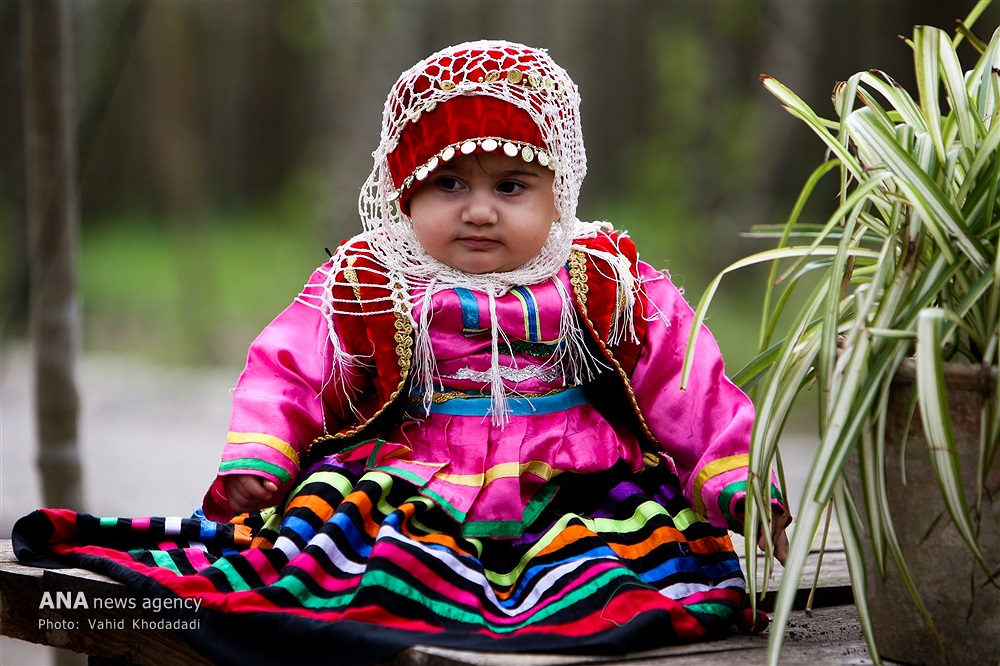
The management of funds and small and medium-sized enterprises in the European Union is carried out by a subsidiary of the European Union, he added.

The commissioner for small and medium-sized industries of the European Union was in Iran three weeks ago and Iran’s Chamber of Commerce is going to negotiate with them as the representative of the private sector, noted Soltani, stressing that the Chamber of Commerce of Iran has established good ties with the European Union.

Poll: MKO Doesn’t Represent Iranian Diaspora in Canada

Members of anti-Iran terrorist group MKO along with its guests from the US and its regional allies in its annual gathering in Paris

According to the survey conducted by the Iranian-Canadian Congress, 98.90 percent of 1,551 Iranian diaspora in Canada who took part in the online survey said they were against the presence of Ottawa officials in the Paris annual gathering.

In response to a question whether or not the MKO represent you when it comes to Iran-related issues and Canada’s policies towards the country, 99.48 percent said the terrorist group doesn’t represent them at all, a report by Alef news website said.

Meanwhile, 94.13 percent said they are against a decision by the former Canadian Prime Minister Stephen Harper to remove the MKO from the list of terrorist organizations in 2012. They also described Harper’s decision as a mistake.

Poll: MKO Doesn’t Represent Iranian Diaspora in CanadaAs the 22nd Prime Minister of Canada, Harper came from the modern Conservative Party of Canada. During his premiership, he was among the staunch supporters of the Zionist regime and showed deep animosity towards the Islamic Republic. Meanwhile, he never supported the talks between Iran and the six world powers which finally led to the Iran nuclear deal in 2015.

In his latest move against Iran, Harper attended the recent MKO gathering in Paris.

MKO is designated a terrorist organization by Iran and Iraq. Washington and the European Union removed MKO from their lists of terrorist organizations in 2012 and 2009, respectively. The group is based in Paris, with a compound for its militiamen located in Albania.

The MKO held its annual meeting in Paris on Saturday with a number of American hawks such as Rudy Giuliani – Donald Trump’s personal lawyer – and other former US officials as well as former Canadian PM Harper in attendance.

Founded in the 1960s, the terror group fled to Iraq in 1986, where it joined Saddam’s army during the war Iraq imposed on Iran (1980-1988) and helped Saddam kill thousands of Iranian civilians and soldiers during the US-backed war imposed on Iran.

Poll: MKO Doesn’t Represent Iranian Diaspora in Canada

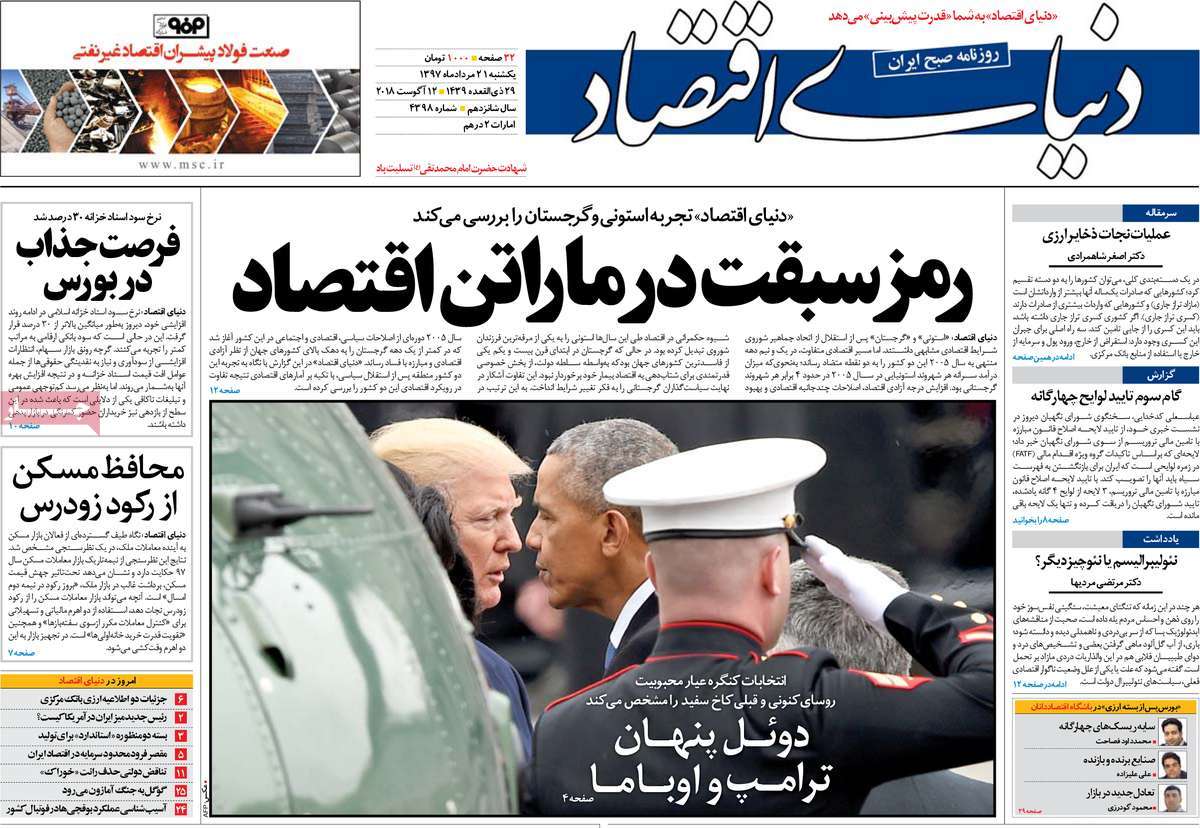
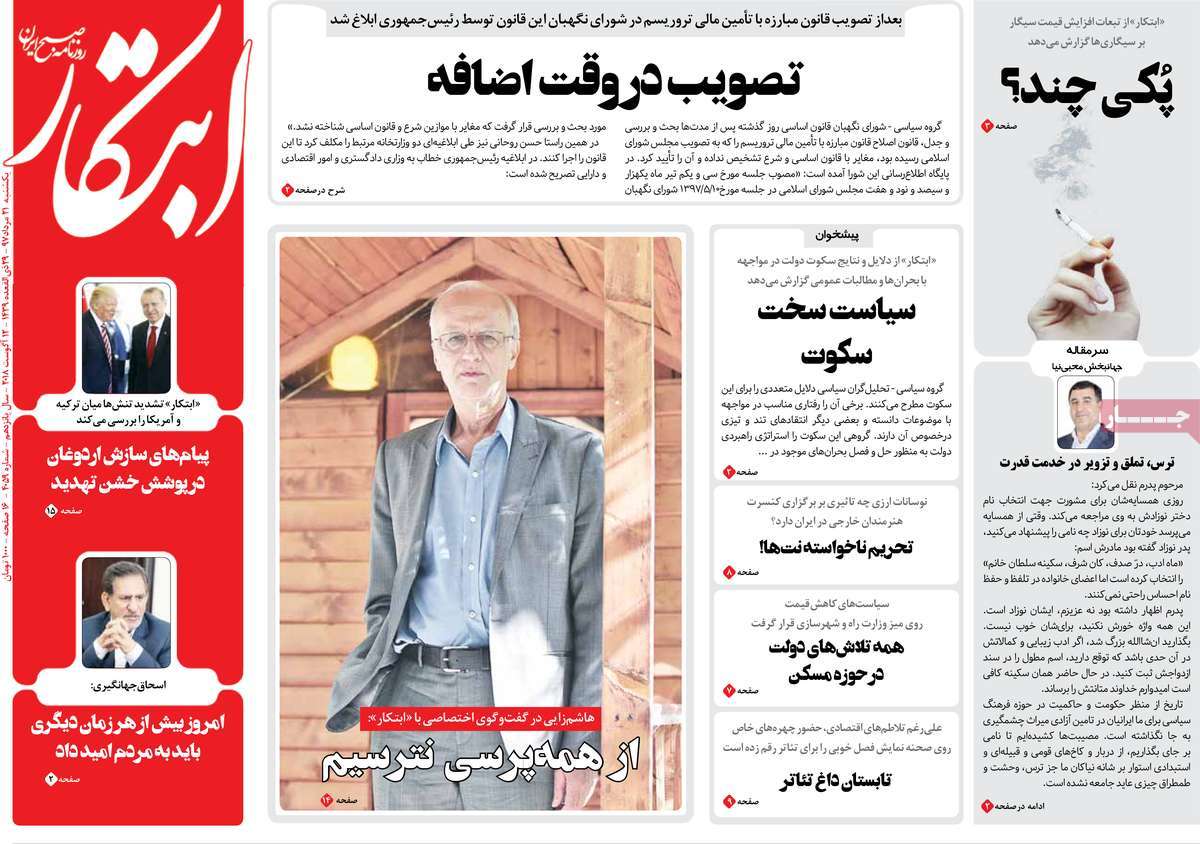
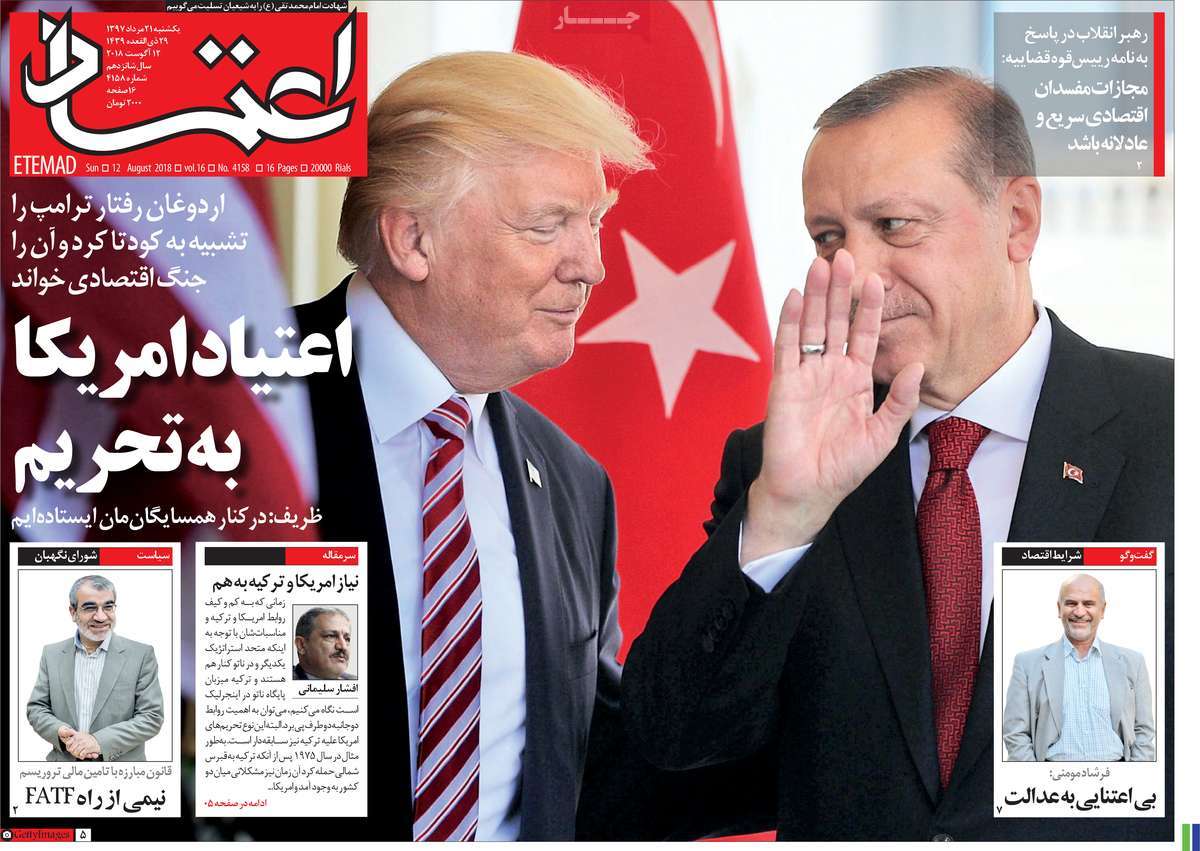
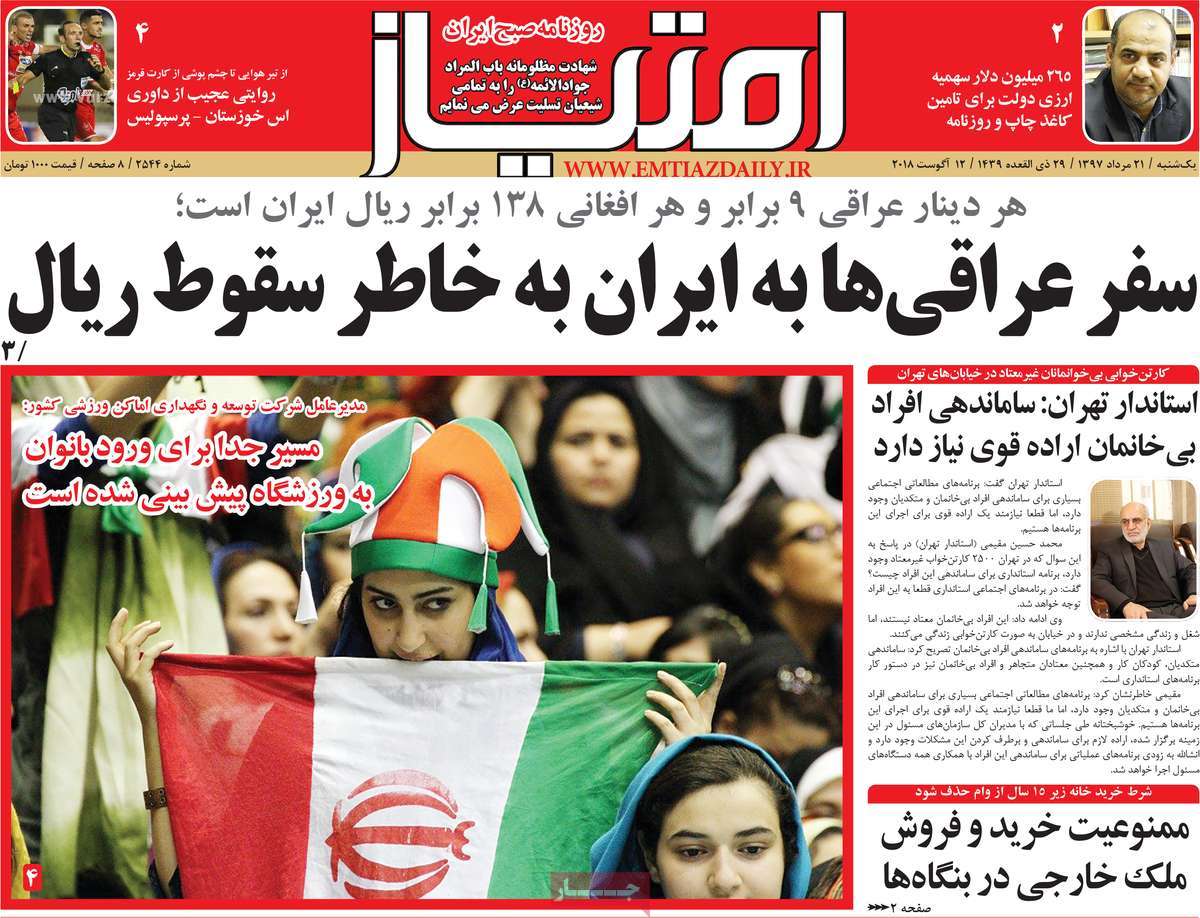
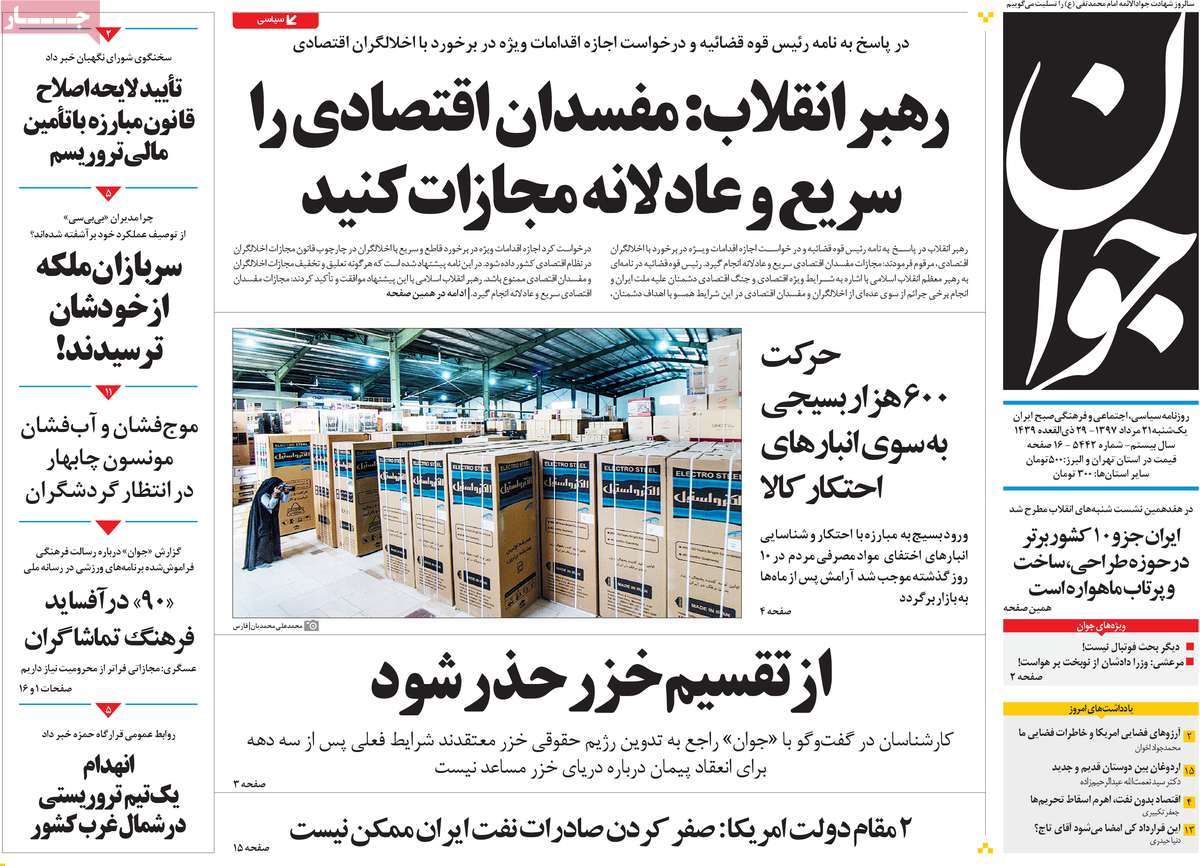
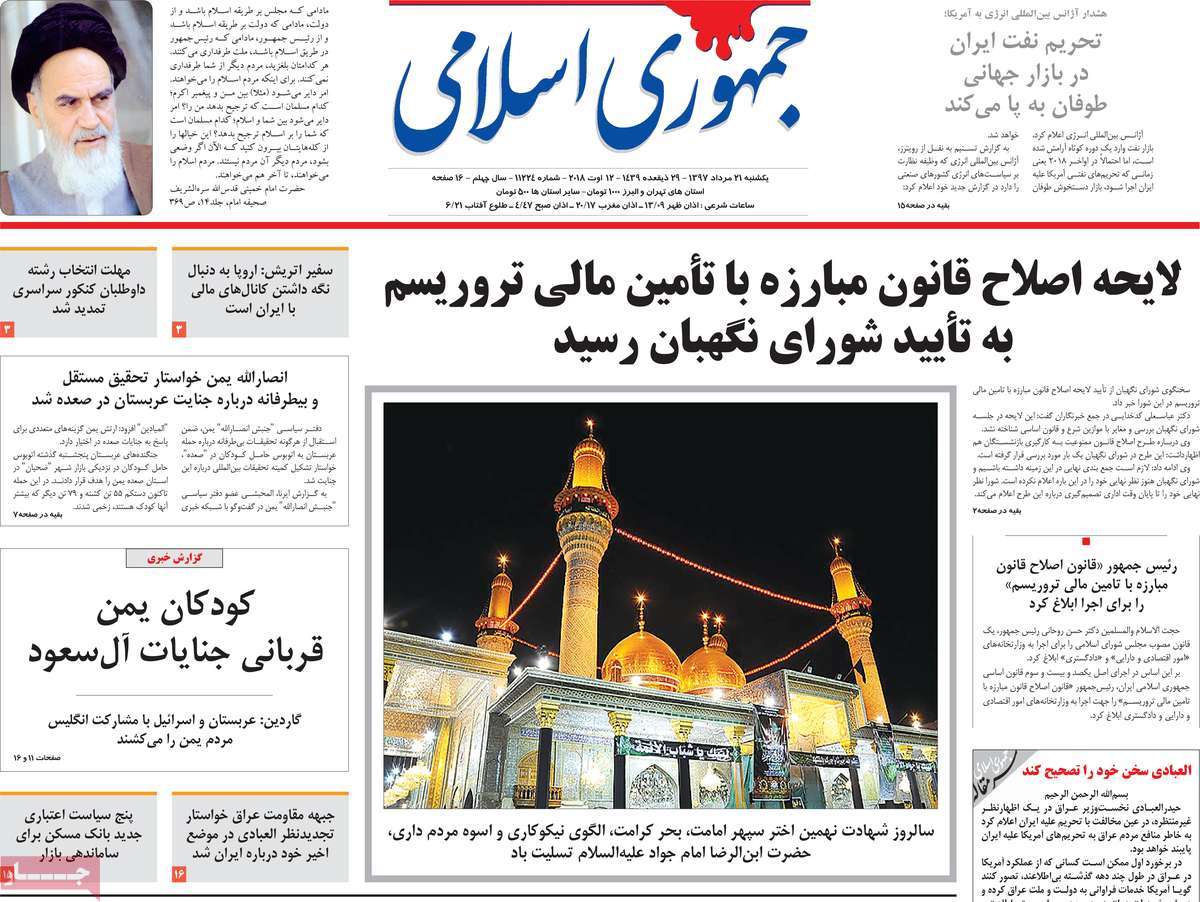
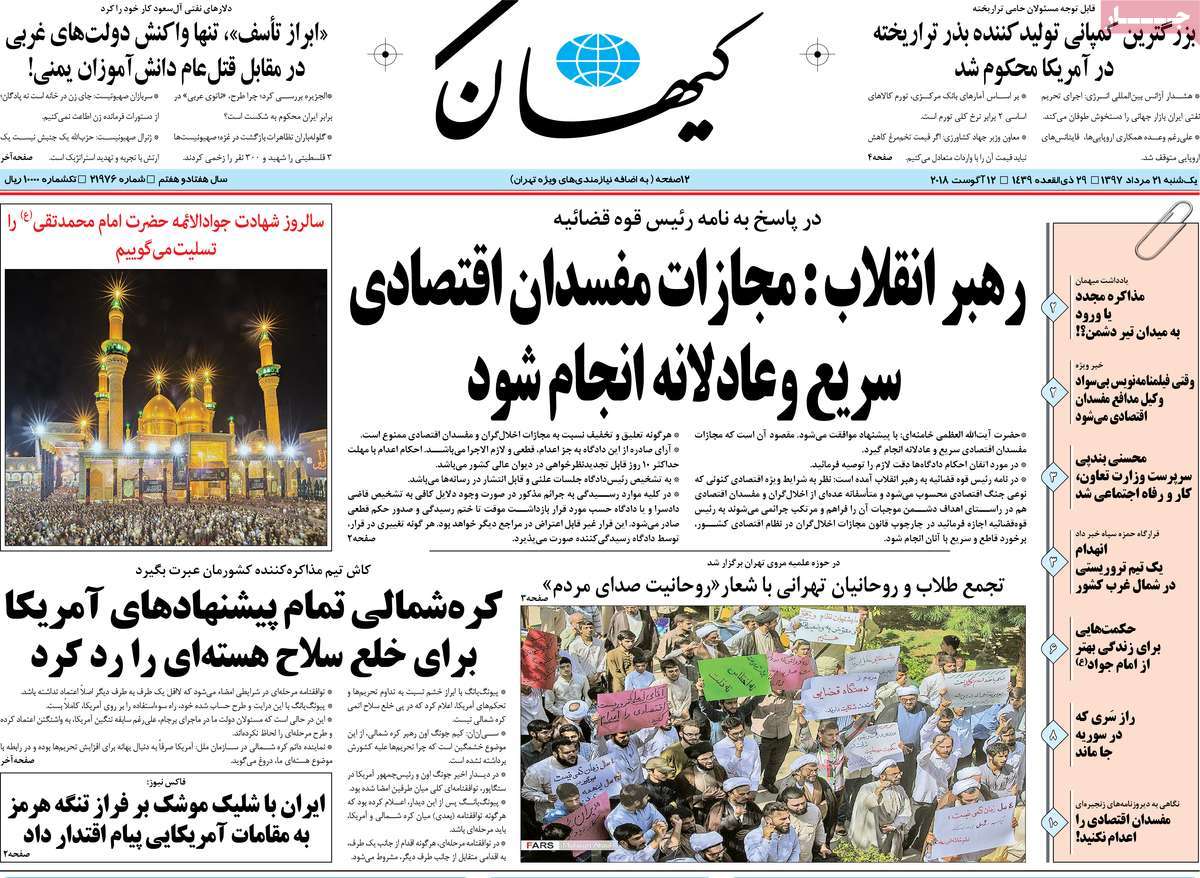
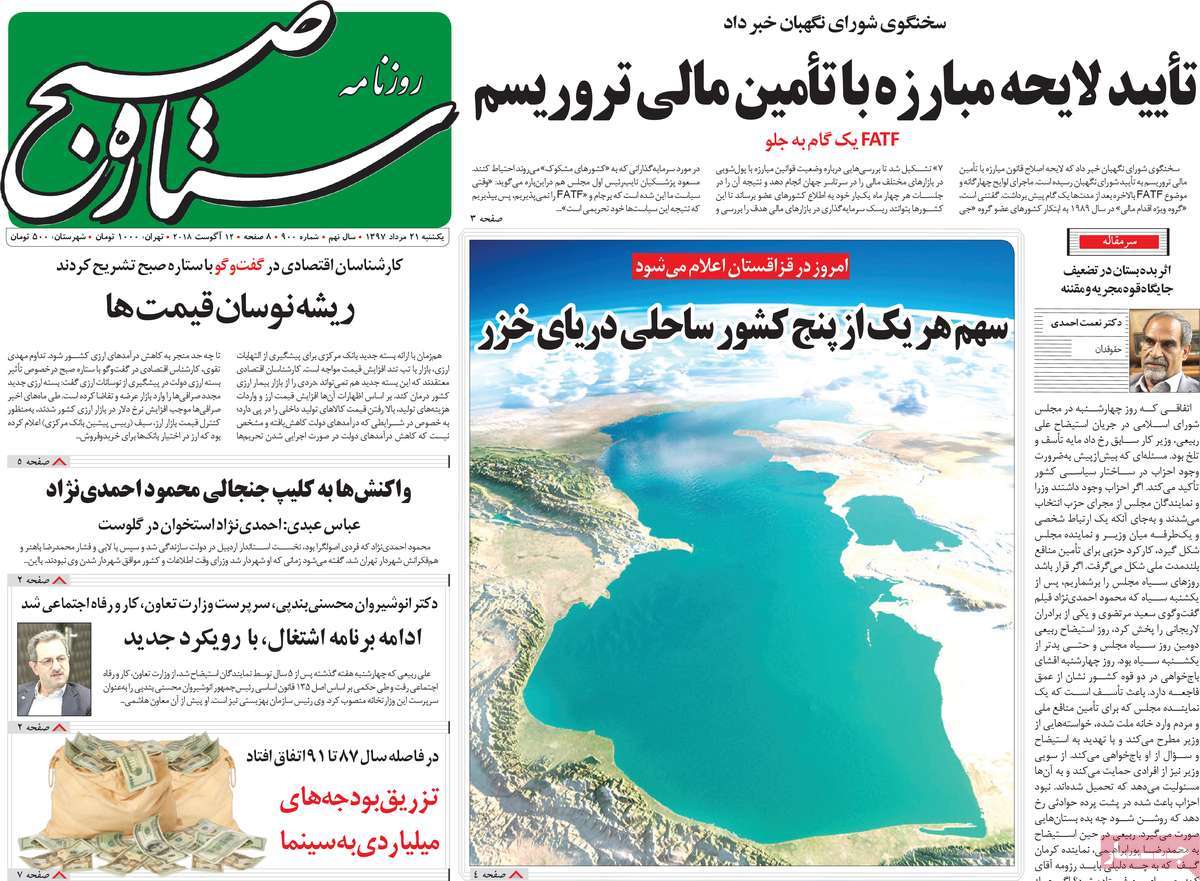
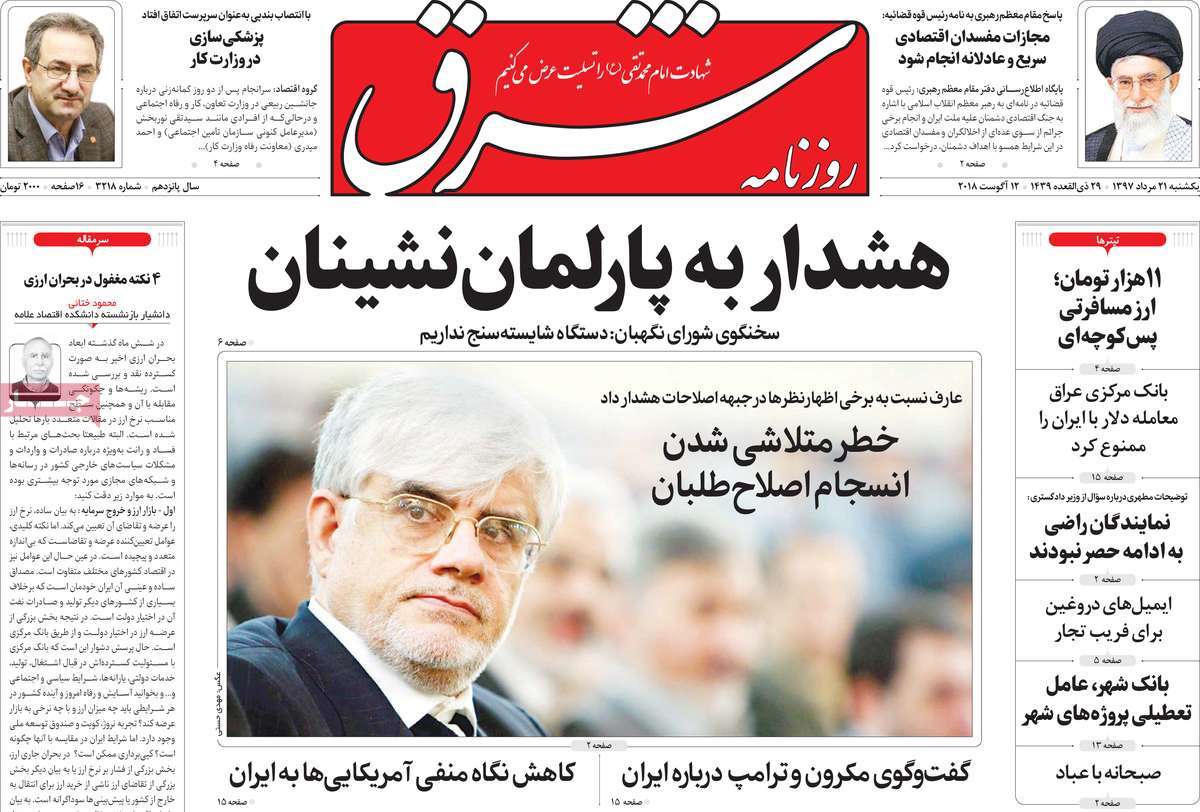
A Look at Iranian Newspaper Front Pages on July 18

A Look at Iranian Newspaper Front Pages on November 19

The top story in all papers today was the harsh reactions in the US to a meeting between US President Donald Trump and his Russian counterpart Vladimir Putin in Helsinki. The US Congress and many others in the country are outraged by Trump’s stances and talks with Putin.

The cessation of Iran’s electricity exports to Iraq over the Arab country’s huge debts, and a decision by Iraqi Prime Minister Haider al-Abadi to replace Iran with Saudi Arabia also received great coverage.

Also a top story was the Expediency Council’s rejection of a bill passed by the Parliament, which allowed the government to implement the FATF standards.

The above issues, as well as many more, are highlighted in the following headlines and top stories:


19 Dey:

1- Iran’s Oil Exports Not to Be Stopped: VP

2- Russia’s Position on Iran Nuclear Deal Not Changed

3- Americans Outraged by Trump’s Meeting with Putin

4- ISIS Terrorists Arrested in Iran

A Look at Iranian Newspaper Front Pages on July 18


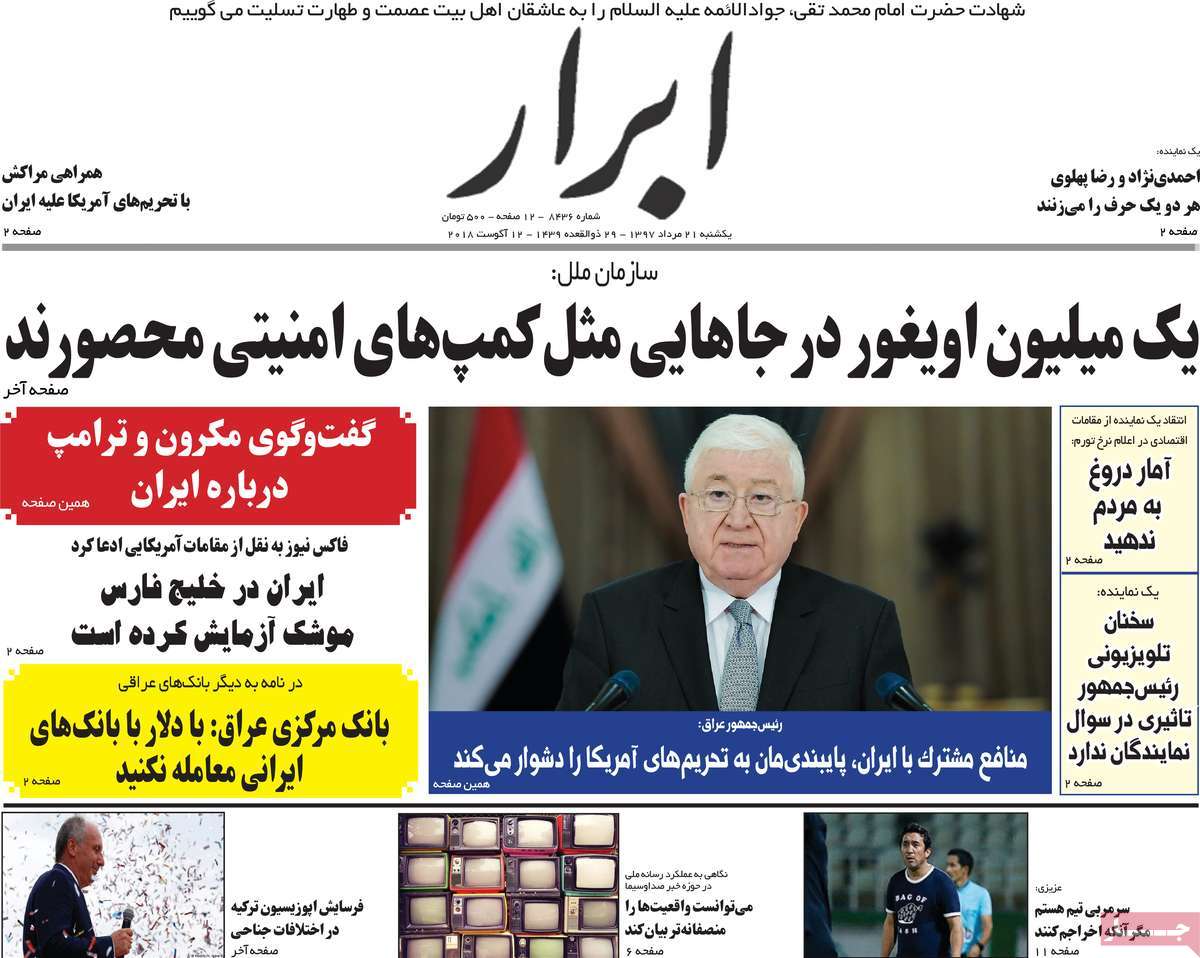
Abrar:

1- Iraq to Use Saudi Arabia’s Electricity instead of Importing Iran’s Power

2- Trump: Putin Looking for Preserving Iran Nuclear Deal

A Look at Iranian Newspaper Front Pages on July 18


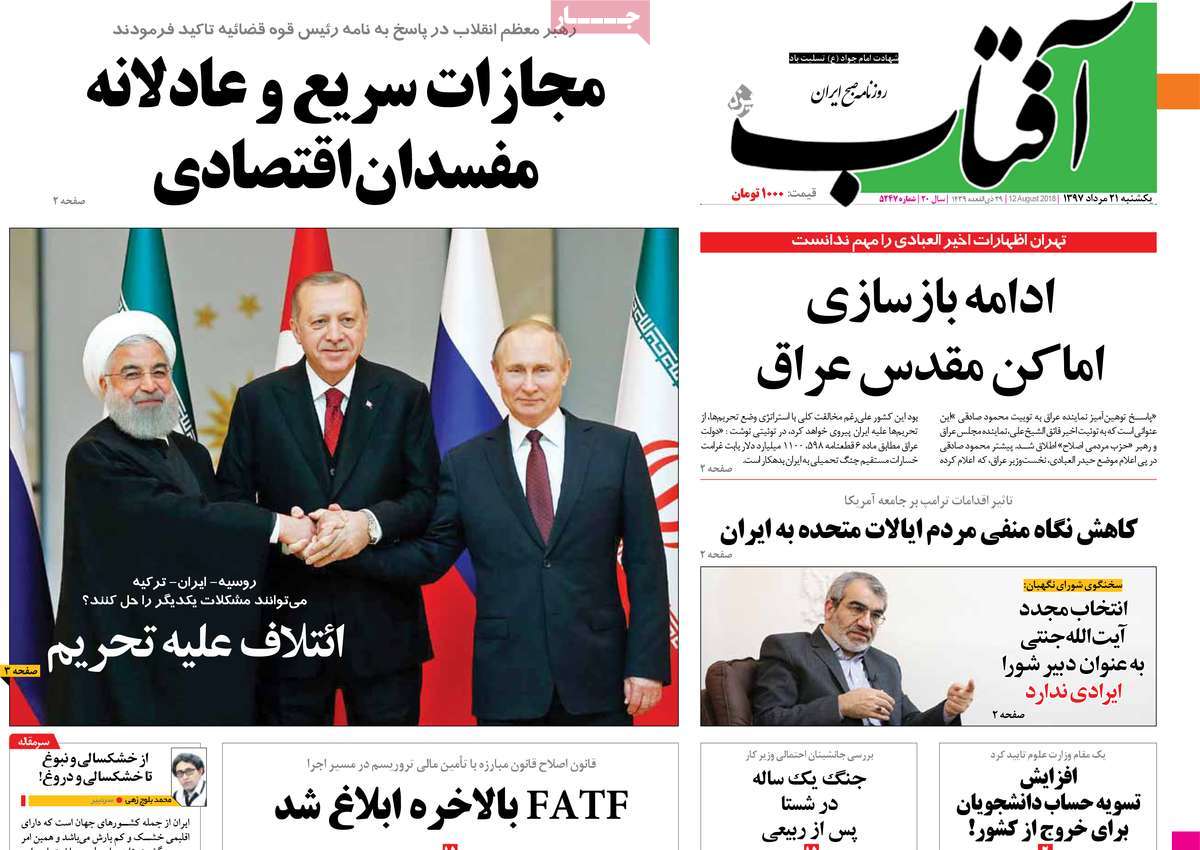
Aftab-e Yazd:

1- Iran Needs to Hold Talks with Anti-Trump Figures in US: Rouhani’s Aide

2- Kayhan Criticizes IRIB for Airing Croatian President’s Hugs after FIFA World Cup Final

  • You’re Now Free to Even Broadcast American Women’s WWE Matches!

A Look at Iranian Newspaper Front Pages on July 18


Amin:

1- Mogherini Rejects US’ Call for Isolation of Iran

2- Moscow Big Winner of Helsinki Game

A Look at Iranian Newspaper Front Pages on July 18


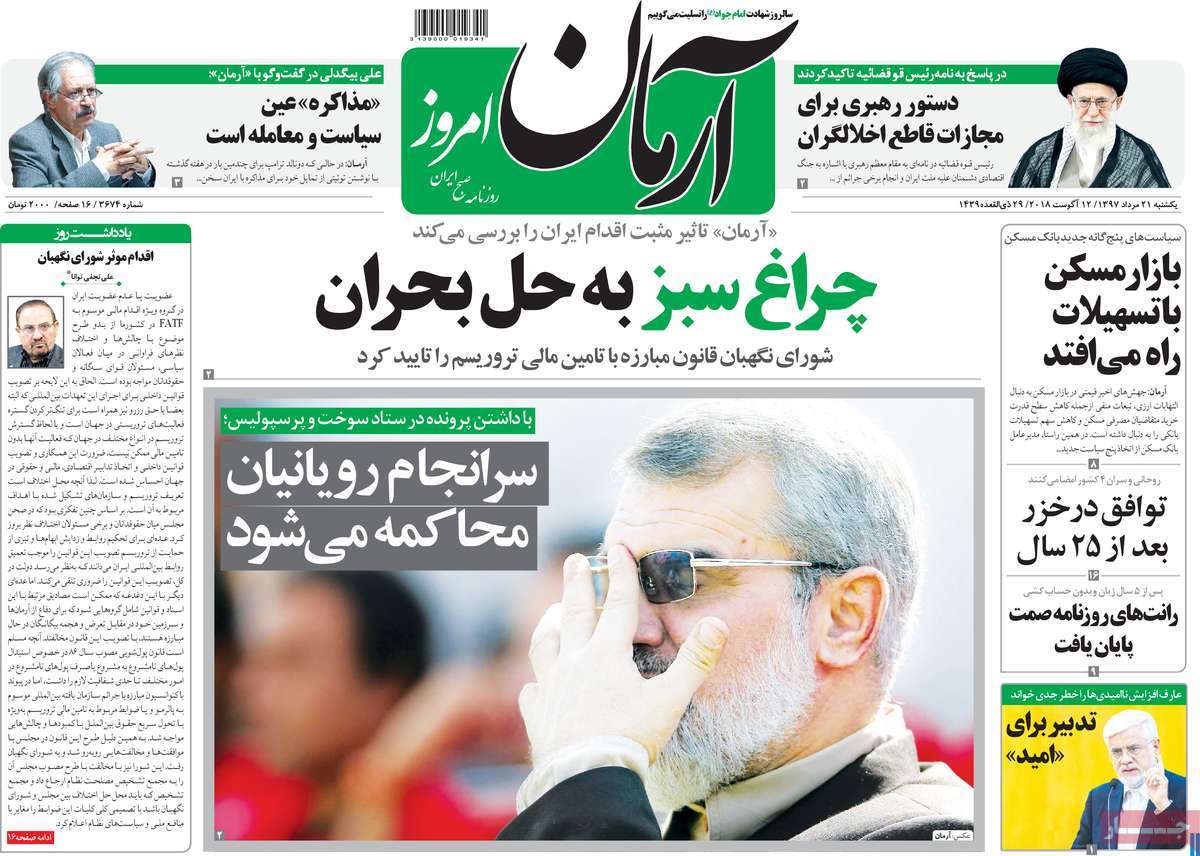
Arman-e Emrooz:

1- Iran’s Lawsuit at The Hague to Put Trump in Passive Position

2- Cleric Calls for Giving More Freedom to Foreign Tourists

3- Iran’s Electricity Exports to Iraq Stopped

A Look at Iranian Newspaper Front Pages on July 18


Ebtekar:

1- Putin Once Again Wreaks Havoc on Trump

2- Issue of Women’s Presence in Stadiums to Be Raised Soon: VP

3- Taliban’s Precondition for Holding Talks with US

A Look at Iranian Newspaper Front Pages on July 18


Emrooz:

1- Austrian Ambassador Says Cutting Exports to Iran Will Damage Europe

2- Central Bank Chief Is to Blame for What Happened to Forex Market: Former MP

A Look at Iranian Newspaper Front Pages on July 18


Emtiaz:

1- Illicit Drugs Used to Be of 20 Types, Now We Have 700 Types of Them: Interior Minister

2- Iran Ranks among Top 15 Countries in Science Production for First Time in History

A Look at Iranian Newspaper Front Pages on July 18


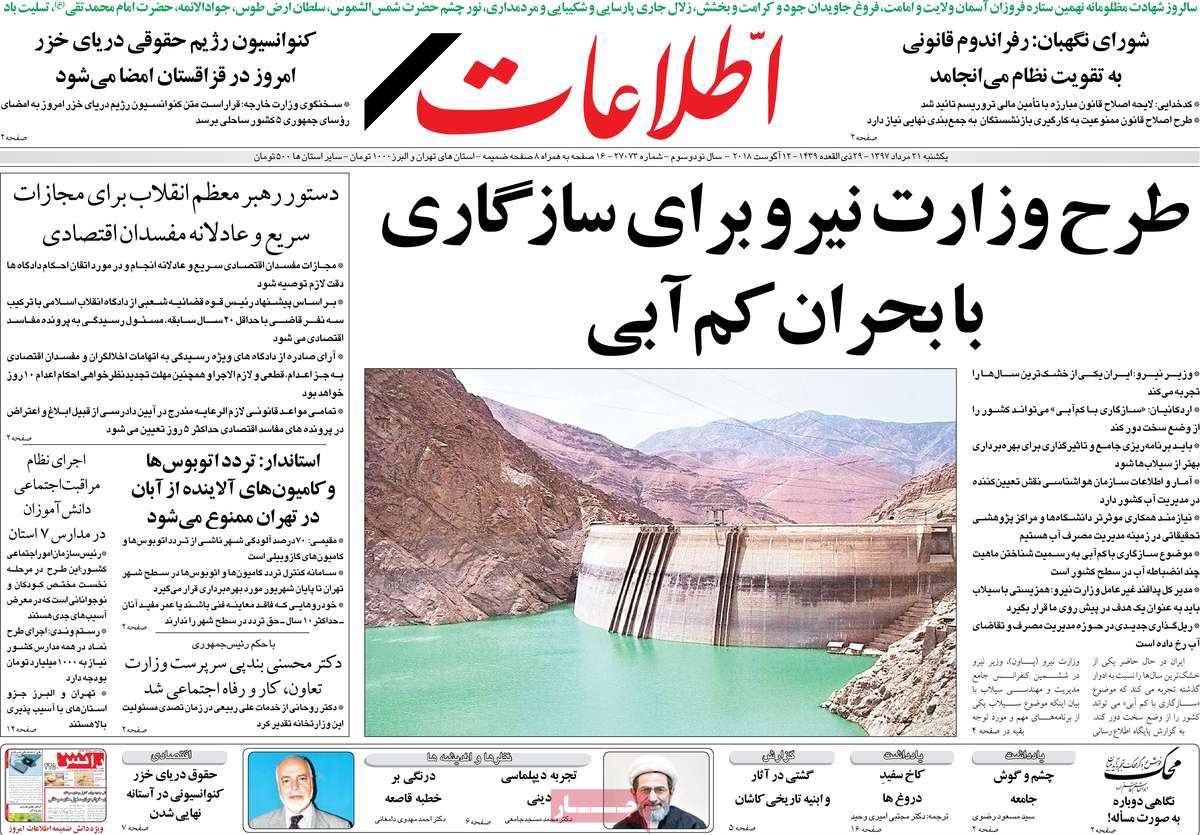
Ettela’at:

1- Europe Allocates $80 Billion for Doing Business with Iran

2- Saudi Coalition Admits: Yemenis Have Fired 160 Rockets

3- Efforts to Keep Beautiful Anzali Lagoon Alive

4- US’ Political Community Strongly Protests Trump’s Remarks in Meeting with Putin

A Look at Iranian Newspaper Front Pages on July 18


Haft-e Sobh:

1- Iranian Girl Accidentally Travels to Russia Alone with Her Cheap Car

2- Iran’s Expediency Council Totally Opposed to FATF

A Look at Iranian Newspaper Front Pages on July 18


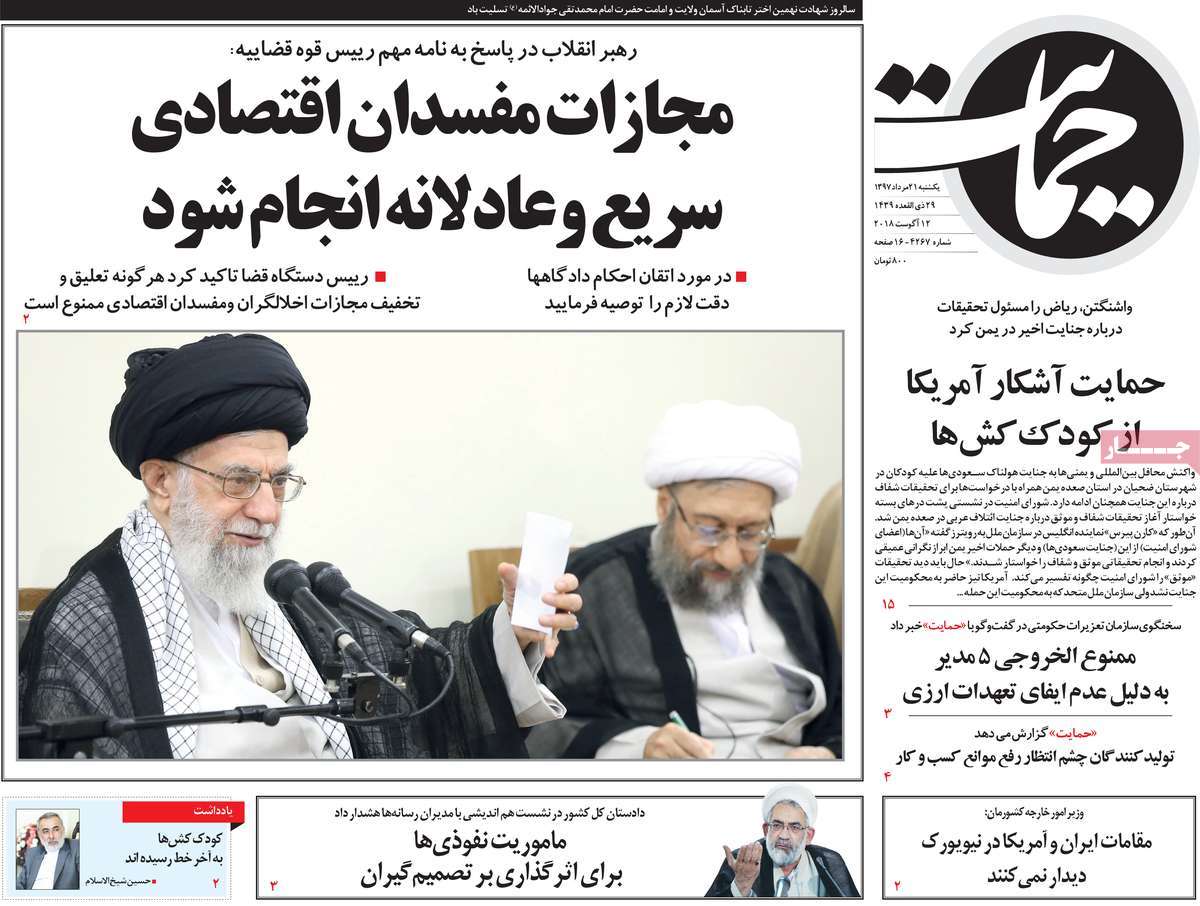
Hemayat:

1- Bill on Iran’s Accession to Palermo Convention Rejected

2- Kids Who Got Old: Shocking Report by PBS on Arab Coalition’s Genocide in Yemen

A Look at Iranian Newspaper Front Pages on July 18


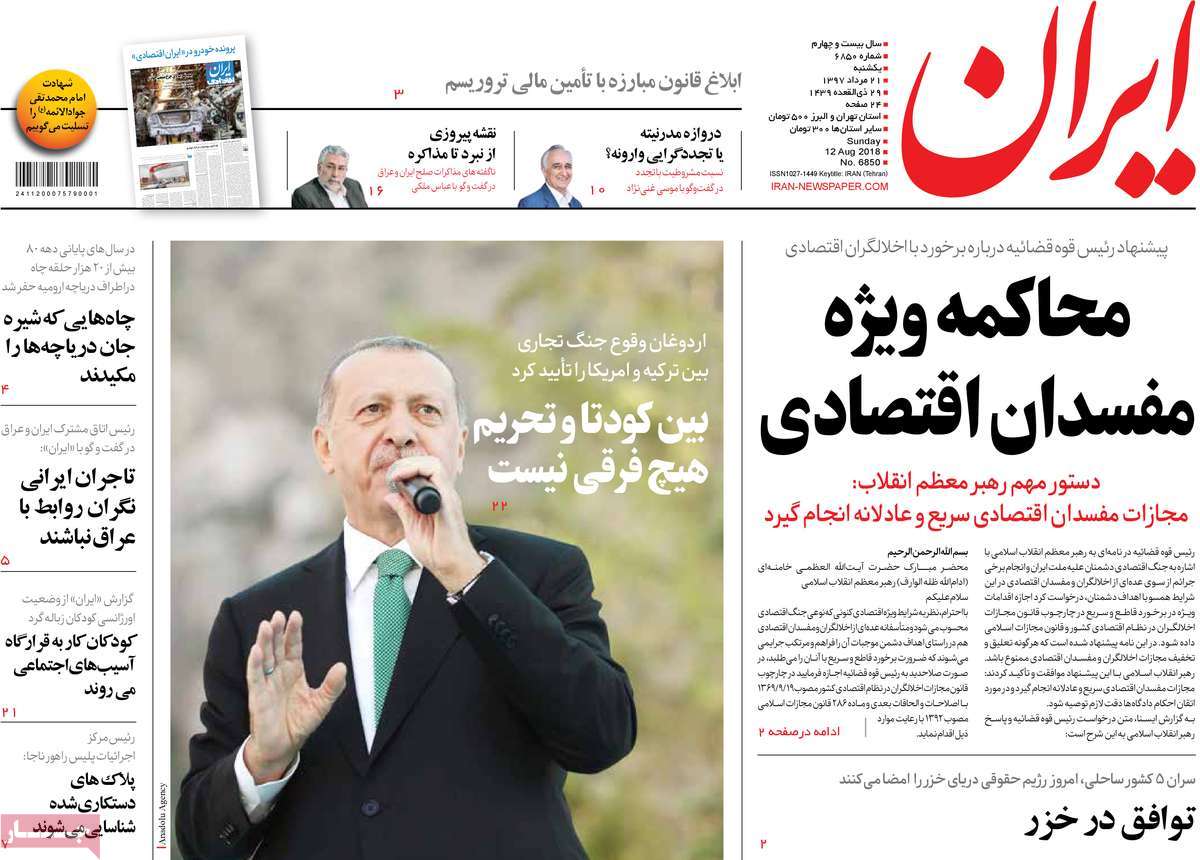
Iran:

1- Draft Bill Prepared for Transparency in Fight against Corruption

A Look at Iranian Newspaper Front Pages on July 18


Jame Jam:

1- Why Doesn’t Iran File Lawsuit against Total?

A Look at Iranian Newspaper Front Pages on July 18


Javan:

1- Government Must Stop Giving Official-Rate Currencies to Those Going Abroad for Pleasure

2- US Has Killed Thousands of Civilians in Syria: Amnesty International

3- Trump-Putin Meeting Did Not Change Syria Equation

A Look at Iranian Newspaper Front Pages on July 18


Jomhour:

1- Desperate Effort: How Much Europeans Will Succeed in Keeping JCPOA Alive?

A Look at Iranian Newspaper Front Pages on July 18


Jomhouri Eslami:

1- FM Zarif Says World Resolved to Help Iran Maintain Its Active Role at Int’l Level

2- Trump’s Own Goal in Helsinki Leads to US’ Defeat against Russia

A Look at Iranian Newspaper Front Pages on July 18


Kayhan:

1- Government Expected to Change Its Behaviour, Reshuffle Cabinet to Resolve Issues

A Look at Iranian Newspaper Front Pages on July 18


Quds:

1- West Minus Trump: From Dream to Reality

A Look at Iranian Newspaper Front Pages on July 18


Sazandegi:

1- Reformist Figure: It’s Fatal for a Country to Have Non-Partisan Parliament

2- Rafsanjani’s Son: We Must Think of Iran in 2021

A Look at Iranian Newspaper Front Pages on July 18


Seda-ye Eslahat:

1- 170 Million Headscarves, Chadors Used Annually

2- Iran Counts on India amid US Sanctions: Araqchi

A Look at Iranian Newspaper Front Pages on July 18


Setareh Sobh:

1- All on One Side, Trump and Putin on the Other Side

A Look at Iranian Newspaper Front Pages on July 18


Siasat-e Rooz:

1- Zionist Regime’s Army Afraid of Kites

2- American Bluff: US Treasury Dept. Says Exceptions to Be Made on Iran Oil Sanctions

A Look at Iranian Newspaper Front Pages on July 18


Sokhan-e Rooz:

1- Shameless, Cowardly, Humiliating!

  • US Congress Outraged by Putin-Trump Talks

A Look at Iranian Newspaper Front Pages on July 18

Qurut; Special Dish Made in Eastern Iran

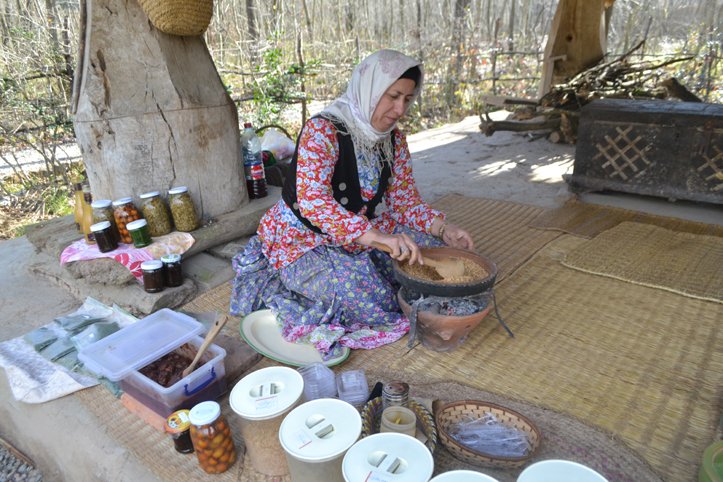
If we want to introduce regional cuisine in Iran, which is a typical example of the country’s geography, we should certainly go to South Khorasan; a desert region where every food is worth a lot.

Due to the warm and dry climate of South Khorasan, animal husbandry has always been more dominant than farming in this area. Therefore, it is not surprising that the most important ingredient in Khorasan Razavi province is whey, which is used differently in foods and also as a popular daily intake alone or in combination with local herbs.

The Birjandi whey dish or Qurut is the most famous food in southern Khorasan with its purple colour which has a special taste. It would be a great experience to try this dish.

Qurut; Special Dish Made in Eastern IranThis delicious food was formerly used by the general public, but the high-ranking people could not forgo Qurut as well. The main ingredient of this food, which is purple, is special Qurut (whey) of Birjand, and powdered walnut.

To get a better purple colour and change of the taste, some locals use mountain pistachios of Khorasan region instead of walnut.

According to the Cultural Heritage, Handicrafts and Tourism Department of South Khorasan province, the local dish of the southern Khorasan Province was inscribed in the Intangible Cultural Heritage List of Iran on July 14, 2018. The inscription came after the setting of Birjandi purple sufra and serving Qurut for 1,200 Birjandis residing in Tehran.

Qurut; Special Dish Made in Eastern Iran

Recipe

Qurut is served in both hot and cold forms. To prepare hot Qurut, they mix some onions or fried garlic with a little salt, black pepper and cinnamon, then add whey to it. Before getting boiled, it is taken off the heat and is ready to be served.

First, they should moisten the hard whey in water for one hour, and then empty the water and put the whey pieces that are now softened in a special container called “whey grinder”, which is hollow with rough walls. After that, they pour powdered walnut on whey pieces, and start to rub them into the wall of the container using their hand palms. They also slowly add water to get a liquid mixture. Then they pour oil in a pot and sauté onions. Some also add chopped mint to fried onions. When the onions get fried, they add the mixture of whey, walnut or mountain pistachio, saffron, water and cinnamon to onions and heat a bit.

Now Qurut is ready. They pour it into a bowl and mix it with Sangak bread or Komaj which is a local type of bread in South Khorasan. Sometimes, hot Qurut is served with eggplants, potatoes, zucchini and cooked vegetables like spinach.

Qurut; Special Dish Made in Eastern Iran

Iran Ready to Assist Yemenis If They Ask: Leader’s Aide

“We welcome any kind of help that we can do to the people in the region, governments of the region, including Syria, Iraq, Lebanon and also Yemen,” Ali Akbar Velayati told RT in an interview during his recent trip to Russia aired on July 15.

“If Yemen asks us to help them bring peace and tranquility to the region, we will not hesitate to do that,” Velayati said.

Since 2015, Yemen has been the scene of a Saudi military campaign, which Riyadh says aims to push Houti fighters out of the Yemen capital Sana’a and restore to power the fugitive president Abd-Rabbu Mansour Hadi.

The US and its regional allies are accusing Iran of seeking to dominate the region, saying Iran’s measures are destabilizing the region.

But Tehran says it’s regional presence is aimed at promoting peace and fighting terrorism.

Last week, Velayati met with Russian President Vladimir Putin in Moscow to deliver a message from the Leader of Iran’s Islamic Revolution Ayatollah Seyyed Ali Khamenei and President Hassan Rouhani.

The trip came as the US is working to tighten the screws on Iran, vowing to impose harsh sanctions on the country to force Tehran to accept US demands regarding its nuclear and regional activities.

Rouhani’s Aide Says Iran Must Negotiate with ‘The West minus Trump’

Referring to the Monday meeting between Trump and his Russian counterpart Vladimir Putin in Finland’s capital of Helsinki, Hesamoddin Ashna said the meeting did not end up in favour of Iran’s adversaries.

“They thought the Helsinki meeting will be a sad day for Iran, but now former US officials and some senators and European figures say it was a sad day for America!” Ashna wrote in a post in his Twitter account, ILNA reported.

Pointing to Trump’s confrontational stance towards US allies showcased in the recent G-7 meeting in Canada and Trump’s visit to Europe this week, Ashna said this behaviour contrasted sharply with Trump’s friendly approach towards Putin.

“Trump has transformed the definition of the West … The Helsinki [meeting] showed that now the West means the coalition between Europe and the [anti-Trump] Americas against Trump’s America,” he said.

Trump’s trip to Belgium, Britain and Finland was marked by his frequent taunts and threats aimed at America’s NATO allies, a sharp contrast to his unrestrained bid to court Russia despite the conclusion by US intelligence agencies that Moscow meddled in the 2016 US election to aid his candidacy, Euronews reported.

In Brussels, Trump sowed confusion and chaos, blasting NATO allies for not contributing enough money for their own defense. Then he called German Chancellor Angela Merkel a “captive” of Moscow for its support of the Nord Stream 2 gas pipeline from Russia, and supported domestic opponents of British Prime Minister Theresa May.

On the eve of his summit with Putin, Trump added insult to injury by calling the EU a “foe” for its trade policies in a CBS interview that aired on Sunday.

That language stood in stark contrast to the scene on Monday at Finland’s presidential palace, where Trump called the Russian leader, accused by the West of all manner of grievances, a “good competitor” and said “I think the word competitor is a compliment.”

The Trump-Putin meeting drew a wave of condemnation by US lawmakers from both Republican and Democratic parties, worried that Trump is creating a chasm among the US and its traditional allies that could be highly dangerous to the US interests.

Ashna said Trump’s controversial measures have created a chance for Iran to draw closer to anti-Trump western leaders.

“This is chance for improving relations with the West. Now we have something called ‘the West minus Trump’,” he said, adding the new definition of the west covers Europe, Canada and a half of US population.
“It’s time for us to enter into talks with the anti-Trump America and the west minus Trump,” he said.

Putin’s Envoy Due in Tehran to Brief Iranians on Helsinki Summit

According to the report, carried by RBS news agency on Wednesday, Lavrentiev will travel to the Iranian capital on Wednesday to brief Iranian officials on the Trump-Putin meeting held in Helsinki on Monday.

He is also reportedly scheduled to coordinate possible joint actions based on the agreements reached in the Finnish capital.

On July 16, US President Donald Trump and his Russian counterpart Vladimir Putin had a one-on-one meeting in Helsinki that lasted more than 90 minutes.

Ahead of the meeting, Ali Akbar Velayati, an international adviser to the Leader of the Islamic Revolution, visited Moscow and held talks with Putin.

“US Unlikely to Get Tough on Iran before November”

The Iranian news website Fararu has, in an analytical piece, weighed in on the US’ oil sanctions on the Islamic Republic of Iran and its growing pressure on Tehran ahead of the November deadline for re-imposition of nuclear-related sanctions.

The full text of the article follows.

The US government is sensitive about hikes in oil prices on the threshold of the country’s important by-elections. As a result, it is unlikely to escalate tensions with Iran before the elections.

After its unilateral withdrawal from the Iran nuclear deal on May 8, 2018, Washington announced that it will reinstate sanctions against Iran and will impose the highest level of sanctions against the Islamic Republic.

Some time later, the Americans unveiled their key measure to exert maximum pressure on Iran. A senior US State Department official told media that the White House had called on all those buying oil from Iran to bring their petroleum purchases from the country to zero; otherwise, they would face the United States’ unilateral sanctions. This unexpected announcement by the US pushed up crude prices on world markets immediately, so much so that White House officials had to tone down their remarks in order to calm down the market.

Although the US has always spoken of putting maximum economic pressure on Iran, observers and analysts believe Washington will not get tough on Iran, especially in the oil sector, at least until next November.

Monitoring Trump’s remarks and positions on crude prices shows he is especially sensitive about price hikes.

Although the Organization of Petroleum-Exporting Countries (OPEC) agreed to raise crude output by roughly one million barrels per day after oil sanctions on Iran were announced, still serious doubts exist on the possibility of compensating, by other producers, for the crude shortage caused by Iran sanctions. So, Trump recently spoke of Saudi King Salman bin Abdulaziz Al-Saud’s agreement to add two million barrels per day to its current output. Of course, following Trump’s comments, the White House issue a statement toning down the US president’s remarks.

The reason behind Trump’s sensitivity about oil is the by-elections of the US Congress.

The by-elections are slated to be held on November 6, 2018. The vote comes as Donald Trump is barely halfway through with his presidency. Candidates will compete for all 435 seats at the House of Representatives as well as 35 Senate seats up for grabs. So, if the Democrats manage to secure the majority of the seats in Congress, it will depict a disappointing outlook for Trump.

But in the run-up to such an important election, will Trump accept the risk of a rise in oil prices because of a halt to Iran’s crude exports? Analysts believe the answer is “no.”

The Bank of America says Washington is unlikely to adopt a tough position on Iran in the lead-up to the congressional elections in November.

Iran, OPEC’s third largest producer, is facing US sanctions, which will make some buyers of Iran’s oil stop petroleum purchases.

Still, the Bank of America said “the [Trump] administration may look for an easy win on trade to appease markets and voters alike before November,”

It is noteworthy that the Bank of America had already warned that bringing Iran’s oil exports to zero may push up crude prices by up to 50 dollars per barrel.

It was due to these concerns over a rise in oil prices before the by-elections that the US is considering using its Strategic Petroleum Reserve (SPR) in order to regulate the prices of petroleum.

Iran FM Says Europe Underestimating Its Power, Influence

Speaking in an exclusive interview with Euronews on Wednesday, the Iranian top diplomat said he believes Europe is selling itself short.

“What we need from the Europeans is both the political commitment, which they have made, now we need to see the measures in place on the ground, not simply in writing, not simply in words — in the banking sector, in the investment sector, in the energy sector, in the transportation sector, in the SME sector,” he said.

“I believe generally Europe is underestimating its power and its influence, we believe that it should be more active in regional peace and security, in international peace and security as well as in promoting a greater cooperation and dialogue”.

Zarif went on to say that Tehran has a good relationship with Russia and the Syrian government but blames the US for supporting the so called Islamic State.

“We have good communication and coordination with Russia and with Syrian government and we will continue to do so. Our objective here is very clear, that is our objectives and the objective of the Russian Federation and that is to fight against terrorism and extremism”.

“Now if President Trump wants to take credit for it, he should take credit for supporting ISIS which has been what the US and its allies have been doing all along. The fact that US arms, US weapons have been found in the hands of ISIS and other extremist organizations is documented, is documented by western sources. So I think we should look at the realities, those who fought terrorism, those who fought extremism are Syrian people and those who work with Syria people.”

The remarks come as Iran has filed a suit against the US alleging that Washington’s decision in May to impose sanctions after pulling out of a nuclear deal, violates a 1955 treaty between the two countries.