Thursday, April 23, 2026
Home Blog Page 3522

Iranian Firm Using Nanotechnology in Paint, Coating Industry

The R&D section of the Rangin Nano Nahal company has managed to bring nanotechnology to the paint and coating industry, inventing several types of electrostatic powder coatings that have solved long-running problems in the industry.

Mehdi Rahmani, the CEO, says his company has more than nine patented products in Iran.

“Among the company’s products are anti-bacterial electrostatic powder coatings, which are used for coating medical equipment, washing equipment, household appliances, etc.” he noted.

“Covering the surface of the equipment with this coating will destroy up to 99 percent of microbial contamination and bacteria and fungi,” he went on to say.

Nanotechnology Exhibition to Bring World’s Leading Firms to Tehran

Rahmani says another kind of coatings is anti-corrosion electrostatic powder coatings, which protect metal equipment exposed to humid environments.

“This kind of coating is made of special nano-particles that boost resistance of metal surfaces against corrosion,” the CEO said.

He further noted that this coating is a must for things that are exposed to water and humidity, including doors, windows, kitchen appliances, metal furniture, lampposts and automobile parts.

Iranian Firm Using Nanotechnology in Paint, Coating Industry

“This coating also increases the durability of structures more than five times,” he added.

Another type of coating is the night-shining one, which is made of photoluminescence particles that can absorb light in the day and create luminance at night, he noted.

“This type of nanostructured electrostatic powder coatings is used in household appliances, motor vehicles, guard rails, etc.” Rahmani explained.

The last kind of coating is the rust converter coating, which is used for protecting roasted iron, he noted.

For a brief review of Iran’s achievements in various fields of science and technology, check the book “Science and Technology in Iran: A Brief Review

According to Rahmani, this water-based liquid coating is good for rainy places, particularly for covering roofs of homes and other surfaces exposed to rain.

“It’s easy to use, really cheap and highly effective,” he added.

The Rangin Nano Nahal company is among the leading knowledge-based firms which will participate in this year’s Tehran Nanotechnology Exhibition, also known as Iran Nano 2018.

The 11th edition of the exhibition will be held from October 13 to 16, 2018, in the Iranian capital, putting on display the world’s latest achievements in the field of nanotechnology.

China Hosts Seminar on Iranian Mysticism, Sufism

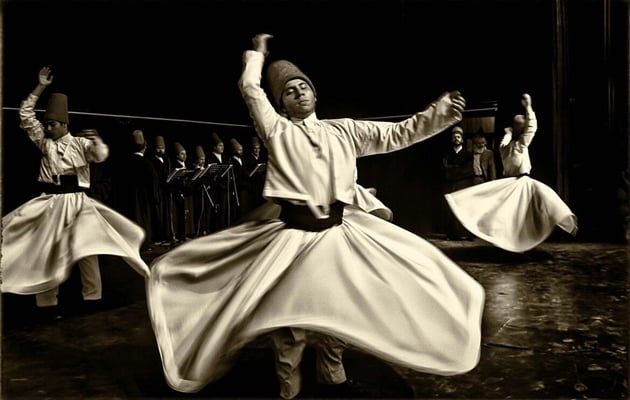
Dancers doing the Sama dance, a Sufi ceremony performed as a prayer

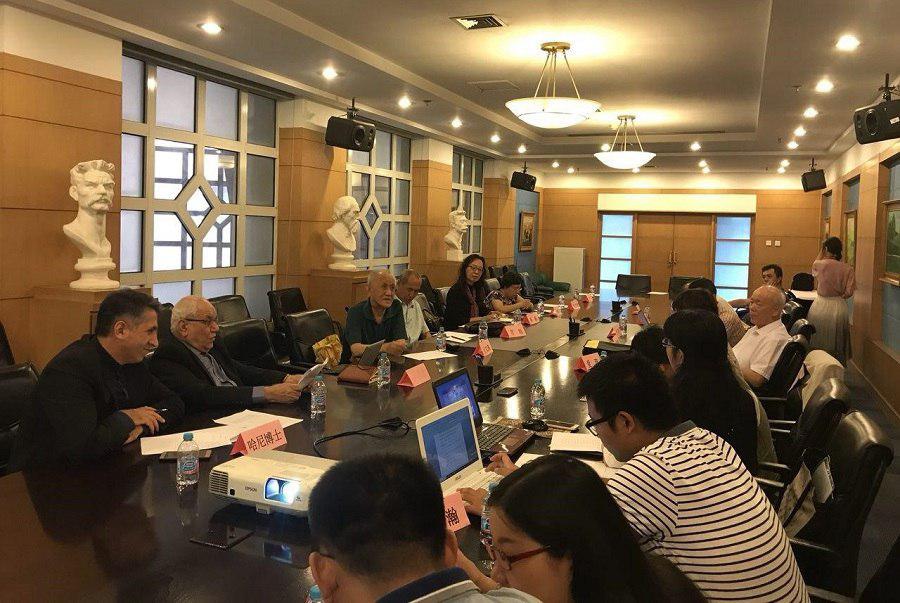
The event attracted a number of Iranian and Chinese scholars interested in the Iranian mysticism and Sufism.

In an address to the seminar, Iranian university professor Gholam-Reza A’avani referred to the long history of philosophy in Iran and said it is the only country in the world in which philosophy was taught even before Islam and served as a philosophical hub in the world, a report by IRNA said.

Professor A’avani underlined that philosophy in Iran has been taught not only in academic but also in non-academic circles throughout history.

According to the Iranian professor, philosophy in Iran is currently taught in three traditional, Islamic and Western categories.

He also thanked the Foreign Language Department at Beijing University for its huge efforts to promote foreign languages including the Chinese language as well as the Iranian philosophy in the world.

He then elaborated on the terminology of Sufism in the world and provided the participants with different interpretations of the word offered by Islamic scholars throughout history.

According to Professor A’avani, Iranian mysticism and Sufism are some spiritual channels through which human beings can get closer to God.

During the one-day seminar, the Iranian professor also replied to questions raised by the participants about the Iranian mysticism and Sufism.

China Hosts Seminar on Iranian Mysticism, Sufism

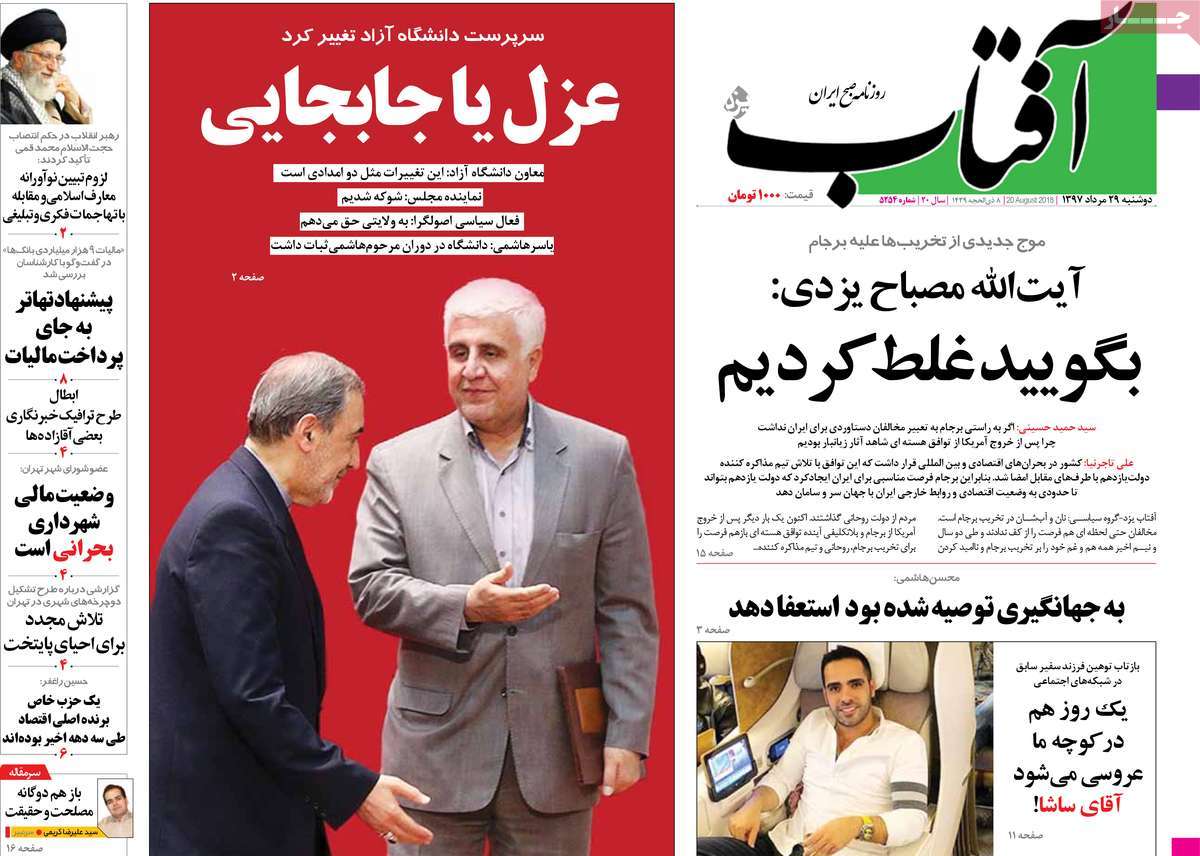
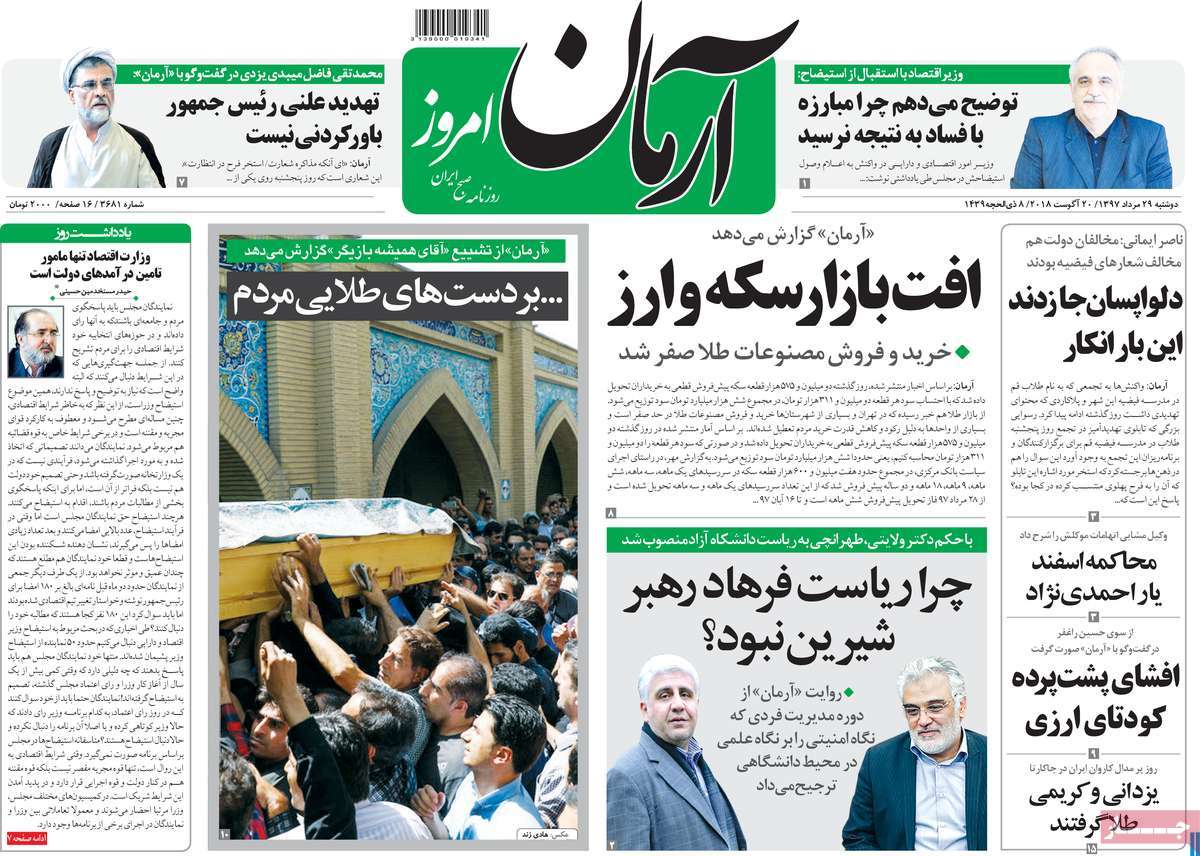
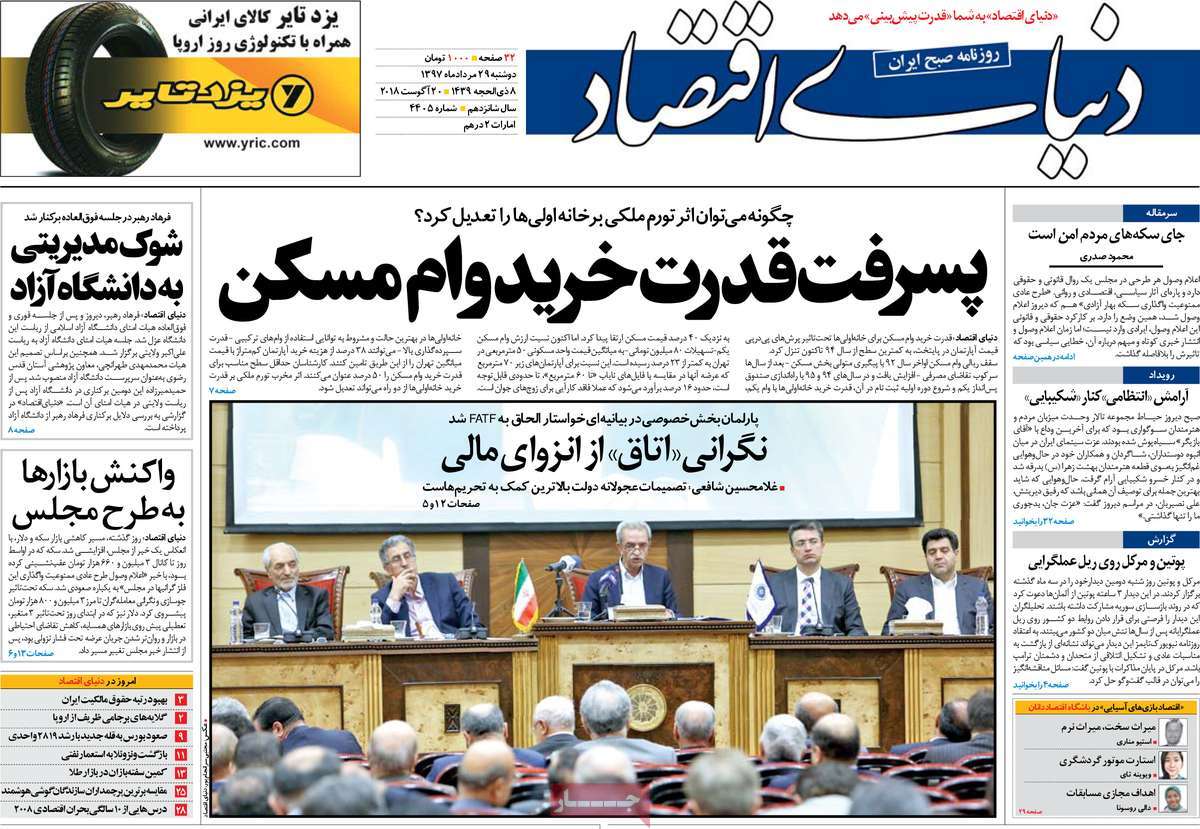
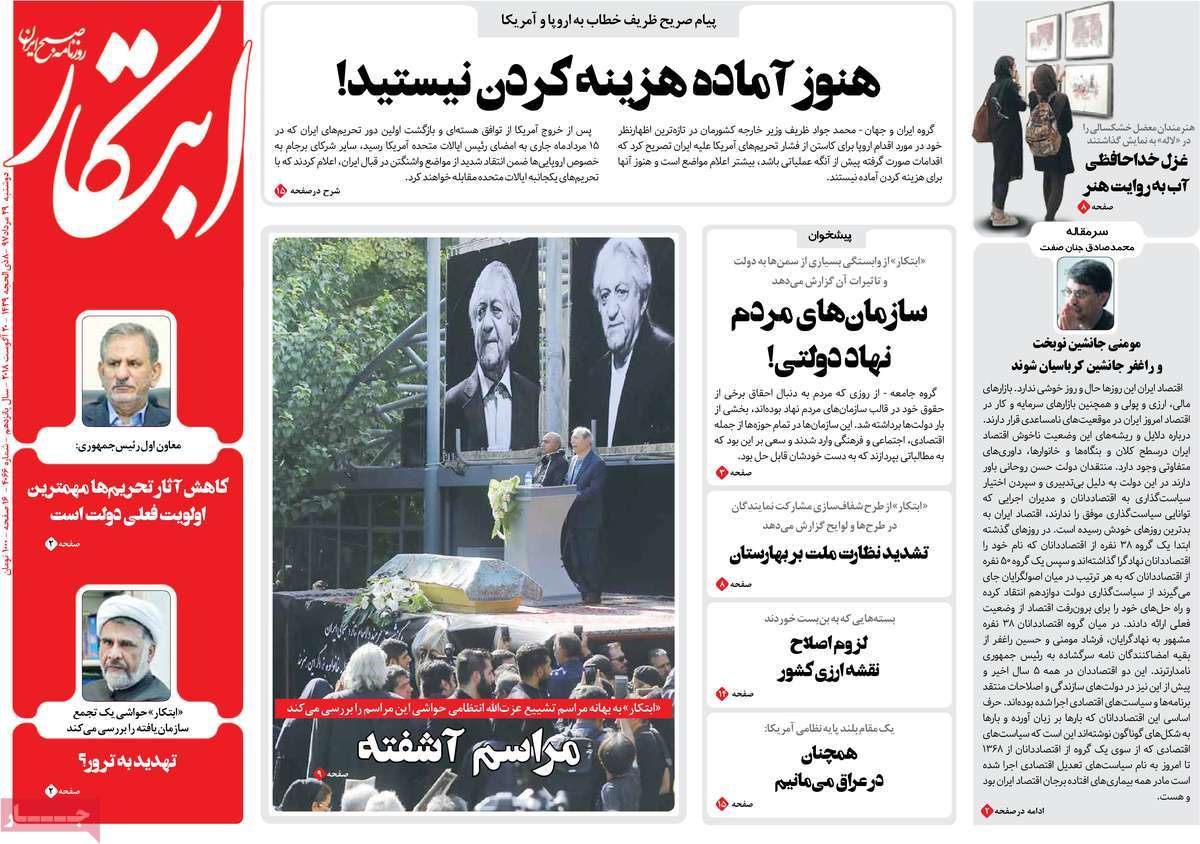
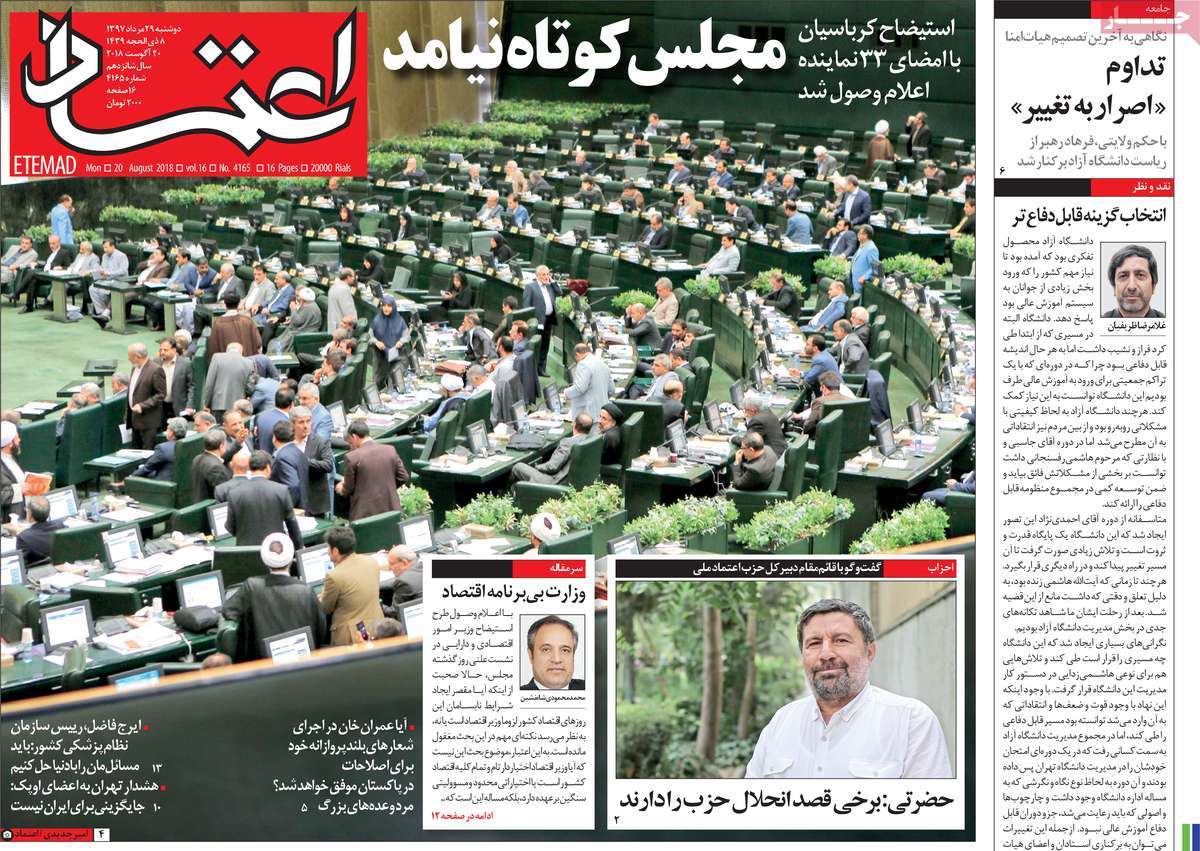
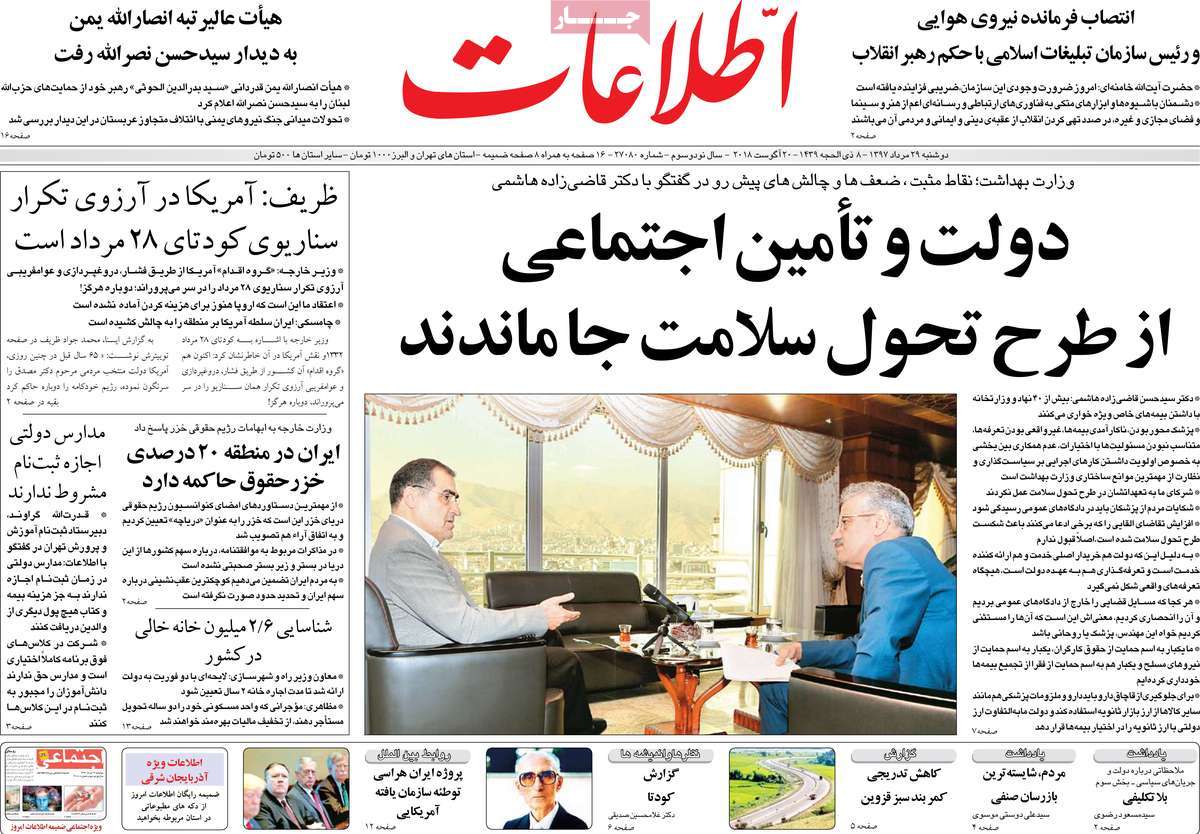
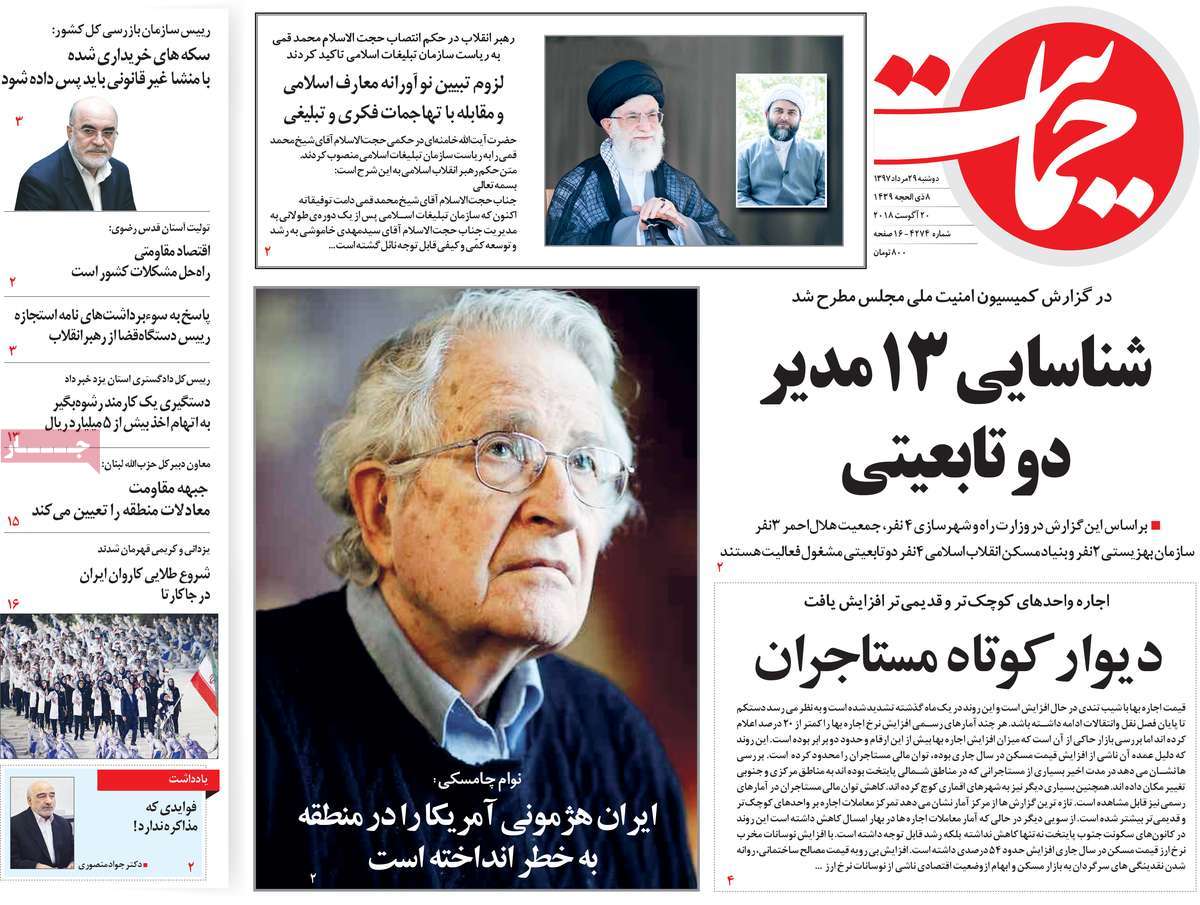
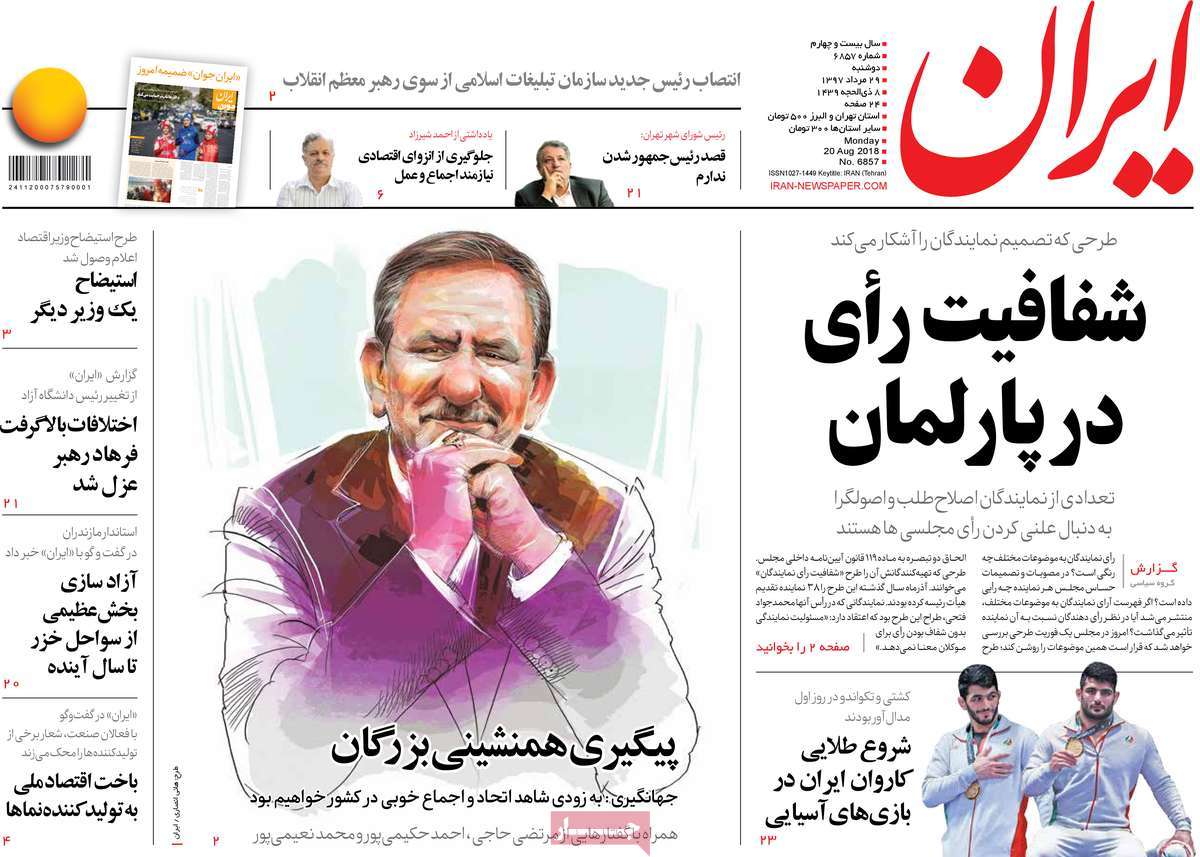
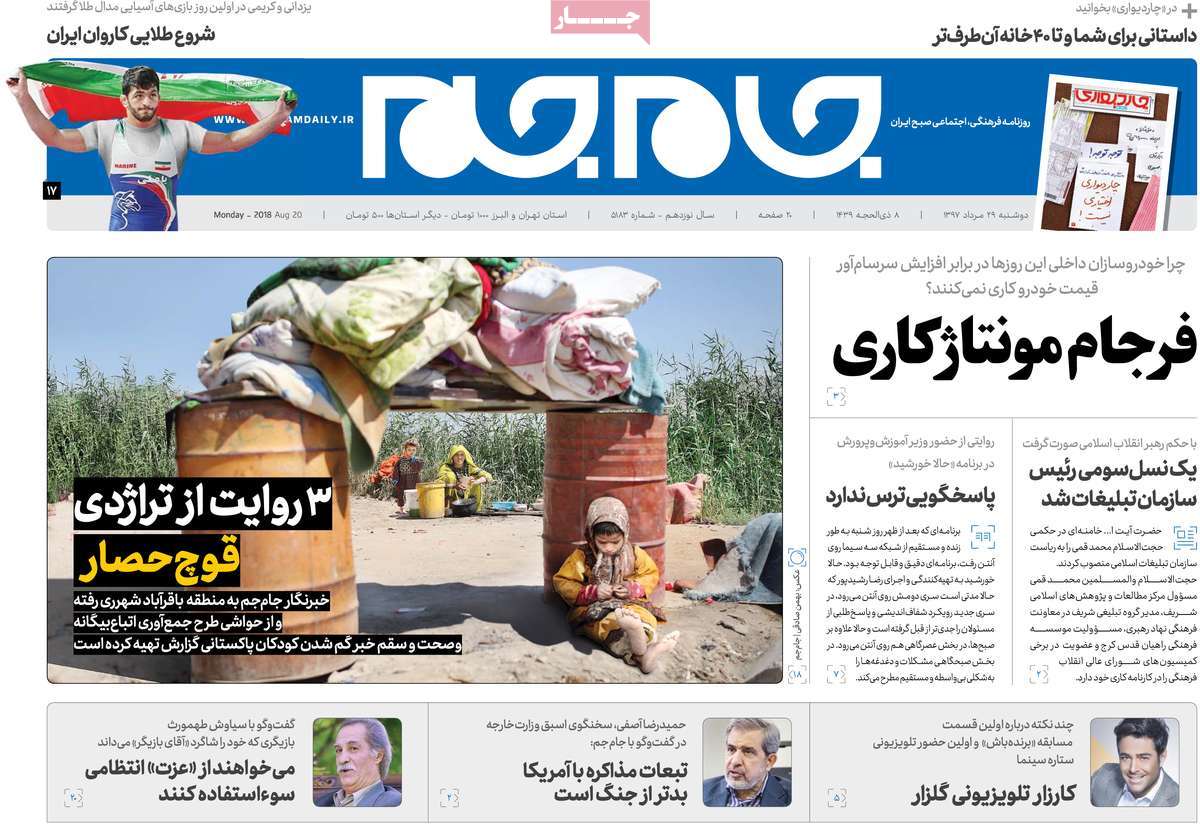
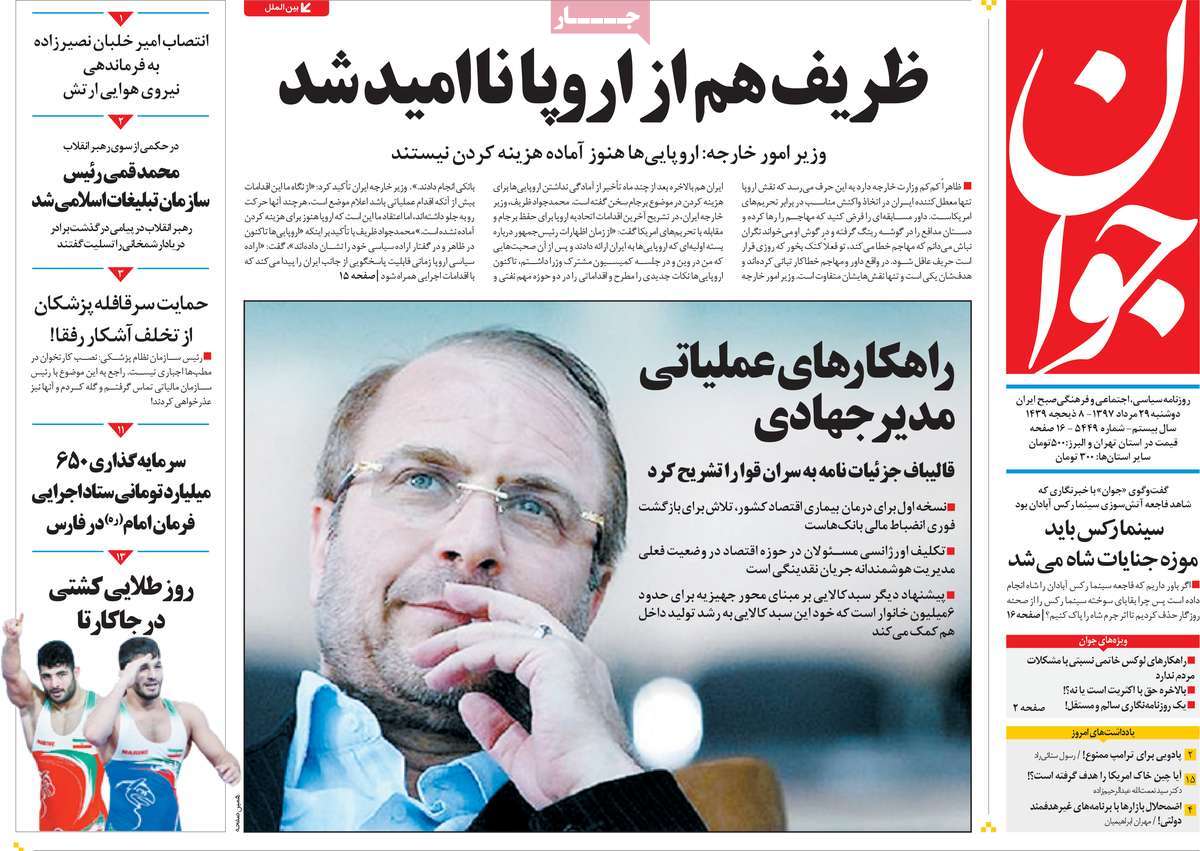
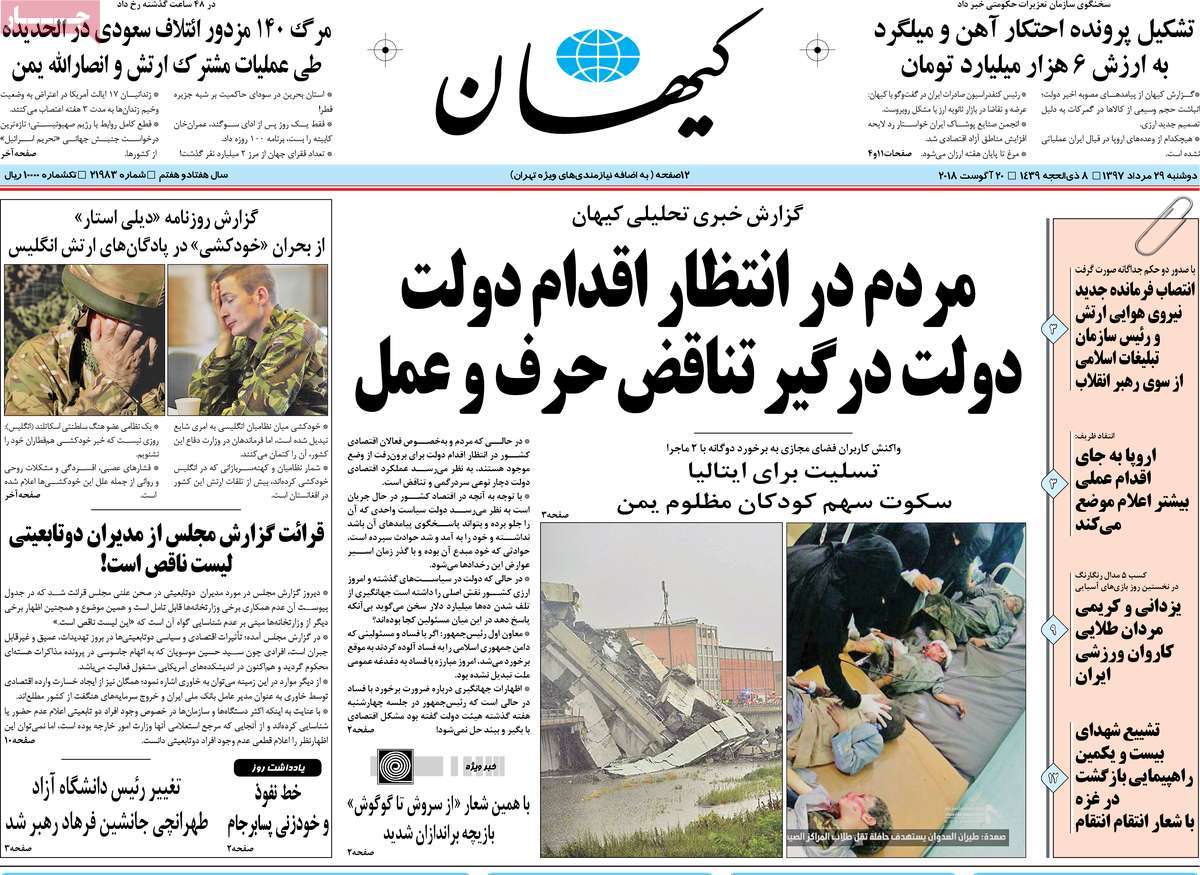
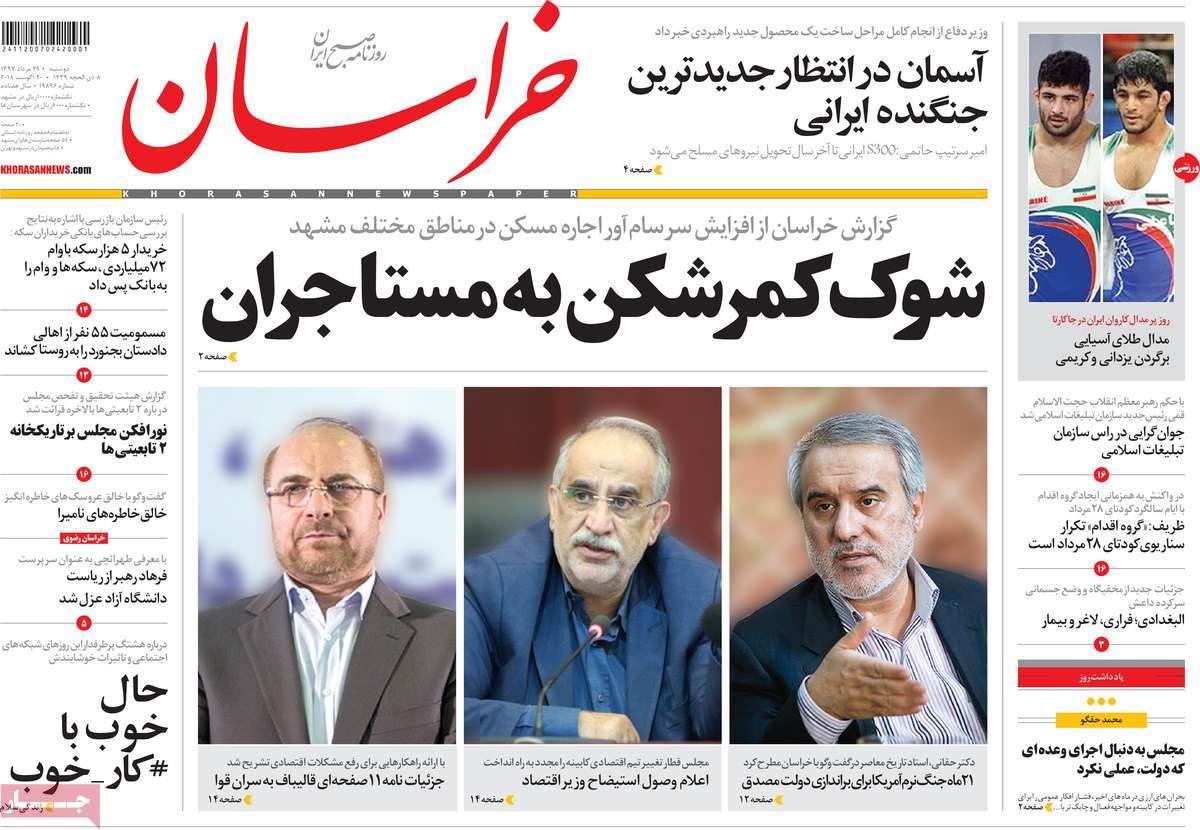
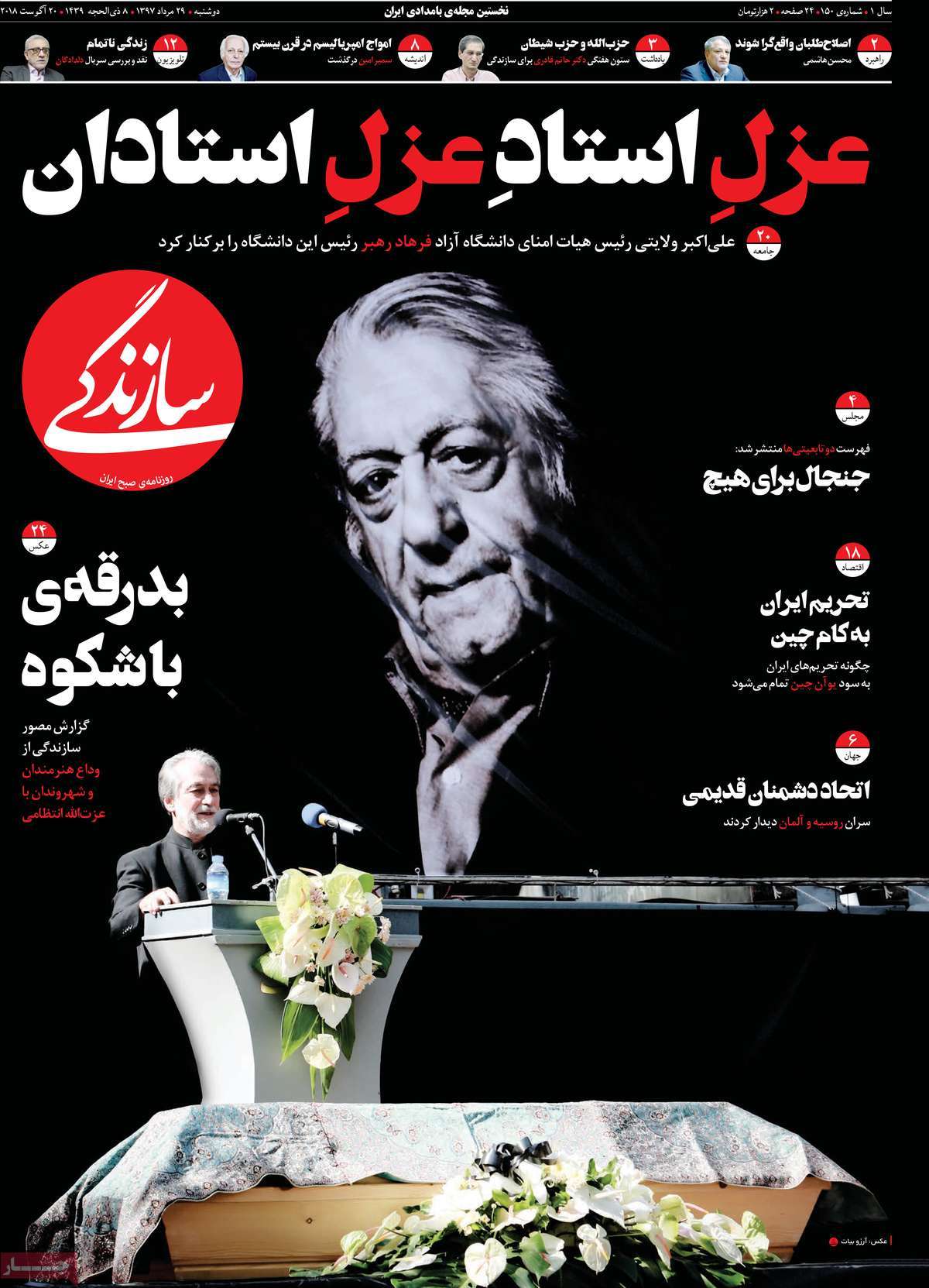
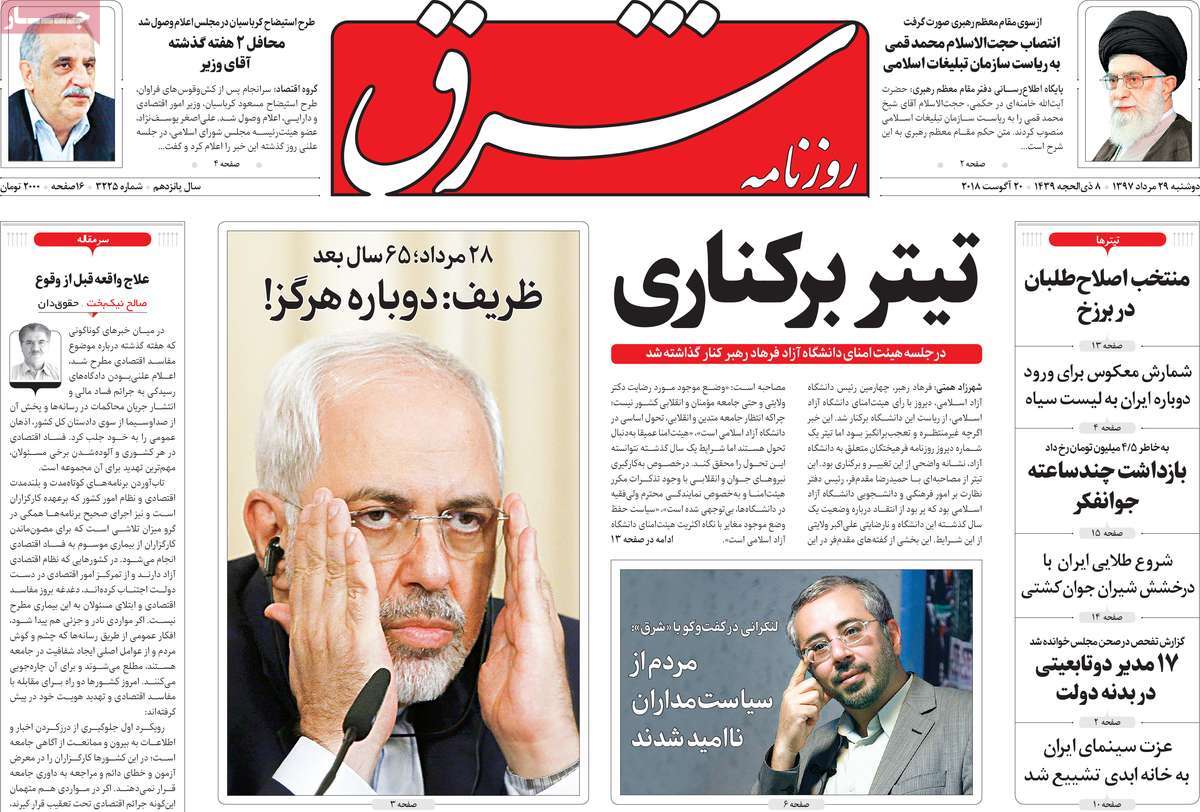
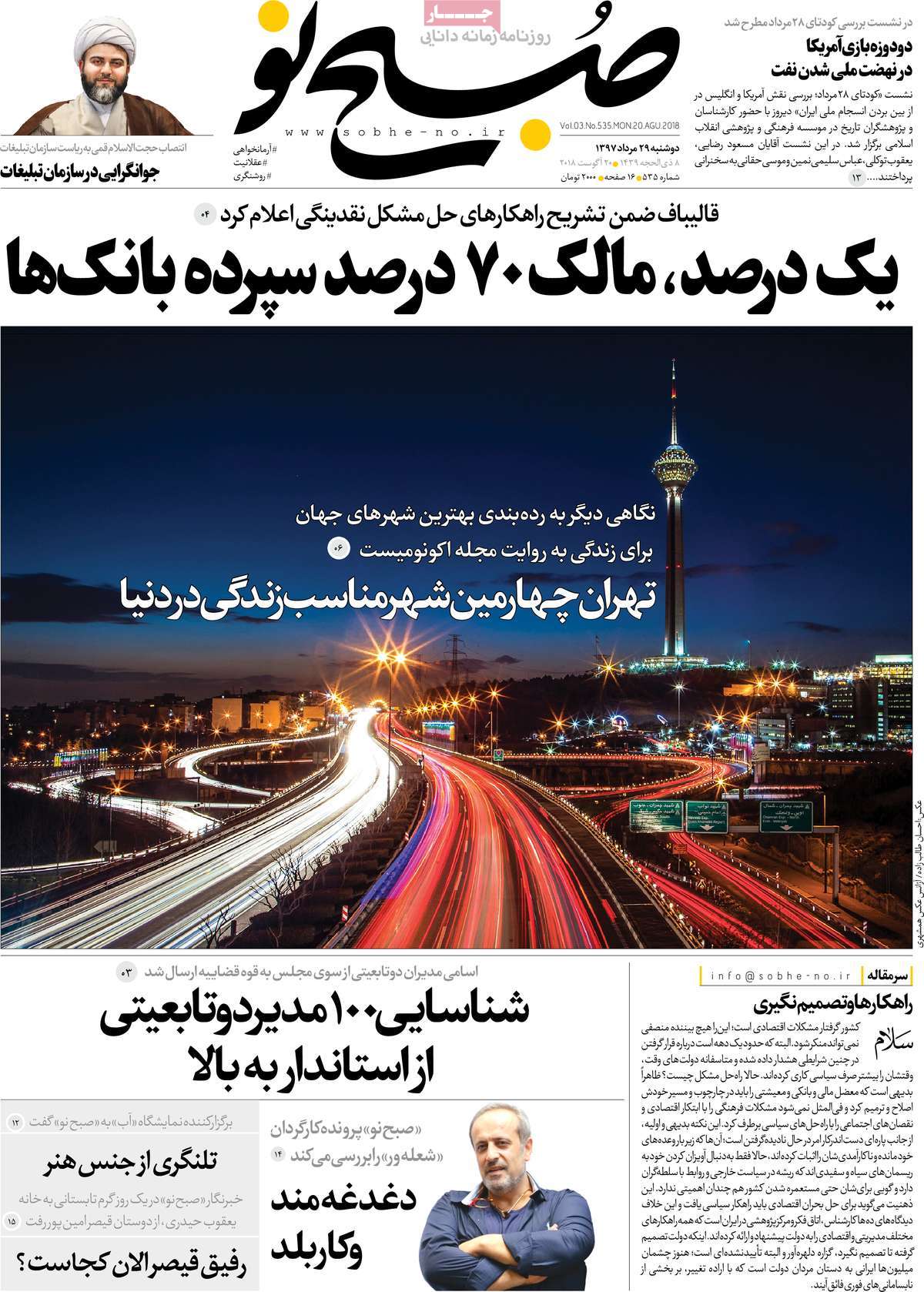
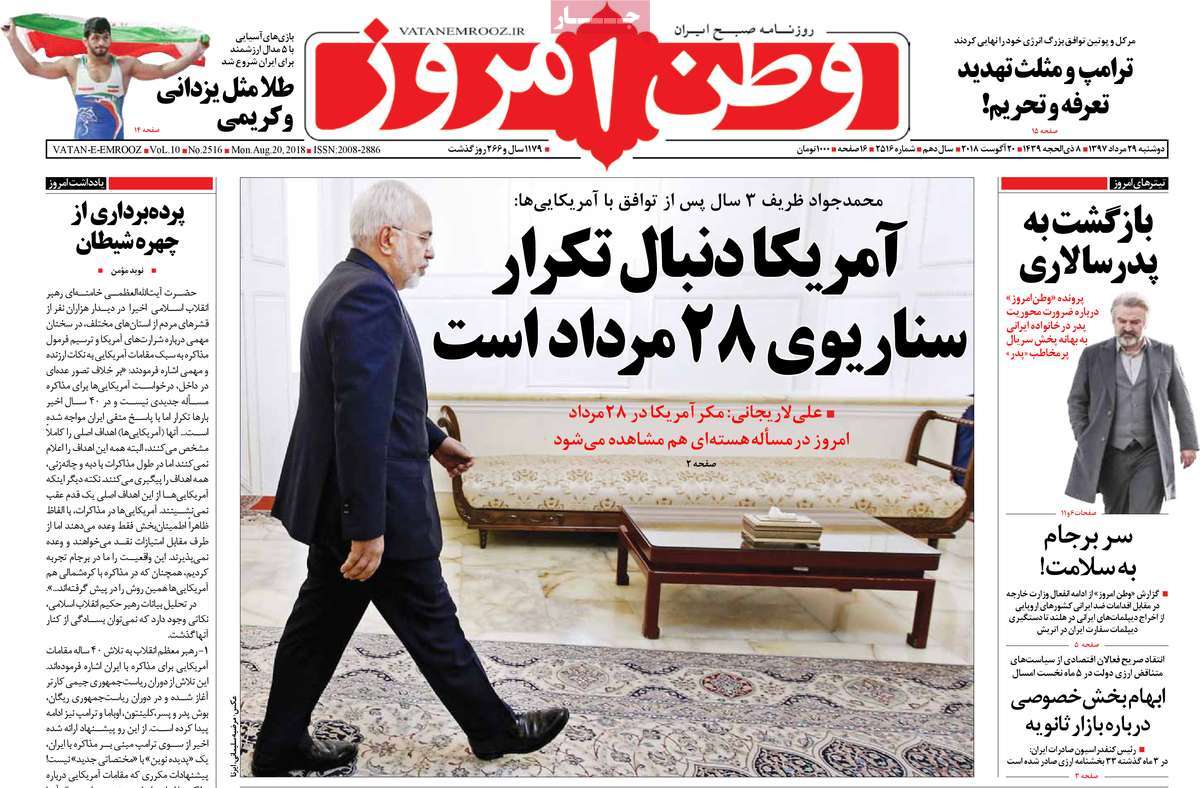
A Look at Iranian Newspaper Front Pages on August 20

A Look at Iranian Newspaper Front Pages on November 19

Iranian papers today widely covered Foreign Minister Mohammad Javad Zarif’s comments about the need for Europe to speed up its efforts to save the Iran nuclear deal.

Also a top story was the upcoming impeachment of Economy Minister Masoud Karbasian, which was approved by the Iranian Parliament.

The brilliant performance of Iranian athletes at the Jakarta Asian Games, particularly the two gold medals won by Iranian wrestlers, also received great coverage.

The above issues, as well as many more, are highlighted in the following headlines and top stories:


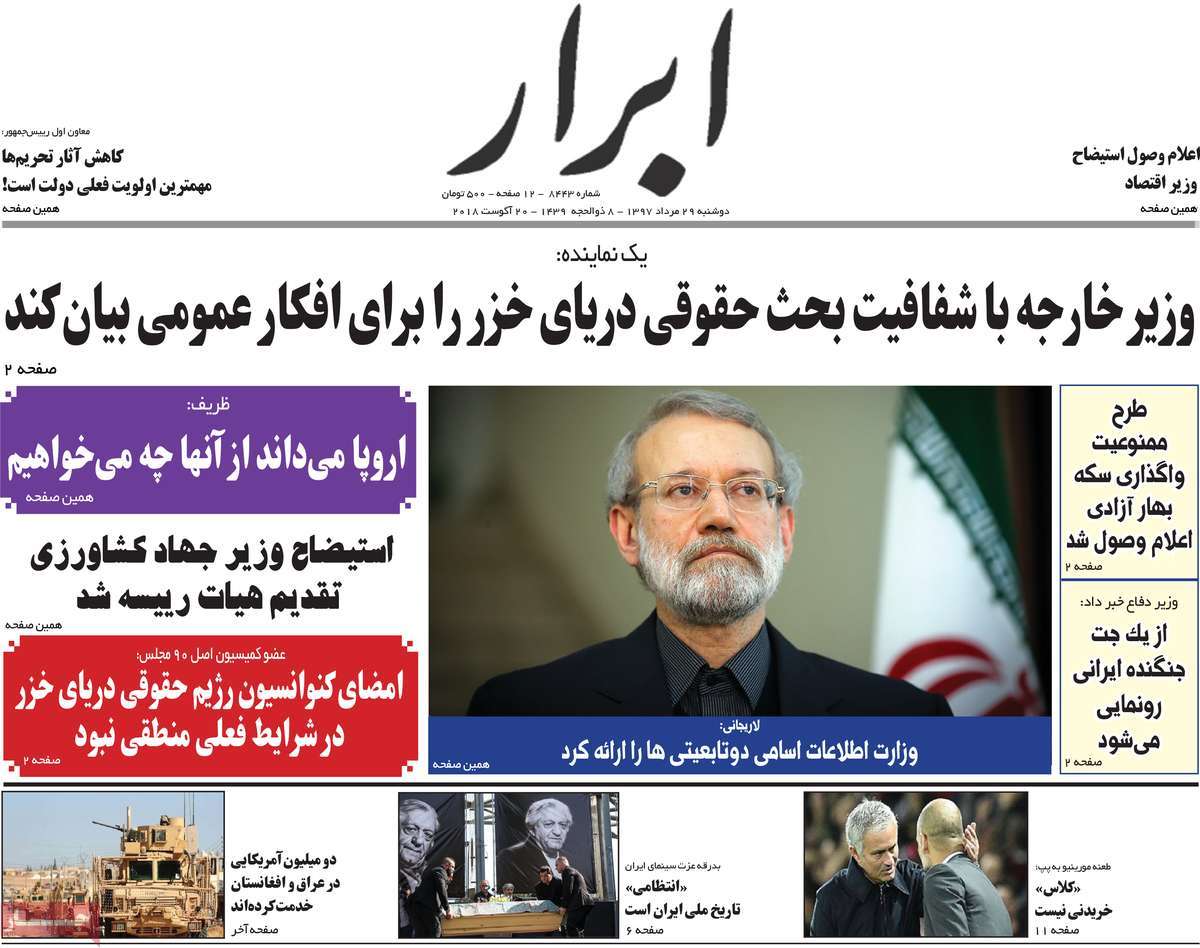
Abrar:

1- Zarif: Europe Knows What We Want from Them

2- Larijani: Intelligence Ministry Gave Us List of Those with Dual Nationality

A Look at Iranian Newspaper Front Pages on August 20


Aftab-e Yazd:

1- New Wave of Attacks against Iran Nuclear Deal

  • Conservative Cleric Mesbah Yazdi: You Must Admit You Make Terrible Mistake

2- Economic Analyst: A Certain Party Main Winner of Economy in Past Three Decades

A Look at Iranian Newspaper Front Pages on August 20


Arman-e Emrooz:

1- Gold Coin, Forex Rates Decline

2- Economic Analyst Raghfar Discloses Secrets behind ‘Forex Coup’

A Look at Iranian Newspaper Front Pages on August 20


Donya-ye Eqtesad:

1- Iran Chamber of Commerce Worried about Financial Isolation

  • Parliament of Private Firms Call for Adoption of FATF Standards
  • Chamber of Commerce: Gov’t Helping Sanctions Work by Making Hasty Decisions

A Look at Iranian Newspaper Front Pages on August 20


Ebtekar:

1- Iran First VP: Government’s Priority Is to Decrease Impact of Sanctions

2- Top US General: We’ll Remain in Iraq for Now

A Look at Iranian Newspaper Front Pages on August 20


Etemad:

1- Parliament to Impeach Economy Minister Karbasian despite Oppositions

2- Economy Ministry without Any Planning [Editorial]

A Look at Iranian Newspaper Front Pages on August 20


Ettela’at:

1- Zarif: US Longing to Repeat Scenario of 1953 Coup

2- Top Delegation of Yemen’s Ansarullah Meets with Hezbollah Chief Nasrallah

A Look at Iranian Newspaper Front Pages on August 20


Hemayat:

1- Chomsky: Iran Endangers US’ Hegemony in Region

A Look at Iranian Newspaper Front Pages on August 20


Iran:

1- Another Minister to Be Impeached

2- Iranian Athletes’ Brilliant Start in Asian Games

A Look at Iranian Newspaper Front Pages on August 20


Jame Jam:

1- Former Iranian Diplomat: Consequences of Negotiation with US Worse than War

A Look at Iranian Newspaper Front Pages on August 20


Javan:

1- Zarif, Too, Disappointed with Europe

  • Iran FM: Europeans Not Ready Yet to Pay the Price

2- Golden Day of Iran’s Wrestling in Jakarta

A Look at Iranian Newspaper Front Pages on August 20


Kayhan:

1- People Waiting for Government’s Measures, Gov’t Full of Contradictions

2- 140 Saudi Mercenaries Killed in Yemeni Forces’ Joint Operation in Hudaydah

3- Daily Star’s Report on Suicide Crisis in British Barracks

A Look at Iranian Newspaper Front Pages on August 20


Khorasan:

1- Iran to Unveil New Strategic Fighter Jet

A Look at Iranian Newspaper Front Pages on August 20


Sazandegi:

1- China Benefiting from Iran Sanctions

2- Unity of Arch-Enemies: Russia, German Leaders Meet

A Look at Iranian Newspaper Front Pages on August 20


Shargh:

1- Zarif on Anniversary of US-Backed 1953 Coup: Never Again

2- People Disappointed with Politicians: Analyst

A Look at Iranian Newspaper Front Pages on August 20


Sobh-e Now:

1- Tehran, Fourth City in the World Suitable for Living

  • The Economist’s Different Look at World’s Best Cities for Living

A Look at Iranian Newspaper Front Pages on August 20


Vatan-e Emrooz:

1- Larijani: US’ Deceit in 1953 Coup Still Seen in Nuclear Deal’s Case

2- Trump and Triangle of Threat, Tariff, Sanction!

A Look at Iranian Newspaper Front Pages on August 20

Iran Laments Slow Progress of EU’s Efforts to Save Nuclear Deal

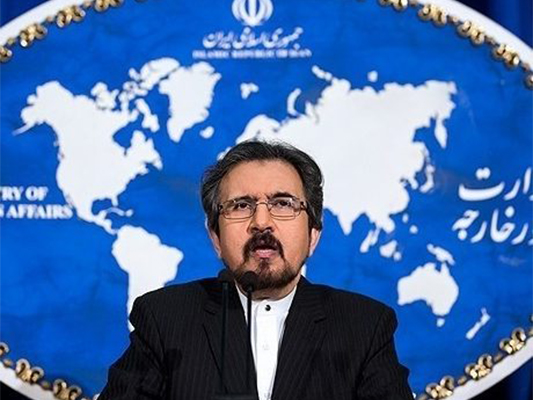
Speaking in a weekly press conference on Monday, Qassemi said the support package offered by the EU to compensate for the US pull-out is generally positive but there are ambiguities that need to be removed.

Following the US withdrawal from the nuclear deal early May, Iran announced its continued commitment to the deal is conditional on EU’s binding guarantees assuring Tehran its interests will be served if it remains in the deal, Tasnim News Agency reported.

The package, drafted by France, the UK and Germany, obliges the European Investment Bank to support EU firms willing to enter Iranian markets, among other measures.

The spokesman said talks on the support package are progressing, but the traditional August holidays in Europe and complexities of the talks have slowed down the process.

“We are not completely satisfied with the process and insist that these countries continue their efforts more seriously and quickly,” he said.

The spokesman said Iran is optimistic the support package will soon be finalized.

“We will work to push Europe to take better moves. I hope that with the end of holidays, we will continue our work and take longer steps,” he said.

Iran has announced the package is acceptable at the macro level, signaling its willingness to keep up fulfilling its JCPOA obligations.


‘Iran Action Group’ Reminiscent of 1953 Coup

The spokesman said the US formation of an ‘Iran Action Group’, which took place on the eve of the anniversary of the US-backed 1953 coup in Iran, reminds people of the long history of the US’ hostile policies and its interventions in Iran.

Qassemi was referring to a US-UK orchestrated putsch against the democratically-elected government of Prime Minister Mohammad Mosaddeq, which restored to power the despotic former Shah Mohammad Reza Pahlavi.

Iran Action Group was created last week in the US State Department, with US Secretary of State Mike Pompeo naming senior policy adviser Brian Hook as the head of the group.

The group is tasked with coordinating the US pressure campaign against Iran after Washington’s withdrawal from the 2015 nuclear deal early May.

The US re-imposed the first series of its anti-Iran sanctions earlier this month, and is working to push the world to cut trade with Iran and stop purchasing the country’s oil before November, when further sanctions on oil and transactions with the central bank of Iran will be restored.

Qassemi said the Iran Action Group has both economic and psychological warfare applications.

“The US, engaging in a big psychological operation, tries to … impose restrictions on Iran’s economic cooperation,” he said.

However, Qassemi said Iran is determined to show resistance against the US pressure and such efforts will lead the US to nowhere.

“The US is in no position to do whatever it wants. This is no time for dictating others. Although sanctions will have impact [on Iran], we can pass this stage,” he said.

Iranian Wrestlers Win Two Gold Medals in Jakarta Asian Games

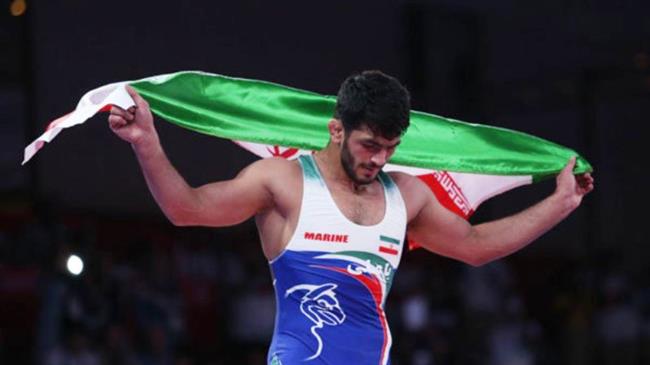
In the freestyle wrestling 86 kg category, Hassan Yazdani defeated all his opponents by technical superiority.

Yazdani beat wrestlers from Indonesia, India and Mongolia to reach the final match. In the final, the Iranian athlete overpowered his Lebanese opponent 10-0 to wrap up the victory in just 1 minute and 29 seconds.

Elsewhere in the 97kg category, Alireza Karimi also won a gold medal with a 6-0 victory over his opponent from Kyrgyzstan. Karimi defeated wrestlers from Japan and Uzbekistan in the earlier rounds.

US Trying to Pit Muslims against Each Other, Iran Leader Warns

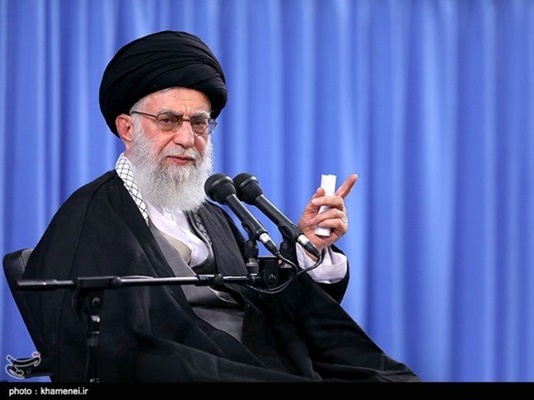
In a Monday message to Hajj pilgrims, Ayatollah Khamenei said solidarity and unity among Muslim people is what the Hajj annual pilgrimage calls, but that is the opposite of what the enemies of Islam are aspiring to do.

Enemies try to incite Muslims to fight against each other at all times, especially, during the present time, Ayatollah Khamenei warned.

“Look at the behaviour of the arrogant and criminal US today. Its essential policy against Islam and the Muslims is warmongering,” the Leader noted.

He said the US’ vicious efforts are aimed at having Muslims killed by other Muslims, causing some oppressive groups to attack some oppressed ones, supporting the front of the oppressors, suppressing the oppressed front through it, and always fuelling this appalling conspiracy.

“Muslims should be aware and nullify this satanic policy. Hajj prepares the grounds for this awareness, and this represents the philosophy of declaring repudiation to pagans and arrogant powers during Hajj,” he added.

The Leader also urged Hajj pilgrims to pray for the Islamic Ummah, the oppressed people in Syria, Iraq, Palestine, Afghanistan, Yemen, Bahrain, Libya, Pakistan, Kashmir and Myanmar and other parts of the world.

He also called on them to ask God to cut the hands of the US and other arrogant powers, and their supporters.

US Suffering from Disease of Addiction to Sanctions: Iran

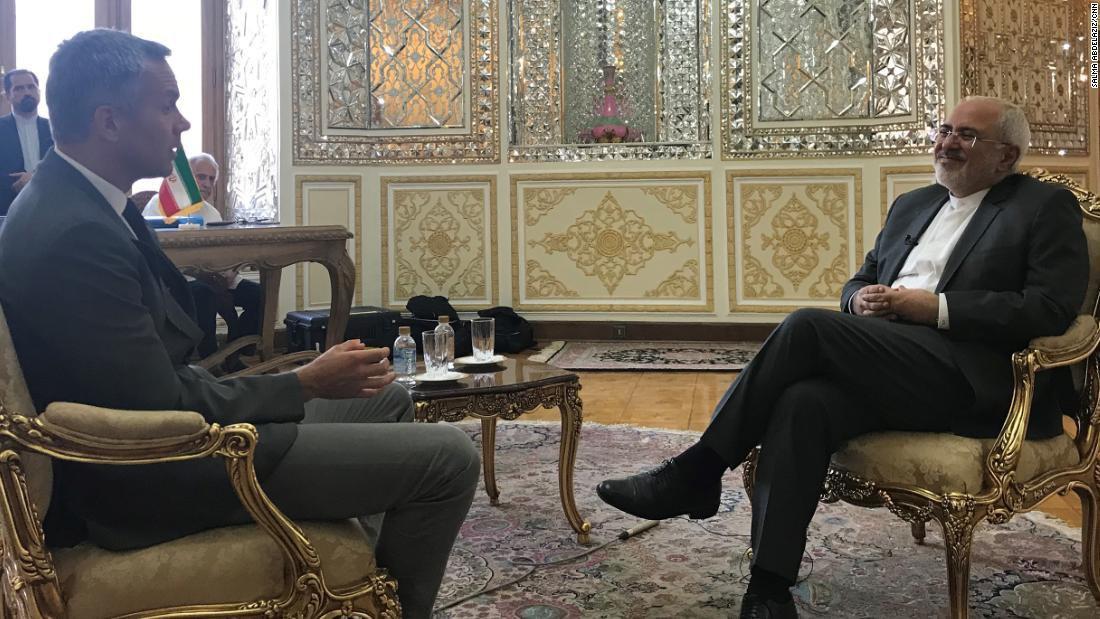
“I believe there is a disease in the United States and that is the addiction to sanctions,” he told CNN in an exclusive interview conducted on the 65th anniversary of a US-backed coup that overthrew the democratically-elected Prime Minister of Iran Mohammad Mosaddeq.

“Even during the Obama administration the United States put more emphasis on keeping the sanctions it had not lifted rather than implementing its obligation on the sanctions it lifted,” Zarif added.

Zarif further noted that the nuclear deal could be revived regardless of the Trump administration’s denunciation of it.

The Iranian top diplomat expressed his dismay that the United States has not learned that sanctions are ineffective in changing the political climate in Iran.

“We felt that the United States had learned that at least as far as Iran is concerned, sanctions do produce economic hardship but do not produce the political outcomes that they intended them to produce, and I thought that the Americans had learned that lesson. Unfortunately I was wrong,” Zarif said.

He said the same ’50s thinking embodied the current US approach. “I think the US administration still believes that it is working with the government it installed in Iran after the 1953 coup,” he said. “As they say, they have to wake up and smell the coffee.”

Zarif also noted that pressure from the European allies could persuade Trump to change his mind and accused the United States of “bullying” the European signatories to the deal.

“We do not want to revisit that nuclear deal,” he said. “We want the United States to implement that nuclear deal. Today the closest US allies are resisting those sanctions. The US basically arm-twisting — its attempt to put pressure. I don’t want to use the term bullying … [but] that’s what it amounts to.”

US Suffering from Disease of Addiction to Sanctions: IranTrump-Rouhani Meeting in New York
Asked whether Iranian President Hassan Rouhani could have a one-on-one meeting with President Trump — as Trump has preferred to tackle North Korea and Russia — Zarif said the previous nuclear deal had to be respected first.

“Not when the previous huge progress that we made was thrown out,” he said of a one-on-one. “That [previous deal] was for us the litmus test of whether we can trust the United States or not.”

Would a lasting pact ever be possible with the man who wrote about the “art of the deal”? “It depends on President Trump — whether he wants to make us believe that he is a reliable partner,” he said.

“Now if we spend time with him and he signs another agreement. … How long will it last? Until the end of his administration? Until he departs from the place where he put his signature on the agreement?”


Iran Ready for Worst-Case Scenario

Zarif further noted that decades of pressure meant the Iranian people would be resistant to this pressure, yet it would have an impact.

“US sanctions have always hurt,” he said. “What it’s hurting, though, is people who want to buy medicine. People who want to buy food.”

Zarif said the recent economic problems, which have seen the local currency slide and fruit and vegetable prices sometimes double, were due to preparatory measures being taken. “The economic upheaval that you see right now in Iran is because of the measures that needed to be taken to be prepared for those days, so we are prepared for the worst case scenario,” he said.

“We spent a lot of time” he said, of the years-long, intense and detailed negotiations that he and then-US Secretary of State John Kerry led. “It was not an easy political decision for the Iranian government and for me personally and for President Rouhani. It may be a credit for some foreign ministers to spend hours upon hours with the US secretary of state but it’s certainly not a credit in Iran.”

Yet he accepted, “That’s what diplomats are for. Part of our salary is to take personal hits for following national interests — that’s what our job is.”

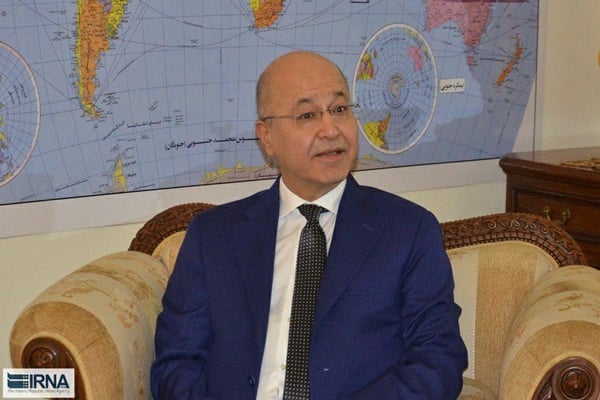
“Secure Borders with Iran Key to Iraq’s National Interests”

He said the national interests of Iraqis as well as the people of the Kurdistan Regional Government would be met only if the country makes its borders with neighbouring states secure, particularly those with the Islamic Republic of Iran.

“We condemn the recent terrorist attacks carried out from northern Iraq against Iran and believe that the KRG along with Baghdad should take long strides in putting an end to such attacks,” he said.

Speaking in an interview with IRNA, the Iraqi Kurdish politician went on to say that the terrorist attacks threaten not only the security of Iraq’s neighbours but also the security of Iraq and the KRG.

“The security of a region requires all involved sides to adopt joint measures against insecurity because terrorist attacks threaten our national interests and neighbours,” he said.

Salih then referred to the political situation in Iraq and called on the conflicting sides to put aside their differences, saying by resolving its internal crisis and restoring its national stability, Iraq can contribute to regional peace and security.

He cited victory over ISIS in Iraq as a good example of cooperation among all involved sides in Iraq and said the terrorist group was defeated because all Iraqis from Shiite to Sunni and Kurds came to the conclusion that the group is threatening the country and the whole region.

The Iraqi Kurdish politician then warned about division inside Iraq and said the country is in a dire need of a strong central government which can meet public demands.

According to Barham, Iraq’s next president should be picked up based on consensus among all Iraqi factions as well as all parliamentarian factions.

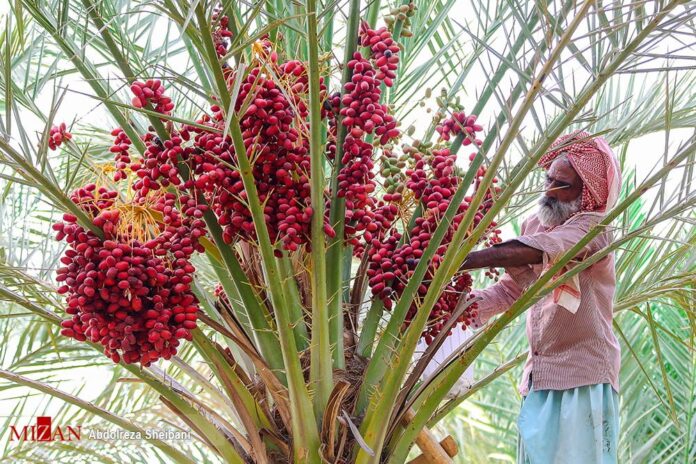
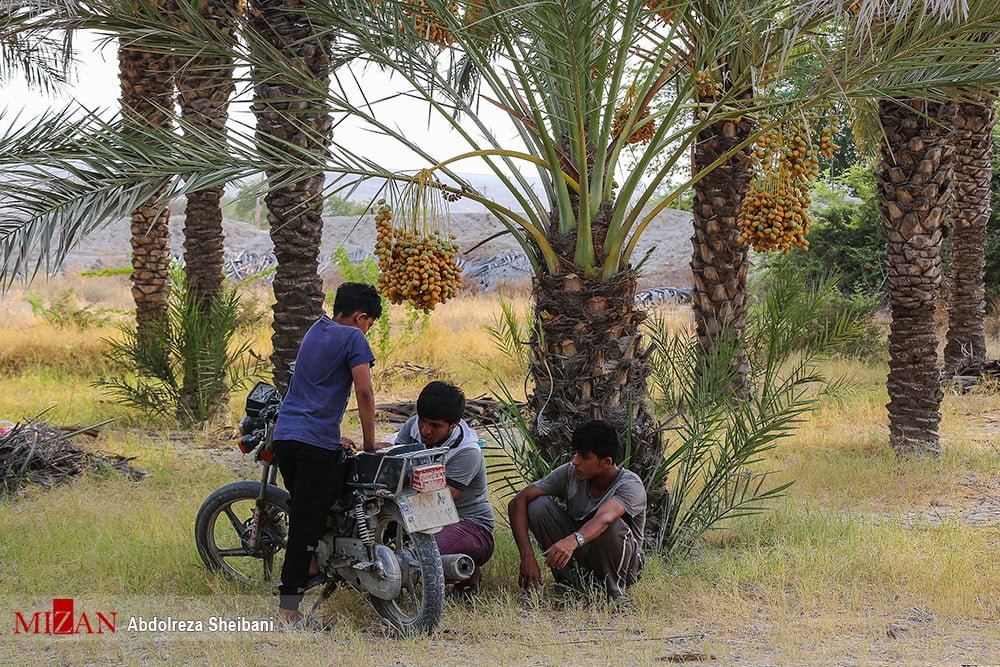
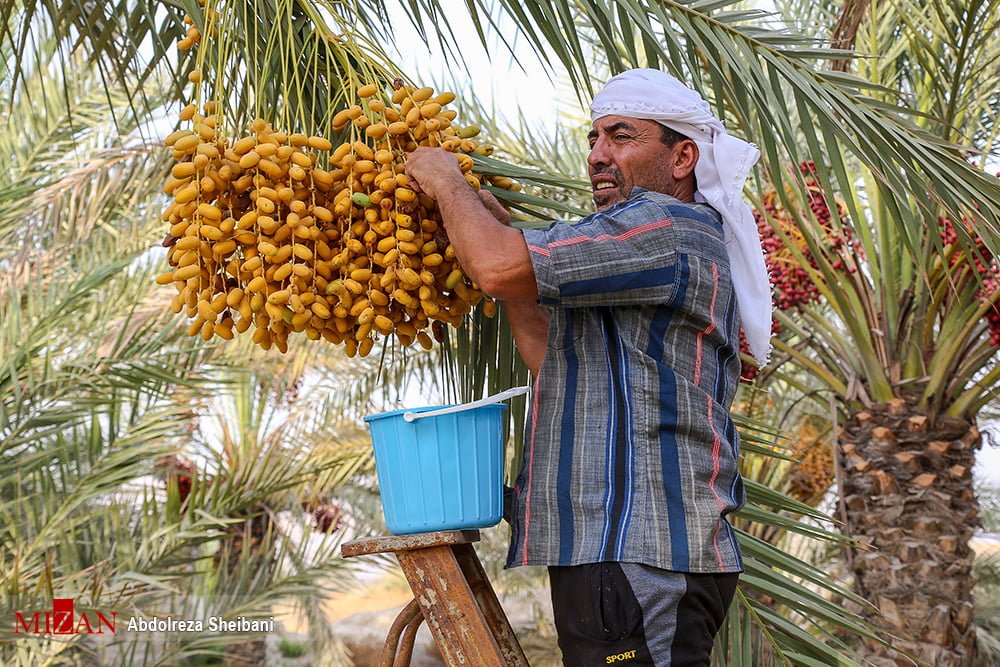
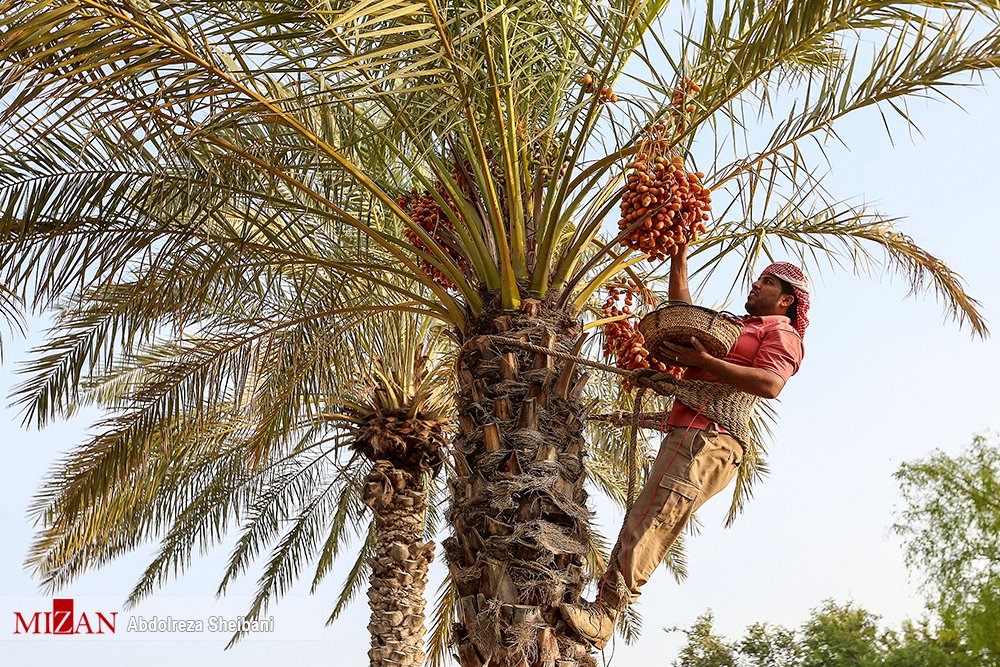
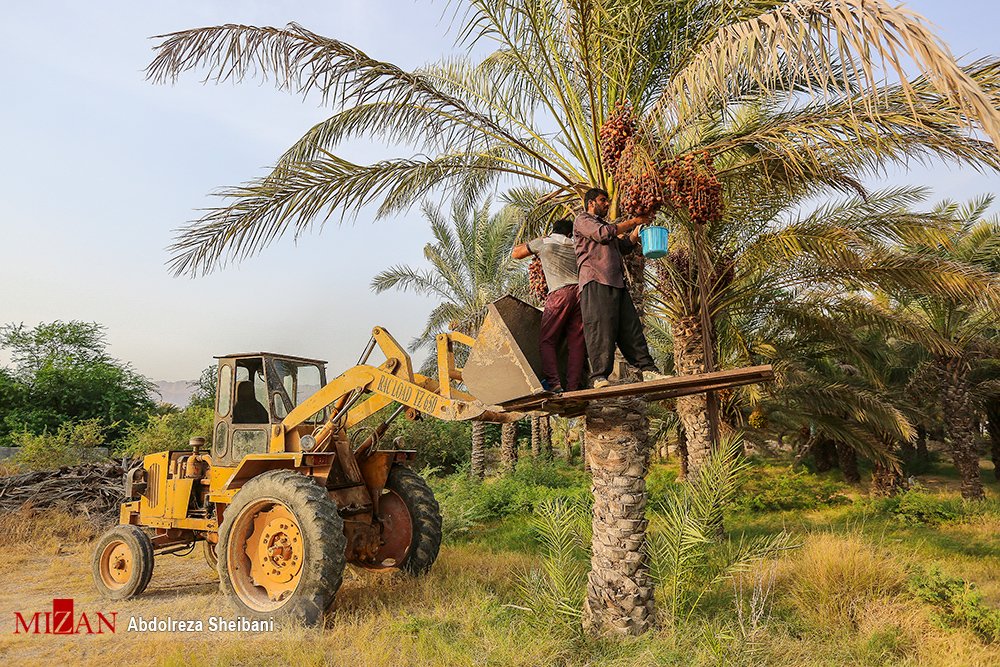
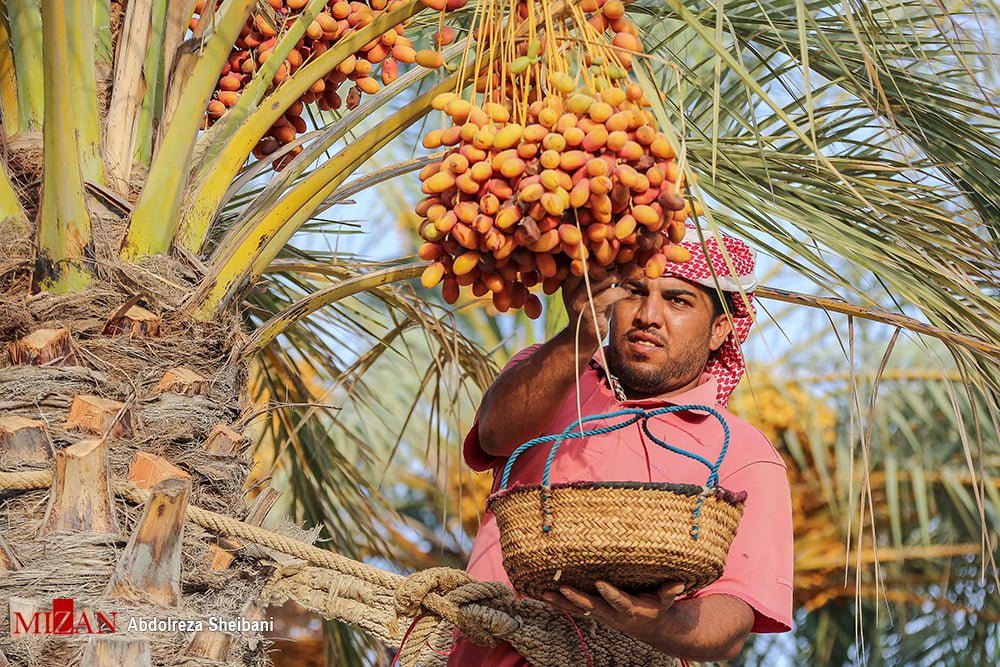
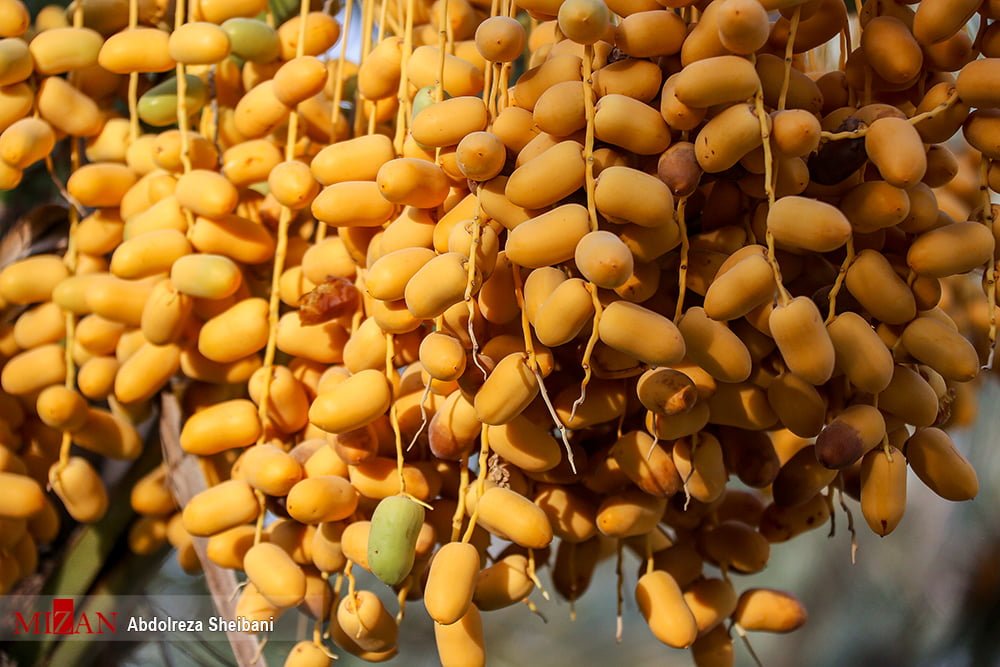
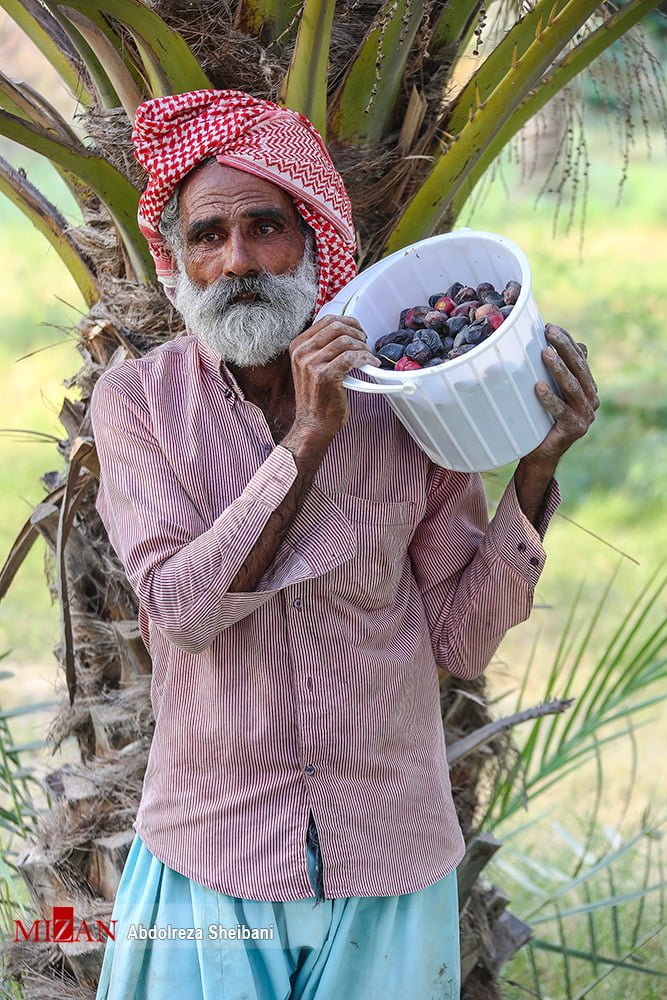
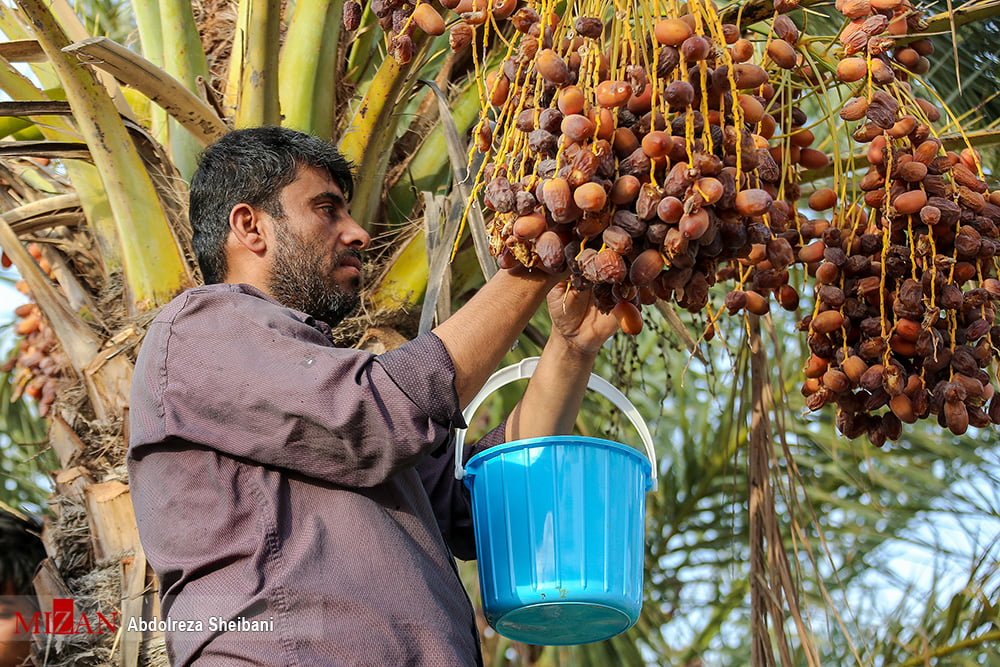
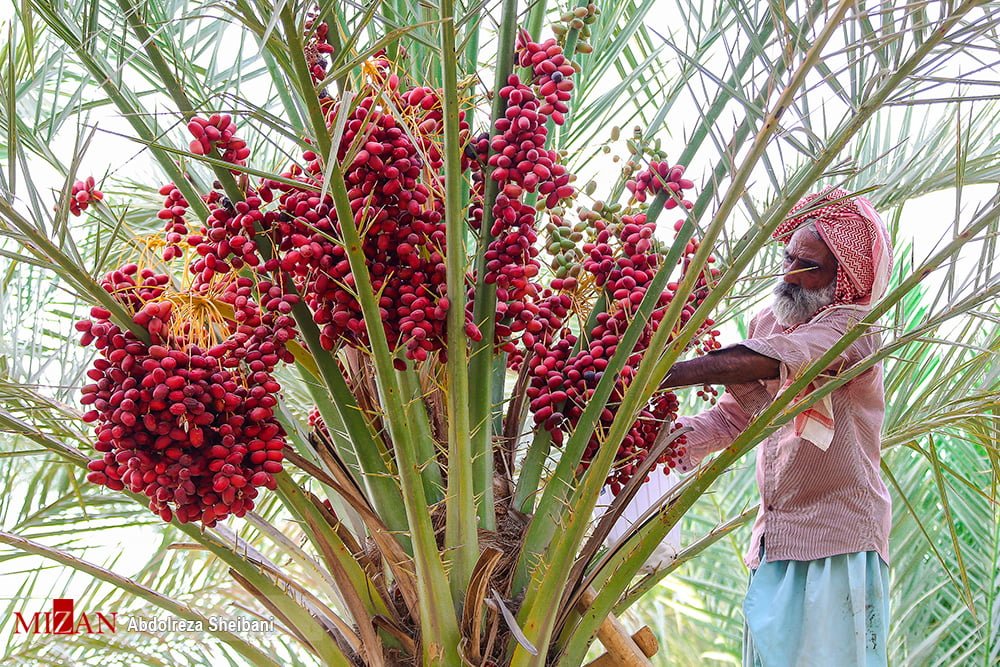
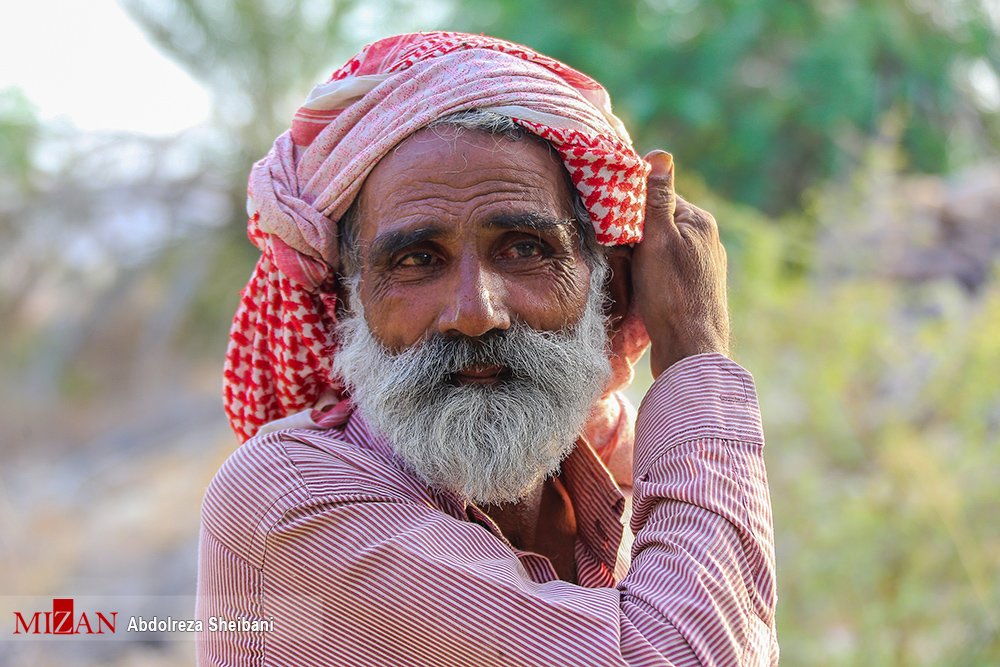
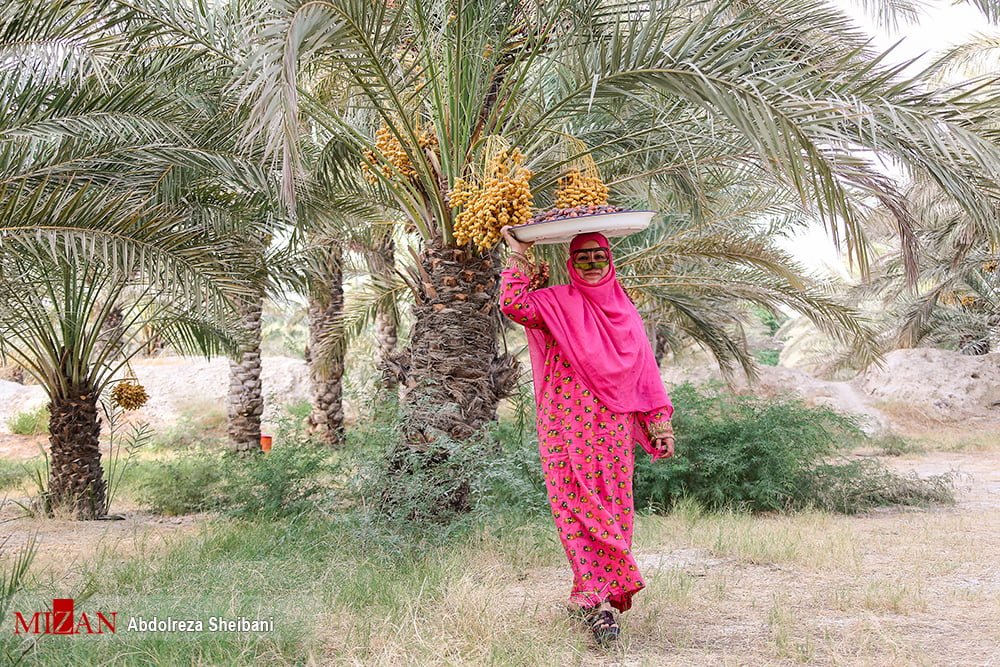
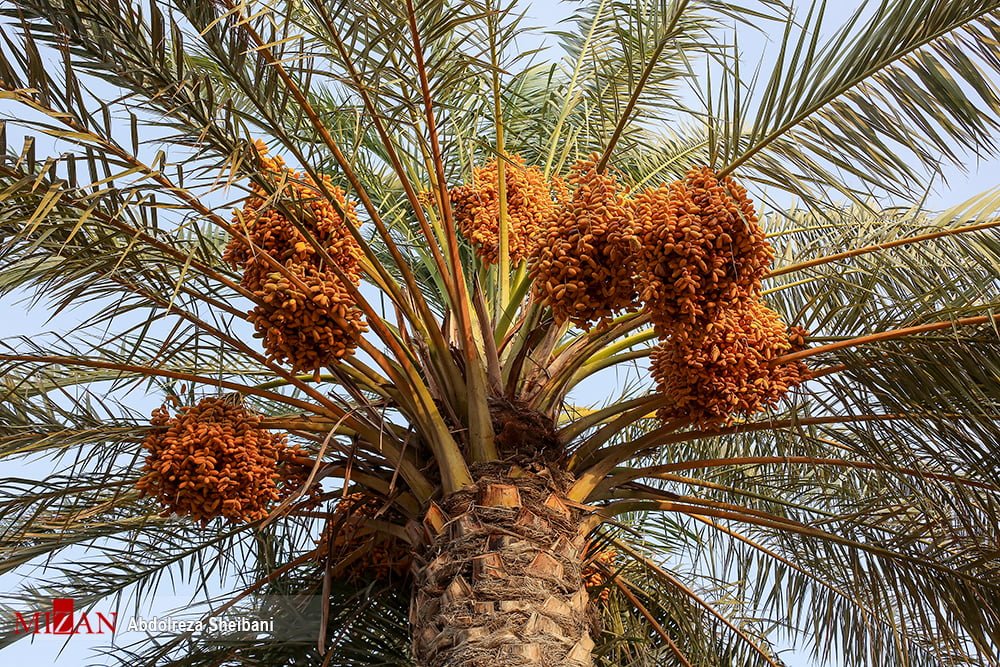
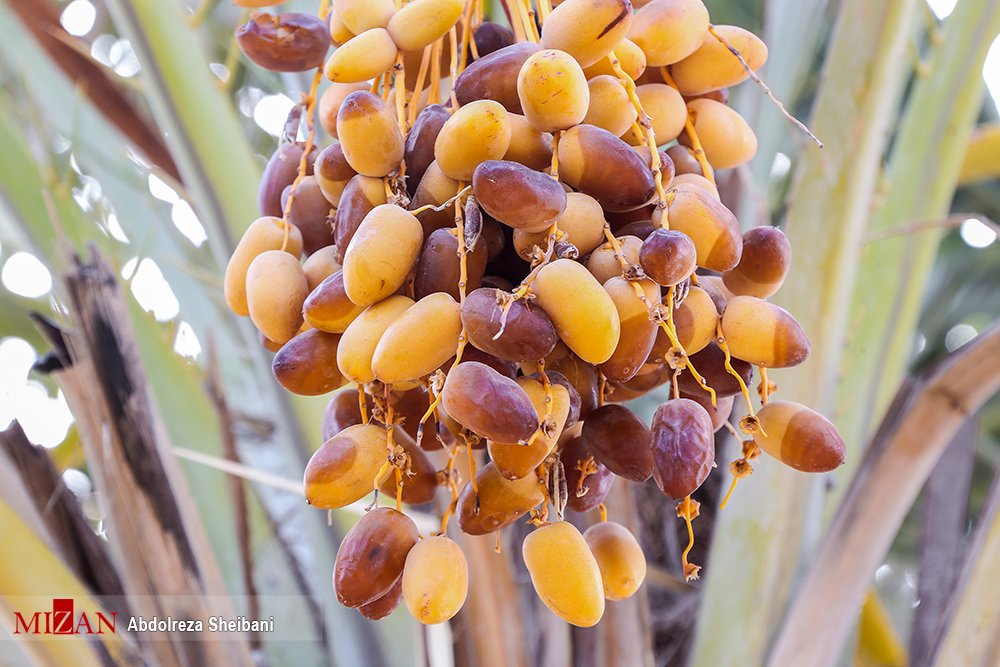
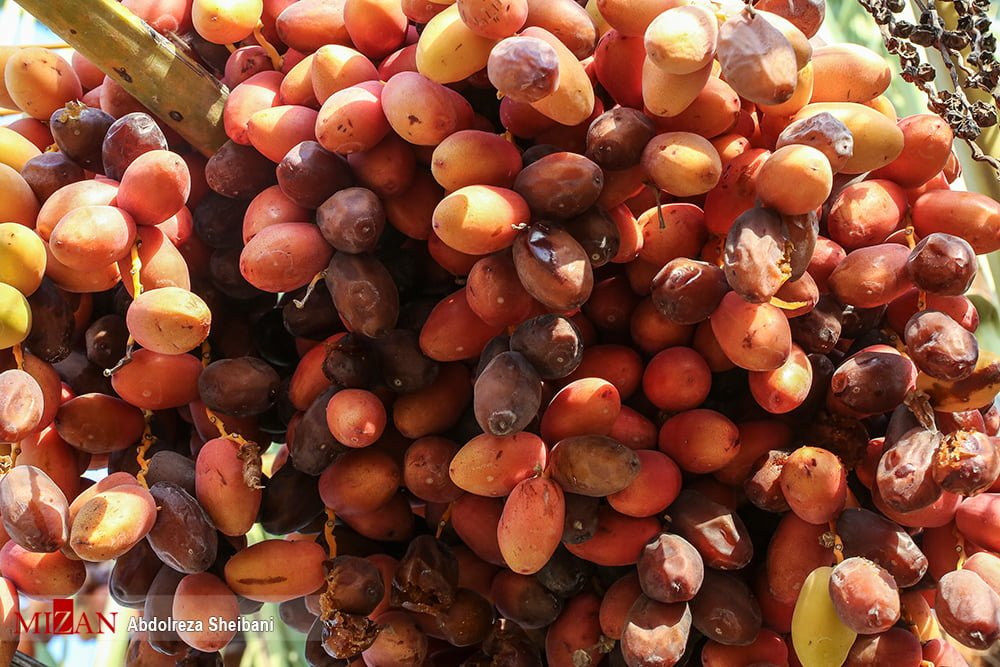
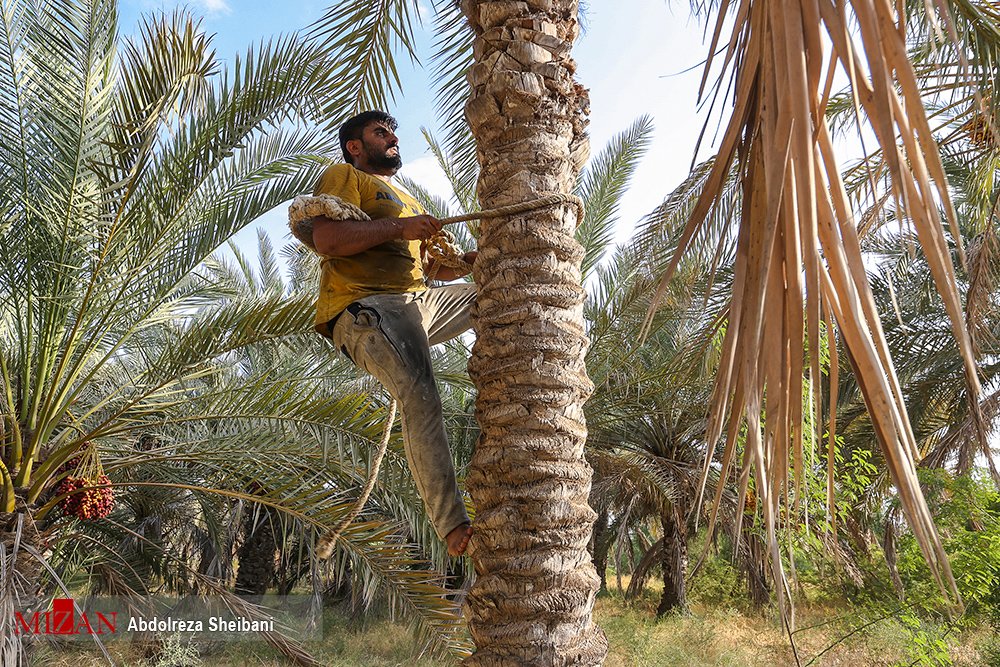
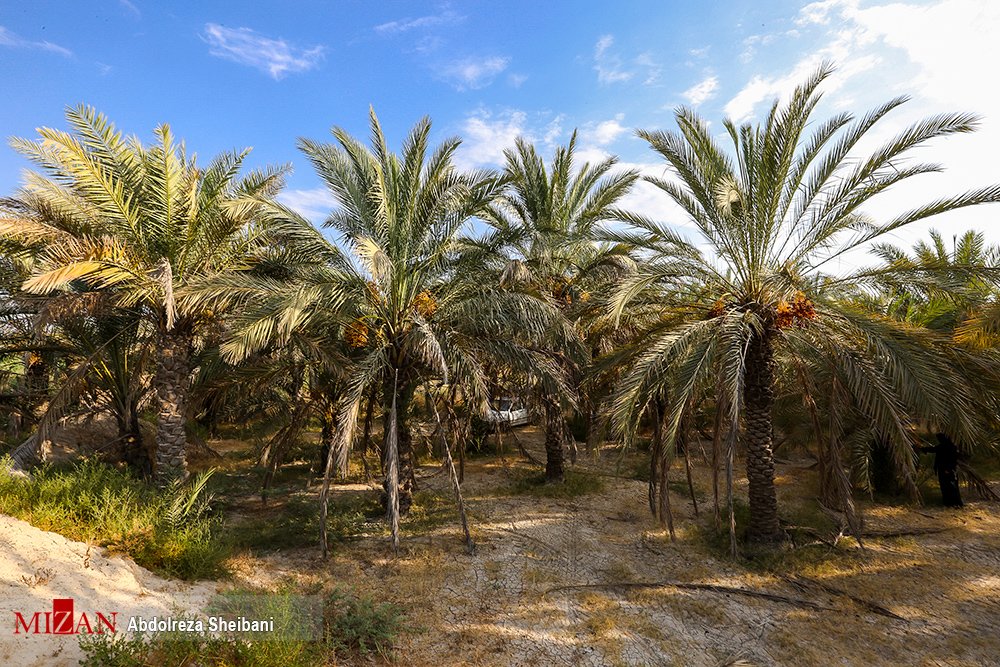
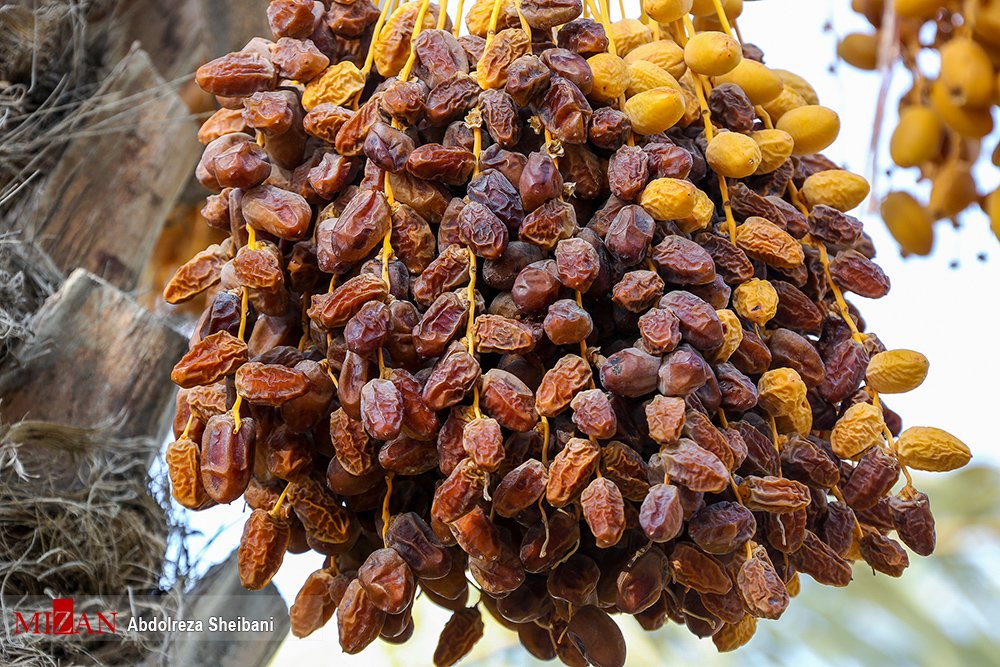
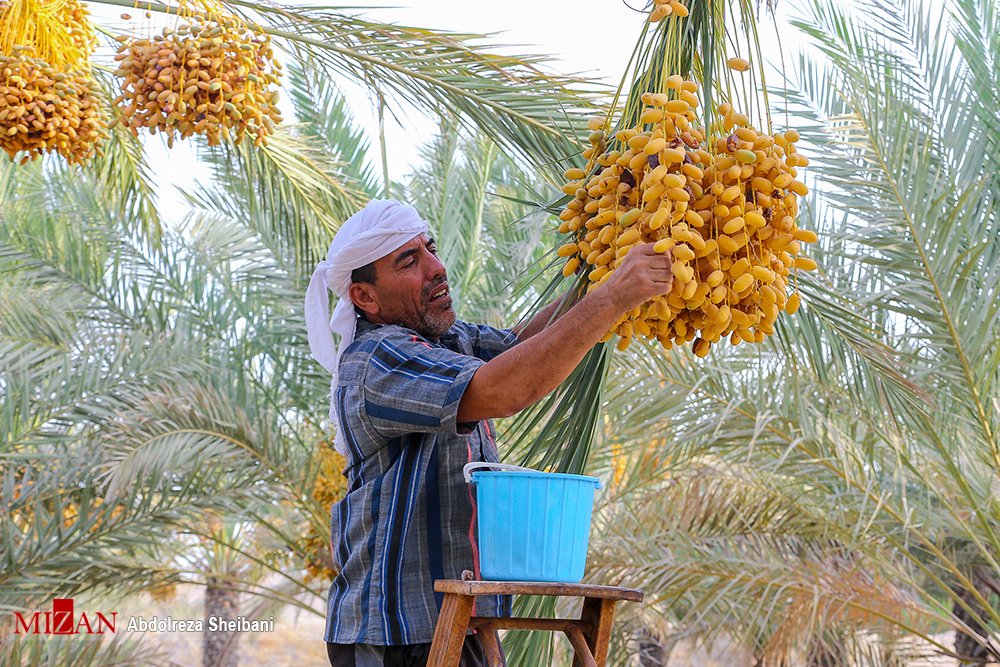
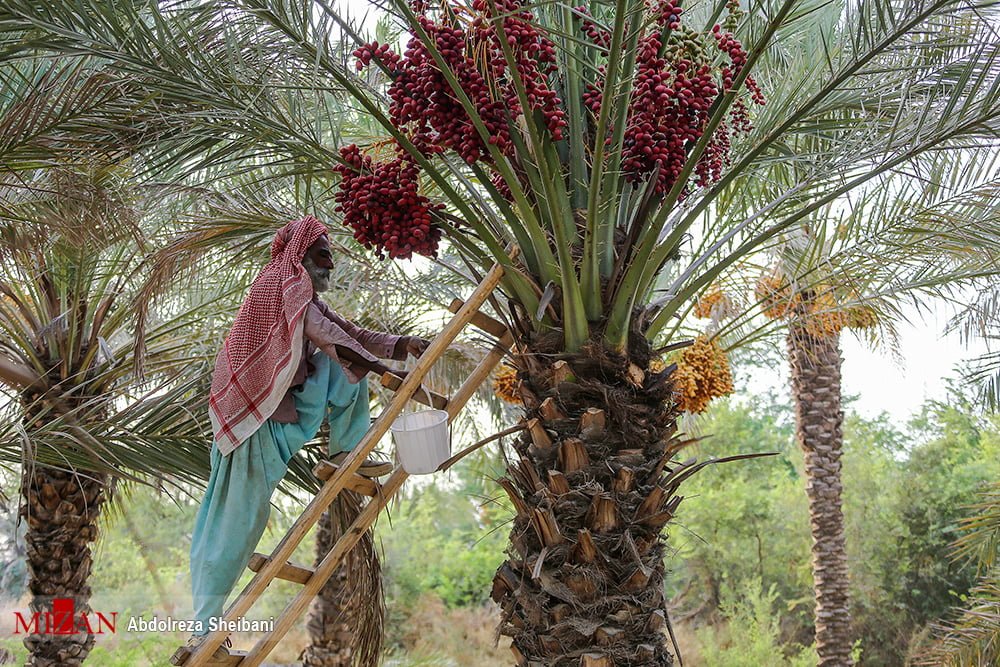
Date Harvest Season Begins in Southern Iran

The city of Parsian in western Hormozgan has palm orchards, which are watered by rain and irrigation. The city has a variety of dates, the most important of which are Azad, Kabkab, Shekari, Halilah, among others.

Following you can find photos of these orchards retrieved from Mizan News Agency:

“FDD Plotting to Depreciate Value of Turkish Lira”

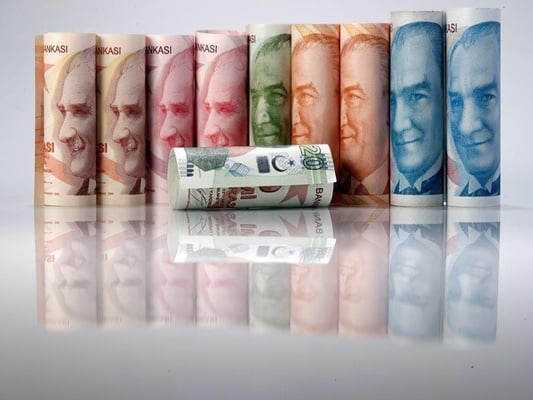
The Fars News Agency has, in an article, discussed a complicated plan to bring down the value of the Turkish lira similar to the plot hatched to devaluate the Iranian rial. The full text of the article follows.

In summer 2011, grim news was reaching Tehran. Reports were flying around in the Iranian capital that the UN Security Council had been issuing back-to-back resolutions against Tehran and that pressures on Iran were building up day by day.

Amid all this, Iran’s economic enterprises had seriously set their eyes on neighbouring countries, and Turkey was the most important entity that could mitigate the pressures exerted on Iran due to oil and monetary sanctions. Moreover, Turkey was a key importer of oil and natural gas from Iran.

All these events led to the creation of a covert channel to make payments, which eased Iran’s financial problems until 2013.

Now several years on, Turkey has come down with a monetary crisis which has seen the value of the Turkish lira drop by 40%. At first glance, maybe there seems to be no connection between two sagas unfolding in Turkey, i.e., the exchange of foreign currency led by Turkish-Iranian gold trader Reza Zarrab and the plunge in the value of the Turkish national currency. However, the reality is that these two developments are mysteriously intertwined with other stories such as the exchange of natural gas and gold between Iran and Turkey, the 2016 failed coup in Turkey, the United Arab Emirates and several other events. Breaking this complicated story into its discrete building blocks can help figure out what is really happening in Turkey.


Meeting the Satan

In 2011 when the first flames of Islamic awakening began to rise in Tunisia before spreading to Egypt and Libya, it was Abu Dhabi and Riyadh as capitals of two Arab kingdoms that were concerned about the rise of Muslim Brotherhood to the peak of ruling the Arab world. By then, not only had Iran’s sphere of influence and worries over the establishment of a Shia Crescent grown, but chaos had struck the heart of the Sunni world as well.

Amid those developments, Turkish President Recep Tayyip Erdoğan was the happiest of all as he was witnessing entities with viewpoints similar to his were gaining power. As a case in point, he mobilized all of Turkey’s intelligence and military potentialities with the covert cooperation of the US to support Muslim Brotherhood in Syria and topple Bashar Assad. Saudi Arabia, too, continued to support the Syrian opposition with full force to make the situation more difficult for Iran. Meanwhile, the United Arab Emirates (UAE) chose a more complicated path.

In 2012, UAE Foreign Minister Abdullah bin Zayed Al Nahyan had a secret meeting with Israeli Prime Minister Benjamin Netanyahu in New York. It took several years until Saudi Arab and the UAE’s the secret relationship with the Israeli regime came to light.  However, one of the key results of this connection was the establishment of a close relationship between the Foundation for Defense of Democracies (FDD) and the UAE.

The incident where the UAE ambassador’s emails were hacked and FDD Chief Executive Mark Dubowitz’s emails were published showed the two had very close cooperation. Common interests shared by the UAE and the Tel Aviv regime in countering Iran, the promotion of cooperation against Muslim Brotherhood and dealing with Hamas have led to the creation of joint work between the two.


How FDD & Gulenists Destroyed Halkbank

To explain what the FDD is, one can say that its major sponsor is Sheldon Adelson, a casino owner and supporter of US President Donald Trump. Based on a report sent to the US Treasury by the FDD, the UAE is also on the list of the major sponsors of this foundation.

When the UAE began to start cooperation with the FDD through Netanyahu, the foundation was pursuing a plan to use unilateral sanctions to counter Iran’s activities to develop its nuclear program. Interesting enough, Zarrab was, at the time, clearing Iran’s forex debts to its customers by importing gold from New Guinea and changing it to dirhams.

This issue was never brought up at Zarrab’s trial chaired by Judge Richard Berman, and it was only Hakan Atilla, the deputy governor of Halkbank, who received a 25-year jail term. The story of the FDD and Turkey was tied to Turkey’s financial sector only when Jonathan Schanzer and Mark Dubowitz in a memo published on Foreign Policy journal dated December 25, 2013 revealed a plan to transfer the revenues from Iran’s oil and natural gas exports to an account related to Iran in the form of gold.

The article claims that Turkey’s Halkbank transferred around $ 119 billion in earnings from Iran’s oil and natural gas exports. The report was part of a storm of reports published in that regard, a storm that Turkish officials blamed on a TV network affiliated with Turkish dissident Fethullah Gulen. Still, a more severe blow was dealt to the Turkish banking system when Hakan Atilla was arrested in the United States and Reza Zarrab turned himself in to American authorities.

Judicial proceedings on the case are still underway and some stories suggest Halkbank has received $27 billion in fines, which could deal a heavy blow to Turkey’s banking system. What is interesting is that in Reza Zarrab’s trial, Dubowitz was one of the witnesses who gave testimony on behalf of the US government against Zarrab.

Still, the foundation continues to commit acts of sabotage, which culminate in the 2016 coup. One thing is evident in the published emails belonging to the UAE ambassador to the US, and that is this country was clearly making every effort to influence the coup d’état in Turkey.


Useless Investment in Turkey’s Coup

When Turkish officials explicitly spoke of a three-billion-dollar fund allocated by an Arab country to the coup in Turkey, all eyes turned to the UAE.

Of course, the UAE had other reasons to be willing to topple the government of Erdogan, and that was the alliance of Turkey and Qatar in countering the blockade on Saudi Arabia and the UAE.

Even when Arab countries decided to capture Qatar, and Tillerson managed to dissuade them from doing so by threatening them, it was the UAE’s“ crown prince that was enraged at Washington’s interference.

When the coup d’état in Turkey was aborted after plans to target Erdogan’s plane failed and his supporters turned out in the streets in droves, Arab-language media such as Sky News, one of whose major shareholders was the UAE, claimed that the putschists had emerged victorious. Also, a meeting on the future of Turkey in the post-Erdogan era held with FDD-backed Gulen advocates in attendance and with the financial support of the UAE showed how deep that relationship was.

Anyway, the failure of the 2016 coup showed how tough Erdogan is. Nevertheless, the course of events still indicated that an intelligence war against the Turkish government was going on. The most important turning point was a second meeting between Israeli and Emirati officials in New York. Amid those developments, the victory of Donald Trump in the US presidential election increased the FDD’s role in determining the policies related to the foreign policy of the US, namely Trump’s withdrawal from the Iran nuclear deal.

What is interesting is that later on, a report on an investigation by Muller into alleged collusion in the US presidential election revealed that extensive consultations between the UAE, Saudi Arabia and the Israeli regime had been going on with the Trump team.

It seems that this was the reason why the tone of the FDD’s reports against Turkey got harsher, so much so that Dubowitz, in a meeting held in early 2018, straightforwardly referred to Iran’s experience in Turkey and using economic tools against Erdogan. This is a strategy that has come to bear down on Erdogan sooner that what he thought.


Anti-Semitists in Turkey

A glance at the activities of an FDD working group on Turkey issues shows that the foundation’s stance has become much harsher in recent years, especially after the 2016 coup. For example, the FDD, in a 2017 report, refers to the dire situation of Jews in Turkey and accuses it of indifference toward anti-Semitic attacks by Turkish nationalists.

The report compares growing anti-Semitic attacks on synagogues and Jewish sites to the 1955 attacks on dozens of synagogues, describing the raids as a prelude to a kind of ethnic cleansing.

The report draws the conclusion that the Turkish indifference and, in fact, contribution to the anti-Semitic moves and refusing to prosecute perpetrators can jeopardize peaceful coexistence among different historical religions in Turkey and turn into a major threat to peace in the country.

Even after the arrest of American pastor Andrew Craig Brunson in Turkey which led to the widening of a covert rift between Washington and Ankara, it was FDD authorities that called for the US government to seriously deal with the situation and slap tough sanctions on Turkey.

Jonathan Schanzer wrote in an article that All Americans should remember the name “Brunson” and know that the Erdogan government is an enemy of democracy.

Of course, the harsh stances adopted by the FDD so far has led to the boycott of two Turkish officials and has not harmed the Turkish government’s financial channels at all. But why has the Turkish lira got stuck in such an ordeal?


Emirati, Saudi Funds behind Plunge in Lira?

In order to have a better grasp of the UAE and FDD’s possible contribution to a drop in the value of the Turkish lira, we should take a look at the expansion of economic cooperation between the two countries, especially in the field of foreign investment.

It is an undeniable fact that the UAE and Saudi Arabia are both major foreign investors in Turkey and tourists from those countries contribute heavily to a rise in the forex income of Turkey as a Muslim country which boasts numerous tourist attractions.

But is the two countries’ contribution to foreign investment in Turkey so much that cooperation between them can disrupt Turkey’s monetary sector to such an extent? What role does Halkbank play in this disorder and how has the FDD entrapped the Turkish lira by mixing important parts of these elements at as sensitive juncture?

In our next report, we will take a look at how this saga has unfolded and how the same tool has been used in similar cases, namely Iran and other independent states as well as important global crises.