Wednesday, December 24, 2025
Home Blog Page 3502

Iran Rejects Comments by Russian ‘Negotiator’ on Caspian Sea

Asked by Tasnim about a recent report from a Persian-language foreign-based media outlet which has referred to Rajab Safarov as a member of Russia’s team of experts involved in the Caspian negotiations in Kazakhstan, Foreign Ministry Spokesman Bahram Qassemi said, “Records show that he (Safarov) has been never a negotiator in the Russian delegation negotiating with the Iranian delegation.”

“Without doubt, the comments and allegations by the above-mentioned person have basically no credibility,” Qassemi added.

The spokesperson also noted that such baseless allegations and false reports against Iran at this juncture have “certain objectives” that are masterminded by “specific elements and centers.”

The reaction came after BBC Persian broadcast an interview with Safarov, introducing him as a member of Russia’s team of experts in the Kazakhstan talks about the Caspian Sea legal regime.

The Russian individual alleged in the interview that Iran had easily abandoned its share of the Caspian Sea after dissolution of the Soviet Union, expressing surprise that Iran has not insisted on its fifty-percent share of the Caspian Sea from the outset of the negotiations.

A summit of leaders of the Caspian littoral states concluded in the Kazakh city of Aktau on Sunday with a long-awaited convention on the legal regime of the large lake.

The five littoral states – Iran, Russia, Turkmenistan, Kazakhstan and the Republic of Azerbaijan- also signed six other agreements in the summit.

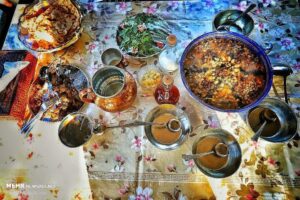
Zanjan Prune Broth: A Traditional Food with Great Taste

Zanjan Prune Broth: A Traditional Food with Great Taste

The so-called Zanjan prune broth has long been favourite with folks in the city of Zanjan in northwestern Iran. It is also popular in other cities such as Malayer, Hamedan, Boroujerd and Nahavand.

The broth is popular with tourists and visitors as well. The ingredients include pulses and dried apricots, among other things, and the food is served with grape syrup and grape vinegar after it is cooked.

Last year, the traditional skill of cooking Zanjan prune broth was registered on the National List of Intangible Heritage in a ceremony attended by the vice president and head of the country’s Cultural Heritage Organization.

Dried apricots and dried greengage are also added to this food. The dried apricot and greengage are cooked separately and added to the broth after it is cooked through.


Ingredients:

Peas: One glass

Beans: One glass

Lentils; One glass

Broth herbs: 1 kg

Potatoes: Two average-sized potatoes

Carrots: Two average-sized carrots

Barley: As much as needed

Small-sized Dried Greengage: Half a glass

Dried Apricots: Half a glass

Noodles: One pack

Beetroots: Optional

Garlic: As much as necessary

Vinegar: As much as necessary

Sugar: Two spoonfuls

Onions: Three average-sized onions


Recipe

Zanjan Prune Broth: A Traditional Food with Great Taste
Iranian Chefs in Fierce Competition to Qualify for National Broth Festival

Lay the pulses in water the night before and change the water several times. Then put them on the flame until half-cooked. Chop 1 kg of broth herbs, including leeks, coriander, parsley and spinach. Use a little bit more coriander, and less of the other three herbs, with an equal amount each.

Cook the chopped herbs before adding the pulses to them. Let the concoction be cooked through. Meanwhile, shred the onions and fry them. Then add them to the broth along with sliced carrots and two chopped potatoes. After half an hour, add the dried greengage and apricots.

Now add some salt and pepper. Then dissolve two spoonfuls of sugar in half a cupful of white vinegar, lime juice or sour orange juice, and add it to the broth. After the taste of the broth changes, add one pack of noodles. (Break the noodles in half, so that there will be enough noodles to go around when serving the dish.)

If you like beetroots, chop them to very small pieces before adding the noodles and spices, and allow the chopped beetroots to be cooked with other ingredients.

If interested, you may add ground walnuts to the broth. In some recipes for the same kind of broth like the one cooked in Hamedan, they use grape syrup instead of sugar, and grape vinegar instead of white vinegar.

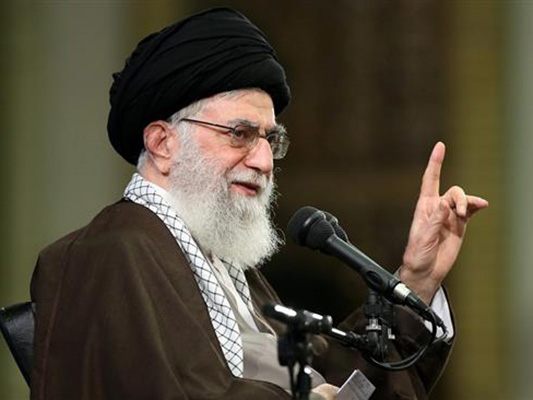
Iran Leader Says There’ll Be No War, No Negotiation with US

Leader

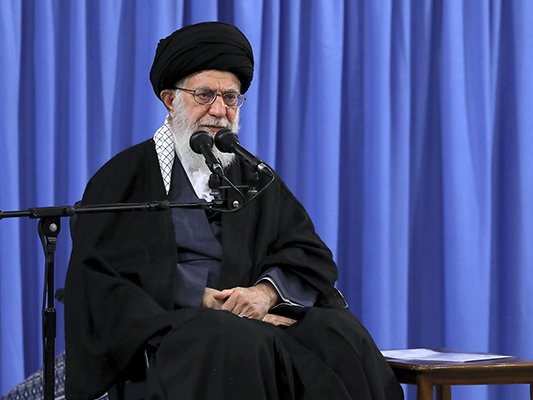
Addressing a huge gathering of people from all walks of life in Tehran on Monday, Ayatollah Khamenei slammed the US rhetoric towards Iran and stated that the US has become ruder and more blatant in their rhetoric over the past few months, both towards Iran and towards other nations.

“Recently, the US officials have been talking blatantly about us. Besides sanctions, they talk about war and negotiations. They raise the spectre of war to frighten the cowards,” he added.

The Leader pointed to the US’ call for negotiation with Iran, saying that they are playing a poor game.

“One of them talks of negotiation with preconditions; another one talks of negotiation without preconditions,” he noted.

“Let me address the people on the matter in a few words: There will be no war, nor will we negotiate with the US. This is the gist of the word that all the Iranian people should know.”

The Leader said the Americans rely on money and power and thus consider negotiations as a commercial exchange.

“When the US wants to negotiate with another party, they determine their main goals, and then they won’t retreat even a step away from these goals,” he added.

“They ask the other party to give a concession immediately; and if the other party refuses to do so, they start making a fuss, so that the other party would surrender,” Ayatollah Khamenei noted.

The Leader said the US itself does not pay anything in exchange for what it takes from the other party. “The US only makes strong promises in order to enchant the other party with mere promises.”

“In the final stage, after receiving all the immediate advantages, the US breaches its own promises,” he added.

“This is the method of the American negotiations. Now should we negotiate with such a fraudulent government? The JCPOA was a clear example of this,” he went on to say.

Ayatollah Khamenei finally prohibited holding any negotiations with the US, saying, “The Islamic Republic would negotiate with the US only when it reaches the power and sovereignty that would nullify the US’ pressures and domineering efforts; when those efforts have no effect on Iran. Today it does not have such power. Thus, I prohibit negotiations with the US just as Imam [Khomeini] did.”

Iran Says Remaining in Nuclear Deal Better than Leaving It

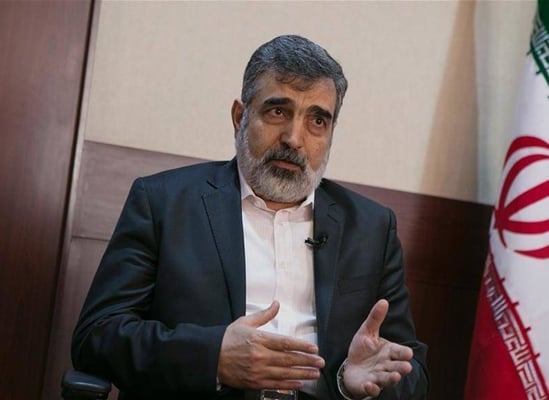
Behrouz Kamalvandi said it is up to the leadership of the Islamic Republic of Iran to decide about remaining in or leaving the JCPOA, but he himself believes that remaining in the deal is better than leaving it.

“As Henry Kissinger, former US Secretary of State, once said, the US withdrawal from the JCPOA has created a deep hole in the US’ internal politics. Meanwhile, according to Kissinger, the pullout has put the US and Europe at a loggerhead over Iran and killed at least six resolutions by the United Nations Security Council about Iran,” he noted.

“Therefore, I believe that we would lose all these advantages simply by leaving the nuclear deal,” he said in an interview with ISNA.


Europe Not to Sever Ties with US over Iran

In response to a question on Europe’s capacity to make up for the damages inflicted on Iran after the US re-imposed its sanctions on the country, the AEOI spokesman said it goes without saying that Europe doesn’t have enough capacity to compensate for the damages.

“Unfortunately, it is a brute fact that the global economy is not imaginable at all without the US and its significant role in the monetary, banking and technological areas. Meanwhile Europe needs to keep its relations with the US not only because of its economic considerations but also its identity and security,” he noted.

Kamalvandi went on to say that it’s wrong to think that Europe will stand against the US over Iran. “They may adopt a relatively different approach towards the US but won’t stand against it at all. Europe’s capacity is limited but as things stand so far, they are ready to work with the Islamic Republic in some areas despite the US sanctions.”

He underlined that based on UN Security Council Resolution 2231, even if all earlier UN resolutions against Iran are restored, there would be no restriction on the contracts signed by Iran and a number of foreign companies after the JCPOA implementation including the re-designing of Arak heavywater reactor.


AEOI Prepared for Worst-Case Scenarios

The spokesperson also referred to the re-imposition of the first round of the US sanctions on the Islamic Republic and said the organization has braced itself for the worst-case scenarios.

The second round of the US unilateral sanctions on the Islamic republic of Iran are set to be re-imposed in November.

Touching on the impacts of the re-imposition of US sanctions on the contracts signed by the AEOI and the European sides over the past three years, Kamalvandi said even if the other parties decide to quit cooperation with the Islamic Republic, there are many small and medium-sized companies which are ready to replace them.


Remaining in JCPOA Could Decrease Impact of Sanctions

The spokesperson also said that although it is not possible to close our eyes on the impacts of the sanctions on Iran, the Islamic Republic can alleviate their impacts by remaining in the nuclear deal.

He noted today the situation is different when it comes to the sanctions “because unlike previous times, the US does not any more have the backing of other countries and there are many small and medium-sized companies which can work with Iran despite the US sanctions.”

The Iranian official underlined that as stressed by Iran’s Leader, the country needs to resist against the sanctions for a while so that the US officials come to the sense that their measures are not strong enough to kneel down the Islamic Republic.


Grounds Not Prepared for Joining Nuclear Conventions

Asked about Iran’s plans to join global nuclear conventions, Kamalvandi said the AEOI has already considered joining such treaties as Convention on Nuclear Safety or Vienna Convention on Civil Liability for Nuclear Damage.

“We have already handed over the conventions to the Parliament for approval but given the current political situation in the country, the parliament is not prepared yet to approve them,” he said.

According to Kamalvandi, the Islamic Republic began studying the conventions after the implementation of the Iran nuclear deal in 2016.


Nuclear Chief to Visit Vienna

Kamalvandi said the Head of the Atomic Energy Organization of Iran Ali Akbar Salehi is set to visit Vienna to attend the annual conference of the International Atomic Energy Organization (IAEA) in Vienna slated for September.

He underlined that in November, Salehi is also expected to take part in a separate meeting to be attended by the science and technology ministers from the IAEA member states.

President Donald Trump decided back in May to withdraw the US from Iran’s nuclear deal and re-impose sanctions against the Islamic Republic.

Trump made the decision despite massive efforts by the European allies of the US to convince him to stay in the landmark agreement. The nuclear deal, known as the Joint Comprehensive Plan of Action (JCPOA) came out of years of negotiations between Iran and six world powers, namely the US, Russia, China, Germany, France and Britain in July 2015.

New Anti-Ship Ballistic Missile Unviled in Iran

In a ceremony in Tehran on Monday, Defense Minister Brigadier General Amir Hatami unveiled the new generation of Fateh missiles, saying the Defense Ministry’s Aerospace Organization is capable of fulfilling practical needs of the Armed Forces by turning ideas into products in a short span of time.

The minister said the new generation of Fateh, an agile, radar-evading and tactical missile with pinpoint accuracy, has been fully designed by the local experts and successfully test-fired.

Mass-production of the new missile will help Iran make major strides in boosting its defense capabilities and deterrent power, the general added.

He further stressed that the Iranian Armed Forces will never back off from plans to promote the missile industry and enhance the capabilities of homegrown missiles.

Denouncing the foreign interference in Iran’s defense sphere and the attempts to cap Iran’s missile power, Brigadier General Hatami said Iran will never allow the outsiders to interfere in its domestic issues.

In comments in October 2017, Leader of the Islamic Revolution Ayatollah Seyed Ali Khamenei had also rejected the idea of negotiations on Iran’s defense power, stressing that the country will press ahead with the plans to boost its might and build up its defense capabilities.

“As we have announced several times in the past and announce it once again, the country’s defense capabilities and power are not subject to negotiations and bargaining,” Ayatollah Khamenei said at the time.

“We will have no bargaining and dealing with the enemy over the country’s means of defense and over whatever provides or supports the national power,” Imam Khamenei underscored.

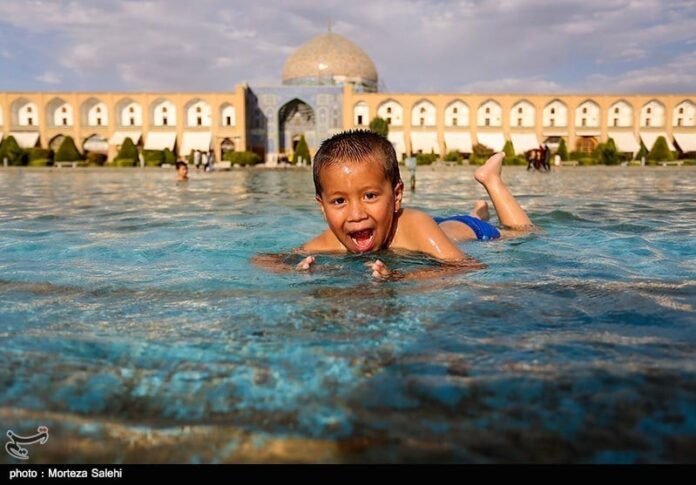
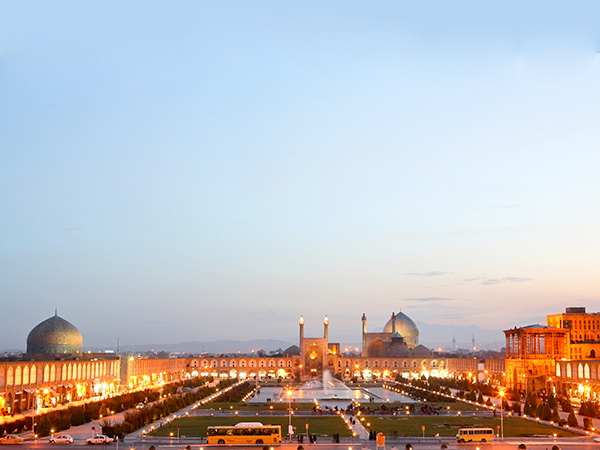
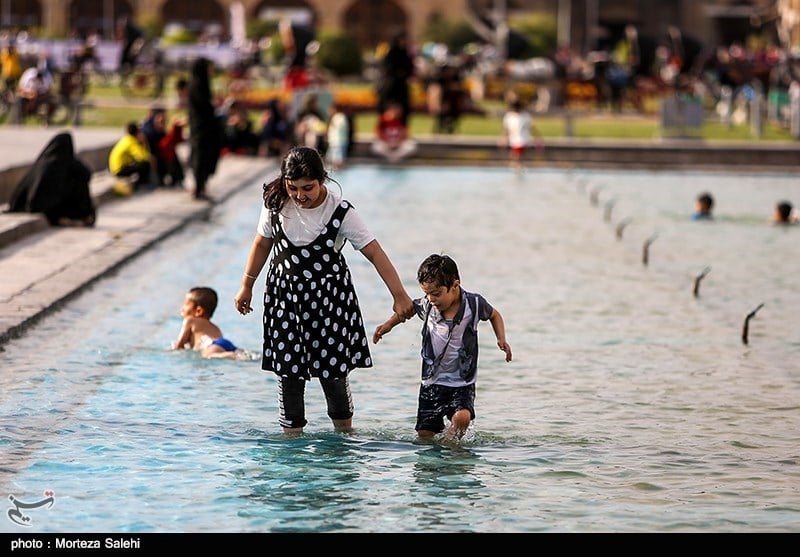
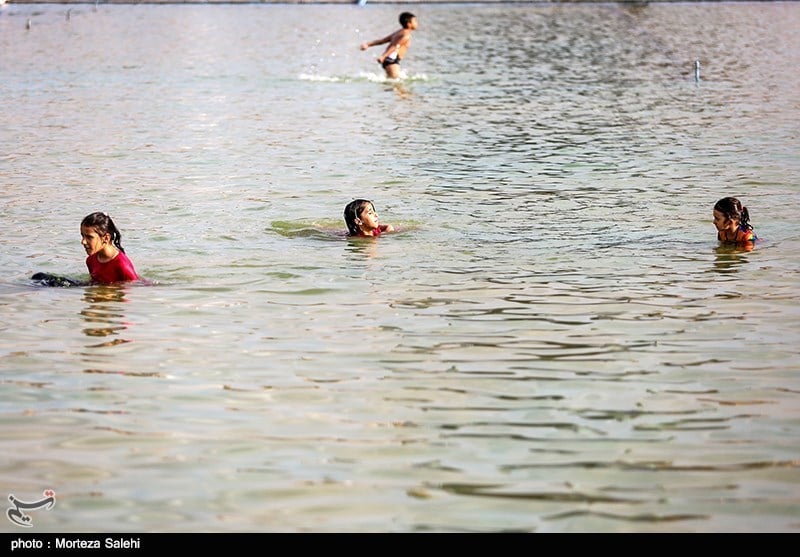
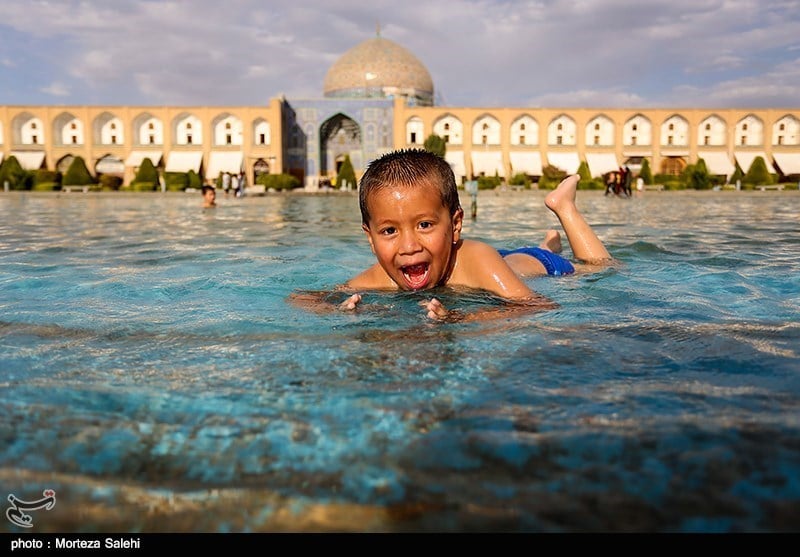
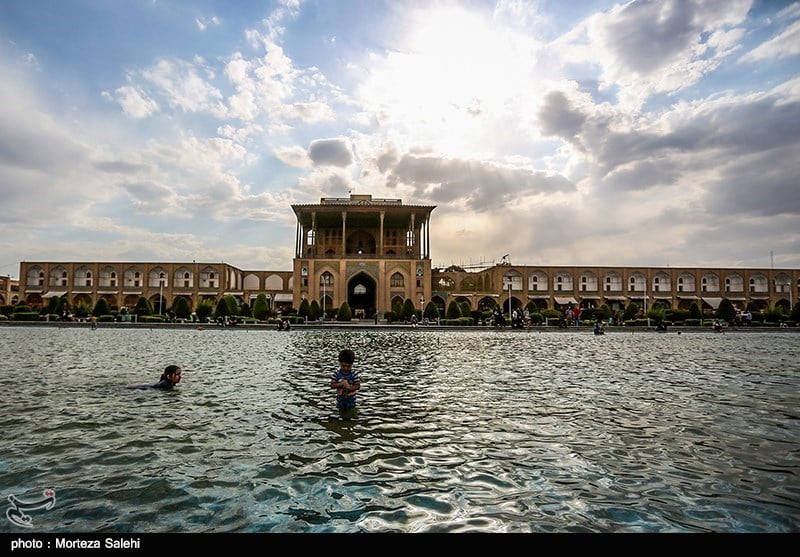
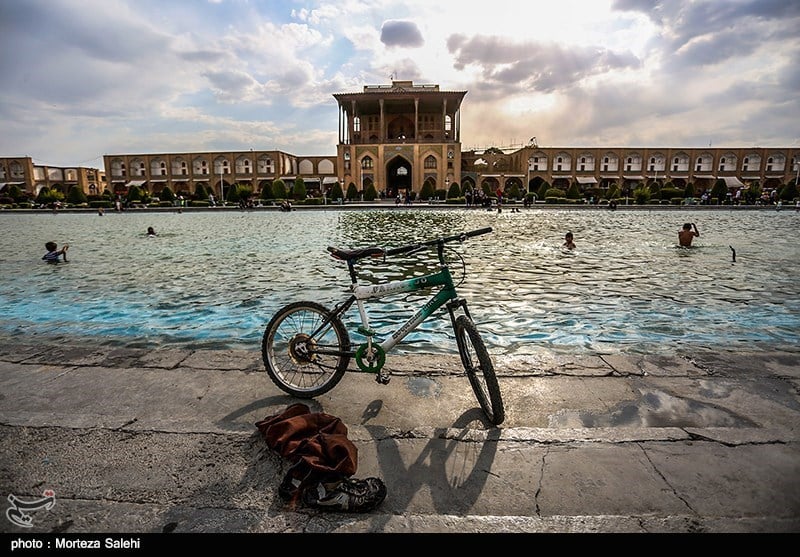
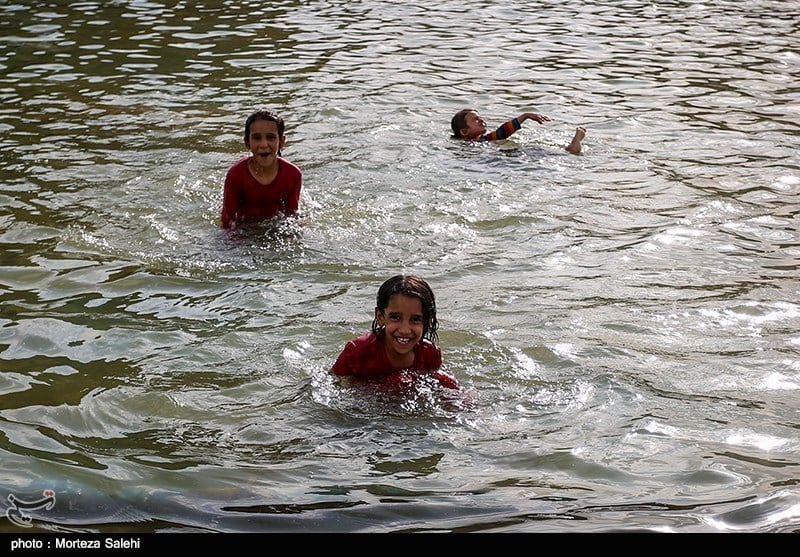
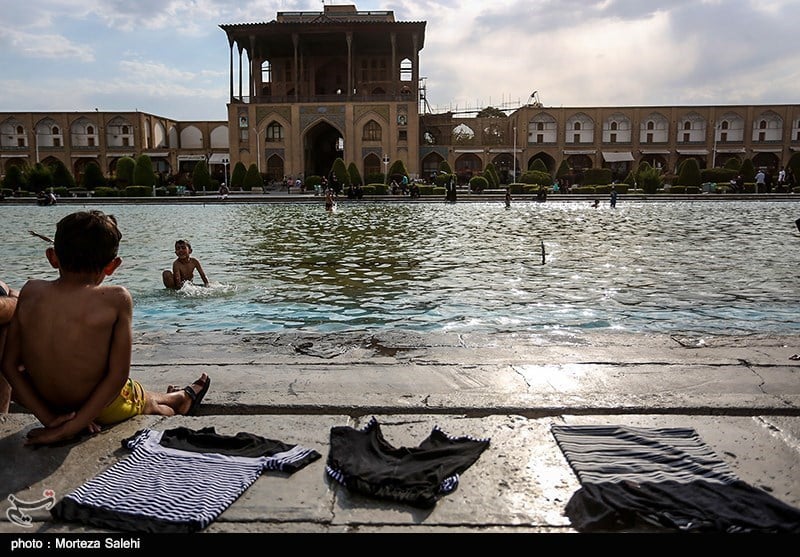
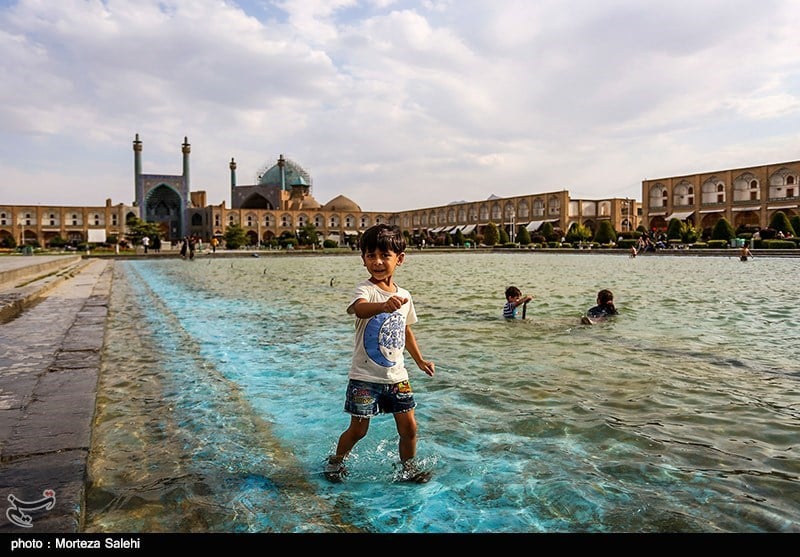
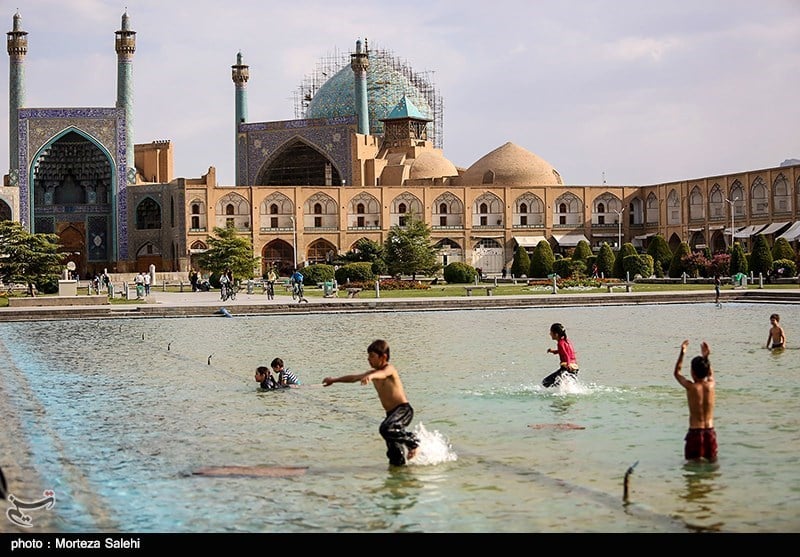
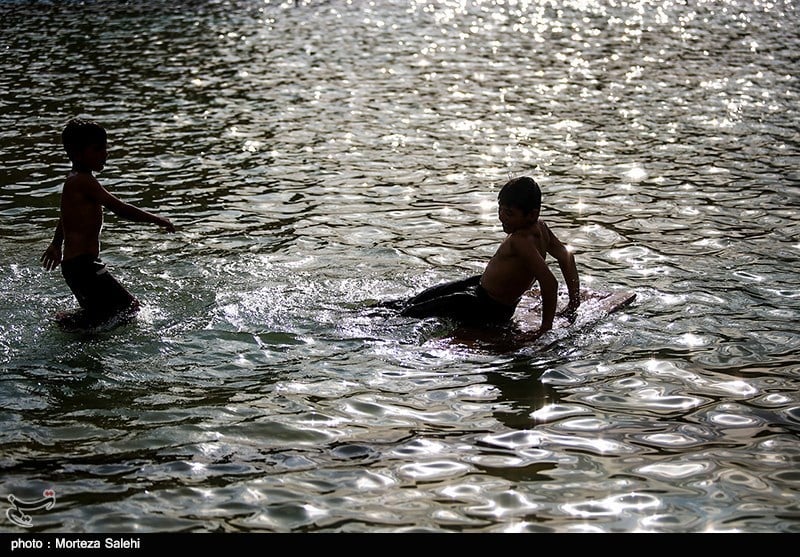
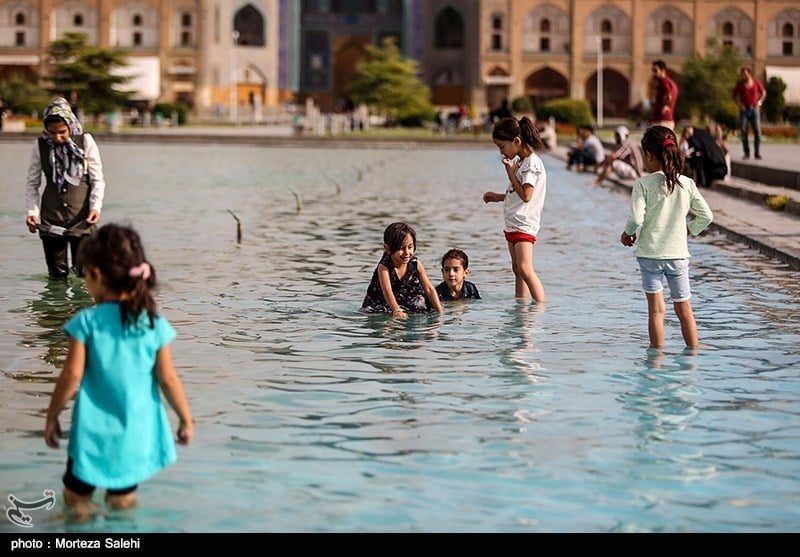
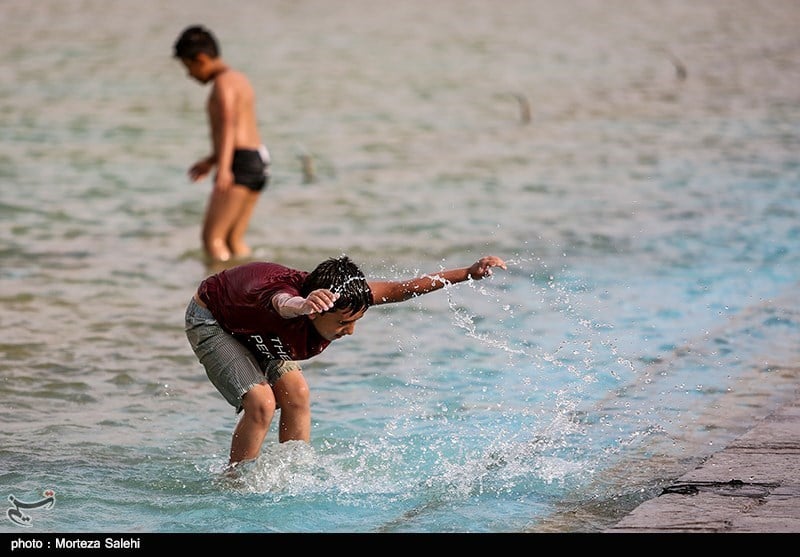
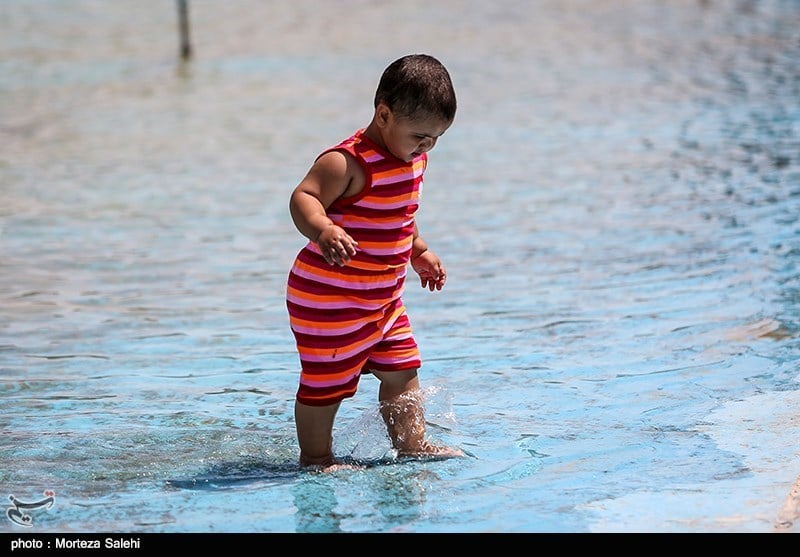
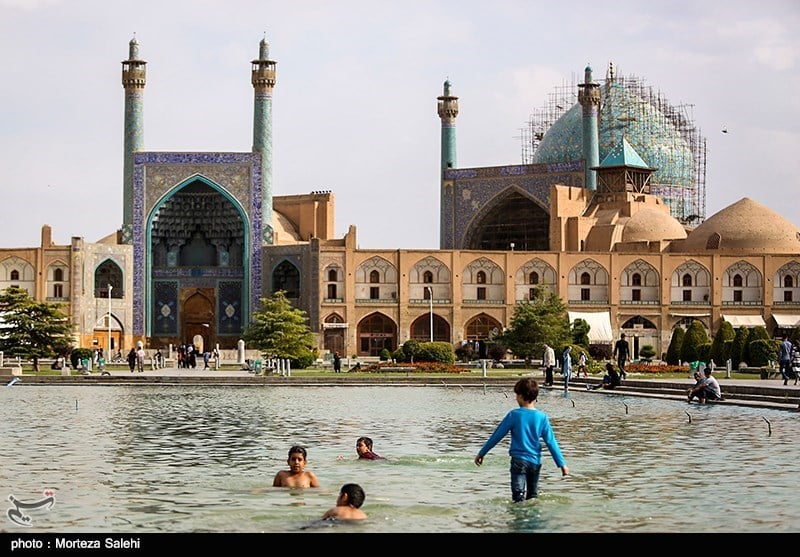
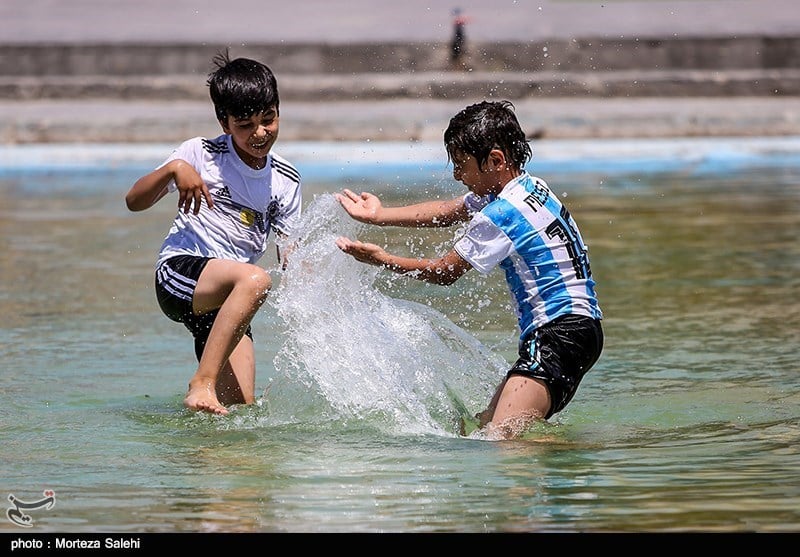
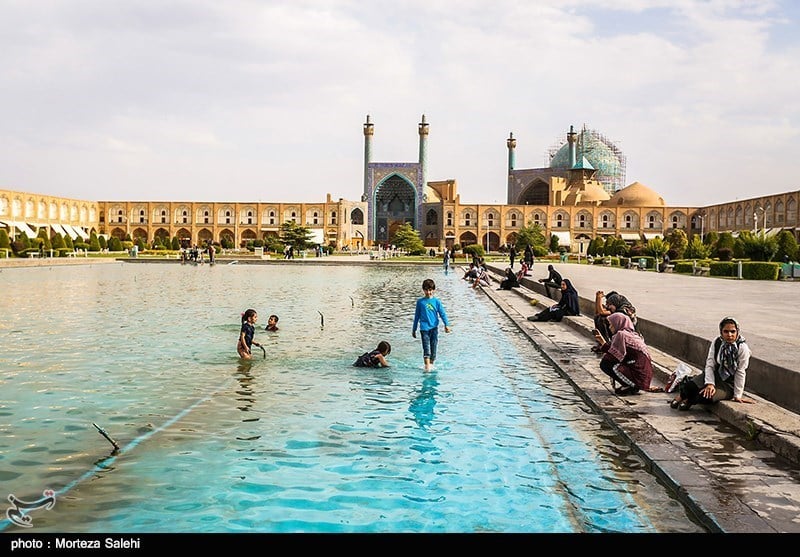
Children Using Naqsh-e Jahan Square as Swimming Pool in Hot Summer

Naqsh-e Jahan Square, also known as Meydan Emam, is a square situated at the centre of Isfahan. Constructed between 1598 and 1629, it is now an important historical site, and one of the UNESCO’s World Heritage Sites.

Below you can find photos of children playing in the square’s pool retrieved from Tasnim News Agency:

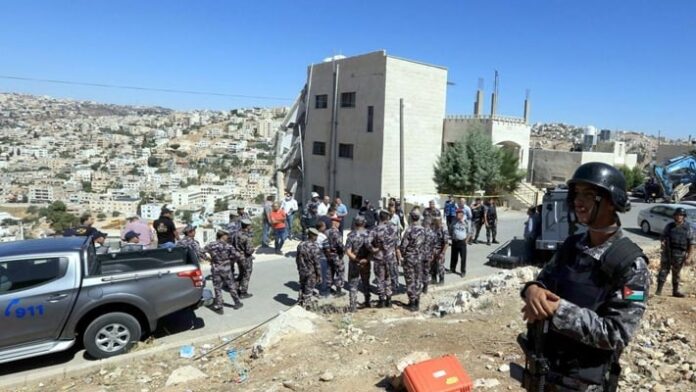
Iran Condemns Deadly Terrorist Attack in Jordan

In a Monday statement, Qassemi offered sympathy to the Jordanian nation, government, and the bereaved families of the incident’s victims.

Three suspected militants and four members of security forces were killed on Saturday when terrorists rigged a building with explosives and detonated them when police raided it.

Alleged assailants opened fire and set off explosions that killed the four security forces attempting to storm the building on Saturday night, officials said.

Police had been chasing suspects in a bombing attack Friday in which a police officer was killed.
The Friday attack was launched on a joint patrol of the Gendarmerie and Public Security Department forces in the city of Fuheis on Friday.

The clash was among the deadliest between suspected militants and Jordanian security forces in recent years.

Mismanagement, Not Sanctions, Main Cause of Iranian Currency Devaluation: Leader

Leader of Iran’s Islamic Revolution Ayatollah Seyyed Ali Khamenei has blamed the government for the ongoing economic crisis in the country, saying the internal factor has been much more effective than external ones like sanctions.

Addressing thousands of Iranian people in Tehran on Monday, the Leader said, “Economic experts and many of our officials agree that internal elements, rather than external ones, are behind the ongoing issue [of the devaluation of Iranian currency].”

The Leader said he does not rule out the impact of sanctions, but the majority of the problems are caused by mismanagement.

If the economy is managed in a “better, more prudent, and stronger” way, then the sanctions would fail to have any significant impact, and resistance would be possible, the Leader noted.

He harshly criticized the Rouhani administration’s performance in managing the gold coin and foreign currency markets, saying that the officials’ negligence and imprudence led to abuses in these markets.

A dramatic rise in the rate of foreign currencies has adversely affected Iranian markets in recent months.

Amid a historic devaluation of the Iranian rial, the US dollar is currently exchanged for prices above 100,000 rials in the free market.

Even a package of measures recently unveiled by the Central Bank has failed to rein in the recent turbulence in foreign currency market.

Azerbaijan President Denounces US Sanctions on Iran

Azerbaijan President Denounces US Sanctions on Iran

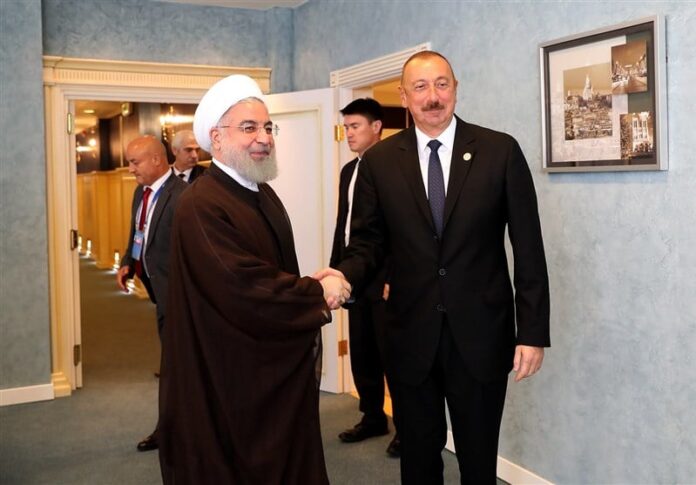
In a meeting with Iranian President Hassan Rouhani on the sidelines of the Caspian summit in Kazakhstan on Sunday, the Azeri president said his country condemns the American sanctions against the Iranian nation.

Azerbaijan’s stance towards Iran is in compliance with fraternity and the international law, Aliyev noted.

He also assured the Iranian president that “nobody” could ever damage the brotherly ties between Baku and Tehran.

For his part, President Rouhani highlighted the deep-rooted cultural and religious bonds between Tehran and Baku, saying Iran believes in brotherly ties with the Republic of Azerbaijan, something beyond the neighborly interaction.

“By promoting the level of cooperation and coordination, Tehran and Baku will not allow the ill-wishers to harm the two countries’ relations,” President Rouhani noted.

Pointing to the numerous opportunities available for enhanced relations between Iran and Azerbaijan, the president called for efforts to accelerate the implementation of the bilateral agreements and joint projects.

The Iranian president returned to Tehran on Sunday night after taking part in the Caspian summit that concluded with a long-awaited convention on the legal regime of the large lake.

The five littoral states – Iran, Russia, Turkmenistan, Kazakhstan and the Republic of Azerbaijan- also signed six other agreements in the summit.

Iran Parliament Summons FM Zarif to Explain Caspian Sea Legal Regime

Lawmaker Alireza Rahimi said Monday Zarif will attend a meeting of the parliament’s National Security and Foreign Policy Commission next week, ISNA reported.

Iran and four ex-Soviet nations, including Russia, signed a landmark convention on the legal status of the resource-rich Caspian Sea in the Kazakh port city of Aktau on Sunday.

The five states agreed in principle how to divide up the world’s biggest enclosed body of water.

Iranian social media was ablaze on Sunday with rumours that Iran is the main loser in the deal.

This is while Iranian President Hassan Rouhani said the delimitation of the seabed, which determines Iran’s share of the oil and gas reserves of the sea, will require additional agreements between littoral nations.

The five countries have been negotiating their shares of the sea for more than 20 years.