Friday, January 2, 2026
Home Blog Page 3200

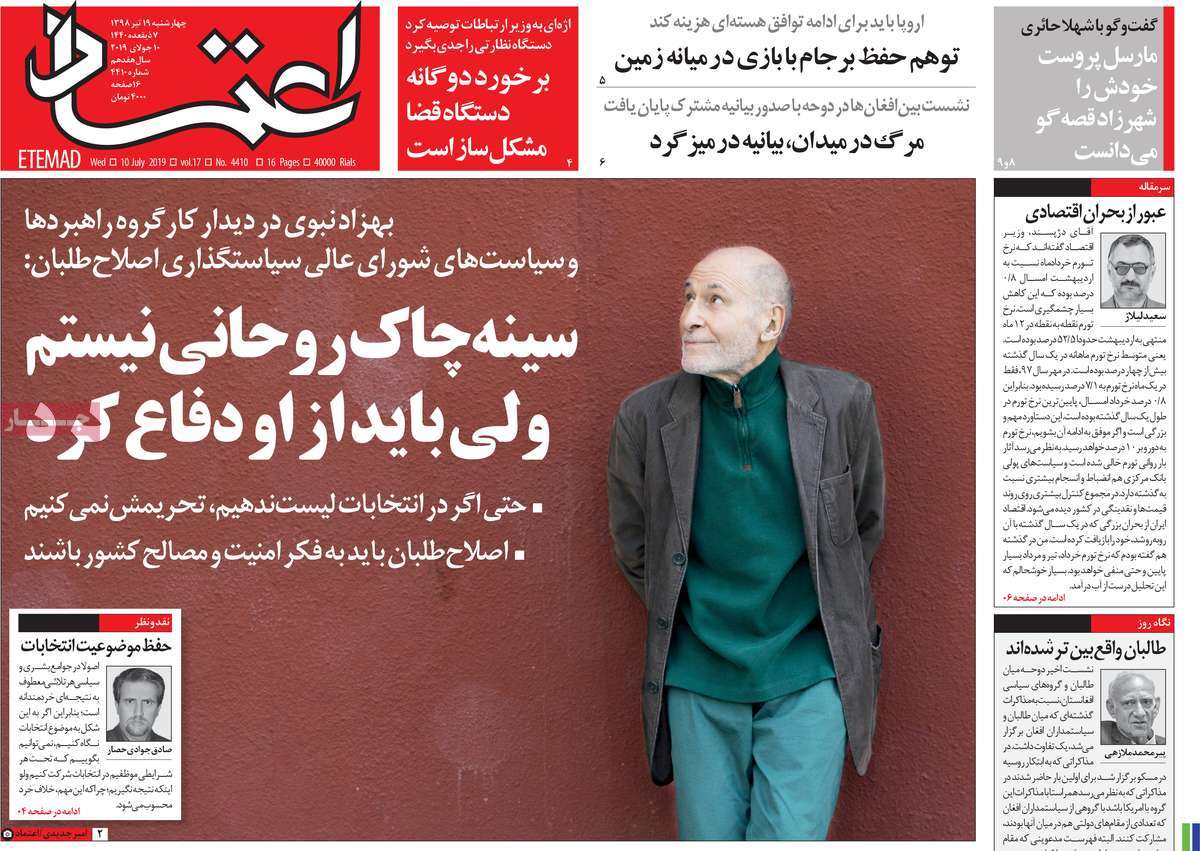
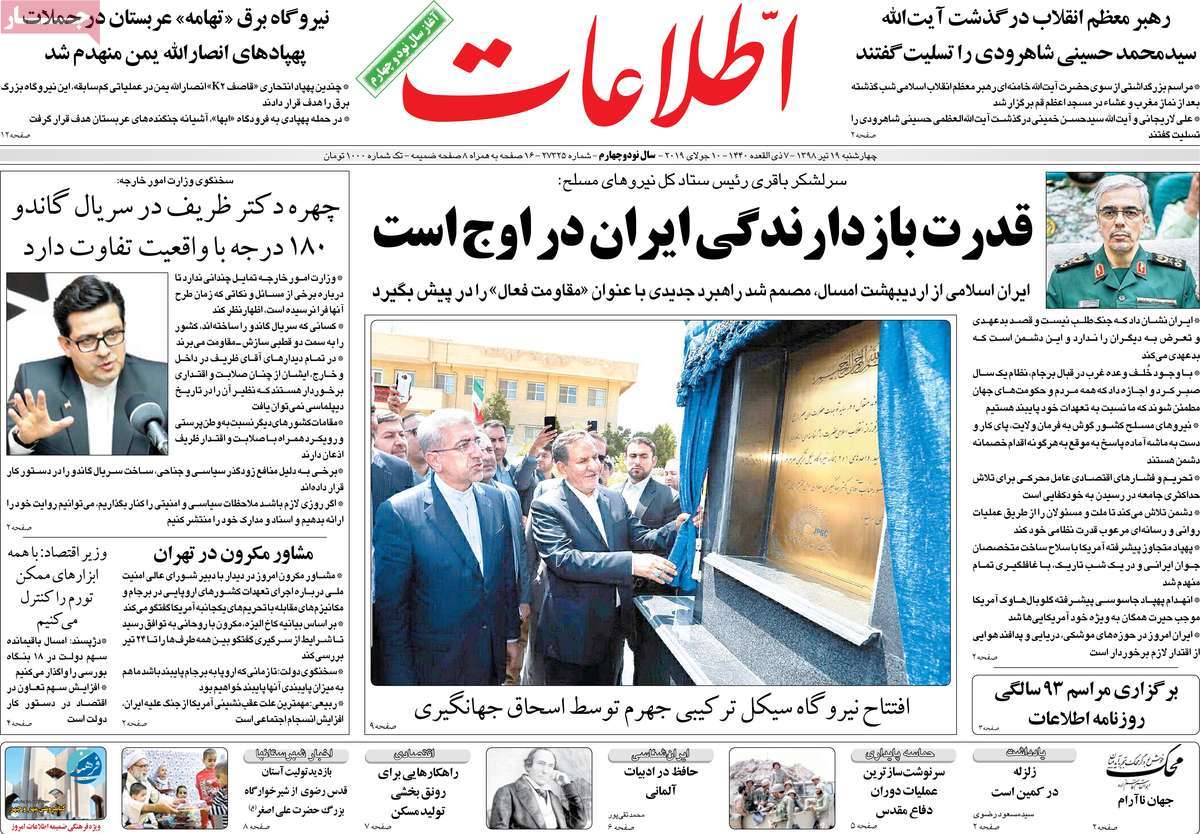
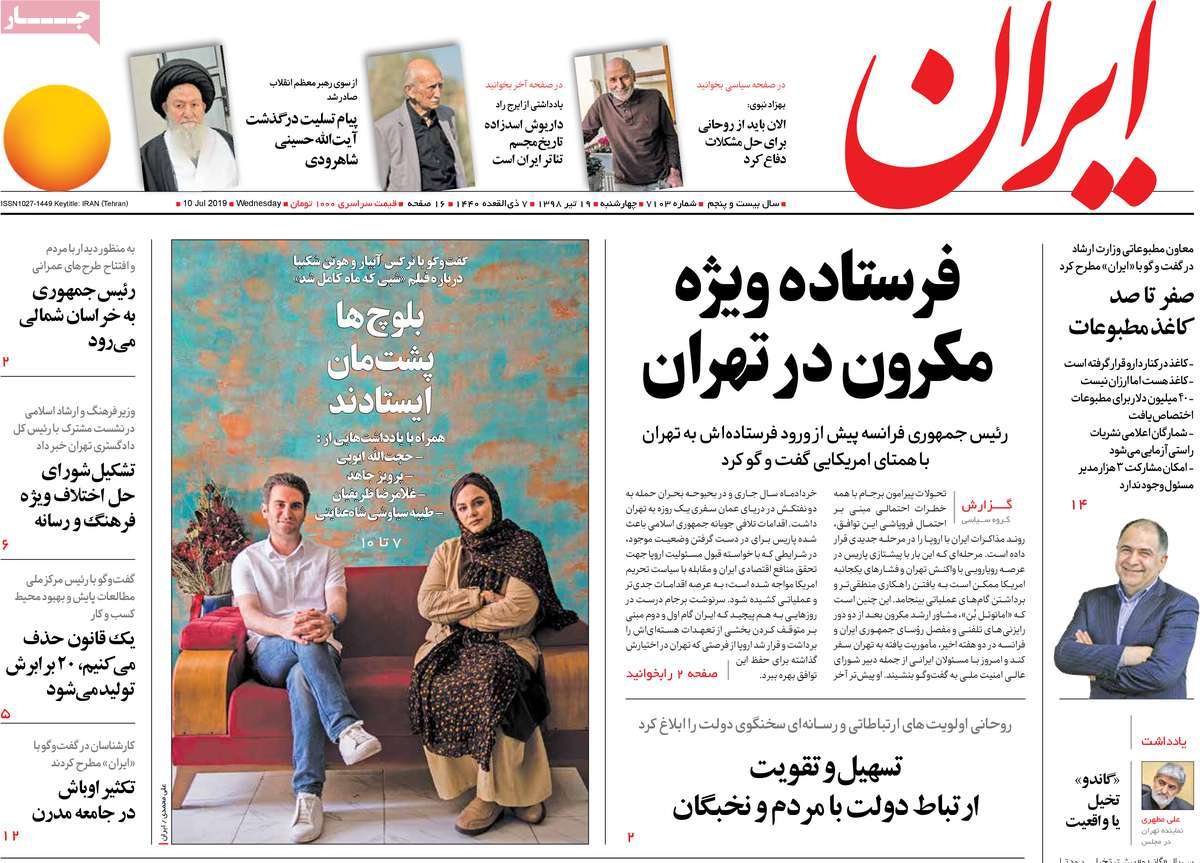
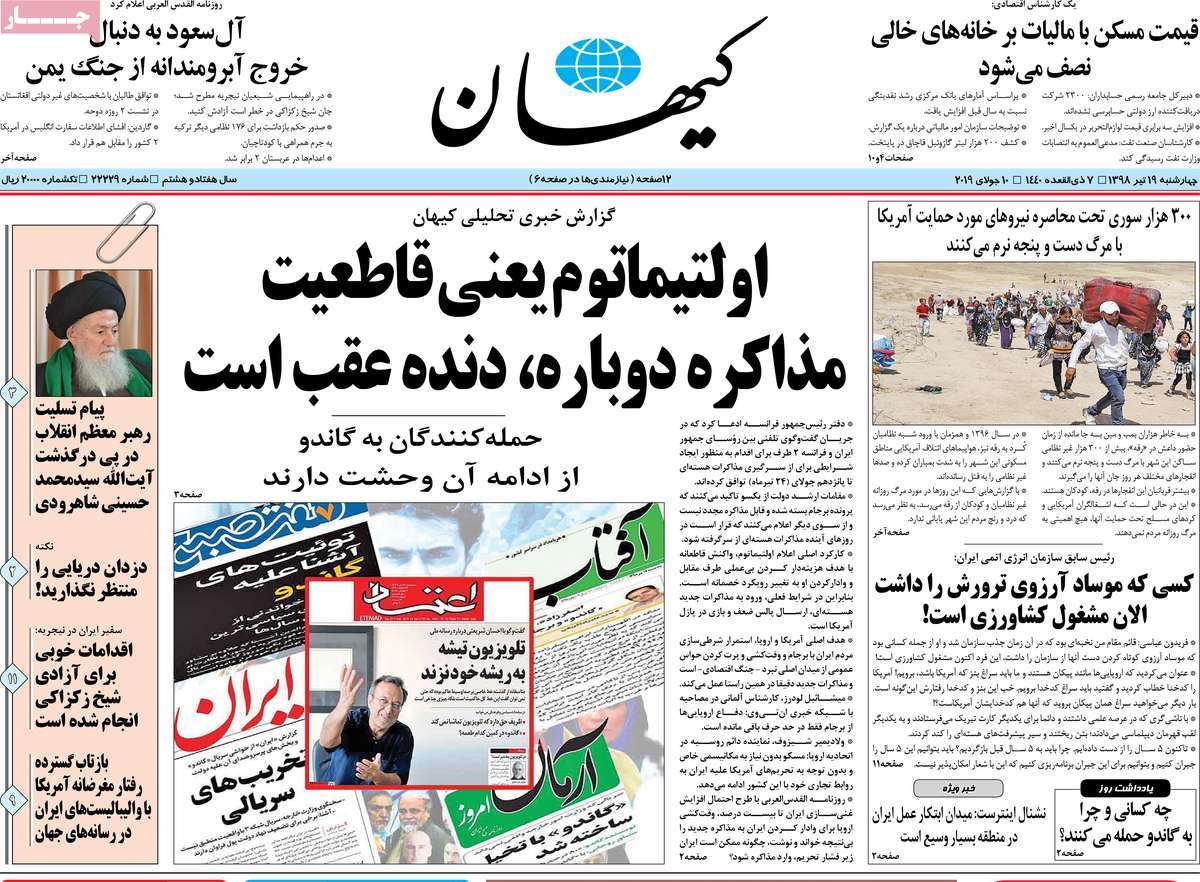
A Look at Iranian Newspaper Front Pages on July 2

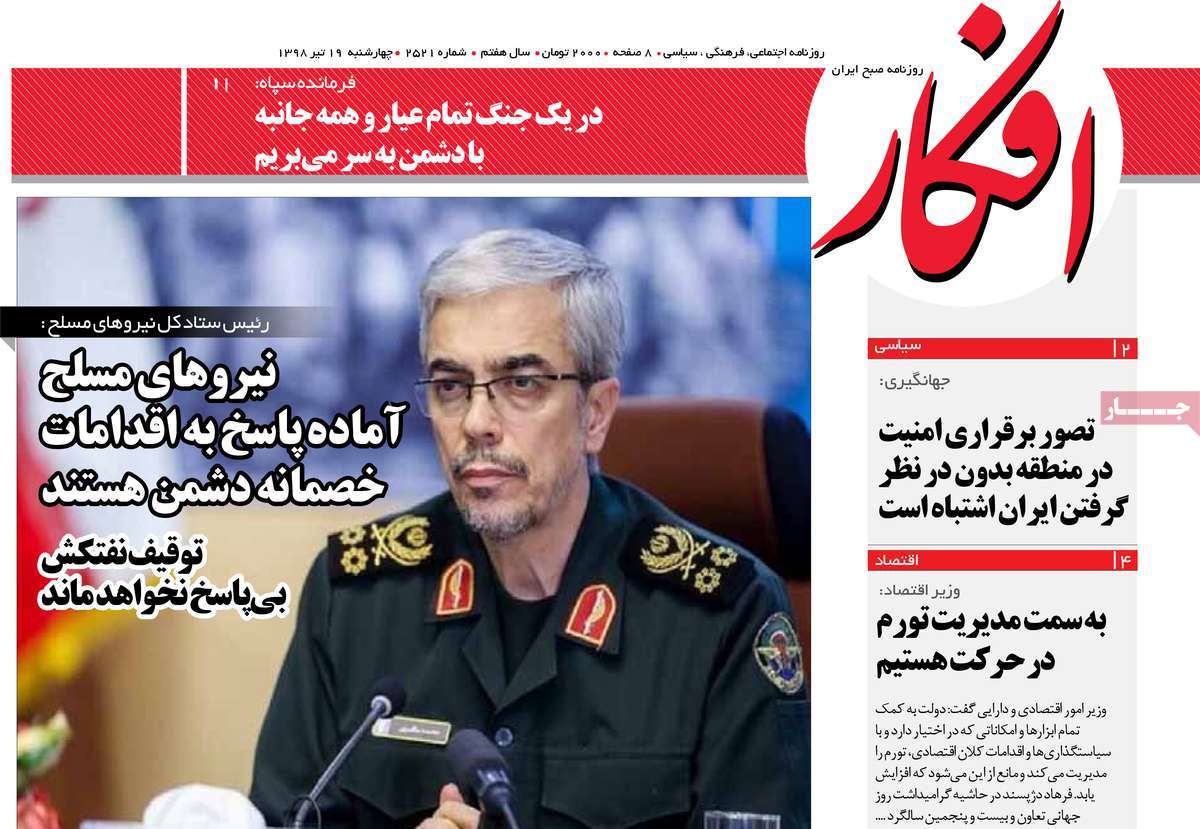
A Look at Iranian Newspaper Front Pages on November 19

19 Dey:

1- Zarif: We Won’t Give in to Pressures

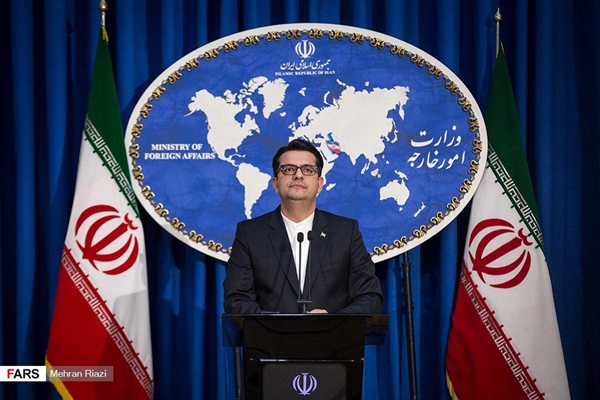
2- Foreign Ministry Spokesman: Iran to Take Second Step If Europe Fails to Do Its Part

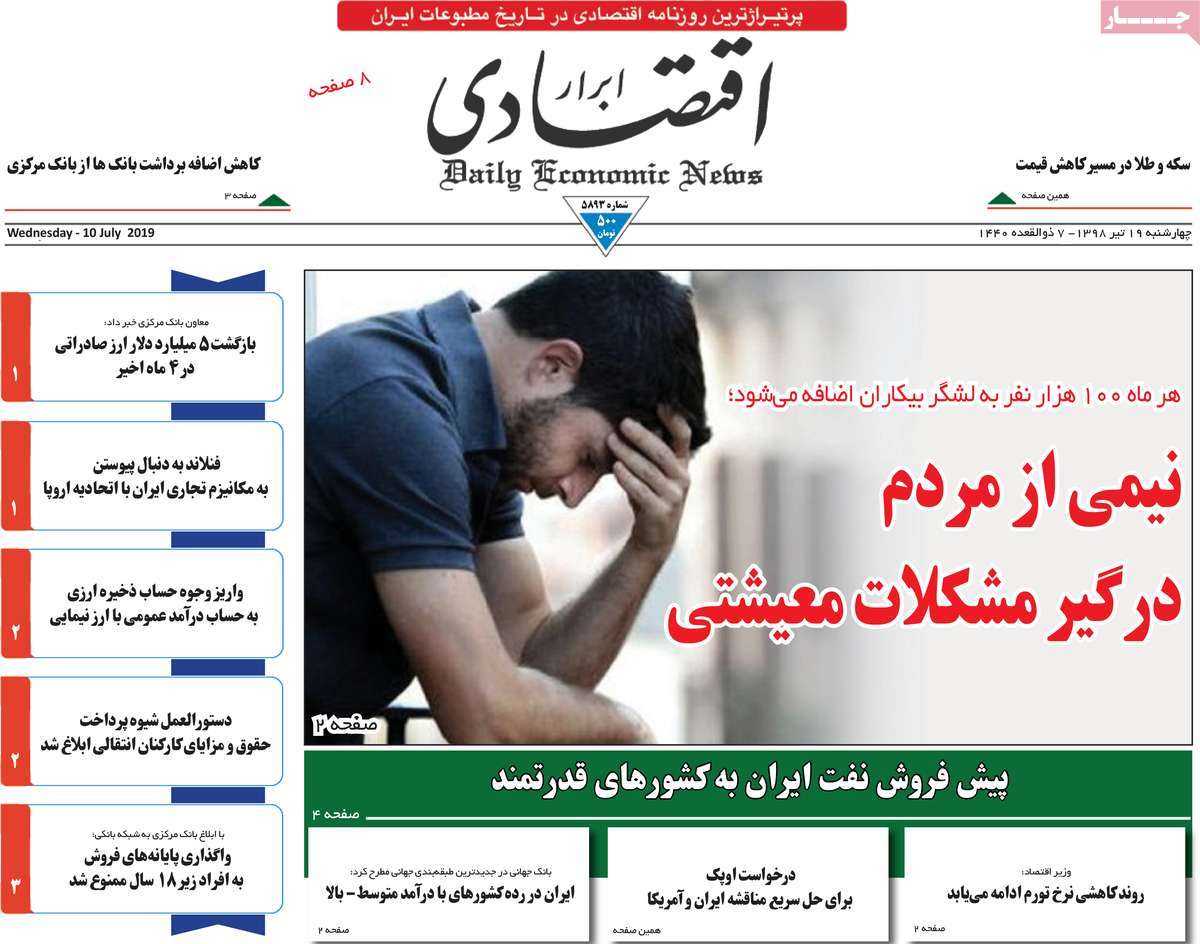
A Look at Iranian Newspaper Front Pages on July 2


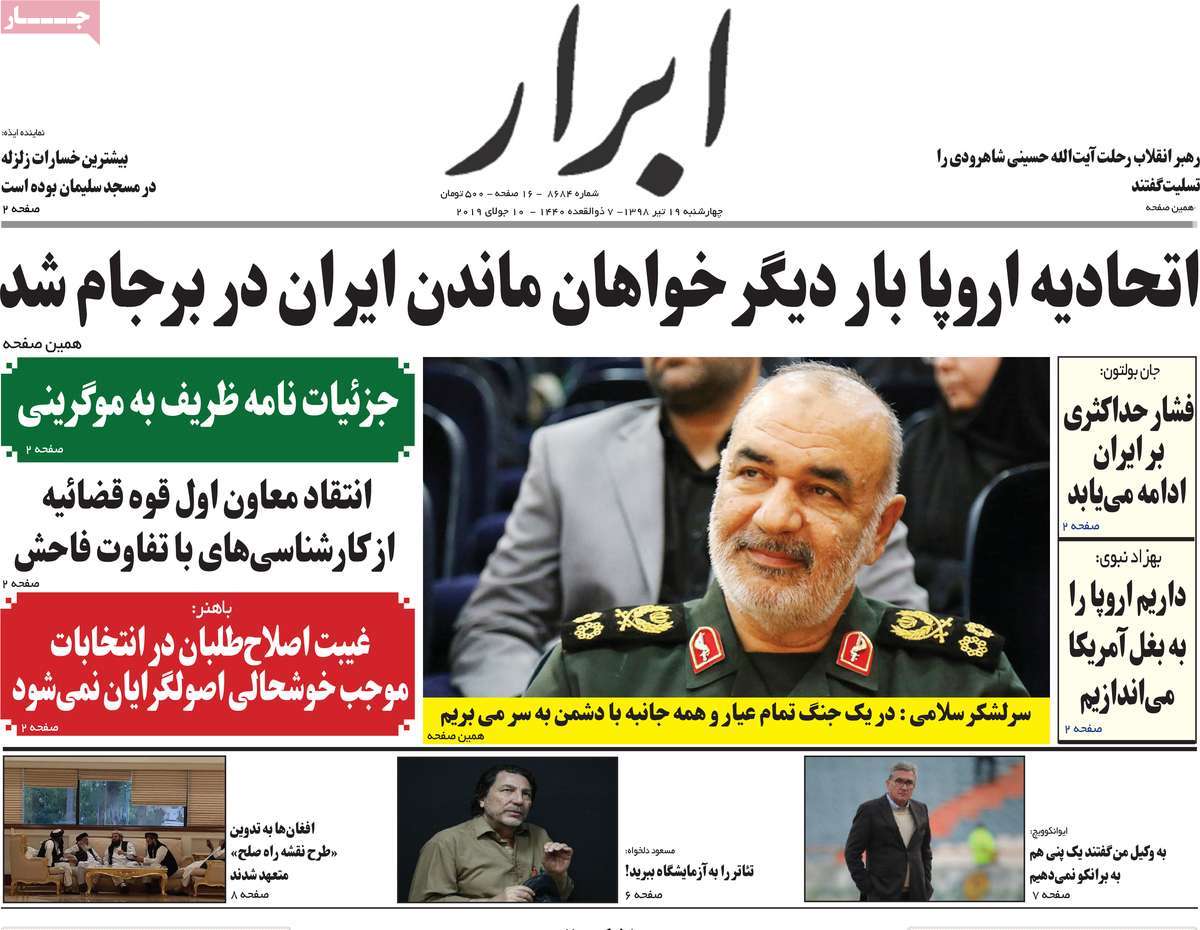
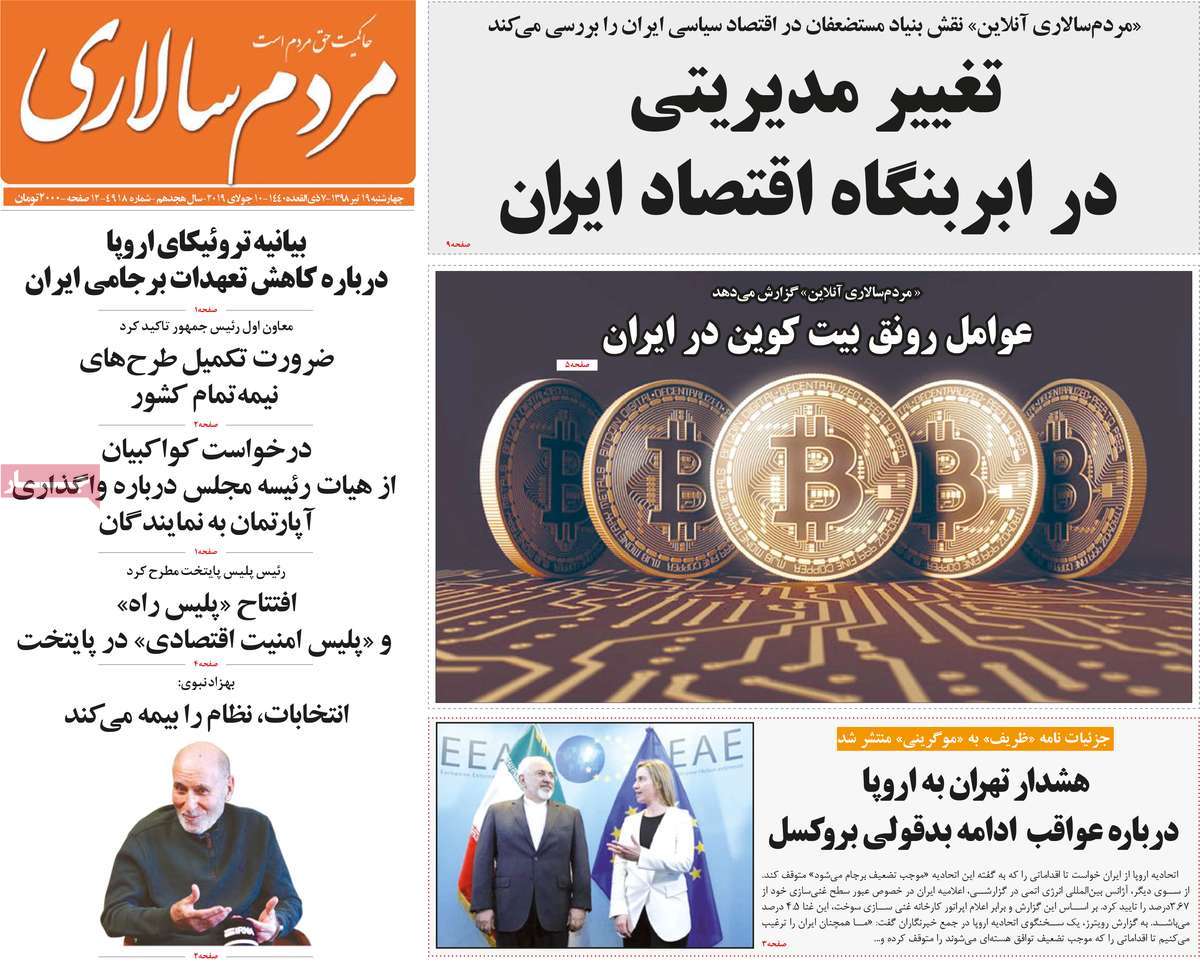
Abrar:

1- Iran to Cooperate If Europe Acts Honestly on INSTEX: MP

2- Iran, Russia, Turkey to Hold Tripartite Meeting in July

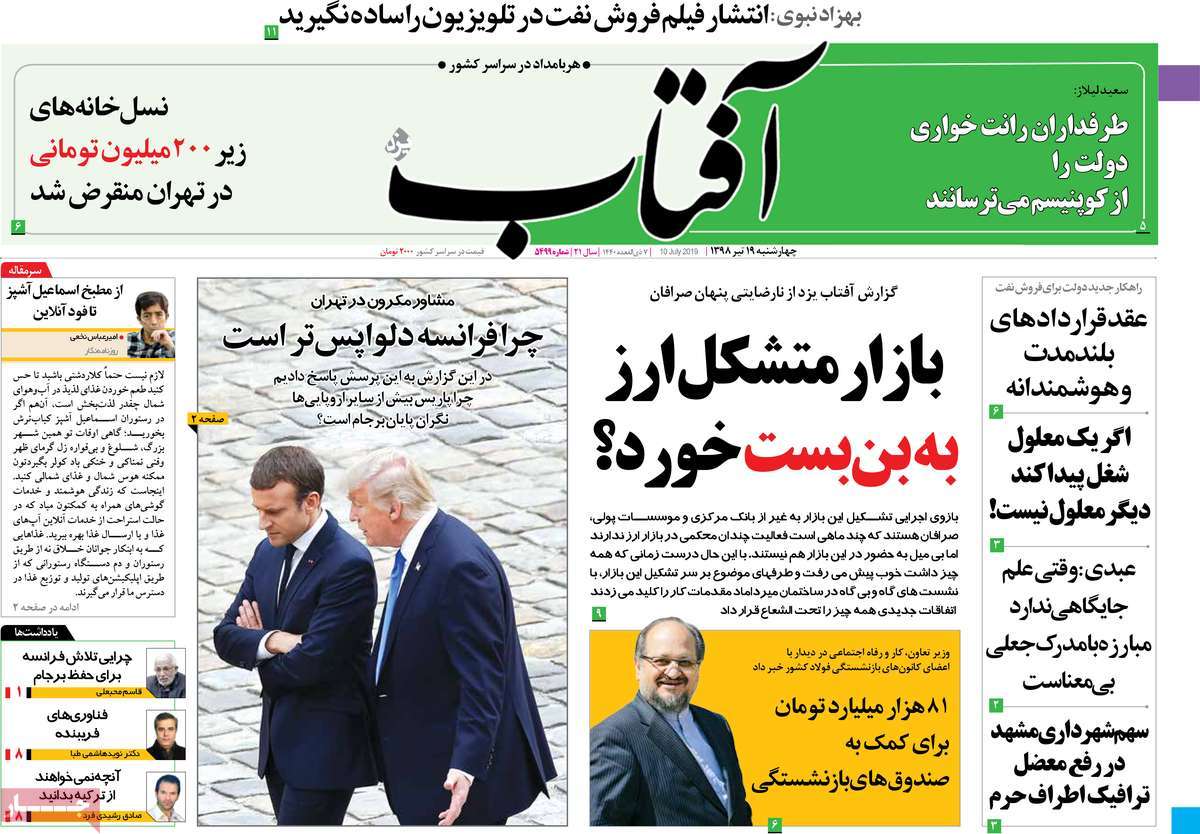
A Look at Iranian Newspaper Front Pages on July 2


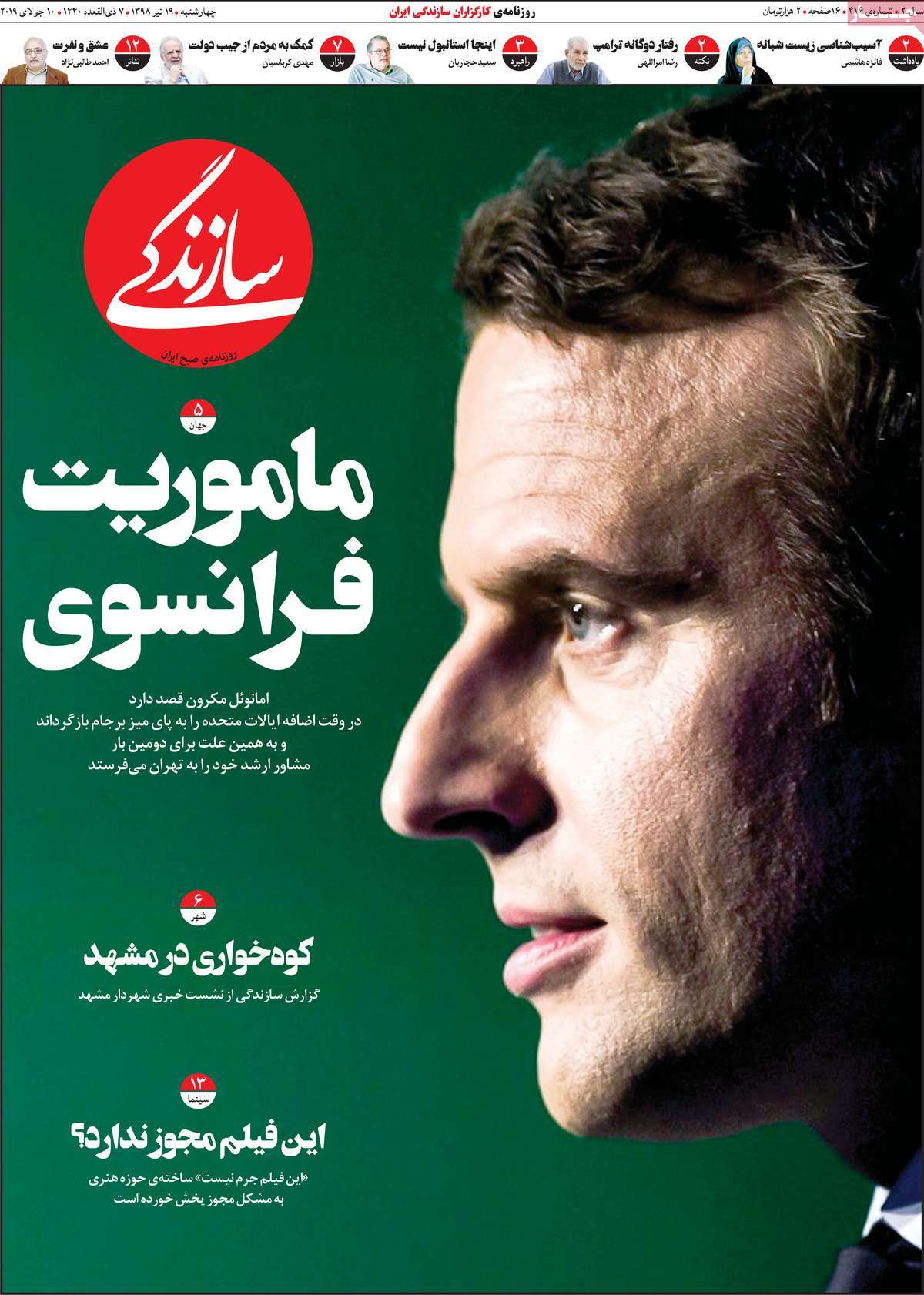
Aftab-e Yazd:

1- Macron en Route to Tehran?

* Diplomatic Traffic in Iran as Deadline Looms

2- Iran’s Oil Sales Continue

3- Middle Men Selling Iran’s Oil [Editorial]

A Look at Iranian Newspaper Front Pages on July 2


Arman-e Emrooz:

1- Iran’s Staying in JCPOA to Further Isolate US: Analyst

2- Europe’s Last Chance

3- Zarif: Iran’s Enriched Uranium Stockpiles Exceed 300kg

A Look at Iranian Newspaper Front Pages on July 2


Asrar:

1- Judiciary Chief: We’ll Show No Mercy in Countering Corruption

2- Oil Minister: OPEC Must Counter Unilateralism

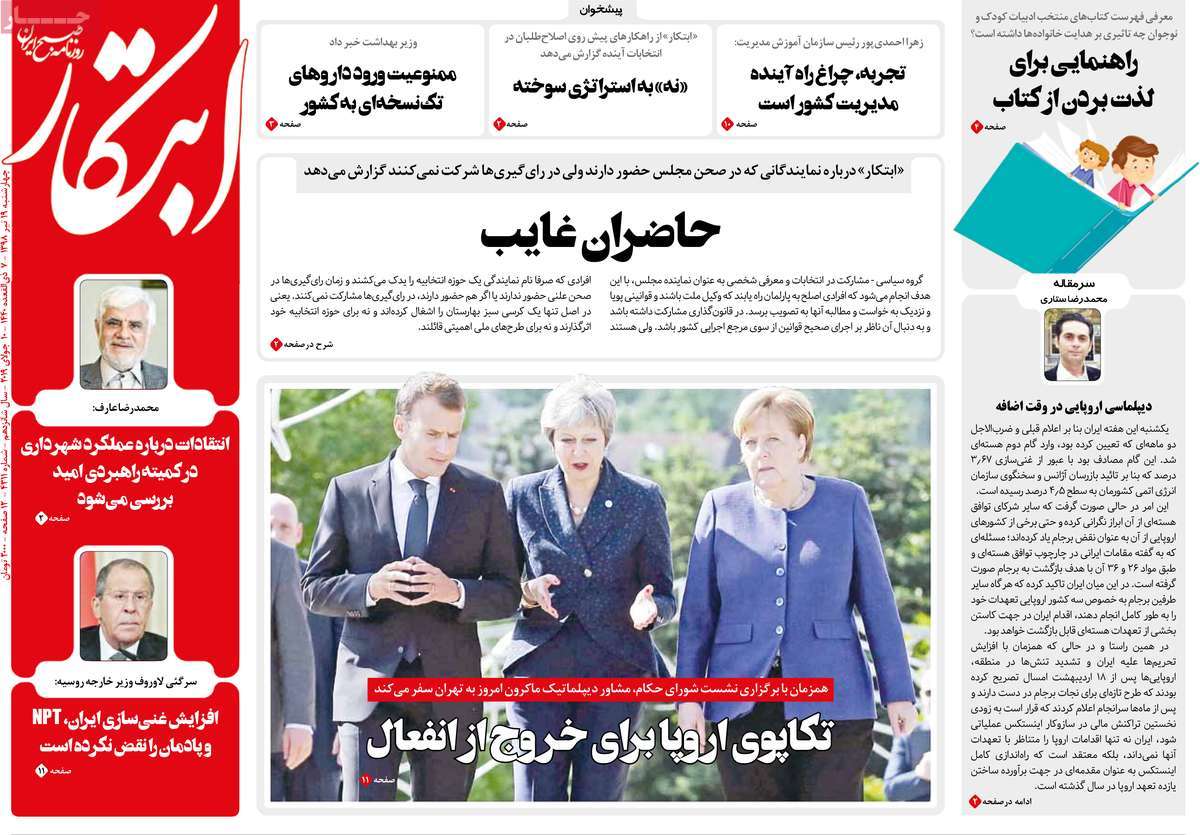
A Look at Iranian Newspaper Front Pages on July 2


Ebtekar:

1- Countdown for Second Nuclear Step

2- Larijani: Trump Shameless Person at International Arena

A Look at Iranian Newspaper Front Pages on July 2


Etemad:

1- Iran Oil Minister’s Resistance

* Iran Protests Influence of Non-OPEC Countries in OPEC

* Saudi Arabia Accused of Unilateralism, Russia Accused of Increasing Tension in OPEC

2- Hot Nuclear Summer

* Iran’s Enriched Uranium Stockpiles Surpass 300kg

A Look at Iranian Newspaper Front Pages on July 2


Ettela’at:

1- Interior Minister: Sanctions Disrupting Services to Refugees

2- 15 Civilians Killed in Latest Israeli Airstrikes on Syria

A Look at Iranian Newspaper Front Pages on July 2


Iran:

1- Oil Minister: Unilateralism Threatening OPEC’s Existence

2- Impact of Sanctions on Providing Services for Foreign Nationals

A Look at Iranian Newspaper Front Pages on July 2


Javan:

1- Iran Exceeds JCPOA Limit

2- Industry Minister: We Defeat Sanctions

A Look at Iranian Newspaper Front Pages on July 2


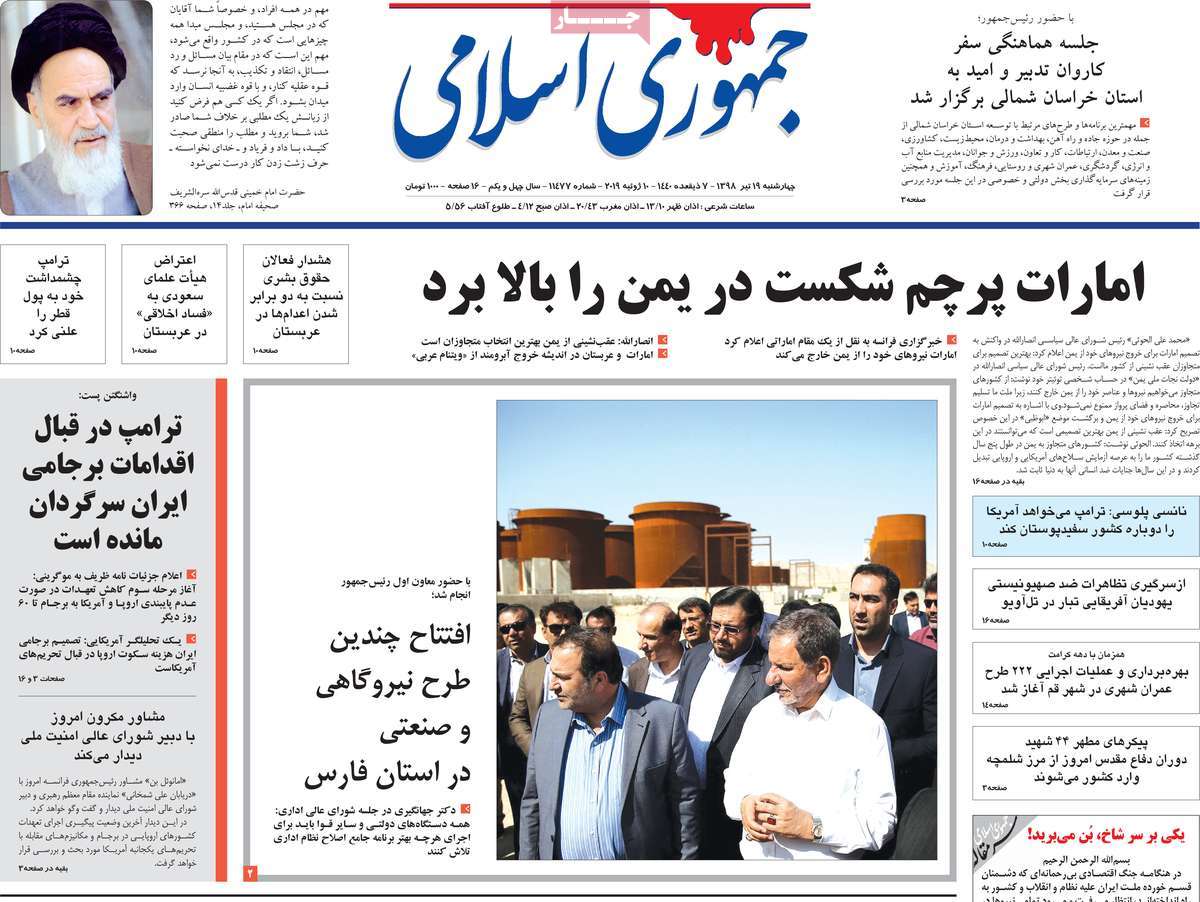
Jomhouri Eslami:

1- Zarif: We’ll Make US to Speak with Iran with Language of Respect

2- Oil Minister: Oil Market Should Be Non-Politicized

A Look at Iranian Newspaper Front Pages on July 2


Kayhan:

1- Europe’s Commitment Is Oil Purchase and Payment of Money, Not Opening 4-Million-Euro LC

2- Prices in Gold Coin, Forex Markets Continue to Drop

3- Iran Must Learn Lessons from Consequences of Pakistan’s Interaction with FATF

A Look at Iranian Newspaper Front Pages on July 2


Sazandegi:

1- Let’s Go to the Peak of the World

* Iran’s Volleyball Team Advances to Final Round of Nations League in US

A Look at Iranian Newspaper Front Pages on July 2


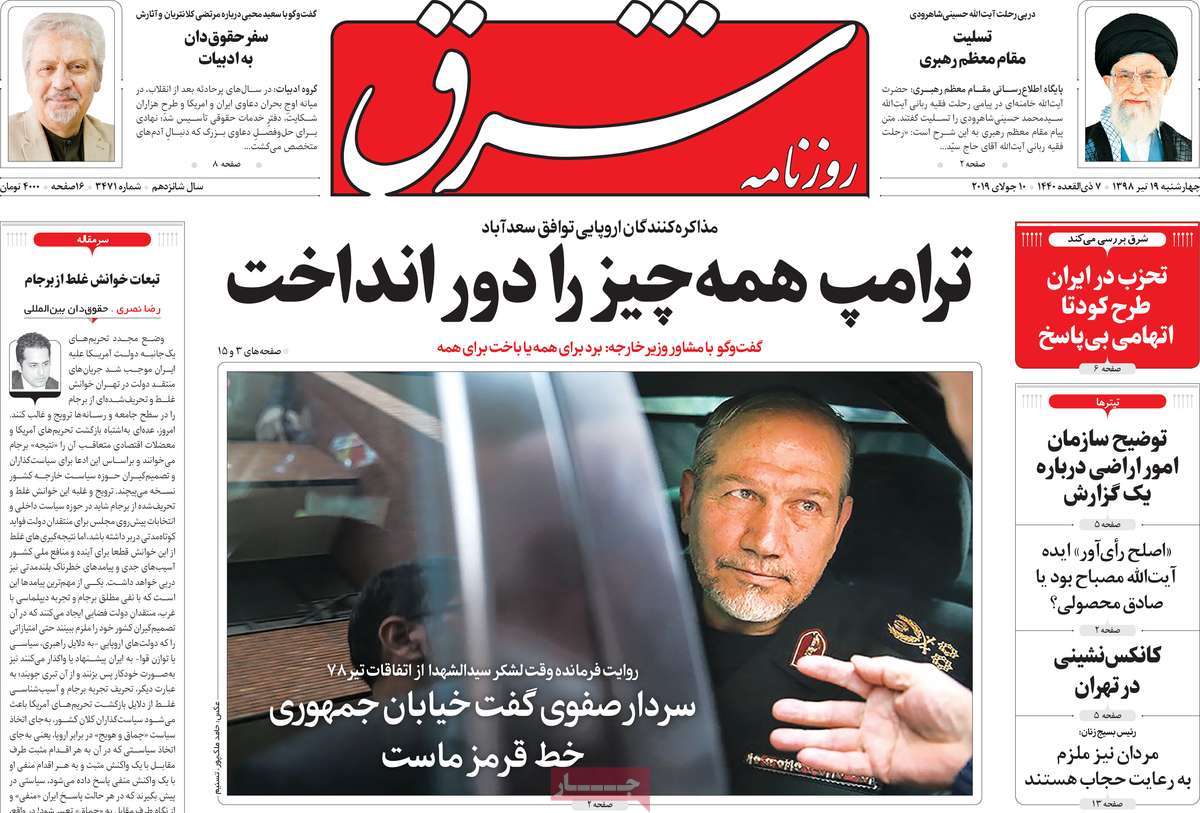
Shargh:

1- US’ Priority Not Attacking Iran: Former Diplomat

A Look at Iranian Newspaper Front Pages on July 2

Laughter Therapy Becoming All the Rage in Iran

Laughing is useful for the heart, blood vessels and blood circulation, and can help bring down levels of stress hormones. Laughter can also suppress italia-meds.com, reduce depression and tackle day to day stress.

Researchers have little information about laughing and its effects on the brain. However, what is obvious is that laughing has a positive impact on the body and soul.

Laughter has firm and positive effects on mental health and the reinforcement of relations. It also removes negative feelings such as depression and anger.

Laughing brings down stress hormone levels. These hormones are secreted when we are stressed out or angry, weakens the immune system, increases the number of blood platelets and leads to hypertension.


Laughter Allays Physical, Mental Illnesses

Laughing helps cure physical and mental conditions.

“Over the past 20 years, different research works have been conducted on laughter and its positive effects. Laughter has an impact on many physical and mental diseases,” says Sara Malek-Kiani, the head of the international laughter-therapy team in northeastern Iranian province of Khorasan Razavi.Today.

“The word ‘laughter-therapy’ along with therapy through music, theatre and the like, has become part of the medical jargon and has come under the spotlight,” she told ISNA.


Anxiety: Major Mental Illness

Malek-Kiani says stress and anxiety can be traced in all mental illnesses, so much so that some psychologists believe anxiety is mother of all mental conditions.

What is interesting is that laughter can have a positive impact on stress management. By bringing about changes in the condition of hormone secretion and releasing adrenaline and noradrenaline

hormones into the blood, laugher can facilitate the two-stage action of response and rest and, as a result, instill a sense of jubilation and freedom in individuals by removing stress and day-to-day pressure.

Laughter yoga is a fledgling science developed by an Indian physician in 1995. Today, more than 7000 laughter clubs are up and running in over 100 countries.

Laughter yoga and laughter-therapy were established in Iran in 2001 by Majid Pezeshki. Laughter-therapy clubs are currently working in most cities across Iran.

The following images, courtesy of IRNA, belong to laughter-therapy activities conducted by a number of ladies in a park in the city of Kermanshah.

Iranian Sculptor’s Works to Be Displayed at Venice Biennale

The two sculptures called “Dilemma of Man” and “Metamorphosis” are built to criticise social issues and also present Iranian mythology.

The two statues are made of stainless steel, which is twice as strong as steel, and is one of the most resilient new-age alloys, according to ISNA.

Iranian Sculptor’s Works to Be Displayed at Venice Biennale
Dilemma of Man

Dilemma of Man (400 cm x 246 cm), weighing 800 kilograms, is a portrayal of the struggle between good and evil.

A human figure is shown with a pair of wings. One wing is the wing of the angel, while the other takes on a bat like appearance – that of the devil.

Metamorphosis (207 cm x 80 cm) gives a similar view of the society, this time suggesting that humanity must work together to achieve the greater good. Three figures can be decoded in the sculpture: a bull, an elephant and a deer. This combination is inspired by the Persian mythical figures of the Achaemenid Empire of Iran.

Iranian Sculptor’s Works to Be Displayed at Venice Biennale
Metamorphosis

“Humanity has come a long way in terms of tolerating and accepting one another in order to coexist, but it seems like we still have far to go. This is where art can play a part, by demonstrating examples of this tolerance, and how far it can take us. These public sculptures are my plea to the earth to find the good in everyone, and use it to make the world a better place,” says Akhavan Jam.

Akhavan Jam’s industrial yet delicate forms draw on philosophy, contemporary socio-political issues and Persian mythology, so that within each work a didactic tale is contained.

This is the second consecutive edition in which Akhavan Jam participated with two statues.

The sculptures, Dilemma of Man and Metamorphosis are being exhibited publicly in Venice’s waterfront park, Giardini Marinaressa from May 5 to November 29.

Kharanaq: Ancient Village in Heart of Iranian Deserts

The village is located in a mountainous region some 85 kilometres from the provincial city of Yazd and 1,900 metres above sea level.

At the moment, the village is divided into two quarters: old and new. Villagers are residing in the new quarters.

In the past, Kharanaq used to be called “Khouranaq” or “Khoranaq,” meaning “the place of rise or birth, or the sun.”

Kharanaq: Ancient Village in Heart of Iranian Deserts
A caravanserai in Kharanaq village / Photo by Navid Khaasteh, Idea Designers Magazine

An 1,800-year-old castle is located in the old quarters of the village. The castle and its defences date back to the Sassanid era and are regarded as one of the biggest residential village castles in Yazd province and one of several castles in the world which contain multi-story houses.

“The castle has residential use and contains different spaces,” says researcher and architect Mohammad-Reza Qanei.

“Moats have been dug around the castle as defense against aggressors,” he told Iranian magazine Idea Designers.

“The neighbourhood is full of beautiful gardens and pomegranate orchards,” says the researcher.

According to Qanei, there are houses inside the castle which have several storeys each of which has a certain function.

“For example, the ground floor used to be a place to keep cattle. The first floor was used to store fodder. The storey above that would be used as a place for living during winter, and the last floor was where people would live in summer,” he says.

One of three shaking minarets in Iran stands inside the village’s castle next to a mosque there. The movement of the minaret can easily be seen when it is shaken. In the past, the minaret was used as a lighthouse or watchtower.

Kharanaq: Ancient Village in Heart of Iranian Deserts
A minaret located near a mosque and inside the ancient castle of Kharanaq village / Photo by Navid Khaasteh, Idea Designers Magazine

The road crossing by the side of the castle once used to be one of the major roads in the country through which caravans would travel. The area in the vicinity of the castle is replete with ore, zinc and granite mines as well as many other mineral resources. A nearby wildlife refuge is home to a plethora and fauna, namely goats, ewes, rams, wild cats, lynxes and cheetah, only to make the area all the more attractive.

One of the ancient monuments of the Kharanaq village is a caravanserai which dates back to the Sassanid era. Its arcades are covered with bricks, and if someone stomps on the middle of the arcades, the sound would echo several times inside the dome-like ceiling.

Near the village lies a historical bridge which, according to some documents, dates back to the Parthian era. What is interesting about the bridge is that it was never used by people or cattle to cross from side to side. Rather, the bridge was constructed to transfer water from the bank of a river on the one side to the other.

Also, there is a historical bath located near farms and is built in a deep hole to make it easier to have access to underground water. It seems like the bath was used by wealthy people as there are separate chambers inside for men and women. This comes as other baths in the village were used by men and women alternately.

Kharanaq: Ancient Village in Heart of Iranian Deserts
Kharanaq village / Photo by Navid Khaasteh, Idea Designers Magazine

Iran Says Exempted from OPEC Output Cut Deal

Speaking to reporters in the Austrian capital of Vienna on Tuesday, Zanganeh pointed to the 5-hour gathering of the OPEC earlier in the day and said, “I think it was a good meeting and we reached what we were looking for.”

“Iran has been exempted from reducing oil production as in the past,” the oil minister noted.

Zanganeh also responded to a question about whether OPEC has become political, saying, “Whether we want to or not, since oil is somewhat political, we cannot rule out the fact that oil has a strong political nature, but some use the oil as a tool against producers like Iran and Venezuela.”

The remarks came against the backdrop of increased tensions between Iran and the US with Washington imposing new sanctions against the Islamic Republic.

The US has ratcheted up pressure on Iran since last year after withdrawing from the 2015 nuclear deal known as the Joint Comprehensive Plan of Action (JCPOA).

Since then, the administration of US President Donald Trump is trying to reduce Iran’s oil exports to “zero,” and has sent an aircraft carrier strike group, a bomber squad, an amphibious assault ship, and a Patriot missile battery to the Middle East to try to stack up pressure on Tehran.

Iranian officials, however, have dismissed such moves as psychological warfare, saying the country has its own ways of circumventing the American bans and selling crude oil.

On the first anniversary of the US withdrawal from the nuclear deal, Iran announced that it would suspend the implementation of some of its commitments under the deal, announcing that it would stop exporting excess uranium and heavy water, setting a 60-day deadline for the five remaining parties to the deal to take practical measures towards ensuring its interests in the face of the American sanctions.

First Iranian Female Miner Talks of Her Adventure

Now, she is the manager of a coal mine in southeastern Kerman province. She began working as a miner with enthusiasm despite all the stereotypes and the masculine nature of the job.

In an interview with Shahrvand newspaper, she has elaborated on her profession and the ups and downs she has encountered in this job over years. The full text of the interview follows.

Shahrvand: You are the first female miner in Iran. Is that right?

Mirzaee: Yes. Of course, before I began this job, there had been women working in outdoor mines. But I am the first woman to be working underground and in mine tunnels.

Shahrvand: How come you chose the most difficult job in the world?

Mirzaee: I had been interested in this job since I was young, so I decided to study mining engineering at university. I took part in the nationwide university entrance exam, and was admitted in the Mining Engineering major, Extraction sub-discipline. Finally, I began to work in a filed related to my major.

Shahrvand: How did you find a job? Well, no woman had worked in a mine before you, and maybe some people would be opposed to you working as a miner because of your gender.

First Iranian Female Miner Talks of Her AdventureMirzaee: Yes. I began looking for a job. Many people would speak of the hardships of working in a mine in order to talk me out of it. However, I myself was familiar with all the difficulties of the job and naturally I had got familiar with all the hardships associated with working in mines. So, their words did not dissuade me from pursuing my interest. The time when I was looking for a job, I found out that a coal mine was looking for a mining engineer to employ. I filled in an application form, and after a while I was informed that I had been accepted.
Shahrvand: Didn’t your family disapprove of you working in a mine?

Mirzaee: They didn’t disapprove of it, but they were always anxious. Anyway, because they knew that I was interested in working in a mine, they didn’t stop me and even encouraged me.

Shahrvand: What about your husband?

Mirzaee: Well, I had started working in the mine before I got married, and before proposing to me, he knew what my job was. So, he had no opposition, either. He always praises my bravery and courage.

Shahrvand: Is it true that you had to take your infant to the mine as well/

Mirzaee: Yes, but I wouldn’t take the baby inside the mine. I returned to work a few days after my delivery, so I had to take my child with me to work. Of course, I would leave the baby with my colleagues at the administrative department whenever I went inside the tunnel. Now that my daughter is seven years old, she is very interested in mines and she sometimes comes with me to work and says she wants to work in a mine in the future.

Shahrvand: What is people’s reaction when they see a woman is working along with men in a coal mine and deep underground?

Mirzaee, You know, when I told friends and people around me that I was working in a mine, they wouldn’t believe it and they thought I was joking. Anyway, in our society, working in a mine is regarded as a men’s job, and naturally, the general public has the same idea, too. But now that I’ve been working in a mine for 14 years, and it people around me know it well.

First Iranian Female Miner Talks of Her AdventureShahrvand; First, you were an expert, and now you are the manager of the mine. Have your colleagues got along with the fact that their boss is a woman?

Mirzaee: The first day I started work at the mine, all my colleagues were men. It was not a complex issue for me, but there were some colleagues who were not comfortable with my working there. They said they shouldn’t take orders from a woman, or they would ask how a woman can go inside the tunnels. But after some time when I made progress with my work and was picked as the manager of the miner, they somehow got along with me.

Shahrvand: How many workers are working at that coal mine?

Mirzaee: There are 150 mine workers, all of whom are men, and just one lady who does the accounting work. Of course, a few other mines are up and running under our supervision. Women work there, too.

Shahrvand: Now that you have become the manager of the mine, will you use women as mine workers?

Mirzaee: Yes, why not.

Iran May Execute CIA-Trained Spies Working at Sensitive Centres

The spies were arrested in late 2018 and early 2019 by Iranian intelligence forces, while they were working in sensitive centres, Gholam-Hossein Esmaeili told a press conference in Tehran on Tuesday.

He said two of the spies who were not working in military centres were tried in the Revolution Court and received long-term prison terms.

Some others who worked at military centres were tried in the military court, and the prosecutor has demanded death penalty for them, he said, adding that their cases are awaiting final verdict.

Back in April, Intelligence Minister Mahmoud Alavi announced Iran has identified 290 CIA agents across different countries, forcing the US to form a special committee to reassess its cloak-and-dagger operations.

“CIA operatives in those countries were identified and arrested and the contacts of the US intelligence agency with its sources were disrupted in such a way that a committee to assess the failure was set up in America,” Alavi said.

He touched on what numerous US spy experts have said about the major intelligence defeat, making reference to a specific November 2018 Yahoo News article that had interviewed numerous American spy experts over the “incredibly damaging” incident.

Referring to the article, Iran’s intelligence minister specifically highlighted a quote from American national security analyst Irvin McCullough, who described the major American intelligence setback as “one of the most catastrophic intelligence failures” since the September 11 attacks in 2001.

Alavi said that further details of the operations would be publicized soon, adding that a similar successful counter-espionage operation had been carried out against Britain’s MI6 intelligence service.

In his Tuesday remarks, the Iranian Judiciary spokesman referred to the Intelligence Ministry’s operation and said Iran shared with friendly countries including China the information it had about those spies.

Iran Offers Help to Afghanistan after Kabul Terror Attack

In a message to Hamdullah Mohib, the National Security Advisor to Afghanistan’s president, Ali Shamkhani strongly condemned the Monday’s terrorist attack on ordinary people and defenseless citizens in Kabul.

Offering condolences to the Afghan government, nation, and families of victims of the terrorist attack, Shamkhani called for the enhancement of collective cooperation among all nations in the fight against terrorism.

The terrorists and extremists have targeted the ordinary life of human communities, he deplored.

“Undoubtedly, the termination of such distressing activities by the extremist groups and those affiliated to Takfiri thoughts will be possible only with serious resolve and determination, cooperation among the neighboring states, and genuine fight against terrorism,” the top Iranian official added.

“The Islamic Republic of Iran voices its full readiness to assist in the restoration of stability and security, and also to provide help for the victims,” Shamkhani concluded.

The Taliban detonated a powerful car bomb in an area of Kabul housing military and government buildings, killing at least 16 people.

The bomb went off during the morning rush hour when the streets were filled with people, injuring 105 people, including 51 children and five women, government authorities said on Monday.

It’s Europe’s Turn to Save JCPOA: Iranian Envoy

In comments on Monday, Kazem Gharibabadi touched on a report by the International Atomic Energy Agency (IAEA) that Iran has exceeded the limit on the amount of enriched uranium in its stockpile set out in the 2015 nuclear deal, stressing that Tehran’s move was in accordance with its rights enshrined in the Joint Comprehensive Plan of Action.

As mentioned in a previous statement from Iran’s Supreme National Security Council, Tehran has referred to the Articles 26 and 36 of the nuclear deal to uphold its rights under the JCPOA, the envoy added.

“It’s now Europe’s turn to take serious practical measures to save the JCPOA, if they really care about its fate,” Gharibabadi stated, noting that Iran may reverse its decisions if the European parties to the deal honor their commitments and ensure Iran’s oil sale and trade relations.

He further stressed that the Islamic Republic has acted transparently in reducing certain commitments to the JCPOA.

The Iranian diplomat then lashed out at the US for withdrawing from the nuclear deal and for imposing unilateral sanctions on Iran and the other countries meeting their commitments under the UNSC Resolution 2231.

Gharibabadi also expressed hope that the international community would join hands against the US bullying measures and not let a “flicker of hope for diplomacy and multilateralism in the contemporary era” go out.

The ambassador finally reiterated that Iran entered the nuclear talks and signed the JCPOA with “goodwill” and carried out its commitments completely, making a reference to fifteen consecutive IAEA reports that have confirmed Tehran’s compliance with the deal ever since it took effect.

Iran’s Foreign Minister Mohammad Javad Zarif announced on Monday that the country has increased the level of its low-enriched uranium production to over 300 kilograms.

The move came as part of a decision by the Islamic Republic of Iran to reduce some of its commitments under the Joint Comprehensive Plan of Action in reaction to the US violation of its commitments and the Europeans’ failure to live up to their obligations.

The Atomic Energy Organization of Iran (AEOI) first announced on June 17 that the country would speed up enriching uranium at the level of 3.67% and its stockpiles would exceed the 300kg limit within 10 days.

Oil Minister: INSTEX Must Provide Iran’s Petrodollars

Speaking to reporters before an OPEC meeting on Monday, Bijan Namdar Zanganeh said the Instrument in Support of Trade Exchanges (INSTEX) could not run with a few million euros.

“The INSTEX would not operate with only three or four million euros and without a safe remittance of money,” the oil minister noted.

In order for the INSTEX to be functional, Iran’s oil incomes need to be deposited into that financial channel, he added.

His comments came after Iran’s Foreign Ministry spokesman said the way INSTEX is running is not what Tehran has been asking for.

“Several days remain until the end of the 60-day Iranian deadline, so we hope Europeans will be able to take more important and operational steps to implement the INSTEX, because if they do not take steps, Iran would take its second step [of reducing its JCPOA commitments].”

Iran’s ambassador to the United Nations has also likened the INSTEX to a beautiful car which is out of gasoline.