Friday, January 2, 2026
Home Blog Page 3199

Kilim-Weaving Girl Representing Iran at CSIT World Sports Games

Hadiseh Ahmadi is a 23-year-old runner. She has been weaving Kilim along with her mother since childhood, and she has been practicing sports at high school. Since five years ago, she has been known as the best female athlete in the field of triple jump and long jump in Iran.

She says she was selected by her trainees at high school for athletics. “After seeing my progress, I decided to practice athletics in a more professional way. As I did not have any support, I turned to worker sports. Of course, I should say my mother, as a working woman, was my only supporter. She has been weaving Kilim for many years. I also learned the skill when I was a teenager.”

Hadiseh is so confident that she speaks of a title in the International Workers and Amateurs Games in Spain.

Kilim-Weaving Girl Representing Iran at CSIT World Sports Games“My specialty is in triple jump. The record in the games is 12 metres and six centimeters and my record is 11 meters and 76 centimetres. If I can beat the same record, I will be among the first three,” says Hadiseh.

This Iranian athlete hopes to join Iran’s national team after returning from Spain games. She says this field is for the people who are deprived of facilities.

“I want to receive my degree in training soon and help my friends to become more interested in sports.”

The 6th World Sport Games organised by the International Workers and Amateurs in Sports Confederation (CSIT) is being held in Tortosa, Spain, from July 2 to 7.

The World Sports Games (WSG) are an international major event (up to 8000 participants) every two years full of competitive and non-competitive sports, cultural exchange and fun.

Iran, Iraq Move Closer to Dredging Arvand Rud

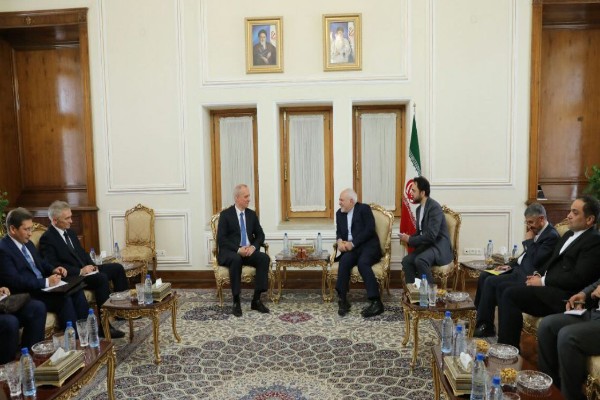
Official delegations from Iran and Iraq held the second meeting of a joint commission for coordination on Arvand Rud in Tehran on Tuesday.

The meeting, held within the framework of an agreement signed by the leaders of the two neighbours, was co-chaired by the Iranian Foreign Ministry’s director general for legal and international affairs and the Iraqi foreign minister’s advisor.

In the meeting, also attended by representatives from different Iranian and Iraqi ministries and organizations, the two sides discussed the general framework of the arrangements for dredging and clean-up of Arvand Rud.

Iran, Iraq Move Closer to Dredging Arvand RudThey also agreed that the joint operational ideas would be submitted to the high-ranking officials of the two countries to be agreed upon and implemented.

Before the meeting, technical experts from Iran and Iraq convened a session of the interim technical task force on dredging Arvand Rud to discuss a timetable for the clean-up operation at the border river.

On May 19, Iranian and Iraqi authorities signed the proceedings of a meeting that had been held to study the technical issues of dredging Arvand Rud.

Tehran and Baghdad have already signed an agreement to resolve disagreements over Arvand Rud based on the 1975 Algiers Accord, which deals with border issues and norms of good neighbourliness.

How to Create Playground Design that is Both Safe and Challenging

Children will want a play area that is intriguing and adventurous. Parents want a play area that will be safe for their children. This can make for a conflict of interest which may not be easy to resolve in a playground design.

So how do you come up with a happy medium? Read on to find out.

Creating a Challenging Playground Design

A playground is more than just a place where a child can burn off excess energy. It is a place where they can develop skills including self-regulation and the handling of stressful situations while increasing self-confidence and self-esteem. When they come to a park, they need to feel challenged by the apparatus and atmosphere the play area provides.

If the play area does not catch their interest, they won’t be as likely to play there. Research shows that limiting challenging elements and enforcing too many restrictions on children can also hamper their development.

If children are exposed to too many circumstances where challenge and risk are restricted it can lead to obesity, mental health issues, a lack of independence and a hampering of learning and perception.

It can also make them more prone to fear. For instance, apparatus that allows them to climb will acquaint them with a healthy sense of heights. Without this sort of stimulation, they may develop a phobia that can continue to be a factor as they age.

So, we can see how important it is to create a design that will pose a challenge to children. But we need to create this design while keeping safety in mind. This is a task that is difficult, but it is not impossible.

Creating a Safe Playground Design

One important step to take in creating a playground that is safe and challenging is to make sure the equipment you use complies with safety codes.

There are several organizations like the International Equipment Manufacturers Association, the Consumer Product Safety Commission and the American Society for Testing and Materials, whose job it is to make sure playground equipment is safe for children. Any equipment used should be thoroughly tested before it is installed in the space.

And while equipment must be up to safety codes, it must still be challenging to children. Apparatus like a sturdy playground net, rock style facades and zip lines that are placed at a safe height can provide the appropriate challenges and still follow safety guidelines.

Another consideration you should take into account in keeping your park safe is to make sure there are areas nearby where adults can supervise. Be sure to provide shady benches around the play area where adults can sit and watch children while they are at play.

Finally, make sure the apparatus you install can accommodate plenty of children. This will reduce overcrowding which can be dangerous, particularly when children are climbing or playing at elevated heights.

Playground Safety Factors

In addition to making sure that the apparatus you use in your play area is safe, there are certain rules and regulations a designer must take note of to ensure that children are protected. These include the following:

Age Appropriateness: The Consumer Products Safety Commission recommends separate play areas for children that are 6 to 23 months, 2-5 years old and 6-12 years old.

Proper Installation: Installation of equipment must be performed by a trained professional. You can also recruit volunteers from a community build project.

Environmental Conditions: The play area must be designed so that it is protected from sun exposure, is well drained, is visible from nearby paths, is far from automobile and bicycle traffic and is separated from water and other natural hazards.

Equipment Design: All equipment used should be structurally sound and up to code.

Layout: The way children play can affect the use of the play environment. It is best to consult a Landscape Structures Consultant like Miracle Playsystems. He or she can help you design a layout that will provide accessibility and minimize congestion while children are playing.

Protective Surface: We all know how likely it is for children to fall while they are playing. That’s why a protective surface is necessary. This can be a loose material that is filled to a depth that will provide somewhat of a cushion. Wood fiber rubber mulch, factory made resistant tiles, a unitary safety surface or a combination of the three are all acceptable.

You may want to provide even more padding near equipment children are likely to fall off of.

Safety Audits and Inspections: Audits and inspections should be conducted regularly to make sure the play area and its equipment is safe and was not compromised by any wear and tear or damaged by vandals.

Creating a playground design that is both safe and challenging can be difficult, but if you consider the safety factors involved as well as how to keep children stimulated, your design will be a successful one. Taking all circumstances into account will help you come up with a play area that will be an asset to the community and the families that live there.


Iran to Honour JCPOA Just Like E3, Zarif Says

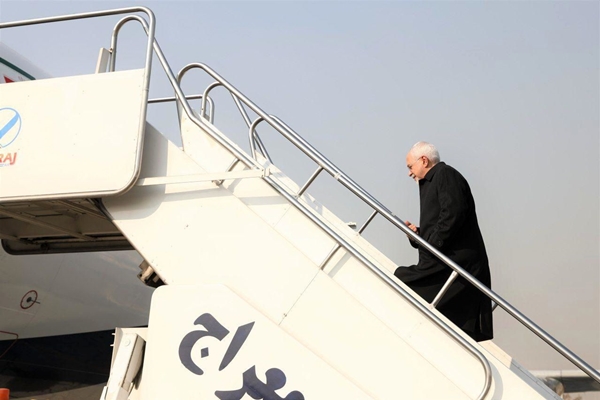
“Iran is committed to the full implementation of the JCPOA: as long as E3/EU implement THEIR economic commitments,” Mohammad Javad Zarif said in a post on his Twitter account on Tuesday, right after his British, French, and German counterparts and the EU foreign policy chief voiced concern about Tehran’s decision to scale down its commitments under the Joint Comprehensive Plan of Action.

“So moving forward, Iran will comply with its commitments under the JCPOA in exactly the same manner as the EU/E3 have –and will- comply with theirs. Fair enough?” he added.

Earlier in the day, the foreign ministers of France, Germany and the UK, as well as EU High Representative Federica Mogherini, issued a joint statement to voice extreme concern about Iran’s new decisions.

“We have been consistent and clear that our commitment to the nuclear deal depends on full compliance by Iran. We regret this decision by Iran, which calls into question an essential instrument of nuclear nonproliferation,” said the statement from Europeans, who have failed to ensure Iran’s economic interests after the US withdrawal from the JCPOA.

Last week, Zarif wrote a harsh letter to Mogherini to underline Iran’s right to reduce its JCPOA commitments.

The top Iranian diplomat announced on July 1 that Tehran has increased the level of its low-enriched uranium production to over 300 kilograms.

The move came as part of a decision by the Islamic Republic of Iran to reduce some of its JCPOA commitments in reaction to the US violation of the deal and the Europeans’ failure to live up to their obligations.

Saudis Refusing to Let Iranian Tanker Go

Iranian tanker Happiness 1

A Tuesday report by Mehr News Agency suggests that the Saudi authorities are refusing to permit the Iranian oil tanker “Happiness 1” to leave Jeddah, even though the vessel’s technical problem has been resolved.

Saudi Arabia not only denies an exit permit to the Iranian oil tanker, but also is charging the National Iranian Tanker Co (NITC) $200,000 a day for the additional costs of maintenance, the report added.

A technical failure in Happiness 1 forced the oil tanker to berth at the Saudi port of Jeddah on April 30.

The NITC said the technical problem had caused sea water to leak into the ship’s engine room and stall the engine when the vessel was heading towards the Suez Canal in the Red Sea.

All of the 26 crew on board the oil tanker were safe after the incident.

US Sanctions Threatening Life of Patients, Iranian Medical Academy Warns

Seyyed Alireza Marandi

In a letter to European Union Foreign Policy Chief Federica Mogherini, Dr. Seyed Alireza Marandi bemoaned the fact that the US sanctions have limited the access to medicine and vital medical equipment in Iran and have led to critical health conditions and the death of many patients.

The Iranian physician also highlighted his academy’s duty to monitor the health of Iranian citizens, and listed a number of health problems caused by the “outrageous sanctions” against people of Iran.

“The illegal sanctions, based on evidence and documentation and as stated in the several correspondences that I have had with the UN Secretary-General, have limited the access to medicine and vital medical equipment leading to critical health conditions and the death of many innocent patients,” he deplored.

“The use of brutal sanctions has led to a reduction in the value of the national currency, a decrease in the public’s purchasing power, and rising prices. As a result, providing affordable healthy food for many people has become problematic. Therefore, US-led economic warfare and terrorism has had a direct impact on the health of the community,” Marandi noted.

“Major events, such as flooding in parts of our country in recent months, have seriously damaged houses and living conditions for many people, and unfortunately, cruel sanctions have prevented international financial aid and even aid from fellow Iranians abroad to reach the people in need. Meanwhile, soaring summer temperatures increase the risk of an outbreak of contagious diseases among these people,” he warned.

“Given the above, what is certain is that the problems related to supplying food and medicine cannot be solved through the utterly inadequate and unreliable mechanisms you intend to create,” Marandi told Mogherini.

“The entire sanctions regime must be lifted or ignored, our oil exported, and normal banking and financial exchanges resumed in accordance with the nuclear deal in order to resolve these problems. The compassionate and hardworking medical community in the Islamic Republic of Iran, over the last forty years, has been struggling for the wellbeing of our people. This was especially evident during the imposed war when Western countries provided Saddam Hussein with chemical weapons and as numerous layers of illegal and inhumane sanctions were imposed. This question will always remain in the minds of our medical community: why should our people suffer under these barbaric sanctions while the self-proclaimed champions of human rights are silent and complicit?” the Iranian physician concluded.

Back in May, Marandi sent a letter to UN Secretary General Antonio Guterres, decrying a muted response from the international human rights organizations to the crimes committed by the US regime and blocking of international aid to Iranians affected by floods.

2 IRGC Forces Killed in Clash with Terrorists in Iran

IRGC

The IRGC said in a statement that the clash took place in Chaldoran region on Tuesday morning, during which the ground forces of Hamzeh Sayyid al-Shohada Headquarters dismantled the terrorist cell affiliated with the “global arrogance”.

The Iranian troops killed two terrorists and injured a number of others, but two local IRGC fighters were also martyred in the clash, it said.

A remarkable amount of weapons, equipment, ammunition and communication systems were confiscated in the operation against terrorists, the statement noted, adding that a manhunt is still in progress.

The IRGC is in charge of border security in Iran’s northwestern and southeastern regions.

Iran Equalizes Blood Money for Men, Women in Historic Decision

The law has been modified based on a verdict by the Supreme Court of Iran, which is indeed an endorsement of an earlier law passed by the Parliament and approved by the Guardian Council.

Diyah in Islamic law is the financial compensation paid to the victim or heirs of a victim in the cases of murder, bodily harm or property damage. It is an alternative punishment to Qisas (equal retaliation).

It only applies when the victim’s family wants to compromise with the guilty party; otherwise Qisas applies.

In the law of Sharia, which was the basis of Iran’s previous law, the blood money for female victims was half the amount set for men; however, based on the new verdict, the other half will be paid to the women victims or their heirs by the Fund for the Provision of Physical Damage, providing the survivors with an amount equal to that of men.

The equality of men and women in Diyah has always been a sticking point in the religious and judiciary circles with each side having their own reasons.

Women’s rights activists advocated for the equality for a long time, arguing that the role women play in the society these days is not at all comparable to the time when the rules of Sharia were implemented 1,400 years ago. They finally prompted the Iranian Parliament to put the issue on its agenda.

The Parliament first managed to change the law for victims of car crashes in 2009, arguing that when consumers – both men and women – pay equal amounts for their insurance, they must be paid equally.

The interim law was approved by the Guardian Council, and implemented until 2013, when the lawmakers turned it into a permanent law, but started their efforts to convince jurists and religious authorities that for other crimes and damages, too, women need to receive an equal amount of blood money.

They finally managed to pass the controversial law, which was later endorsed by the Guardian Council and the Supreme Court, despite opposition by a number of top clerics.

Iran to Display Knowledge-Based Food Products at Turkey Expo

Iran’s first pavilion showcasing the country’s knowledge-based products geared to export will be open to public at the expo in late summer.

“CNR Food is the biggest and most important expo of foods and beverages in Eurasia” held in cooperation with several Turkish food, beverage, and grain associations, said Marzieh Shaverdi, a top official at the Iranian Innovation and Development Fund, in an interview with ISNA.

She said the Istanbul event is a suitable forum where suppliers and buyers of food products can meet.
Shaverdi noted the exhibition also showcases machinery pertaining to the food industry and relevant industries.

She said Iran’s pavilion will run from September 4 to September 7, 2019.

“This exhibition is a good opportunity for visitors to get familiar with the latest developments in, and see an innovative outlook for the food industry,” she added.

“In this year’s expo, there will be a special section where food packaging and beverage producing machinery will be put on show,” she added.

Iran Leader Appoints New Military Commanders

In a decree on Tuesday, the Leader appointed Brigadier General Mohammad Reza Ashtiani, an Army general, as the new Deputy Chief of Staff of the Iranian Armed Forces.

In another decree, Ayatollah Khamenei also appointed Brigadier General Gholam-Reza Soleimani as the new commander of IRGC’s Basij Organization.

The new commanders respectively replace Major General Ataollah Salehi and Brigadier General Gholam-Hossein Gheibparvar.

In the decrees, Ayatollah Khamenei appreciated the efforts made by former commanders in both positions and called on the new appointees to speed up efforts to ensure Iran’s security and use potentials of the young generation of Iran.

Basij is a paramilitary voluntary force established in 1979 on late founder of the Islamic Republic Imam Khomeini’s order.

The force consists of often young Iranians, who have volunteered, with a strong sense of fidelity to both the Islamic system and religious beliefs.

General Gheibparvar had been appointed as the Basij chief in December 2016. His predecessor, Mohammad-Reza Naqdi, had remained in the position for over seven years.