Wednesday, December 31, 2025
Home Blog Page 3178

Iranian Pilgrims ‘Treated Well’ Upon Arrival in Saudi Arabia for Hajj

Abdolfattah Navvab said the conditions of Iranian pilgrimage in the holy cities of Medina and Mecca are relatively good.

“The Saudi officers have good behaviour with Iranian pilgrims and the situation is relatively desirable. But sometimes there are some instances which may not be good,” he said.

He went on to say that preparations to handle Iranian pilgrims in Saudi Arabia have been made months earlier.

According to him, this year, about 86,500 pilgrims from Iran will arrive in the holy cities of Mecca and Medina. So far, around 20 thousand pilgrims have entered into Saudi Arabia.

Officials say Saudis have remained committed to the previous year’s agreement on respecting the dignity of Iranians.

Three years ago, more than 1.8 million pilgrims attended Hajj but Iranians refrained from travelling to Saudi Arabia after tensions between Riyadh and Tehran boiled following a deadly crush of people during the 2015 pilgrimage.

Saudi Arabia claims nearly 770 people were killed during the deadly crush of people but Iran’s Hajj and Pilgrimage Organization say about 4,700 people, including over 460 Iranian pilgrims, lost their lives.

Iran Strongly Condemns Attack on Turkish Diplomat in Erbil

Security personnel near a restaurant in Erbil, in the Kurdish region of Iraq, where gunmen opened fire on Turkish consular officials on Wednesday. / Photo by Reuters

In a statement on Wednesday, Mousavi also expressed sympathy with the bereaved families of the victims.

“Terrorism is a horrendous phenomenon that has inflicted extensive damages on regional states,” he noted.

He also noted that the only way to combat terrorism is that the international community jointly fight against terrorist groups by putting an end to political, financial, ideological, and arms support for them.”

A Turkish diplomat and two Iraqis were killed Wednesday in a gun attack in a restaurant in the Kurdish-controlled region of Iraq, according to the Turkish and Iraqi governments.

Turkey’s foreign minister, Mevlut Cavusoglu, confirmed the death of an official of the Turkish consulate, and said that one Iraqi had been killed and another seriously wounded. The second Iraqi died later.

The two Iraqis worked for the consulate, said Dr. Ahmed al-Sahaf, an Iraqi Foreign Ministry spokesman. One was a guard for the Turkish diplomat.

It was not immediately clear who carried out the shooting or why. Iraqi and Turkish authorities said they were investigating the attack.

A Look at Iranian Newspaper Front Pages on July 17

A Look at Iranian Newspaper Front Pages on November 19

Abrar:
1- I Can Move to Three Buildings in New York: Zarif
2- I’m Not Supposed to Meet Zarif: Hook
3- Without Iran, Not Possible to Secure Persian Gulf: FM Zarif
4- EU Must be Reformed before Accepting New Members: Macron

A Look at Iranian Newspaper Front Pages on July 17


Aftab-e Yazd:
1- Iranian MP Welcomes Pompeo’s Offer of Interview with IRIB
2- Iraq Pressured by US over Iran
3- Reduction of JCPOA Commitments to Continue: Iran Leader


A Look at Iranian Newspaper Front Pages on July 17


Arman-e Emrouz:
1- “Muslim Figures Would Not Let UK’s Actions Go Unanswered”
2- Reduction of JCPOA Commitments Will Sure Continue: Leader
3- US Afraid of Zarif’s Presence on Its Soil

A Look at Iranian Newspaper Front Pages on July 17


Besharat-e Now:
1- Doors of Diplomacy Completely Open in Case of Sanctions Removal: FM
2- Seizure of Iranian Oil Tanker Violation of UN Charter: Iran M

A Look at Iranian Newspaper Front Pages on July 17


Ebtekar:
1- If Sanctions Lifted, Diplomacy Doors Are Open: Zarif Tells NBC
2- Iran Not to Surpass 4.5 Percent Enrichment for Now: AEOI Spokesman
3- Iran’s Return to JCPOA Very Easy: Iranian VP
4- Democrats’ Second Chance to Rein in Trump
5- Trump’s Racist Remarks Bring to Forth His Impeachment Case Again

A Look at Iranian Newspaper Front Pages on July 17


Etemad:
1- Media Struggle; Etemad Encrypts Zarif’s Strategy

A Look at Iranian Newspaper Front Pages on July 17


Ettela’at:
1- Four US Congresswomen Call for Trump’s Impeachment
2- UK’s Piracy Not to Go Unanswered: Leader
3- JCPOA Commitments Would be Reduced More: Leader
4- EU Forces US to Lift Iran Sanctions: Jahangiri

A Look at Iranian Newspaper Front Pages on July 17


Jomhouri Eslami:
1- Spanish Daily Reveals Role of US in Confiscating Iranian Oil Tanker
2- Netanyahu Infuriated Over EU’s Reaction to Iran’s Reduction of JCPOA Commitments
3- Iran Not to Exceed 4.5 Percent Enrichment Cap for the Moment: AEOI Spokesman

A Look at Iranian Newspaper Front Pages on July 17


Kayhan:
1- US Forces Attack Mosques, Civilian Houses, Killing 60 Innocent People

A Look at Iranian Newspaper Front Pages on July 17


Sazandegi:
1- Meeting in Moscow; What Were Details of Gen. Soleimani’s Strategic Talks with Putin Regarding Russia’s Penetration into Syria?

A Look at Iranian Newspaper Front Pages on July 17


Setareh Sobh:
1- Iran Welcomes Trading with US Firms: Zarif Tells NBC
2- Piracy Won’t Go Unanswered: Leader Warns UK

A Look at Iranian Newspaper Front Pages on July 17


Shargh:
1- Zarif Complains about Movement Restrictions in New York
2- Macron to Exchange Views with Iran, US, Russia

A Look at Iranian Newspaper Front Pages on July 17

US Abusing Privilege of Hosting UN Headquarters

Based on an agreement signed in 1947 between the US and the United Nations, the former has been committed to issuing visa for all diplomats affiliated with the UN. The agreement explicitly states that there must be no restriction for the diplomats.

However, the US government recently imposed travel restrictions on Iran’s top diplomat in violation of the agreement. US State Secretary Mike Pompeo says the decision was a tit for tat measure, as no American diplomat is allowed to step in Tehran.

This comes as the US, as the host of the UN headquarters, is required by the International law to provide the envoys of all members of the UN with an appropriate ground to take part in the UN meetings. Meanwhile, since Iran and the US have no diplomatic ties, there is no justification for the presence of American diplomats in Iran, particularly now that the US has imposed the most severe sanctions in history on the Iranian nation.

Instead of adopting a harsh approach towards the restrictions, Zarif is trying his best to take the most advantage of the visit.

His recent interviews with mainstream media including NBC and BBC shed lights on the hidden aspects of the US move.

In an interview with NBC, Zarif underlined that resistance is Iran’s only choice against any pressure. “There is a way out if the US really seeks an honourable exit from the current crisis.”

He underlined that Iran is not after tensions but it will have no hesitation to defend itself against any invasion. “The US has deprived itself of Iran’s market which is open to all American companies.”

In a separate interview with BBC’s Hard Talk, the Iranian foreign minister said Trump’s decision to cancel his plan to invade Iran was made after he received reports of Iran’s strong retaliatory measures.

Elsewhere in his interview with Hard Talk, he underlined that Iran will sell its oil under any circumstance but will never give up its honour.

US Must End Arms Sales to Saddam Reincarnations: Iran

“For 8 YEARS, Saddam showered our cities with missiles & bombs provided by East & West,” Zarif tweeted Wednesday.

“Meanwhile, NO ONE sold Iran any means of defence,” he added.

“We had no choice but building our own. Now they complain.”

“Instead of skirting the issue, US must end arms sales to Saddam’s reincarnations,” he added.

Iran Denies Permitting BBC to Have Correspondent in Tehran

Director of Public Relations Department at the Ministry of Culture said the BBC correspondent, like other reporters who come to Iran and report, was in Iran for a few days, but it’s not true to say he plans to stay in Iran as a permanent reporter.

Mohsen Haddadi said the BBC correspondent has left Iran about ten days ago.

However, the corporation is said to have agreed not to share reporting materials it gathers in Iran on BBC Persian.

The remarks came after a rare access to Iran was given to BBC, which the Iranian Establishment believes to be controlled by the “hostile” UK government.

BBC correspondent Martin Patience, along with cameraman Nik Millard and producer Cara Swift, recently visited Tehran and the holy city of Qom, talking to Iranians about the escalating crisis between Iran and the US.

Ansarullah Rejects Trump’s Anti-Iran Claims as Excuses to Milk Saudis

Mohammed Abdul-Salam referred to US President Donald Trump’s remarks on Iran’s withdrawal from Yemen as a denial of reality and things that are not worth answering.

He wrote on his Twitter page on Tuesday that “Trump’s remarks are not compatible with reality, and they are not even worth the answer. These claims are solely for the sake of milking the kingdom.”

Throughout the US presidential election campaign in 2016, Trump used to describe the Kingdom of Saudi Arabia as a “milk cow” that will be led to slaughter when its milk runs out.

Yemeni spokesman also referred to the US involvement in the Saudi war on Yemen saying “Aggression on Yemen was announced by Washington, and it is led by its affiliates and mercenaries. Crimes are committed using American weapons and US Senators ask their country to end their support for aggressors.”

The US military’s political and military support for the offensive is all the more important, as many Western experts believe the Saudi regime will stop the war on Yemen in the event cease of US supports.

Iran’s National Currency Recovers Some of Its Lost Value

The fall in the price of foreign currency started a few days ago and the price observed on July 16 in the market is the same as what it was back in February.

In early February, the price of the US dollar was about 116,500 rials, after which the trend was upwards until May 9, 2019 when it reached about 153,500 rials. However, from that time on, the currency market has plunged.

According to Khabaronline, the monetary and fiscal policies adopted by the bank are said to have helped the rial grow more than 20 percent against the US dollar over the past two months.

The lowest exchange rate seen before February 2019 was in December 11, 2018, when the price of the dollar fell to 97,100 rials. This as both in the days before and after that, the foreign exchange market was bullish.

Some currency market analysts believe the downward trend in prices is likely to continue, and the real price of the dollar is about 80,000 rials.

Iran’s Central Bank Governor, Abdolnaser Hemmati believes that the current situation in the foreign exchange market will continue and exchange shocks are depleted.

“The economic indicators have been improving since two months ago, so inflation and unemployment are also decreasing. The central bank’s set of measures has stabilised the currency market and with the efforts of our exporters, our dependencies on the oil market have shrunk,” added Hemmati.

This as two days ago, he said in the city of Isfahan that the central bank no longer allows the exchange rate to increase, and the government is cutting the price of the foreign currency and increasing the value of the national currency.

According to him, “The United States was seeking to destroy the national currency of Iran and it spoke of 400 to 500 thousand rials for each dollar, but it could not achieve its goals.”

In this situation, Bloomberg analysed in a report the situation of the Iranian currency market saying that the Islamic Republic’s efforts to curb the rial’s slide are starting to work.

Referring to Abdolnaser Hemmati’s comments, it noted that the rial strengthened about 8% in the open market over the past month to 125,450 per dollar, according to prices compiled by Bloomberg from foreign-exchange websites and traders in Tehran.

“The advance is a relief for Iranians who watched the currency plummet more than 50% after U.S President Donald Trump scrapped the 2015 nuclear accord and reimposed sanctions on the nation.”

According to Bloomberg, the central bank sought ways to protect the currency with measures that include setting up a government-run foreign-exchange platform known as Nima to quell the black market and controlling interest rates offered by lenders.

Iran’s President Hassan Rouhani said in a statement on Sunday at a meeting in North Khorasan province that during the past two months, some sort of balance was seen in the exchange rates and inflation.

“It means that if we try, we will succeed, and if we move using all our power, we will fully control the inflation,” underlined Rouhani.

Would the USD’s Slide Continue?
In this situation, the question is that whether the fall of foreign currency will continue or not? And what is the real price of US dollar?
Majid Reza Hariri, deputy president of the Iran-China Chamber of Commerce says the central bank managed to control the foreign exchange market somewhat, although it still remains to reach to the real price of dollar which is 80,000 rials.

“It cannot be argued that macro-management has been ineffective in this sector, so, of course, if it was not for the central bank policies, now the price of the US dollar would have gone up to more than 170,000 rials. As a result, price management has been effective, but it is still far from reaching the real prices. As the minister of finance said, if the smuggling and capital flight were to be prevented, the real price of the dollar would be about 80,000 rials; therefore, the current 120,000 price is 50% more than the real rate,” underscored Hariri.

“Some analysts think the 80,000 for each dollar is unrealistic, because the market function determines the real price. Apart from the fact that there is no mechanism in Iran like the ones existing in some countries, it should be noted that if the illegal demand for the foreign currency, which is used in capital flight procedure, is eliminated, the only demand in the market will be the formal ones and it will lead to lower prices.”

Mohammad-Taqi Fayyazi, who is an economist, says the national currency of Iran was often reinforced by artificial injection of petro dollars, which is not possible anymore. “On the other hand, economic growth will be negative for the second year. There is a probability of a deficit that results in the printing of bank notes and, consequently, devaluation of the national currency. In such a situation, how can one talk about strengthening the national currency in the medium term?”
“I think in the short run and in less than a year, it would be possible to manage the economy and help the price of dollar decrease against rial, but afterwards the situation will change,” he maintained.

Iran Helps Foreign Oil Tanker in Distress after Receiving SOS Call

US Will Fail to Extend Iran’s Arms Embargo: Spokesman

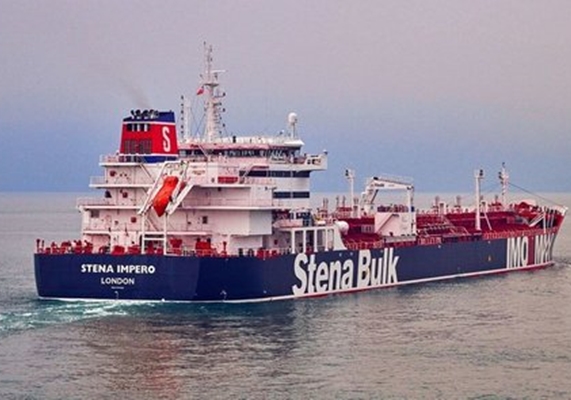
Foreign Ministry Spokesman Abbas Mousavi said Iranian forces went to the aid of a foreign oil tanker experiencing technical difficulties in the Persian Gulf waters.

He said Iranian forces responded to the SOS call from the vessel in accordance with international regulations and hauled it to the Iranian waters where the tanker could undergo the necessary repair.

More details on the story will be announced accordingly.

The comments came after the Associated Press claimed small oil tanker from the United Arab Emirates travelling through the Strait of Hormuz has entered Iranian waters and turned off its tracker three days ago, leading the US to suspect Iran seized the vessel amid heightened tensions in the region.

The Panamanian-flagged Riah turned off its transponder late Saturday night but an Emirati official said it sent no distress call.

Iran Rejects AP’s Report on Missile Talks

“We categorically reject the AP’s characterization of Foreign Minister Zarif’s comments to NBC News that “if the US wants to talk about missiles, it should stop selling weapons, including missiles, to regional states” as meaning that Iran is willing to negotiate on its defensive missile program at some point,” Iran’s UN mission said in a statement.

“Iran’s missiles are absolutely and under no condition negotiable with anyone or any country, period,” it added.

“Surely AP reporters are familiar enough with conversational English to know and understand and are able to contextualize comments on the hypothetical, as well as parrying with words to make a point,” it said.

“Drawing a false conclusion in pursuit of headlines, when what was said in the context was obvious, only leads to a diminution of the standing of the press with the public.”