Wednesday, December 31, 2025
Home Blog Page 3177

Iran May Turn Defensive Strategy into Offensive, IRGC Warns

“As far as the strategy is concerned, we act defensively, meaning that we will not be the ones to start or initiate any war,” Major General Hossein Salami said during an inspection of the level of preparedness of the country’s defensive forces in an area near the Strait of Hormuz in the Persian Gulf on Thursday.

The area, known as Naze’at comprises four islands in the Persian Gulf, which are of great importance to the country’s efforts to maintain the security of the strategic waterway.

“As far as the strategy is concerned, we act defensively, meaning that we will not be the ones to start or initiate any war,” Major General Hossein Salami said during an inspection of the level of preparedness of the country’s defensive forces in an area near the Strait of Hormuz in the Persian Gulf on Thursday.

The area, known as Naze’at comprises four islands in the Persian Gulf, which are of great importance to the country’s efforts to maintain the security of the strategic waterway.

“The situation is, however, completely opposite when it comes to [the country’s] tactical attitude, and should enemies commit any miscalculation, our defensive strategy would turn into an offensive one,” Salami added, noting the offensive transition would involve the Islamic Republic’s entire defensive capacities.

Salami also underlined the region’s significance for the country and the entire global economy, adding, “Using the pretext of the region’s sensitivity to enable extra-regional military presence here would only stoke insecurity and compromise standing security arrangements in the region.”

Salami asserted that the Islamic Republic enjoys perfect command over the waters lying in the northern part of the Persian Gulf and the Sea of Oman. The country maintains the command as means of defending its territorial integrity, naval superiority, and aerial security, he added.

“On behalf of the Iranian nation, we engage in defensive development in all areas,” he stated.

The United States has resorted to significant military buildup in the region, which has seen it sending over an aircraft carrier strike group, a bomber taskforce, an assault ship, and thousands of additional forces.

President Donald Trump and other US officials have, however, recurrently disowned any intention to engage in warfare with Iran, claiming that the American equipment and troops are actually meant to prevent one.

Elsewhere in his remarks, Salami cautioned enemy think tanks against plotting any adventurism or mischief against the Iranian nation.

He finally hailed the “infallible readiness” of the Iranian Armed Forces, especially the IRGC, for engaging in all-out defense of the country’s security and interests.

All Paths Open to Save JCPOA, Rouhani Tells Macron

Handling COVID-19 Impossible without Concerted Action, Rouhani Tells Macron

Hassan Rouhani made the remarks in a telephone conversation with his French counterpart Emmanuel Macron on Thursday.

“The Islamic Republic is determined to keep open all the paths leading to the JCPOA preservation,” referring to the agreement by the abbreviation of its official title, the Joint Comprehensive Plan of Action.

Rouhani also underlined the importance of Paris endeavors in ensuring the deal’s existence.

Also on Thursday, Macron talked to his Russian counterpart Vladimir Putin over the phone. The heads of state underlined the pivotal role of the nuclear deal in ensuring regional security, attached “great importance” to preservation of the accord, and pledged to increase their efforts to guarantee its survival.

The agreement was signed in Vienna in July 2015 between the Islamic Republic and the P5+1 group of states comprising the United States, the UK, France, Russia, China, plus Germany. The JCPOA lifted nuclear-related sanctions against Iran in return for the country’s voluntarily changing some aspects of its nuclear energy program.

The US unilaterally left the JCPOA last year in defiance of international criticism and although the deal has been ratified as a United Nations Security Council resolution. Washington also returned its anti-Iran sanctions in a move condemned by the Islamic Republic as “economic terrorism.”

Tehran has said its continued commitment to the nuclear agreement is conditioned upon the remaining signatories’ guaranteeing its economic interests now that the US has gone back on its obligations.

Rouhani told Macron that Iran and the European signatories to the JCPOA need to invest in efforts aimed at implementation of “balanced steps” that could safeguard the deal because “there are some in the United States, who would not want the efforts seeking to save the JCPOA to succeed.”

He said that despite existing setbacks and sabotage activities, Tehran believed that the remaining signatories had to seize the time and task their experts with finding creative and appropriate approaches that save the agreement.
“Europe must expedite its attempts to meet Iran’s legitimate [economic] interests [under the deal] and bring about truce in the US economic warfare,” the Iranian president stated.
In January, Britain, France, and Germany announced the establishment of a non-dollar trade system, officially called the Instrument in Support of Trade Exchanges (INSTEX), to protect their business with Iran against the American bans.

Rouhani said bilateral transaction using the INSTEX, including those transferring Iran’s oil revenues, are be among the efforts that save the JCPOA.

He called potential removal of the American sanctions another approach that would assist the deal’s survival and help restoration of the state of affairs to how it used to be prior to the US illegal moves.

Pakistan, Iran Discuss Border Security in Islamabad

Pakistan delegation was led by Director General (Afghanistan, Iran and Turkey) Zahid Hafeez Chaudhri, and Iranian delegation was led by Director General of International Legal Affairs of the Ministry of Foreign Affairs, Abbas Bagherpour Ardekani.

The HBC is a mechanism for consultations between the two countries to discuss all border related issues for enhanced coordination at different levels. The first session of the Commission was held in Tehran on 17 July 2017.

The second session was held in follow up of the decision taken by the leadership of the two countries during Prime Minister Imran Khan’s visit to Iran earlier this year.

Pakistan and Iran enjoy brotherly relations which are deep rooted in historical, religious, cultural ties and strong people-to-people contacts.

The two countries share more than 900 km long common border that is described as a border of peace and friendship.

During the Session, the two sides held constructive discussions for effective implementation of existing border mechanisms within the relevant frameworks including Agreement for Administration of Pakistan-Iran border of 1960.

They agreed to further strengthen their cooperation in these areas.

Both sides reaffirmed their commitment to expedite opening new border crossing points with mutual understanding.

Both parties emphacised the necessity of updating border maps and border pillar descriptions and carrying out joint border surveys.

The two sides also shared the understating about their effective border management efforts through appropriate measures including physical installations such as fencing.

IRGC Navy Seizes ‘Foreign’ Tanker in Persian Gulf: State TV

Iran's IRGC Says Following Americans in Persian Gulf 'Like A Falcon'

According to an IRGC statement, the tanker with 12 crew members was seized on Sunday, July 14, when it was going to deliver the contraband fuel it had received from Iranian smugglers to foreign vessels in distant areas.

The vessel could carry two million litres of fuel, but was carrying only half of its capacity, the statement added.

The IRGC naval forces seized the tanker based on a judicial decree, and as part of its efforts to counter organized smuggling of fuel in the Persian Gulf and the Strait of Hormuz, the statement said.

The IRGC also dismissed Western media reports that Iran has seized “another” tanker in the Persian Gulf in recent days.

A few days ago, the Associated Press claimed a small oil tanker from the United Arab Emirates travelling through the Strait of Hormuz had entered Iranian waters and turned off its tracker, leading the US to suspect Iran seized the vessel amid heightened tensions in the region.

The Panamanian-flagged Riah turned off its transponder late Saturday night but an Emirati official said it sent no distress call.

Back on Wednesday, Iranian Foreign Ministry Spokesman announced Iran has helped a foreign oil tanker in the Persian Gulf after picking up an SOS signal from the vessel, but it did not give more details about the vessel.

Abbas Mousavi said Iranian forces went to the aid of a foreign oil tanker experiencing technical difficulties in the Persian Gulf waters.

He said Iranian forces responded to the SOS call from the vessel in accordance with international regulations and hauled it to the Iranian waters where the tanker could undergo the necessary repair.

IRGC Navy Seizes ‘Foreign’ Tanker in Persian Gulf: State TV

Iran Meets 97% of Domestic Need for Medicines Locally: Official

Deputy Minister of Industry, Mines and Trade Farshad Moghimi said 97% of the domestic need for drugs is met through local production.

“97% of the country’s need for medicines is met through Iranian-made products, and the Ministry of Industry [Mines and Trade] is ready to prepare the ground for the development of national production in this domain by supporting this sector,” he said.

He added 67% percent of raw materials for the production of medicines in the country are procured domestically.

He underlined plans are underway to reduce forex dependence on foreign countries and to solve problems which exist with regards to the foreign currency needed to import raw materials for the production of medicines.

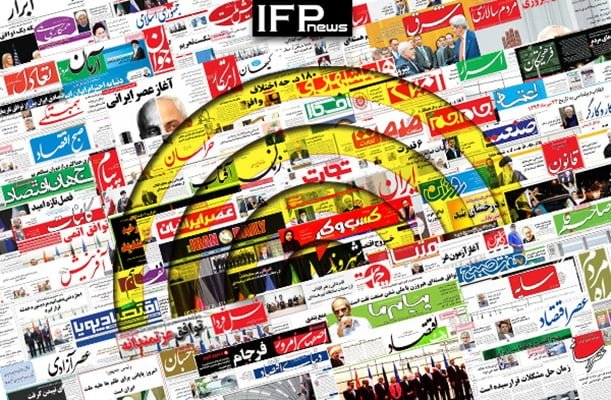
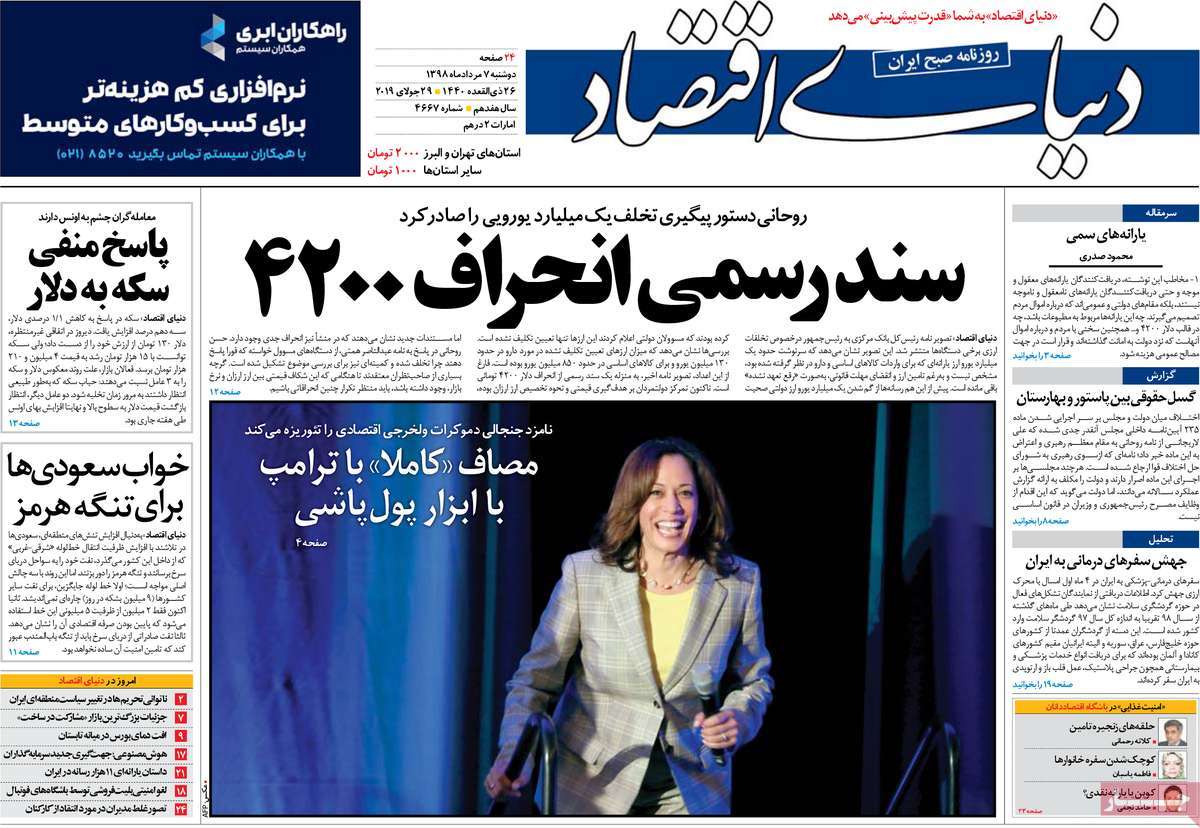
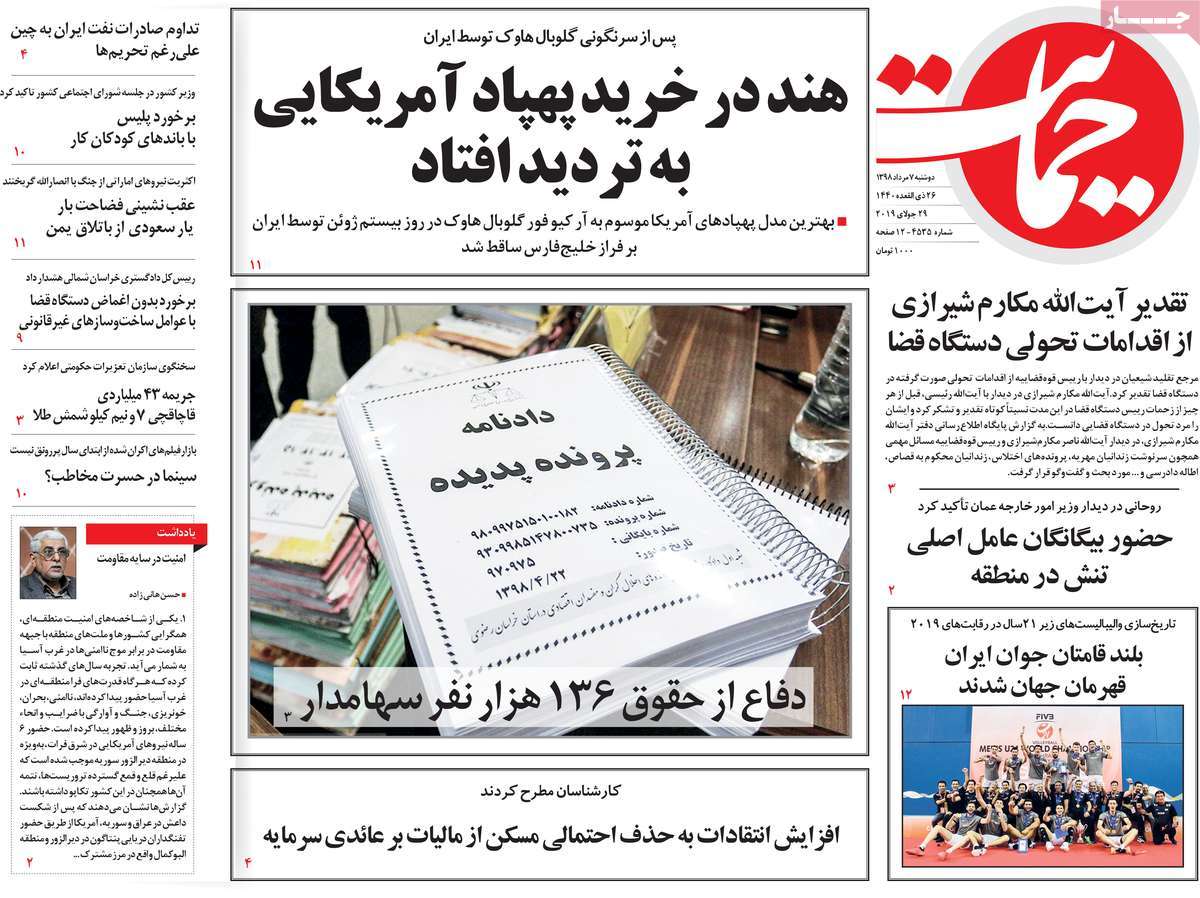
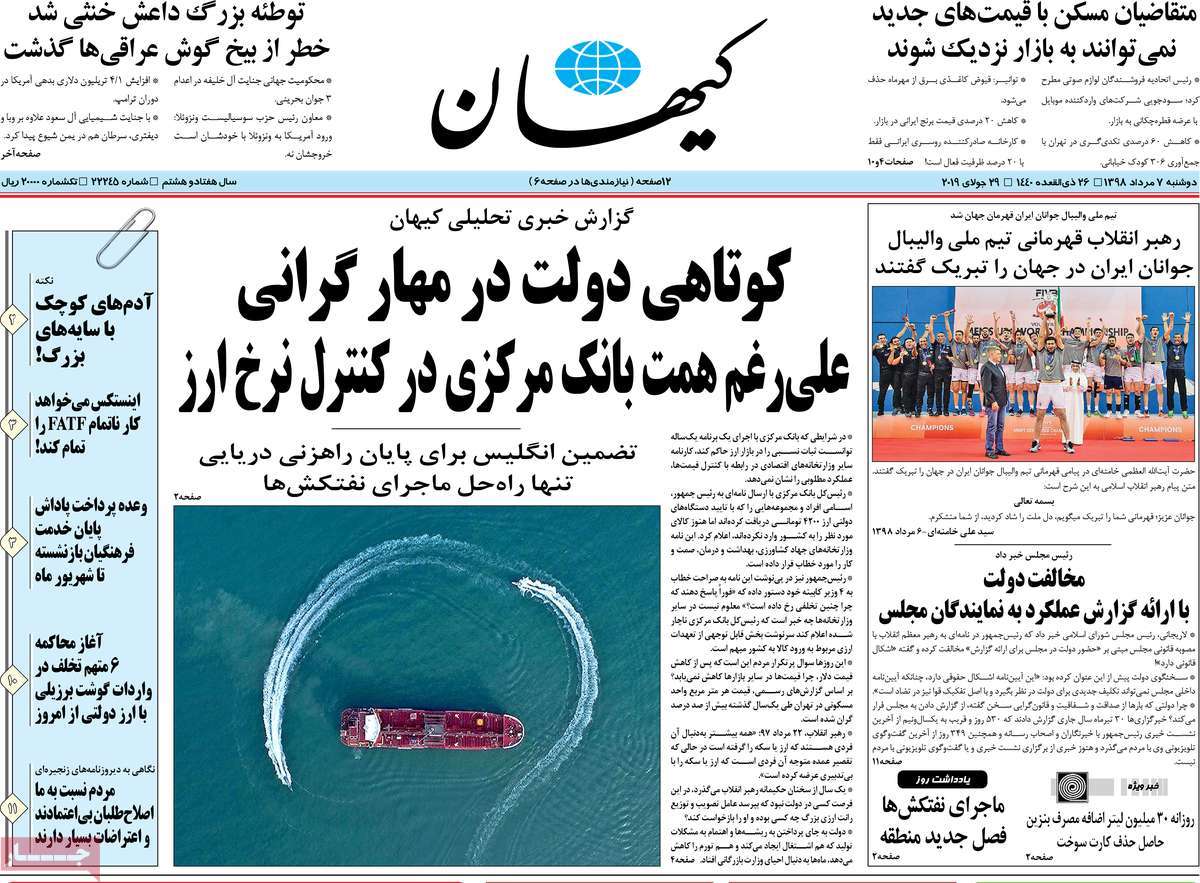
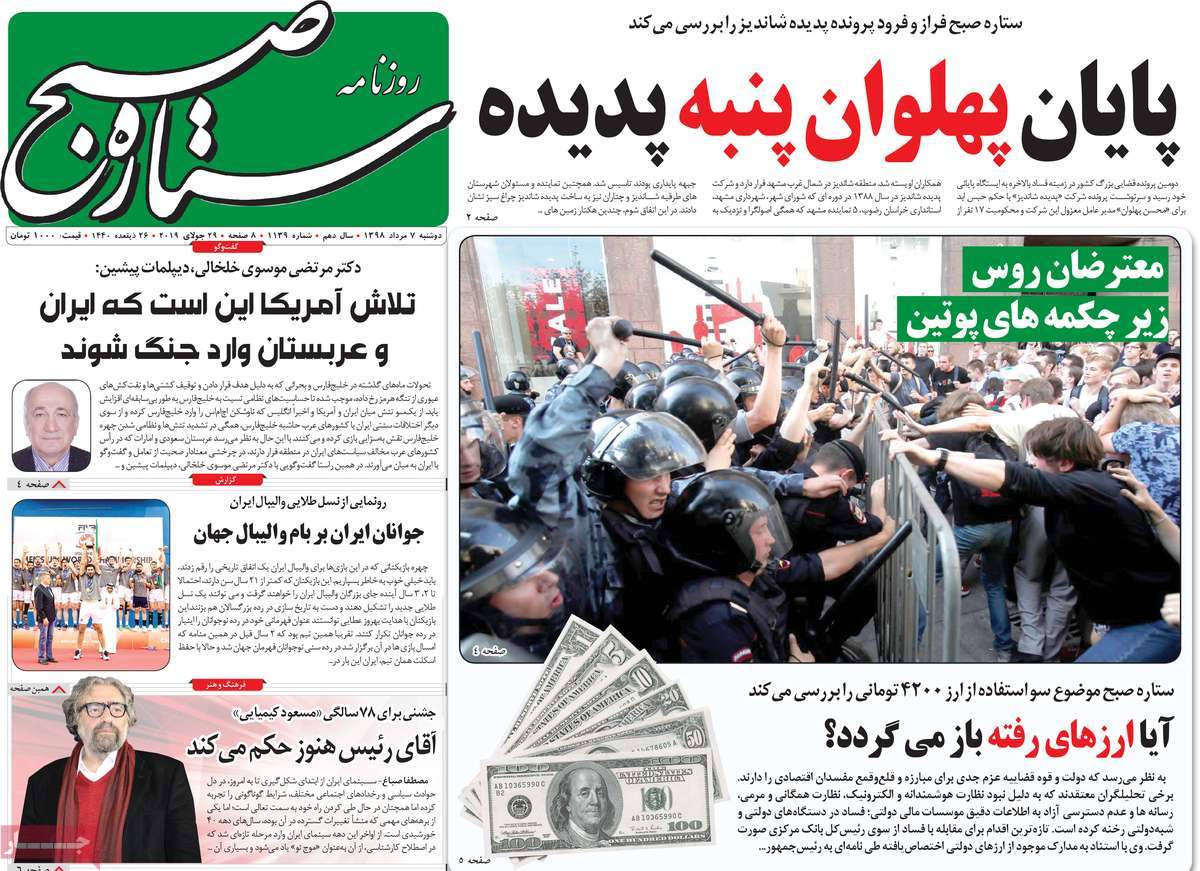
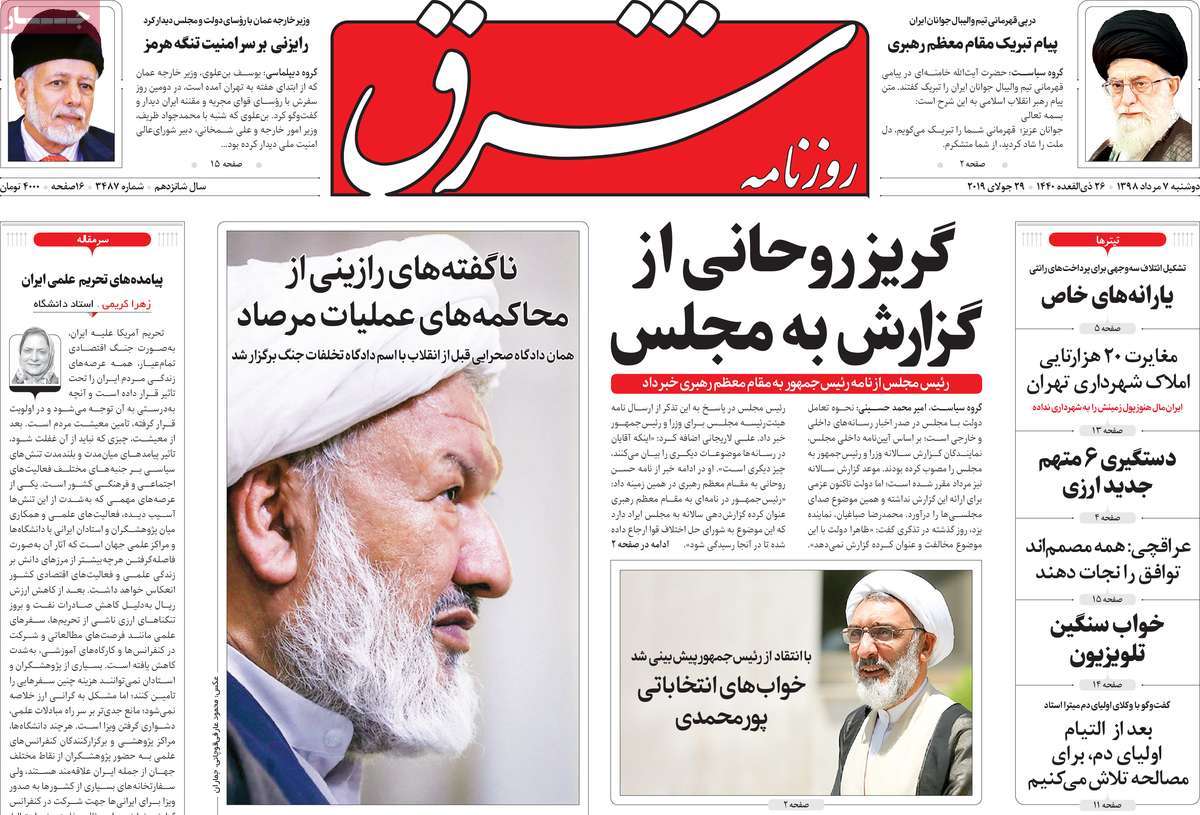
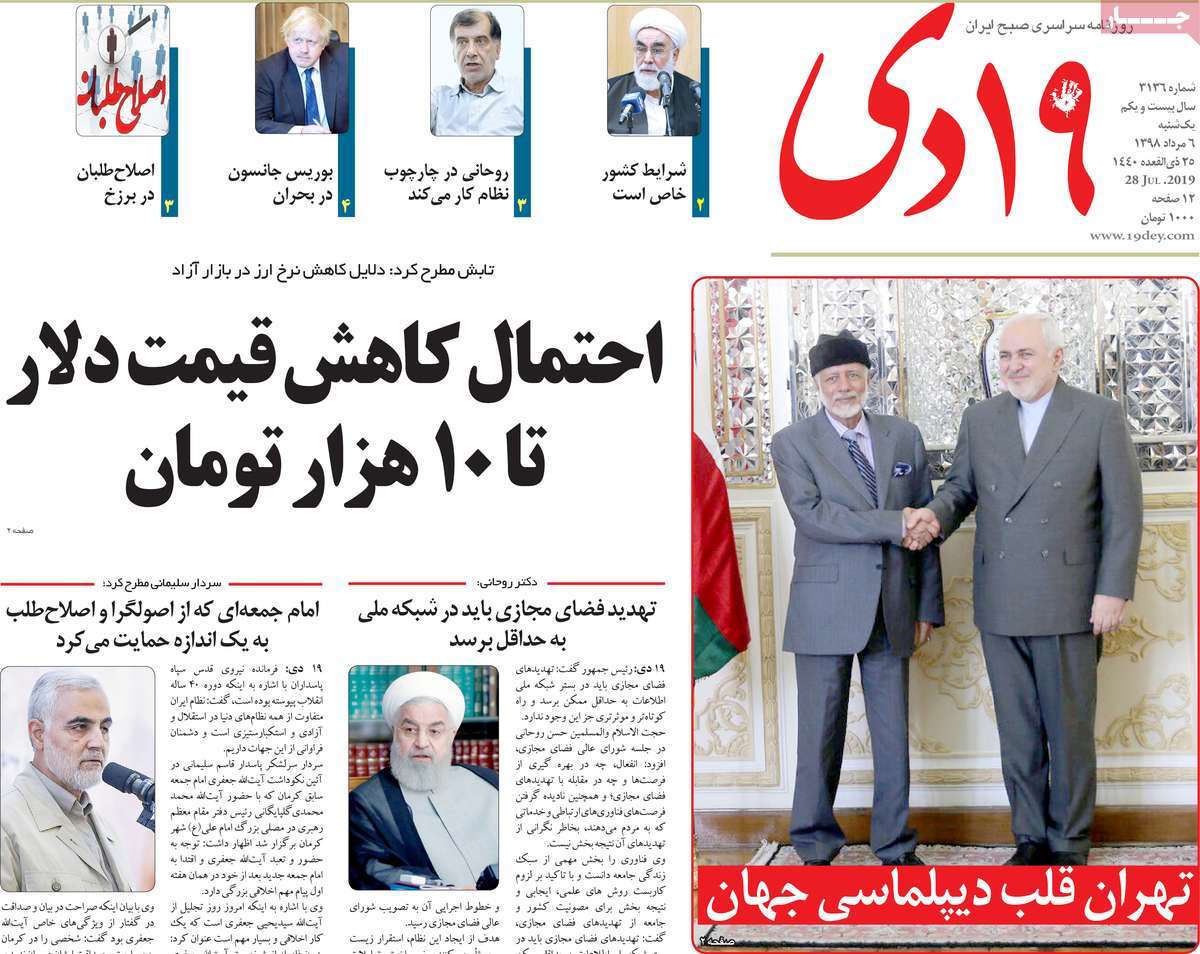
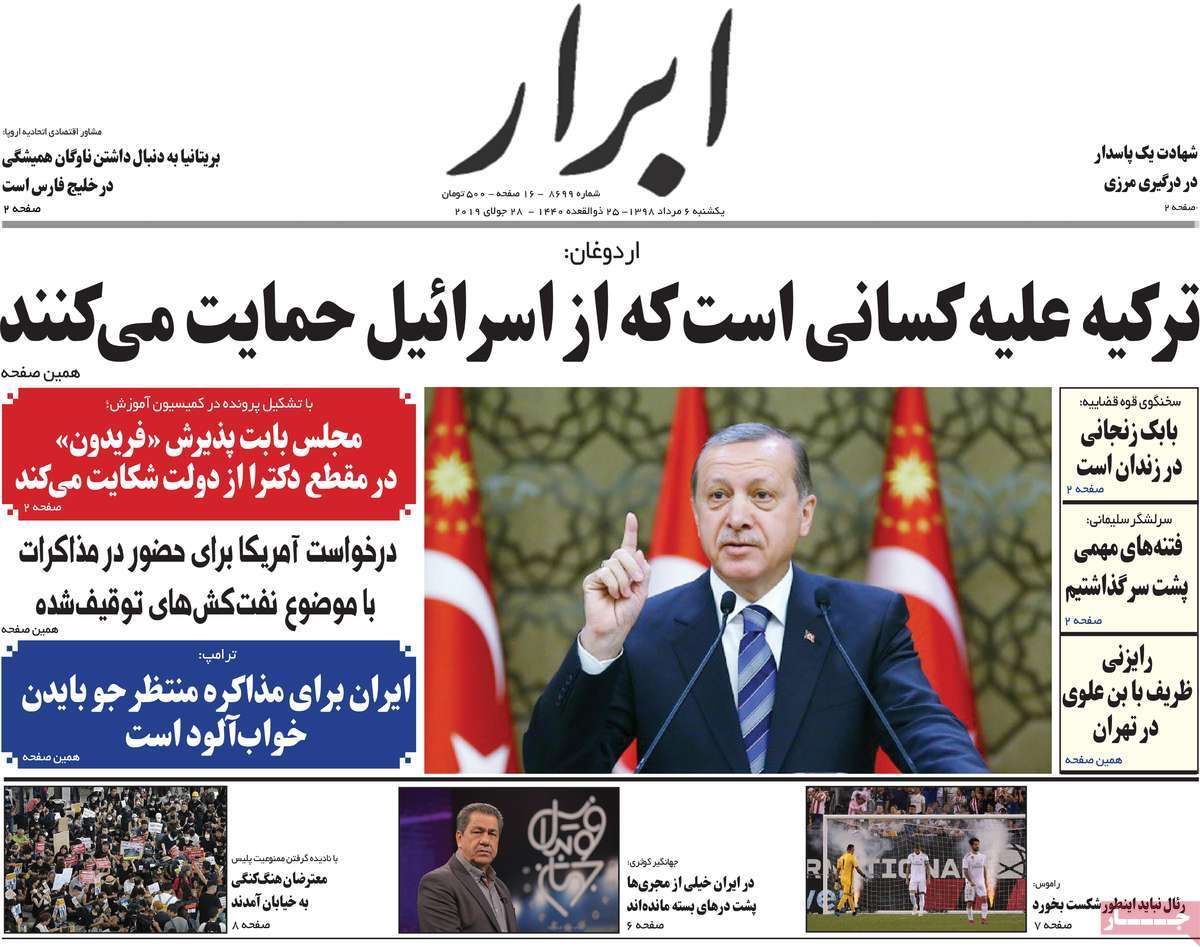
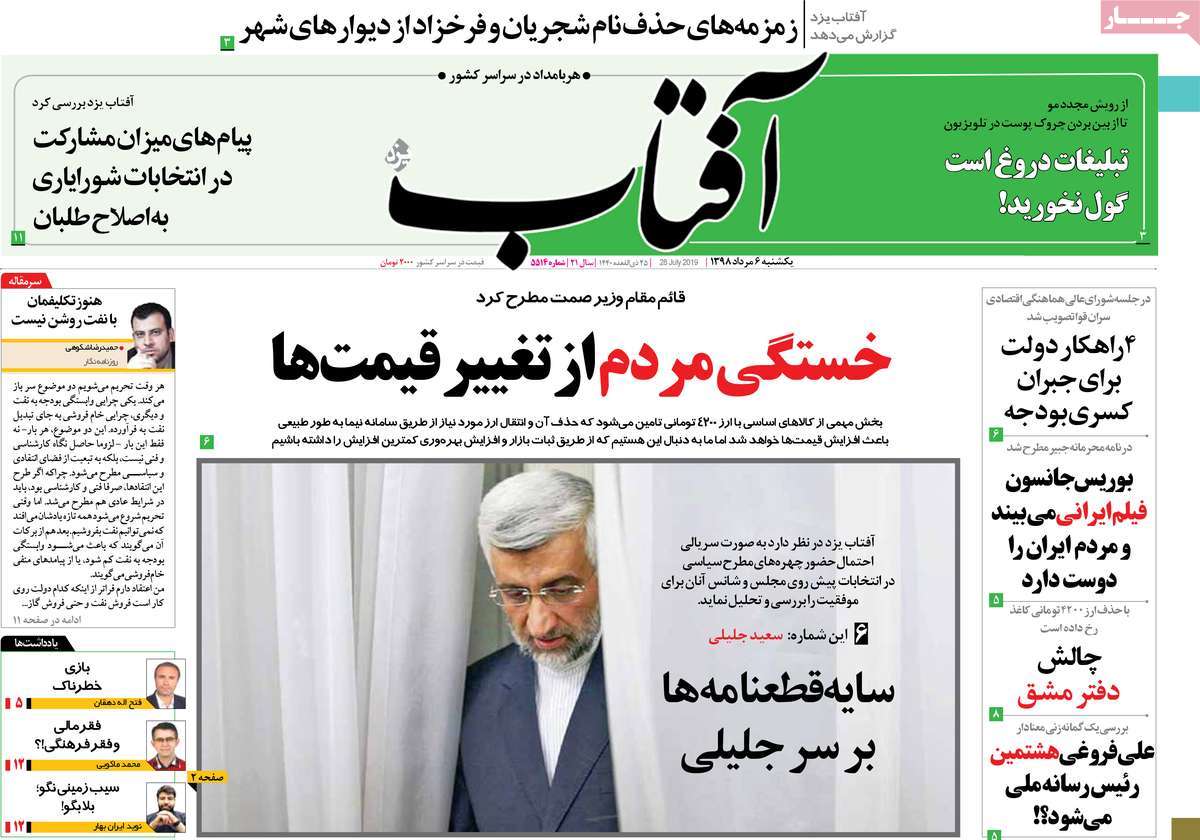
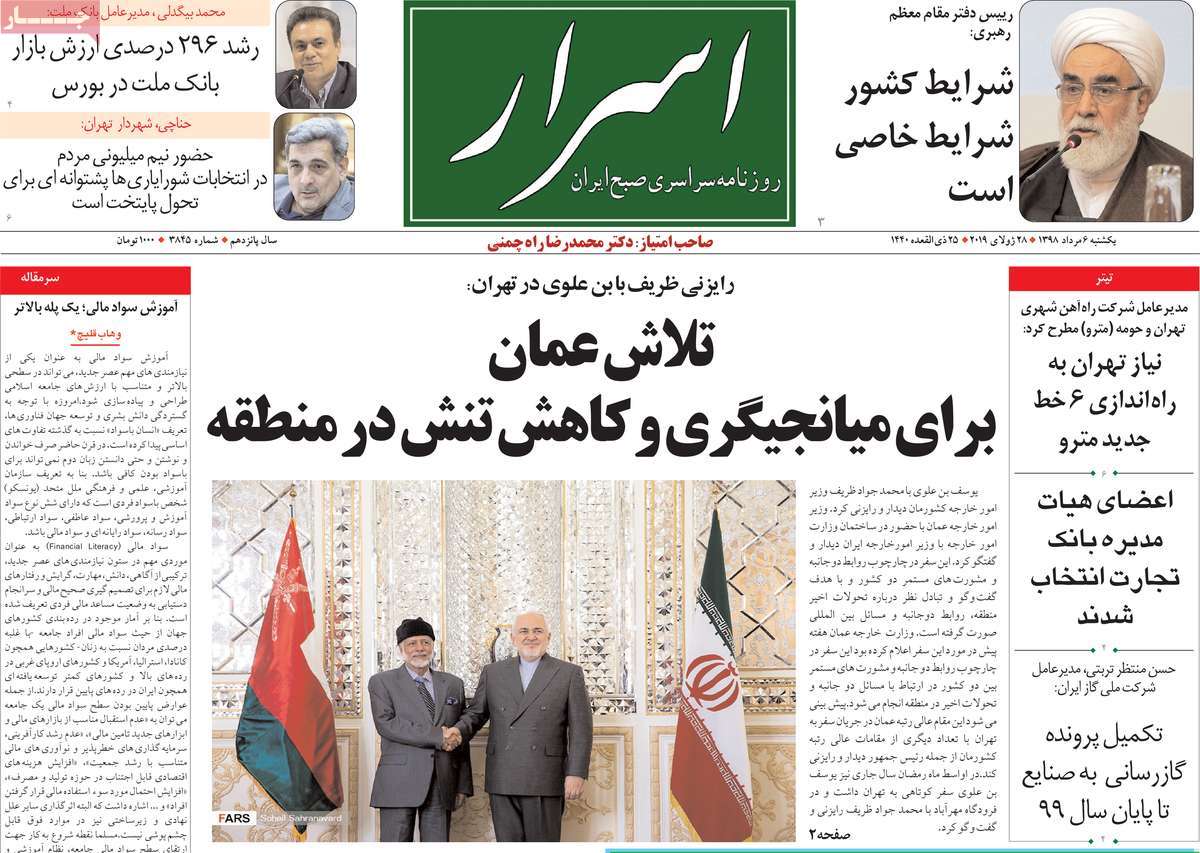
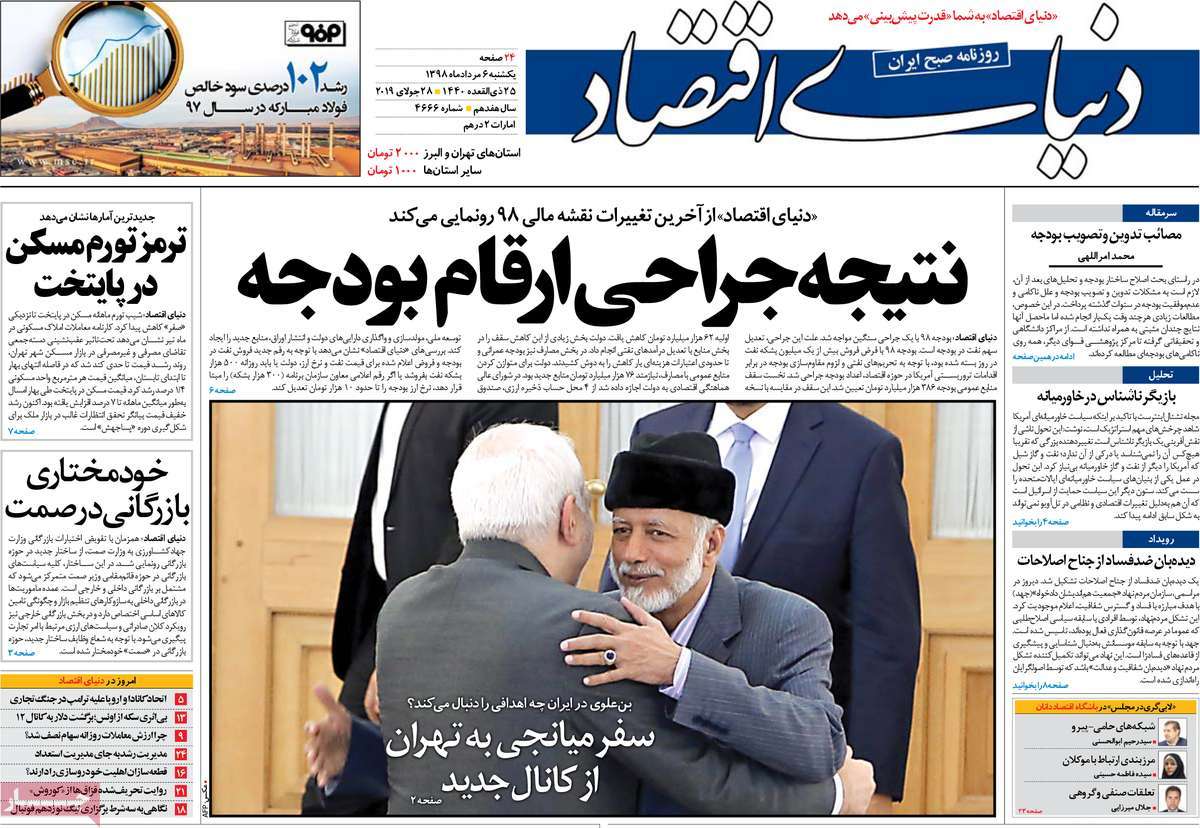
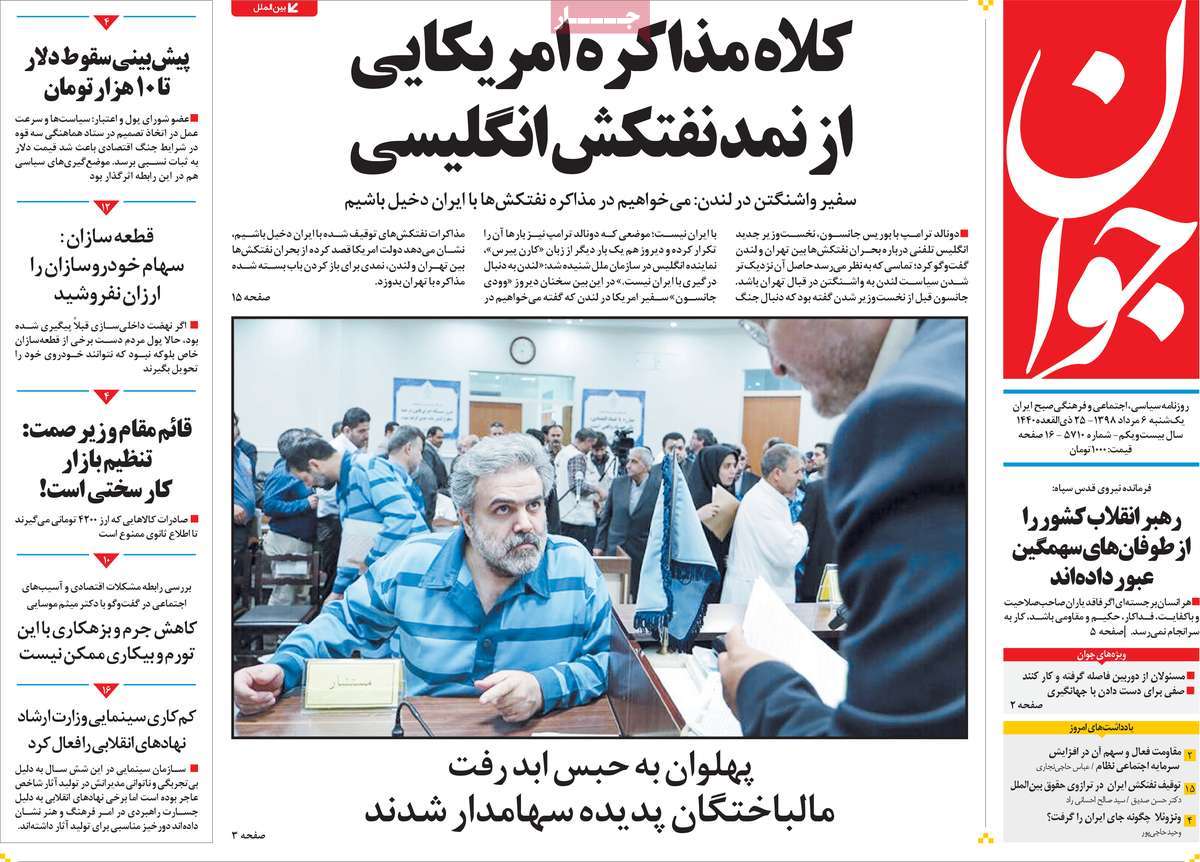
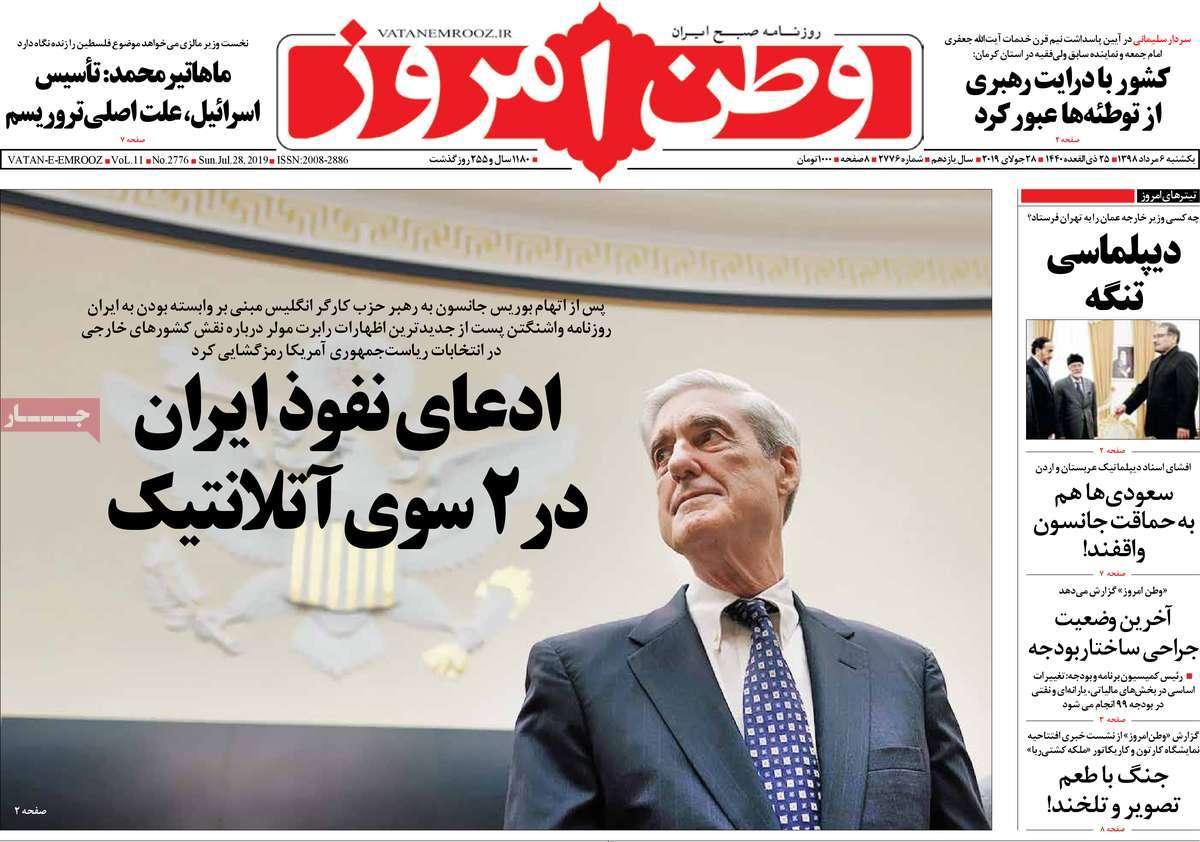
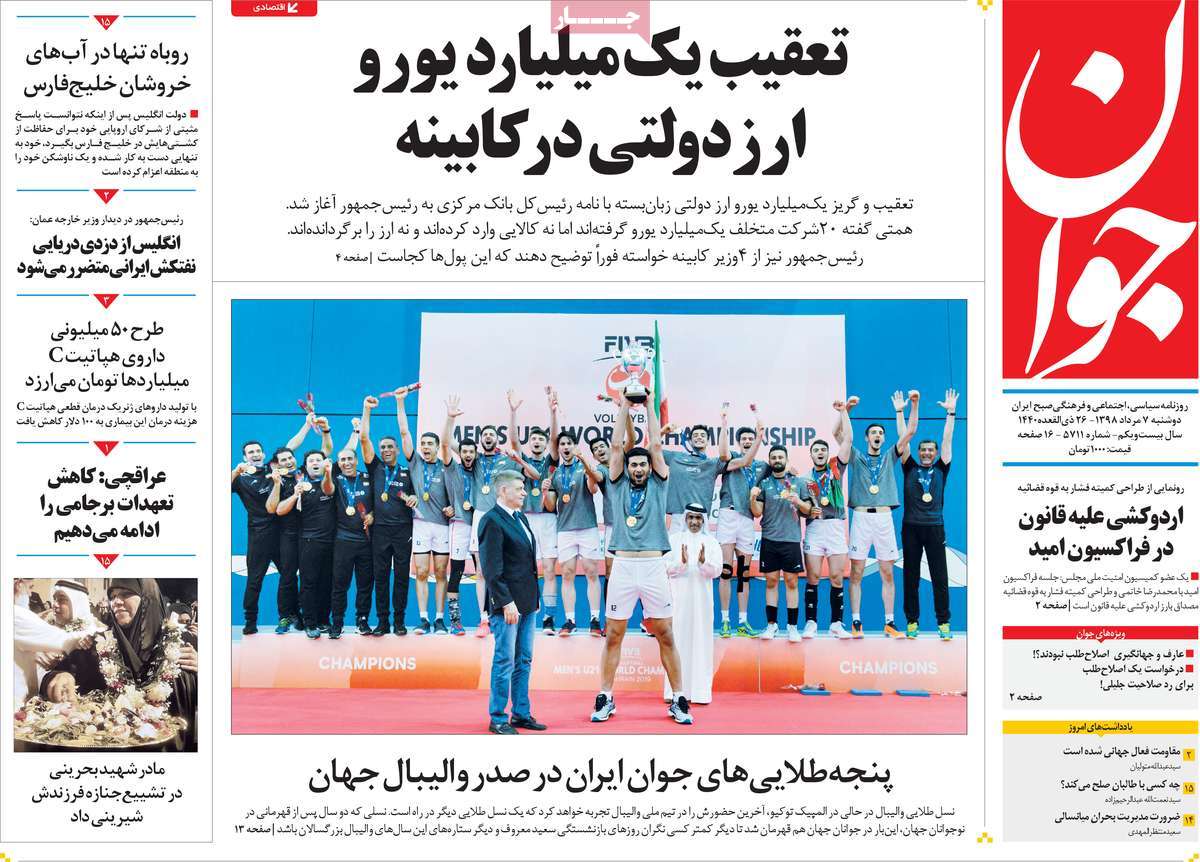
A Look at Iranian Newspaper Front Pages on July 18

A Look at Iranian Newspaper Front Pages on November 19

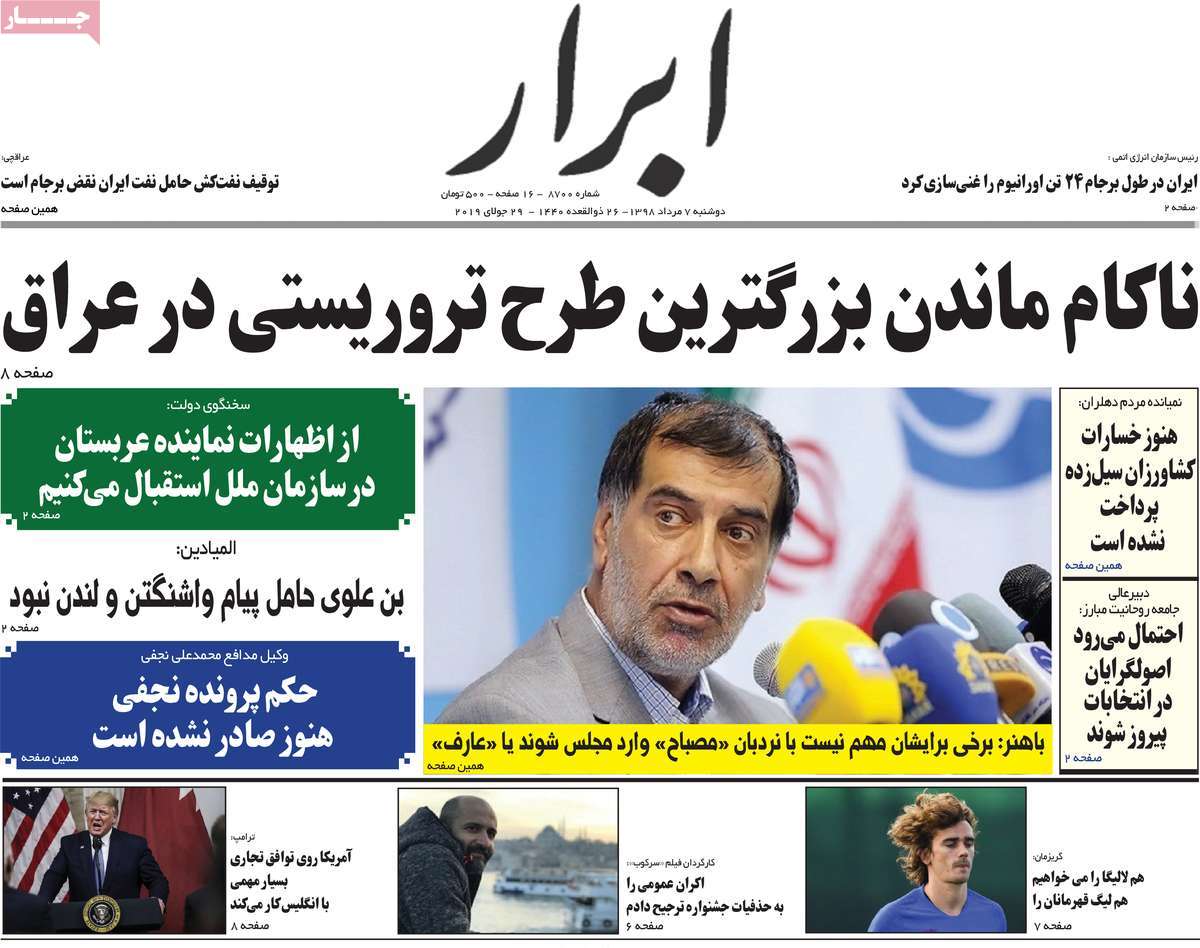
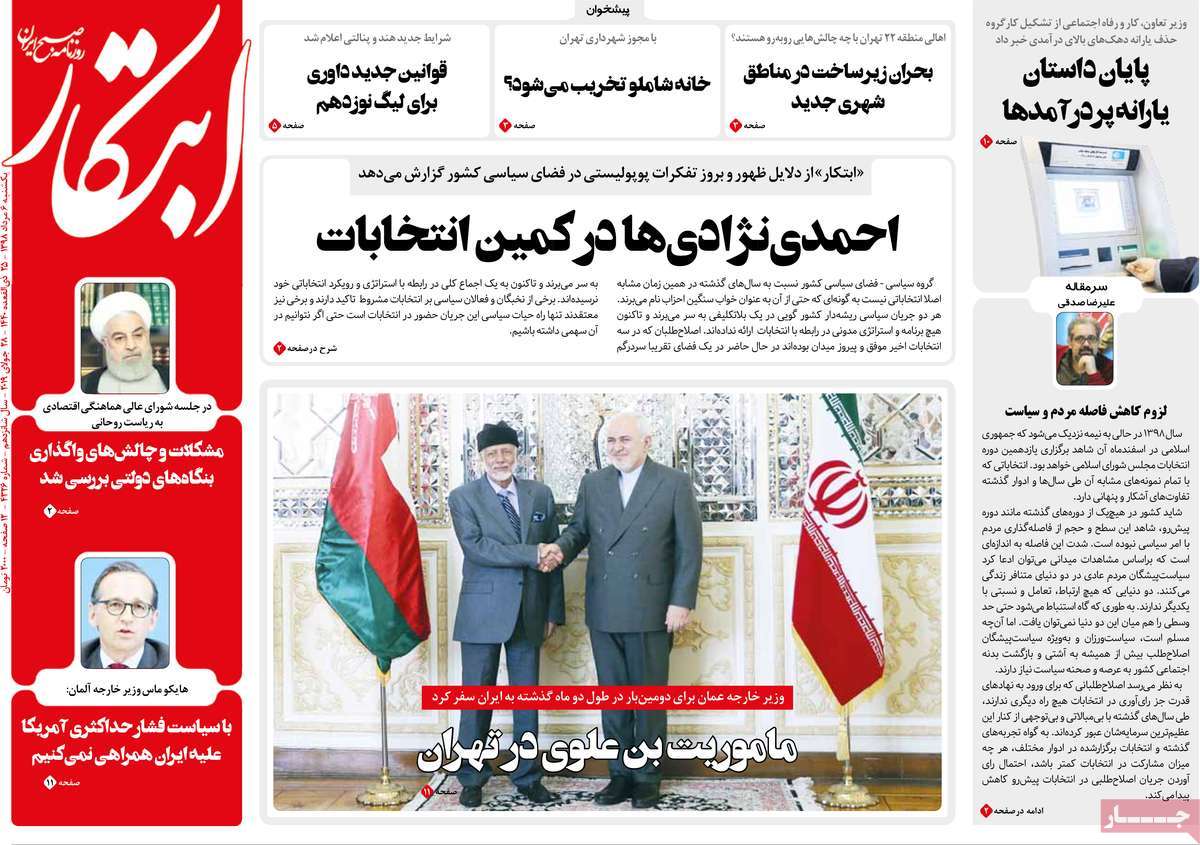
Abrar:
1. Iran Denies Report of Talks over Its Missile Defence
2. US Sanctions Myanmar Military Leaders
3. Zarif: More Interviews Coming
4. Trump: I Have Good Ties with Erdogan, but We Won’t Sell Turkey F-35

A Look at Iranian Newspaper Front Pages on July 18


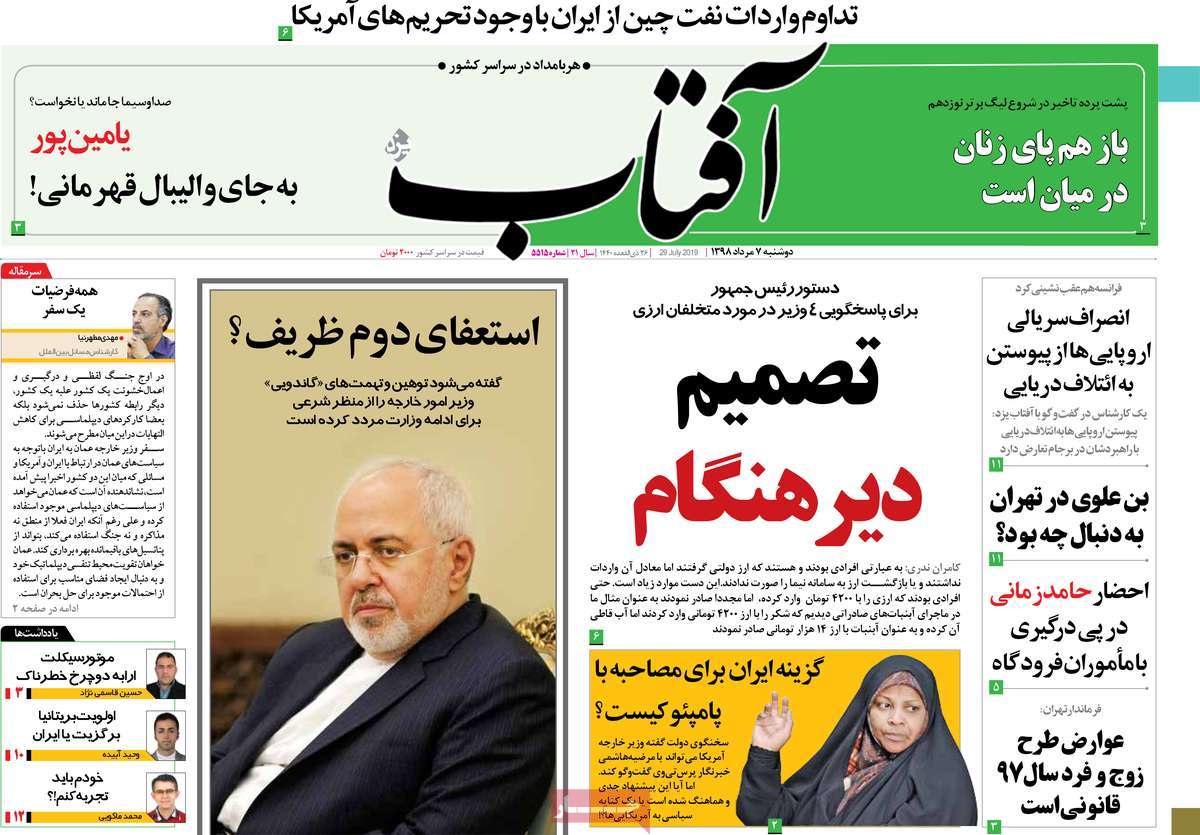
Aftab-e Yazd:
1. Egypt Seeking to Use Iran’s Card? Cairo’s Positive Signals for Ties with Tehran
2. US Congressmen Call for Trump’s Return to JCPOA
3. Iran, US Agree with Iraq Decision on Hashd al-Shaabi

A Look at Iranian Newspaper Front Pages on July 18


Arman-Emrooz:
1. Trump to Lose 2020 Election If He Chooses Military Option

A Look at Iranian Newspaper Front Pages on July 18


Besharat-e Now:
1. Zarif: US Must Stop Arming Saddam’s Reincarnations
2. Diplomatic Siege: From Restriction to Misinterpretation; Americans Frustrated by Zarif
3. Nuclear Disarmament Official Rejects US, Europe Plot

A Look at Iranian Newspaper Front Pages on July 18


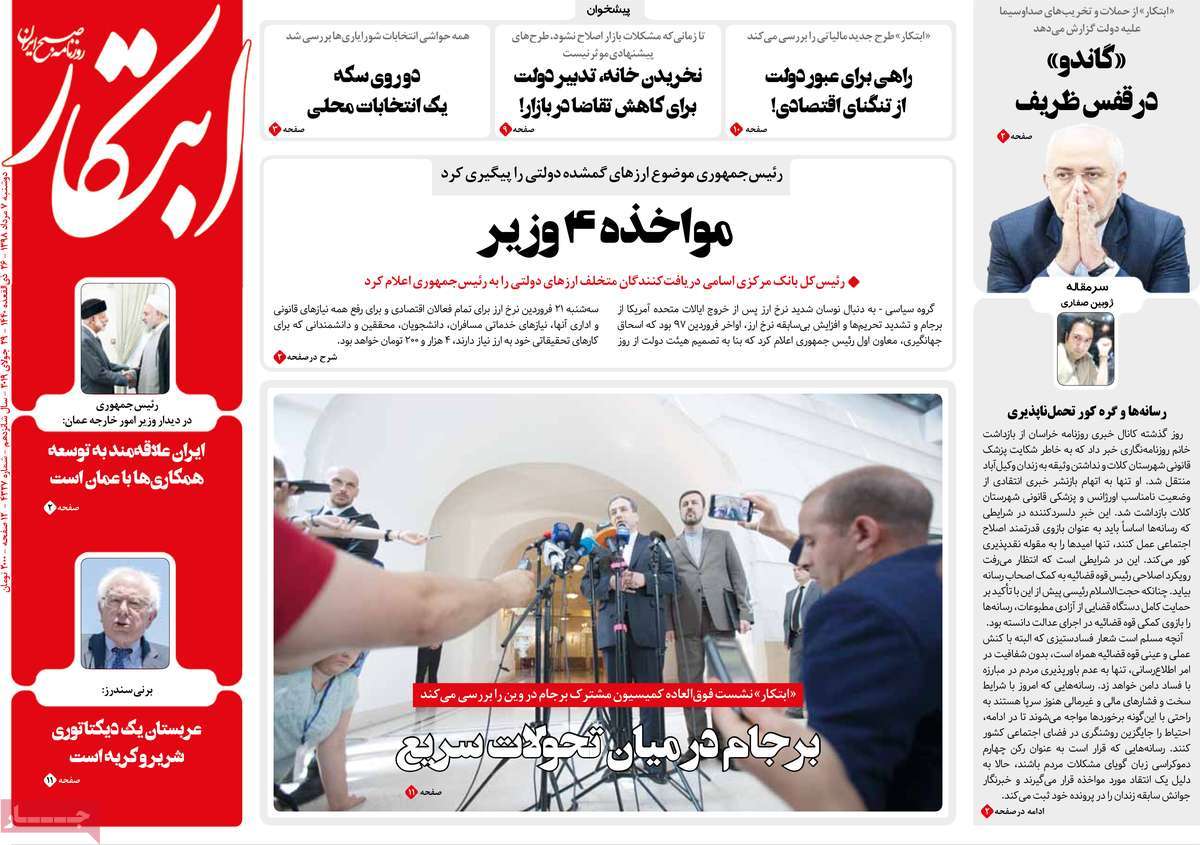
Ebtekar:
1. Iran Rejects Pompeo’s Claim Tehran Ready for Missile Talks

A Look at Iranian Newspaper Front Pages on July 18


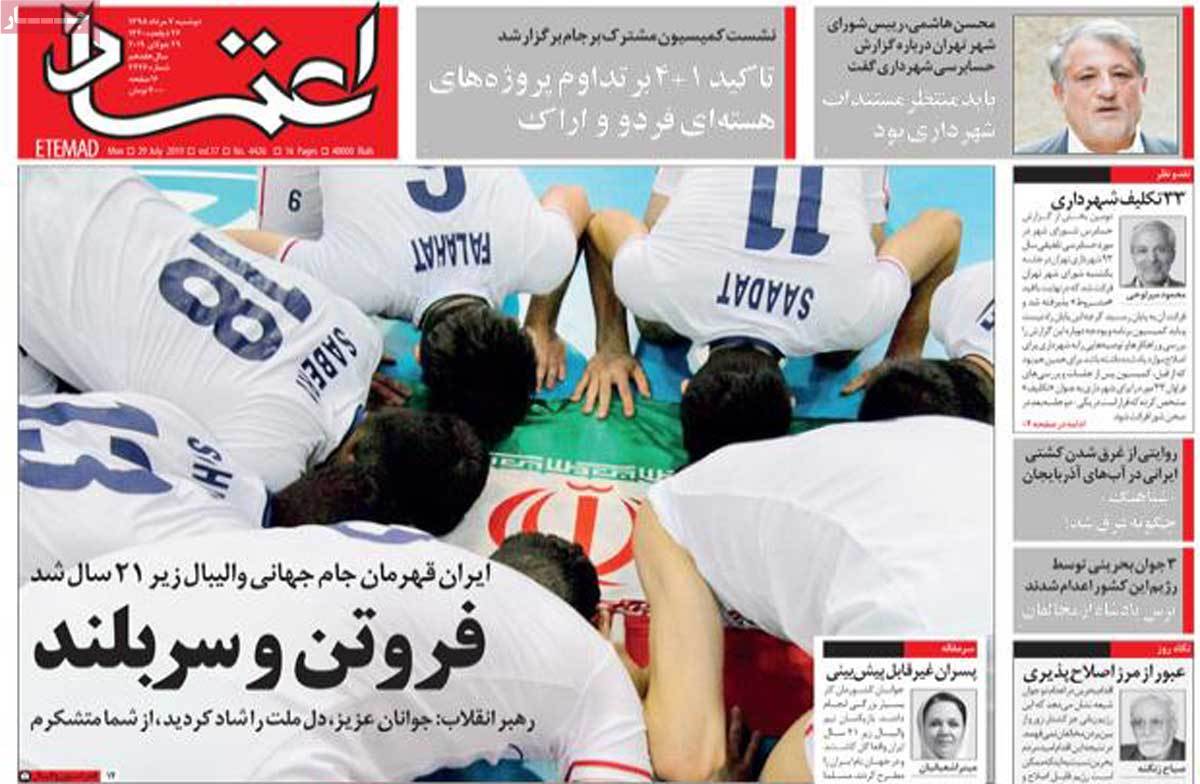
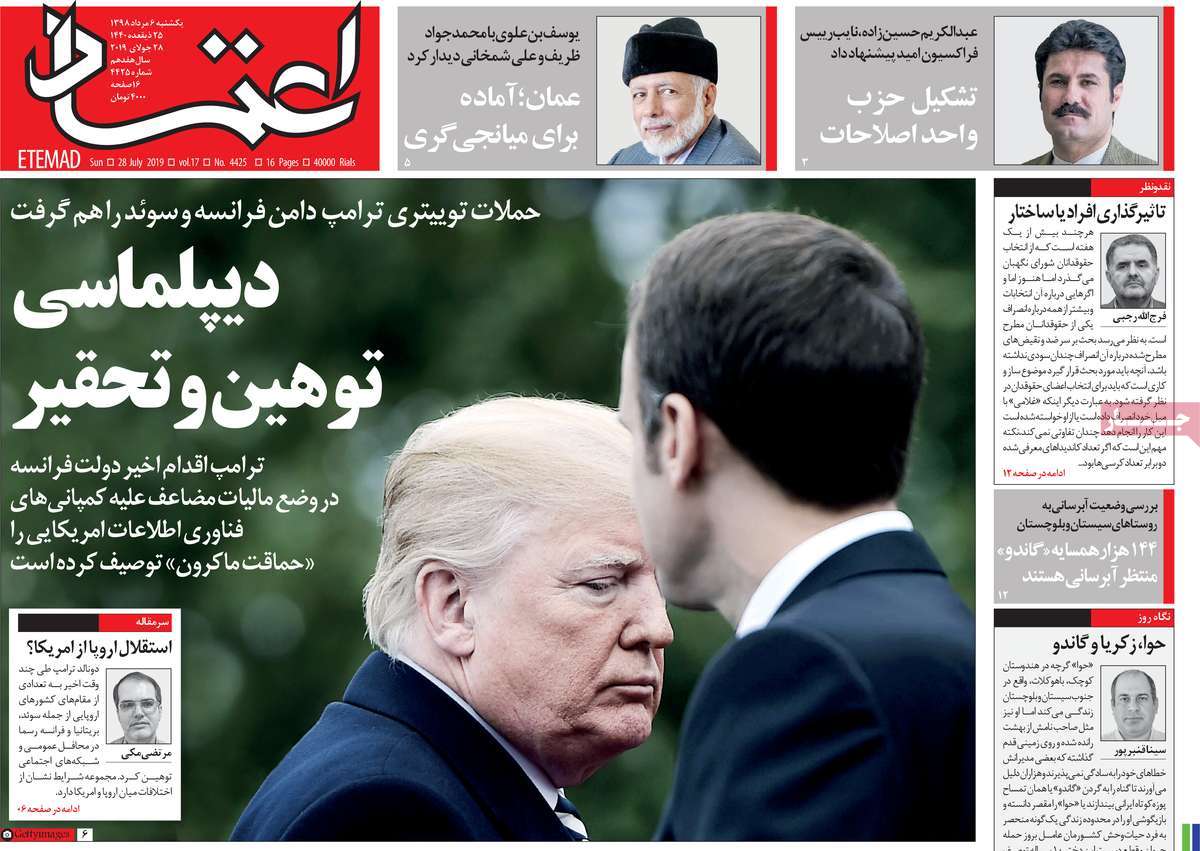
Etemad:
1. Iran Not to Sit for Talks over Its Missile Program: Rouhani’s Chief of Staff

A Look at Iranian Newspaper Front Pages on July 18


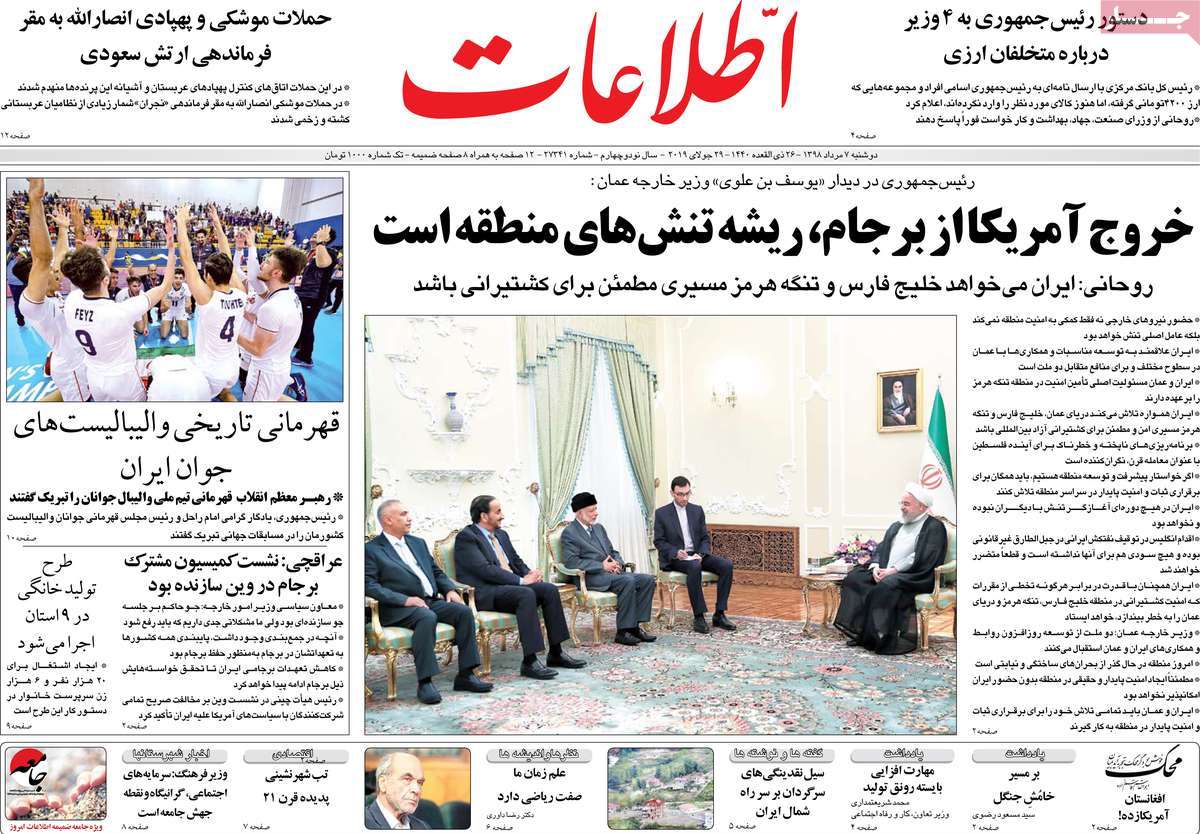
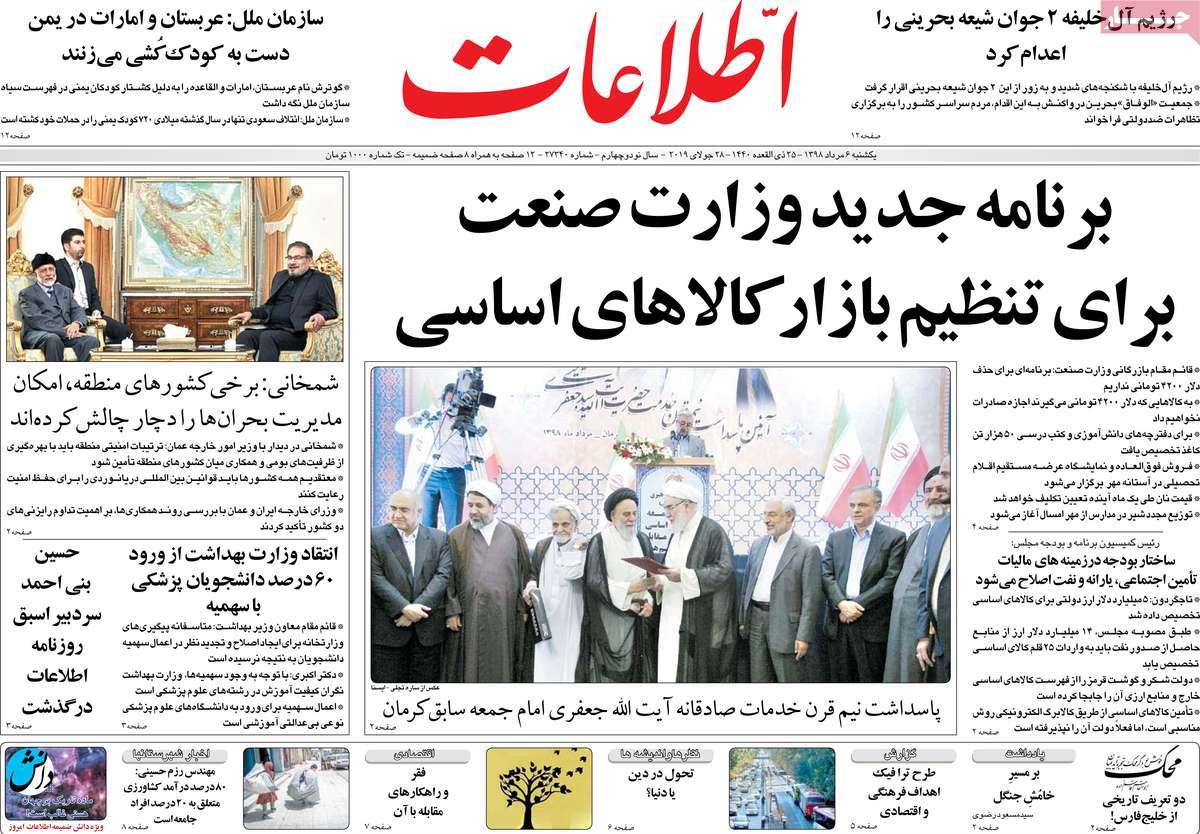
Ettela’at:
1. Iran, Russia, Turkey, Azerbaijan to Launch Joint IT Market
2. Ansarullah Launches Crushing Drone Attacks on Saudi Airport, Military Base
3. US Illegal Sanctions Biggest Barrier to Sustainable Development: Zarif
4. Mogherini: Europe to Be Influenced by Instability in Persian Gulf

A Look at Iranian Newspaper Front Pages on July 18


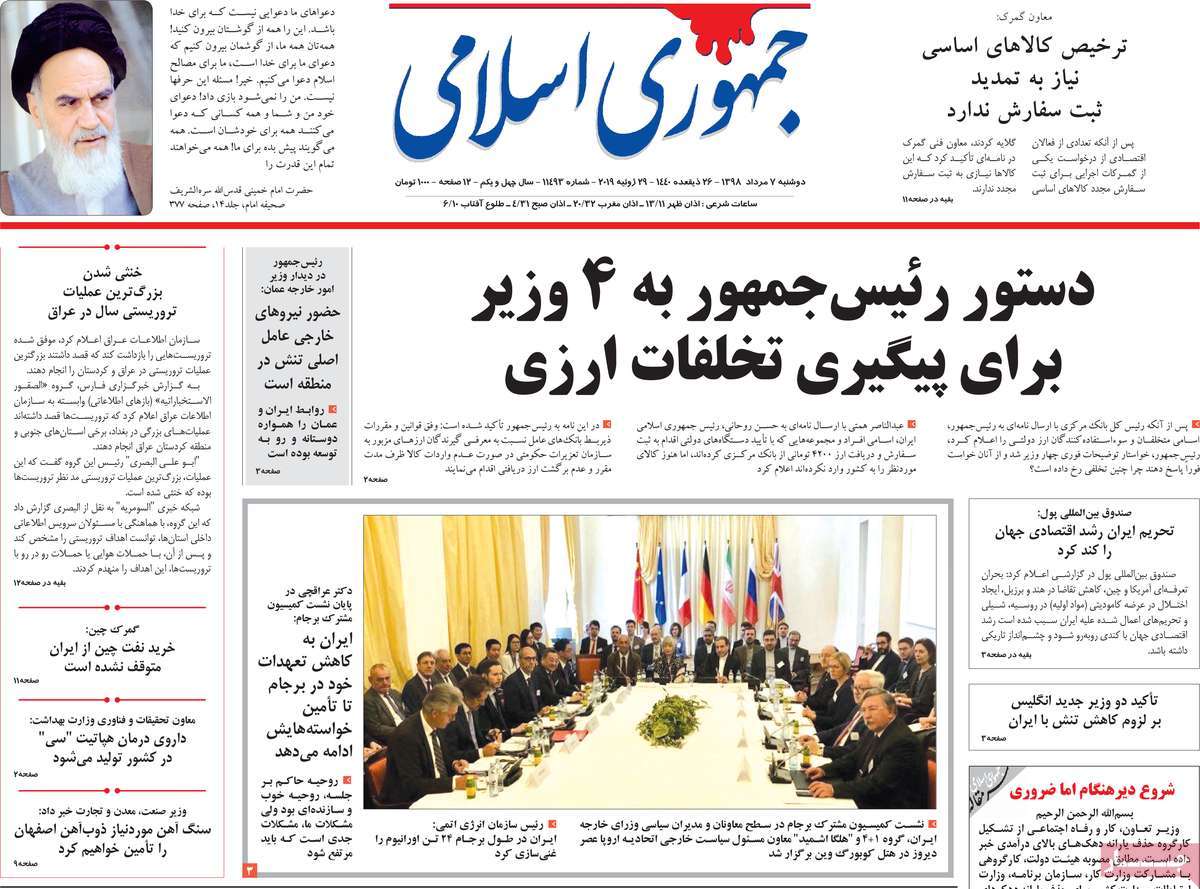
Jomhouri Eslami:
1. Russia FM: Several Billion Dollars’ Worth of Transactions Already Done through INSTEX
2. US Representatives Urges Return to JCPOA: Increased Opposition to Trump Policies
3. Mohajer-6 Homegrown Drone Joins Army’s Fleet

A Look at Iranian Newspaper Front Pages on July 18


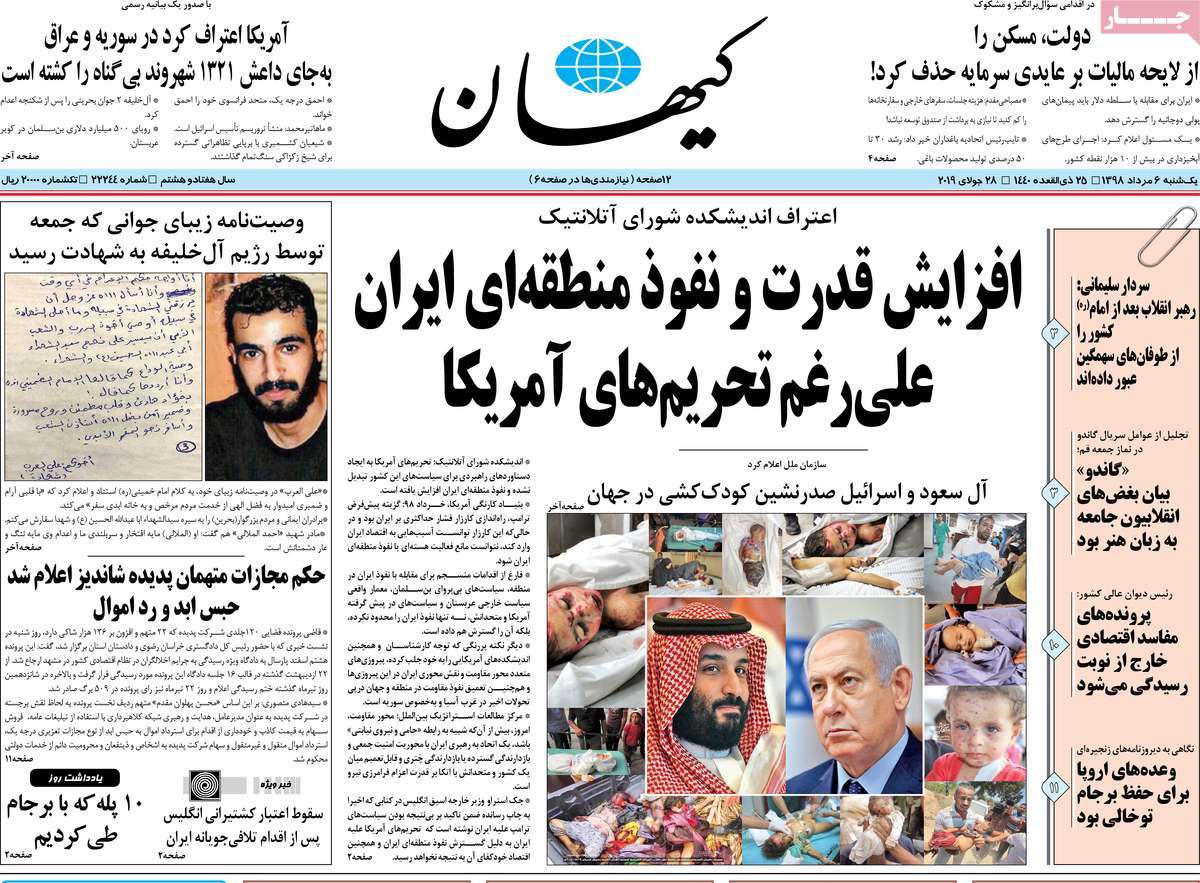
Kayhan:
1. Ansarullah’s Relentless Attacks against Saudi Airports
2. American Paper Reviews Why US Army Doesn’t Win Any War

A Look at Iranian Newspaper Front Pages on July 18


Mardom Salari:
1. Zarif’s Chess in New York: A Review of White House’s Media Fuss about Zarif’s Comments
2. Ursula von der Leyen New First Lady of Europe: Germans Take Control of Europe

A Look at Iranian Newspaper Front Pages on July 18


Setareh Sobh:
1. Wide Coverage of Zarif’s Diplomacy in New York
2. Trump: Washington Seeks to Hold Talks with Tehran
3. Zarif’s Diplomatic Efforts Have Worked [Editorial]

A Look at Iranian Newspaper Front Pages on July 18


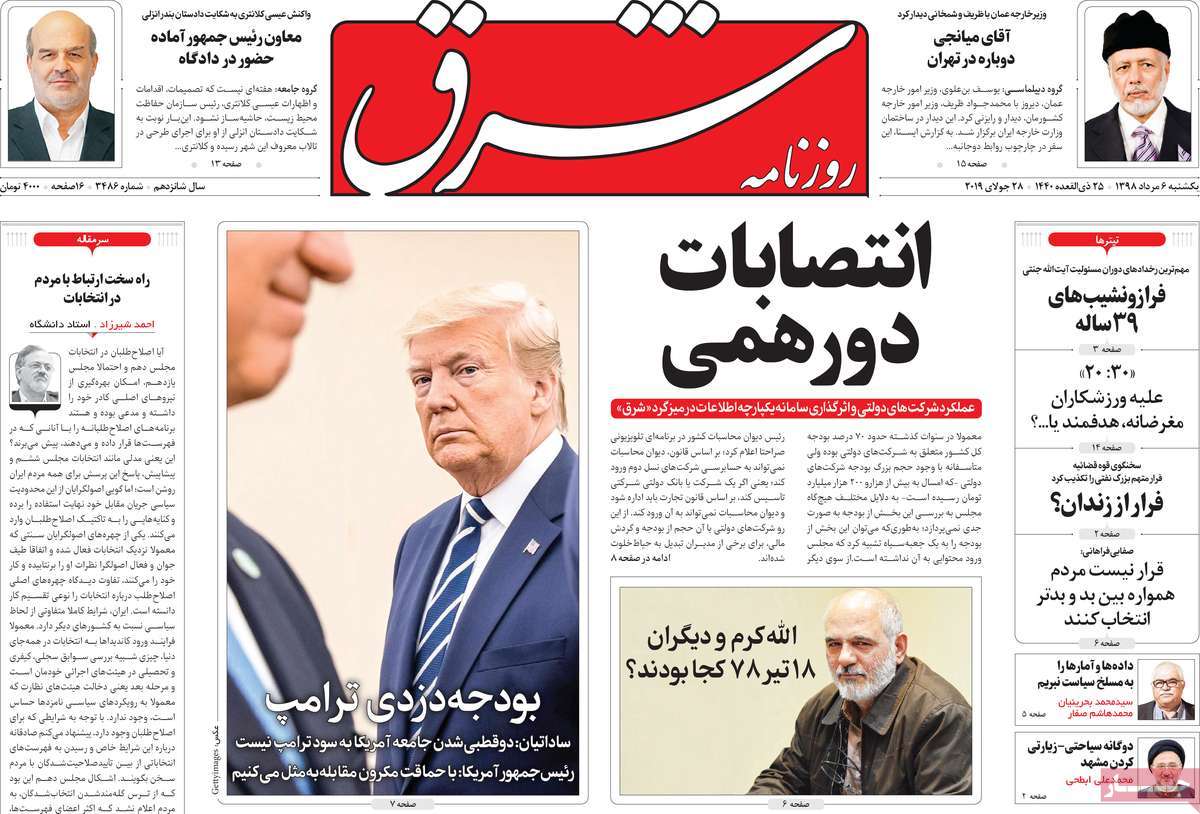
Shargh:
1. Zarif to BBC: No One in Region to Be Safe in Case of a War
2. Controversy over Zarif’s Comments about Missile Talks
3. Mystery of Oil Tankers: UAE Tanker Missing in Strait of Hormuz

A Look at Iranian Newspaper Front Pages on July 18

Iran Develops Bullet-Proof Glass

That came in a ceremony in the city of Shiraz in southern Fars province attended by Deputy Minister of Industry, Mines and Trade Khodadad Gharibpour and the chhairman of the Board of Directors of the Iranian Mines and Mining Industries Development and Renovation Organization (IMIDRO).

In a speech on the sidelines of the ceremony, Gharibpour said employment and production are the best way to realize balanced development.

“Accordingly, it is necessary that assets be funneled into activities to boost production and ensure sustainable employment,” he added.

For a brief review of Iran’s achievements in various fields of science and technology, check the book “Science and Technology in Iran: A Brief Review – 2019

The deputy minister then touched upon a plan to revive, identify and activate small-scale mines and exploration activities.

“The active participation of private sector institutions whose activities are related to the mines sector will pave the way for raising the status of small-scale mines in production, trade and job creation,” he said.

He also referred to a plan for further development of mines and the setting up of a special committee to activate the mines sector.

“Twenty small-scale mines have been identified in Fars province. A call for investors to put money into these mines has been issued. We hope by attracting investors, we will see the development of the mines sector in Fars and creation of sustainable employment,” he added.

Iran Develops Bullet-Proof Glass

Russia Blames US’ Anti-Iran Line for Mideast Tensions

In an interview with the Russian ‘Argumenty i Fakty’ weekly published on Wednesday, Lavrov said the current flare-up of regional tensions is the “direct consequence of Washington’s and some of its allies’ anti-Iranian line.”

He also warned that Washington’s muscle-flexing against Tehran may lead to a “dangerous situation.”

“The US is flexing its muscles, it has launched a campaign to discredit Iran, has accused the Islamic Republic of all the sins,” Lavrov said. “It creates a dangerous situation where a spark would be enough to light a fire. The US would be responsible for any possible catastrophic consequences.”

The top Russian diplomat further stressed that Iran has repeatedly expressed its willingness to ensure regional stability through dialog with all countries, including the Persian Gulf Arab states, which have interests in the region.

Moscow, he added, has been taking steps to ease tensions and promote collective security in the Persian Gulf through confidence-building measures.

“We are working with our partners to maintain multilateral agreements and resolve the situation surrounding Iran’s nuclear program,” Lavrov said.

Tensions have been running high between Tehran and Washington since last year, when President Donald Trump unilaterally withdrew the US from the 2015 multilateral nuclear deal, officially known as the Joint Comprehensive Plan of Action (JCPOA), and unleashed the “toughest ever” sanctions against the Islamic Republic.

Recently, the US has taken a quasi-warlike posture against Iran and stepped up its provocative military moves in the Middle East, among them the June 20 incursion of an American spy drone into the Iranian borders.

The US says it is deploying an aircraft carrier strike group and a bomber task force to the Middle East in a “clear and unmistakable” message to Iran.

In May, Washington dispatched an aircraft carrier strike group, a bomber task force, and an amphibious assault ship to the Persian Gulf, citing an alleged Iranian threat.

The military deployment sparked global concerns that the US may be planning to wage war on Iran.

Iran Considers Defensive Power Its Red Line: Official

“The country’s defensive might is a redline. We will not be holding negotiations in this area under any circumstances, and have said so on repeated occasions,” Mahmoud Va’ezi said on Wednesday.

Speaking to NBC News on Monday, Zarif had condemned the United States’ arms sales to regional countries, saying the sales had made “our region ready to explode.” “So if they (the US) want to talk about our missiles, they need first to stop selling all these weapons, including missiles, to our region,” he added.

Misconstruing the comments, however, US Secretary of State Mike Pompeo claimed on Tuesday that “for the first time, the Iranians have said that they are prepared to negotiate about their missile program.” “We will have this opportunity, I hope….,” he added.

The Associated Press also published a report, including in the title “Zarif Raises Idea of Talks (about Iran’s missile program).”

Va’ezi said, “It is not a new thing…for different American officials to make contradictory remarks every minute.”

He called Zarif’s remarks to NBC “very clear,” adding, “No part of the interview allows such interpretation.”

Earlier, a spokesman for Iran’s mission to the United Nations, Ali-Reza Mir-Yousefi also reacted to the distortion of the top diplomat’s remarks.

“We categorically reject the AP’s characterization of Zarif comments…as meaning that Iran is willing to negotiate on its defensive missile program at some point. Iran’s missiles and its missiles are absolutely and under no condition negotiable with anyone or any country, period,” the spokesperson tweeted.

“Surely AP reporters are familiar enough with conversational English to know and understand and are able to contextualize comments on the hypothetical, as well as parrying with words to make a point,” he added.

Mir-Yousefi finally deterred misapplication of official comments for political or journalistic purposes, and said such misuse works to damage the press’ standing in the public opinion.

The United States — along with Israel — has long been accusing Iran of pursuing military objectives in its nuclear program, despite over a dozen reports by the International Atomic Energy Agency (IAEA) to the contrary.

The IAEA has been monitoring the technical aspect of a 2015 nuclear deal initially inked between Iran and six world states, including the US. Washington, however, abruptly pulled out of that agreement last year in defiance of international objections.

Leader of the Islamic Revolution Ayatollah Seyyed Ali Khamenei has irreversibly prohibited any pursuit of nuclear weapons through an official decree.

Washington has also been making similar accusations about the Islamic Republic’s missile activities.

Iranian officials have repeatedly underlined, though, that the projectiles are not designed to carry nuclear warheads, while noting that its conventional missile program is non-negotiable.

What’s Going On in Iran’s Beverly Hills?

To purchase a piece of land in the newly established town, one should pay a price far from our imagination. In the recent past, the town was besieged with a long wall preventing all except for the rich house owners from entering into Basti Hills. But now, based on an order by the Judiciary chief, the wall has been removed.

Basti Hills is a private town with 36 villas on a land 200 metres above Lavasan’s ground level. Dotted with pools, saunas and Jacuzzis, the town provides its residents with a spectacular 360-degree perspective of Latyan Dam. They can enjoy the perspective while in their pools protected by appropriate visual blocks preventing any outsiders’ voyeurism.

Local real estate agencies say the price of land in this spectacular heaven is valueless. According to them, there is no fixed price for land pieces there and each villa is sold and purchased with a special pattern.

Basti Hills is named after a boulevard in Lavasan called Basti. Since recently, only the owners of the villas were allowed into the town.

You may think that Basti Hills is a cast away region without the least urban facilities. But you are totally wrong. There is a large supermarket in the main boulevard of the town, just some ten metrrs away from the villas.

Recently, the Friday prayers leader of Lavasan sent a letter to the head of Iran’s Judiciary calling on him to stop illegal constructions and land grabbing in the region. A couple of weeks ago, the gates to the town were removed at the order of the judiciary chief.

This made happy most environmentalists who have always expressed concerns over the activities of land grabbers in Tehran turning natural hills and plains into villas.

Now with the removal of the gates, photos and videos of Basti Hills have gone viral on the social media. Ordinary people who were banned from entering the town, now express surprise at the luxurious conditions they see inside Basti Hills.

Now the main question is whether the residents of Basti Hills can keep their tranquility and luxury lifestyle after the removal of the town’s gates or not.

bastibab