Thursday, April 9, 2026
Home Blog Page 3076

Iranian Maestro Kalhor Wins Prestigious Music Award

Iranian Maestro Kalhor Wins Prestigous Music Award

Kalhor received the prestigious award on Sunday at the 25th jubilee edition of the World Music Expo (WOMEX) in Tampere, Finland.

“For the mastery and virtuosity of the kamancheh (Iranian music instrument),  for the ceaseless innovation and collaboration to create exciting new musical languages and for bringing the Persian classical music tradition to the ears of people all over the world, Piranha Arts, the organizers of WOMEX, are delighted to present the WOMEX Artist Award 2019 to Kayhan Kalhor,” WOMEX said.

Speaking at the event, Kalhor introduced himself as a representative of Iranian musicians on behalf of whom he would present the prize to legendary master of traditional Persian music, classical singer and composer Mohammad-Reza Shajarian.

“I dedicate the award to Ostad (master) Mohammad-Reza Shajarian, the great master of Persian music, who has been fighting a nasty illness for a few years,” he stated.

Earlier upon being nominated for the award, Kalhor had said, “Receiving the WOMEX Artist Award means so much to me. The award is recognition of the rich culture of my homeland Iran and an ageless Persian art that thrives and is beloved throughout the world. As forces arise across the globe and push for divisiveness, borders and intolerance, music brings us together and reminds us of our common humanity. As a citizen of the world, I am humbled by this recognition and stand with artists whose music fosters unity.”

Kalhor, born in Tehran in 1963 to a Kurdish family, began studying music at the age of seven.

In addition to classical Persian music, he also learnt Kurdish and Turkish musical influences in Iran.

He then studied European classical music and eventually graduated from the music program at Carleton University in Ottawa, Canada.

Kalhor’s instrument of choice is the Kamancheh, a bowed string instrument used in classical Persian music.

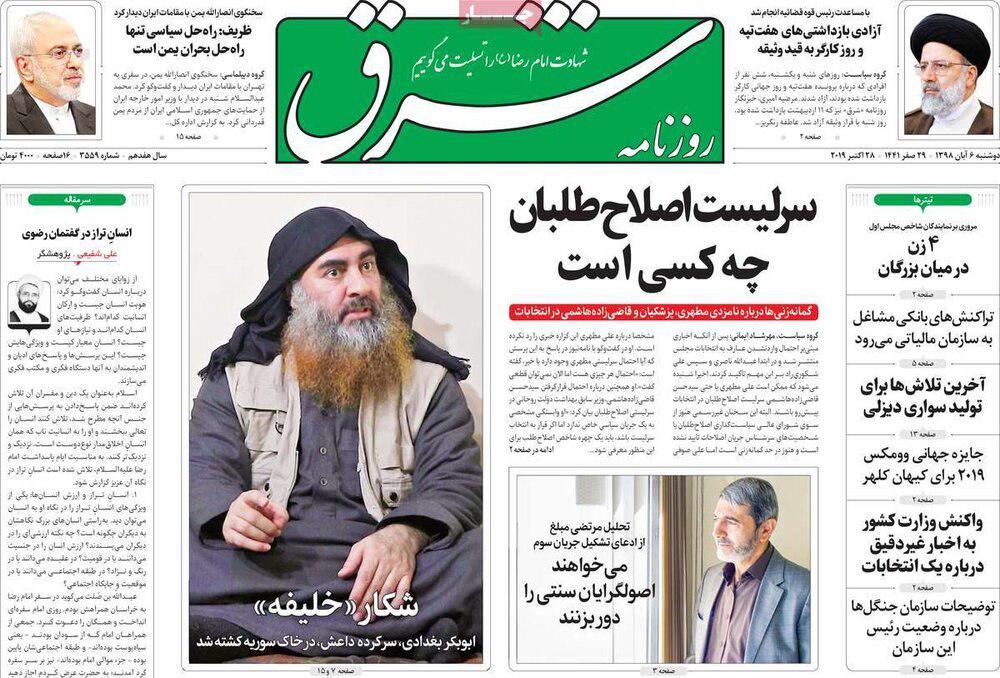
A Look at Iranian Newspaper Front Pages on October 28

A Look at Iranian Newspaper Front Pages on November 19

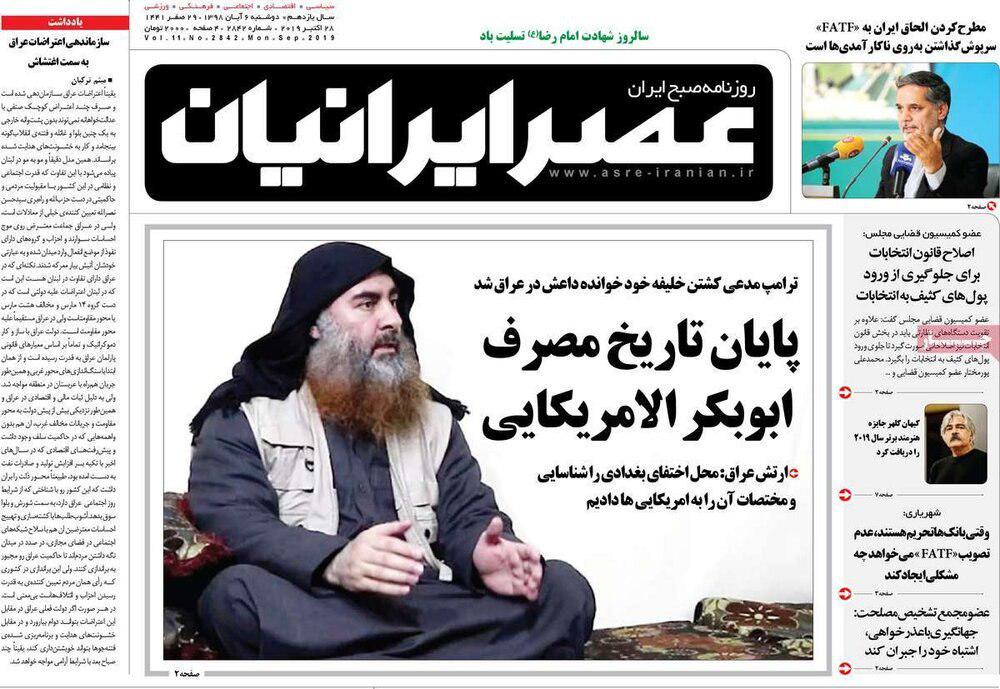
Asr-e Iranian:

1- Expiration Date of Abu Bakr al-American Arrives

2- MP Urges Revision of Election Law to Prevent Use of Dirty Money in Campaigns

A Look at Iranian Newspaper Front Pages on October 28


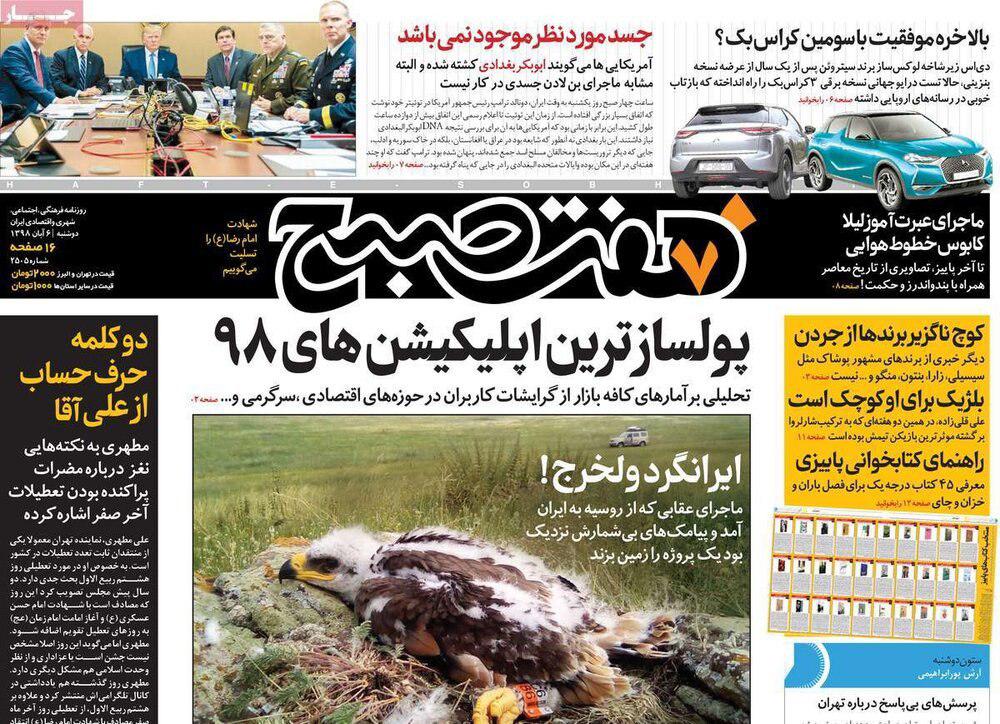
Haft-e Sobh:

1- No Corpse Available

* Americans Say Al-Baghdadi Killed, but No Body Just Like Bin Laden Case

A Look at Iranian Newspaper Front Pages on October 28


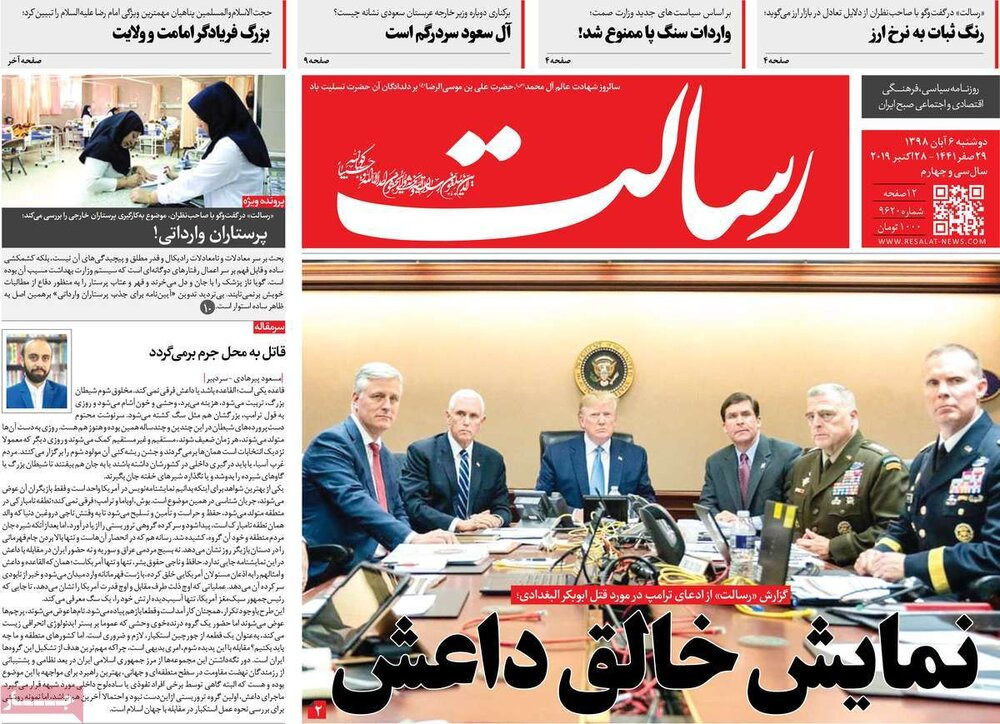
Resalat:

1- Show by ISIS Creator: Trump Claims US Has Killed al-Baghdadi

2- Criminal Returns to Crime Scene [Editorial]

* Whether It’s Al-Qaeda or ISIS, Big Satan’s Inauspicious Creature Is Punished

A Look at Iranian Newspaper Front Pages on October 28


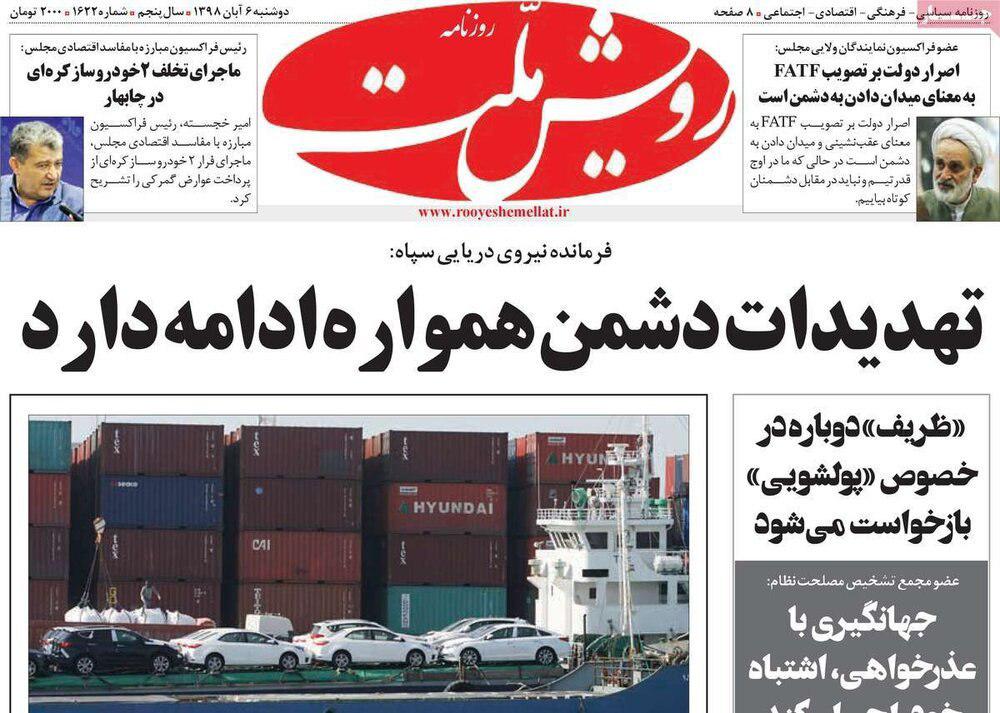
Rooyesh-e Mellat:

1- IRGC Navy Chief: Enemy’s Threats to Continue Forever

2- Government’s Insistence on FATF Ratification to Open Way for Enemy: MP

A Look at Iranian Newspaper Front Pages on October 28


Shargh:

1- Hunting the Caliph: Abu Bakr al-Baghdadi Killed in Syrian Soil

2- Zarif: Political Solution Only Way Out of Yemen Crisis

A Look at Iranian Newspaper Front Pages on October 28


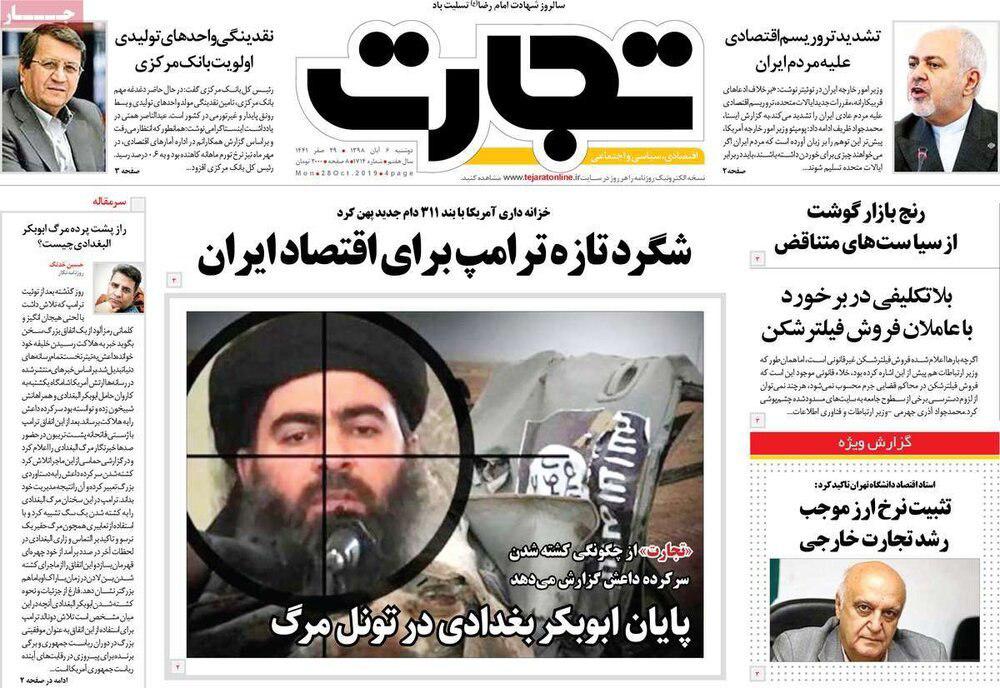
Tejarat:

1- End of Abu Bakr al-Baghdadi in Death Tunnel

2- Zarif: US’ Economic Terrorism against Iran Exacerbated by New Regulations

3- Trump’s New Trick for Iran Economy

A Look at Iranian Newspaper Front Pages on October 28

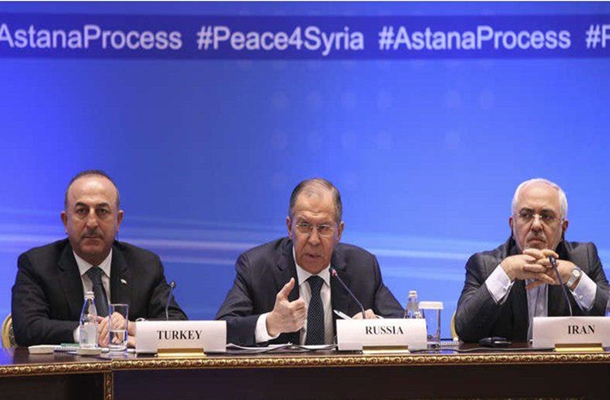
Iranian, Russian, Turkish FMs to Meet in Geneva on Syria

Iranian, Russian, Turkish FMs to Meet in Geneva on Syria

“We [Astana guarantors] will be supporting the committee’s launching event at the level of our foreign ministers in Geneva,” Turkey’s Permanent Representative to the United Nations Office at Geneva Sadik Arslan told Sputnik.

“This is a plan: they will arrive … in Geneva, and they will make their long-declared commitment and reaffirm it again to the rest of the international community,” he noted.

“We will be supporting the overall work of the committee in the time ahead of us,” Arslan said.

The first session of the 150-member SCC, which includes representatives of Syria’s government, opposition and civil society, will be held in Geneva on Wednesday.

The diplomat recalled that the SCC launch had failed in December 2018.

“Unfortunately, then it failed, I mean, that initiative. This time, of course, they are planning to come to Geneva to show their support for the Constitutional Committee, and maybe they will call for the support of the international community and all other stakeholders to do the same thing,” Arslan added.

In December 2018, the foreign ministers of Russia, Iran and Turkey held in Geneva a meeting with then-UN Special Envoy for Syria Staffan de Mistura.

The formation of the SCC was expected to be announced as a result of the meeting. However, neither the SCC composition, nor its launch were announced back then.

Iran Says Killing Al-Baghdadi No Big Deal, Won’t End ISIS

Iran Says Killing Al-Baghdadi No Big Deal, Won’t End ISIS

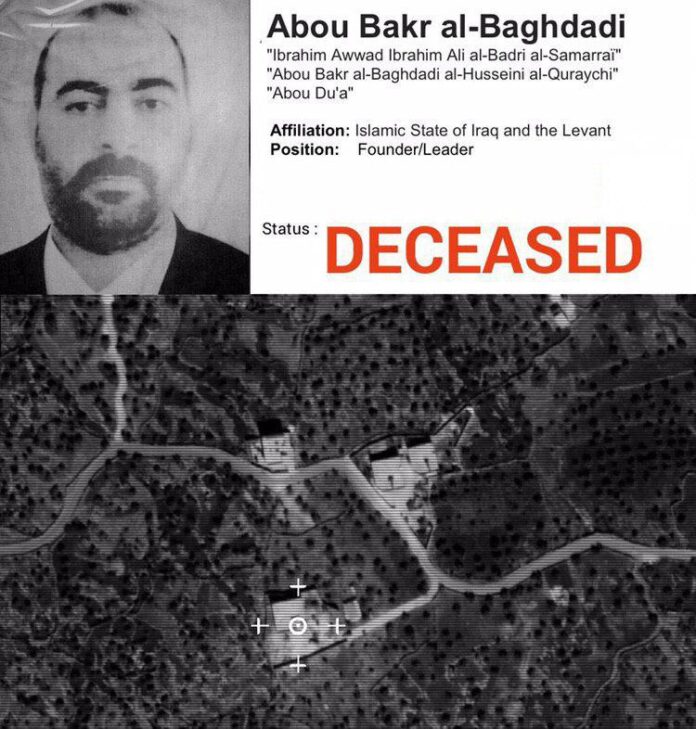
Mousavi said on Monday the ISIS lives on as an extremist ideology and is a tool in the hands of such countries as the US, which claims to have killed al-Baghdadi in an operation on Saturday night.

The spokesman noted that it was Iran and the regional countries that defeated ISIS. “In our view, the US act was not a big one, because ISIS had already been defeated by us and the countries of the region,” he added.

“Unfortunately, terrorism and sectarianism are still alive and countries such as the US are using them for their own purposes, so we do not see al-Baghdadi’s death as the end of ISIS,” he noted.

“As confessed by the US officials, terrorist groups like ISIS and figures like Abu Bakr al-Baghdadi and the likes of those who are at the forefront of terrorist groups have been created by the Americans themselves,” underlined Mousavi.

He said these groups and individuals have expiration dates for Americans and Washington eliminates them when their expiration date reaches.

Mousavi noted that remnants of ISIS could be re-organised by Americans and engage in acts of sabotage in the region.

He said the US is blowing the killing of Baghdadi out of proportion, stressing that’s an election stunt by the US president.

In the weekend, the US announced it killed the terrorists’ chief in an operation in northwestern Syria. Abu Bakr al-Baghdadi had fled to Syria following the defeat of ISIS in Iraq in 2017.

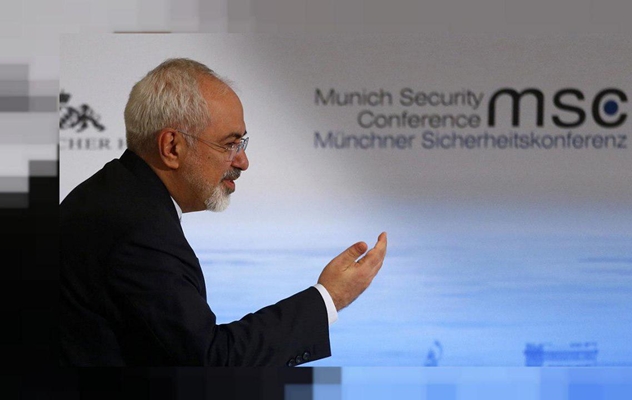
FM Zarif Due in Qatar to Attend MSC Core Group Meeting

FM Zarif Due in Qatar to Attend MSC Core Group Meeting

“The foreign minister will leave Tehran for Doha today – Monday – in order to attend a meeting of the Middle East Committee of the Munich Security Conference,” said Seyyed Abbas Mousavi.

During the visit, the Iranian top diplomat will attend and address several panels related to the conference, some of which will probably be held in Q&A format, Mousavi added.

In his speeches, Zarif will discuss the regional issues and ongoing developments in the Persian Gulf, and declare the Islamic Republic’s stances, the spokesman added.

The Munich Security Conference (MSC) is an annual conference on international security policy that has taken place in Munich, Bavaria since 1963. It is the world’s largest gathering of its kind.

In addition to the main conference, a new series of events, the MSC Core Group Meetings, were launched in November 2009 in Washington, DC. The meetings provide a select group of participants the opportunity to discuss key issues of international security policy in order to continue the work of the Security Conference and provide impulses.

The location of the Core Group Meetings always varies. The subsequent events took place in Moscow in 2010, Beijing in 2011, Doha and Washington DC in 2013, New Delhi in 2014, Tehran in 2015, Addis Ababa in 2016, Washington DC in 2017, and Minsk in 2018.

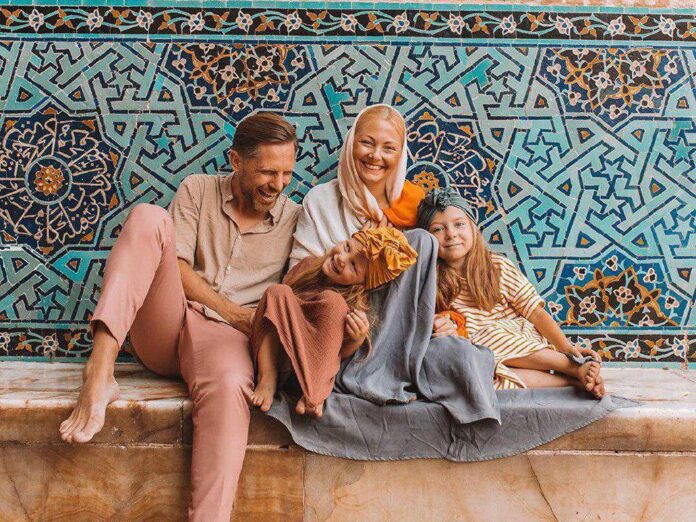
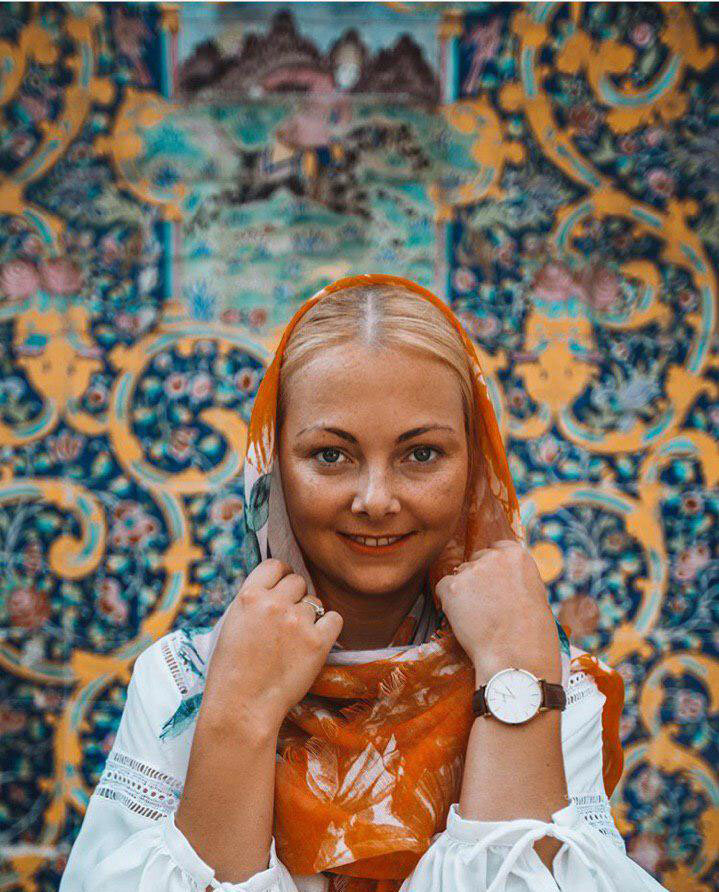
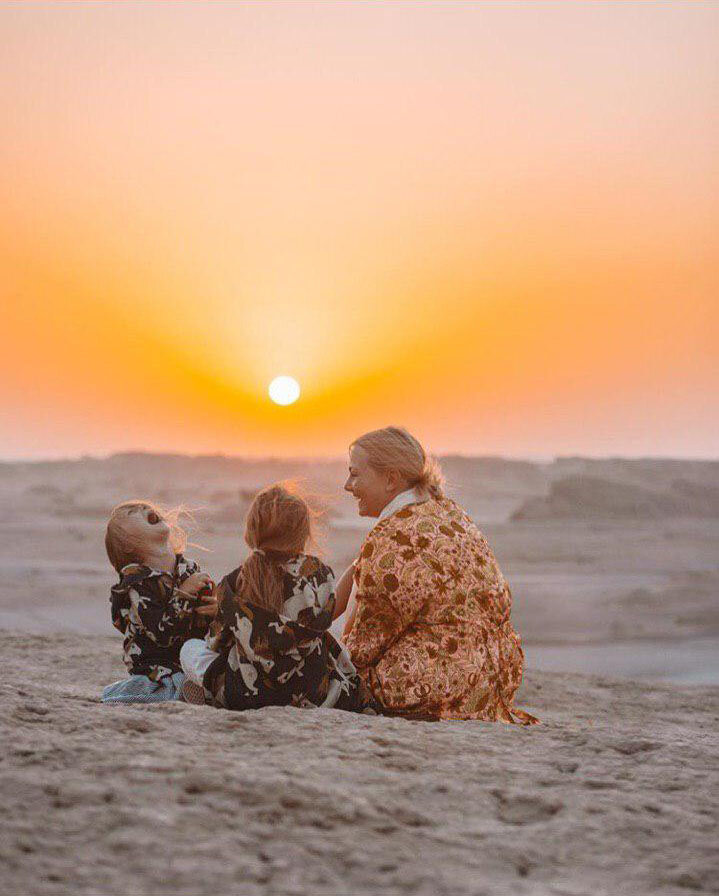
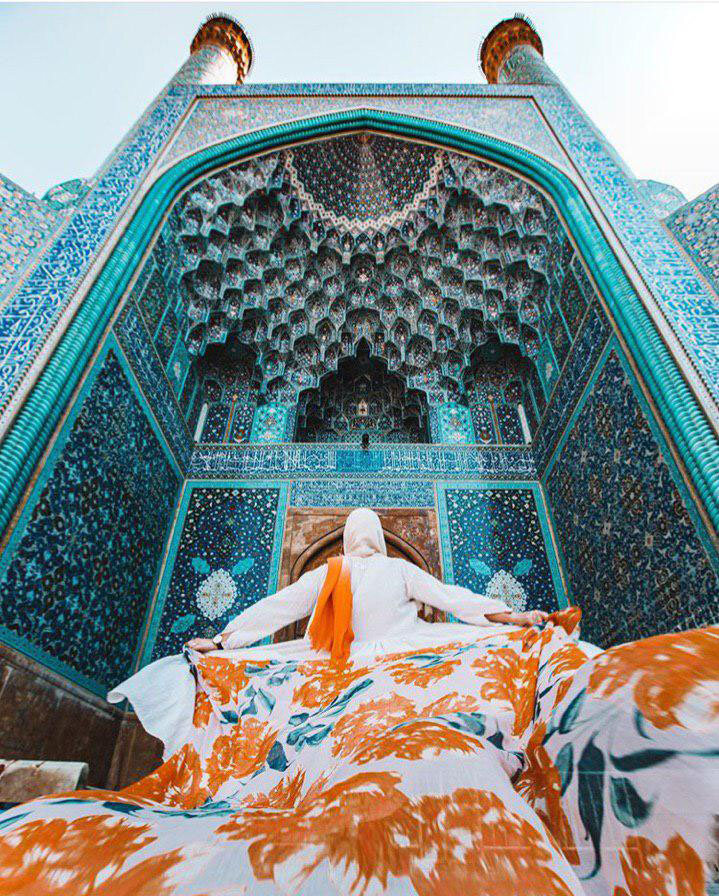
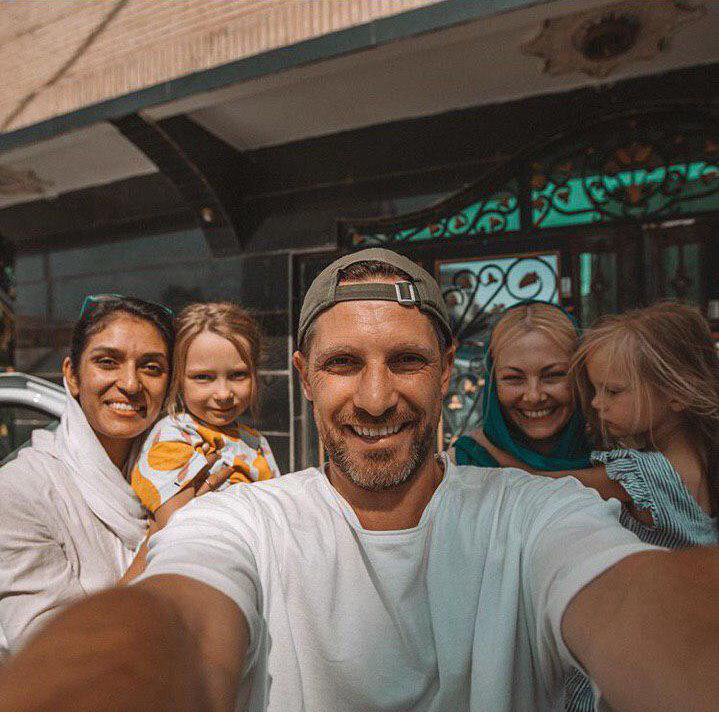
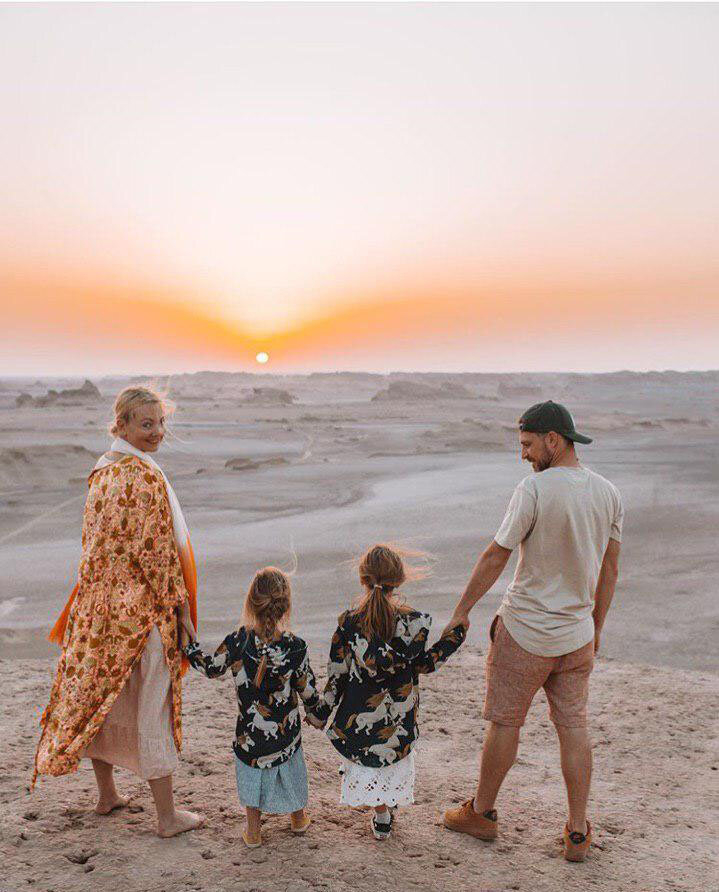
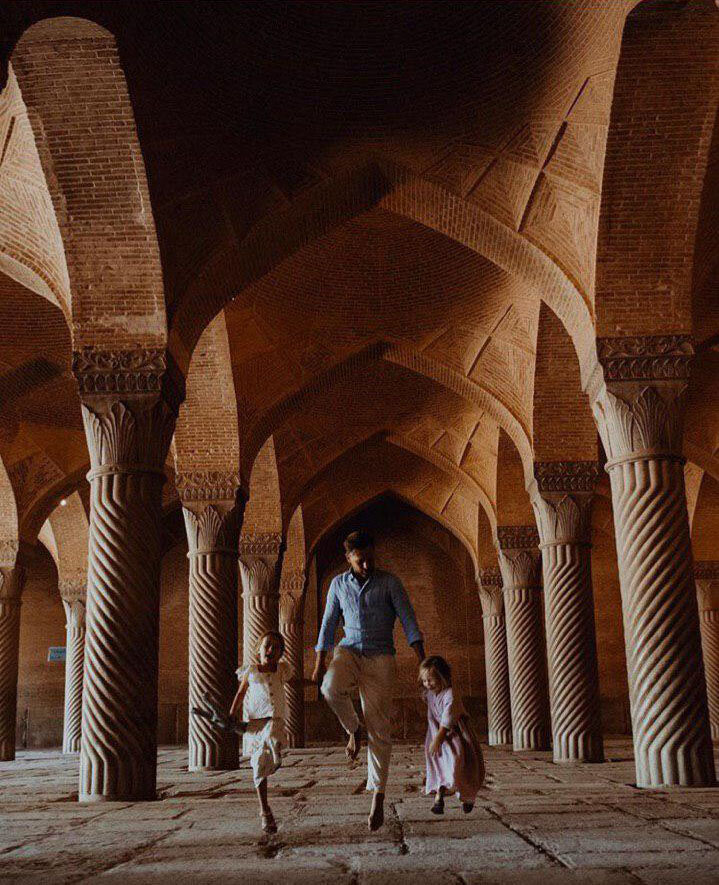
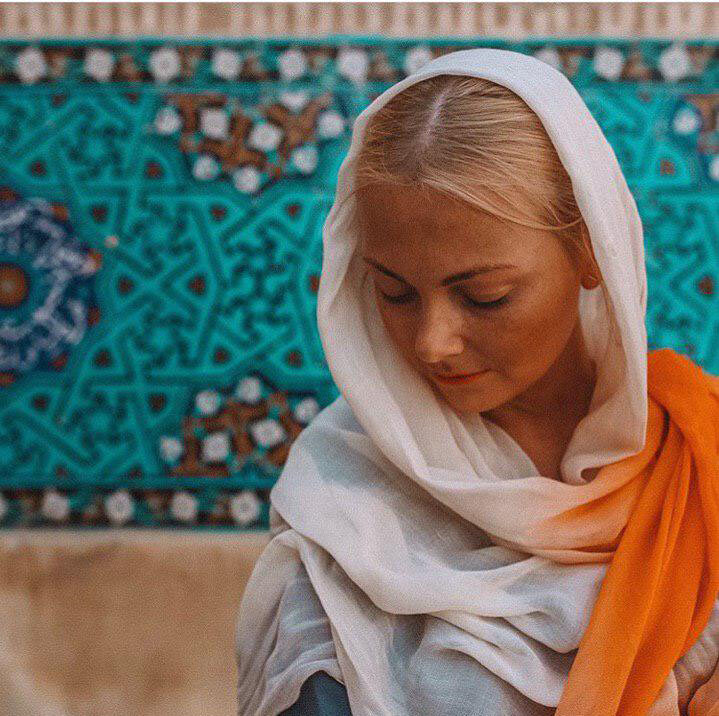
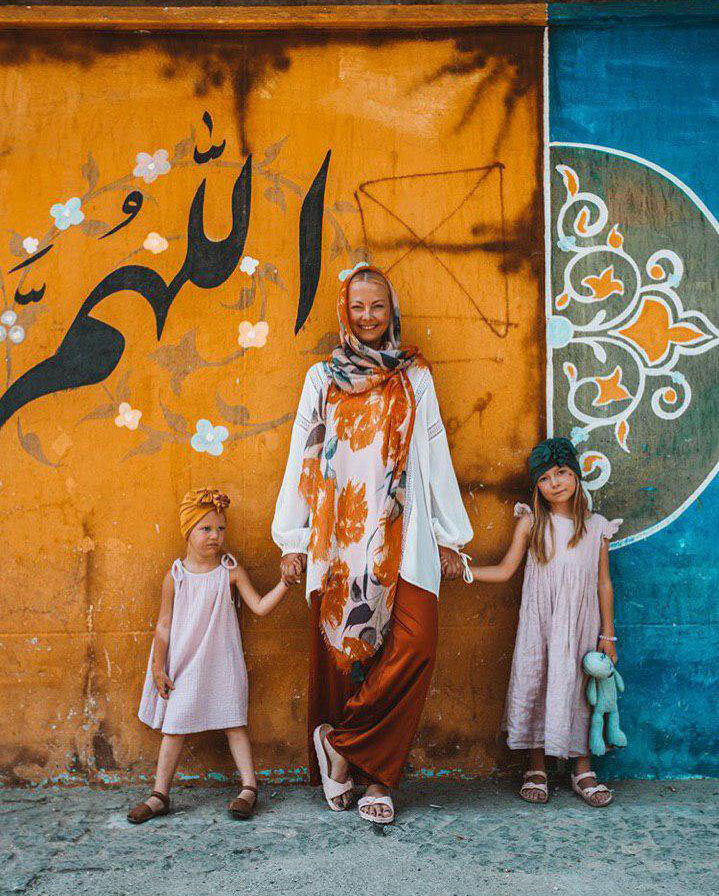
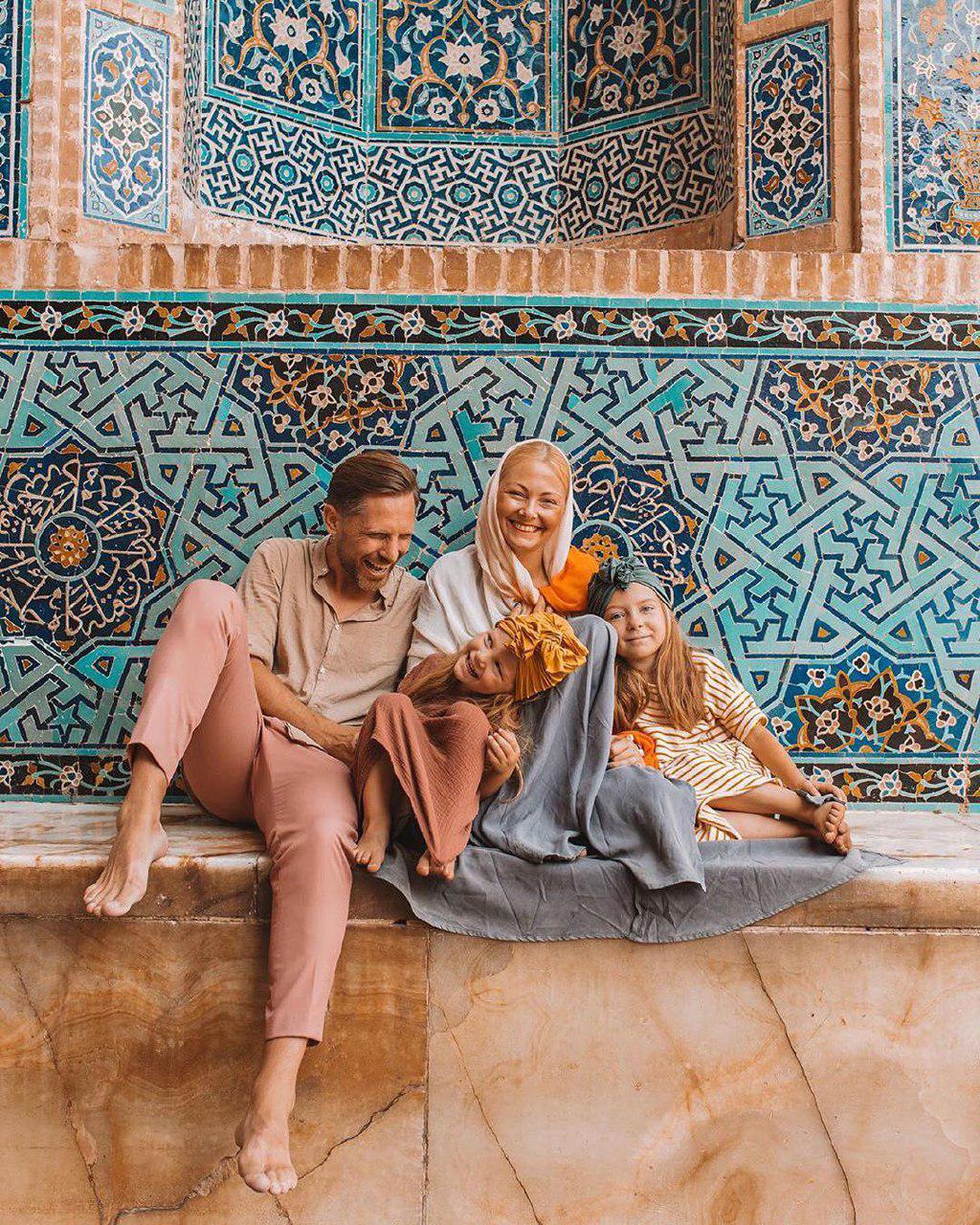
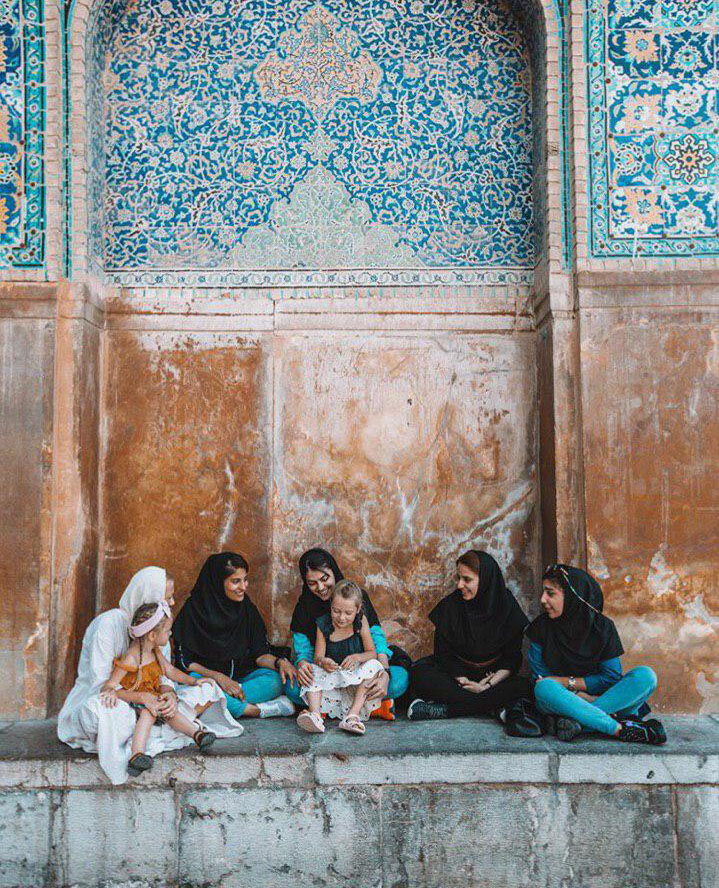
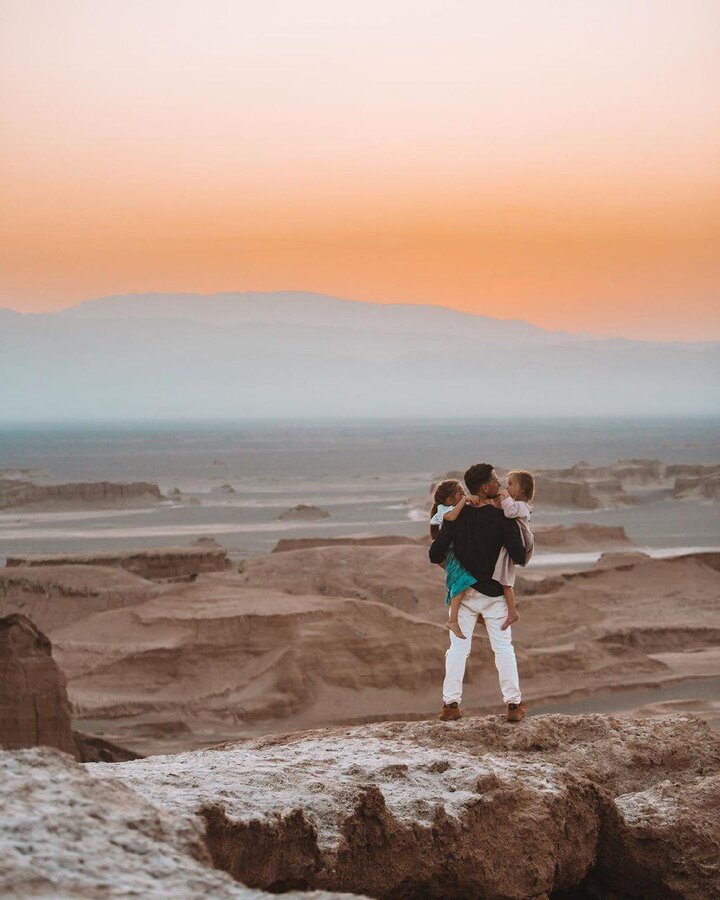
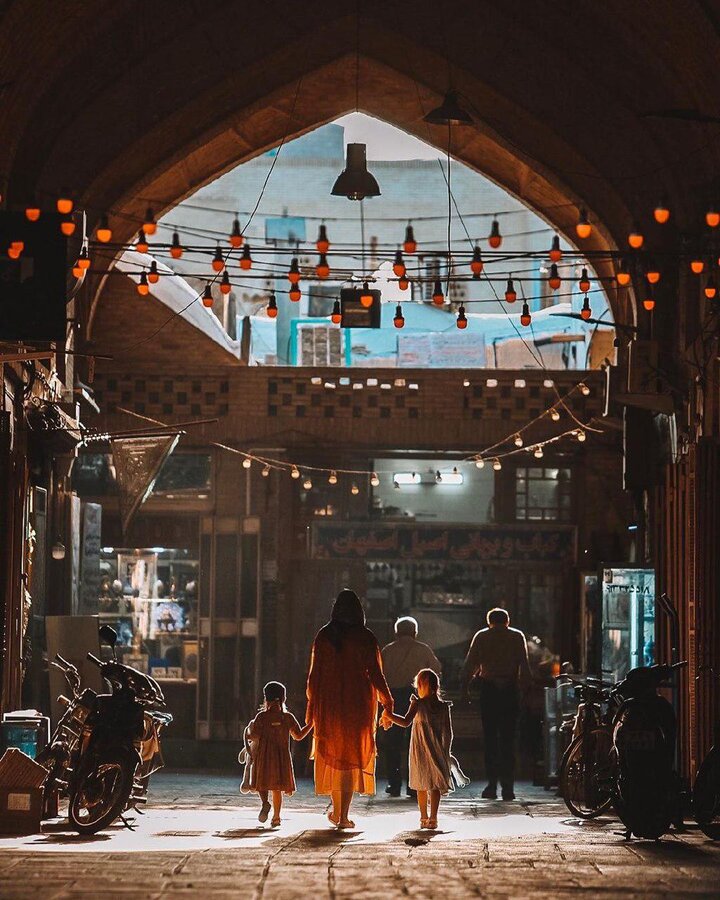
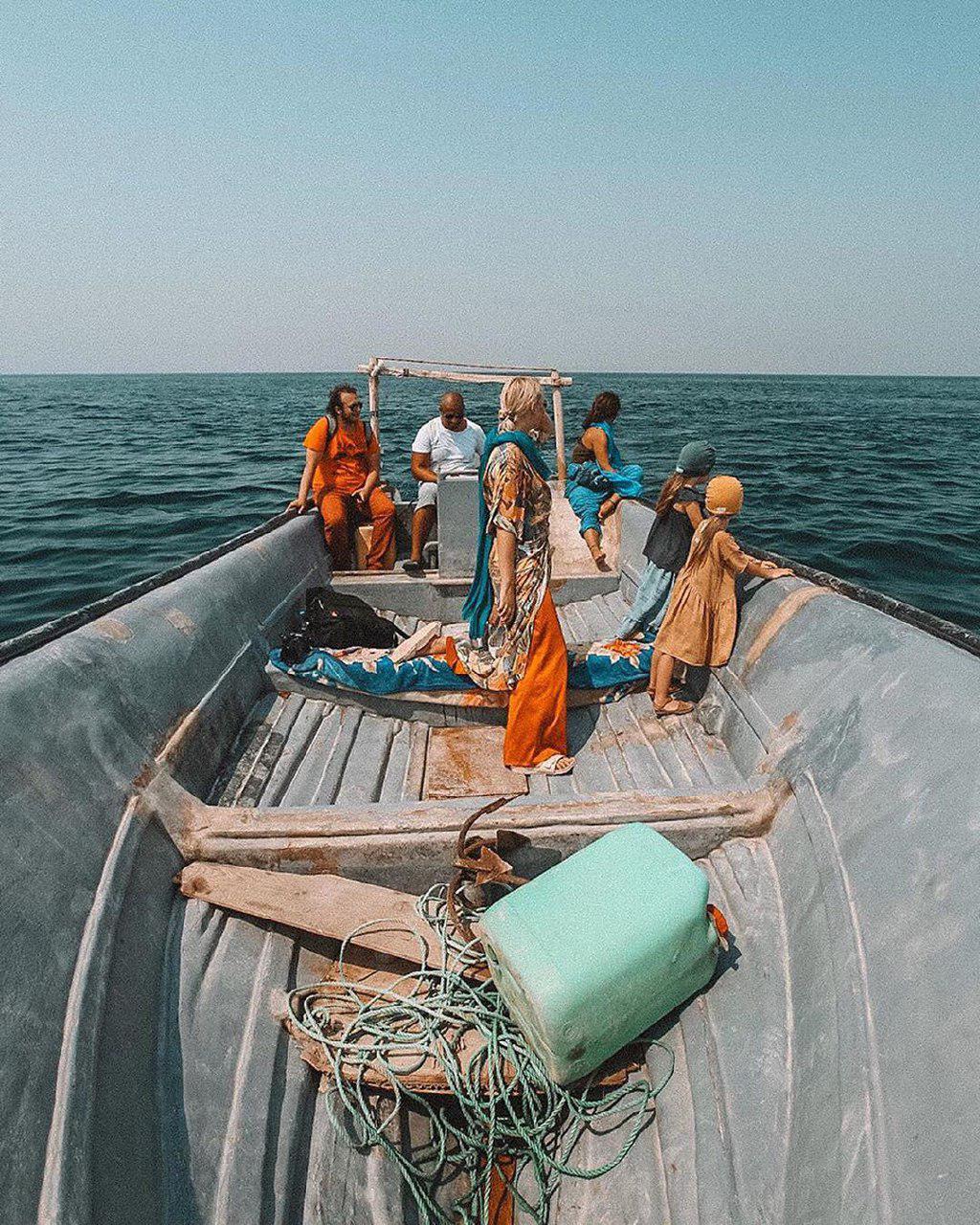
Polish Family Share Their Joy of Travelling to Iran

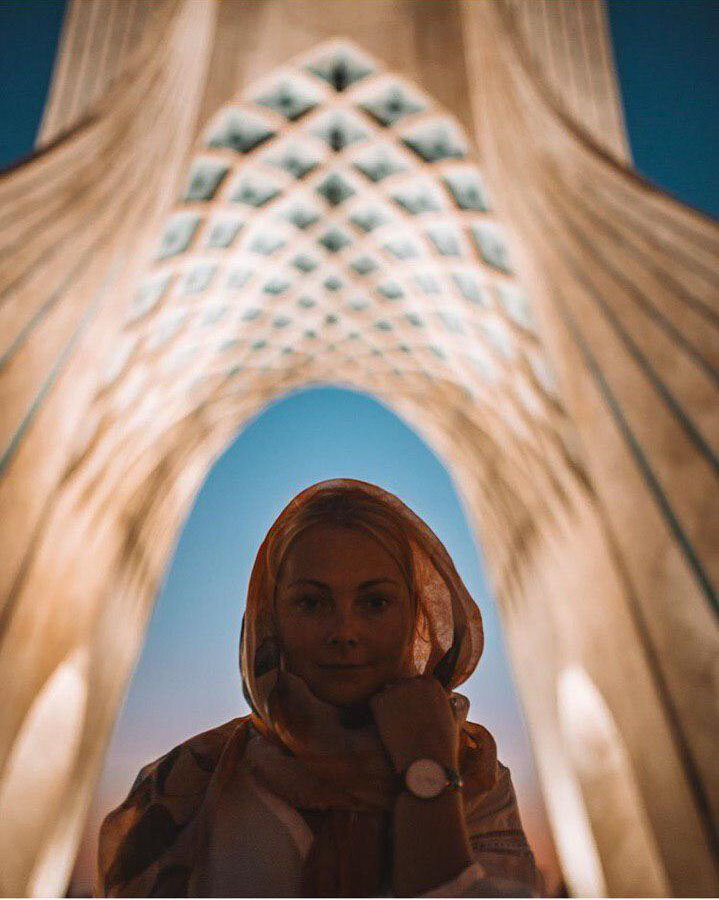
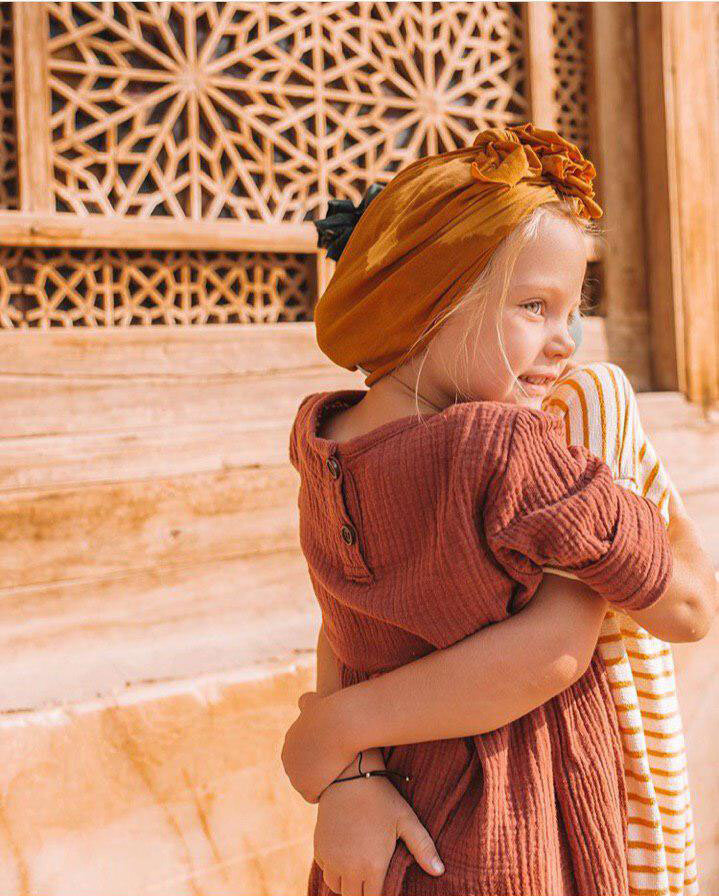
Carolina and Jack along with their two six and three-year-old daughters, have travelled to Iran despite all the Western media propaganda against the country.

Following the visit, the family has published special photos of themselves in the historical and natural attractions of Iran, some of which follow:

The Iceman Cometh; What’s Putin Doing in Mideast? (Part II)

The Iceman Cometh; What’s Putin Doing in Mideast? (Part II)
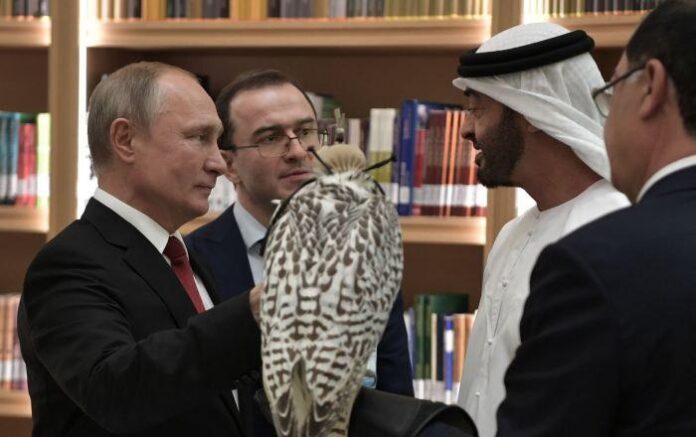
Russian President Vladimir Putin gifts Crown Prince of Abu Dhabi Mohammed bin Zayed Al Nahyan a gyrfalcon during a visit to the UAE / Photo by Alexey Nikolsky, Sputnik

Dr Bahram Amir-Ahmadian, a Eurasia expert and professor of regional studies has reviewed the recent visit of the Russian president to the Middle East and its possible implications, in an interview with Khabar Online.

Amir-Ahmadian is a professor of political geography at University of Tehran. He is an expert in Eurasian, Caucasian, and CIS issues.

The first part of the interview was earlier published on the Iran Front Page. Here’s the second and final part:

Q: What do the Russians want in term of security?

A: Russia needed to have a strong presence in two places:  One at the Sevastopol port on the Crimean Peninsula, which was the place to keep the Black Sea Fleet’s nuclear submarine. Russia leased the area from Ukraine, where Ukraine was at odds with Russia. In the meantime, hard power was used instead of soft power, and Russia seized the area. The next location was in the Mediterranean Sea, near the Suez Canal, the crossing point of the Russian commercial fleet, i.e. the Port of Tartus. Russia has been using this port since the Soviet times and must preserve it. So, in addition to protecting the port, Russia has also sought to support the Syrian government. Russia’s intimacy with the Middle East also goes back to the Soviet era that Moscow is keen to revive. So we see it forms an economic union or a customs union. They are even looking for presence in the Indian Ocean. It should be noted that Russia is not powerful economically, politically, and culturally, like the Soviet era.

Russia has tried to maintain both the port and the Syrian government. Russia’s propinquity to the Middle East countries goes back to Soviet era and many Russians like to revive that era. For example, a military, economic union, has lead to Shanghai Cooperation Organisation, which is a collective security structure.

The CIS is consisted of 12 countries. Of course, they are 11 now. Ukraine has left, and Georgia is separated, but their performance is not like the Soviet Union era. Some countries, such as Kazakhstan, still have their own structure as there is no alternative for them. Russia’s presence in the Middle East is just to quench the Soviet ambition. Russia does not have the status of a cultural, political and economic power to be considered a great power. It means, it cannot replace the United States. It cannot replace the US because there is no point in it to replace America.

Q: You mentioned that Russia does not benefit greatly from the trip; given your own assertion, so can we say the reasons for his trip were security issues? Or other issues like resolving the Yemen crisis and holding negotiations? As we know, Russia had called for political dialogue to resolve the Yemen crisis. Lavrov, on the other hand, upon arrival in Saudi Arabia, said that we do not know who was behind the attack on Aramco.

A: Since the Russian occupation of Afghanistan, they have always stated that they can resolve the Afghanistan issue, but in practice we have seen nothing. As for their presence in the Persian Gulf, they will have communication problems because the Russian language is very difficult. The second language of the Arab countries is English and Moscow will face challenges. Even the Central Asia and the Caucasus states are undergoing changes to replace English. Russia has limited soft power, and most importantly they are viewed as violent and unreliable party. For example look at Egypt. Egypt in the Arab world has suffered a major blow from the Soviet Union, though some say the Soviet Union and Russia are two separate entities. But all former Soviet officials were Russians. The same culture and the same people are still at work. The same Putin and Lavrov had responsibilities during the Soviet Union! They only reinforce their sense of ambition to tell their nation “don’t worry! We are spending militarily!”

I have seen Russia from Siberia to the Ural and Volga, the Caucasus and so on. In the Asian regions of Russia there is a lot of construction work to do. They are an underdeveloped community with a traditional context. They are not like Moscow at all. Our problem about Russia is that we think it’s European. Russia is not even industrial. If it was, Why Russian brands are not known in other countries? What goods are made in Russia that are vital except weapons and nuclear power? An industrial economy can develop. Russia is just a hard military power.

Q: So, what is the purpose of Russia’s moves in the Middle East? What does she want to do? Export oil? Well that’s what the Arabs have! Again I get back to the previous question regarding security. After a recent visit to Russia, the Iranian delegation talked of the possibility of a joint war game in the Persian Gulf. Can it be said that Putin is only looking for security issues, given that you referred to the fact that they are only looking for their past glory.

A: For Russia, Iran does not have the position that we define for ourselves in its foreign policy. We are a country with independent foreign policy. We are not dependent on foreign policy. We make our own decisions. Many in Iran say Moscow is Tehran’s strategic partner, but the Russians deny it. Unfortunately, in Iran, the concept of strategic partner is not interpreted well. However, the important point is that Iran can turn into an independent geopolitical state, relying on domestic forces and national power. It has all the components of a regional power. The preconditions of tuning into a regional geopolitical state are efforts to promote its industrial development. The 20-Year National Vision of the Islamic Republic of Iran states that in 2025, the Islamic Republic is one of the countries with the most engagement with the international community.

I believe that Iran’s soft power is much more than Russia’s. Russia’s soft power alongside its hard power makes sense, but Iran’s soft power has other characteristics. Iran is far superior than the countries around us, but we need more efforts. We cannot say that Russia’s presence in the Middle East has been effective unless it can be felt by everyone. At the same time, if a country wants to be strong, it must have a brand as well as a character. Russia is not a country to trust. Everyone is witnessing that Russia has seized Crimea, Abkhazia and Ossetia and resorted to force.

The problem with Iran-Russia relations is that the Russians are very violent and it cannot be identified by their outer shell. Russian culture also says that laughter is the job of the crazy. Another point is that the Russians have invaded Iran and seized our land. In 1907 the Russians and British divided Iran.

Q: For example, the plan to dismantle the Ottoman Empire and its fall was designed by the British, but the Ottoman Turks also do not trust the Russians.

A: That’s because the Russians fought the Ottomans. The Crimean Peninsula was part of the Ottoman Empire and the Russians seized it from the Ottomans. The Russians’ mental and physical thirst is endless and this is part of their culture that needs to be contained. We should not forget the S-300 issue. When the Russian generals were setting time for the US invasion of Iran, and when it came to delivering the S 300, they were talking of sanctions! Fortunately, our military forces in Iran adjusted the situation. This is one of the issues that shows the Russians cannot be trusted. Russia will never give priority to the interests of Iran instead of its own interests. Iran should never put aside its interests for the sake of the interests of another country.

To conclude, the Russians in the Persian Gulf cannot do anything because of the difference in economic structure as their economies are not similar to those of the Arab countries. In such circumstances, the Organisation for Economic Co-operation will not be formed. An entity like ECO can hold up to 10% of trade, which in the EU is over 50%. So what seems necessary is to give a clear picture of Russia. It is seeking its own interests, and Iran must be pursuing its own interests. Of course, wherever it is in our interest, we must work with the Russians and most importantly our private sector must enter.

Q: Finally, will Putin’s Russia fall into the hands of another man? If that happened, how would be the Iran-Russia ties like?

A: It is not likely that a powerful person like Putin would exist in Russia.  As long as this vacuum exists, Putin will remain President. One of the issues regarding Russia’s soft power is that it cannot accept anyone else. There is a view in the West that the second person should be more powerful than the chief himself. But in the east they believe that the dumbest person should be the deputy so as not to stage coup against the leader. Putin is the lifelong president.

Researchers Develop Nano-Paste to Stop Bleeding

Researchers Develop Nano-Paste to Stop Bleeding

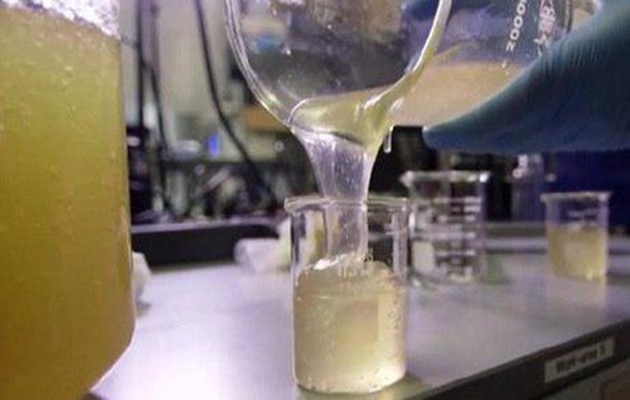
Thanks to its antimicrobial activity, this product can prevent bleeding with high efficiency and stop bleeding in less than a minute.

The company has produced the paste using nano-hydroxyapatite. “One of the benefits of this product is the use of nanostructured carbonate nano-hydroxyapatite,” said Maliheh Baqeri, a researcher at the project, adding that “the structure of the paste is based on nanohydroxyapatite and bioglass.”

“Its carbonation is very similar to the bony and dental structures of the body and is therefore very biocompatible. Also, the nanopores present in this product increase its specific surface area, which itself increases the scope of application of this material.

For a brief review of Iran’s achievements in various fields of science and technology, check the book “Science and Technology in Iran: A Brief Review – 2019

“This product is licensed by the Food and Drug Organisation and is currently being purchased by a company to produce toothpaste,” she said, noting that the produced carbonate nano-hydroxyapatite powder produced has a variety of uses.

“New wound dressings, bleeding stoppers and nano-silver based disinfectants are among our knowledge-based products, and we are currently producing 80 knowledge-based products that are exported to 15 European countries,” she concluded.

By Killing Al-Baghdadi, US Killed Its Own Creature: Iran

By Killing Al-Baghdadi, US Killed Its Own Creature: Iran

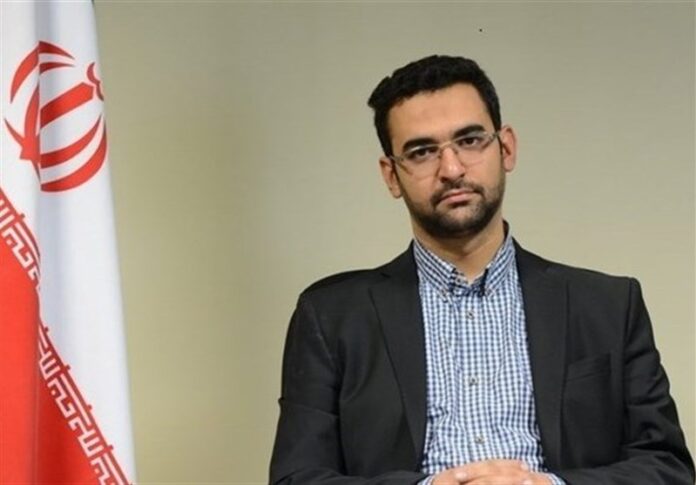
“Not a big deal. You just killed your creature,” Azari Jahromi tweeted on Sunday.

Earlier in the day, US President Donald Trump said al-Baghdadi had blown himself up, dying “like a dog,” and “like a coward” after American forces trapped him inside a dead-end tunnel.

He said the Daesh ringleader detonated his suicide vest while “crying and whimpering” during an overnight raid by American special ops forces in Syria.

An official at the Russian Ministry of Defense said following Trump’s announcement that Moscow had no reliable information on the US operation that killed al-Baghdadi

“The Russian Ministry of Defense does not have reliable information on the US servicemen conducting in the Turkish-controlled part of the de-escalation zone of Idlib an operation on yet another ‘elimination’ of the former IS leader Abu Bakr al-Baghdadi,” Major-General Igor Konashenkov was quoted by RIA news agency as saying.

Iranian Knowledge-Based Firms Combatting Sanctions: Minister

Iranian Knowledge-Based Firms Combatting Sanctions Minister

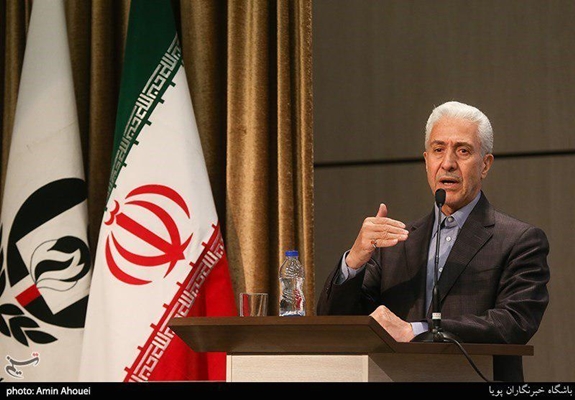
In an address to an academic meeting in the city of Hamedan, Gholami said the Iranian university professors and students have established scientific and technological groups as well as knowledge-based companies to help the country deal with the sanctions.

The minister said the local knowledge-based companies have signed contracts to make up for the shortcomings caused by the foreign sanctions, saying they have been manufacturing various industrial parts and developing the essential software.

Highlighting Iran’s advances in the industrial sector, Gholami said 43 science and technology parks and 197 development centres are operating across the country under the aegis of the Science Ministry.

For a brief review of Iran’s achievements in various fields of science and technology, check the book “Science and Technology in Iran: A Brief Review – 2019

Iran’s success to employ science and technology for addressing its problems has been so considerable that Iran has been ranked first among the Muslim nations in the region, the minister added.

In comments in August, Iranian Vice President for Science and Technology Sorena Sattari said there were around 4,500 knowledge-based companies in Iran which have created 300,000 direct jobs alone.

He had already hailed the knowledge-based companies as the strong arm of the economy that contribute to Iran’s sustainable development.