Tuesday, December 23, 2025
Home Blog Page 3075

Iran Releases Two Australians, Will Free Russian Journo Soon

The Australian foreign affairs minister, Marise Payne, told reporters, “It is with some enormous relief that I announce that they have been released and returned.”

Payne said the Australian government held “very sensitive” negotiations with Iran over King and Firkin’s release and helped ensure they were treated appropriately while in detention.

“We have done that discretely, and I would note each case of an Australian detained overseas is different and requires a specific and a particular response,” she said.

“For Jolie and for Mark, the ordeal they have been through is now over, they are being reunited with their loved ones.”

She said all charges against King and Firkin had been dropped.

Payne said King and Firkin were in good health and good spirits, and had requested privacy.

In a statement issued on Saturday afternoon they said, “We are extremely happy and relieved to be safely back in Australia with those we love.

King and Firkin left their home in Perth, Western Australia, in 2017, documenting their travels on a blog called The Way Overland. They were arrested three months ago near the Iranian capital for flying a drone – allegedly to shoot pictures for the travel blog – near military installations in Jajrood in Tehran province. They were then detained and jailed in Evin prison.

Drone use with a permit is allowed in Iran, but there are strict conditions. People must not fly drones over people or large crowds, over the city of Tehran, or over sensitive areas. Flying a drone without a permit in Iran is punishable by six months in prison followed by immediate deportation.

The release came a week after the US released Iranian prisoner Negar Ghodskani, who had served 27 months in prison in Australia before being extradited to the US.

Iran to Release Russian Journalist Soon

Iran has also announced that Russian female journalist Yulia Yuzik, detained in Tehran allegedly on charge of spying for Israel, would soon be released.

“Russian Deputy Foreign Minister Igor Morgulov summoned Iranian Ambassador to Moscow Sanaei to the Russian Foreign Ministry on October 4 to demand clarification on the circumstances for the detention of Russian citizen Yuzik in Tehran. Sanaei confirmed that Yuzik had been detained by law enforcement agencies to give explanations on a number of issues, and will soon be released,” the Russian Foreign Ministry said.

Iran Set to Boost Tourism Ties with Tajikistan

“During his trip to Tajikistan, our country’s president underlined that we should expand our relations with this friendly and brotherly country and we will try to make it happen,” said Ali-Asghar Mounesan on the fringes of a meeting of tourism ministers of the Economic Cooperation Organization (ECO) member states in the Tajik city of Khujand.

“In a meeting with Tajikistan’s foreign minister as head of the country’s Tourism Organization, we announced our readiness to help on all fronts. We stand ready to help Tajikistan in all areas and work together,” said the minister.

“Iranian companies have good experience in economic and development projects and have also implemented several projects in Tajikistan such as the construction of bridges, power plants, dams, etc.,” he said.

“Also in the tourism sector which is the scope of our responsibility, we are ready and will help in all areas in order to further upgrade the level of relations between the two countries,” he added.

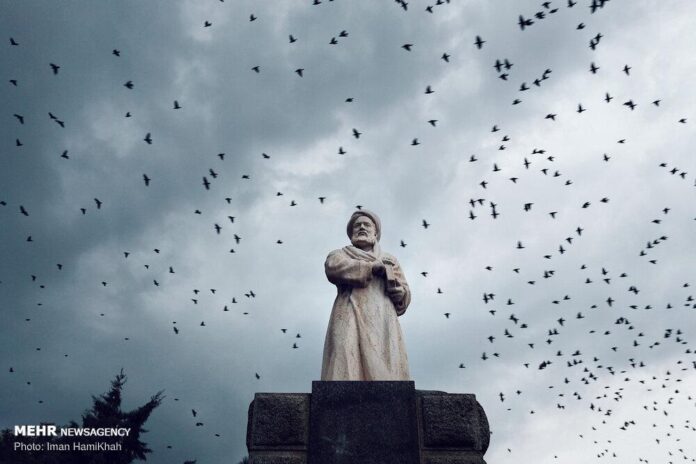
Rumi Remains Point of Contention after 800 Years

“Each befriended me on his own surmise, none sought my secrets, inner-wise,” says Rumi.

September 30 marks the national day to commemorate Rumi. His works of poetry and prose have been around for around 800 years, with a whole variety of viewpoints about the characters and concepts in his literary works.

Following reports of Iranian filmmaker Hassan Fathi’s bid to make a film about him, two top Shiite clerics said it would be religiously forbidden to even make a film about the story of his life because such a movie would promote Sufism, an ideology which they believe misleads Shiite people.

Some others also accuse Rumi and prominent contemporary mystic Shams of Tabriz of being male lovers, despite the fact that homosexuality is haram in Islam.

The following are some of the mixed viewpoints about the renowned Iranian poet and his magnum opus Manavi.

You Meet God in Masnavi

A great Iranian scholar says thousands of points are included in verses of worship in Masnavi, and urges people to read them.

“Rumi puts you in a circle where God also exists,” says Hossein Elahi Qomshei.

“Rumi takes to toward Paradise and informs you of the existence of Hell before the Judgement Day and shows you the flames of fire and wrath,” he adds.

“If you get familiar with Rumi, you will see the Judgement Day,” he says.

Rumi No Commodity to Be Seized

Mohammad-Ali Movahed, who has published a corrected version of Masnavi, believes Rumi’s verses emit love and hope which are much in demand today when morality is hard to find. He says the power and attraction of Rumi’s words are due to the miraculous combination of poetry, music and story-telling.

“Rumi is no commodity to be seized,” he says.

“Rumi is beyond such worlds. He is as related to us as he is to the whole world,” he adds.

“The world is infatuated with Rumi whose poems are in Persian, whose tomb lies in Konya, and who is also known as Balkhi Rumi,” he says.

Rumi Not Infallible

Late renowned Iranian scholar Mohammad Taghi Jafari says Rumi never claimed to be the Almighty or the Prophet; rather, on many occasions in Masnavi, he has confessed to paving his own way.

“So, one cannot say he was infallible,” he says.

The scholar says humans are liable to errors, and hence, Rumi must not be regarded as an infallible individual.

Rumi: Pure Islam, Divine Understanding

Leader of Iran’s Islamic Revolution Ayatollah Seyyed Ali Khamenei, himself a great fond of poetry, says Rumi was all mysticism, reality, pure Islam and divine understanding

Rumi Is No Mentor

Iranian philosopher and intellectual Mostafa Malekian says one should look at Rumi as a teacher, not a mentor.

“If we look at him as a mentor, we must listen to everything he says. But in fact, we should look at him as a teacher and see which of his thoughts and ideologies are useful for us and learn the same,” he says.

‘No Iranian City Will Have Problem in Access to Water in Two Years’

Reza Ardakanian said we strive to meet the financial and non-financial needs for this project.

“We at the ministry of energy are looking forward to launching a major water and electricity project every week in the second half of this year, which will begin as of next week,” he said.

The minister of energy reiterated that more than 220 large-scale projects of urban water supply, sewage, rural water, power plants including thermal and renewable energy and other projects nationwide will be put into operation and people would withstand how we made good use of the sanctions based on our domestic capabilities.

“Last summer, we were able to supply 150,000 megawatts more energy than the same period a year ago, and in a year named as the ‘boom in production’, two of the most important infrastructural products, i.e. water and energy, play an important role in the country’s development,” added Ardakanian.

Touching upon the importance of water management he said water is not less important than electricity, noting that the energy ministry plans to institutionalise the issue of proper consumption as a moral and cultural custom in the society. He mentioned that the role of media and NGOs is very crucial in this regard.

“The sustainability of development in our country and the resilience of our society depend more on ethical commitment, and the more ethical we are, the more resilient and developed we can be,” he continued.

Iran Raps France’s ‘Meddlesome’ Remarks on Iranian National

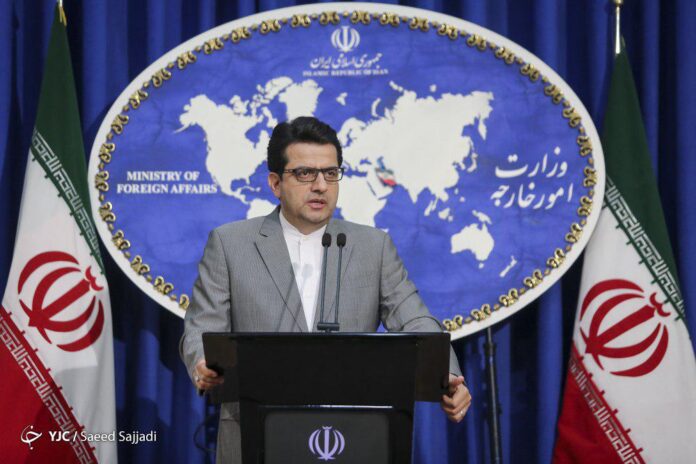
“The dual nationality of Iranian citizens is not recognized by the Islamic Republic of Iran’s national law; therefore, Ms. Adelkhah is regarded an Iranian national,” Mousavi said in a Friday statement.

“As an Iranian, she enjoys all recognized citizen rights for Iranian nationals,” he added.

The spokesman said the Iranian Judiciary is carefully investigating the case of Ms. Adelkhah within the framework of Iran’s fair trial law, and the French Foreign Ministry’s interference in the case of Iranian nationals has no justification.

“The move not only fails to help the resolution of the issue, but also would further complicate the trial procedure,” he added.

Mousavi said the move by the French government is considered as interference in the internal affairs of Iran and is unacceptable.

His comments came after French Foreign ministry spokeswoman Agnes von der Muhll called for the release of Adelkhah, who also holds French nationality.

“It is vital and urgent for the Iranian authorities to be transparent in this case as well as for all cases of foreign nationals arrested in Iran”, von der Muhll told reporters on Thursday in a daily online briefing.

“France has repeatedly demanded consolatory access to Ms. Adelkhah and her release from prison. But Iranian officials reject this request based on her Iranian nationality,” she noted.

“Her family has been able to meet her a few times,” the French foreign ministry spokeswoman added.

Adelkhah, a 60-year-old anthropologist and director of research at Sciences Po’s Centre for International Studies (CERI) in Paris, was reportedly detained in June on charge of espionage.

Tehran to Sue US at ICJ for Denying Visa to Iranian Staff

Gholam-Hossein Dehqani said the Islamic Republic will insist on the issue, but other countries, including Cuba and Russia, also have problems that were raised at United Nations Committee on Relations with the Host Country.

“Iran’s diplomatic missions to the United Nations have been discriminated against by the host government for the past several decades, and their movement was limited to about 25 miles from central Manhattan.”

Over the past six months, the current US administration has reduced the Iranian UN staff’s limit to three miles.

Iranian diplomats have been severely restricted from access to things such as physicians, universities or other required things.

“We have asked for the removal of the restrictions … but that has not been accepted,” added Dehqani. 

The US government has imposed travel restrictions on Iranian officials, including Foreign Minister Mohammad Javad Zarif. The restrictions drew widespread criticism during the recent visit of the Iranian delegation to New York to take part at the 74th annual meeting of the UN General Assembly.

The bans stand in stark contradiction to all international rules and serve as an abuse of the privilege to host the UN headquarters.

Based on an agreement signed in 1947 between the US and the United Nations, the former has been committed to issuing visa for all diplomats affiliated with the UN. The agreement explicitly states that there must be no restriction for the diplomats.

Iran’s Reaction to Scattered Unrest in Iraqi Cities

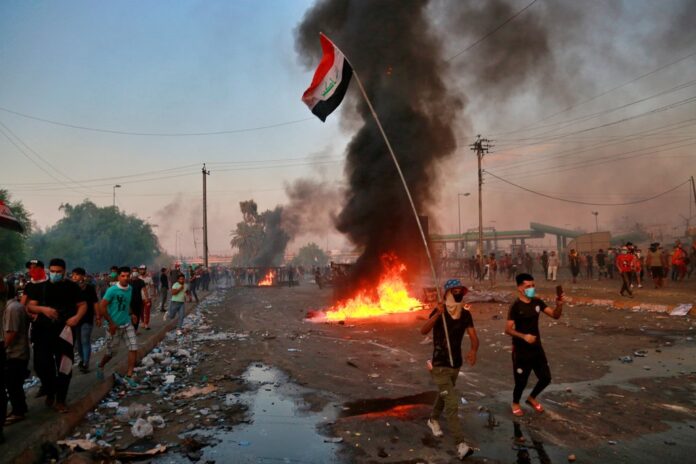
“Expressing regret over the scattered unrest in some cities of Iraq, the Ministry of Foreign Affairs of the Islamic Republic of Iran is confident that the Iraqi government and nation will work with all groups, parties and personalities, especially the grand Marja’s and other religious authorities and political leaders to calm the current tense situation,” the Thursday statement read.

“The Ministry of Foreign Affairs is confident that the Iraqi nation and government will not allow the continuation of certain moves that are to the detriment of the Iraqi people and that let the foreigners take advantage of the situation,” it added.

“Stressing the importance of the great march of Arba’een and the necessity of holding this magnificent congregation, the Foreign Ministry calls on the Iranian faithful people and the Ahl al-Bayt (PBUH) lovers to postpone their visit to Iraq until calm is restored to the country, and to pay close attention to the warnings of political and security officials,” the statement said.

Some protesters and one policeman have been reportedly killed in Iraq’s southern city of Nasiriya and the capital of Baghdad over two days of unrest.

The holy cities of Kabala and Najaf, where the annual religious gathering of Arba’een is bring held, were the scene of demonstrations as well.

It is said that people are angry about unemployment, corruption and poor public services, but growing unrest days before Arba’een congregation especially in the religious cities of Karbala and Najaf does not seem to be a coincidence.

Many believe it is a foreign plot to make the country unstable during the world’s largest religious gathering.

Meanwhile, the protests come days after air strikes against the positions of Hashd al Shaabi, the Shiite Popular Mobilization Forces of Iraq, which Iraqi Prime Minister Adel Abdul-Mahdi officially blamed on Israel.

Hashd al-Shaabi has called on the Iraqi government to go through diplomatic channels by submitting complaints to the United Nations, adding that different factions will meet in the next few days in Baghdad.

Hashd al Shaabi has stressed that “all options are on the table, especially since we reserve the right to respond – and the Zionist entity is not far from the range of fire.”

Plot to Assassinate General Soleimani Foiled: Iran

General Ghassem Soleimani

The official says the attempt to assassinate General Soleimani, the commander of the Quds Force of Iran’s Islamic Revolution Guards Corps (IRGC), was a scheme orchestrated by Hebrew-Arab services. However, he adds, the members of the terror team were arrested.

“After the failure of the their different plots and acts of sedition against the Islamic Republic of Iran … and following the Iranian nation’s resistance against economic pressure, the enemies of the Islamic Revolution and Iranian nation were seeking to commit an act [of terror] in the east of the country, but they failed to do so thanks to the existing climate and full awareness of security and intelligence forces,” said Hossein Taeb, the head of the IRGC’s Intelligence Organization.

He said foreign agents had been planning for years to assassinate General Soleimani.

In this plot, he noted, the mercenary terrorist team was supposed to enter the country during a religious mourning period. He said the terrorists were going to blow up a place where the general was supposed to be present for mourning ceremonies using 300-500 kg of explosives.

However, he added, their plot failed.

Tehran to Host Regional Meeting of WHO Ministers

WHO Regional Committee for the Eastern Mediterranean meets annually in October in one of the member states of the Region or its regional headquarters in Cairo.

The annual meeting is one of the most important regional events for making decisions about regional health policies.

At this meeting, important health issues at regional level are discussed and the results would be published in the form of resolutions, roadmaps, decisions and action plans. These results are presented to the countries for policy making and planning at the national level, whereby the member states are committed to enforce the provisions of these documents.

According to the WHO, key technical health issues on this year’s agenda will include ending preventable newborn, child and adolescent deaths, strengthening nursing and midwifery, strengthening the hospital sector, developing national institutional capacity for evidence-informed policy-making for health, accelerating regional implementation of the UN Political Declaration on the Prevention and Control of Non-communicable Diseases.

The four-day event will also include progress reports on eradication of poliomyelitis; health, environment and climate change; civil registration and vital statistics systems; implementation of the Eastern Mediterranean vaccine action plan and regional malaria action plan; mental health care; implementation of the regional framework on cancer prevention and control; and implementation of the global action plan on antimicrobial resistance.

These reports provide updates on implementation of resolutions approved by the Regional Committee at previous sessions.

The summit will be attended by WHO’s Head, Tedros Adhanom, and representatives of Eastern Mediterranean countries including Afghanistan, Bahrain, Djibouti, Egypt, Iran, Iraq, Jordan, Kuwait, Lebanon, Libya, Morocco, Oman, Pakistan, Palestine, Qatar, Saudi Arabia, Somalia, Sudan, Syria, Tunisia, United Arab Emirates and Yemen.

Panels and visits will also be arranged with the aim of introducing the achievements of Iran’s health system.

This is the fourth time that the Islamic Republic of Iran is hosting this important regional summit.

Thousands of Farmers to Revive Iran’s Lake Urmia

The project, which has been running since January in cooperation with the Government of Japan, the Bureau of Wetlands Conservation, Department of Environment and the Agricultural Jihad Organisation, has organised a total of 500 training courses for farmers, with 1,320 participating in the courses.

This year, these courses have been held with the participation of 116 farmers in the villages of the lake’s basin. At the sixth stage of the project, a memorandum of understanding is signed and planning is underway for its implementation.

Officials say the project has been implemented in 45 villages and 45 sites in two phases, while the third phase starts in October this year at 50 sites and 35 learning centres in the province.

In this project, farmers and gardeners learn how to change farming methods from traditional to modern and knowledge-based ones.

They are also introduced to the latest scientific techniques of agriculture, farming methods and learn how to apply organic manures instead of chemical fertilisers, and reduce the use of pesticides. The farmers also learn how to use modern irrigation methods instead of traditional techniques.

Lake Urmia is set to reach its optimal ecological level within five years as part of its resuscitation plans. The lake began to dry out in the early 2000s, and according to international statistics, by the year 2015, about 80 percent of it dried up.

All domestic and foreign experts believe the involvement of local communities along with the implementation of various projects has an important role to play in revitalising the lake.

According to the latest surveys, Lake Urmia’s balance has reached 1271.32 metres, which is 104 centimetres higher than the same period last year.

Due to the good downpours of last year, about 4.2 billion cubic metres of water entered Lake Urmia, and the lake is in a good condition now.

The lake is a major barrier between Urmia and Tabriz, two of the most important cities in the provinces of West Azerbaijan and East Azerbaijan.

A project to build a highway across the lake was initiated in the 1970s but was abandoned after the Iranian Revolution, leaving 15 km with an unbridged gap. The project was completed in November 2008. Experts had warned that the construction of the causeway and bridge, together with a series of ecological factors, will eventually lead to the drying up of the lake, turning it into a salt marsh, which will adversely affect the climate of the region.