Monday, December 22, 2025
Home Blog Page 3037

Iran Says Regional States Must Avoid Meddling in Iraq

Iran Says Regional States Must Avoid Meddling in Iraq

Speaking in a press conference on Monday, Ali Rabiei said the approach adopted by Baghdad to deal with demonstrators is peaceful, adding the unrest is a domestic issue of Iraq.

He urged Iraq’s neighbours not to meddle in their neighbour’s internal affairs.

“Iraq’s neighbours have a duty not to interfere in Iraq’s internal politics, to set the stage for reaching necessary agreements to give the Iraqi nation the rightful status it has had as a bridge connecting the regional nations,” he noted.

Rabiei noted the issue of Iraq is important to Iran, highlighting that “the destiny of Iraqi people is tied to that of Iranians historically and culturally.”

He further lashed at the US and Israel for trying to cash in on the unrest in Iraq.

“Intelligence on the ground as well as Trump’s hasty tweet shows the US and the Israeli regime and some regional countries have waged psychological warfare to piggyback on people’s demands,” he noted.

He said the demonstrations are not a representation of the Iraqi society, expressing hope that “efforts by the Iraqi government and nation will bear fruit, and Iraq’s welfare, security and democracy will be secured through interaction with the Iraqi government.”

The government spokesman further stressed the importance of national will to end the current unrest in Iraq.

“We are confident and Iraqi people’s legitimate demands can be met within the framework of Iraq’s Constitution and through the national will of all ethnic and religious groups and by following top Iraqi religious figures in order to solve problems,” he noted.

Iran Declares Fourth Phase of Reducing Nuclear Commitments

Rouhani

Addressing a ceremony in Tehran on Tuesday, President Rouhani said he will order the Atomic Energy Organization of Iran (AEOI) to start injecting gas into the centrifuges of Fordow nuclear plant as part of the fourth phase.

According to the president, Iran was not supposed to inject any gas into the 1,044 centrifuges it has in Fordow according to the Joint Comprehensive Plan of Action (JCPOA), but it is not going to comply with that restriction any more given the US’ withdrawal from the accord and the European countries’ failure to meet their commitments.

Rouhani said Tehran is well aware of the other parties’ sensitivity to Fordow and the country’s centrifuges, and expect them to make a fuss about the fourth phase.

However, he added, the move is reversible like the previous ones, and Iran is ready to stop injecting the gas once the other parties fulfill their commitments.

He also noted that Iran’s nuclear activities will remain under the supervision of the International Atomic Energy Agency (IAEA).

Iran had earlier taken three separate calibrated steps away from the deal, and had warned it would take the fourth in November unless the US lifts economic sanctions.

Iran Says Will Never Hold Unconditional Talks with Trump

Iran Says Will Never Hold Unconditional Talks with Trump

Mahmoud Vaezi said Tehran’s reduction of its obligations under the Iran nuclear agreement known as the Joint Comprehensive Plan of Action (JCPOA) is in conformity with the provisions of the deal.

“Our steps to reduce our JCPOA commitments are within the rights stipulated in clauses 26, 36 and 37 of the JCPOA,” said Vaezi, the chief of staff of Iranian President Hassan Rouhani.

He said Iran still believes in returning to the JCPOA, and added Tehran’s reduction of its commitments under the deal is aimed at creating an opportunity for other signatories to the deal to fulfill their obligations under the JCPOA.

“It wouldn’t be possible for Iran to remain committed to its obligations under the JCPOA while the other signatories fail to keep their side of the bargain,” he added.

Vaezi also touched upon Iran’s conditions for holding negotiations with the P5+1 group again.

“As Mr. Rouhani has already announced, we are ready to sit at the negotiating table with P5+1 countries in order to secure Iran’s national interests. In fact, we regard talks as a tool to reinforce national interests, but we will never hold unconditional talks with someone who is not morally and legally committed to agreements,” he said.

Vaezi said Iran is now in a position of power, and all countries admit that Iran is right, which is a testament to the failure of Washington’s “maximum pressure” policy on Iran.

He said Europe has proposed different plans in order to keep the nuclear agreement alive. He said Iran is reviewing some of the plans, including the one put forward by French President Emmanuel Macron.

“It needs the consensus of all signatories to save the JCPOA,” he said.

He said Iran will cooperate to preserve the JCPOA only if US sanctions against are lifted.

Iran Condemns New US Sanctions, White House Statement

Iran Vows to Take Action against US Move to End Nuclear Sanctions Waiver

In a statement on Monday, Mousavi condemned the unilateral and futile sanctions imposed by the US Treasury Department against a number of Iranian individuals.

“The US regime’s addiction to unilateral sanctions has put the regime’s statesmen in a totally passive position, in which they announce some hollow sanctions every now and then in order to relieve themselves and escape the frustration caused by their failure against the Iranian nation’s iron will,” the spokesman said.

“As we repeatedly announced earlier, such measures only reveal the regime’s desperation and inability to use diplomatic or logical solutions, which can be evaluated within the framework of the United States’ bullying approach toward other countries and important international and global issues,” he added.

The US Treasury on Monday announced the new sanctions against the financial assets of what the US called the “inner circle of both military and foreign affair advisors” to the Leader of Iran’s Islamic Revolution Ayatollah Seyyed Ali Khamenei, a senior administration official said in a call with reporters to discuss the sanctions.

The US sanctions block any US-controlled property or interests held by those targeted, and prohibit anyone or any entities in the United States from dealing with those sanctioned.

In his Monday remarks, the Iranian spokesman further criticized a statement released by the White House on November 4, describing it as a distortion of reality and flagrant.

“Through propaganda and brouhaha and using an impolite and undiplomatic language, the White House always tries to misrepresent the realities and distort the history by keeping open an already-closed case, which was settled and closed 40 years ago through the Algiers agreements between the two governments of Iran and the US,” Mousavi added.

He went on to say that the US administration cannot hide the crimes it committed against the Iranian nation from those in the 1953 coup and later through robbery, plunder, murder, and economic terrorism through such rhetoric, and replace the positions of the executioner and the victim.

“What the US administration has attributed to Iran is indeed what the Iranian nation and other nations in the world demand from the US government. It is the US administration that must stop [backing] terrorism – especially its support for the state-sponsored terrorism of the Zionist regime which loots other countries’ resources – as well as piracy, economic terrorism, and other abnormal and unusual behaviours, and instead choose a civilized, wise, and lawful path,” he added.

In a statement on Monday, released on the 40th anniversary of the seizure of the US embassy in Tehran, Washington claimed that Tehran targets “innocent civilians for use as pawns” in its foreign relations, and vowed that it will continue to impose its “crippling” sanctions until Iran changes this and what it called its other “hostile” behaviours.

Iran Declines Invitation to Afghanistan Meeting Involving US

Speaking at a Monday meeting of the Strategic Council on Foreign Relations, the Iranian Foreign Minister’s special assistant and Director General of the Southeast Asian Department of the Iranian Foreign Ministry Seyyed Rasoul Mousavi said Iran has twice refused invitations to participate in meetings on Afghanistan.

“A four-party meeting was held in Moscow with China, the US, Russia and Pakistan in attendance, and Iran was also invited to take part in the session, but the Islamic Republic declined the invitation considering the definite policy on Afghanistan,” he said.

“Moreover, a meeting on Afghanistan was held in China, and representatives from China and Russia came to Tehran to encourage Iran (to attend the meeting), but we did not attend that meeting either, and we would definitely not go to any venue that excludes the Afghan government,” Mousavi added.

He also decried the US government’s peace plan for Afghanistan, saying the Special Representative for Afghanistan Reconciliation at the US State Department Zalmay Khalilzad was pursuing a “dangerous initiative” for peace between the US and the Taliban, which was brought to a halt by US President Donald Trump.

Pointing to Khalilzad’s recent visits to different countries for the resumption of the peace talks, the Iranian diplomat said, “Khalilzad met (representatives of) different countries in a visit to Brussels, and finally a 17-article communiqué was issued, which appears to have been accepted by the international community as a manifestation of peace in Afghanistan and which has major difference with Khalilzad’s scheme.”

“Considering that the contents of the Afghanistan peace talks have changed significantly, Iran is likely to take part in the future meeting of China, the US, Russia and Pakistan,” he added.

Mousavi emphasized that the primary condition for any peace plan in Afghanistan must be the acceptance of a ceasefire as the basis for any lasting peace.

In Doha, Khalilzad rattled the pillars of a political system that had been formed in Bonn, the Iranian diplomat deplored, adding that the quadripartite meeting in Moscow that excluded the Afghan government has also undermined the achievements of the Bonn conference.

“At the Doha conference, Khalilzad questioned bodies such as the (Afghan) parliament, government, judiciary and particularly the constitution,” Mousavi deplored.

The third dangerous plot put forward by the US special representative at the Doha conference was replacing the national with the international legitimacy, he noted, adding, “The US, Russia, China and Pakistan are seeking to shape the future political system of Afghanistan, while such a decision must be made by the Afghan people, and it is really dangerous that foreign countries would decide for the people of another country.”

Mousavi then turned to Khalilzad’s fifth troubling initiative, saying he sought to convince the US officials to terminate the Bilateral Security Agreement that had been formally signed between the US and Afghanistan, but his insistence angered the US Congress.

“The Islamic Republic of Iran has made it crystal clear that it won’t attend any negotiation that excludes the Afghan government,” the Iranian diplomat underlined.

Denouncing Khalilzad’s plan as a “continuation of war in Afghanistan”, Mousavi said only the people of Afghanistan are entitled to decide their fate.

“If the foreign countries seek to impose peace (on Afghanistan), this will be doomed to failure, and Iran will never take part in such plan,” he stated.

The Iranian diplomat finally urged that the winner of the Afghan election should continue Ashraf Ghani’s peace plan, considered by Tehran as the “Kabul Peace Plan”.

The Kabul Peace Plan derives from Afghanistan’s legitimate political system and must be pursued for a lasting peace in that country, he concluded.

A Look at Iranian Newspaper Front Pages on November 4

A Look at Iranian Newspaper Front Pages on November 19

Abrar:
1- Iran Leader: Talks with US Has No Result, as They Won’t Give Us Any Concessions
2- Erdogan-Trump Meeting May Be Cancelled over Invitation for Kurdish Commander
3- UK Envoy Warns about Iran’s Next Steps to Reduce JCPOA Commitments

A Look at Iranian Newspaper Front Pages on November 4


Arman-e Melli:
1- Talks with US Futile: Iran Leader
2- Endless Controversies against Iranian Foreign Ministry
* Zarif Summoned to Parliament for 8th Time in 3 Months

A Look at Iranian Newspaper Front Pages on November 4


Ebtekar:
1- Zarif: Six UNSC Resolutions against Iran Works of Some of Our Friends [Ahmadinejad]
2- Parliament Speaker: US Officials Should Think of Something for Trump’s Mouth
3- Johnson in Crisis: UK PM Urges Fans to Prevent Victory of Corbyn

A Look at Iranian Newspaper Front Pages on November 4


Javan:
1- Leader: Don’t Count on Macron’s Words, He’s Either Naive or US Accomplice

A Look at Iranian Newspaper Front Pages on November 4


Jomhouri Eslami:
1- US Hostility towards Iranian Nation from 1953 Up to Now: Iran Leader
2- Iraq Protests in New Phase of Civil Disobedience and Strikes

A Look at Iranian Newspaper Front Pages on November 4


Kayhan:
1- UAE Intelligence Cell Disbanded in Iraq; They Used to Distribute Money among Protesters
2- Had Officials Acted Naively and Negotiated with US, Roads Would Be Opened for US to Exert More Pressure: Leader

A Look at Iranian Newspaper Front Pages on November 4


Mardom Salari:
1- Saudi, Bahrain Smile at Rouhani’s Letter: Kuwaiti Paper
2- Calls for Changing Iraq Ruling System from Parliamentary to Presidential
* Protesters Close Streets

A Look at Iranian Newspaper Front Pages on November 4


Resalat:
1- Johnson in Deadlock: UK Nationalists Boycott Elections
2- Government Must Listen to Leader’s Recommendations on Fourth Phase of Reducing Commitments

A Look at Iranian Newspaper Front Pages on November 4


Setareh Sobh:
1- US Expectations Have No End: Leader
2- Zarif’s Clash with Critics in Parliament Floor
3- Baghdad’s Streets Closed in 10th Day of Iraq Protests

A Look at Iranian Newspaper Front Pages on November 4

Iran Denies WSJ’s Claim about Request for US Consular Section

Iran Appoints Female Ambassador to Denmark

Seyyed Abbas Mousavi’s remarks came in reaction to a Sunday report by the Wall Street Journal in which a US official was quoted as saying that “Iran had recently asked for the creation of a consular service through the Swiss, who represent US interests in Tehran.”

The US official claimed “Iran hopes the consular service can be used to facilitate negotiations over prisoner swaps.”

“The Trump administration hasn’t responded to that request, another sign of the deep freeze in ties,” the report claimed.

Mousavi had earlier said some twenty Iranian people are jailed in various countries in the world on the false charge of bypassing the US sanctions, and Iran has proposed a list to the US to have them released.

Addressing a press conference in Tehran on October 21, Mousavi said “some twenty people” are imprisoned over the “baseless” accusations of bypassing the US’ unilateral sanctions on Iran, and the country is pursuing their release.

He announced that the country has sent a list of names it is demanding in a prisoner swap with the United States and other Western nations.

The spokesman said the detainees have been jailed on delusional and illegal charges, and must be released.

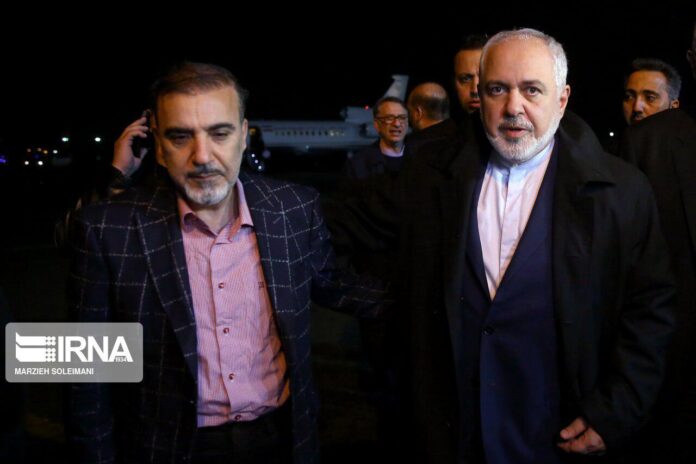
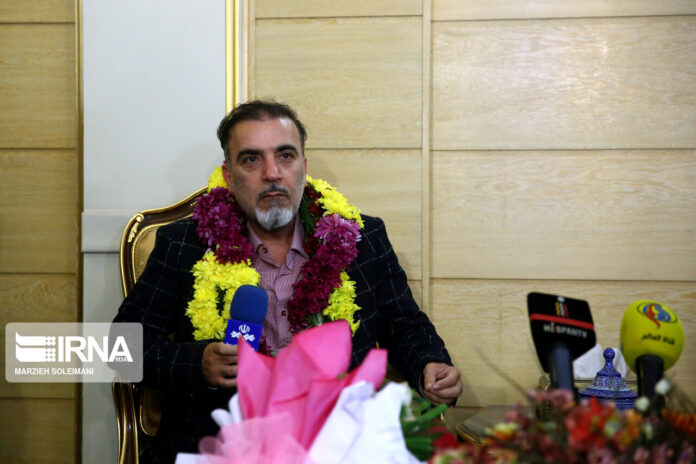
Earlier, Foreign Minister Mohammad Javad Zarif had noted that he hopes to hear “good news soon” about the release of Iranian scientist professor Masoud Soleimani, jailed in the US.

Iran Begins Injecting Uranium into New Chain of IR-6 Centrifuges

In a ceremony at the Natanz enrichment site in central Iran on Monday, Head of Atomic Energy Organization of Iran (AEOI) Ali Akbar Salehi unveiled a chain of 30 IR-6 centrifuges and inaugurated the process of injecting uranium gas into the machines.

Salehi said the nuclear site includes a sector, called S8, where the new centrifuge machines undergo various tests, such as mechanical stabilization tests, before being installed in the main section.

According to the AEOI chief, the local experts have installed 15 new generation centrifuges at the research and development site over the past two months alone, increasing the uranium enrichment capacity by more than 2,660 SWU (Separative Work Unit).

Salehi noted that Iran’s uranium enrichment capacity has now reached 8,660 SWU, and the output of enriched uranium, which stood at around 450 grams per day before Iran’s third step in reducing the JCPOA commitments, has jumped 10 times, surpassing 5,000 grams a day.

The AEOI director added that the number of Iran’s IR-6 centrifuge has reached 60 with a total capacity of 600 SWU.

Salehi noted that Iran’s uranium enrichment capacity over the past two months has come closer to the numbers before implementation of the JCPOA.

Iran’s operational enrichment capacity was around 11,000 SWU before the JCPOA, while it has reached 8,600 SWU following the third step in reducing the JCPOA commitments.

The nuclear chief explained that Iran now possesses a total of 490 new centrifuges with a total enrichment capacity of 2,660 SWU.

An obvious sign of Iran’s steady progress in the nuclear industry is that it has diversified the centrifuges, Salehi stated, citing 15 different types of centrifuge machines after the third step of reduction in the JCPOA commitment. “Before the JCPOA, we had only five types pf new generation (centrifuge) machines.”

In August, Salehi said Iran was dynamically advancing its civilian nuclear program after launching a plant that can manufacture dozens of advanced centrifuges on a daily basis.

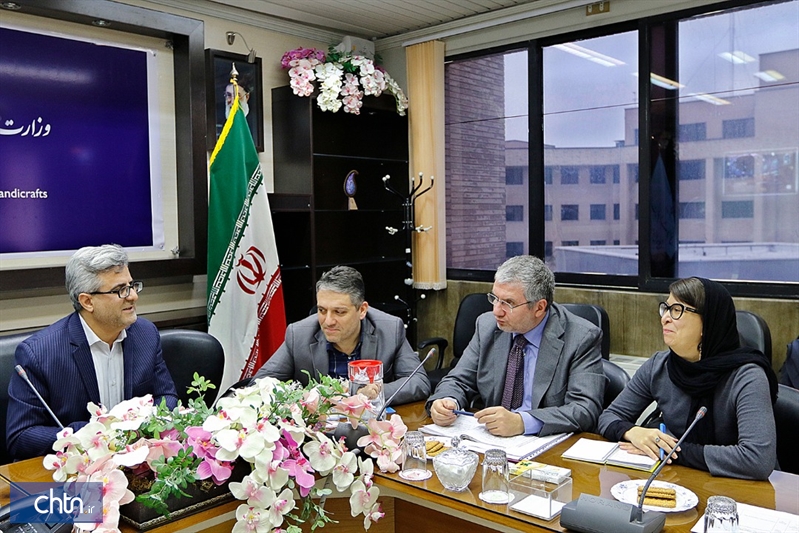
Iranian Diplomat to Attend Moscow Nonproliferation Conference

Araqchi

The senior Iranian diplomat will be among 250 international figures from over 40 countries planned to take part in the conference.

Known as one of the world’s largest forums on nuclear issues, the Moscow Nonproliferation Conference (Nuclear Energy, Disarmament, Nonproliferation) will be held on November 7-9.

The 2019 MNC will also host representatives from key international organizations, such as the United Nations Office for Disarmament Affairs (UNODA), Comprehensive Nuclear-Test-Ban Treaty Organization (CTBTO), and the International Atomic Energy Agency (IAEA).

The upcoming conference is going to discuss a range of issues, such as Russia-US arms control, different prospects of the Joint Comprehensive Plan of Action (JCPOA), growing tensions in the Middle East, and the lack of progress of the denuclearization of the Korean peninsula.

Iranian Deputy Foreign Minister Araqchi is going to attend a panel discussion on the 2015 Iran nuclear deal during the conference to talk about the latest status of the JCPOA.

The panel discussion will also include Russian Deputy Foreign Minister Sergei Ryabkov, Secretary General of the European External Action Service Helga Maria Schmid, and Director-General of the Chinese Foreign Ministry’s Department of Arms Control Fu Cong.

Founded in 2010, the MNC is organized by the Center for Energy and Security Studies (CENESS) in cooperation with a number of Russian and international partners.

Iranian Firm Produces Offshore Radio Locaters

Iranian Firm Produces Offshore Radio Locaters

The design and development of radio locator systems is very important, and up to now most of them have been supplied by other countries, but a knowledge-based company has recently managed to domesticise them.

The CEO of the company Esmail Vahdati says the products are currently being offered to project users in a format that utilise a TDOA-based method in remote sites to find locations.

To this end, various radio positioning systems have been designed and made available to users in the defence industry, he said.

“The company has introduced a Multilateration and Hybrid Positioning System, which with additional capabilities can be presented to other users in the commercial realm as well.”

Non-mobility or passivity of the manufactured systems and their high precision in locating are among the features of these domestically-made systems.

“Based on the users’ expectations, the system has new features that make it easier to provide tactical advantages. Meanwhile, the addition of new processing hardware and software systems based on angles, integrated modes, and GNSS signal calibration and synchronisation modules are among the most important features of these locaters,” added Vahdati.

For a brief review of Iran’s achievements in various fields of science and technology, check the book “Science and Technology in Iran: A Brief Review – 2019

He also talked about the capacity of this product to be presented on the international markets, noting that although the changes and improvements are made to the current systems and its users are defence industries, due to the market needs, other industries (including telecommunications) will be potential customers of passive location tracking and monitoring systems.

“One of the key considerations in developing radio locator systems is to enter other markets. The first step is to prevent the import of similar products by providing powerful, easy-to-use systems and, in the next step, to meet the needs of foreign consumers. This advancement in the telecommunications and positioning systems, are also needed for frequency space monitoring as well,” underlined Vahdati.

The price of this domestically-made product is 50 percent lower than the foreign samples. In addition, the costs of installation, commissioning and launch of the systems are lower in comparison with the foreign companies. Therefore, it seems that relying on these features as well as focusing on domestic production in the ICT ministry can work. At the same time, in the production of these systems the international standards of defence systems are used that go beyond the industrial and commercial standards.