Monday, December 22, 2025
Home Blog Page 2922

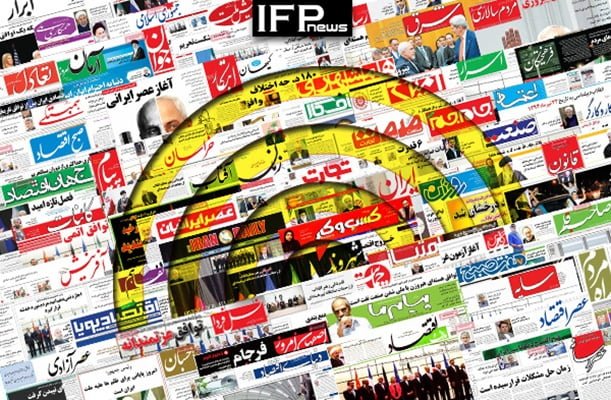
A Look at Iranian Newspaper Front Pages on February 23

Iran Newspaper Headlines

Iran Newspapers

Abrar:

1- Muqtada al-Sadr Threatens ‘Million-Strong’ Protest Rallies

2- Coronavirus Outbreak in Iran at ‘Yellow’ Condition: Official

A Look at Iranian Newspaper Front Pages on February 23


Aftab-e Yazd:

1- Corona Workers

2- Hello to Unanimous Conservative Gov’t

3- Which One’s to Blame for Price Hikes in Iran: FATF or Coronavirus?

A Look at Iranian Newspaper Front Pages on February 23


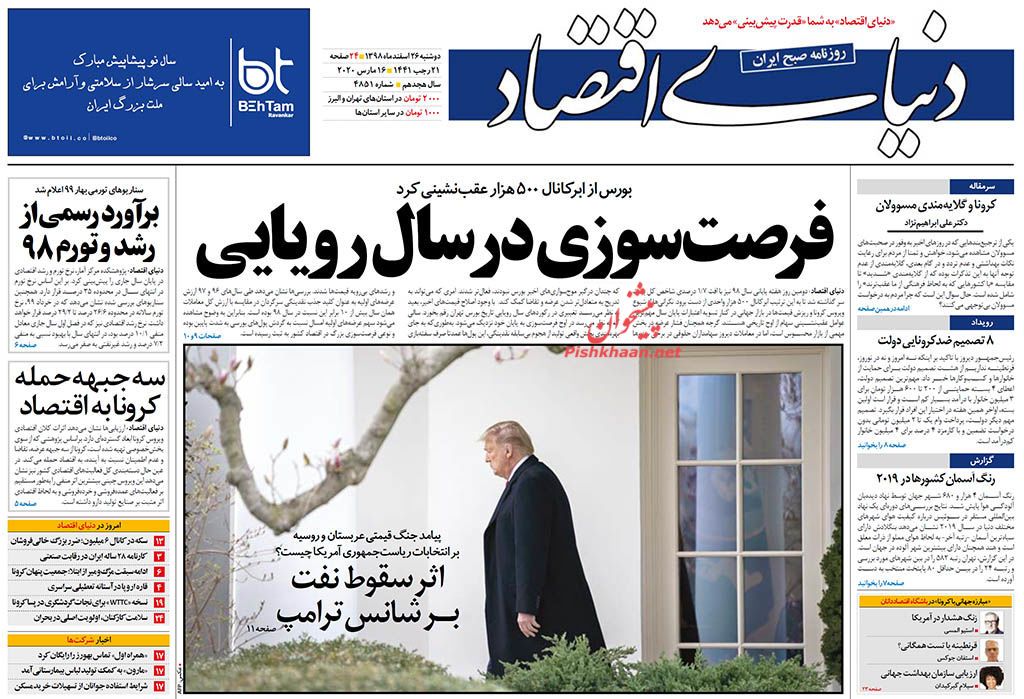
Donya-ye Eqtesad:

1- Putin’s Covert Support for Sanders?

2- Impact of Coronavirus on Businesses

A Look at Iranian Newspaper Front Pages on February 23


Ebtekar:

1- Conservatives Take Over New Parliament

2- Rouhani, Zarif Meet with Dutch FM: We All Must Try to Save JCPOA

A Look at Iranian Newspaper Front Pages on February 23


Etemad:

1- Profiteers of Coronavirus

* People Complain about Shortages Regarding Coronavirus

2- Iran’s Conditions Won’t Get Worse with FATF Blacklisting

A Look at Iranian Newspaper Front Pages on February 23


Ettela’at:

1- Rouhani: Iran Ready for Talks with EU on Regional Security

2- Health Ministry: 28 Infected by Coronavirus; Five Killed

A Look at Iranian Newspaper Front Pages on February 23


Hamshahri:

1- No to Fear of Corona

A Look at Iranian Newspaper Front Pages on February 23


Iran:

1- All Together against Coronavirus

2- Rouhani to Dutch FM: We Haven’t Closed Doors to Talks with EU

A Look at Iranian Newspaper Front Pages on February 23


Javan:

1- We’ll Defeat Coronavirus Even Without Int’l Support

2- Rouhani Slams EU’s Failure to Comply with JCPOA

3- Taliban Declares Victory against US in Afghanistan

A Look at Iranian Newspaper Front Pages on February 23


Jomhouri Eslami:

1- 98.5 Percent of Coronavirus Patients Can Be Treated

A Look at Iranian Newspaper Front Pages on February 23


Kayhan:

1- Anti-US Candidates Win Elections in Fresh Slap on Trump’s Face

2- Zionists Attack Palestinian Demonstrators with Bulldozer!

3- US Struggling to Exaggerate FATF Show

A Look at Iranian Newspaper Front Pages on February 23


Sazandegi:

1- Corona Panic

A Look at Iranian Newspaper Front Pages on February 23


Shahrvand:

1- Conservatives’ “Unity” in Parliament

2- Number of Corona Patients Increased to 28; 6 Killed

* Schools in Several Provinces Shut Down

A Look at Iranian Newspaper Front Pages on February 23


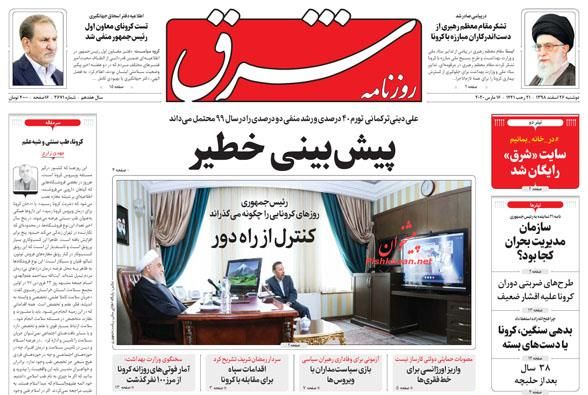
Shargh:

1- Bitter Strategy: What Plan Do Sanction Designers Have for Iran Economy?

2- Tehran-Amsterdam in Post-Tension Era

3- Corona in Tehran City Council: Chairman Quarantined, Mayor Infected

A Look at Iranian Newspaper Front Pages on February 23

FATF’s Blacklisting of Iran; Threat or Opportunity?

FATF’s Blacklisting of Iran; Threat or Opportunity?

For this reason, the government believes that non-compliance with these conventions actually means a kind of self-imposing the sanctions.

Proponents of Iran’s membership at the FATF believe in a situation that Iran is fully prepared to deal with both organised crime (the Palermo Convention) and the financing of terrorism (the CFT Convention) and the country is the victim of the international drug traficking and terrorism, it should join these conventions and does not give international organisations an excuse to keep Iran in more troubles.

Opponents of Iran’s adherence to these conventions argue that, should this happen, we must disclose all financial information of the country, including military intelligence, assistance to liberation movements in the region, and so on, to international institutions overseen by US influence and this is against Iran’s national security.

However, Vice President for Legal Affairs Laya Joneydi denied the allegations in a televised statement saying that “These institutions should provide us with documentation, clues and traces of drug trafficking, banned goods, etc. and ask us to provide financial information about those groups or individuals. Otherwise, they will not immediately ask for any information and we will not give it for no reason.”

She says even Russia and China have warned that they will not cooperate with Iran if the country is blacklisted.

Now, it seems, the country’s authorities can turn the threat of “blacklisting Iran” to opportunity and keep the country adhered to the conventions against money laundering and terrorism.

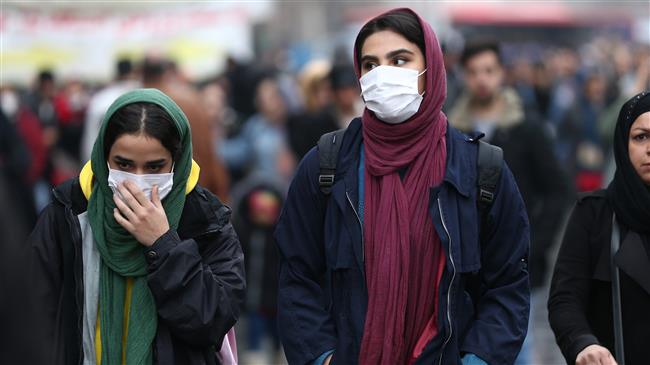
Iranians Using Public Transportation More Cautiously

Iranians Using Public Transportation More Cautiously

Scared of Coronavirus Outbreak in Iran, people use public transportation more cautiously

Photo by Mostafa Rudaki, Mizan

Rouhani Says US Sanctions on Iran Resemble Coronavirus

Hassan Rouhani-foreign minister of Austria

In a Sunday meeting with the foreign minister of Austria in Tehran, President Rouhani said the US sanctions are similar to the coronavirus, as the panic about them is bigger than the reality.

“The European Union is expected to stand against the US’ illegal measures,” the president added.

He also highlighted the suitable grounds for economic cooperation between Tehran and Vienna, saying, “We hope Austria would not care about the illegal and incorrect pressures from Americans in the promotion of cooperation (with Iran).”

The 2015 nuclear deal does not belong only to Iran, to Europe or to the Group 5+1, but is an influential factor in the regional and international peace and security, President Rouhani noted, stressing, “We still believe that we can save the JCPOA.”

The Joint Comprehensive Plan of Action could work as an appropriate base to build mutual trust between Iran and the West, including the European Union and the US, the president stated, emphasizing that Iran has lived up to its part of the agreement.

Denouncing the US sanctions on the export of foodstuff and pharmaceutical products to Iran, President Rouhani said such sanctions amount to an “act of terrorism”.

“We expect the European Union to fulfill its humanitarian duty in this regard,” the president told the Austrian minister.

President Rouhani then reiterated that the regional security must be ensured by the regional countries themselves, adding, “Today, the security of the region’s sea routes has decreased compared to the past, and many countries in our region, such as Yemen, Iraq, Syria, and Afghanistan are not experiencing suitable security conditions.”

He said Iran has proposed the Hormuz Peace Endeavor for the establishment of peace and security in the region, noting, “All of the problems of our region result from the US’ wrong and illegal interference in the affairs of the region.”

“We believe that the security of this region (Middle East) is important for the security of Europe and for the safety of the energy routes in the entire world and Europe,” President Rouhani underlined.

He finally expressed hope for the enhancement of cooperation between Iran and Austria in various fields, and also hoped that the Austrian foreign minister’s trip to Tehran would lead to positive developments in the ties between Iran and the European Union.

In turn, Alexander Schallenberg hailed the friendly and age-old relations between Austria and Iran, and highlighted the efforts to boost the bilateral ties in all fields, particularly the economic and trade interaction.

The Austrian diplomat also described the JCPOA as a milestone in trust-building efforts in the region and the world, highlighted the plan to save the JCPOA as a main policy of Austria and the EU, and vowed to make whatever effort necessary to salvage the nuclear deal.

“We believe that the JCPOA has a significant role in maintaining calm and stability in the region, and it is necessary to save it,” Schallenberg added, lauding Iran for its major role in ensuring stability and security in the region.

He also praised the Iranian peace initiative, known as the Hormuz Peace Endeavor, saying the plan could become a “road map to peace and stability in the region”.

“Austria welcomes this initiative, which has been proposed to build trust, and is willing to play a positive role in this process,” the European diplomat concluded.

Coronavirus in Iran: Schools Shut Down as Death Toll Hits 8

Coronavirus in Iran: Schools Shut Down as Death Toll Hits 8
Front page of Iranian daily newspaper Shahrvand on Feb. 20, 2020 with the title "Corona's Here"

Since it emerged in December, the new coronavirus has killed 2,345 people in China, the epicentre of the epidemic, and over 20 elsewhere in the world.

The COVID-19 outbreak in Iran first surfaced on Wednesday, when authorities said it claimed the lives of two elderly people in Qom, a Shiite holy city south of the capital.

They were the first confirmed deaths from the virus in the Middle East. Iran reported two more deaths on Friday and another one on Saturday.

The latest figures announced by the Health Ministry on Sunday take to 43 the total number of confirmed infections in Iran, out of which eight have passed away.

Based on official figures, nearly 18 percent of those infected with the new coronavirus in Iran have died, compared with little more than three percent in China.

As a “preventive measure”, authorities ordered the closure of schools, universities and other educational centres in 14 provinces across the country from Sunday.

They include Tehran, Qom, Markazi, Gilan, Ardabil, Kermanshah, Qazvin, Zanjan, Mazandaran, Golestan, Hamadan, Alborz, Semnan, and Kurdistan.

The government also announced that “all art and cinema events in halls across the country have been cancelled until the end of the week [Friday]” in order to stop infections.

Sport events, including the football matches of the country’s premier league, will also be held without spectators.

The health ministry says tests had been carried out on 785 suspected coronavirus cases since the outbreak began.

“Most of the cases are either Qom residents or have a history of coming and going from Qom to other cities,” its spokesman said.

Iran has yet to confirm the origin of the outbreak, but the Health Minister announced on Sunday that one of the two first cases who died of COVID-19 was a businessman who had visited China through a third country.

Tourian Village, Green Place in Iran’s Qeshm Island

Tourian Village, Green Place in Iran's Qeshm Island

Tourian is a village about 31 km to the southwest of Qeshm Island. Agriculture is booming in this village. Vegetable cultivation, sunflower farms and beautiful palm groves are among the tourist attractions of this region.

At the time of Mongol invasion when anarchy was the order of the day in Iran, any tribe which could escape unharmed and survive the Mongol plunder would leave for a safe place.

A tribe headed by Touran settled in Qeshm Island. The tribal chief built a court, a mosque and a bathroom in the village and proclaimed himself the king. Later he was known as Touran Shah (King Touran).

History has it that two Touran Shahs were in Tourian village: one on Hormuz Island and the other on Qeshm. Ibn Battuta writes in his travelogue: Touran, the king of this island, took up residence six farsangs from Qeshm. He is widely known as Mokhles or Tourian.


Iranian, Austrian Foreign Ministers Hold Talks in Tehran

Iranian, Austrian Foreign Ministers Hold Talks in Tehran

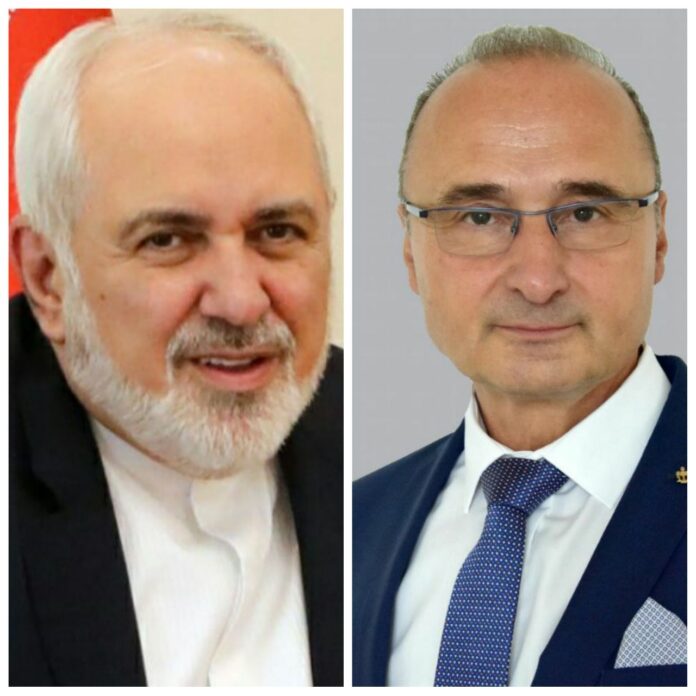
Austrian Foreign Minister Alexander Schallenberg, who has visited Iran at the head of a diplomatic delegation, held the first round of negotiations with the Iranian Foreign Minister in Tehran on Sunday morning.
In the meeting, the two sides welcomed the expansion of close bilateral relations between Iran and Austria and stressed the need for plans to promote and deepen the ties in all fields.
The main topics of the first round of talks between Foreign Minister Zarif and Schallenberg included the latest developments surrounding the JCPOA and the European parties’ commitments to the nuclear deal.
At the conclusion of the first round of their negotiations, the two top diplomats are going to visit the president of the Islamic Republic of Iran. Afterwards, they will resume their negotiations in the second round in the Ministry of Foreign Affairs of Iran on Sunday noon.

Iran Saves $7b Through Reliance on Domestic Firms

Iran Saves $7b Through Reliance on Domestic Firms

On the sidelines of a joint exhibition held by the Headquarters, Mohammad said that the security of investment is very important for the private sector and the producers must be assured about receiving infrastructure services to them.

Khatam al-Anbiya Construction Headquarter is an Iranian engineering firm controlled by the Islamic Revolution Guard Corps (IRGC). It is the IRGC’s major engineering arm and one of Iran’s largest contractors in industrial and development projects.

Khatam al-Anbiya was created during the 1980–88 Iran–Iraq War to help rebuild the country, and has diversified over the years into companies dealing with mechanical engineering, energy, mining and defence.

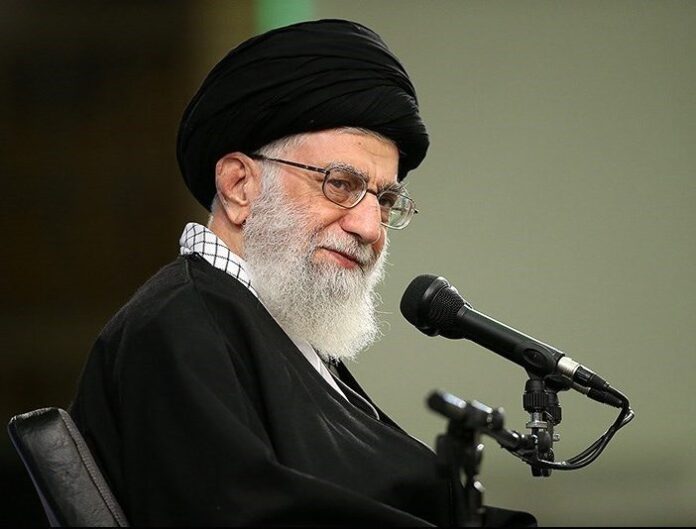
Iran’s Leader Hails High Voter Turnout Despite Foreign Propaganda Campaigns

Ayatollah Seyyed Ali Khamenei

Ayatollah Khamenei said foreign propaganda outlets had started spreading propaganda against the elections months ago, which heated up in the run-up to the vote.

“In the last two days [before the elections,] they spared no effort to discourage people from taking part in the election under the pretext of a disease and a virus (coronavirus),” Ayatollah Khamenei noted in an address to his students at the beginning of a theology class on Sunday.

He said enmity towards the Iranian people is not limited to economic, cultural and religious domains.

“They are even opposed to Iranians’ elections because they wouldn’t like to see voter turnout in the name of religion and the revolution become fixed as a reality,” the Leader noted.

He said the holding of elections in the Islamic Establishment of Iran refutes enemies’ claims that religion is opposed to freedom and democracy.

“Elections in the Islamic Republic if Iran show that religion is the full manifestation of an all-out democracy, and the holding of 37 elections over 41 years [since 1979 Revolution] shows the Islamic Establishment pays due regard to democracy,” Ayatollah Khamenei said.

He urged all to identify the enemy and remain vigilant against it.

Doors to Dialogue with Europe Still Open: Rouhani

President Hassan Rouhan-Stef Blok

“We believe that the nuclear deal served the interests of the region and the world and the US move [to pull out of the deal] harms all [nations] and even the American people,” the Iranian president said in a meeting with Dutch Foreign Minister Stef Blok in Tehran on Saturday.

“Over the past 21 months since the US exit from the JCPOA (the nuclear deal, officially known as the Joint Comprehensive Plan of Action), the European Union has unfortunately failed to take effective steps in line with mutual relations and the fulfillment of its commitments under the JCPOA,” he added.

Pointing to the US’ “illegal, unilateral and cruel” sanctions against the Iranian nation, which also include medicine and food, Rouhani said, “It is expected that the world’s free nations vociferously condemn these unlawful sanctions.”

Elsewhere in the meeting, the Iranian president pointed to centuries of “good and cordial” relations between Tehran and Amsterdam and said, “We are keen to expand political and economic relations with the Netherlands.”

He added that Iran’s foreign policy is based on “constructive interaction” with countries, in particular enhanced relations with the EU.

Rouhani also emphasized that the US presence and policies in the region are the root causes of regional insecurity and said, “If the US stops its terrorist measures and uncalled-for interference, our region will be naturally safe.”

In turn, the Dutch foreign minister said his country would make efforts to preserve the JCPOA and stressed the importance of continuing dialogue as a means of solving problems.
Blok added that Amsterdam has openly and privately told the Americans that their move to withdraw from the JCPOA, which is an international agreement, was not the right thing to do.

He also called for the promotion of relations between the two countries in all fields, particularly in the economic sector, and expressed hope that the Netherlands would be able to play a more dynamic role in the implementation of a non-dollar direct payment channel — officially called the Instrument in Support of Trade Exchanges (INSTEX).