Saturday, December 27, 2025
Home Blog Page 290

President Pezeshkian: Iran ready to cooperate for regional peace and security

Speaking in a phone call with Egyptian President Abdel Fattah el-Sisi on Wednesday, Pezeshkian reiterated Iran’s support for the establishment of a region free of nuclear arms and other weapons of mass destruction, provided that the Israeli regime is also included, since “its track record leaves no room for trust.”

He appreciated Egypt’s diplomatic efforts and those of other Islamic and neighboring countries to restore calm to the region.

Pezeshkian then referred to the Israeli aggression against Iran, noting that in response to the US’s direct involvement in the war on Iran, the Islamic Republic had no choice but to target a US base in the neighboring and brotherly country of Qatar.

Sisi for his part welcomed the ceasefire between Iran and the Zionist regime and voiced hope for its continuation and consolidation.

He noted that the region was on the verge of widespread turmoil and thanked Iran for its constructive role in de-escalating the situation.

The two presidents also called for the establishment of Tehran-Cairo ties.

Foreign Ministry: Iran under most stringent IAEA inspection regime

Iran Nuclear Program

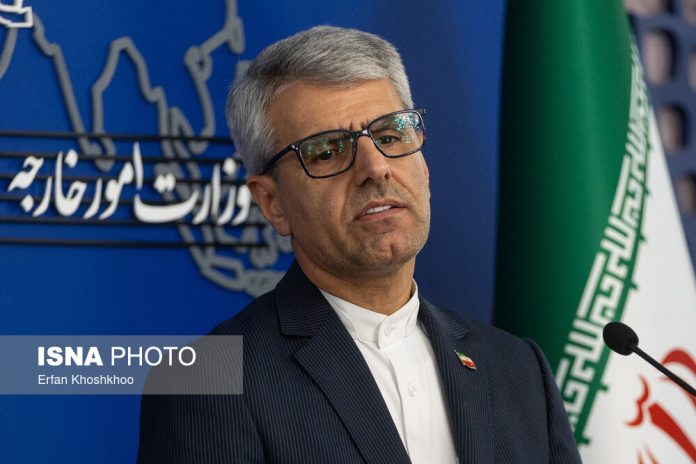
“We have done everything possible to demonstrate transparency and build trust, including the implementation of several voluntary measures,” Baqaei said, in an interview with IRNA.

He noted that although Iran’s peaceful nuclear activities make up less than 3% of the world’s total, they account for over 23% of all IAEA inspections.

“This means 3% of global activity, yet 23% of inspections—proof that Iran is under the strictest verification regime.”

Referring to recent indirect talks between Iran and the US, the Foreign Ministry spokesman said five rounds of discussions were held in the past three months.

He rejected US Secretary of State Marco Rubio’s claim that Iran “played” the negotiators by delaying the talks.

Baqaei described this allegation as “misleading and manipulative”.

“From the beginning, we underlined that if the US side were serious, the talks could proceed more intensively…we were ready to remain in place and engage in negotiations continuously, because such a critical issue cannot be resolved through short sessions held a week apart”, he added.

Baqaei further noted that the US showed no real commitment to the process.

“Despite our responsible and transparent approach, the other side’s lack of seriousness exposed their duplicity… Iran’s logic prevailed so much so that they resorted to encouraging their regional proxy [the Zionist regime] to attack Iran”.

Baqaei also underscored that this act will not be forgotten.

The Foreign Ministry spokesman said the recent developments confirm Iran’s firm commitment to diplomacy and prove the opposing side remains unwilling to engage in an effort to genuinely and peacefully resolve an issue they themselves have inflated.

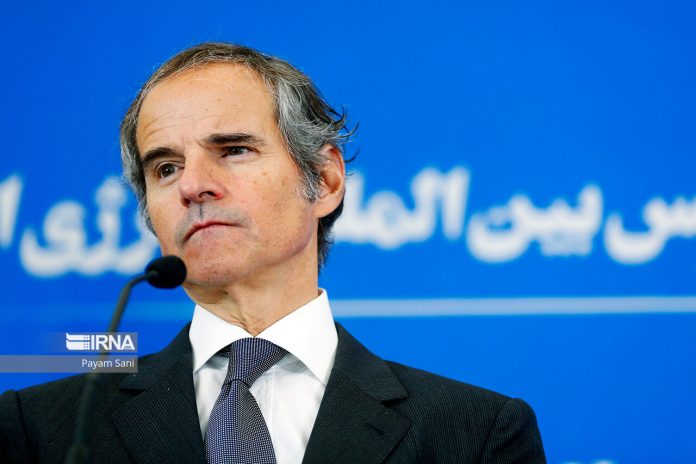
IAEA Director-General: Returning to Iranian sites is top priority

Rafael Grossi

“This is the number 1 priority,” Grossi told a news conference at an Austrian security cabinet meeting.

He is seeking his inspectors’ return to Iranian sites including the three plants where it was enriching uranium until Israel launched strikes on June 13.

Asked if Iran had informed him of the status of its stocks of enriched uranium, particularly its uranium enriched to up to 60% purity, he pointed to a letter he received from Iran on June 13, saying Iran would take “special measures” to protect its nuclear materials and equipment.

“They did not get into details as to what that meant but clearly that was the implicit meaning of that. We can imagine this material is there,” Grossi added, suggesting much of that material had survived the attacks.

There is a chance that much of Iran’s highly enriched uranium survived Israeli and US attacks because it may have been moved by Tehran soon after the first strikes, Grossi said.

He stated earlier this week that Iran had informed the IAEA on June 13 – the first day of Israeli raids – that it would take “special measures” to protect its nuclear materials and equipment.

“They did not get into details as to what that meant but clearly that was the implicit meaning of that, so we can imagine that this material is there,” Grossi stated Wednesday.

“So for that, to confirm, for the whole situation, evaluation, we need to return (IAEA inspectors to Iran’s nuclear facilities),” he added.

Crushing’ Russia with sanctions would jeopardize Ukraine peace talks: US

Speaking with Politico on the sidelines of the NATO summit in The Hague, Rubio said Trump wants to keep open a diplomatic channel with Russian President Vladimir Putin, despite growing frustration from European leaders and President Volodymyr Zelensky over Russia’s refusal to agree to a ceasefire.

“If we did what everybody here wants us to do, and that is come in and crush them with more sanctions, we probably lose our ability to talk to them about the ceasefire and then who’s talking to them?” Rubio added.

Rubio acknowledged that Russia appears committed to pursuing its objectives by force.

“Our sense of it is that the Russians are going to try to achieve on the battlefield what they’ve demanded at the negotiating table, which is certain territories, administrative lines, and the like,” he stated.

“We think it’s going to be a lot harder for them to achieve that than they think it’s going to be.”

Rubio added that Trump “will know the right time and place” for additional sanctions, but emphasized that imposing them too soon could signal that the U.S. has given up on a negotiated resolution.

Previously, Trump said he had refrained from imposing new sanctions on Russia because he believed a peace deal with Moscow might be within reach, warning he did not want to jeopardize negotiations by acting prematurely.

Speaking after two rounds of peace talks in Istanbul between Moscow and Kyiv that led to no ceasefire, Trump on June 5 declined to say when additional sanctions on Russia might be imposed, only noting there is a deadline “in (his) brain.”

“If he (Trump) does it, you’re almost admitting that this is not going to be negotiated anytime soon,” he said, adding, “We’re going to continue to engage. In the sense that if there’s an opportunity for us to make a difference and get them to the table, we’re going to take it.”

Zelensky and several European leaders are expected to ask Trump during meetings at the summit to increase economic pressure on Moscow.

It has been more than 100 days, since Ukraine agreed to a U.S.-backed complete ceasefire, while Russia continues to reject it. Moscow continues pushing maximalist demands while intensifying attacks across Ukrainian cities.

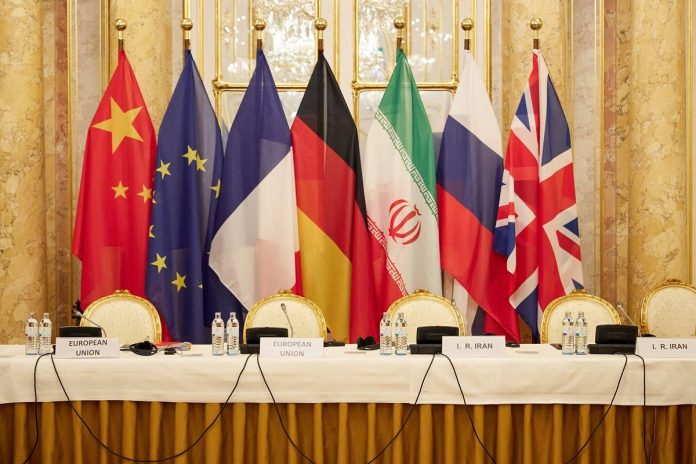
EU says may take action against Israel if conditions in Gaza do not improve

The European Union

After meeting the bloc’s foreign ministers in Brussels, Kaja Kallas said it was “very clear” that Israel had breached its human rights commitments in Gaza and the West Bank.

She added if the situation for Palestinians did not improve, the EU could discuss “further measures and come back to this in July”.

But Kallas declined to spell out details: “The concrete question is what then we [the EU] are able to agree?

“But right now, the most important thing is to improve the situation on the ground, improve the lives of people in Palestine and stop the suffering and also human toll that we see there every day.”

The foreign ministers discussed the EU’s relationship with Israel after a report by Kallas’s team found “indications” that its ally was in breach of human rights obligations over the catastrophic humanitarian situation in Gaza and settler violence in the West Bank.

A review of the EU-Israel association agreement – a trade and cooperation pact – was triggered last month by 17 member states in protest at Israel’s blockade of humanitarian aid to Gaza.

On Monday, only Spain called for outright suspension of the agreement although other strong supporters of the Palestinians – Belgium, Ireland and Sweden – stressed the need for action.

However, Germany, Greece and Italy were among the countries that voiced opposition to suspending the agreement.

The EU report is largely based on findings from UN bodies and the international court of justice.

While the overall pact can be suspended only by unanimity, parts of the relationship agreement – trade or Israel’s participation in the EU’s Horizon research programme – could be suspended by a weighted majority vote.

The association agreement, which came into force in 2000, underpins a trading relationship worth €68bn (£58bn) between the 27 EU countries and Israel. The bloc is Israel’s largest market, accounting for about a third of its exports.

Iran spox: Attack on Al Udeid not an act against Qatar

Esmael baghaei

On Wednesday, Esmail Baqaei, in response to questions from journalists regarding the emergency meeting of PGCC foreign ministers and their statement about Iran’s defensive strike on the US base at Al Udeid, said:
“The Islamic Republic of Iran’s action in targeting the American Al Udeid base was carried out under Article 51 of the United Nations Charter as an exercise of its inherent right to self-defense, in response to the United States’ act of aggression on June 21, 2025, which violated Iran’s territorial integrity and national sovereignty.”

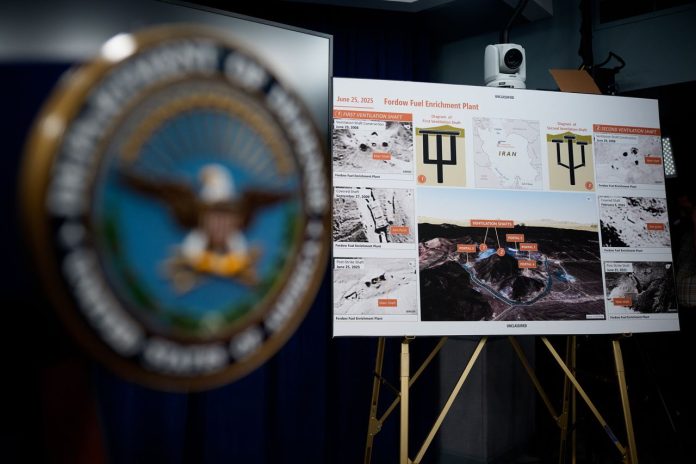
On Monday night, June 23, following the US attack on Iran’s nuclear facilities in Fordow, Natanz, and Isfahan, Iran launched a missile strike on the American base at Al Udeid in Qatar. After the attack, Baqaei reiterated that the operation was not aimed at the friendly nation of Qatar.

The Foreign Ministry spokesperson also thanked Arab and Islamic countries for expressing solidarity with Iran and for their firm stance in condemning the US and Israeli violations of Iran’s territorial integrity and sovereignty.

He emphasized that the Islamic Republic of Iran will spare no effort to strengthen understanding and cooperation among regional countries to ensure endogenous security and stability.

He further reaffirmed Iran’s commitment to maintaining and expanding a policy of good neighborliness and friendly relations with all Persian Gulf states, including Qatar.

He also expressed appreciation for the PGCC’s position on halting Israeli aggression against Iran and condemning the ongoing crimes and genocide committed by the Zionist regime in Gaza and the West Bank.

Iran detained 700 “mercenaries” working for Israel throughout 12-day war: FNA

Iran Police

“The mercenaries, who mainly operated in the framework of espionage and sabotage networks, were identified and arrested based on public reports and intelligence operations,” the report reads.

Israel’s spy agency Mossad has acknowledged the role of its undercover personnel working in Iran as part of its military operation, which began with unprecedented strikes on Iran on June 13.

Mossad provided footage of its covert agents working behind Iranian lines in the lead-up to the raids, work that included setting up a base to launch drones at targets from inside Iran.

The arrests of Israeli agents have been made across Iran, according to Fars, including in Kermanshah, Isfahan, Khuzestan, Fars, and Lorestan provinces. Authorities have not yet published details on the number of alleged Israeli spies arrested in the capital Tehran, the outlet reported.

Other Iranian news outlets have reported multiple executions of alleged Israeli agents carried out since the conflict began.

BRICS countries say attacks on Iran violated UN Charter

BRICS

“We express grave concern over the military strikes against the Islamic Republic of Iran since 13 June 2025, which constitute a violation of international law and the Charter of the United Nations,” said the statement issued by the Brazilian Foreign Ministry.

The group, where Brazil holds the rotating presidency this year, also called for making the Middle East free of nuclear weapons and other weapons of mass destruction.

BRICS expressed concern over the attacks against Iran’s nuclear installations, saying they were carried out in violation of international law and relevant resolutions of the International Atomic Energy Agency.

“BRICS remains committed to promoting international peace and security and to fostering diplomacy and peaceful dialogue as the only sustainable path toward long-term stability in the region,” the statement added.

Iran executes three Mossad spies

Iran Prison

The death sentences for these three agents of the Zionist regime—who had smuggled assassination equipment into Iran—were carried out on Wednesday morning in Urmia Prison.

Idris Ali, Azad Shojaei, and Rasoul Ahmad Rasoul were arrested and tried on charges of “waging war against God” (moharebeh) and “spreading corruption on earth” (efsad fel-arz) through collaboration with hostile foreign governments in favor of the Zionist regime.

The executions were carried out after a full criminal trial process and confirmation of the verdicts by Iran’s Supreme Court.

According to the case documents, the individuals had established contact with a key Mossad operative in one of Iran’s neighboring countries and smuggled in equipment intended for the assassination of individuals.

They reportedly brought the equipment into the country disguised as shipments of alcoholic beverages, which ultimately led to the assassination of a prominent figure.

Iran Parliament approves plan to suspend cooperation with IAEA

IAEA

Alireza Salimi, a member of the Parliament’s Presidium, announced in an interview with Fars News Agency that both the general outlines and specific provisions of the plan had been approved in the open session of Parliament.

He stated: “According to the Parliament’s resolution under this plan, IAEA inspectors are not permitted to enter the country for inspections unless the security of Iran’s nuclear facilities and its peaceful nuclear activities is guaranteed — and such permission is subject to the approval of the Supreme National Security Council.”

Salimi added: “The Parliament has stipulated penalties for individuals who allow IAEA inspectors to enter the country. The resolutions cover both safeguards-related cooperation and cooperation beyond safeguards.”

This plan was passed following the IAEA’s recent report on Iran’s nuclear program to the Agency’s Board of Governors — a report which paved the way for US and Israeli aggression against Iran and attacks on several of its nuclear facilities.

The Islamic Republic of Iran has, until now, extended the highest level of cooperation with the IAEA — even beyond its safeguards obligations.