Saturday, December 27, 2025
Home Blog Page 289

Right groups say Gaza Humanitarian Foundation may be ‘complicit in war crimes’

The GHF, a recently launched and controversial aid distribution mechanism, commenced operations in Gaza on 27 May, following nearly three months of an Israeli blockade on the entry of humanitarian assistance into the Gaza Strip.

The organisations criticised the GHF for a lack of “transparency, impartiality, and accountability”, citing concerns over its opaque structure and the absence of publicly available operational plans.

According to the letter, the new relief delivery method, which has sought to wrest distribution away from major aid groups led by the United Nations, is a “radical and dangerous shift away from established international humanitarian relief operations”.

It adds that the “privatized, militarized aid distribution” is one that is “dehumanizing, repeatedly deadly and contributes to the forced displacement of the very population it purports to help,” referencing the ongoing killings of Palestinians by Israeli forces near GHF aid points.

The 15 groups urged all organisations and individuals working or assisting GHF, including the private military contractors at the distribution hubs such as Safe Reach Solutions and UG Solutions, to end their operations.

“Failure to do so may expose these organizations and their officers, representatives, and agents to further risk of criminal and civil liability for aiding and abetting or otherwise being complicit in crimes under international law, including war crimes, crimes against humanity, or genocide in violation of international law, US law and other relevant national laws under the principle of universal jurisdiction,” the letter warned.

“GHF’s militarized model, coupled with its close collaboration with Israeli authorities, undermines the core humanitarian principles of humanity, neutrality, impartiality, and independence.”

The organisations also note that forcing starving Palestinians to walk long distances through militarised areas to obtain aid “creates an immediate risk of forced displacement that may violate the prohibition on forcible displacement of civilians”.

Established in February, GHF has come under growing criticism from rights groups and activists, including the United Nations.

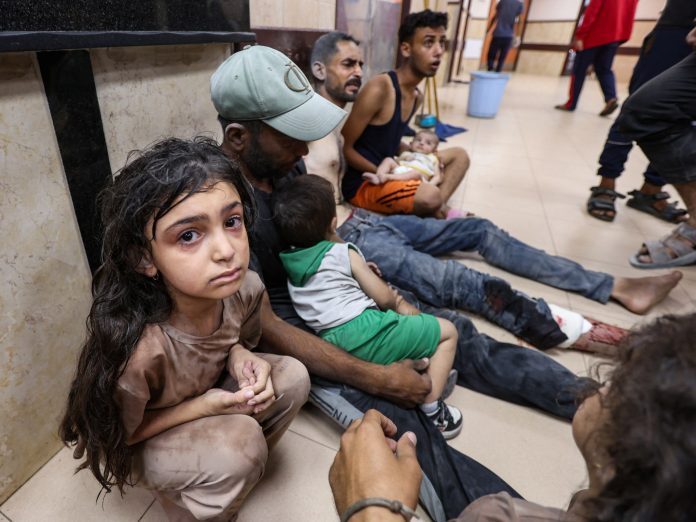
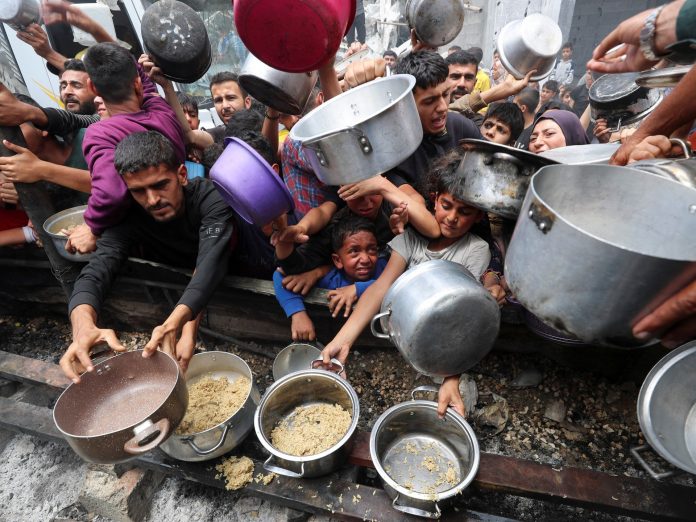
The scheme has been accused of dehumanising Palestinians and providing insufficient food, in addition to imperilling their life, as Israeli forces routinely open fire on the starving crowds.

Described as “death traps”, the few GHF-operated aid distribution points have become places where Palestinians expect bloodshed instead of respite from the war.

A recent press release by the non-proft Euro-Med Human Rights Monitor stated that the US-backed organisation was “directly responsible for the escalating Israeli crimes against starved Palestinian civilians”.

“The foundation’s operational model involves luring civilians to specific locations coordinated with the Israeli army, where they are subjected to killing, injury, and cruel and degrading treatment,” it said, adding, “These points have effectively become death traps used as tools in Israel’s ongoing genocide against the Palestinian population for over 20 months.”

According to health sources in Gaza, at least 516 people have been killed near the GHF-run hubs, with more than 3,799 others wounded and 39 missing since its operations began a month ago.

Zelensky urges trial for ‘war criminal’ Putin

Zelensky issued the call late on Wednesday after he signed an accord with the Council of Europe to set up a special tribunal to prosecute Russian officials, including Putin, for the invasion of Ukraine.

“We need to show clearly, aggression leads to punishment, and we must make it happen together, all of Europe,” said Zelensky after signing the accord with Council of Europe Secretary-General Alain Berset.

“It will take strong political and legal courage to make sure every Russian war criminal faces justice, including Putin,” he added.

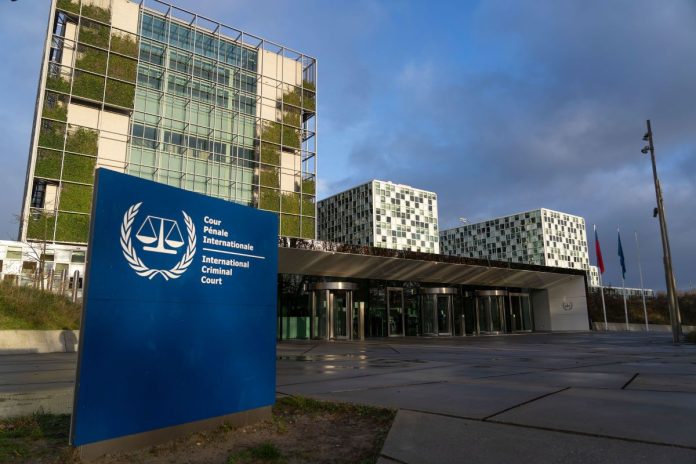
Putin is already facing an arrest warrant issued by the International Criminal Court (ICC) in The Hague for the alleged war crime of illegally transporting children out of Ukraine.

The ICC has the jurisdiction to investigate war crimes, crimes against humanity, and genocide, but it does not have the jurisdiction to investigate “crimes of aggression” or the use of armed force against another state.

The special tribunal is being established to one day prosecute Russia’s “crime of aggression” for the full-scale invasion of Ukraine in February 2022. The tribunal could, in theory, put on trial senior Russian figures, including Putin.

It has not yet been decided where the tribunal would be based, but Zelensky stated The Hague, the home of the ICC, would be “perfect”.

This is the first time such a tribunal has been set up under the aegis of the Council of Europe, the continent’s top rights body.

Ursula von der Leyen, President of the European Commission, previously said the special tribunal would “give Ukraine a path to justice for the top-level decision to invade its territory – a wrong that no other international court or tribunal can currently address”.

The European Council announced the proposed tribunal could potentially be used to prosecute North Korean and Belarusian individuals who assisted Russia in the invasion.

The 46-member Council of Europe is not part of the European Union and members include key non-EU European states such as Turkiye, the United Kingdom and Ukraine. Russia was expelled from the body in the wake of its invasion of Ukraine.

Alongside its arrest warrant for Putin, the ICC is also seeking to arrest four of Russia’s top commanders for targeting civilians.

Iran’s government to fund reconstruction efforts after Israeli assault: MP

Mohammad Reza Kouchi said on Wednesday that insurance companies in Iran have no coverage for buildings and facilities destroyed during the Israeli aggression on the country, adding that the government would pay for the reconstruction.

Kouchi told the ILNA news agency that Iran’s transportation ministry was assessing the damage caused by the attacks on people’s houses and other facilities, adding that the rebuilding projects would begin soon after the assessments are finished.

He stated that philanthropists and charitable organizations are expected to contribute to the reconstruction efforts.

“All these services will be offered to people and those who suffered losses without any charge,” added the lawmaker.

Iran’s transportation minister, Farzaneh Sadegh, also said on Wednesday that the government would set up a special committee to expedite reconstruction efforts after the war.

Sadegh stated that experienced developers and engineers would be commissioned for the projects to accelerate the reconstruction process.

She added that the government would also offer extra loans and grants to the people affected by the Israeli aggression.

The Israeli regime launched a 12-day aggression against Iran starting on June 13, inflicting damage on people’s houses and the civilian infrastructure across the country.

Hundreds of people, including women and children, were killed in the assaults.

Iran’s retaliatory attacks on Israel also inflicted heavy losses on the regime, with one report published earlier this week suggesting that insurance companies have received more than $1.3 billion worth of claims from owners of properties directly hit in Iran’s missile attacks.

World Bank approves $146mn for recovery of Syria’s power sector

World Bank

“The Syria Electricity Emergency Project (SEEP) will rehabilitate damaged transmission lines and transformer substations and provide technical assistance to support the development of the electricity sector and build the capacity of its institutions,” the bank said in a statement.

Due to damage to Syria’s energy infrastructure during years of conflict, many cities can only be supplied with electricity for a few hours at a time.

Jean-Christophe Carret, World Bank Middle East division director, stated: “Among Syria’s urgent reconstruction needs, rehabilitating the electricity sector has emerged as a critical, no-regret investment that can improve the living conditions of the Syrian people, support the return of refugees and the internally displaced, enable resumption of other services such as water services and healthcare for the population and help kickstart economic recovery.”

“This project represents the first step in a planned increase in World Bank support to Syria on its path to recovery and development,” he added.

Yisr Barnieh, Syria’s finance minister, also said electricity is a foundational investment for economic progress, service delivery and livelihoods.

“This is the first World Bank project in Syria in almost four decades. We hope it will lay the ground for a comprehensive and structured support program to help Syria on its path to recovery and long-term development,” he added.

Last month, Syria signed an agreement with an international consortium, including Turkish, US and Qatari firms, for building energy plants in the country.

Iranian airspace opens to intl. flights after 12-day war

Data released by Plane Finder, an international flight tracking service, showed that flights originating from cities like Moscow, London and Dubai were passing through the Iranian airspace on Wednesday.

Airlines started to avoid the Iranian skies on June 13, when the Israeli regime launched an unprovoked aggression against the country.

Israeli assault prompted a fierce response from the Iranian armed forces as they targeted various areas in the Israeli-occupied territories with missiles and drones, causing a major disruption to international aviation services in the entire West Asia region.

The 12-day war ended on Tuesday morning after the Israeli regime declared a unilateral ceasefire in a deal brokered by Washington. Iran also accepted the agreement.

However, Iranian authorities announced on Wednesday that a ban on domestic and international flights to and from Iranian airports would continue until Thursday afternoon local time.

A transportation ministry spokesman stated that the safety of the passengers and the security of the aviation routes were still a main priority for the Iranian government.

That came as officials in Iran’s pilgrimage authority said that Iranian nationals remaining in Saudi Arabia since early June, when they finished performing their hajj rituals, would return to the country as of Thursday morning using flights from the Saudi city of Mecca.

Trump calls for cancellation of Netanyahu’s corruption trial

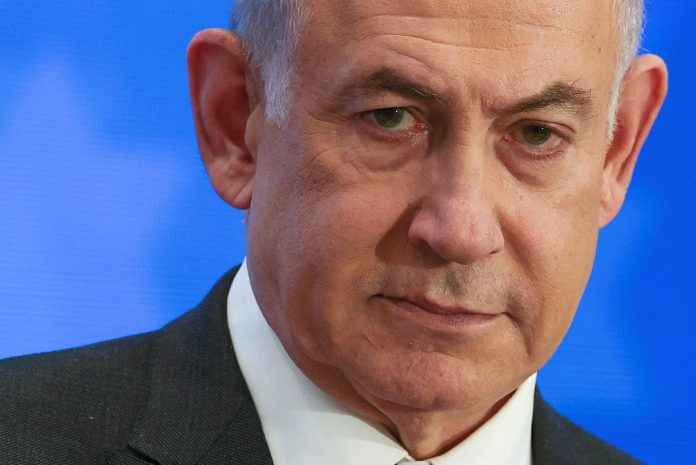
Trump issued the call on Wednesday on behalf of his close Israeli ally, who was indicted in 2019 in Israel on charges of bribery, fraud and breach of trust.

Netanyahu’s trial began in 2020 and involves three criminal cases. He has denied the allegations and pleaded not guilty.

“Bibi Netanyahu’s trial should be CANCELLED, IMMEDIATELY, or a Pardon given to a Great Hero, who has done so much for the State (of Israel),” Trump wrote on his Truth Social platform using the Israeli leader’s nickname, adding that he had learned that Netanyahu was due to appear in court on Monday.

“Such a WITCH HUNT, for a man who has given so much, is unthinkable to me.”

Israeli media have reported that cross-examination of Netanyahu began on June 3 in a Tel Aviv court and was expected to take about a year to complete.

Israeli President Isaac Herzog has the power to pardon Netanyahu, but has been quoted by Israeli media as saying that a pardon is “not currently on the table”.

Herzog also stated that “no such request had been made”, according to the reports.

Trump also said in his post: “It was the United States of America that saved Israel, and now it is going to be the United States of America that saves Bibi Netanyahu.”

It was unclear what Trump or the US government could do to stop Netanyahu’s corruption trial.

Source: Possible use of depleted uranium in recent Israeli strikes on Iran

Initial tests conducted at the impact sites have reportedly revealed traces suggestive of uranium presence. However, the source emphasized that definitive conclusions have yet to be drawn, and further technical analysis is currently underway.

Depleted uranium is a dense byproduct of the uranium enrichment process, commonly used in armor-piercing munitions due to its high penetration capability.
When such munitions strike a target, they can release fine radioactive and toxic particles, raising significant concerns about their long-term health and environmental impacts.

International organizations have repeatedly warned against the use of depleted uranium weapons, urging global restrictions on their deployment due to potential violations of humanitarian and environmental standards.

Military experts are now examining the weapons used by Israeli forces, with more detailed findings expected once the final test results are released.

627 Killed, 4,870 Injured in Zionist regime’s attacks on Iran

The Ministry’s information center said other heavily affected provinces include Khuzestan, Lorestan, Isfahan, Markazi, East Azerbaijan, Hamedan, Zanjan, and Gilan, ranking third to tenth in terms of casualty figures.

It also noted that 86.1% of the martyrs lost their lives at the scene while 13.9% succumbed to their injuries upon hospital arrival.

Iran condemns NATO head’s admiration for US assault

“It is disgraceful, despicable and irresponsible for NATO’s SG to congratulate a ‘truly extraordinary’ criminal act of aggression against a sovereign State,” Esmaeil Baqaei said in a post on his X account on Wednesday.

“Who endorses an injustice lacks integrity,” the spokesman said.

“Who supports a crime is regarded as complicit,” he stated.

His reaction came after the US president on Tuesday posted a screenshot of a message from Rutte in which the NATO secretary general congratulates Trump for his “truly extraordinary” action in Iran and for getting his NATO allies in Europe to “pay in a BIG way” on defense.

While the Zionist regime waged a war of aggression against Iran on June 13 and struck Iran’s military, nuclear and residential areas for 12 days, the US stepped in and conducted military attacks on three nuclear sites in Iran’s Natanz, Fordow and Isfahan on June 22.

The Islamic Revolution Guards Corps targeted the United States’ Al-Udeid airbase in Qatar with a powerful missile attack on Monday evening in retaliation for Washington’s strikes on the three Iranian nuclear sites.

US will meet with Iran “next week”: Trump

“We’re going to talk to them next week, with Iran. We may sign an agreement, I don’t know. To me, I don’t think it’s that necessary. I mean, they had a war, they fought, now they’re going back to their world. I don’t care if I have an agreement or not,” Trump said during a news conference at the end of the NATO summit in The Hague.

Trump added that his administration would be asking for the same type of commitments it sought in negotiations with Iran prior to recent heightened tensions in the Middle East.

“The only thing would be asking for is what we were asking for before,” Trump said, adding again that he does not believe such an agreement is necessary due to his insistence that the US successfully destroyed Iran’s nuclear capabilities, despite early intelligence assessments suggesting otherwise.

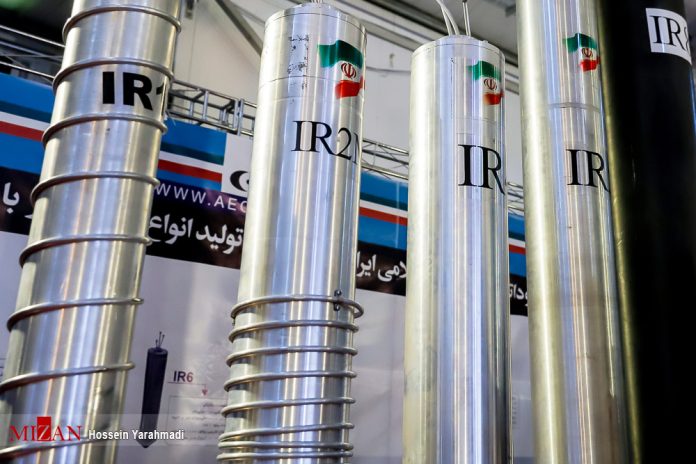
“We want no nuclear, but we destroyed the nuclear. In other words, it’s destroyed. I said ‘Iran will not have nuclear.’ Well, we blew it up. It’s blown up to kingdom come, and so I don’t feel very strongly about it. If we got a document, it wouldn’t be bad. We’re going to meet with them,” the president continued.

Trump told reporters he had asked Secretary of State Marco Rubio, who also serves as his national security adviser, as they were walking up to the stage if he wanted to draw up an agreement. Trump said he believed the US could get the Iranians to sign such a document.

Rubio told reporters that such a deal depends on Iran’s willingness to negotiate directly with the US, not through intermediaries.

Trump also stated Iran will need oil money to “put the country back into shape” and said he doesn’t have an issue with China purchasing their oil, signaling possible sanctions flexibility on Iran.

“Look, they just had a war. The war was fought. They fought it bravely. I’m not giving up,” Trump told reporters when asked whether allowing China to buy Iranian oil — as he said he’d like to see — would mark the end of his administration’s “maximum pressure” campaign on Iran.

“They’re in the oil business. I mean, I could stop it if I want to – sell China the oil myself. I don’t want to do that. They’re going to need money to put that country back into shape. We want to see that happen,” he said of Iran.

“If they’re going to sell oil, they’re going to sell oil. We’re not taking over the oil,” he added.

On his way to the NATO summit on Tuesday, Trump posted on Truth Social: “China can now continue to purchase Oil from Iran. Hopefully, they will be purchasing plenty from the US, also. It was my Great Honor to make this happen!”

A senior White House official clarified later Tuesday that the president’s post was not an announcement of sanctions relief.

“The president was simply calling attention to the fact that, because of his decisive actions to obliterate Iran’s nuclear facilities and broker a ceasefire between Israel and Iran, the Strait of Hormuz will not be impacted, which would have been devastating for China,” the official said, adding, “The president continues to call on China and all countries to import our state-of-the-art oil rather than import Iranian oil in violation of U.S. sanctions.”