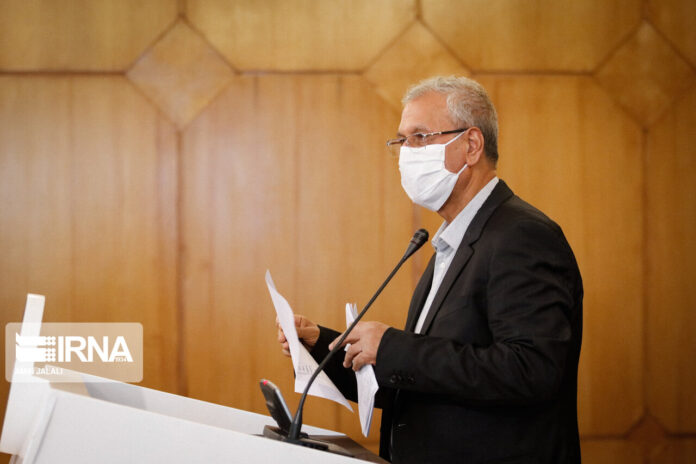
Kianoush Jahanpour announced on Tuesday that the new deaths increase the death toll to 4,683.
He said 1,574 new infections have been confirmed in the past 24 hours, which raise the total number of cases to 74,877.
So far, 48,129 patients have recovered and been discharged from the hospital, he noted.
According to the spokesman, 3,691 are currently in severe conditions of the disease.
He also put the overall number of COVID-19 tests taken so far at 287,359.
The food of each country is part of that country’s individualities and is known as one of the factors introducing its culture. Some of them are so interesting and noticeable that can even be considered as one of the attractions in the world today.
The Iranian food culture is of great diversity, and at every point a new taste can be discovered and enjoyed.
Pontia Fallahi, the Iranian-American woman, has a different look at this culture, and in an article introduces ten Iranian desserts that could be a different experience for those who travel to this land.
According to a Farsi report by Karnaval.ir, Pontia was born and lived in America and has the experience of living in three other countries. In her article, she has described ten local desserts that everyone should try them.
Qottab (Ghottab) is a traditional Persian sweet pastry
She says Chelow kabab [the national dish of Iran, consisting of cooked rice and one of the many varieties of Iranian kebab] is one of the most well-known Iranian cuisines and almost everyone knows it, but does anyone pay attention to desserts in this country?
“Iranians have a friendly culture and use every opportunity to get together and drink tea. The interest in the tea has made the Iranians attracted to sweet tastes. These tastes are a different experience that few people pay attention to. They have three inseparable elements: saffron, rose water and cardamom.
Best and popular Iranian Desserts
Here, we will introduce you to a number of famous Iranian desserts.
Zulbia & Bamiyeh; One of the Iranian desserts for Ramadan
Zulbia is the name of a sweet that is poured into oil by a funnel and deep-fried in pretzel or circular shapes. Then, it is soaked in rosewater and saffron syrup to get a different taste.
Bamiyeh is also the name of another sweet that is usually served together with Zulbia and is very similar to Chorru (a Spanish fried-dough pastry). Bamiyeh is also dipped in sugar syrup.
These two sweets have many fans in the holy month of Ramadan because after a day of fasting, it provides the body with the sugar it needs.
How to cook jalebi at home:
Jalebi and sweet okra (Zoolbia and Bamia) are among the most consumed and popular sweets on the table during the holy month of Ramadan. If you prepare and consume jalebi and okra fresh at home, they will certainly be healthier and more cost-effective.
Tips to make homemade jalebi:
1-Pour a glass of starch into a bowl and add a glass of yogurt.
2-Add a spoonful of flour along with baking powder to the yeast and mix it thoroughly with a spoon until all the ingredients are uniform.
3-Add brewed thick saffron to the ingredients and mix. 4-Pour some oil in a frying pan on medium heat until it is completely hot. 5-Pour the ingredients into the pan as well in a circular and round shape. 6-Then Take the jalebis and okras out of the container and put them in syrup.
2. Ranginak Traditional Persian Desserts of southern Iran
South of Iran and the Persian Gulf islands display a kind of different culture in Iran that is even touchable in their cuisine.
In these regions of Iran, people fill in soft dates with walnuts, then put them in a blend of fried flour, saffron, cardamom, and cinnamon to make a delicious dessert called Ranginak. This delicious dessert can make everyone crazy with its appearance, and its taste can put a spell on you.
3. Faloodeh Shirazi;The most famous Iranian dessert in Shiraz
With the first look at Faloodeh, you may ask yourself:
Who would eat noodles as desserts?
But if you taste these noodles that are dipped in the rosewater syrup, for sure you will not trust your eyes when choosing something to eat.
There are many choices ahead; you can have this dessert with lemon juice or enjoy it with sour cherries and other syrups.
Faloodeh is the best choice in the hot summer days and you can find the best ones in the city of Shiraz.
4. Akbar Mashti Ice Cream or Traditional Ice Cream
In the 1950s, a person named Akbar Mashhadi introduced a delicious ice cream that has become the most famous ice cream in Iran today.
Saffron Ice Cream is also known as the traditional ice cream and has many fans. The combination of vanilla ice cream, saffron with rose water and pistachios can be an exciting experience for you, but not as much as when frozen cream pieces surprise you and make you feel good.
This ice cream is served both in a cup and in a special Iranian form of ice cream sandwiches.
5. Shole Zard; Persian saffron rice pudding
Now it’s time to introduce the special Iranian pudding which is made with rice. The high-quality Iranian saffron also gives it an excellent yellow colour and aroma. Cinnamon is also an ingredient, but is used exclusively for dressing.
In the religious ceremonies and during the holy month of Ramadan (Wikipedia), Shole-Zard is served among Muslim communities free of charge.
6. Yazdi Sweets
Yazd in central Iran is one of the cities that are famous for delicious sweets. In this city you can try different types of Baklava including the Greek and Turkish ones.
You can also taste Qottab [almond-filled deep-fried Iranian cuisine pastry] Loz-e Nargil {Iranian coconut sweets with rosewater] and cotton candy. Of course, never miss a cup of hot tea next to these delicious sweets.
Koloocheh is a delicious cookie with different flavours such as cinnamon, walnut, cocoa, etc. Different regions of Iran have Koloochehs with different shapes.
Koloocheh can be served in the afternoon along with your tea, or during your breakfast.
8. Sohan; famous traditional Iranian sweet
The ingredients of this brittle toffee are saffron, eggs, rosewater, sugar, butter, and cardamom. Its colour and the pistachio on top of it can make you crazy! Every time you have Sohan, you will need to brush your teeth.
Some points about sohan (confectionary)
Sohan is made and sold in different forms and types such as:
Honey Sohan, Sesame Sohan, Halvai Sohan, Badami Sohan, Gezi Sohan, Morsel Sohan, Circular Sohan, Pashmaki Sohan, Sohan Dessert, and so on.
Qom’s Sohan is the most famous Sohan in Iran. In fact, the most diverse types of Sohan are produced in Qom.
In other cities like Zarand, Kerman and Isfahan, Sohan is also produced. Isfahan’s Sohan is called Honey Sohan. Zarand’s Sohan, which is also registered nationally, is much crispier and much thinner than Qom’s Sohan.
Zarand’s Sohan contains much less oil than Qom’s Sohan. This makes it more durable. This sweet used to be produced mostly in a traditional way and by hand. Now it is made using special machinery and molds.
9. Gaz
Isfahan province in central Iran is the origin of this delicious candy. Sap of Angabin (a plant), rosewater, and egg whites are the main ingredients of Gaz while almonds and pistachios could be added to it as well.
10. Halva; Delicious Iranian dessert
Iran’s halva (Read more) is different from its other forms in the Middle East. To prepare it, the Iranians slowly sauté wheat flour in oil or butter and then add sugar, rosewater and saffron to it.
Almonds and pistachios are used to make it pleased to the eye. This dessert has a special place in traditional religious ceremonies.
An authority in charge of a local religious congregation centre, said afghans living in the town of Ray produce more than 1,000 gowns as well as hygienic headwear and footwear.
“Given the coronavirus outbreak in the country, Afghan nationals are producing gowns and caps to support the nation’s medical personnel and hospitals,” he added.
The official, himself an Afghan national, said only through cooperation can the country get through the COVID-19 crisis.
“The Afghan nation and immigrants have always stood by the Iranian nation and will continue to do so because we have cultural, religious and language commonalities with the great Iranian nation,” he said.
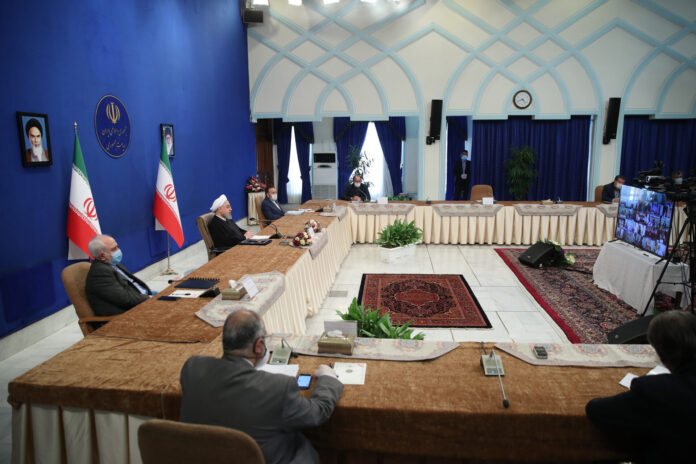
President Hassan Rouhani said Tuesday all Iranians who receive cash subsidies will be granted Rls. 10 million in low-interest loans, which will be deducted from their monthly subsidies over several months after a three-month grace period.
“The 10-million-rial loan will be paid on an interest-free basis,” he said.
“Those interested to receive this loan should announce it via SMS,” the president added.
In addition to this loan, he noted, some 3 million low-income families will receive additional aid support in four batches, part of which has already been paid.
The president noted that a third loan, amounting to 10 to 20 million rials, will go to some four million families who meet the requirements.
The governmemt’s decision to give “interest-free” loans came after it got under fire for an earlier decision to get 12% interest from the poor families.
However, now the government has decided to pay for the interest itself.
The tulips have changed the city’s scenery. However, the beautiful event has remained unseen to a large degree due to the coronavirus outbreak which led to the closure of the parks.
What follows are YJC’s photos of tulips festival in Mashhad, Khorasan Razavi province:
The coronavirus pandemic has gripped all countries and infected more than half a million people around the world, so far. Some 100,000 people have also lost their lives to the virus. In Iran, too, all national plans have been drawn up while taking the epidemic into consideration.
The Royan Research Institute, which is a distinguished scientific centre in Iran, is naturally expected to adopt innovative measures in order to boost the society’s health at a time when the country is gripped by the coronavirus outbreak. One of the measures for which the research centre is known is its cell-therapy capacity. Recently, Royan has taken action to tap into its cell-therapy potential to fight COVID-19.
Head of the research centre Abdolhossein Shahverdi has, in an interview, weighed in on the measures adopted by the institute to fight the coronavirus, namely the establishment of a molecular diagnostic laboratory.
“The Royan Institute has good experience in the field of cell science,” he said.
“Given that the Royan Research Centre has the necessary infrastructure, we felt that we should tap into its potentialities … to help tackle the ordeal which has gripped the country,” he added.
“Of course, treatments offered by the Royan Institute has, so far, been mostly related to infertility or cell-therapy for hardly curable diseases; however, there was good infrastructure at Roya, and with reliance on this very infrastructure, we began to put into service a molecular diagnosis lab in cooperation with the Ministry of Health and Medical Education to serve as a backup coronavirus diagnosis laboratory,” he said.
Abdolhossein Shahverdi
Royan Institute Moving to Treat COVID-19 Patients via Cell Therapy
One of the problems that develop in patients infected with the coronavirus is that their lungs are affected, and these problems may result in subsequent complications. So far, good treatment methods have been used for COVID-19 patients in Iran by drawing on China’s experience in fighting the coronavirus as well as the findings of medical institutes inside Iran. In addition, a large percentage of patients have recovered using these very methods and returned to the bosom of their families.
he Royan Research Institute has experience in the field of cell therapy and using Mesenchymal stem cells (MSCs). The institute has a record of treating different illnesses using cell therapy. Mesenchymal stem cells are among good cells used in cell therapy and play a role in moderating reactions by the immune system and healing damaged tissue. The research institute has received initial licenses from the Ministry of Health and Medical Treatment to use MSCs. By drawing on its experience in cell therapy and its treatment record in that regard, the Royan Institute has taken the first step in developing a treatment for coronavirus patients through cell therapy and stem cells in cooperation with other hospitals and the Tehran University of Medical Sciences.
“In this treatment method, MSCs are used. One of the sources of these cells are umbilical cord blood cells or marrow cells,” he noted.
“In the past, we had used these cells to treat some incurable illnesses such as cartilage and bone diseases, and we achieved good results,” said the director of the institute.
He expressed hope the treatment method will successfully pass the stage of clinical tests and prove useful in treating coronavirus patients.
“Despite US sanctions, Iran has made significant progress in fighting the pandemic, thanks to its human & scientific resources, and friends abroad,” said Mohammad Javad Zarif in a tweet.
He further said the coronavirus pandemic was an opportunity for the United States to give up its habit of imposing sanctions, but it missed it.
“Covid19 was opportunity for US to kick its addiction to sanctions. Instead, it will now live in infamy in the memory of our people,” he added.
Despite US sanctions, Iran has made significant progress in fighting the pandemic, thanks to its human & scientific resources, and friends abroad.#Covid19 was opportunity for US to kick its addiction to sanctions. Instead, it will now live in infamy in the memory of our people.
Iranian officials have, on numerous occasions, lambasted Washington for its hostile approach of maintaining illegal sanctions on the Islamic Republic.
Zarif himself had called on the international community to react and break its silence in the face of Washington’s economic and medical terrorism.
“Donald Trump intensifies the United States’ illegal sanctions in a hostile manner in order to deplete the resources Iran needs in the fight against the COVID-19 virus; this comes at a time when our citizens are dying due to the virus. The world can no longer remain tight-lipped in the face of the United States’ economic terrorism which is associated with medical terrorism,” Zarif had said.
This comes as the US claims to be willing to help Iran while it refuses to lift sanctions.
“If we can help the Iranians with this problem, we are certainly willing to do so… All they have to do is ask. We will have great professionals over there,” Trump said in a speech recently.
Trump’s remarks were met with critical reactions from Iranian officials.
“Those who even kept medicines and foodstuffs from reaching [Iranian] people and imposed sanctions on them and committed the most evil acts against the Iranian nation over the past two years unfortunately came forward disguised in a mask of sympathy and claimed to want to help the Iranian people,” said Iranian President Hassan Rouhani.
“If you are honest, at least lift the sanctions; that would be the first step,” Rouhani added.
US Sanctions Illegitimate Obstacle in Way of Granting Loan to Iran: VP
In a piece published by dolat.ir, Laya Joneydi also explained the unlawful nature of US sanctions.
Here is the full text of this article:
Unilateral and extraterritorial US sanctions are undoubtedly against the principles of international law, including the principle of territorial integrity, the principle of non-interference in the affairs of other countries, the principle of free trade, the principle of equal sovereignty, and principle of democracy.
These sanctions (especially secondary ones), beyond the territory of the United States, affect companies and banks and businessmen based in other countries, interfere with the affairs of third countries, and impede free trade. They also question the equal sovereignty by imposing the will of the sanctioning government on the will of countries interested in having trade and economic relations with the sanctioned country. These sanctions ultimately weaken democracy by forcibly replacing the policy set by the parliament and the government of a third country that intends to cooperate with the sanctioned country, with the sanctioning government’s favourite policies.
In addition to violating the above principles and some other ones, regarding the relationship between Iran and the United States, the recent behaviour of the US is a violation of the international agreements and treaties because at least at the time of imposing sanctions agreements and treaties such as the JCPOA and the Treaty of Amity were in force.
Sanctions violate fundamental human rights when they hinder access to the general and basic needs of a nation, such as food, agricultural items, medicine, medical equipment, or transportation and monetary exchange.
Therefore, the International Court of Justice has issued an interim order to suspend sanctions in the above-mentioned fields, due to the urgency and necessity of the matter, before looking into Iran’s lawsuit against the United States.
The outbreak of the coronavirus and the need for medical and pharmaceutical items and equipment to prevent, diagnose and treat the disease have exacerbated the harsh, inhumane and, of course, illegal and unlawful nature of these sanctions.
This disease has shown that sanctions, in addition to violating obligations and customary rules and principles, inevitably violate basic human rights, as well as other principles of international law, such as the principle of cooperation between countries to control and contain such diseases. Because they encompass the right to life and health of the people and the security of human society, and are enshrined in the Charter of the United Nations and the documents of the World Health Organisation. Of course, the necessity of ending this type of policy is reminded both by legal standards and by the conscious consciences and moral values.
In fact, sanctions have posed a threat to the country’s health system, at least from two perspectives. First, it has discouraged pharmaceutical companies from providing the necessary medicines, equipment, and goods because of fear of losing market share or being fined for cooperating with sanctioned countries. On the other hand, if they accept the companies risk, the sanctions have eliminated the possibility of paying the money of goods and services due to banking restrictions on the transfer of funds. Therefore, cooperation with them is fruitless. More significantly, they have deprived countries under sanctions such as Iran of the financial resources, including the export of oil and petroleum products. By blocking these resources they practically target the country’s financial capacity to modernise and improve the health system.
The warnings of economists, health professionals and even politicians in recent days have all been based on the same worries, but in the case of infectious diseases such as the coronavirus, these risks are no longer limited to the sanctioned country because the transmission chain continues in the sanctioned country and it could endanger other people due to the survival of the disease.
Although the United States is trying to justify this practice with its domestic sanctions laws, and its representatives in international institutions and organisations vote in accordance with these laws, it should not be forgotten that these laws, in addition to violating the territorial sovereignty of other countries, are in conflict with the rules and principles of international law.
At the same time, they violate the special international obligations of countries to cooperate in controlling contagious diseases, especially epidemic diseases that are considered a threat to international peace and security, because such obligations can be an independent source and basis for international responsibility of governments.
This should convince the decision-making body of international financial institutions, including the International Monetary Fund, the World Bank, etc., that they must not consider unilateral and transnational sanctions that are contrary to international obligations, to be effective in reviewing requests and making decisions.
National courts, for example, have typically ignored US domestic laws and rejected the implementation of federal court verdicts that have been issued in accordance with these laws but are in conflict with international customary laws. A recent example is the decision of the Luxembourg Court of Appeals to release Iranian bonds. Of course, other administrative obstacles must be removed to restore these funds.
Thus, all of the above principles, rules and commitments are a valid basis for Iran to use active diplomacy to release its blocked assets. Moreover, the Islamic Republic must pursue getting loans from the International Monetary Fund to control and contain this pervasive disease. Iran should take the necessary legal steps to lift illegal sanctions that have been unilaterally and extraterritorially imposed as an obstacle to accessing funds and loans.
The Legal Department of the Iranian government, with the coordination and cooperation of the relevant executive bodies has taken the necessary steps for this purpose.
Nowhere is this more evident than in social media. People will even buy real Instagram comments just to keep up with the need for communication.
Social media is a great way to get in touch with people all around the world. They can be people you have known all your life or people you have only ever met online. Social media also offers its users the opportunity to communicate with real-life celebrities, removing the distance that exists between celebrities and fans in the real world. With so many celebrities regularly taking to social media, being able to interact with them is easier than ever before. Getting comments from celebrities can be a major boost for your profile but even if you don’t get them, any comments you do get can prove to be useful. Why is this?
What are comments?
Comments are an essential part of interaction for your social media profile because they offer other users the opportunity to engage directly with you. The type of comments that you might receive can be quite varied. They can range from complimentary and congratulatory to friendly or inquisitive all the way to critical or antagonistic. While these latter types of comments may not be ideal, it is important to give them as much attention as the rest of them. This is because every comment, regardless of its content or origin, represents someone taking the time to put their thoughts into writing and send it to you. Comments are not like views or likes; they take a considerable amount of added effort and time. Because of this, it is crucial that you respond to them. This shows other social media users that you are happy to address people’s concerns and engage with them when they make the effort to get in touch. This works wonders for the wider perception of your profile and will give your brand a boost.
Why do you need comments?
The big selling point for comments is that they provide social media profiles with a substantial amount of interaction. Unlike views and likes, which only offer one specific type of engagement, comments serve as a social media feature that increases interaction in various ways. Comments count as one form of interaction but they also tend to attract more views and likes and, if the comment is particularly interesting, they can also encourage other users to add comments in response. With comments, the potential for further interaction multiplies. In addition to this, comments can also be used to tag other users. This means that a comment is posted containing the name of another social media user. That user is notified and taken to the comment and the post in question, resulting in more views and the potential for more likes and comments. Views and likes simply don’t provide these opportunities, highlighting exactly why you need comments for your profile.
What can I do to get more comments?
There are several approaches that can be used to encourage further comments for your profile. The use of hashtags is one of the most popular choices as it helps categorise your post and bring it to the attention of other users who might be interested in it. Another strategy that gets success is running a competition where users who want to enter must respond with a comment. In a similar vein, posting a question and asking for users to post their replies in a comment can also prove effective in generating more comments for your profile. However, with all this said, these approaches only help to encourage comments, there is no guarantee that they will deliver the amount of comments you feel you deserve. If you are looking for guaranteed comments, the only way to do this is to pay for them.
What to do if I’m paying for comments?
There are plenty of options out there for those who are considering paying for comments on social media. It is important to remember that if you pay for them, you can control, to some extent, the way that they reach your profile. As comments tend to generate further interaction in one form or another, it is recommended that you add just one to start with and then wait to see what the response is. If you feel that it is not working, you can add another. However, it is not recommended that you add too many. You want to encourage more interaction but too many comments might become a distraction when people look to read through them. Getting comments that are provocative or that encourage debate are a great way to generate more engagement while having users tagged in these comments is another good approach.
What to take away from all this?
In conclusion, comments fulfil two beneficial functions for social media users. First of all, comments give them the chance to interact with other users and develop a rapport between them. This is always useful if you are looking to raise your own profile. Secondly, comments provide your account with much-needed interaction and have the potential to generate even more, depending on its content. For these reasons alone, you should be focused on getting as many comments as possible.