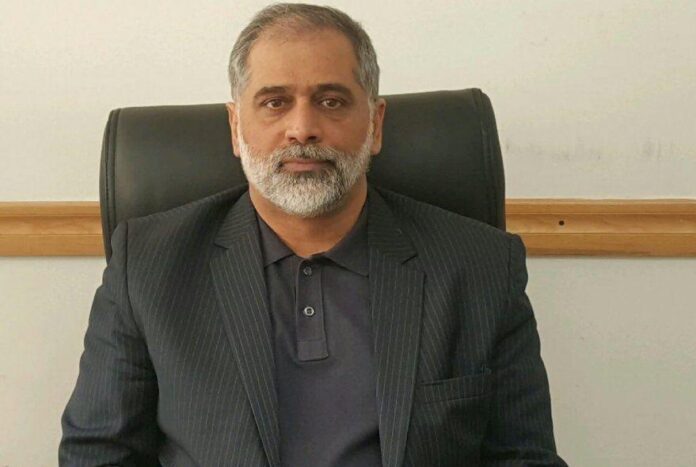
Minister of Cooperatives, Labour and Social Welfare Mohammad Shariatmadari said among the priorities of the government is to prevent a rise in unemployment and keep workers from being laid off.
“Workers in 10 job groups whose employment has been affected by the coronavirus outbreak will be supported,” he said.
The minister added some 600,000 people have registered their names on a website for unemployment benefits.
“The trend of unemployment is alarming in all countries. In Iran, too, the necessary predictions have been made to support some workers who have lost their jobs due to the COVID-19 outbreak,” he said.
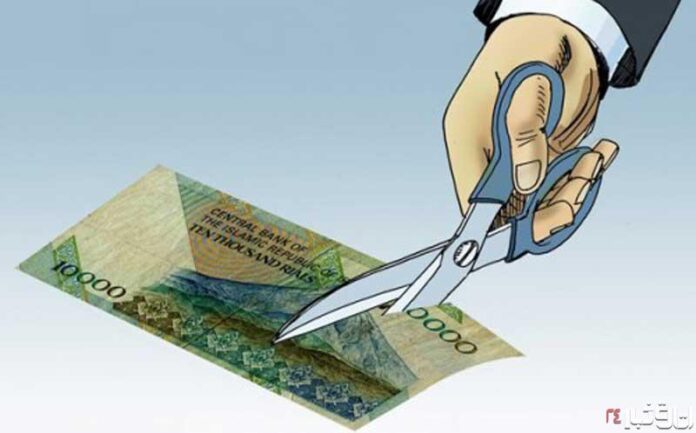
He noted some Rls. 50 trillion ($334 million) has been earmarked to provide unemployment benefits for these workers.
Minister of Culture and Islamic Guidance Abbas Salehi announced it in separate letters to the first vice president, the president’s chief of staff, the head of the Plan and Budget Organization and the vice president for economic affairs.
The minister called for the government to immediately help and support affected businesses in the domains of culture, art and media.
He called on the president to issue orders to ease economic pressure on individuals and businesses working in the above-said fields.
The minister also presented detailed figures on the losses that the culture, art and media sectors have suffered.
In a phone conversation on Wednesday, Iranian Deputy Foreign Minister for Political Affairs Abbas Araqchi and Azeri Deputy Foreign Minisiter Khalaf Khalafov urged that the two nations should continue their cooperation in all areas.
In the phone talk, Araqchi touched upon certain reports published on the web and social media, and said, “Enemies which are against reciprocal ties between the two countries are seeking to strain relations between the two sides by publishing false reports.”
“The news claiming Iranian trucks have been moving toward mountainous Karabakh and the occupied territories of the Azerbaijan Republic are utterly false,” he said.
“While respecting the territorial integrity of the Azerbaijan Republic, Iran is fundamentally opposed to any move that would fuel conflict between the two neighbouring countries of the Azerbaijan Republic and Armenia,” he noted.
He also thanked the Azerbaijan Republic for sending humanitarian aid to Iran to help the country fight the coronavirus.
Araqchi also described as important the issue of transportation of goods between the two countries while observing health protocols.
He also referred to the quarantine condition and closure of universities and called on the Azeri government to cooperate in returning university students and other Iranian nationals to the country. The idea was welcomed by the Azeri side.
Considering the rapid and widespread developments in Afghanistan and in parallel with the relevant diplomatic moves from the Ministry of Foreign Affairs, including the Iranian Foreign Minister’s contacts with the Afghan officials and the foreign ministers of the regional countries for talks about the issue, the Ministry of Foreign Affairs of the Islamic Republic of Iran’s Center for Political and International Studies held a video conference meeting, attended by the international state and non-state authorities and figures, to study and discuss the latest developments in Afghanistan.
The meeting was attended by the special representatives of the United Nations and the European Union for Afghanistan, as well as the special representatives or senior authorities and experts from Norway, Germany, the US, Uzbekistan, Afghanistan, India, Pakistan, Russia, Belgium and France.
Participants in the video conferencing discusses the latest status of the negotiations between the Taliban and the Afghan government, the possible scenarios for the future of government of Afghanistan, the arrangements for the participation of the Afghan political officials in power, the national, regional and international challenges, the negative consequences of ignoring the achievements of Afghan people over the past two decades, as well as the democratic principles and frameworks stipulated in the Islamic Republic of Afghanistan’s Constitution.
In a statement on Wednesday, Seyyed Abbas Mousavi voiced concern about the US president’s decision to suspend contributing to the World Health Organization’s budget and halt funding to the international organization amid the critical situation created by the outbreak of coronavirus.
The Iranian spokesman strongly condemned the US decision and slammed it as another step from the US government in undermining multilateralism and international institutions.
The coronavirus pandemic is directly threatening the health, hygiene and life of people in the world, Mousavi warned, adding, “The US is abruptly punishing the only coordinator of world health at the worst possible time and amid the fight against a global disaster, as this is utter irresponsibility and crime against humanity.”
“(US President Donald) Trump’s main purpose in suspending the World Health Organization’s budget is pinning the blame on others and covering up the US government’s inefficiency in containing and controlling the coronavirus in that country. He has called on the international community to try to compensate for the US’ unilateral measures and maintain the united global front and stand with that international organization (WHO),” Mousavi noted.
“The American statesmen must recognize that such measure is a violation of their commitments to the international community, and that one cannot hold the world’s humanitarian efforts captive by halting assistance and (exerting) unilateral pressures and take advantage of the illegal and immoral measures,” the Iranian spokesperson concluded.
In a phone conversation on Wednesday, Zarif and Wang Yi conferred on the latest political developments in Afghanistan and the return of peace and stability to the country.
The two top diplomats further discussed bilateral relations, the comprehensive and strategic partnership between the two countries, and the joint fight against coronavirus.
They also conferred on the United States’ hostile policies, including the regime’s unilateral and inhumane sanctions against the Iranian nation.
The Iranian top diplomat had earlier held separate phone talks with his Qatari, Turkish, Russian, and Indian counterparts to discuss the political crisis in Afghanistan that emerged following the recent presidential election.
In these phone calls, Zarif stressed the importance of restoring peace to the country.
Back on Sunday, the Iranian foreign minister also held talks with Mohammed Haneef Atmar, the acting foreign minister of Afghanistan. In this phone call, Zarif underlined the importance of strengthening unity among Afghanistan’s various parties and establishing peace and stability in the country.
Last month, Abdullah Abdullah, who served as the chief executive officer of the outgoing administration, rejected a decision by Afghanistan’s Election Commission to announce Ashraf Ghani as the winner of the presidential election, proclaiming himself to be president-elect. On March 9, Ghani and Abdullah both held inauguration ceremonies in the capital Kabul.
A few days ago, the top Iranian diplomat held separate phone conversations with Ghani and Abdullah on issues of common interest, from the latest developments in Afghanistan’s political arena to bilateral cooperation in the battle against the new coronavirus pandemic.
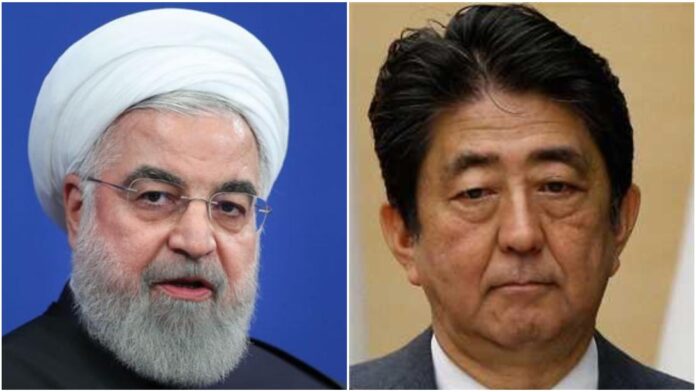
Speaking in a cabinet session on Wednesday, President Rouhani said despite what the enemies are saying, last year the economic growth was positive without oil.
“Last year, our economic growth without oil was positive despite all the pressures, and this year, all calculations, including the central bank’s prediction, show that economic growth and inflation will be better than two years ago despite the enemies’ propaganda,” he added.
He further noted that the government must now fight the COVID-19 and unemployment problems at the same time.
“Today, people’s concern is health and livelihood, and we strive to fight the disease and unemployment at the same time,” Rouhani said.
“If we can implement this comprehensive vision well, God willing, we can lead the country step by step to where it is desirable for people,” he added.
The president said coronavirus is a problem for all countries in the world.
“Almost the whole world has been affected by this wave of disease; both world politics and economics, people’s lifestyle in the world, trade and transactions and everything are under the impact of the new situation,” he said.
The president said his administration is duty-bound to identify the infected people and to separate them from the society and to send them to hospitals and rehabilitation centres so that the illness does not spread to other parts of the society.
He further noted that the country is proud of its medical staff in this historical period, as from the first day until today no patient has gone to a hospital to face a closed door.
“This is one of the honours of our medical sector, and of course the doctors, nurses and all the medical staff have made an extraordinary effort and sacrifice during this period, day and night,” he added.
“In some countries, when some patients went to the hospital and a bed was empty, the nurse and the doctor were not enough, and in some countries, there were enough beds, but the intensive care unit could not accommodate the patient.”
“In our country, everybody supported the underprivileged with insurance, and in some cases nothing was received from them and even foreign nationals who live legally in our country received treatment for free,” he went on to say.
1- Luxembourg Confirms Iran’s Victory over US in $1.6-Billion Case
Afkar Newspaper:
1- Good News: Iran Says Exclusive Antibody Made for Coronavirus
Aftab-e Yazd Newspaper:
1- World Under Shadow of Red Dragon
2- An Analysis of Sanders’ Withdrawal, His Endorsement of Biden
3- Iranian Genius ‘Arat’ Praised by Messi
* What’s He Doing in Liverpool?
1- UAE’s Plan to Improve Ties with Iran in Post-Corona Era
2- Sad Story of $4.8 Billion Worth of Missing Public Funds
Javan Newspaper:
1- Judiciary Spokesman Praises ‘Unmatched’ Fight against COVID-19 in Iran Prisons
2- Basij Launches Movement to Help 3.5 Million Families
3- Injecting ISIS Virus to Iraq amid COVID-19 Outbreak
Jomhouri Eslami Newspaper:
1- Major Food Producers Warn Hunger May Double amid COVID-19 Outbreak
Kayhan Newspaper:
1- IRGC Chief: Revolutionary Bodies Helping 3.5 Million Families to Heal Their Corona Wounds
2- Al-Kazemi Vows to Expel Americans from Iraq
3- Middle East’s Biggest Mask Production Factory Opened with Capacity of 4 Million Masks
Setareh Sobh Newspaper:
1- COVID-19 Daily Deaths in Iran Below 100
2- Plasma-Therapy Used to Treat Corona Patients in Tehran
Shahrvand Newspaper:
1- Poor People Are Most Affected by Pandemics
2- Rouhani: Interest-Free Loans to Be Paid to Iranian Families
Shargh Newspaper:
1- Luxembourg Rejects US’ Bid to Seize Iran’s Assets
2- Decrease in Number of Deaths Caused by COVID-19
Kianoush Jahanpour announced on Wednesday that 1,512 new cases of coronavirus infections have been confirmed in the past 24 hours, which brings the total number of cases to 76,389.
He also noted that 49,933 patients have so far recovered and been discharged from the hospital.
According to the spokesman, 3,643 COVID-19 patients are currently in severe conditions of the disease.
So far, 299,204 COVID-19 tests have been taken across the country, Jahanpour said.
Except for one day of rise in the daily number of infections and fatalities (Apr. 10), the figures have been decreasing in the past 16 days.
This is the second day in a row that the daily number of fatalities has remained below 100.
Officials, however, have warned people to continue taking the virus seriously as any negligence may result in the second wave of the disease.
For this reason, the French castle is commonly known as the French castle or the castle of de Morgan.
The castle is similar to the Bastille Castle in France. The structure was built by local craftsmen with bricks taken from two other archaeological sites, the Achaemenid Darius castle and the Elamite Choqazanbil ziggurat located in the nearby ancient city of Susa. The plan of the castle is trapezoidal in shape.
The historical castle was registered in 2001 in the list of national heritage of Iran.
The castle was heavily damaged by Iraqi bombs during the 1980s Iran–Iraq war, but has since been completely restored by the Iranian government.
It is now used as a museum and the historical objects as well as tools of the French archeology are kept in it.
Here are photos of the castle retrieved from ISNA: