A member of the designing team and director of the Isfahan Museum of Contemporary Arts says the masks have been designed as part of a campaign started by Iranian artists in various fields of literature, cinema, music and visual arts to lift the people’s spirits amid the COVID-19 outbreak.
Mahdi Tamizi said Isfahani artists sought to appreciate the efforts of medical staff in Iran and other parts of the world on the International Nurse Day by offering the masks to nurses.
He further noted that the masks will be useful for preventing the spread of the coronavirus, and will help promoting one of the famous handicrafts of Isfahan in the world.
“The masks prepared by Isfahan Art Group are made of Qalamkar (a type of hand-painted cotton textile). The design shows the Arc Tower whose image is engraved on the entrance of a historical bazaar in Isfahan,” he noted.
Tamizi further added that some of the masks will be sent to 13 sister cities of Isfahan, such as Xi’an in China, Kuala Lumpur in Malaysia and Freiburg in Germany.
“A number of these masks will also be sent to several cultural places in the world, such as the United Nations and the World Health Organisation,” he continued.
The Iranian Vice Presidency for Science and Technology’s Patent Centre said on Saturday it has supported 96 Iranian inventions in registering patents in the international offices so far.
The centre says its provides the support to commercialize the Iranian inventions on the basis of homegrown technologies and to assist the local inventors in the “complicated” process of applying and obtaining an international patent.
An inventor usually has to bear the heavy costs of applying for an international patent, but the Iranian Vice Presidency for Science and Technology’s Patent Centre reduces the burdens with special methods of interaction with the foreign patent offices and also covers more than 90 percent of the costs once an Iranian invention is qualified, a report by the government’s website said.
In the current Iranian year, which began on March 20, the Vice Presidency for Science and Technology’s Patent Centre says it has broadened the patent registration market in order to expedite the process of fulfillment of goals of the Iranian businesses, and is offering services for patent applications in the US, Canada, China, and the European Union (EU).
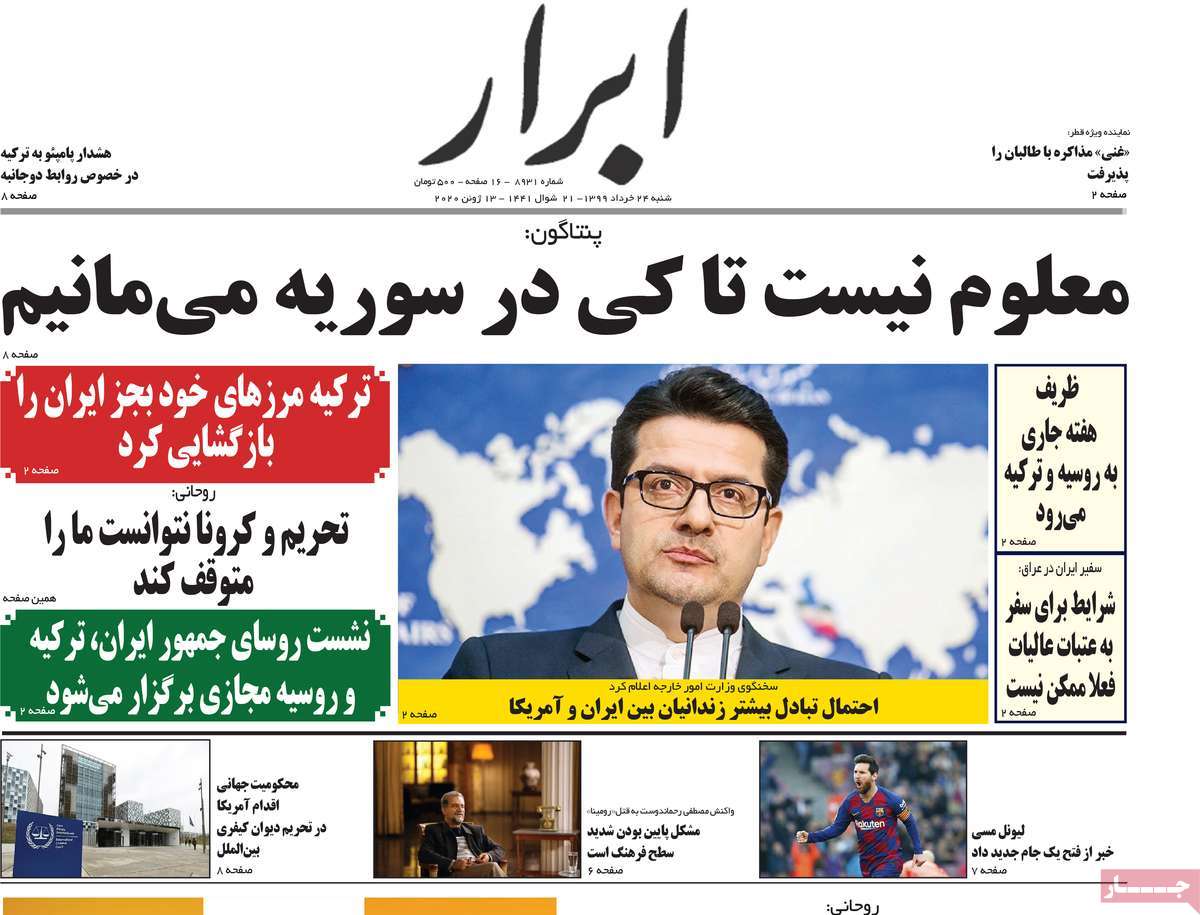
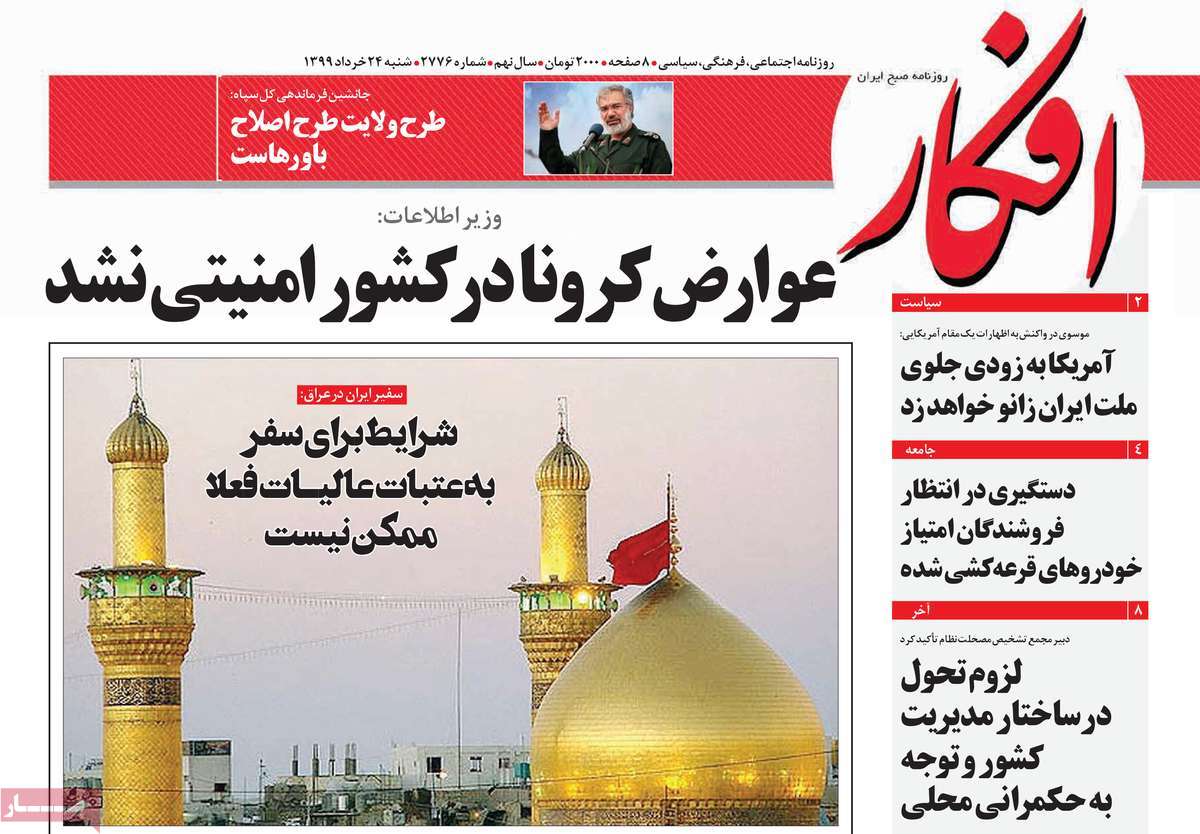
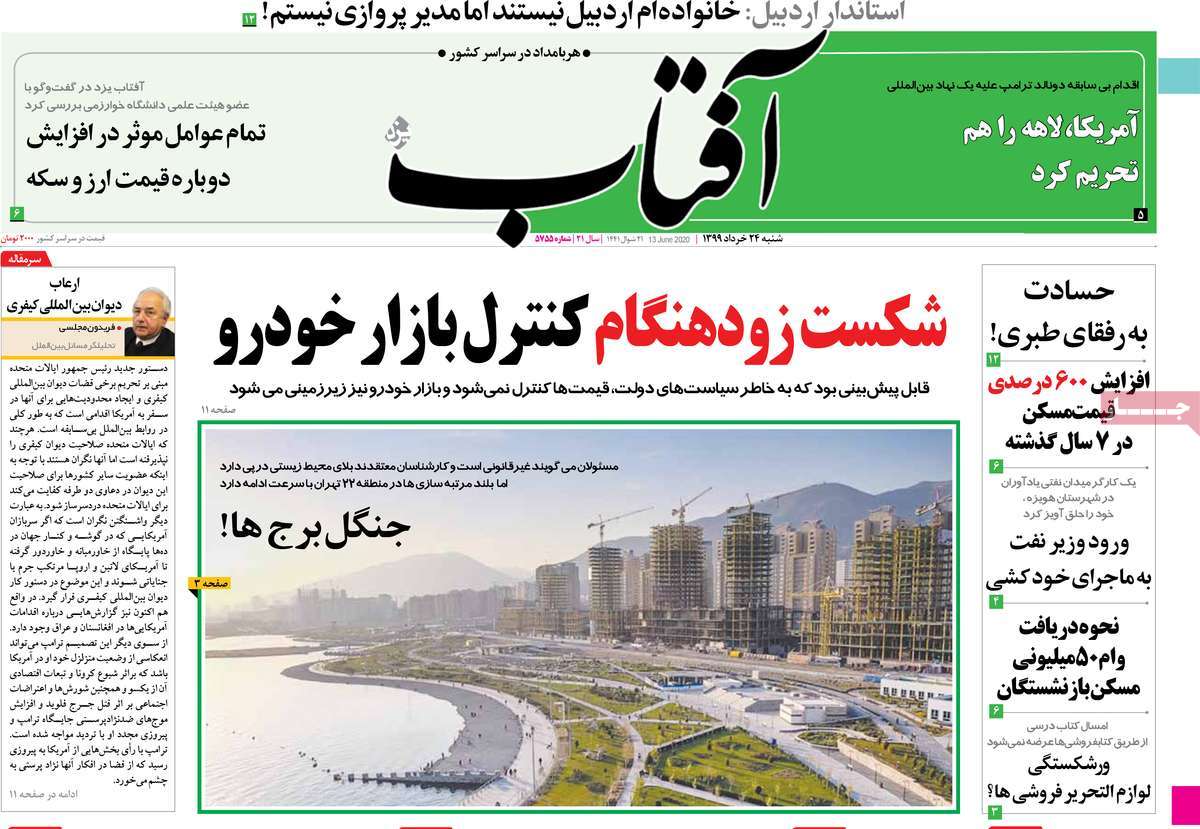
Iran Exports Coronavirus Testing Kits to Germany, Turkey: Ministry
Iran Stresses Need for Controlling Afghan Border, Activation of Inactive Border Posts
JCPOA Has Not at All Prevented Our Progress: Zarif
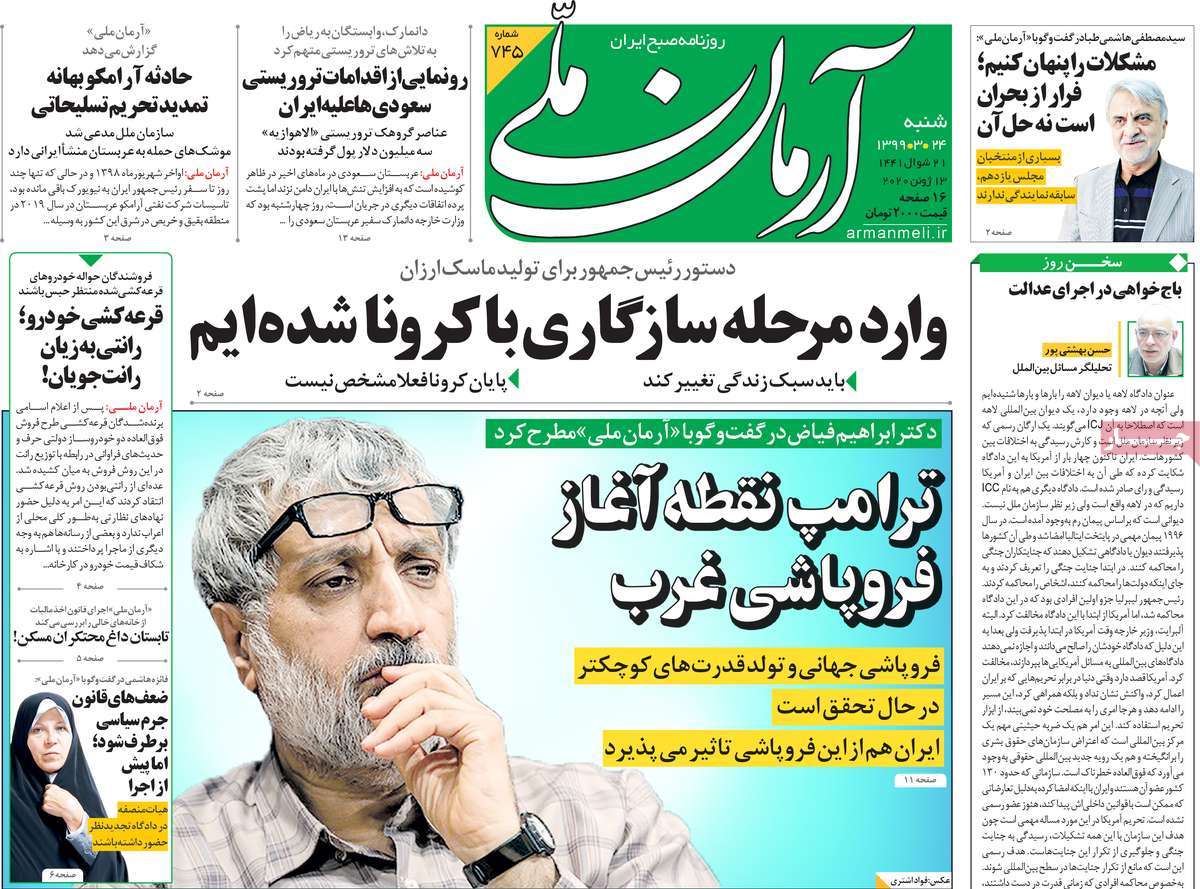
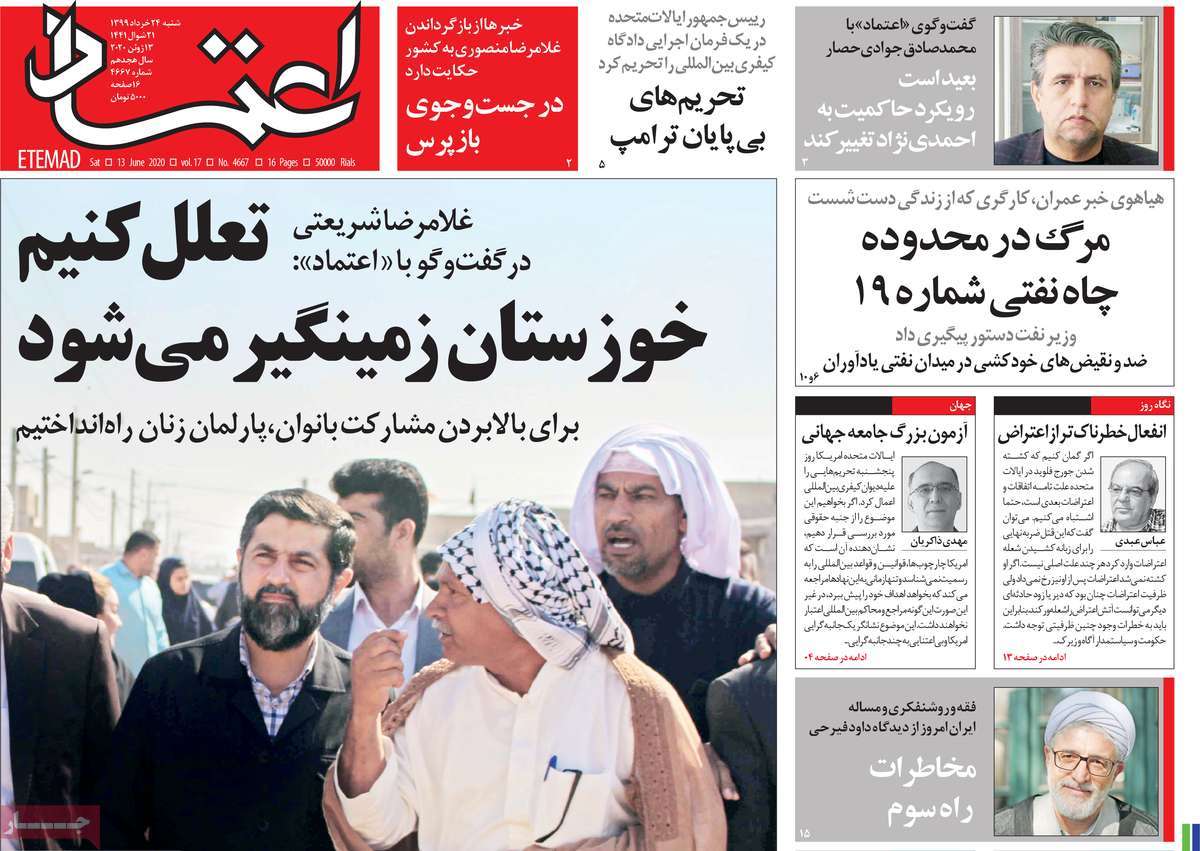
Aftab-e Yazd Newspaper:
1- Tehran-Riyadh: An Equation without Solution
Bin Salman Has Asked Iraq to Mediate between Iran, Saudi: Report
2- US President Threatens to Cut Off All Ties with China
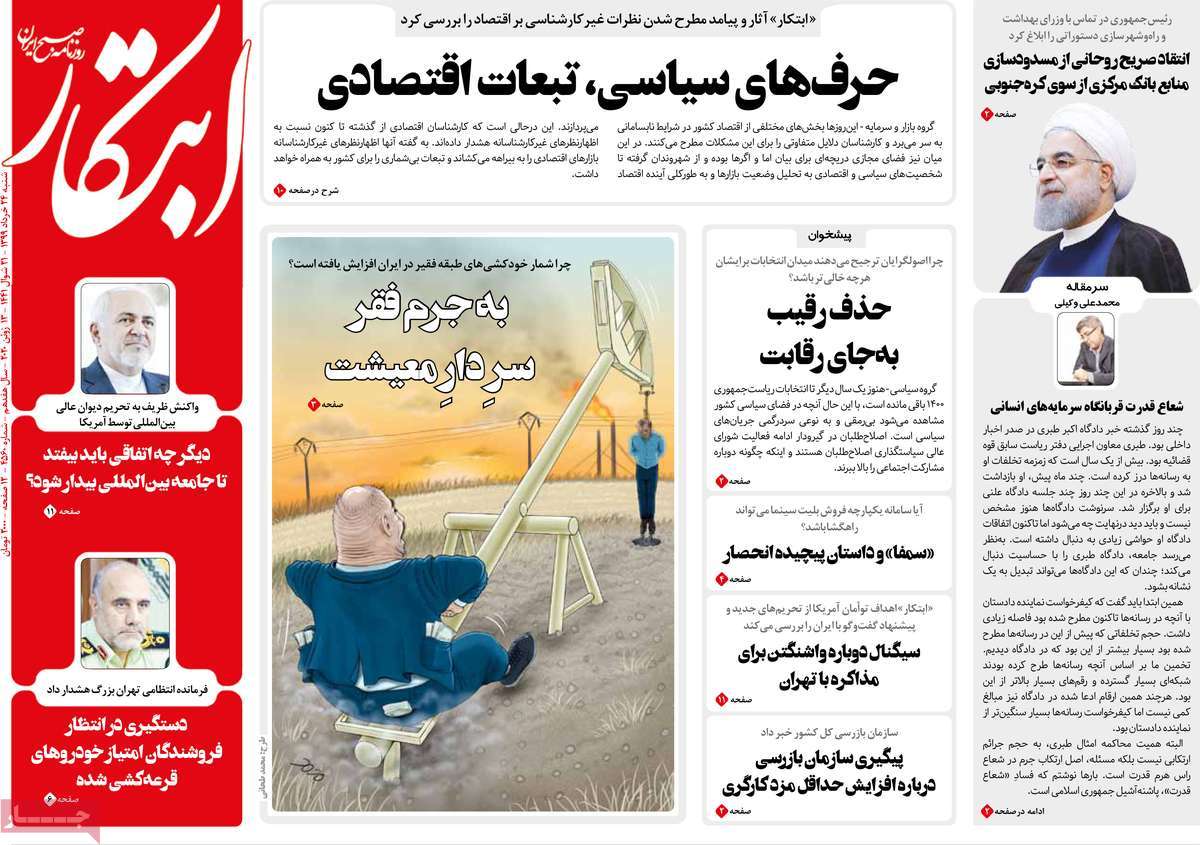
Ebtekar Newspaper:
US Ended Its Participation in UNSC Resolution 2231 Long Time Ago: Zarif to US
US, China in Star Wars: The Virus Turns into Turning Point in US-China Rivalry
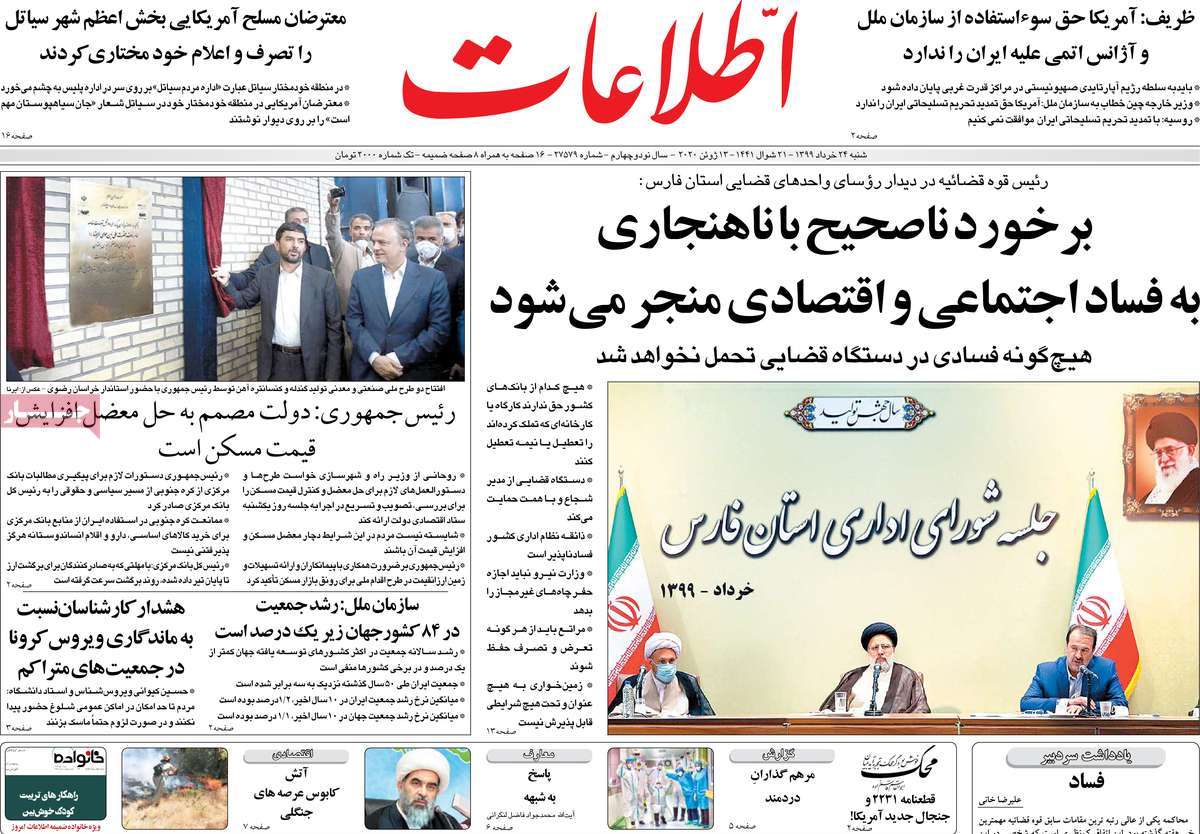
Ettela’at Newspaper:
Zarif: Americans Will Lose; European Parties to JCPOA Must Correct Their Behaviour
Russia Takes US’ Coup Attempt against Venezuela to Security Council
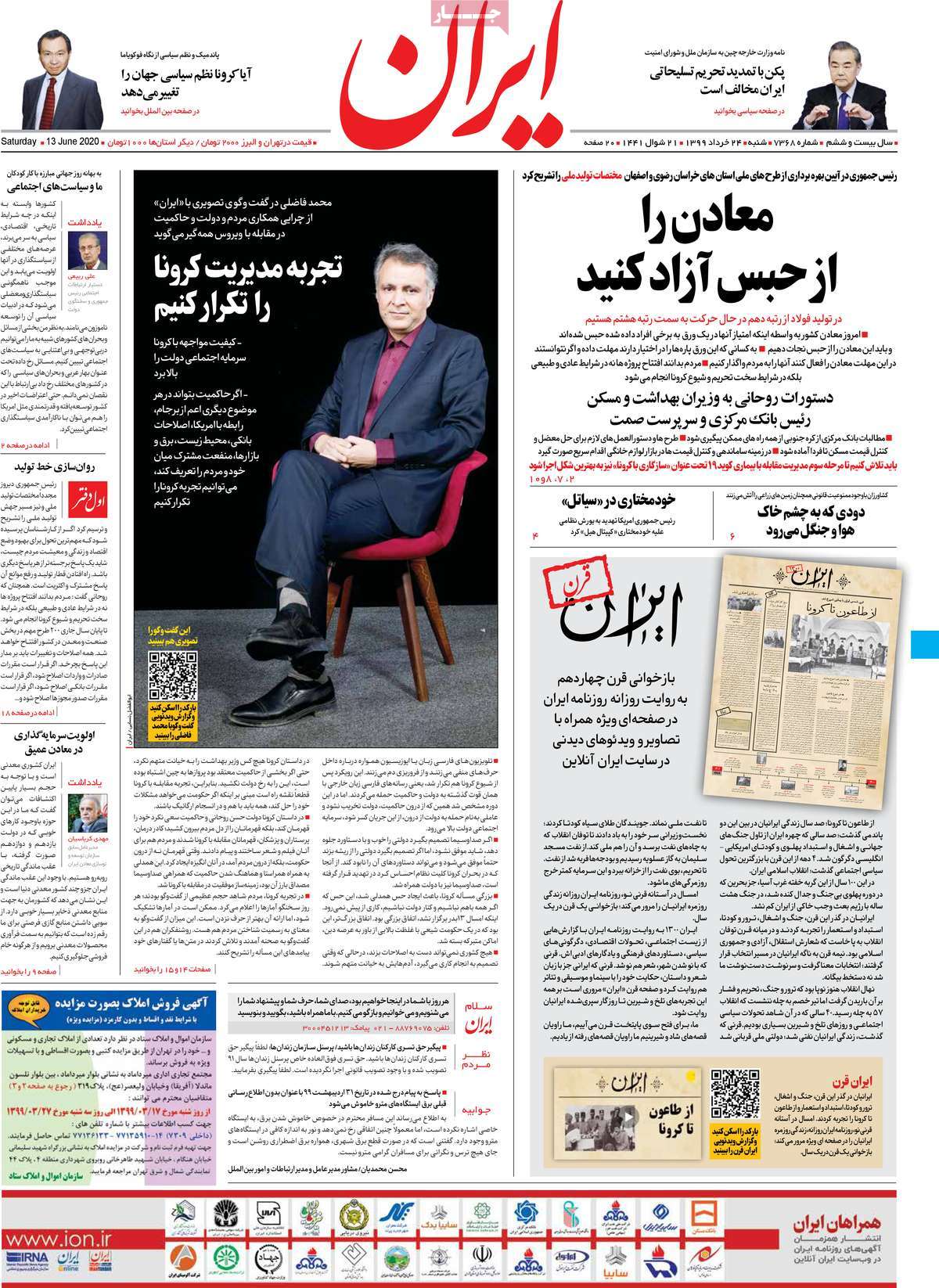
Iran Newspaper:
Corona Vaccine Must Be Given to Entire World Population for Free: 120 World Figures
Washington Threatens to Sever All Ties with China: US’ Dark Winter under Trump
Javan Newspaper:
Corona in Its Final Days
Health Ministry: 80% of New Cases of Infection Have Weak Symptoms, Receive Outpatient Treatment
Moscow, Beijing to Veto Extension of Iran Arms Sanctions
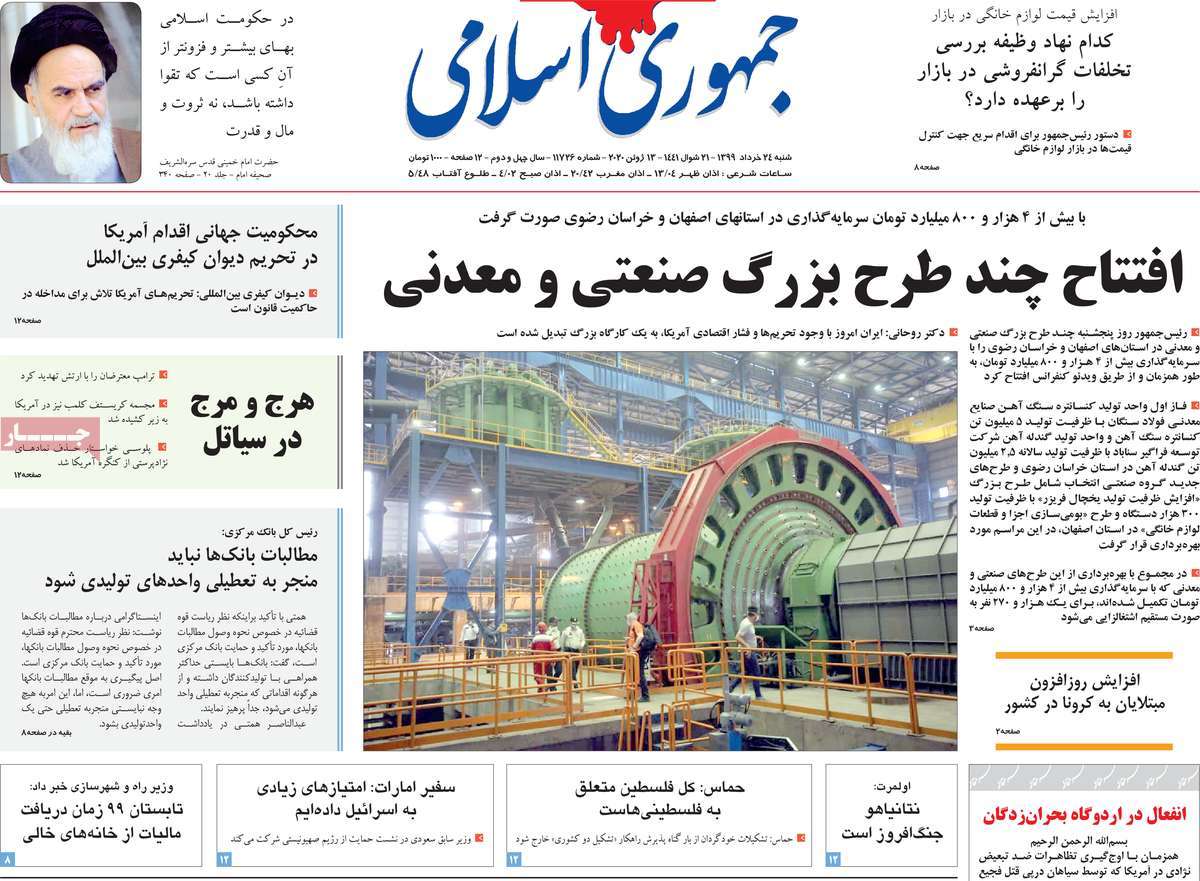
Jomhouri Eslami Newspaper:
Russia, China Strongly Opposed to US Adventure of Extending Iran Arms Embargo
Iran Calls on Freedom-Seeking Nations, Governments to Show Effective Support for Palestine
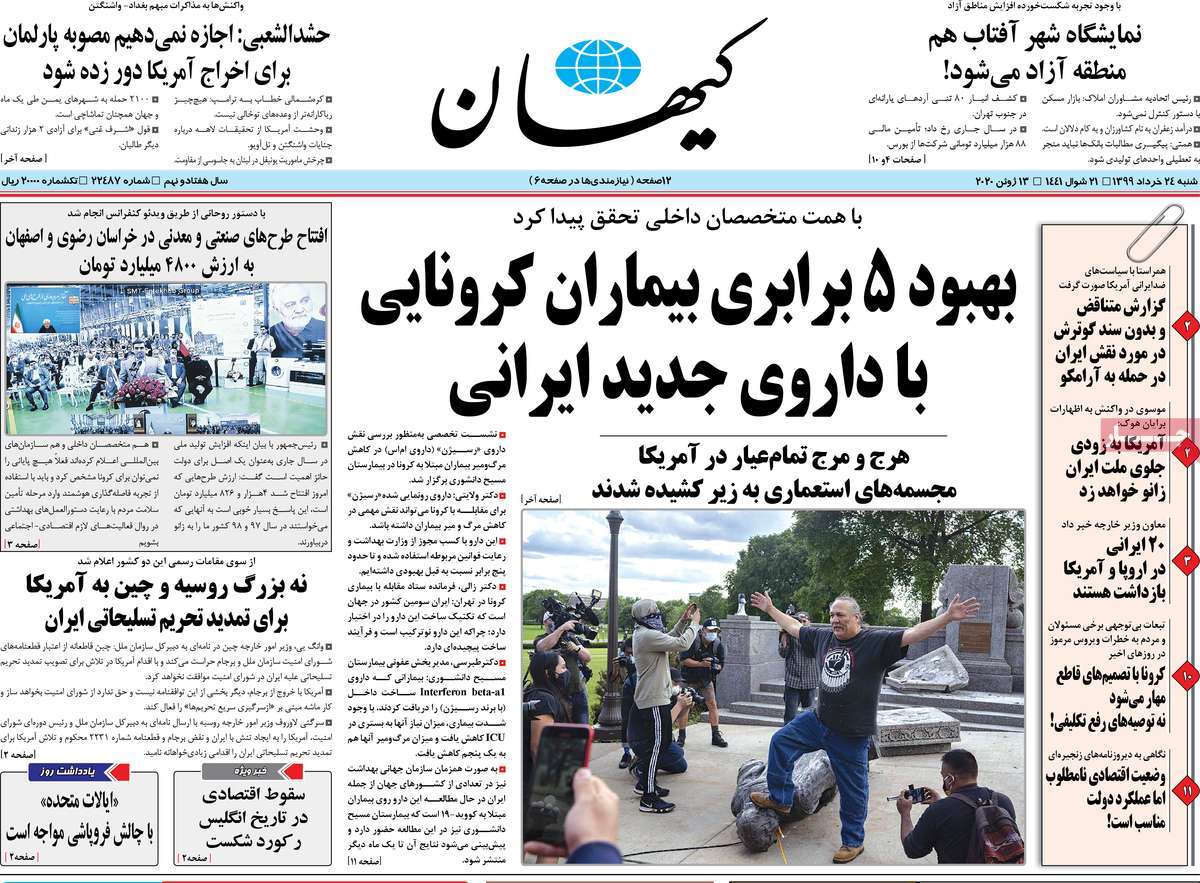
Kayhan Newspaper:
US Dangerous Plan to Help 10,000 ISIS Elements Escape
The port city of Chabahar, which is about 17,150 square km in area with a population of nearly 200,000, is located in Sistan and Baluchestan Province in extreme southeastern Iran. Chabahar is the only Iranian port by the Indian Ocean.
The fact that this Iranian port has deep waters right up to its shoreline makes it ideal for ocean liners to dock. In other words, Chabahar does have what it takes to turn into a mega-port.
1 of 9
Chabahar port is a transit gate in southeastern Iran and a strategic area for expansion of the transit industry. On top of its strategic position, Chabahar is home to many tourist attractions.
The following is a list of wonderful sites in the port city worth visiting:
Tis Port
Tis Port has been originally built during Achaemenid era.
Tis Port, which dates back 2,500 years, is known as Tiz Port in the books on Alexander the Great’s conquests. Tis used to be a busy commercial port which was destroyed during the Mongol invasion of Iran. Ancient sites such as castles and graves in Tis Port are indicative of its age-old civilization.
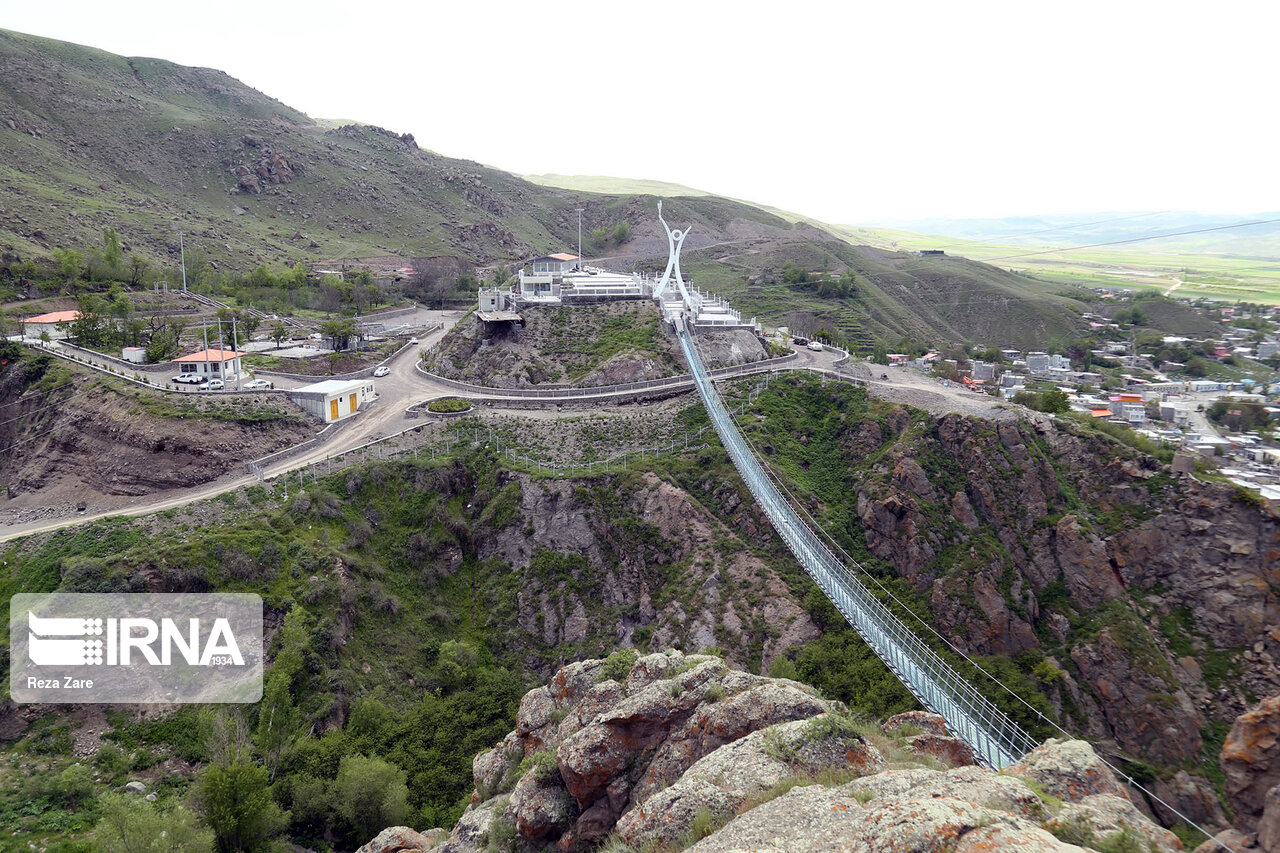
Tis Mosque of Chabahar
Tis Mosque has been constructed a millennium ago
Tis Mosque is located in a beautiful namesake village, 9 km from Chabahar. The mosque was first built 1,000 years ago. Thanks to the single-minaret mosque’s proximity to Pakistan and India, its architecture and interior design are similar to Pakistani and Indian places of Muslim worship.
Tomb of Seyyed Gholam Rasoul
The tomb of Seyyed Gholam Rasoul has been built during Seljuq era.
According to Muslim accounts, Seyyed Gholam Rasoul, originally known as Seyyedena Mohammad, was a Muslim Indian. On a visit to Chabahar, he decided to marry a local girl, but on his wedding night he fell ill. In his will, he asked others to refrain from mourning for him and instead celebrate for ten nights to secure blessings for his soul.
Every year on the 15th day of the 11th month of the Lunar calendar, a 10-day celebration is held in his memory at his tomb, 5 km to the northwest of Chabahar. During the ceremony, elderly women enter the tomb to say prayers for others and ask God to heal the sick while men stay outside and play music. The tomb has white walls and Indian-style architecture. The exterior of the structure is graced with paintings and religious phrases. This structure was built in the Seljuq era; its murals were painted later during the Safavid era. The tomb dates back to the 11th century AD.
Telegraph House of Chabahar
The Telegraph House is the oldest modern building in Chabahar port which was built by the British in 1864, at the end of the Qajar era, to promote sailing and trade, and to connect India, Jask [a city in Hormozgan Province] and Bandar Abbas. The beautiful structure with sloping slate shutters and arches has been registered as a national monument.
Rocky Coasts
There are stunning rocky coasts in southeastern Iran
Coasts along the Sea of Oman, particularly in Chabahar, are rocky. Iran’s most beautiful rocky coasts are in Sistan and Baluchestan Province. Whales can often be seen frolicking off these coasts.
Banmasity Caves
Banmasity caves have been either shelters of places of worship
In the Shahbazband Mountains, about 25 m above ground level, there are two man-made caves and one natural one. The trio is called Banmasity Caves by locals. In the local language, ban means a pious person and masity is a place of worship. Inside the small natural cave, there is a cubic grave whose dome is 40 cm high. On three sides of the dome, there are inscriptions and signs in red and purple which are similar to Indian writing. Seven steps away, there is a second cave made of stucco and stone. The third cave is 50 m away. These caves seem to have served as either a shelter or a place of worship. At the entrance to all three caves, there is a platform that seems to have been used for religious rituals.
Portuguese Castle of Chabahar
The main building of Chabahar Portuguese Castle has been constructed in pre-Islamic era
The so-called Portuguese Castle is located on top of a hill in the village of Tis which was an important Iranian seaport during the Achaemenid Empire. The castle which is five km away from Chabahar was built during the Safavid era. As the Portuguese started to expand their naval fleet in the 16th century, they used the castle as a base to extend their influence in Iran and other Persian Gulf countries. The area where the castle is built on dates back to the pre-Islamic era. The castle has been registered on the list of Iran’s national heritage sites and is being restored.
Pink Wetland
The Pink wetland of Chabahar is home to several aquatic species
The pink wetland of Lipar is located just 200 meters from the northern edge of the Sea of Oman and south of a namesake village in Chabahar, in Sistan and Baluchistan province. The wetland is one of the alluring natural attractions of the area where those who are fond of the marine environment can catch a glimpse of beautiful scenery. What stands out about the wetland, which sits on the edge of Lipar’s seasonal lagoon 20 kilometers to the east of Chabahar, is its water which looks pink. This body of water which is 10 hectares in area accounts for 90 percent of herbal planktons in the region and is home to a large number of species, flora and fauna.
Mud Volcano of Chabahar
The mud volcano in Chabahar is 20 m in height
In the northwest of Chabahar, 20 km away from Kahir Village, in a vast plain there is a mud volcano. Mud volcanoes are remarkable geo-tourist attractions. There are only a handful of mud volcanoes – formations created by geo-exuded slurries and gases – across the world. Sounds similar to gunshots can be frequently heard when such volcanoes are active. The mud volcano in Chabahar is 20 m in height and its crater is 12 m in diameter. Over the several years of activity, the flow of mud has formed a hill around the volcano where no plant can grow.
Martian Mountains of Chabahar
Surreal view of Martian Mountains
The southeastern city of Chabahar is on the Gulf of Oman with breathtaking natural places which are reminiscent of dreamy images. The city is home to astonishing mountains that stand in parallel with coastal areas of the Gulf of Oman. Locals call the mountains Martian because, as far as appearance is concerned, they have nothing in common with other mountains in Iran.
Baluchi Embroidery
Embroidery is an ancient Iranian art popular with Baluch women
Baluchi embroidery is an ancient Iranian traditional art popular with women. Baluchi embroidery is completely different from other styles of embroidery. People in Chabahar use such embroidery to embellish their clothes with simple, colorful patterns.
Senior Assistant to Iran’s Minister of Foreign Affairs in Special Political Affairs Ali-Asghar Khaji on Saturday stressed the Islamic Republic’s strong support for Syria in the fight against terrorism.
Speaking in a meeting with Syrian Ambassador to Iran Adnan Hassan Mahmoud, Khaji said it is important for Iran, Russia and Turkey to continue joint efforts and cooperation in the framework of the Astana process as well.
Khaji also referred to the continuation of US “unilateral” sanctions against the Syrian people amid the difficult conditions and the spread of coronavirus, highlighting that the international community must support the Syrian people, the country’s national sovereignty and territorial integrity within the framework of international law and the fight against terrorism.
For his part, the Syrian ambassador said the two countries’ relations are strategic, emphasising that consultations between Iran and Syria must be developed at the bilateral and regional levels.
The two sides also exchanged views on the latest developments in Syria and relations between Tehran and Damascus.
Syria has been under the US economic sanctions since 1979. The Arab country has also been gripped by a civil war since 2011.
Foreign Ministry Spokesman Seyyed Abbas Mousavi wrote on his Twitter account on Saturday, “Iran rejects the US regime’s attempt to discredit and blame China for the spread of COVID-19.”
Mousavi went on to say that the US regime’s move is aimed at diverting public opinion from the incompetence of the Trump administration to save American lives and reopen the country’s economy.
He also called on independent states to stand up to this coercion by Washington.
In the latest escalation of US tensions with Beijing, Donald Trump has blamed China for the scale of the coronavirus pandemic, slamming China over its lack of transparency and warning that Washington could cut off its ties with the Asian country.
“There are many things we could do,” Trump told Fox News on Thursday. “We could cut off the whole relationship. Now if you did, what would happen? You’d save $500bn.”
File photo of a group of US Navy ships re-positioned out of the path of Hurricane Maria in the Caribbean Sea in September 2017
Iran’s Fars News Agency claimed in a report on Saturday that the US Navy has deployed its USS Detroit (LCS-7), USS Lassen (DDG-82), USS Preble (DDG-88), and USS Farragut (DDG-99) to the region along with P8-Poseidon.
The report quoted its military and political analysts as saying that any encounter with the Iranian tankers will spark a reaction that may endanger US President Donald Trump’s campaign ahead of November elections.
The US has not yet reacted to the claims made by the Iranian semi-official news agency.
Reports of a shipment of Iranian fuel to Venezuela in the face of US sanctions against the two allies have infuriated the United States, with one official threatening to take “measures” against the “unwelcome” development.
The Iran-flagged tanker Clavel sailed for the South American country, the Reuters news agency reported.
The vessel tracking data from analyst Refinitiv Eikon suggests the tanker loaded fuel at Bandar Abbas port in Iran at the end of March, and sailed through the Suez Canal and entered the Atlantic on Wednesday.
A senior official in US President Donald Trump’s administration told Reuters on Thursday that the United States was considering measures against Iran in response to the fuel shipment. The official spoke on condition of anonymity.
The official said Washington has a “high degree of certainty” that the Venezuelan government is paying Iran in gold for the fuel.
Both Iran and Venezuela are under the US sanctions.
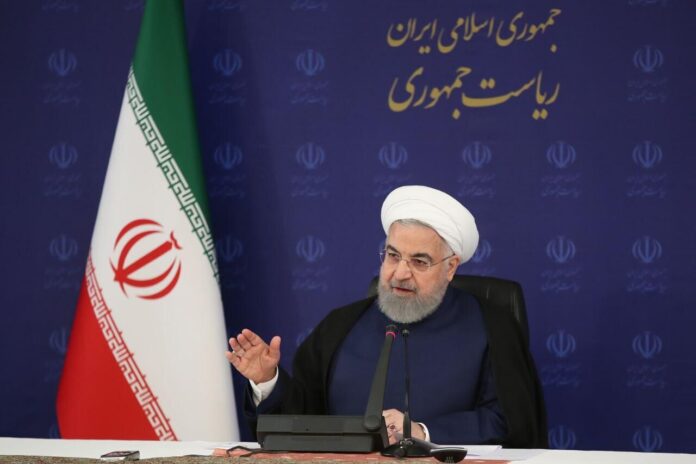
Speaking in a Saturday meeting in Tehran, President Rouhani noted that the Eid al-Fitr prayers will be held at mosques and open spaces, and not in Grand Mosques, across the country.
As per the decision of the National Coronavirus Headquarters, Rouhani said, the prayers must be held with full observance of health protocols.
said some parts of Imam Reza Holy Shrine in Mashhad will also be reopened in a limited scale for 12 hours a day after the Eid al-Fitr, which will be celebrated probably next Sunday in Iran.
The president said all Iranian universities will be reopened as of June 6, and sport activities will be resumed in empty stadiums while observing health protocols.
He also pointed to the International Quds Day rallies, the anti-Israel demonstrations annually held in Iran and several other countries on the last Friday of the holy month of Ramadan, and said this year the ceremony will be held in 218 ‘white’ and low-risk cities of the country while observing all health protocols.
Rouhani said this year it will be held as a gathering at the venue of Friday prayers, not as a rally.
In Tehran, he added, the IRGC will organize a symbolic march of cars without any gathering of people on this year’s Quds Day.
Arak is the capital of Markazi province and only a little more than two hundred years old. Despite its young age, Arak boasts many cultural and historical monuments such as the Arak Bazaar, Masroob Church, Samami School, Four-Season Museum, etc.
The city is also home to picturesque villages and natural attractions such as Meighan Lagoon. Moreover, the Great Tulip Festival turns the city into tourist hub.
The foods of Arak and its religious culture and customs may also appeal to many visitors.
Arak has numerous handicrafts such as copperwork, wood carving, carpet weaving, etc.
Arak Bazaar
The Arak Bazaar was built in the centre of the city during the Qajar era in 1813. One of the reasons behind the construction of the bazaar was that areas surrounding Arak had a strong economy.
Arak Bazaar
1 of 9
The Mehr Plaza
The Roof of the Kashani Plaza
The Arak Bazaar, the Carpet Sellers’ Plaza
The Bazaar, The Kashani Plaza
The Arak Bazaar, the Carpet Sellers’ Plaza
The Mehr Plaza
The Bazaar, The Kashani Plaza
The Mehr Plaza
The Mehr Plaza
Masroob Church
The Masroob Church is one of the historical monuments dating back to the Qajar era. The church was registered on Iran’s List of National Heritage Sites in 2000. The lintel of the church is decorated with statements written in the Armenian language. The church was built in 1914 and contains four sections: the school, the priest’s home, a congregation hall and the church.
Masroob Church
Samami School
The Samami School was constructed in 1903 by Zolfaghar Khan Bayat. Like the Darolfonoon school in Tehran and Roshdieh School in Tabriz, Samami ranks among the first modern-style schools built in Iran.
Samami School
Four-Season Museum
The building was originally used as a public bath and built almost 100 years ago. It is the only bath in the country where a specific section is dedicated to religious minorities.
This invaluable monument was registered on Iran’s List of National Heritage Sites. In 1994, after its restoration and renovation work was completed, the building opened as an archaeology and anthropology museum.
Four-Season Museum
1 of 4
Ghanyarogh Village
Markazi is one of the provinces which is home to the largest number of ancient villages which boast pristine nature.
The village of Ghanyarogh lies 10 kilometres west of Arak and has a cold-moderate climate. Gardens, fields and dams are among the visitor attractions of the city. The villagers are very hospitable. There is a holy shrine on the way to the village called Imamzadeh Tahir, which is a place for relaxation.
Ghanyarogh Village
Gerdoo Valley
The Walnut Valley is an exemplary tourist site measuring an area of 100 hectares. It is located in the south of the city and enjoys a pleasant atmosphere and a virgin nature. The valley is also easy to reach. The reason why it is called the “Walnut” valley is because there are countless walnut trees there. Families and residents go to this valley to have fun and enjoy themselves, especially on Fridays and holidays.
Gerdoo Valley
1 of 2
Meighan Lagoon
Meighan Lagoon lies 15 kilometres from Arak and covers an area of some 25,000 hectares, which includes the lake along with three islands in the middle as well as the desert area and nearby plains. Each year, the lagoon hosts a large number of migratory birds, including rare and protected species. November 6 is named as Crane Day because cranes amass the lake that time around. The lagoon contains the largest stocks of sodium sulfate in the country.
Meighan Lagoon
Bird-Watching Tower at Meighan Lagoon
The 12-metre-high tower contains a booth from where birds can be watched. It is fitted with special equipment used to watch birds. A CCTV is installed on top of the tower, making it possible to monitor the surrounding area as well as to show live images of birds nearby.
Bird-Watching Tower at Meighan Lagoon
Giveh Sewing
Giveh Sewing is one of the handicrafts of Sanjan village in the vicinity of Arak city. Giveh is a type of traditional footwear the upper part of which is made of cotton tissue and the lower part with leather.
Surveys show giveh sewing dates back to the Qajar era. The United Nations Educational, Scientific and Cultural Organization (UNESCO) has confirmed the originality of the giveh made in Arak.