Friday, December 26, 2025
Home Blog Page 274

Hamas says responded to US-backed Gaza ceasefire proposal in a ‘positive spirit’

US President Donald Trump earlier announced a “final proposal” for a 60-day truce in the nearly 21-month-old war, stating he anticipated a reply from the parties in the coming hours.

Hamas announced late on Friday that the group had submitted its reply to Qatar and Egypt, who are mediating the talks.

“The movement [Hamas] has delivered its response to the brotherly mediators, which was characterised by a positive spirit. Hamas is fully prepared, with all seriousness, to immediately enter a new round of negotiations on the mechanism for implementing this framework,” a statement by the group read.

Trump stated earlier this week that Israel had accepted the main conditions of a proposed 60-day truce, during which time negotiations would aim to permanently end the war. But Israeli Prime Minister Benjamin Netanyahu has yet to publicly endorse the plan.

Netanyahu, who is wanted by the International Criminal Court (ICC) over war crimes in Gaza, is expected to meet Trump in Washington on Monday.

According to Israeli media reports early on Saturday, Israeli government officials had received Hamas’s official response to the latest ceasefire proposal framework and were reviewing its contents.

According to a translated copy of the framework shared with Al-Jazeera, the deal would include a 60-day truce, guaranteed by Trump, with a phased release of Israeli captives and increased humanitarian aid.

The proposed exchange includes the release of 10 living and 18 deceased Israeli captives from the “List of 58”. Releases would occur on days one, seven, 30, 50, and 60 – beginning with eight live captives on the first day.

Under the plan, aid would flow into Gaza immediately following Hamas’s approval, in quantities comparable to the January 2025 deal. Distribution would be handled by agencies including the United Nations and the Palestine Red Crescent Society.
As part of the proposed Gaza ceasefire framework, all Israeli military operations would stop once the agreement takes effect.

The deal includes a pause in military and surveillance flights over Gaza for 10 hours each day – or 12 hours on days when captives and prisoners are exchanged.

Negotiations for a permanent ceasefire would begin on day one under the supervision of mediators. Talks would cover a full exchange of captives for Palestinian prisoners, Israeli troop withdrawal, future security arrangements, and “day-after” plans for the besieged Strip.

Despite Hamas’s endorsement, the group has reportedly sought guarantees that the proposed truce would lead to a permanent end to Israel’s war and prevent Tel Aviv from resuming attacks at will.

According to two Israeli officials quoted by the Reuters news agency, details of the proposal are still under negotiation. Israel is said to be pressing Trump for written assurances that it can resume operations if its key demands – Hamas disarmament and the exile of its leadership – are not met.

Israeli broadcaster Channel 14, citing a senior political source, reported earlier this week that the accord includes a side letter from Trump granting Israel the authority to “renew the fire” should Hamas fail to comply. The document would allow Israel to determine whether the terms had been fulfilled.

Netanyahu has repeatedly insisted that any Palestinian resistance groups in Gaza must be dismantled as a precondition for peace – an issue that remains a major sticking point.

A previous two-month truce ended when Israeli attacks killed more than 400 Palestinians on March 18 and led to what UN Secretary-General Antonio Guterres has called “the cruellest phase of a cruel war”. More than 6,000 Palestinians have been killed since Israel broke the truce.

Overall, Israeli forces have killed at least 57,268 Palestinians and wounded more than 130,000 since October 7, 2023.

Threats facing NATO becoming more complex and intertwined: New chief of military operations

NATO

“These are consequential times,” US Air Force General Alexus Grynkewich said following a change of command ceremony in Mons, Belgium, that saw him assume the functions of NATO’s Supreme Allied Commander Europe (SACEUR).

“The challenges facing the alliance and our partners are growing more complex. The threats we face are only becoming more intertwined. But they are no match for the unity, the resolve, and the shared purpose” within NATO, he added.

Grynkewich, who was appointed by US President Donald Trump, confirmed by the US Senate and approved by NATO’s North Atlantic Council, said that he intends to “maintain the momentum” from his predecessor, General Christopher Cavoli, in transforming the alliance’s command operations.

Allies, he stated, “stand ready in defence of our nations, and we’re only going to get better”.

SACEUR, who has always been a US military general, is responsible for the planning and execution of all NATO operations, including the identification of forces required for missions. They also make recommendations to NATO’s political and military authorities and, in the case of aggression against a NATO member state, are responsible for executing all military measures within their capability and authority to preserve or restore the security of alliance territory.

The position has no fixed term with previous SACEURs in function from one to eight years.

General Cavoli described his successor as “the officer we need here, now”.

“He will lead our Alliance into its future, a future that we know is going to be in dangerous time. We know that future will be about collective defence, and it’s a future that is going challenge us to rise to the heights that we can achieve together,” he noted.

Allies last month agreed to significantly boost their defence spending target from 2% of GDP to 5% of GDP. The target is split in two with 3.5% to be spent on core defence spending (ie hardware), and 1.5% to go towards defence-related investments including dual-purpose infrastructure and cyber security.

NATO leaders said in their joint declaration that Russia poses a “long-term threat” to Euro-Atlantic security. The country, which launched a full-scale invasion of Ukraine in early 2022, is believed to be in a position to attack a European ally before the end of the decade.

The 5% target, based on new capability targets allies also agreed to, was a huge victory for Trump who has chided European allies for not spending enough.

Washington has also cast doubt over its continued long-term support to allies and is expected to announce a pullback of troops and equipment towards the end of summer.

Trump’s seeming ambivalence towards the alliance had led to rumours in the spring that Washington could relinquish SACEUR.

General Grynkewich is the 21st SACEUR, a position created in 1951 and first held by General Dwight D Eisenhower, who later became US president.

IRGC spokesman: Iran ready for crushing response if attacked again

Brigadier General Ali Mohammad Naeini underlined that Iran holds no red lines when it comes to defending its sovereignty.

Naeini made those comments during an interview with Lebanon-based Al Mayadeen news channel. He further spoke about the recent 12-day aggression by the Israeli regime against Iran, describing it as a strategic failure for Tel Aviv and a clear demonstration of Iran’s military preparedness and deterrence.

“If a new act of aggression is launched against Iran, our response will be crushing and we will observe no red lines”, Naeini said.

According to Naeini, the ultimate aim of the Israeli regime’s attack was to dismantle the power structure of the Islamic Republic, force Tehran into submission, and potentially divide or eliminate the state altogether.

“The enemy failed through dialogue, so they turned to military aggression, yet they still don’t truly understand the nature of the Islamic Republic”, he noted.

Highlighting Iran’s operational effectiveness, Naeini confirmed that the Islamic Republic launched over 2,000 missiles and drones toward occupied Palestine during the 12-day war. “Many of these successfully hit their intended targets”, he said, saying the attacks dealt a significant blow to the Zionist regime’s defense systems.

The IRGC spokesman underscored that the war not only showcased Iran’s military capabilities, but also exposed the strategic miscalculations of its adversaries.

“Our enemies are now fully aware that if they dare repeat their aggression, the response will be far more destructive”, Naeini warned.

Iran’s top military official warns of devastating response to any new attack

General Mousavi was speaking during a memorial ceremony for Major General Hossein Salami, the martyred commander-in-chief of the Islamic Revolution Guard Corps (IRGC).

Referring to Israel’s recent aggression against Iran, he said: “Following the leader of the Islamic Revolution’s initial command, we had designed a paralyzing operation. We did not get the chance to execute it, but if Iran gets attacked again, they will witness what we are capable of…perhaps even the US won’t be able to save Netanyahu.”

Paying tribute to fallen commanders, Mousavi expressed sorrow over the loss of his comrades, praising their selflessness, courage, and lifelong dedication to defending Iran. “These were commanders of intellect, faith, and humility… they sought no reward for themselves, only martyrdom and divine grace”, he said.

According to Mousavi, Iran’s enemies had been planning the recent conflict for 15 years, aiming to dismantle the Islamic establishment under the pretext of the nuclear issue. “They miscalculated three things: the leadership, the people, and the power of Iran’s armed forces.”

He added that Iranian armed forces delivered a deterrent response first, and then a punitive operation. “The people, against all odds, stood united …this unity forced the US to rush to Netanyahu’s aid and request a ceasefire, but if they return, we are ready.”

Tehran reaffirms conditional cooperation with IAEA following recent aggression against Iran

Tehran reaffirms conditional cooperation with IAEA following recent aggression against Iran

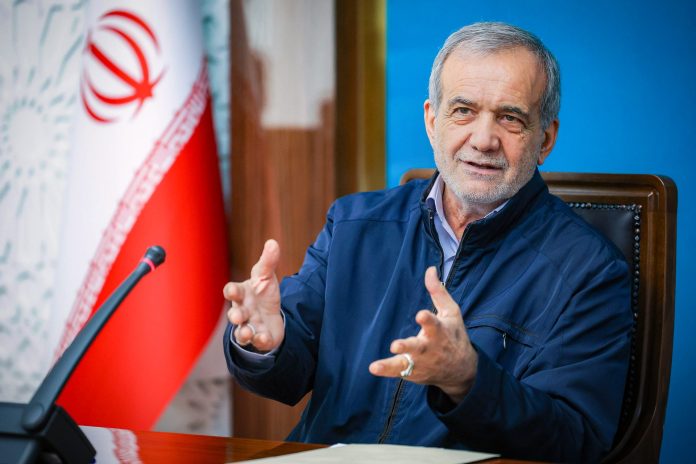
Takhte-Ravanchi noted that the decision to suspend some cooperation with the IAEA was in accordance with new legislation passed by the Iranian Parliament and signed into law by President Masoud Pezeshkian.

However, he said the final direction of Iran’s future engagement with the agency will be determined by Iran’s Supreme National Security Council. “Our ambassador in Vienna remains in contact with the Director General of the IAEA”, he said, underlining that dialogue is ongoing.

The diplomat then slammed a recent IAEA report on Iran, calling it “ill-timed, unfair, and inaccurate”, saying the US and its European allies used it to pass a resolution aimed at isolating Iran.

“That resolution became a pretext for an open act of aggression by the Zionist regime and the US”, he stressed.

He referred to the indirect Iran-US negotiations before the attacks, including a planned meeting in Oman, which was ultimately preempted by military strikes. “This was the biggest blow to diplomacy and to trust”, he said, adding, “We need a clear explanation from the US on why they misled us”.

On Iran’s nuclear program, Takhte-Ravanchi reaffirmed Tehran’s right under the Non-Proliferation Treaty (NPT) to enrich uranium for peaceful purposes.

He rejected Western skepticism about Iran’s 60% uranium enrichment, citing its use in medical and research reactors, particularly the Tehran Research Reactor.

He also highlighted Iran’s long-standing rejection of nuclear weapons, referencing a religious decree by Iran’s Leader.

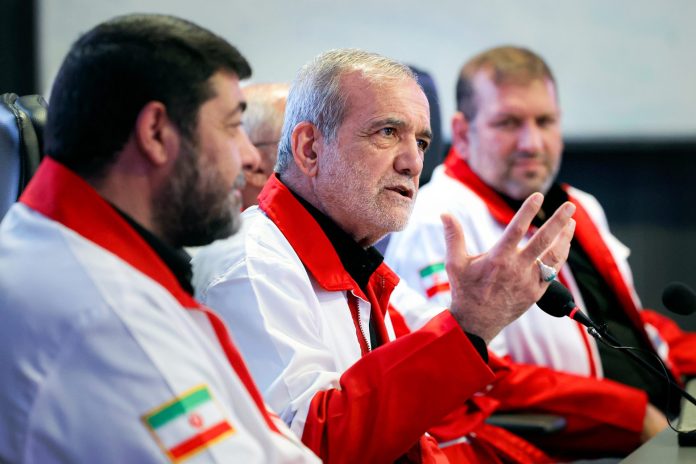
Iranian president condemns Israeli attacks, defends Iran’s right to self-defense at ECO summit

Iranian president-Azerbaijan

He stated that Iran exercised its legitimate right to self-defense under Article 51 of the UN Charter.

President Pezeshkian said the attacks, carried out during nuclear negotiations between Iran and the US, violated international law, particularly Article 2(4) of the UN Charter, and were supported by US military forces.

The 12-day assault targeted civilians, academics, off-duty military personnel, nuclear facilities under IAEA supervision, and key infrastructure, causing extensive damage and fatalities.

He commended regional nations, especially ECO members, for their “responsible stances” during the crisis and urged global condemnation of the aggression.

Addressing the ECO’s broader mission, President Pezeshkian emphasized the need to strengthen intra-regional trade and logistics.

He criticized the current 8% regional trade rate as “unacceptable” and called for realization of free trade goals outlined in ECO’s Vision 2025 and 2035.

He also highlighted Iran’s willingness to host the next ECO summit and proposed better transit access for landlocked member states, alongside development of international-standard logistics hubs and digital transformation across the region.

Iranian president arrives in Republic of Azerbaijan’s Khankendi for ECO summit

Pezeshkian was welcomed in Khankendi, the summit venue, where he is expected to deliver a speech and hold bilateral meetings with several participating heads of state and senior officials.

Before departing for Azerbaijan, the president described the summit as an important opportunity to strengthen regional cooperation.

“This trip falls within the framework of trilateral relations among Iran, Turkey, and Pakistan and marks a first step toward broader regional collaboration among 10 member countries,” he stated.

In addition to Iran, participants include Republic of Azerbaijan, Turkmenistan, Afghanistan, Uzbekistan, Tajikistan, and Kazakhstan.

President Pezeshkian emphasized the summit’s potential for dialogue on economic, political, and social issues, aiming to create common ground for mutual benefit.

Highlighting the importance of expanding regional ties, President Pezeshkian expressed hope that the summit would contribute to improved political engagement, stability, and peace.

“The more regional coordination increases, the less room there will be for hostile actors to spread insecurity,” he said.

Iran warns against Israel’s plot to fully annex West Bank

Iran warns against Israel's plot to fully annex West Bank

Baqaei called on the international community and Islamic nations to take urgent and decisive action in support of the oppressed Palestinian people and to confront a colonial plan to erase Palestine as a nation with a deep-rooted historical identity.

He also strongly condemned the intensifying genocide in the occupied Palestinian territories and the killing of hundreds of defenseless civilians across various areas of the Gaza Strip in the past week.

The Iranian Foreign Ministry spokesman described the continued attacks by Israeli forces on residential neighborhoods, refugee tents, shelters, and aid distribution centers as unprecedented war crimes.

Referring to repeated, deliberate attacks on refugee gathering sites and the bombing of the Mustafa Hafiz school in Gaza City, Baqaei held the United States, Germany, and other supporters of the occupying regime responsible for the continuation of genocide and crimes against humanity in Gaza.

Baqaei also praised the ongoing efforts of Francesca Albanese, the UN Special Rapporteur on the situation of human rights in the occupied Palestinian territories, for her role in exposing the Zionist regime’s atrocities and defending the rights of the oppressed Palestinian people.

Iran set to expel remaining IAEA inspectors amid suspension of cooperation, MPs say

MP Mahmoud Nabavian wrote on the social media platform X that, under a new law passed by Parliament, the remaining IAEA inspectors, whom he referred to as “spies”, will be expelled in the coming days.

His comments were echoed by MP Amirhossein Sabeti, who also confirmed the imminent removal of the inspectors, citing follow-ups with the Atomic Energy Organization of Iran.

The move comes after Iranian President Massoud Pezeshkian formally enacted legislation requiring the government to suspend all cooperation with the IAEA in response to recent airstrikes by the US and Israel on Iranian nuclear sites amid the IAEA’s ‘biased’ stance.

In a post on X on Thursday, Foreign Minister Abbas Araghchi said Iran remains committed to NPT and its Safeguards Agreement but that future cooperation with the IAEA would be directed by the Supreme National Security Council.

According to the law, no IAEA personnel, including the director general, will be permitted entry, and Iran will halt the operation of surveillance cameras and the submission of nuclear activity reports.

More than a dozen nuclear scientists are among hundreds of the Iranians killed in the Israeli attacks on Iran.

Most Iranian airports resume operations amid safety review

Iran’s Civil Aviation Organization (CAO) announced on Thursday that all domestic and international flights have resumed at airports across the country following the airstrikes by the US and Israel last month, except for those in Isfahan and Tabriz.

According to the CAO, this decision follows multiple inter-agency meetings and thorough safety and security assessments. As a result, major airports including Tehran’s Mehrabad and Imam Khomeini, as well as airports in the north, south, east, and west of the country, have reopened and are now fully operational for scheduled flights.

Isfahan and Tabriz airports remain closed, but the CAO stated that they will rejoin the national aviation network once necessary infrastructure is restored and no further restrictions remain.

Additionally, Iran has reopened its central and western airspace to international overflights during daytime hours (5 a.m. to 6 p.m.), while eastern airspace remains open 24/7 for transit flights and regional operations.

Iran’s airspace had been closed to flights since June 13 when the Israeli regime, later joined by the US, launched strikes that targeted civilian and military targets across the country.