Friday, December 26, 2025
Home Blog Page 273

Tabriz Airport resumes operations with first post-war flight

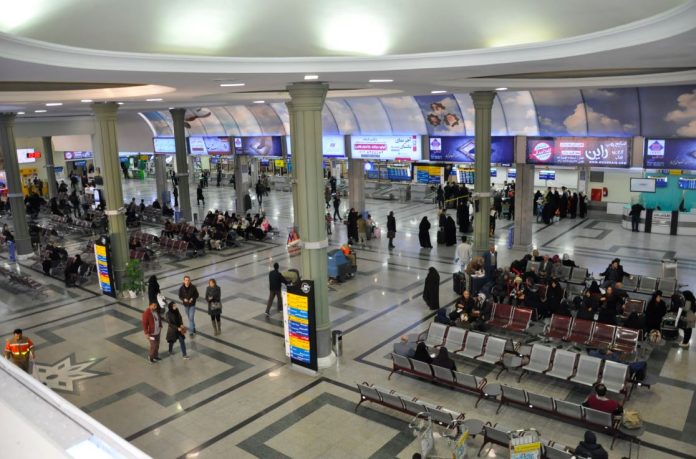
Ramin Azari, Director General of East Azarbaijan Airports, announced that the first post-war flight, operated by Iran’s ATA Airlines, took off from Shahid Madani International Airport in Tabriz to Istanbul, following the completion of runway reconstruction.

He said the airport is now fully prepared to handle both domestic and international flights.

Azari commended the extraordinary round-the-clock efforts of airport staff in restoring operations after “brutal” Israeli aggression last month.

According to Azari, the facility was declared operational following thorough inspections and approval by the Civil Aviation Organization of Iran and the Airports and Air Navigation Company.

Shahid Madani International Airport, located in northwestern Tabriz, is a key hub for both passenger and cargo transport and operates 24/7 under an open-sky policy. It plays a vital role in regional and international air traffic, particularly as a corridor for flights between Europe and Southeast or Central Asia.

Tabriz was one of the hardest hit cities of Iran during the Israeli strikes, aided by the US.

NATO calls for US ‘flexibility’ on Ukraine aid as Washington halts deliveries

US Weapons

The Pentagon’s decision to halt transfers of artillery rounds and air defense systems coincides with a significant escalation in Russian attacks on Ukrainian cities, exposing critical vulnerabilities in Ukraine’s air defense capabilities as current US funding nears expiration this summer.

“The US has to make sure that the stockpiles are at the level we need for the U.S. to have, because they are crucial for our collective defense,” Rutte told reporters.

“At the same time, of course, we hope for the flexibility, we have to make sure also that Ukraine can move forward.”

The Pentagon announced the aid pause this week, citing a review of U.S. stockpiles as it assesses the need to conserve weapons for other potential security threats. This move comes as Russia intensified its air campaign, unleashing record drone and missile strikes on Kyiv and other major urban centers overnight.

President Volodymyr Zelensky spoke with U.S. President Donald Trump by phone Friday, aiming to persuade the U.S. leader to resume deliveries and increase weapon sales to the country. Trump expressed disappointment following his latest conversation with Russian counterpart Vladimir Putin, which produced no progress toward a ceasefire in Russia’s war against Ukraine, now in its fourth-year.

Given Russia’s apparent unwillingness to pursue a ceasefire, allies must “be sure” Ukraine “has what it needs to stay in the fight,” Rutte emphasized.

He spoke after a ceremony welcoming Air Force General Alexus Grynkewich, the new commander of U.S. military forces in Europe and top NATO military commander.

Grynkewich acknowledged the ongoing discussions, adding: “We’ll see more play out of the next week or two.” He also announced a 90-day review of U.S. forces in Europe, examining potential future US posture in the region.

A broader US military review is expected later this summer, potentially outlining significant reductions in Europe. This prospect has already raised concerns among European NATO allies, who say they have received no prior information about these plans.

Iran lashes out at Israel for strike on Evin prison hospital, urges accountability

Foreign Ministry spokesperson Esmail Baqaei said Saturday that new evidence continues to emerge in the aftermath of recent Israeli attacks on Iranian territory, revealing “horrific dimensions” of war crimes by Israel during the 12-day military escalation supported by the US.

In a post shared on the social platform X, Baqaei published footage that showed the attack on Evin Prison’s hospital, where families of inmates had gathered for visits.

According to Baqaei, 79 people, including family members, staff, and bystanders, were killed after being trapped under rubble and burned in the bombing.

“No person of conscience can remain silent in the face of such blatant violations of international humanitarian law,” Baqaei wrote.

He emphasized that Israel must be “firmly condemned” and held responsible for “heinous crimes” committed against Iranian civilians.

The strike on Evin Prison added to a series of deadly incidents during the Israeli aggression that started on June 13, and at one point with the open involvement of the US, which targeted both military and civilian infrastructure.

No power can prevent Iran from attaining its legitimate rights: Leader advisor

Ali Akbar Velayati

Ali Akbar Velayati made the remarks on Friday, commenting on the Israeli regime’s recent United States-backed imposed war against the Islamic Republic.

The 12-day war saw Washington provide the aggression with unprecedented military and intelligence support and even join in towards the end of its 12-day span. The duo waged the aggression, using the International Atomic Energy Agency (IAEA)’s most recent anti-Iranian resolution, which had been drawn up amid intense Western pressure, as a pretext.

Velayati ephasized the country’s insistence on not giving up its entitlement to scientific and technological progress, including in the field of peaceful nuclear energy, notwithstanding Western and Israeli efforts at tarnishing the nation’s rightful endeavors.

“The Iranian nation has always stood firm against pressure, threats, and aggression and will never surrender,” he stated.

The people, the official added, “will continue to advance with greater determination than ever before on its path towards scientific progress, technological independence, and [preservation of] national esteem.”

In the same context, the advisor stressed that “no power can prevent the Iranian nation from achieving its legitimate rights.”

Elsewhere in his remarks, Velayati said legal and diplomatic pursuit of these crimes through international authorities, especially the United Nations, was on the Islamic Republic’s agenda in line with the country’s legitimate right to proportional response.

He further denounced the combined aggression as a clear violation of the imperative norms of the international law, emphasizing the UN’s legal and moral responsibility to recognize the Israeli regime and the US as aggressors.

The world body, he added, also had to take appropriate punitive action against Tel Aviv and Washington, obligating them to compensate the Islamic Republic for the material and moral damages that had been caused during the atrocities.

Iran says Israel behind abduction of its diplomats in Lebanon 43 years ago

Iranian Foreign Ministry

The ministry issed a statement on Saturday, honoring the memory of the abducted diplomats and expresseing solidarity with their patient and hopeful families.

Seyed Mohsen Mousavi, Ahmad Motevaselian, Kazem Akhavan, and Taghi Rastegar Moghadam, were abducted in Beirut on July 5, 1982.

The statement points out that
they were abducted by agents affiliated with the Zionist regime.

It further says, there is ample evidence indicating that the Iranian diplomats were abducted by an armed group in Lebanon during the Zionist regime’s occupation of Lebanese territory, handed over to the occupying forces, and subsequently transferred to the occupied territories.

According to Iran’s Foreign Ministry, the abduction not only violates international law and represents a grave breach of the 1961 Vienna Convention on Diplomatic Relations, but also constitutes an act of terrorism under the 1979 International Convention Against the Taking of Hostages.

It appreciated the cooperation of the Lebanese government on pursing the case of the four abducted diplomats,  calling on the authorities of the Lebanese government, the UN Secretary General, the International Committee of the Red Cross (ICRC), and other competent international bodies to fulfill their legal and humanitarian responsibilities in following up on this case.

The Iranian Foreign Ministry emphasized the
establishment of a joint fact-finding committee between Iran and Lebanon, with the cooperation of the ICRC, to pursue the matter and determine the status of the abducted diplomats.

613 Gaza killings recorded at aid sites, near humanitarian convoys: UN

“This is a figure as of June 27. Since then … there have been further incidents,” Ravina Shamdasani, the spokesperson for the UN Office of the High Commissioner for Human Rights (OHCHR), told reporters in Geneva on Friday.

The OHCHR reported that 509 of the 613 people were killed near GHF distribution points. The Gaza Health Ministry has put the number of deaths at more than 650 and those wounded as exceeding 4,000.

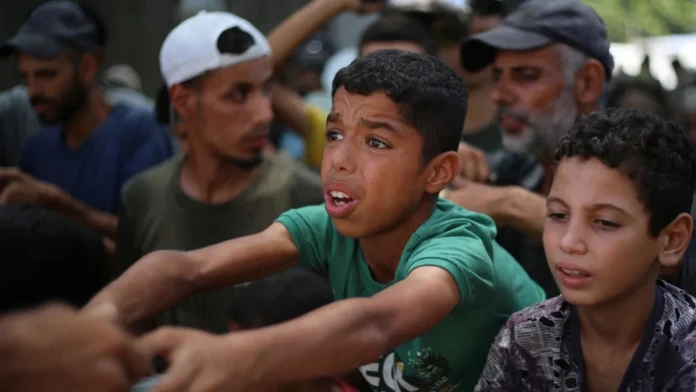
The GHF began distributing limited food packages in Gaza at the end of May, overseeing a new model of deliveries which the UN says is neither impartial nor neutral, as killings continue around the organisation’s sites, which rights groups have slammed as “human slaughterhouses”.

Mahmoud Basal, a civil defence spokesperson in Gaza, stated that they “recorded evidence of civilians being deliberately killed by the Israeli military”.

“More than 600 Palestinian civilians were killed at these centres,” he continued, adding, “Some were shot by Israeli snipers, others were killed by drone attacks, air strikes or shootings targeting families seeking aid.”

The UN, humanitarian organisations and other NGOs have repeatedly slammed the GHF for its handling of aid distribution and the attacks around its distribution sites.

More than 170 humanitarian organisations, including Oxfam, Save the Children and Amnesty International, on Tuesday demanded the immediate closure of the GHF, accusing it of facilitating attacks on starving Palestinians.

The NGOs added Israeli forces and armed groups “routinely” open fire on civilians attempting to access food.

The UN agency for Palestinian refugees (UNRWA), which was carrying out aid distribution for decades before the GHF, has called for investigations into the killings and wounding of Palestinians trying to access food through the GHF.

UNRWA noted that while it operated about 400 sites across the territory, the GHF has set up only four “mega-sites”, three in the south and one in central Gaza – none in the north, where conditions are the most severe.

A recent report from Israeli outlet Haaretz detailed Israeli soldiers, in their words, confirming that Israeli troops have deliberately shot at unarmed Palestinians seeking aid in Gaza after being “ordered” to do so by their commanders.

Israel’s war in Gaza has killed more than 57,000 Palestinians, according to the enclave’s Health Ministry, while displacing most of the population of more than two million multiple times, triggering widespread hunger through a punishing blockade and leaving much of the territory in ruins.

The war began after Hamas-led fighters crossed into southern Israel on October 7, 2023, killing 1,200 people and taking 251 captives back to Gaza, according to Israeli tallies.

IAEA inspectors leave Iran as Tehran suspends cooperation with UN atomic watchdog

IAEA Team

“An IAEA team of inspectors today safely departed from Iran to return to the agency headquarters in Vienna, after staying in Tehran throughout the recent military conflict,” the agency said in a post on its X account on Friday.

The IAEA called for the resumption of its “indispensable monitoring and verification activities” in Iran.

“IAEA Director General Rafael Grossi reiterated the crucial importance of the IAEA discussing with Iran modalities for resuming its indispensable monitoring and verification activities in Iran as soon as possible,” the agency stated.

On July 2, Iran’s President Masoud Pezeshkian gave the final approval to a resolution that suspends cooperation with the IAEA.

The rationale for the move was the UN atomic agency’s politically-motivated resolution which paved the way for the US-Israeli acts of aggression against the Islamic Republic.

The resolution was approved during the public session of Iran’s Parliament on June 25.

According to the resolution, IAEA inspectors will not be permitted to enter Iran unless the security of the country’s nuclear facilities and that of peaceful nuclear activities is guaranteed, which is subject to the approval of Iran’s Supreme National Security Council.

Iran is also considering an entry ban on the IAEA chief, Rafael Grossi, who has come under fire for his politically motivated reports against Iran.

In an unprovoked, brazen act of aggression on June 13, Israel targeted Iranian military commanders and nuclear scientists who had previously been placed on sanctions lists based on IAEA reports. Israel also killed civilians.

On June 22, the US military bombed Natanz, Fordow, and Isfahan nuclear sites in violation of the United Nations Charter, international law and the Nuclear Non-Proliferation Treaty (NPT).

Grossi remained silent. He did not condemn the acts of aggression, drawing criticisms from Iranian officials.

Zelensky and Trump agree on joint defence efforts in ‘fruitful’ phone call

“Today we discussed the current situation, including Russian airstrikes and the broader frontline developments,” Zelensky wrote in a post on X.

“President Trump is very well informed, and I thank him for his attention to Ukraine. We spoke about opportunities in air defence and agreed that we will work together to strengthen protection of our skies. We have also agreed to a meeting between our teams.”

He added that they also discussed in detail the prospects for joint defence production.

“We – in Ukraine – are grateful for all the support provided. It helps us protect lives, safeguard our freedom and independence.”

“We have achieved a lot together with America and we support all efforts to stop the killings and restore just, lasting, and dignified peace. A noble agreement for peace is needed,” Zelensky pointed out.

The Ukrainian leader added they discussed the possibility of joint defence production, mutual purchases, and investments.

Neither the White House nor Trump himself have said anything about the call.

That conversation comes a day after Trump and Russian President Vladimir Putin discussed Ukraine, Iran and other issues in a call the Kremlin described as “frank and constructive.”

It was their sixth publicly disclosed talk since Trump returned to the White House.

On the war in Ukraine, Putin’s foreign affairs adviser Yuri Ushakov said Trump emphasised his push for a quick halt to the fighting, and Putin voiced Moscow’s readiness to pursue talks with Kyiv, noting the previous rounds in Turkey yielded humanitarian results.

At the same time, the Russian leader said Moscow will seek to achieve its goals in Ukraine and remove the “root causes” of the conflict, Ushakov added.

“Russia will not back down from these goals,” Ushakov told reporters after the call.

Also on Thursday, Trump complained that the United States provided too many weapons to Ukraine under the previous administration, his first public comments on the pause in some shipments as Russia escalates its full-scale invasion.

On Tuesday, the US said it was halting shipments of some air defence missiles and other weapons previously promised to Kyiv amid concerns that its own stockpiles had declined too much, according to officials.

Certain munitions were previously promised to Ukraine under the Biden administration to support its defences. However, the administration appears to have revised some of those decisions due to concerns for US interests.

“This decision was made to put America’s interests first following a review of our nation’s military support and assistance to other countries across the globe,” White House spokesperson Anna Kelly stated in a statement.

Iranians commemorate Tasua, honoring Imam Hussein’s sacrifice

The events take place one day before Ashura, which marks the tragic Battle of Karbala more than 1,300 years ago in present-day Iraq.

Across cities, towns, and villages, mourners gathered to take part in traditional rituals, marching in processions, beating their chests, and wearing black to express their sorrow and solidarity.

Imam Hussein, the grandson of the Prophet Muhammad,  was martyred in 680 AD while leading a small group of followers in a valiant stand against the oppressive rule of the Umayyad caliph Yazid I. His sacrifice is remembered as a symbol of resistance against tyranny.

Religious eulogists recount the events of Karbala and reflect on Imam Hussein’s message of justice and moral courage.

Ta’zieh, a dramatic reenactment of the battle, is also performed in many regions.

The mourning rituals culminate on Ashura, the tenth day of Muharram, when Imam Hussein, his family members, and companions were martyred in one of the most pivotal events in Shia Islam.

Iranian MP warns Israel of ‘end of regime’ if further attacks occur

Iran Missile Attack Israel

In an interview with IRNA, Boroujerdi stated, “If Israel makes the mistake of attacking Iran again, it will be writing the final chapter of its existence.”

His comments follow reports of continued Western military support to Israel and speculation about further Israeli strikes.

Referring to the 12-day conflict in June that saw hundreds of Iranian military commanders, scientists, and civilians killed, Boroujerdi said Iran would not initiate war but would deliver a “devastating response” to any aggression.

He recalled past targeted assassinations of Iranian scientists and commanders, describing them as part of a long pattern of hostility since the 1979 Islamic Revolution. Despite these attacks, he emphasized, Iran’s nuclear knowledge has advanced.

Boroujerdi concluded that Iran’s retaliation during the recent conflict proved its military readiness, adding that “Israel’s eventual acceptance of a ceasefire showed the failure of its campaign.”