Monday, December 22, 2025
Home Blog Page 2718

US Bogged Down in Self-Created Quagmire in Afghanistan: Iran

US Bogged Down in Self-Created Quagmire in Afghanistan: Iran

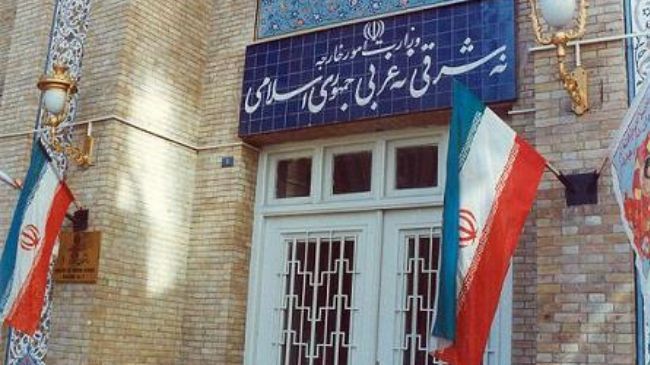
In a statement on Tuesday, Khatibzadeh said the US has been bogged down in a self-created quagmire in Afghanistan.

“The American troops’ blood is being shed thousands of miles away from their homeland because of the wrong policies of White House rulers,” he said.

The US policy, he added, has resulted in nothing but years of war and bloodshed for the innocent people of Afghanistan.

“The US government, which has no answer to give the families of its fallen soldiers in Afghanistan, is making a media fuss to cover up its miscalculations in Afghanistan,” Khatibzadeh said.

He finally called on the United States to act responsibly and end its disastrous presence in Afghanistan as soon as possible instead of pinning the blame on others.

Hus comments came in reaction to a CNN report that US intelligence agencies have assessed Iran offered bounties to Taliban fighters for targeting American and coalition troops in Afghanistan, identifying payments linked to at least six attacks carried out by the militant group just last year alone, including a suicide bombing at a US air base in December.

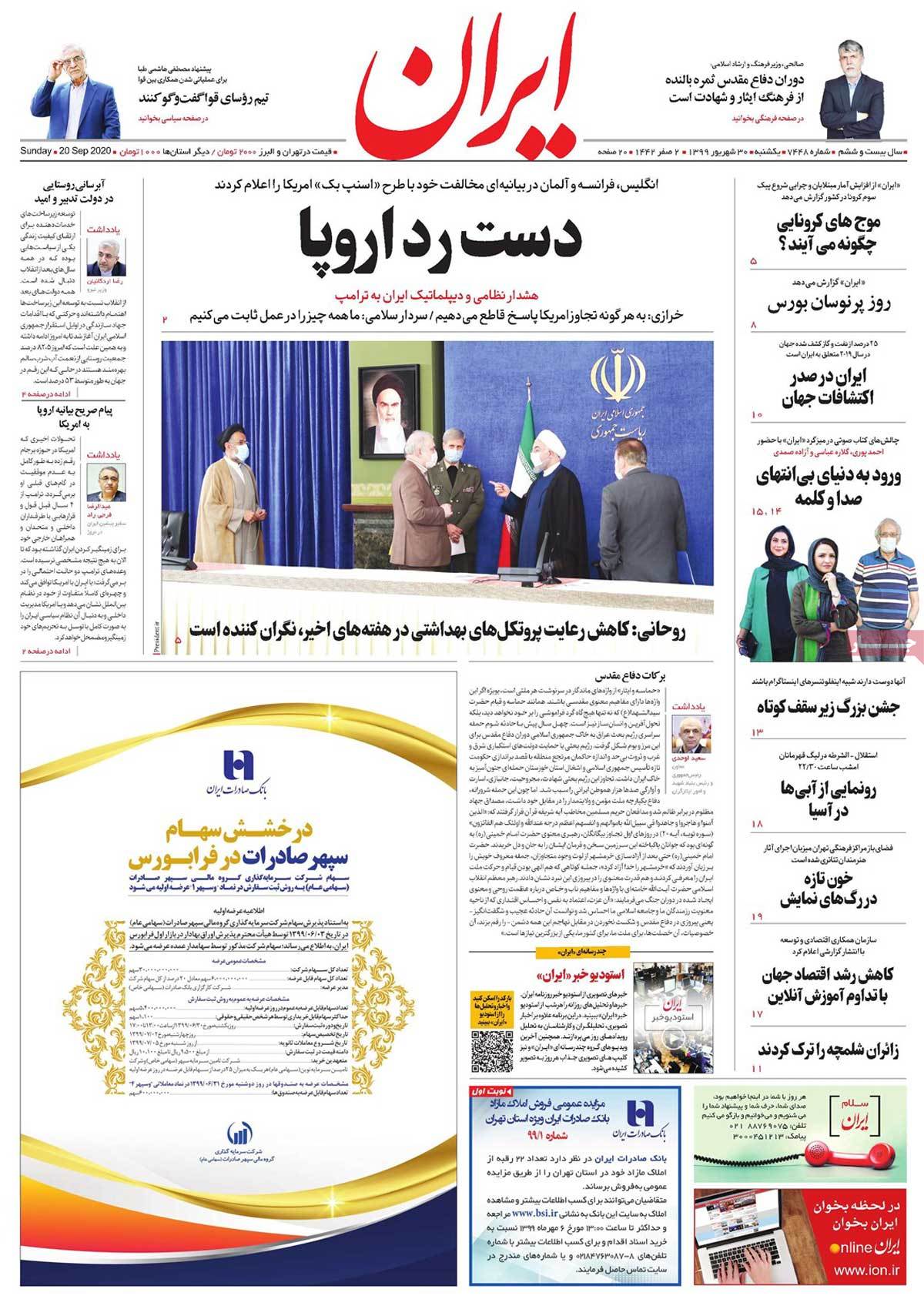
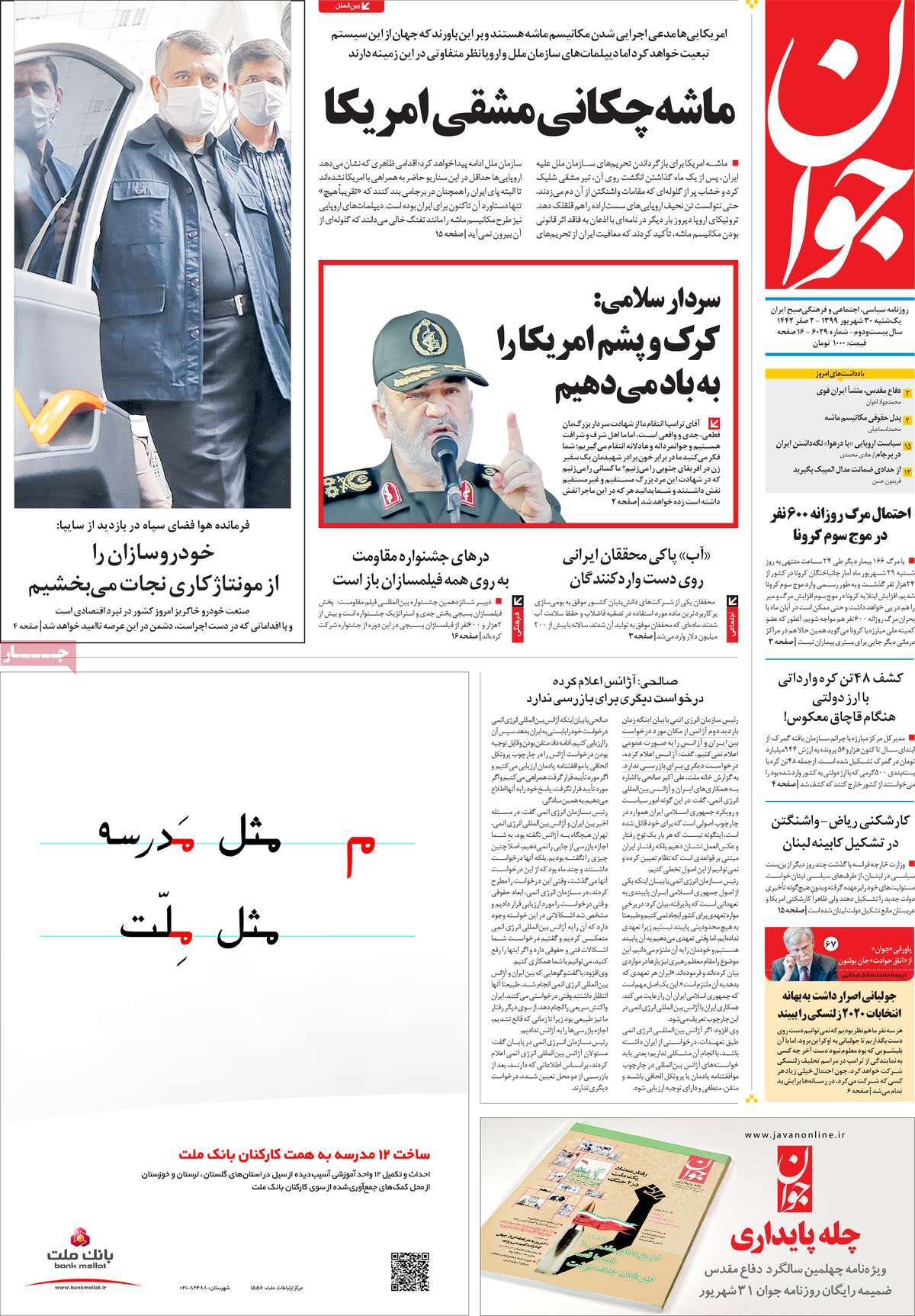
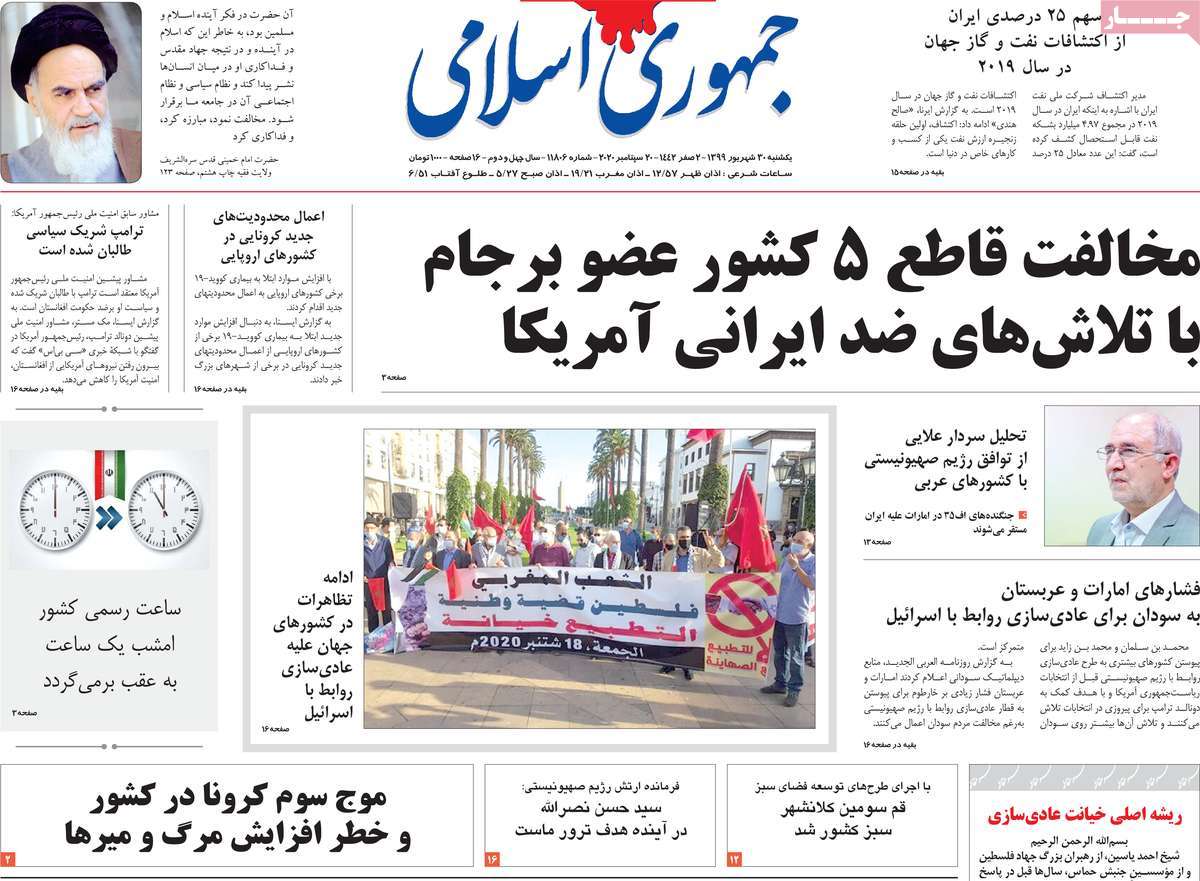
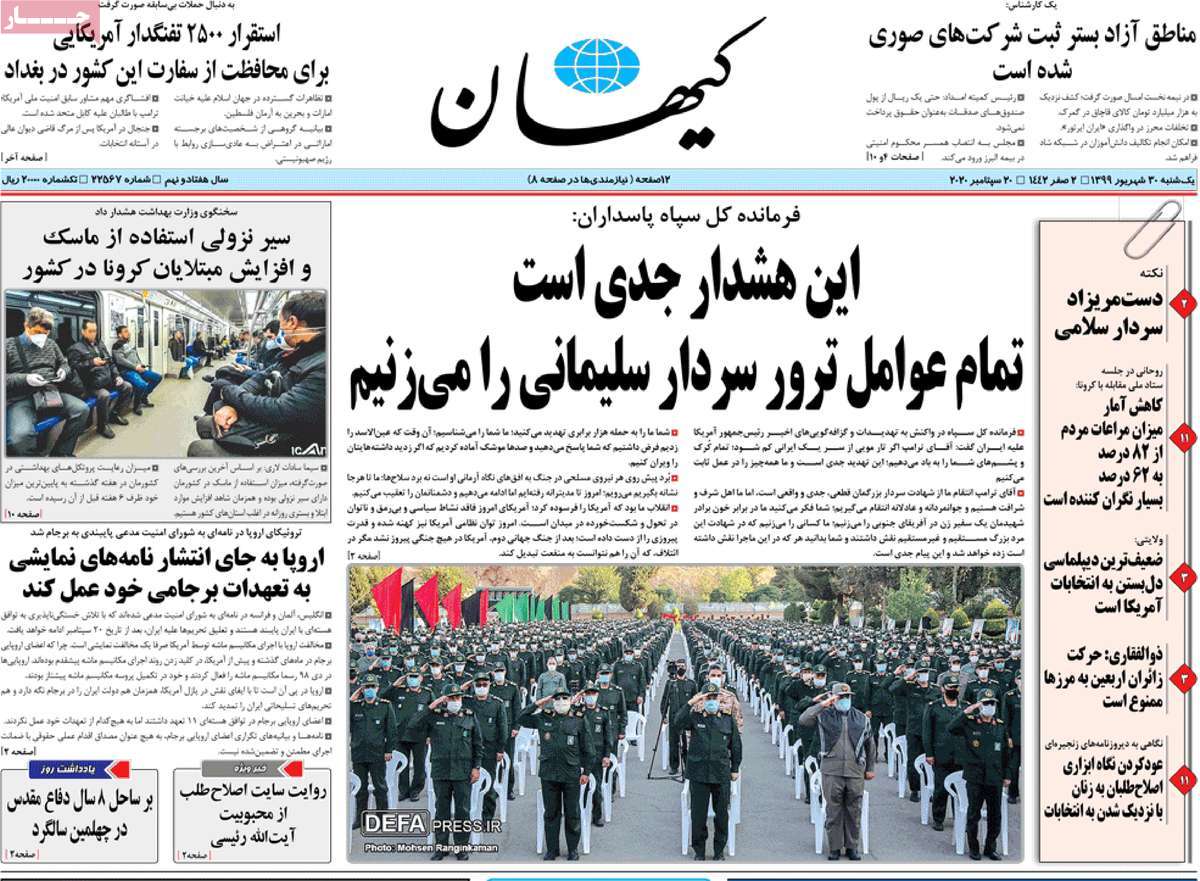
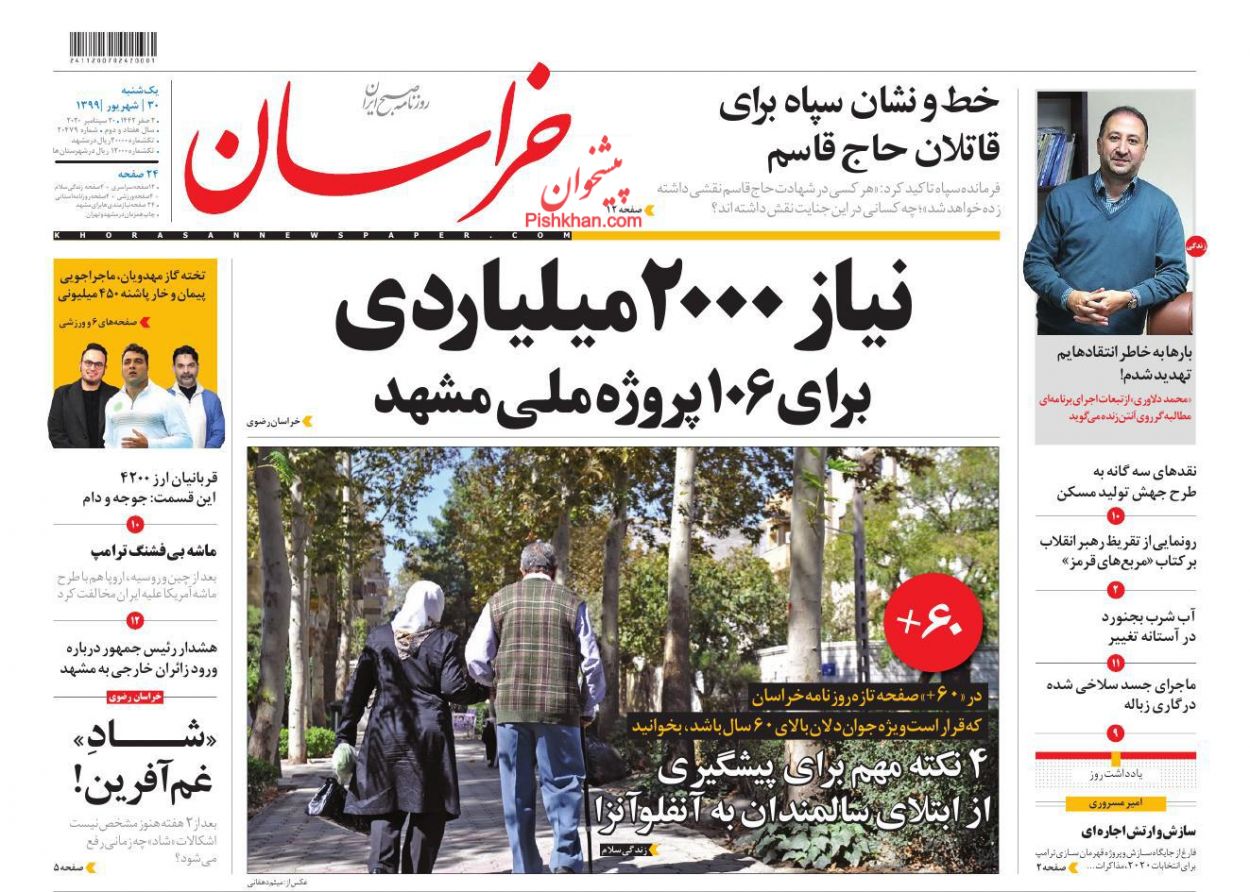
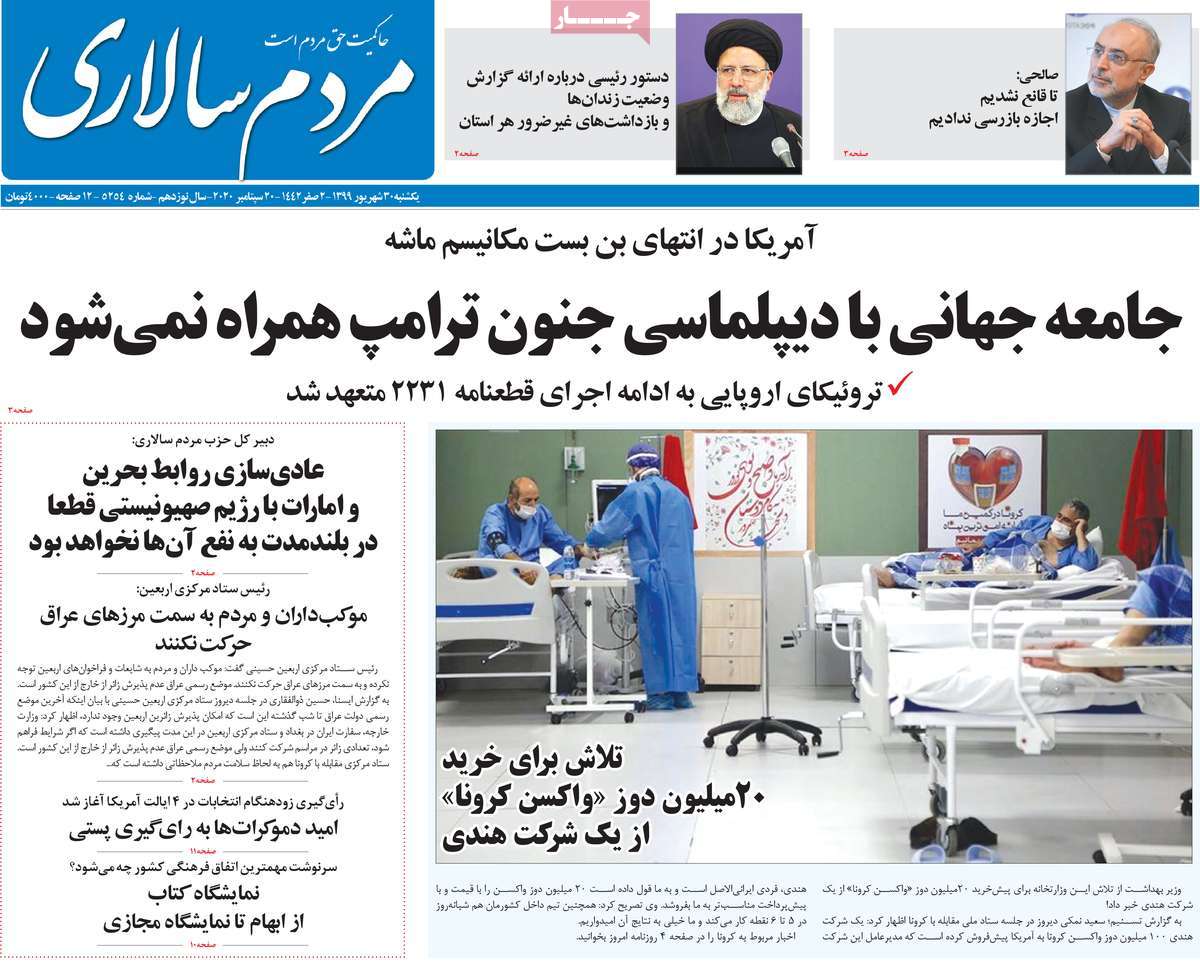
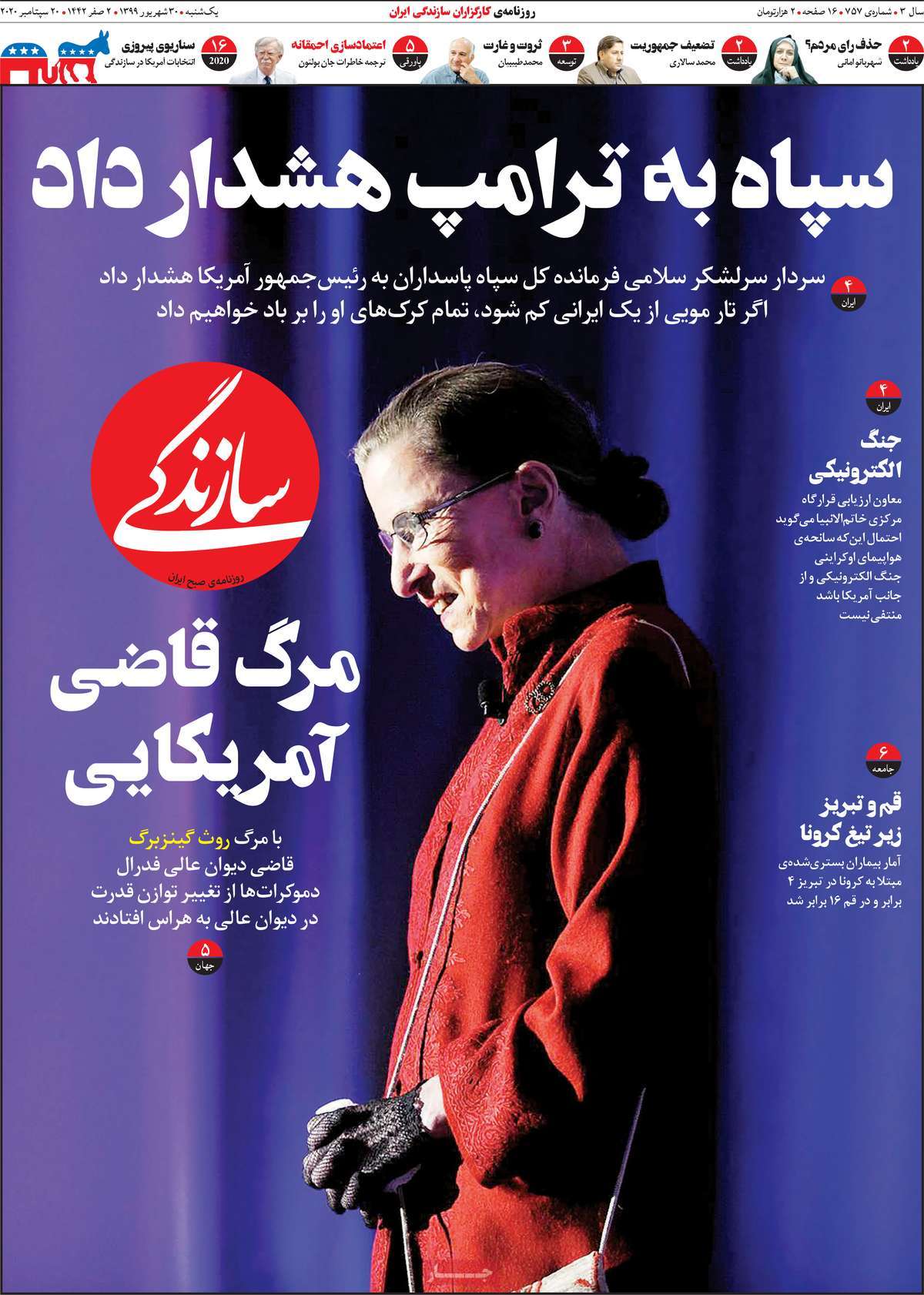
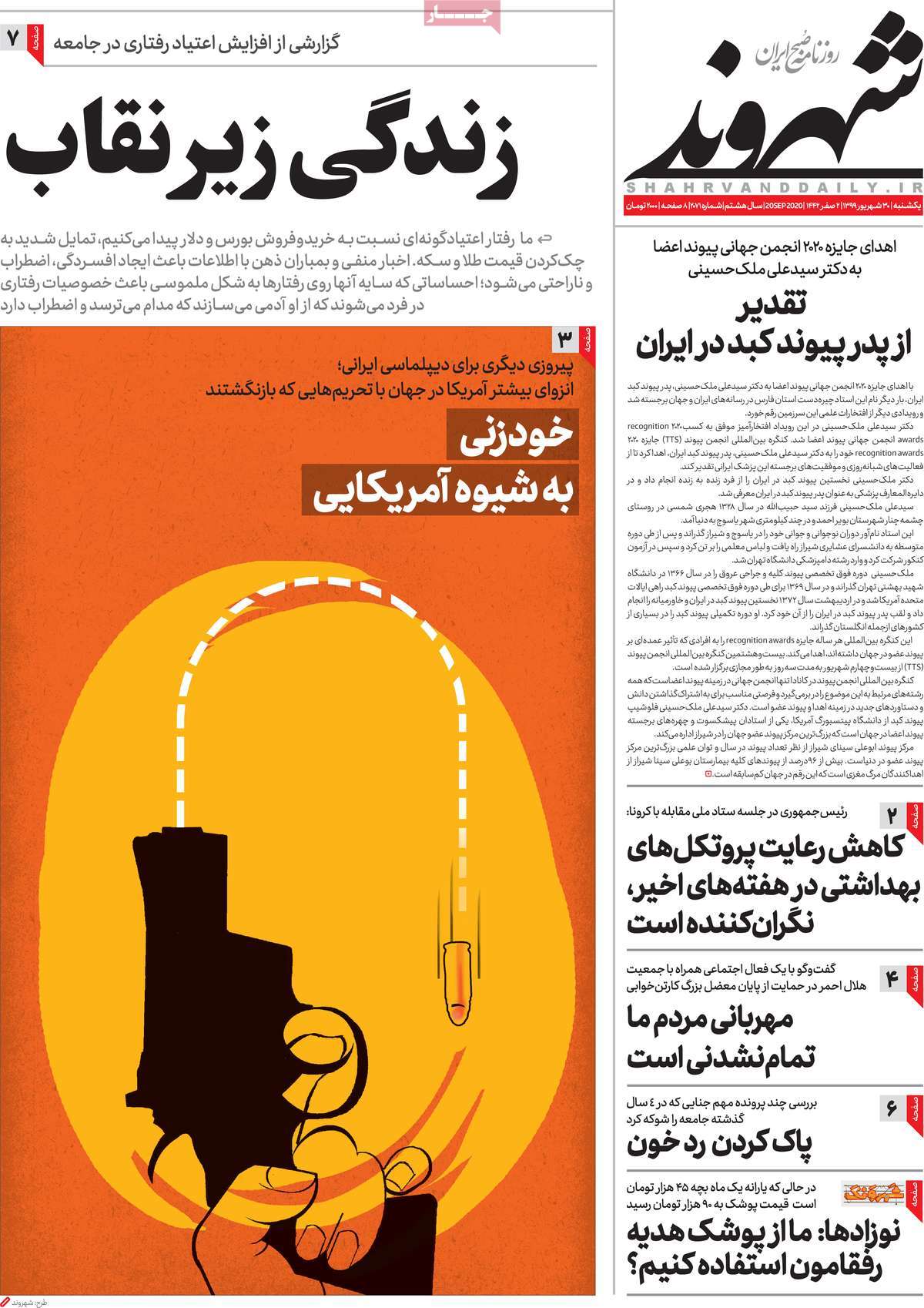
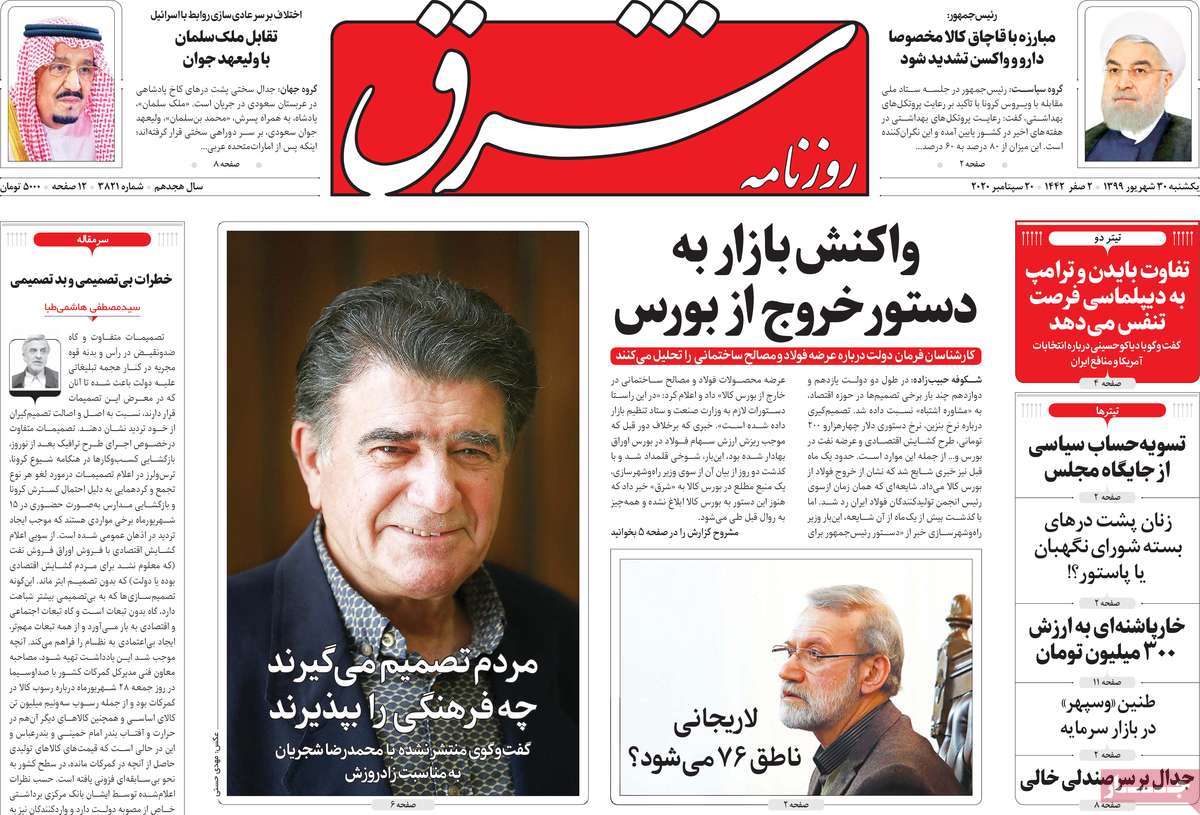
A Look at Iranian Newspaper Front Pages on August 18

A Look at Iranian Newspaper Front Pages on November 5

Iranian Newspapers

Aftab-e Yazd Newspaper:

1- Oil Minister: We Won’t for Foreigners and Die If They Refuse to ComeA Look at Iranian Newspaper Front Pages on August 18


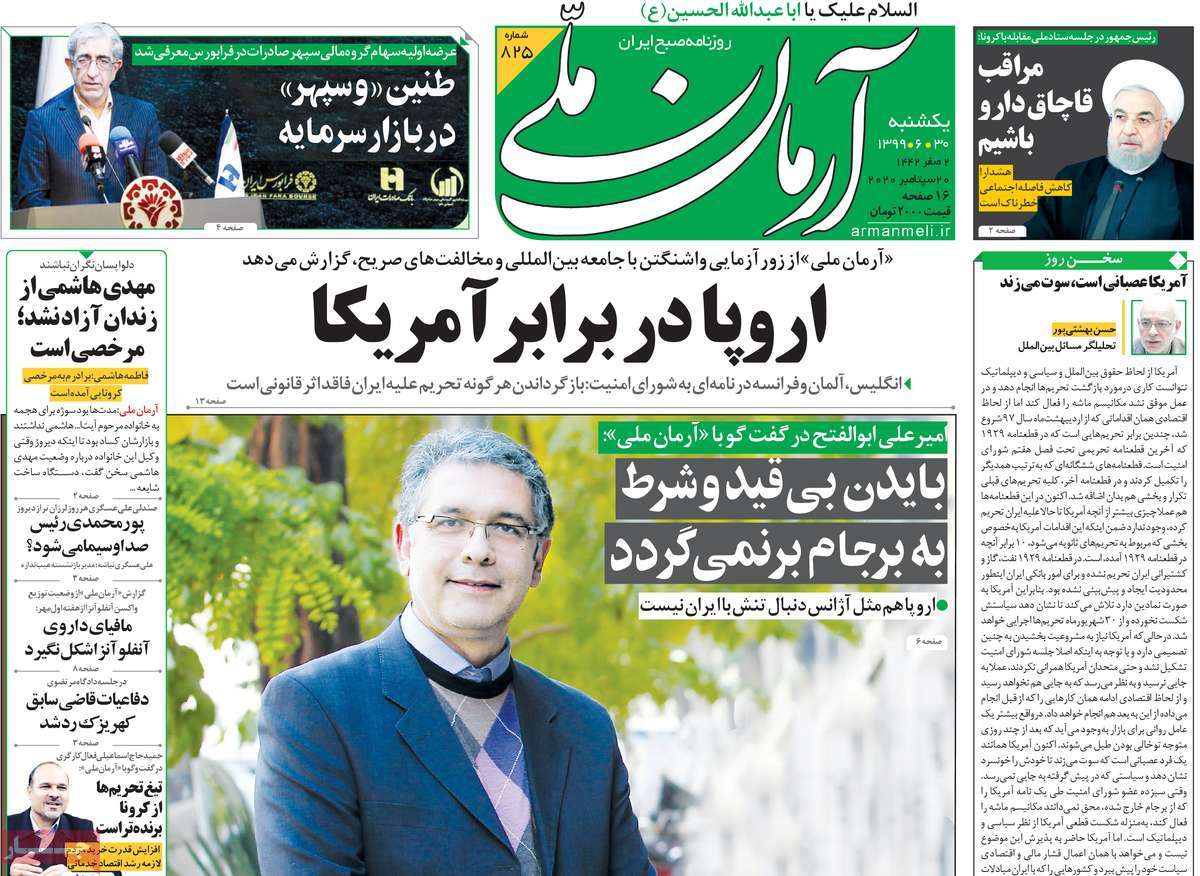
Arman-e Melli Newspaper:

1- US Not Willing to Attend Meeting with Iran Offered by PutinA Look at Iranian Newspaper Front Pages on August 18


Donya-ye Eqtesad Newspaper:

1- Bolton’s Offer to Trump: Don’t Play with TriggerA Look at Iranian Newspaper Front Pages on August 18


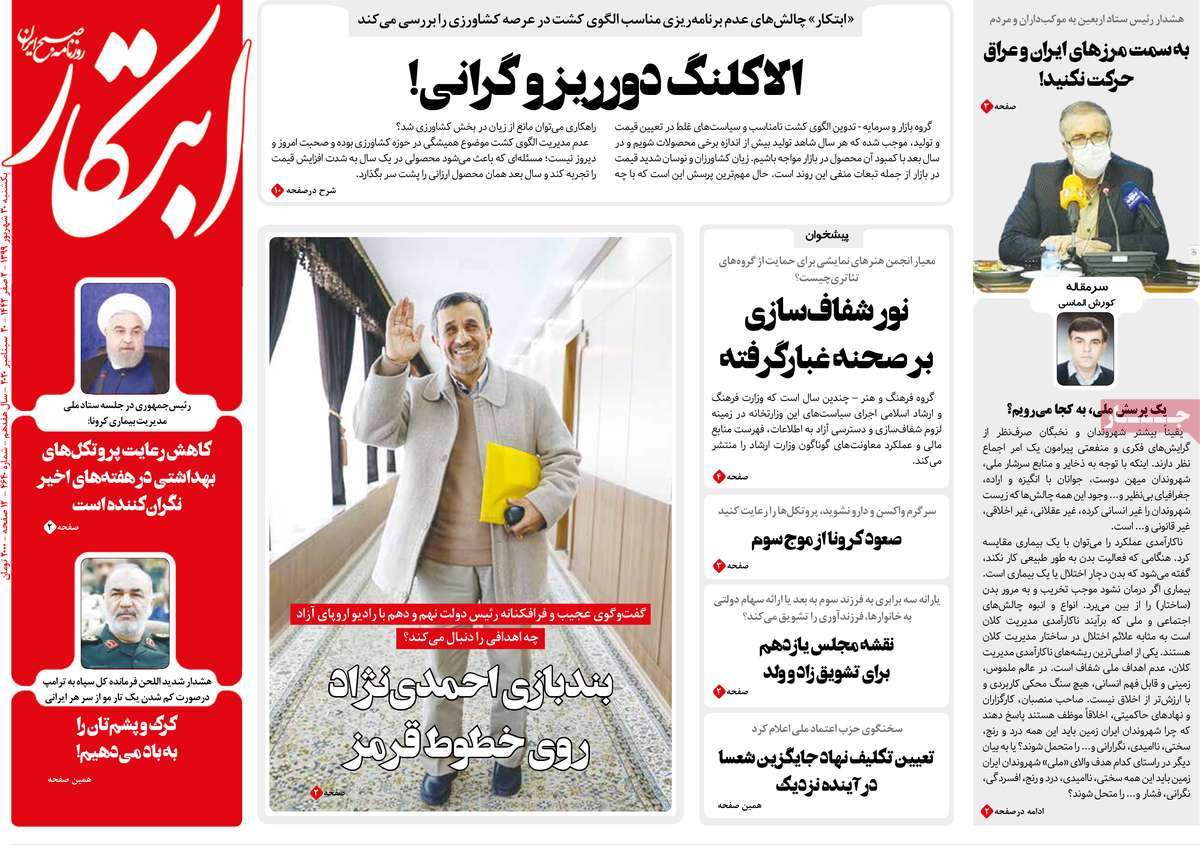
Ebtekar Newspaper:

1- Oil Minister: Iran Ahead of Its Neighbours in All Major Joint Oilfields

2- Biden-Harris More Popular than Trump 77 Days Ahead of ElectionsA Look at Iranian Newspaper Front Pages on August 18


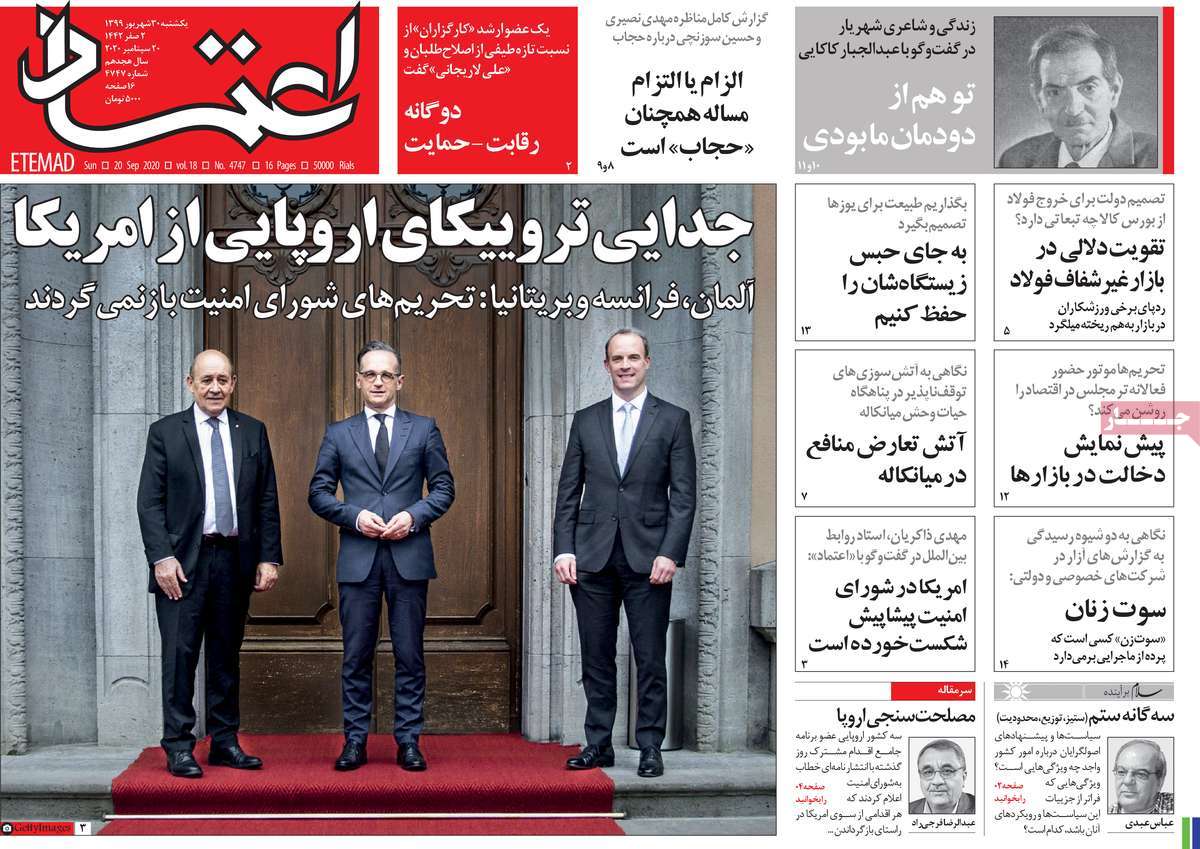
Etemad Newspaper:

1- 1953 Tragedy and American Comedy of 2020

* Zarif and Mosaddegh Both Defended Iran’s Right to National IndependenceA Look at Iranian Newspaper Front Pages on August 18


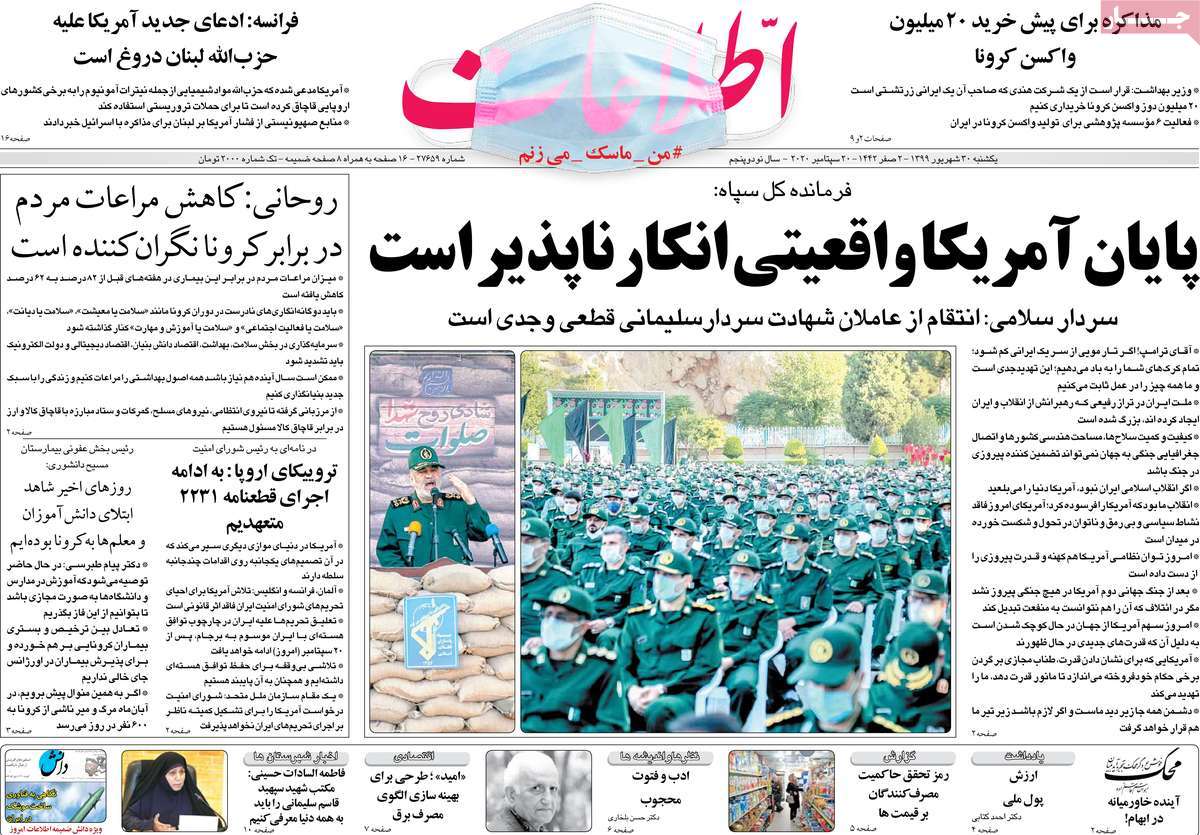
Ettela’at Newspaper:

1- Oil Minister: Iran Must Quickly Return to Pre-Sanctions Output CapacityA Look at Iranian Newspaper Front Pages on August 18


Iran Newspaper:

1- Vaezi: Gov’t Resolved to Reinforce Capital MarketA Look at Iranian Newspaper Front Pages on August 18


Javan Newspaper:

1- Parliament’s Finger on Trigger of Taking Iran Out JCOA

2- UAE’s Compromise to Serve Crisis-Hit Economy of IsraelA Look at Iranian Newspaper Front Pages on August 18


Kayhan Newspaper:

1- Mr Zarif! JCPOA Is Dead Because Sanctions Are Alive

2- Iran Parliament to Take Iran Out of JCPOA If Trigger Mechanism Activated

3- US Police in Portland Clash with Protesters as ‘Riot’ Status AnnouncedA Look at Iranian Newspaper Front Pages on August 18


Mardom Salari Newspaper:

1- Iran’s Bitterness in Trump’s MouthA Look at Iranian Newspaper Front Pages on August 18


Shahrvand Newspaper:

1- Disaster at Iran’s Football Federation

* FIFA Fines Iran over Marc Wilmots Case: 6 Million EuroA Look at Iranian Newspaper Front Pages on August 18


Shargh Newspaper:

1- Will Zarif Run for President in 2021?

2- Russia, China Won’t Shoulder Burden of Iran’s Tensions with Others: Former Envoy to Moscow

3- US’ Shaky Position against Iran at UN Security Council [Editorial]A Look at Iranian Newspaper Front Pages on August 18

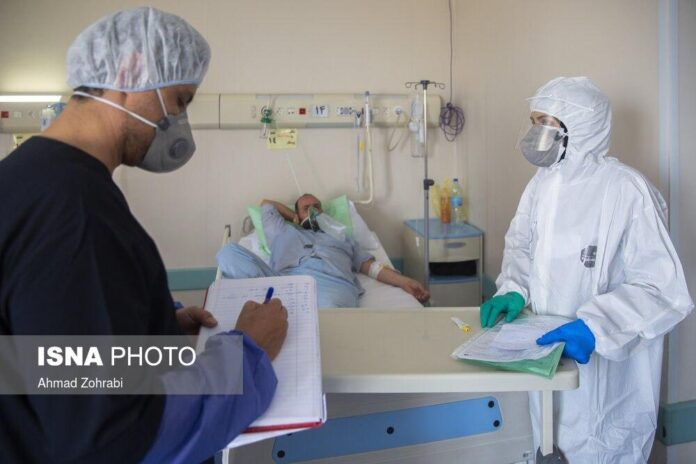
Iran Says 300,000 COVID-19 Patients Have Recovered

Iran Says 300,000 COVID-19 Patients Have Recovered

In a press briefing on Tuesday, Sima-Sadat Lari said the novel coronavirus has killed 168 people in the past 24 hours, bringing the total number of fatalities to 19,972.

She confirmed 2,385 new cases of infection with the novel coronavirus, raising the total number of cases to 347,835.

3,882 patients are also in critical conditions because of more severe infection, she added.
Lari noted that 2,914,049 COVID-19 tests have been taken across the country.

She said the high-risk “red” zones include Tehran, Qom, Mazandaran, East Azarbaijan, Isfahan, Ardabil, Yazd, Markazi, Khorasan Razavi, North Khorasan, Semnan, Gilan, Golestan, and Kerman provinces.

The “orange” zones also include Alborz, Lorestan, Hormozgan, Ilam, Fars, Hamadan, Bushehr, West Azarbaijan, Qazvin, Chaharmahal and Bakhtiari, Kohgiluyeh and Boyer-Ahmad, and Zanjan provinces, she added.

Can CBD Help Treat Cannabis Use Disorder?

Can CBD Help Treat Cannabis Use Disorder

Addicted to cannabis? Maybe cannabis can help. Wait, what? While the THC in marijuana can be hard to give up if you’ve been using it daily for some time, a recent study has shown that CBD from hemp might help to reduce cravings and withdrawals.

But is marijuana even addictive? Some experts say yes, it is, while others scoff at the notion. Although THC itself has not been shown to create a physical dependence in the same way as drugs like heroin and cocaine, the truth is that the pleasant feelings of euphoria caused by smoking, vaping, or eating marijuana can certainly be habit forming — especially in stressful times.

The fact of the matter is that nearly half (47 percent) of those who use marijuana on a daily basis, now legal and for sale at dispensaries nationwide in the United States, will show significant signs of withdrawal such as cravings, irritability, anxiety, and depression when they quit cold turkey. And about 1 in 10 of those who partake in cannabis consumption actually show signs of becoming physically reliant upon the drug.

This condition is known as Cannabis Use Disorder and it’s becoming more and more prevalent. In fact, marijuana is now the number one substance cited by first time clients at rehab centers in Europe and has increased by 76 percent in the past decade.
This increase is in direct correlation to the increasingly higher concentrations of THC over the past couple decades. There is also substantial evidence showing a five-times higher increase in the risk of psychosis with daily usage of highly potent cannabis.

At present there are no proven treatments for dependence on marijuana. However, the results of a recent study suggest that prescription-strength CBD could prove to be an effective remedy for the symptoms of marijuana withdrawal.

THC and CBD, the yin and yang of cannabis 

The two most abundant cannabinoid compounds produced in the resinous flower clusters of the cannabis plant are THC and CBD. While THC (delta-9 tetrahydrocannabinol) is infamous for its intoxicating effects, CBD (cannabidiol), on the other hand, is non-intoxicating. And while many strains of marijuana are high in THC, hemp is essentially devoid of THC and higher in CBD.

Although the mechanisms behind marijuana intoxication are still not completely clear, receptors found on the surface of neurons in the brain called CB1 receptors are the main target of THC. And while CBD typically interacts with receptors on the surface of all of our other major organs, it also acts upon certain other types of receptors found in the brain such as opioid receptors.

It has been shown that CBD has the ability to mimic an endocannabinoid produced naturally by our own bodies called anandamide. Anandamide is responsible for the production and uptake of a hormone called serotonin. And serotonin has been shown to increase feelings of comfort. Patients suffering from anxiety and depression are often shown to have low levels of serotonin.

Because of its ability to reduce withdrawal symptoms, CBD is now part of the regimen at a number of alcohol and drug addiction treatment centers.

And now it’s looking like CBD may just be the silver bullet needed to help those suffering from withdrawal from marijuana.

A team of scientists has discovered that prescription-grade CBD seems to significantly reduce intake of marijuana in those who use the drug on a regular basis.

But what is meant by “prescription-grade CBD”? While commercially available CBD products typically fall in the 5 to 50 milligram range, prescription CBD may typically be as much as 16 times more potent.

In a report published by Inverse, study lead author Dr. Tom Freeman, Director of the Addiction and Mental Health Group within the Department of Psychology at the University of Bath explained:

“There are currently no safe and effective treatments available for prescription to help people with cannabis use problems. This is a large and unmet clinical need and could help people to quit in an acceptable treatment format. Whilst it may seem counterintuitive to treat problematic cannabis use with CBD – a constituent part of the cannabis plant – THC and CBD have contrasting effects on our own endogenous cannabinoid system. Unlike THC, CBD does not produce intoxicating or rewarding effects and it shows potential for treating several other medical disorders”

A study on CBD for treating Cannabis Use Disorder 

The study involved 82 individuals diagnosed with marijuana use disorder to determine the efficacy and safety of prescription CBD products. Most of the individuals in the study were considered to have a moderate to severe marijuana addiction.

The findings of the study were published recently in the journal Lancet Psychiatry.

Scientists in the study measured the effects of prescription-strength CBD on levels of cannabis use both during a four-week treatment period and after a six-month follow-up.

Participants exhibited four out of 11 possible symptoms including continued abuse of cannabis in spite of ongoing social and interpersonal issues caused by the detrimental effects, and an inordinate amount of time spent in pursuit of obtaining, using and recovering from the effects.

“Most people who use cannabis do so without significant problems,” Dr. Freeman explained. “Others find that it has a substantial negative impact on their life such as their ability to work, relationships with friends and family, and their mental and physical health.”

The participants in the study acknowledged their marijuana habit was creating problems in their day to day existence and expressed a desire to quit within a month. Many had made futile attempts to quit on their own.

The members of the study were randomly placed in groups and were given two capsules of prescription grade CBD twice a day for four weeks — either 200mg, 400mg, or 800mg. There were also participants who received a placebo.

In addition to the capsules, the participants received six counseling sessions to aid in their cessation of cannabis, both before and after the study.

The researchers determined the 200mg dose was ineffective and dropped it from the experiment. In phase two of the study, evidence showed 400 to 800mg was more effective than the placebo.

Each week the study participants were asked about the number of days they abstained from marijuana consumption and urine tests were given to determine cannabis usage.

Those who received daily CBD doses of 400mg to 800mg greatly reduced their cannabis intake and appeared to abstain for longer periods than those participants who were given the placebo. The group receiving 400mg abstained half a day more per week. Those administered 800mg abstained 0.3 days a week. While those numbers aren’t high, they are statistically significant.

No adverse reactions were reported throughout the study when CBD was consumed.

Professor Valerie Curran, co-author and Director of the Clinical Psychopharmacology Unit at University College London, UK explained:

“Our findings indicate that CBD doses ranging from 400 mg to 800mg daily have the potential to reduce cannabis use in clinical settings, but higher doses are unlikely to bring any additional benefit. Larger studies are needed to determine the magnitude of the benefits of daily CBD for reducing cannabis use. CBD has contrasting and often opposite effects to THC on our endogenous cannabinoid systems. In this way, CBD is very different from a nicotine patch or other replacement therapies.”

Dr. Freeman, told Inverse:

“The results from our trial open up a novel therapeutic strategy for managing problematic cannabis use in clinical settings. As we highlight, CBD at daily oral doses of 400mg and 800mg has potential to address the substantial and currently unmet clinical need for a pharmacological treatment of cannabis use disorders. Whilst it may seem counterintuitive to treat problematic cannabis use with CBD—a constituent part of the cannabis plant—THC and CBD have contrasting effects on our own endogenous cannabinoid system. Unlike THC, CBD does not produce intoxicating or rewarding effects and it shows potential for treating several other medical disorders.”

If the studies in this field continue to confirm the findings, an estimated 22 million people suffering from cannabis use disorder may find that CBD can help.

It’s important to point out that the study authors are not advocating for people to self-medicate with CBD in order to curtail their marijuana usage.

No Obstacle to Development of Strategic Arms in Iran: DM

No Obstacle to Development of Strategic Arms in Iran: DM

In a meeting with members of the Iranian Parliament’s National Security and Foreign Policy Commission on Tuesday, Brigadier General Hatami said the Defence Ministry does not face any problem in the production of strategic weapons and products, thanks to various infrastructure inside the country.

He also noted that the Defence Ministry has successfully carried out the strategies to strengthen national security and maintain the deterrent power in cooperation with the Parliament.

Highlighting the abundant capacities and infrastructures available at the Defence Ministry for supplying the defence needs, the general said the Defence Ministry is prepared to help the country’s economic and civilian sectors with the surplus of its defence technologies and knowledge.

He further pointed to the great role that parliamentary support plays in preserving and boosting the Defence Ministry’s efforts to ensure security and national power, proposing that special funds for the defence-related research studies will help the country attain emerging technologies and respond to the threats.

In remarks in February 2020, Leader of Iran’s Islamic Revolution Ayatollah Seyyed Ali Khamenei stressed the need to build up the country’s military power to prevent a war and counter threats.

The Leader has called on the Iranian Armed Forces to strengthen their defence capabilities in various dimensions and make the most of the country’s domestic capacities and talents.

UK Must Apologize for Role in 1953 Coup in Iran: Envoy

UK Must Apologize for Role in 1953 Coup in Iran

In a tweet on Tuesday, Hamid Baeidinejad said it’s time for London to apologize as it contributed heavily to the coup which toppled the democratically-elected prime minister of Iran, Mohammad Mosaddegh.

“67 years have passed since the US-engineered coup against the government of Dr. Mosaddegh. Britain had an effective role in the coup d’état, and numerous documents are available to prove that,” he added.

“The British government has, to date, even refused to make a simple and official apology to the Iranian nation,” he added.

“Isn’t it time [for the UK] to apologize and make up for the past,” the ambassador asked rhetorically.

The 1953 Iranian coup d’état was the overthrow of the democratically elected Prime Minister Mohammad Mosaddegh in favour of strengthening the monarchical rule of the Shah (Mohammad Reza Pahlavi) on 19 August 1953. The coup was orchestrated by the United States (under the name TPAJAX Project or “Operation Ajax”) and the United Kingdom (under the name “Operation Boot”), and carried out by the Iranian military.

Mosaddegh had sought to audit the documents of the Anglo-Iranian Oil Company (AIOC), a British corporation (now part of BP), and to limit the company’s control over Iranian oil reserves. Upon the AIOC‘s refusal to co-operate with the Iranian government, the Iranian parliament voted to nationalize Iran’s oil industry and to expel foreign corporate representatives from the country. Finally, Britain contributed to the CIA-orchestrated coup to topple Mosaddegh’s government.

Remains of Humans, Animals Found in Persepolis Ruins

Remains of Humans, Animals Found in Persepolis Ruins 8

The discovery was made during the restoration work underway at the historical site in Fars province.

“Remains of bones and skeletons of 13 humans and animals were discovered during third and fourth phases of restoring Persepolis water canals,” said Hamid Fadaei, the director of the Persepolis International Cultural Heritage Centre.

Iran, Austria Seal Deal to Restore Persepolis Ancient Complex

“The remains were dug out during excavation work and the restoration of the water canals, which … are an engineering and stone-cutting wonder,” he added.

He said the water canals had been built to direct surface waters.

The researcher noted that a question mark remains over why the bone remains were found at the site of the water canals.

“These bones were found at a location two metres above the bottom of the canals,” he said.

Persepolis dates back to the Achaemenid Empire and is one of the four locations in Fars province registered on the list of world heritage sites.

Iran Urges Muslim Parliaments to Act against UAE-Israel Deal

Iran Urges Muslim Parliaments to Act against UAE-Israel Deal

In a message sent to his counterparts in Muslim states on Tuesday, Mohammad-Baqer Qalibaf said the UAE-Israel agreement undermines efforts being made by the Organization of Islamic Cooperation (OIC) and the Parliamentary Union of the OIC Member States (PUIC) towards upholding the inalienable rights of the oppressed Palestinian nation.

Qalibaf said the US-brokered deal, which was released on Thursday, “encourages the usurpers of the Palestinian territory to occupy [even more land], deny the Palestinian people their rights, and destabilize regional peace and security; therefore, the compromise deal lacks any legal validity” in the eyes of the Palestinians and the entire Islamic Ummah.

He also praised the Palestinians for sticking to their culture and history, making sacrifices for their cause, and rejecting any compromise with the usurpers of the land of Palestine and Jeusalem al-Quds over the past seven decades of Israeli occupation.

The Iranian Parliament strongly condemns any measures that violate the Palestinians’ rights, including the UAE-Israel deal, he said.

The agreement, he added, is a “strategic mistake” on the part of Abu Dhabi as well as a “provocative move” that encourages the continuation of the crimes committed by the Zionist regime and threatens peace and security in the region.

“Accordingly, it is necessary for the parliaments of Muslim countries, as the representatives of Muslim nations, to firmly condemn the measure, based on Islamic teachings,” Qalibaf said.

The legislatures are also expected to “employ all parliamentary measures and initiatives to oppose and block this shameful agreement and uphold the inalienable rights of the Palestinians,” he emphasized.

Qalibaf further called on the Muslim parliaments to push their respective governments to condemn the normalization deal and use all their international and regional capacities to foil “this political assassination of the noble Palestinian people.”

Iran’s Nature in Photos: Lotus Lagoon of Mazandaran

Lotus Lagoon of Mazandaran 4

The lotus lagoon of Babol is a must-see tourist attraction in northern Iran. What follows are Mizan News Agency’s photos of the lagoon:

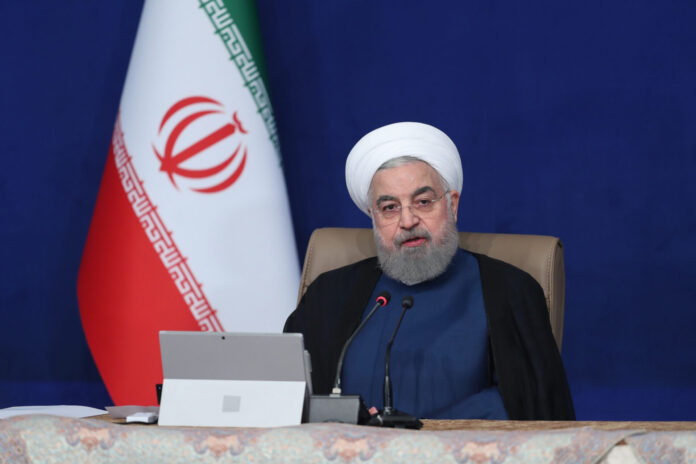
Rouhani’s Aide Explains Why Meeting with Trump Never Happened

Rouhani's Aide Explains Why Meeting with Trump Never Happened

In an interview with local media, Hessam-ul-din Ashna has elaborated on a range of issues involving the president.

In part of the interview, he underlined that Rouhani made every effort to preserve the 2015 Iran nuclear deal, officially known as the Joint Comprehensive Action (JCPOA)

“I confess that that Mr. Rouhani would make any sacrifices to preserve the JCPOA,” he noted.

“The president would pawn his honour or would be ready to be cursed in order to ward off sanctions,” he said.

“But the president came to realize that [US President Donald] Trump was not going to settle the issue and just wanted to take a photo (i.e., paint a publicly acceptable image of himself),” the advisor noted.

“If Mr. Rouhani had been confident that Trump wanted to resolve the issue and, more importantly, was structurally capable of doing so, he (Rouhani) might have adopted other decisions,” he said.

“If reaching a deal with Trump had had costs on the domestic front only, Mr. Rouhani would have paid them. Likewise, the phone conversation with [former US President Barack] Obama and getting into the nuclear deal had very heavy costs for Mr. Rouhani, but he managed to move forward,” said the advisor.

“Mr. Rouhani is still not forgiven by some power circles for the agreement (JCPOA) he initiated, but the Trump phenomenon is an exceptional one in the world,” he said.

Rouhani-Trump Talks

Mr. Trump would say, “We won’t hold talks with people, but with governments.” “Accordingly, when Mr. Macron, in New York, gave an offer of trilateral negotiations, Mr. Rouhani did not reject it,” said Ashna.

“Negotiations between Mr. Rouhani and Mr. Macron went so far that four-point proposal was put forward; the proposal held that Iran and the US should accept these commitments and re-enter talks with these commitments,” he added.

“They were put on paper and some negotiations were held through an intermediary. But the Americans believed that talks needed to start, so that both sides would see whether or not they could fulfill those four provisions; this was a bone of contention,” he said.

“Mr. Rouhani said the principles of the agreements should be set first before sitting at the negotiating table. This is verification. But Mr. Trump said we should first sit at the negotiating table, and then see what happens. This was the technical part of the story,” said the advisor.

“Mr. Macron drew up provisions, and Mr. Rouhani said the he agreed with those four provisions in principle, but needed to work more on them,” said the advisor.

“When Mr. Rouhani went to New York, work had progressed well and both sides were working on the ‘language’ of those provisions. But suddenly, Mr. Macron goes to Mr.

Rouhani’s room that night and says he has the required devices and equipment with him, and that Mr. Trump, too, wants to talk to the Iranian president that night without any prior arrangement or agreement,” the advisor added.

According to Ashna, Macron told Rouhani that Trump had not agreed to the provisions, which meant Rouhani would have to accept the risk of entering into talks with Trump, talks that would have no result for Iran, but would serve to make Trump popular.

“Although Rouhani was prepared for a meeting, he realized that Trump’s goal was not to reach agreement. Given that Iran was under sanctions, unconditional talks would mean giving in to Washington’s demands,” he said.