Saturday, December 27, 2025
Home Blog Page 2708

6 Iranian Firms Working to Develop COVID-19 Vaccine: VP

5 Iranian COVID-19 Vaccines on WHO’s List of Vaccines Candidates

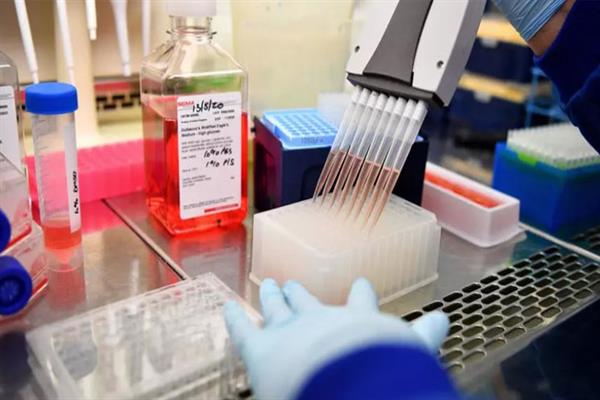
Vice-President for Science and Technology Sorena Sattari says no effective drug or vaccine for coronavirus has been developed around the world so far.

“Still, all medicines which contribute to the recovery of coronavirus patients and relevant equipment for the disease such as masks and ventilators are all being produced in the country,” he said.

“Moreover, the health minister is to inform the public of [efforts underway to develop] a vaccine,” he added.

Elsewhere in his remarks, Sattari said some 500 Iranian elite will return home from 200 top world universities to use their scientific knowledge to contribute to Iran’s progress.

He said the number of Iranian elite returning to the country in August 2020 registered a two-fold rise year-on-year.

Iran’s Public Culture Council Condemns Charlie Hebdo’s Insulting Cartoon

Iran’s Public Culture Council Condemns Charlie Hebdo’s Insulting Cartoon

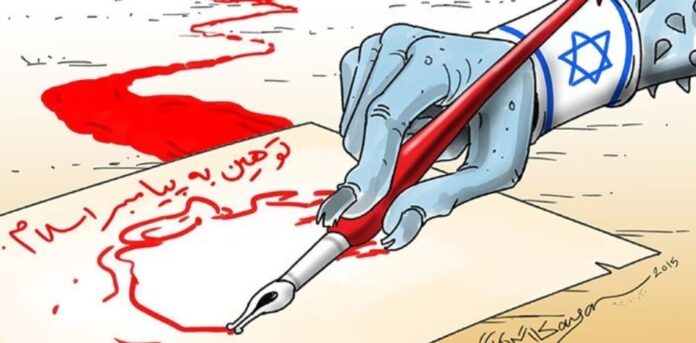
In a statement released on Sunday, secretariat of the Public Culture Council of Irancondemned the French satirical magazine’s move to insult Prophet Muhammad (PBUH) by republishing offensive cartoons.

The Iranian council also denounced the “bitter and heinous” action from a group of malicious ignorant ill-wishers in Sweden to burn copy of holy Quran, saying such insults reveal the extent of their hostility towards Islam.

The statement has also emphasized that such sacrilegious moves will not only not harm Islam and the holy character of Prophet Muhammad (PBUH), but lays bare the frustration of enemies and their failure to engage in logical discourse.

The consequences of insulting the sanctities of 1.5 billion Muslims in the world will plague those who have masterminded, provoked and perpetrated such evil plot, it added.

The French satirical newspaper whose Paris offices were attacked in 2015 is reprinting the controversial caricatures of Islam’s Prophet Muhammad.

In an editorial last week accompanying the offensive caricatures, the paper said the drawings “belong to history, and history cannot be rewritten nor erased”.

Iran’s National Information Network Not Based on Censorship: Official

Iran’s National Information Network Not Based on Censorship: Official

In remarks at a televised interview, director of Iran’s National Centre of Cyberspace, Abul-Hassan Firoozabadi, said the National Information Network (NIN) is not based upon censorship and will not carry out any filtering policy unless the platforms violate the law and their illegal activities would cause cultural, social, political and security problems.

Like all other international networks, web contents in the Iranian Internet or the NIN will be accessible in accordance with the country’s regulations and the network is not going to censor anything at the beginning, he added.

“There is no plan to shut down any foreign network or platform, unless the platform disobeys the Iranian law and causes widespread destructive security effects,” he noted.

Firoozabadi also emphasized that the National Centre of Cyberspace is by no means after filtering of the foreign social networks, saying the services blocked in Iran have a record of anti-security activities, such as Twitter that took brazen acts of interference organized by the White House amid the 2009 unrest in Iran.

Telegram had also promised to cooperate with Iran, but refused to do so after a whole bunch of daily complaints about the messaging service being used for fraud, wrongdoing and even terrorist operations, the official noted, describing why the messaging services have been blocked in Iran.

Highlighting Iran’s progress in development of telecommunication networks, the official said the Islamic Republic outperforms many regional countries in the telecommunication systems.

He finally called on the administration to push for the development of basic web-based services and let the private sector carry out projects on homegrown messengers, search engines, e-mail and cloud services.

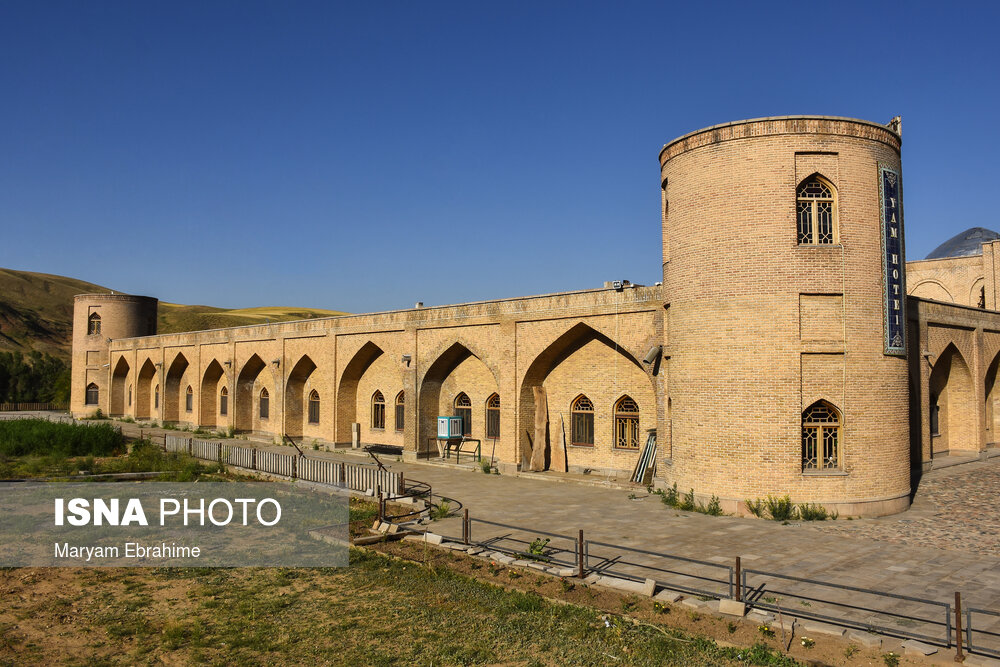
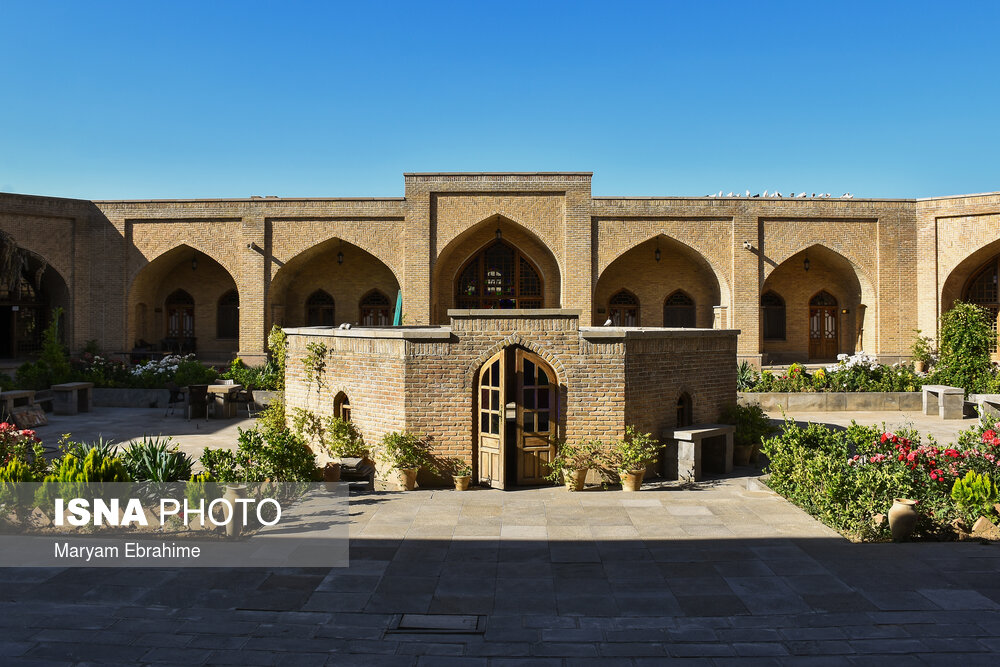
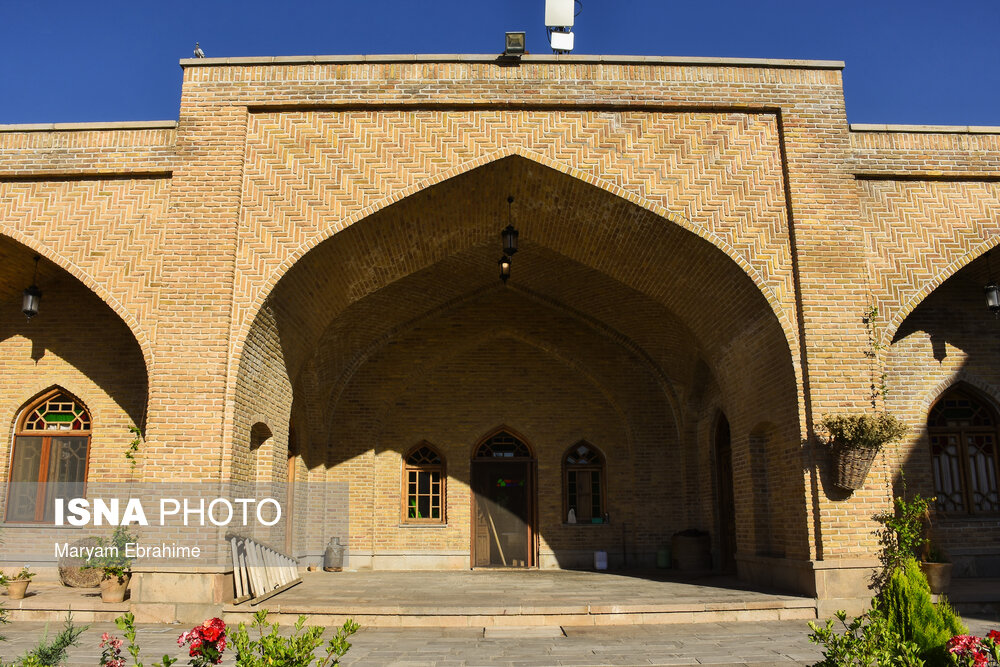
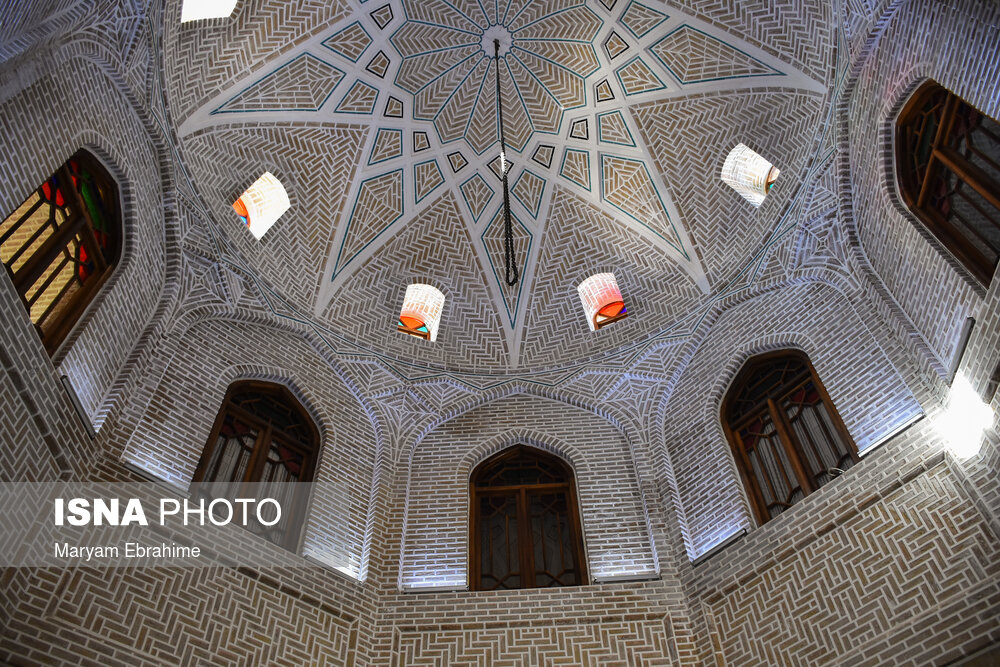
Iran’s History in Photos: Yam Caravanserai

Iran’s History in Photos Yam Caravanserai 5

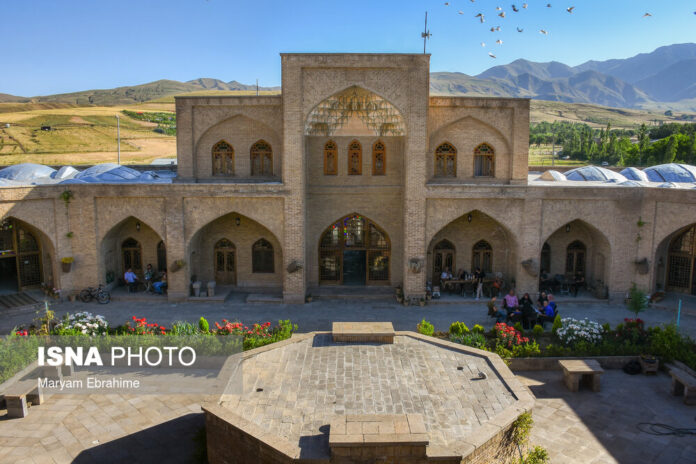
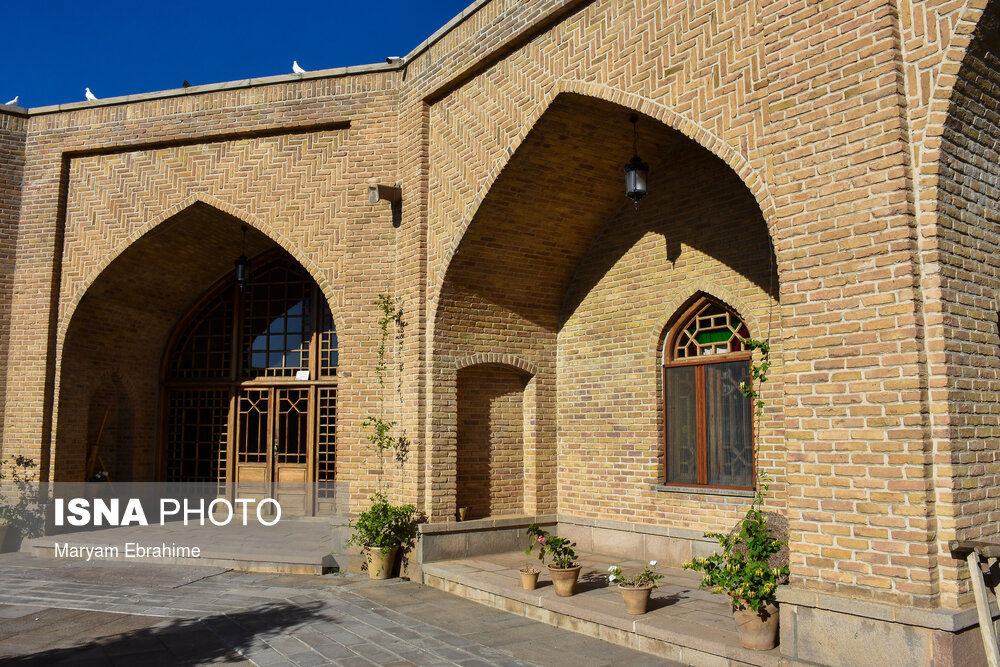
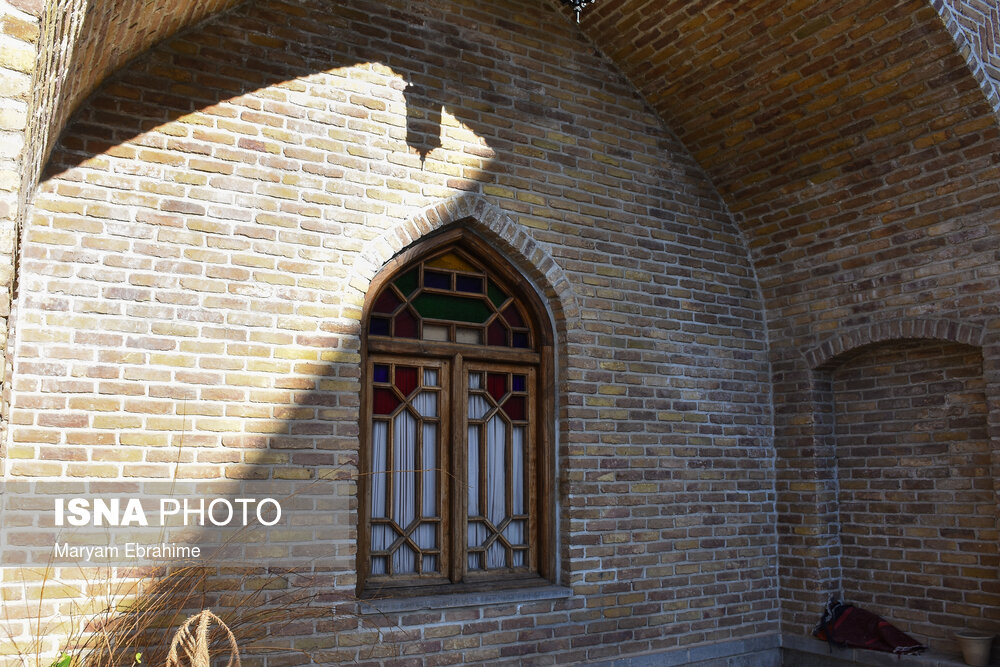
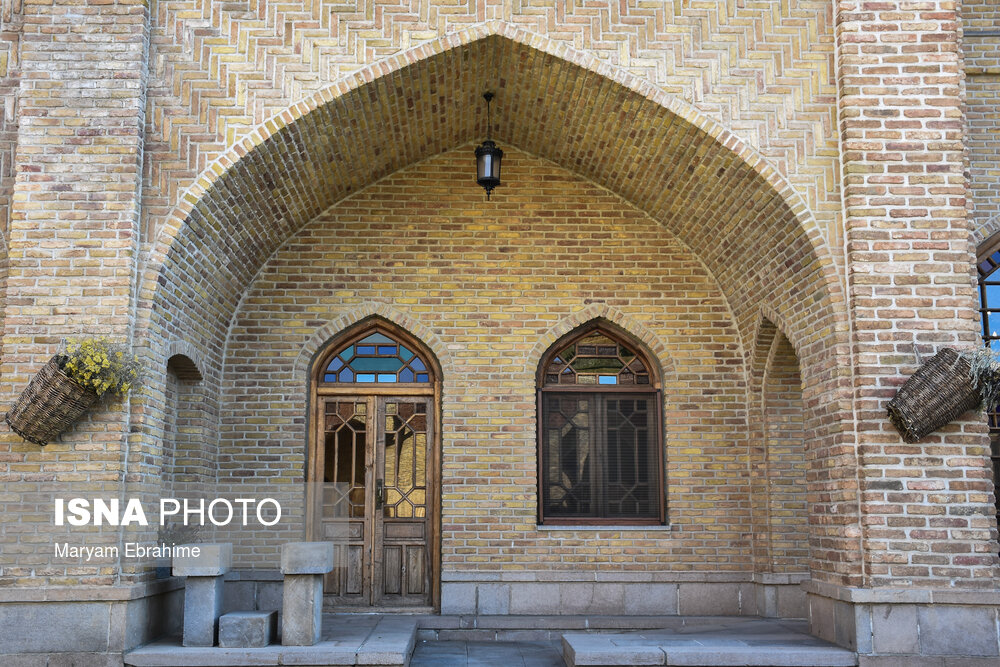
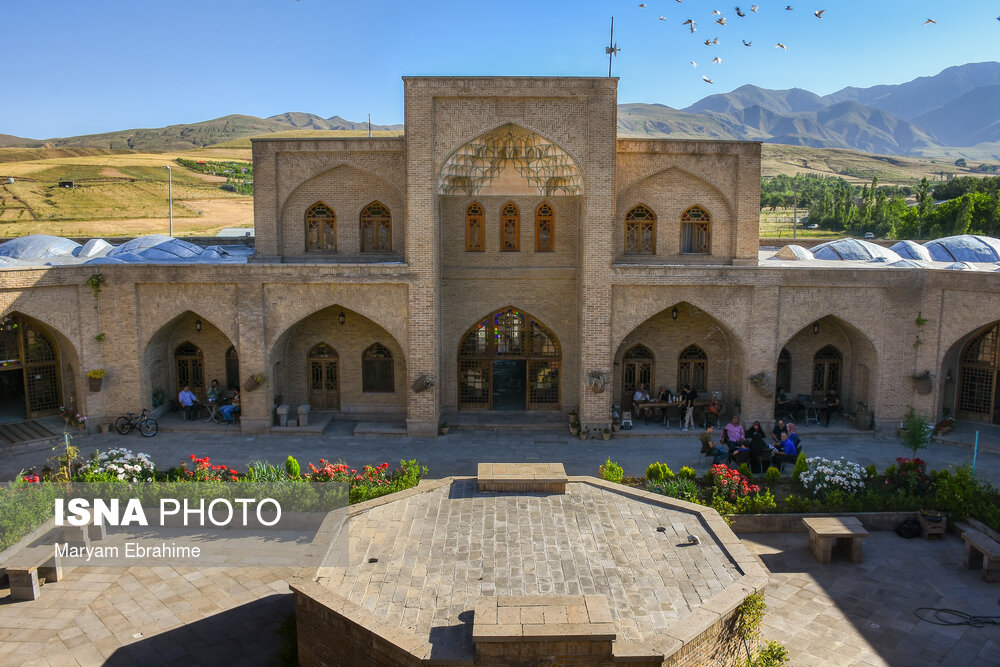
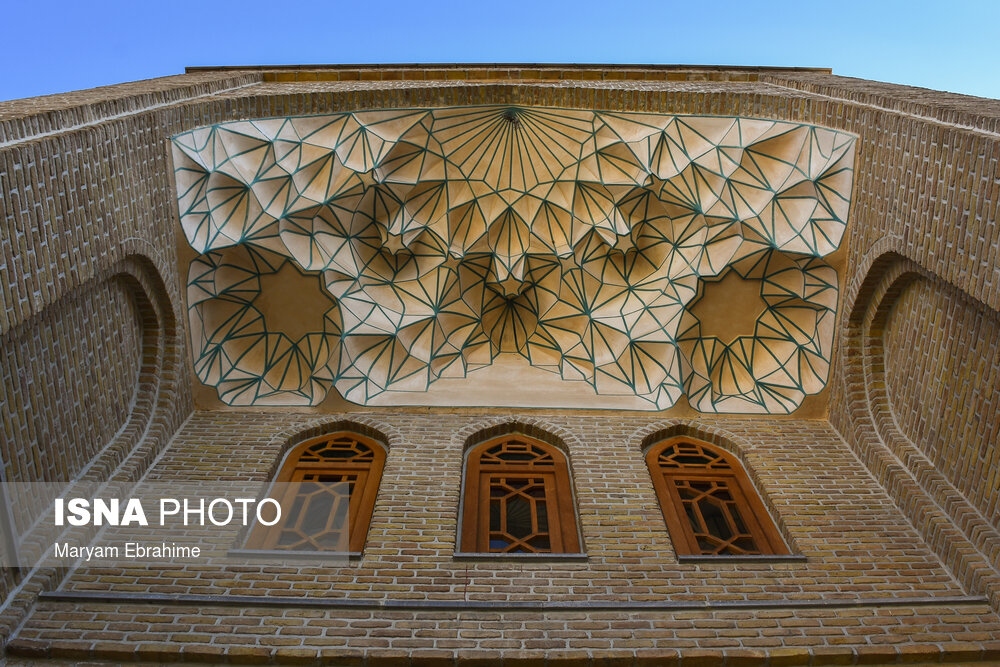
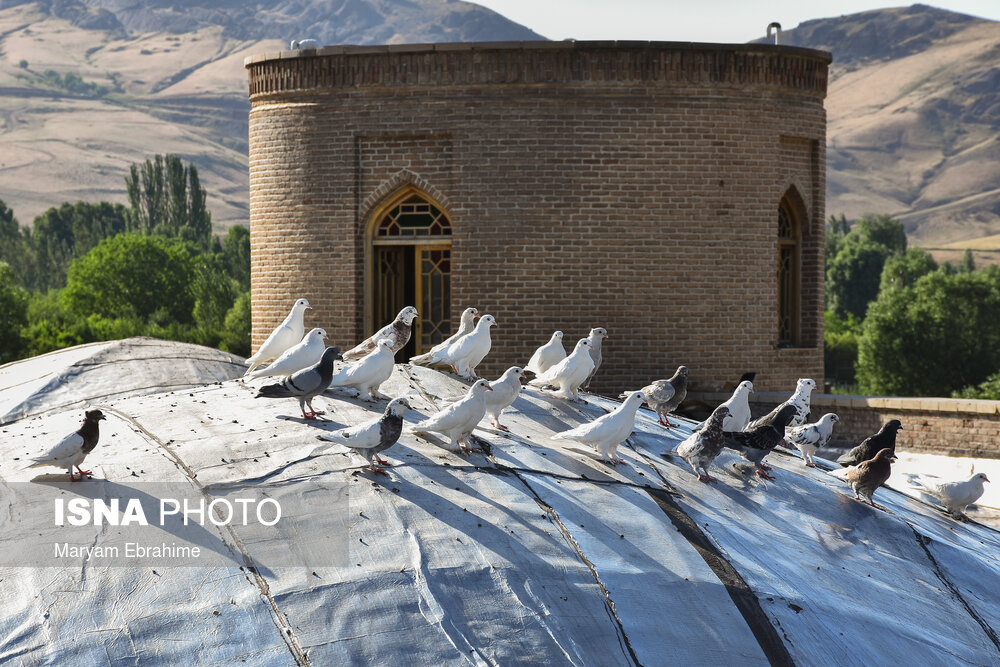
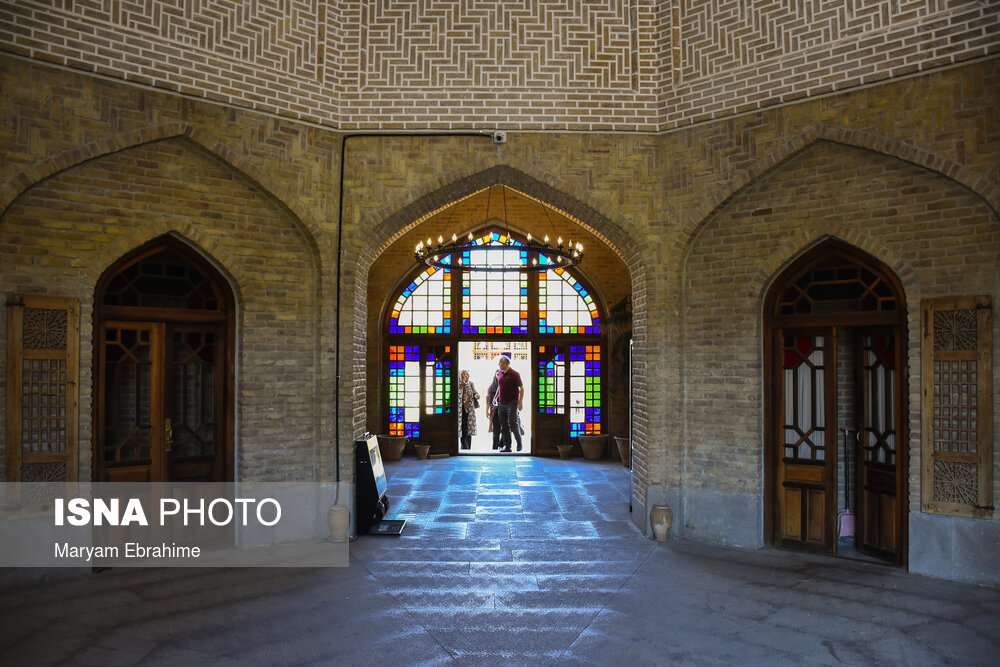
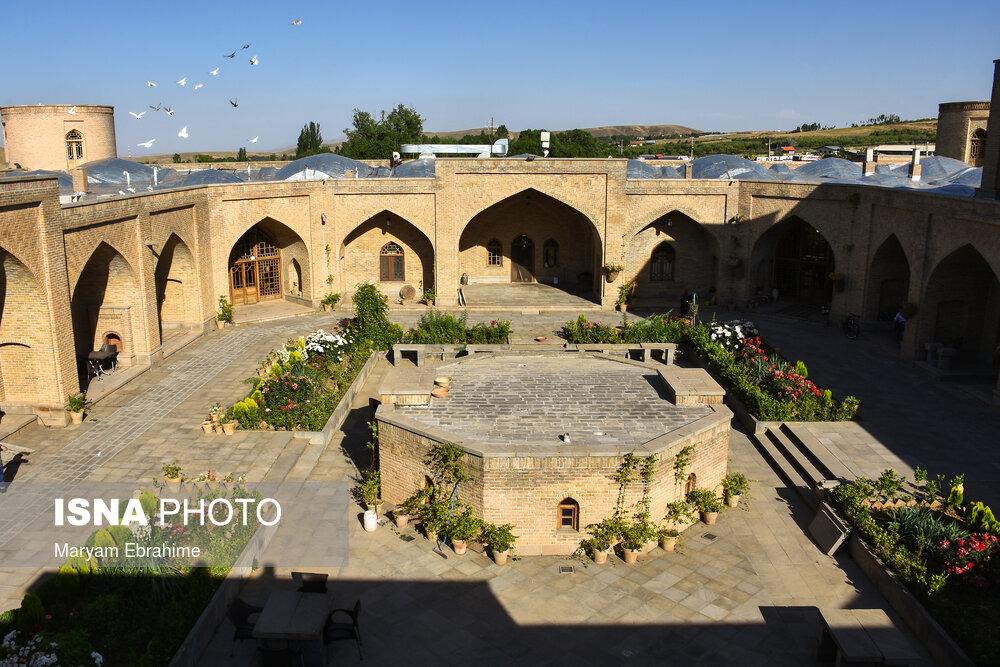
The Yam caravanserai is the largest of its type in the north-west of Iran, and one of the most important historical and tourist buildings of the country.

The caravanserai is located 54 kilometres from Tabriz along the road to Marand. It had been damaged due to severe climatic conditions; however, it was rebuilt and revived by cultural heritage restorers in recent years.

Also called the caravanserai of Payam, the building dates back to the Mongol and Safavid eras; and is now one of the 999 Shah-Abbasi style caravanserais in Iran which are open to public.

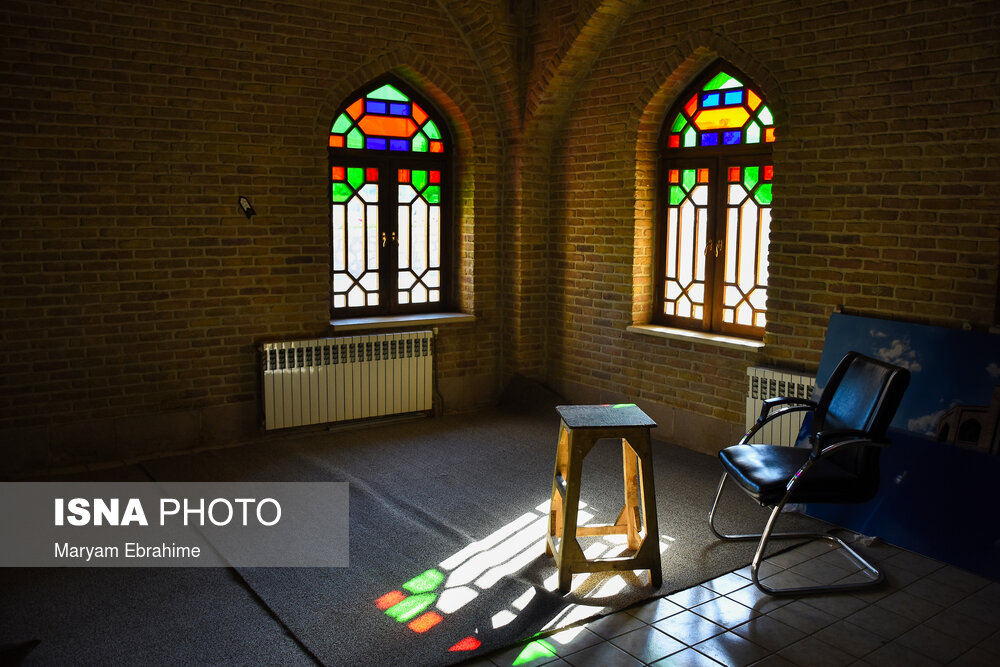
What follows are ISNA’s photos of Yam caravanserai:

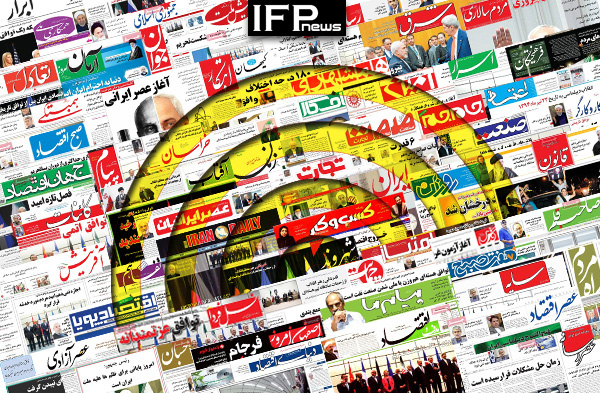
A Look at Iranian Newspaper Front Pages on September 6

A Look at Iranian Newspaper Front Pages on November 5

Iranian Newspapers

Abrar Newspaper:

1- This School Year Different from All Previous Years: Rouhani

2- Corona in Iran: 110 More Patients Die; 29 Provinces in Red, Orange Zones

3- UK Defence Chief Admits His Country’s Debt to Iran

4- Iran’s Reaction to Pompeo’s Phone Call with Swiss Counterpart ahead of Tehran Visit
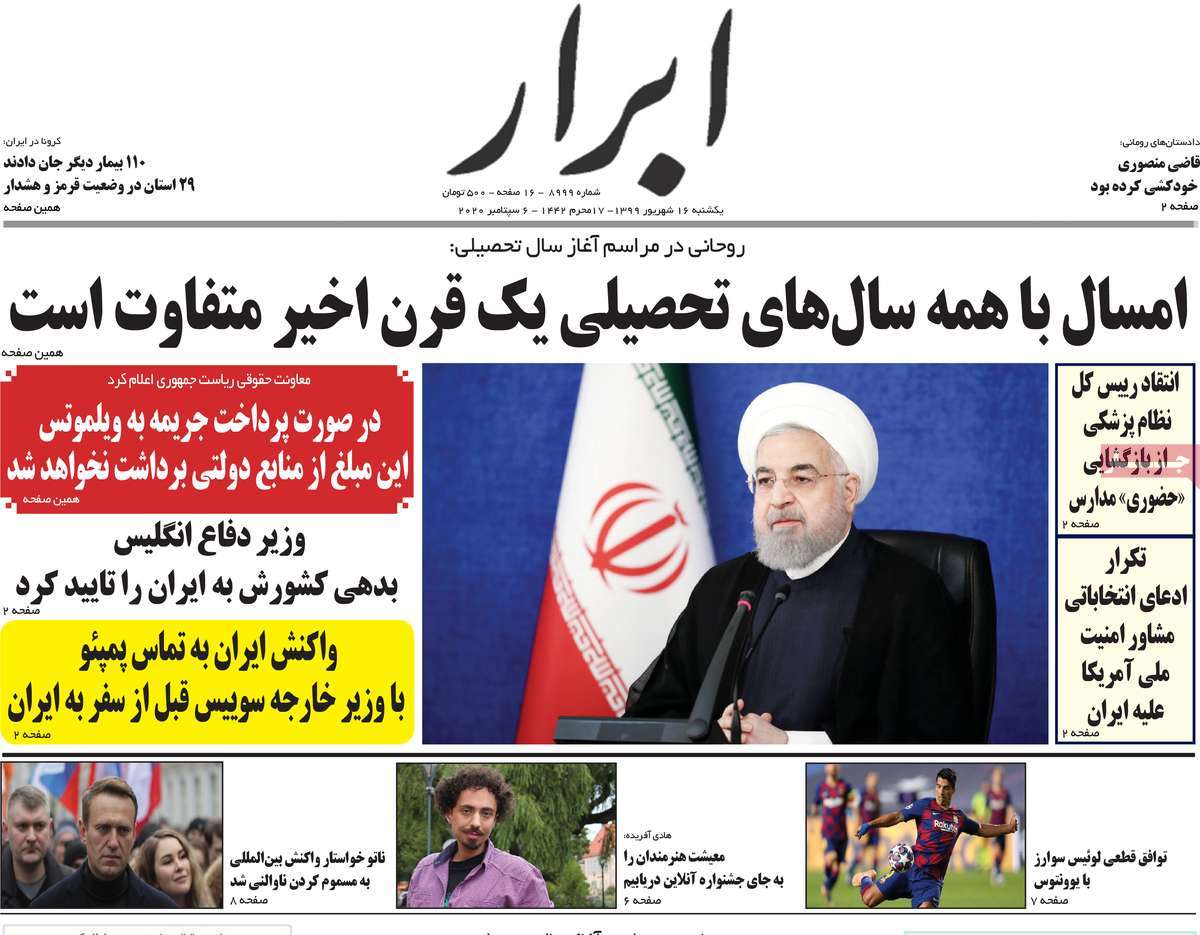
A Look at Iranian Newspaper Front Pages on September 6


Afkar Newspaper:

1- Iran’s Medical Official Urges Education Ministry to Reconsider Decision to Reopen Schools
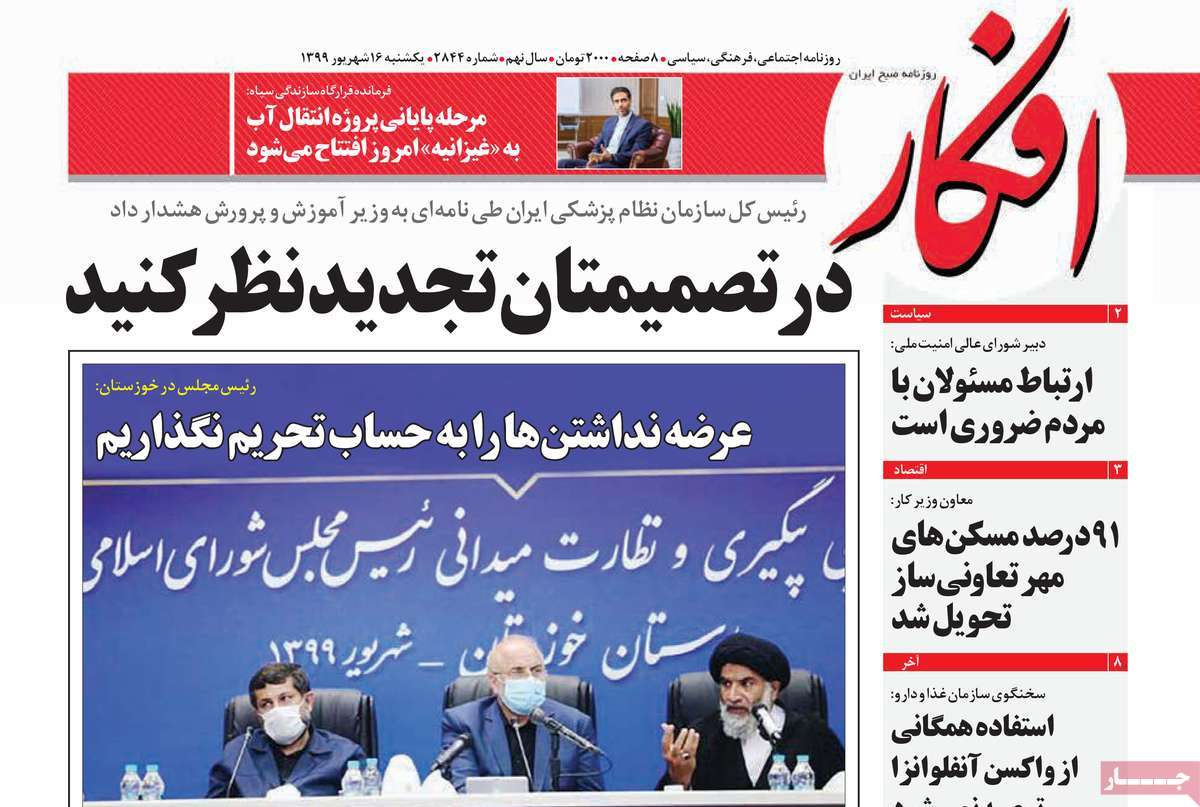
A Look at Iranian Newspaper Front Pages on September 6


Arman-e Melli Newspaper:

1- We Expected to Receive Assistance in Time of COVID-19 Outbreak: Rouhani

2- Trump Not after War, Seeks to Get Concessions: Analyst
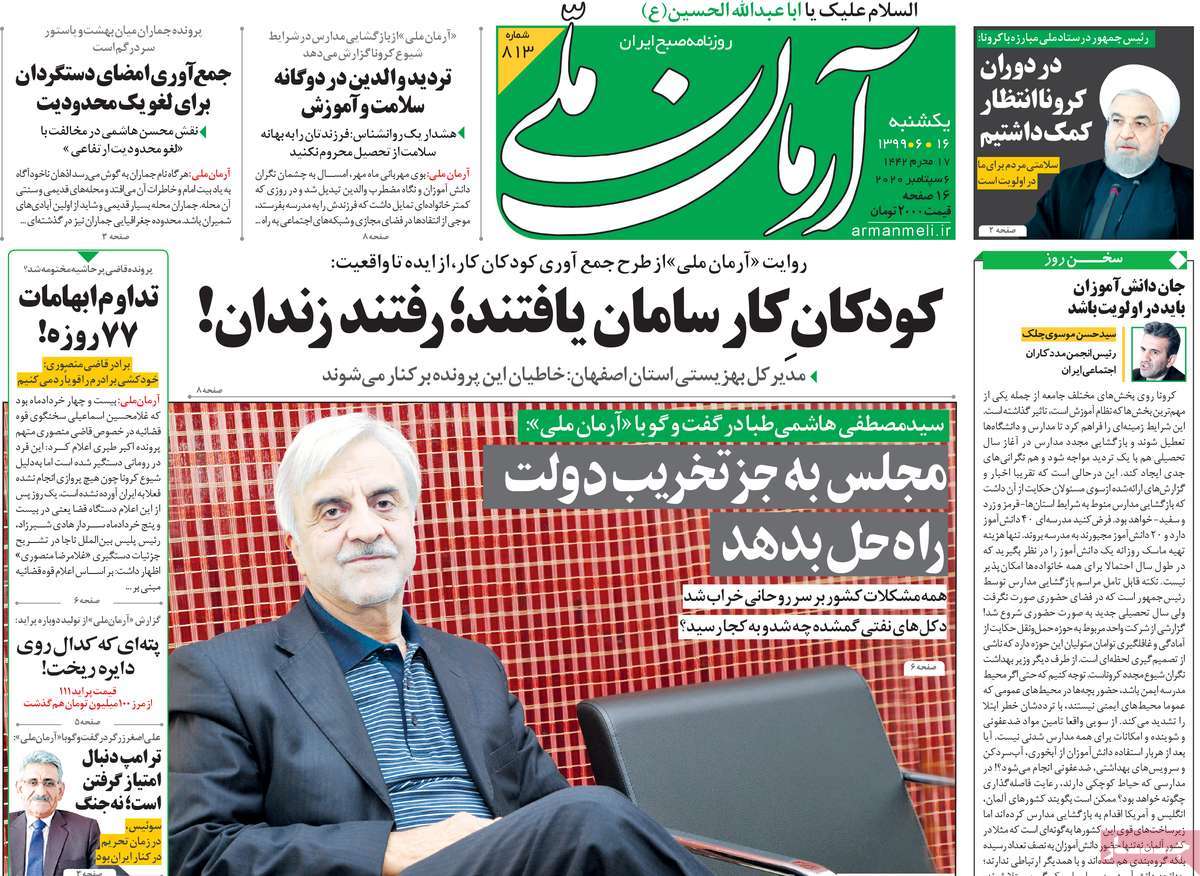
A Look at Iranian Newspaper Front Pages on September 6


Ebtekar Newspaper:

1- JCPOA Turning Point in Iran’s 42-Year Diplomacy

* A Deal Which Still Works Despite Challenges

2- Iran to Begin New Era of Monetary Policy-Making: Chief Banker
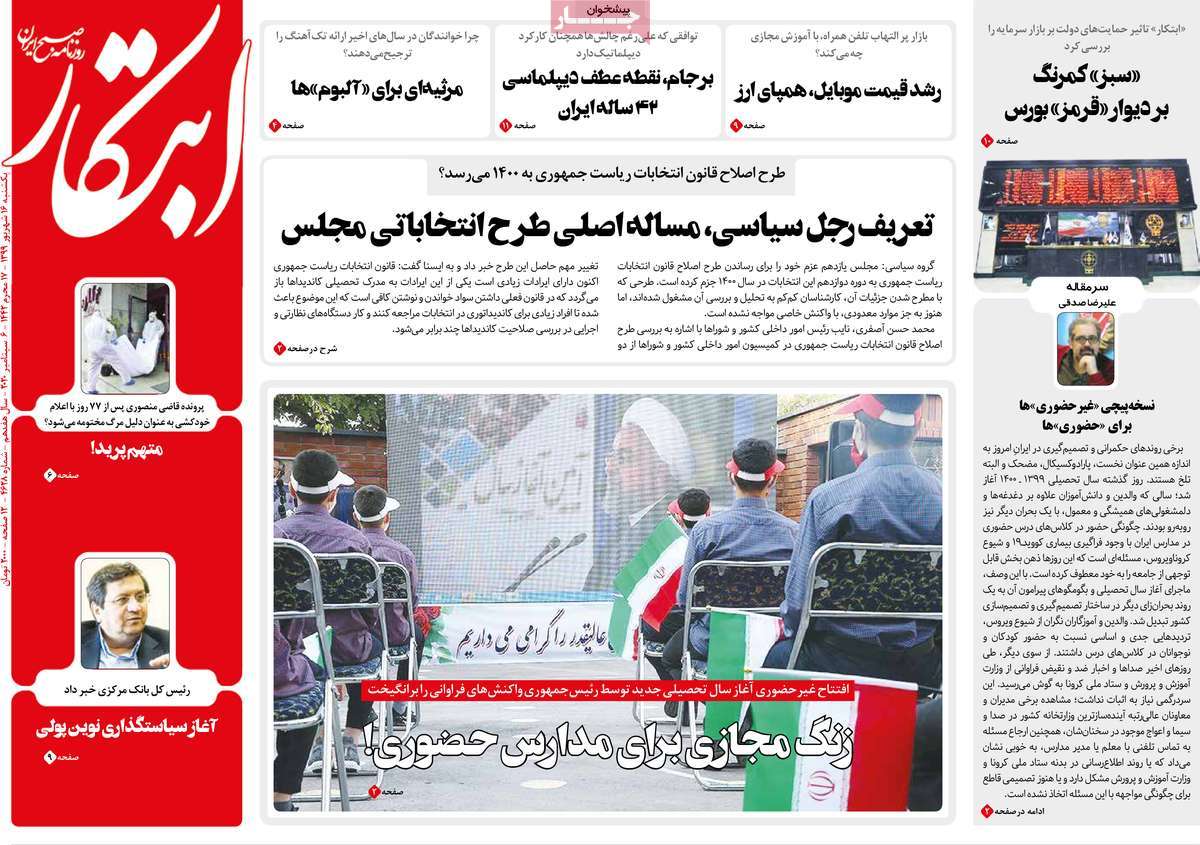
A Look at Iranian Newspaper Front Pages on September 6


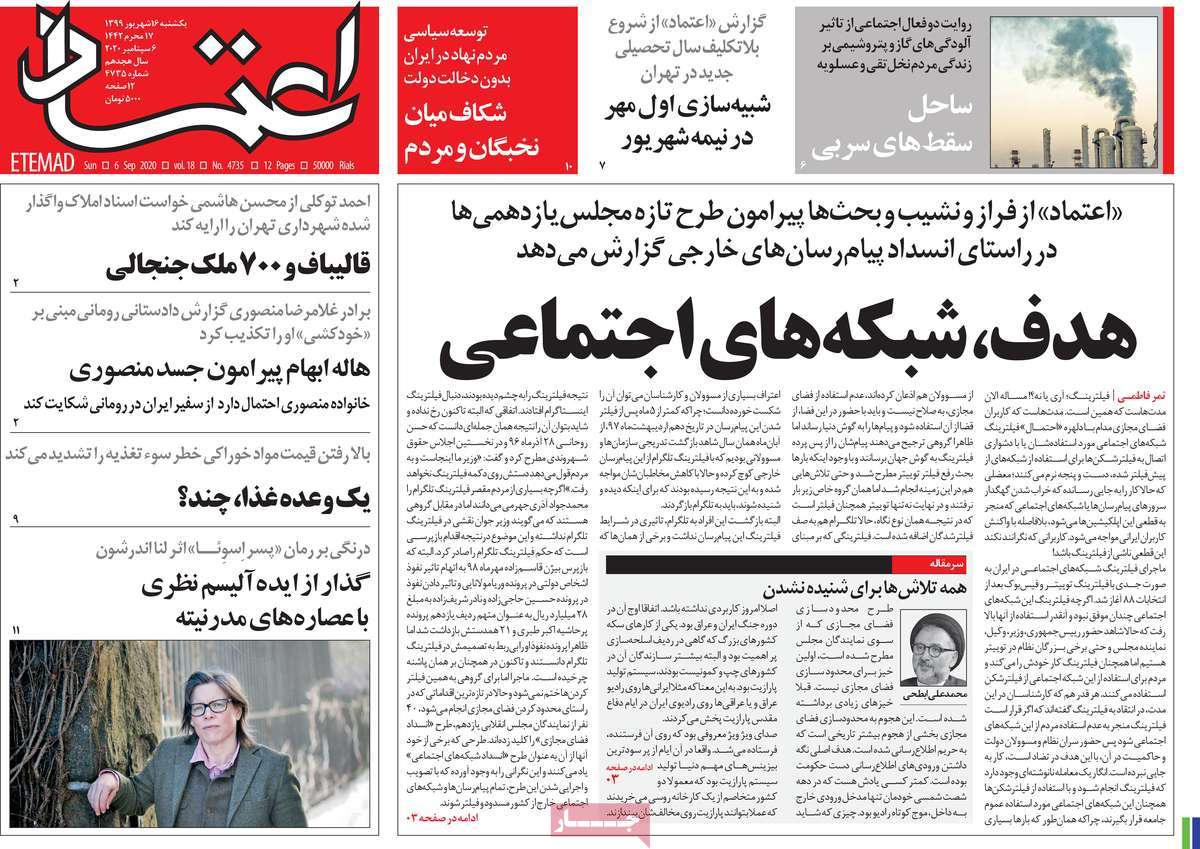
Etemad Newspaper:

1- Ambiguities over Iranian Judge’s Body

* His Family May File Lawsuit against Iran Ambassador to Romania
A Look at Iranian Newspaper Front Pages on September 6


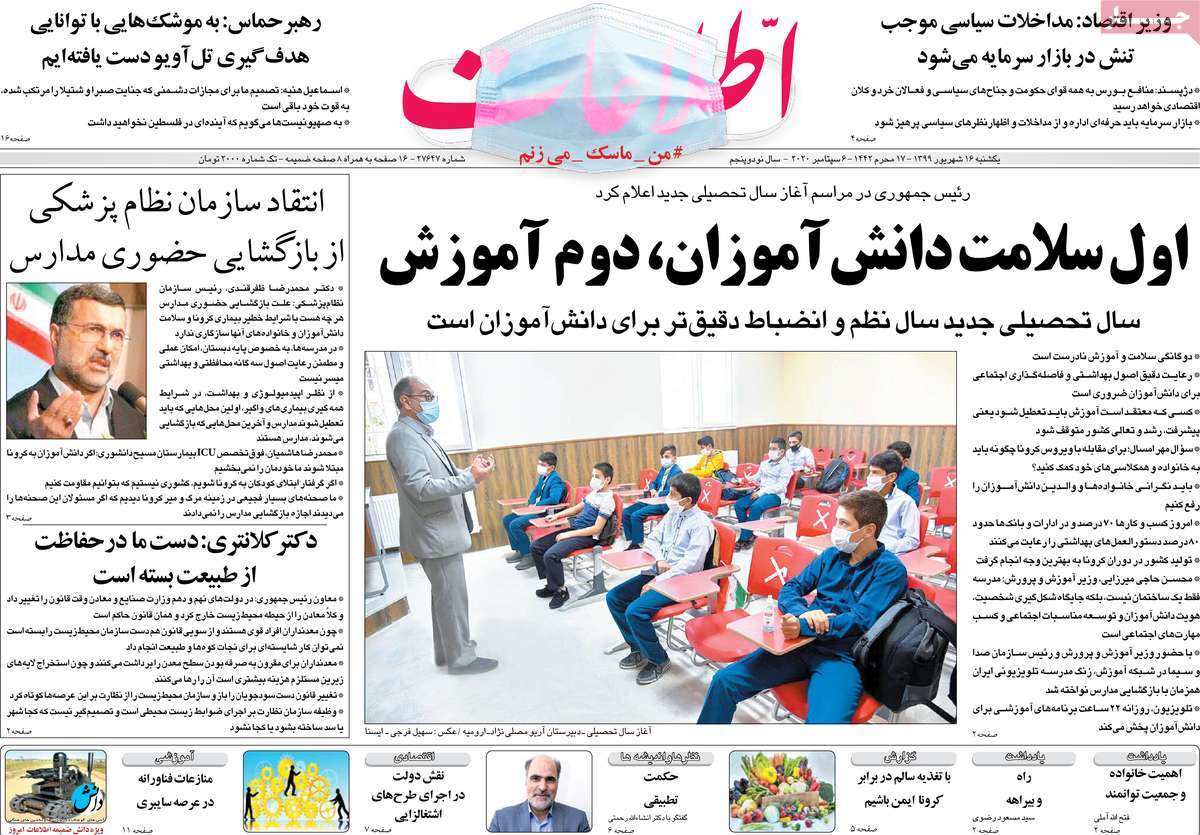
Ettela’at Newspaper:

1- Iran’s Medical Council Criticizes Reopening of Schools with In-Person Learning

2- Hamas Chief: We’ve Acquired Missiles that Can Hit Tel Aviv

3- Economy Minister: Political Interventions Create Tension in Capital Market
A Look at Iranian Newspaper Front Pages on September 6


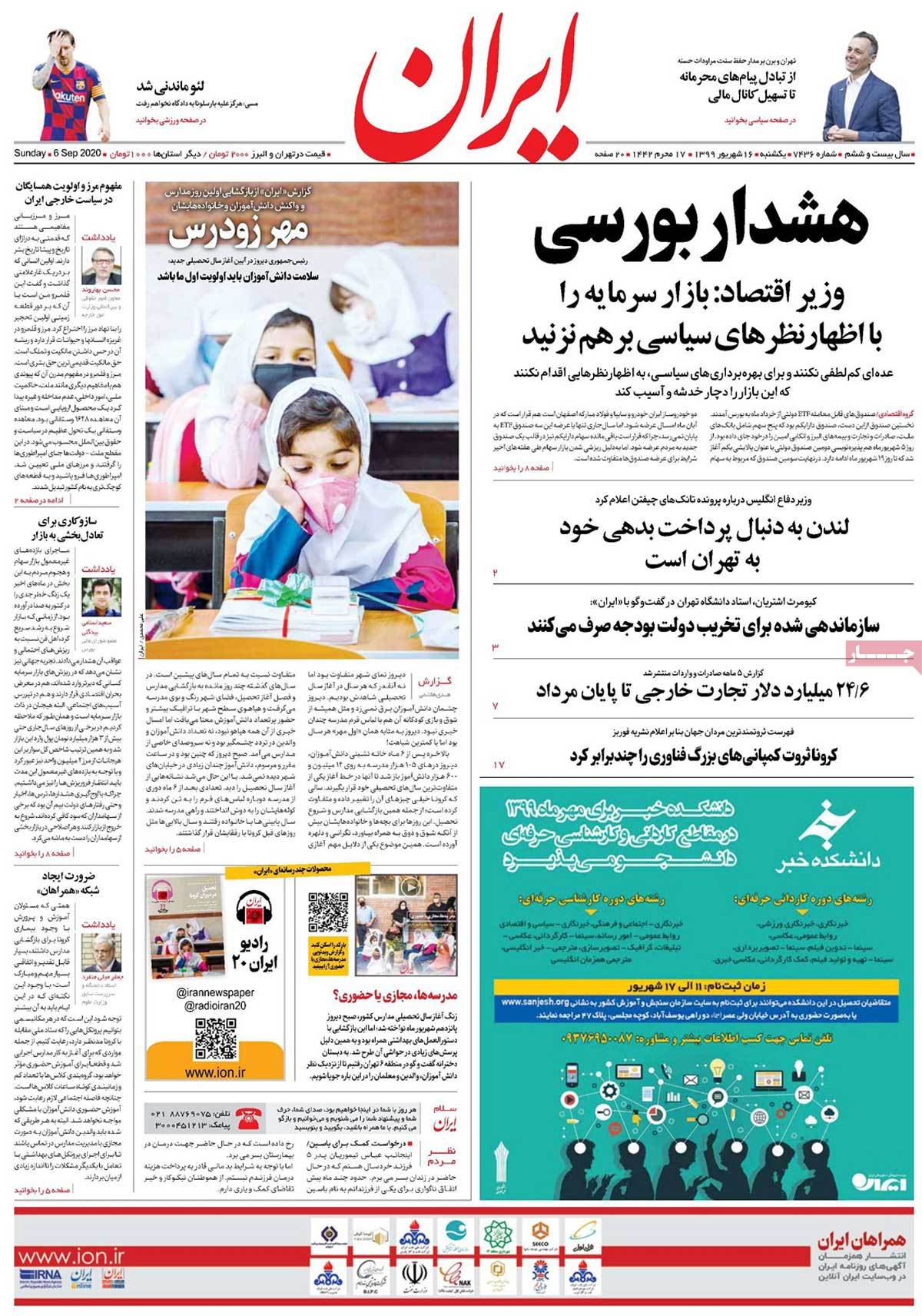
Iran Newspaper:

1- From Exchange of Secret Messages to Facilitating Financial Channel

* Tehran and Bern in Course of Maintaining Good Ties

2- London to Repay Its Debt to Iran: Defence Chief
A Look at Iranian Newspaper Front Pages on September 6


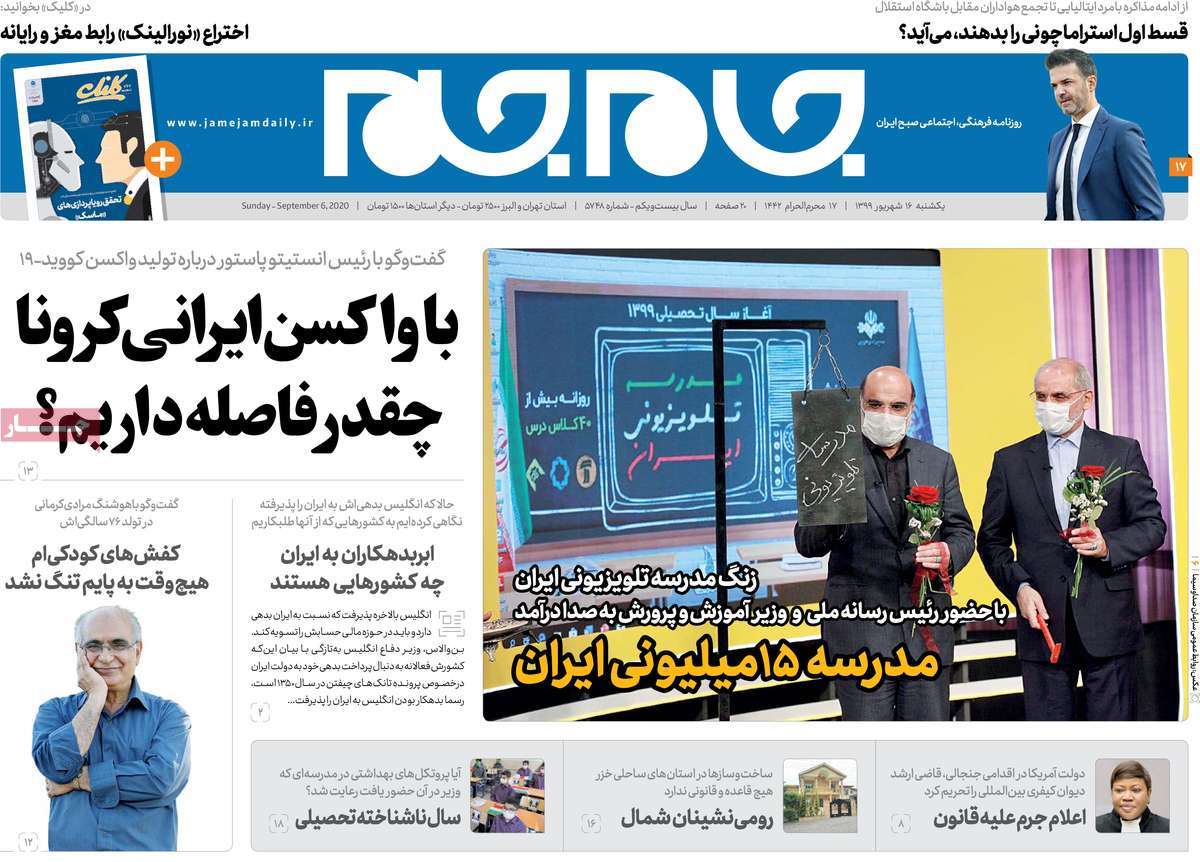
Jame Jam Newspaper:

1- How Far Are We from Iranian Vaccine for COVID-19?

2- Which Countries Are Indebted to Iran the Most?
A Look at Iranian Newspaper Front Pages on September 6


Jomhouri Eslami Newspaper:

1- Iran Envoy to IAEA: Latest Report Shows ‘Constructive Outlook’ for Bilateral Ties

2- Trump: We Have No Evidence of Kremlin’s Role in Poisoning Putin’s Critic
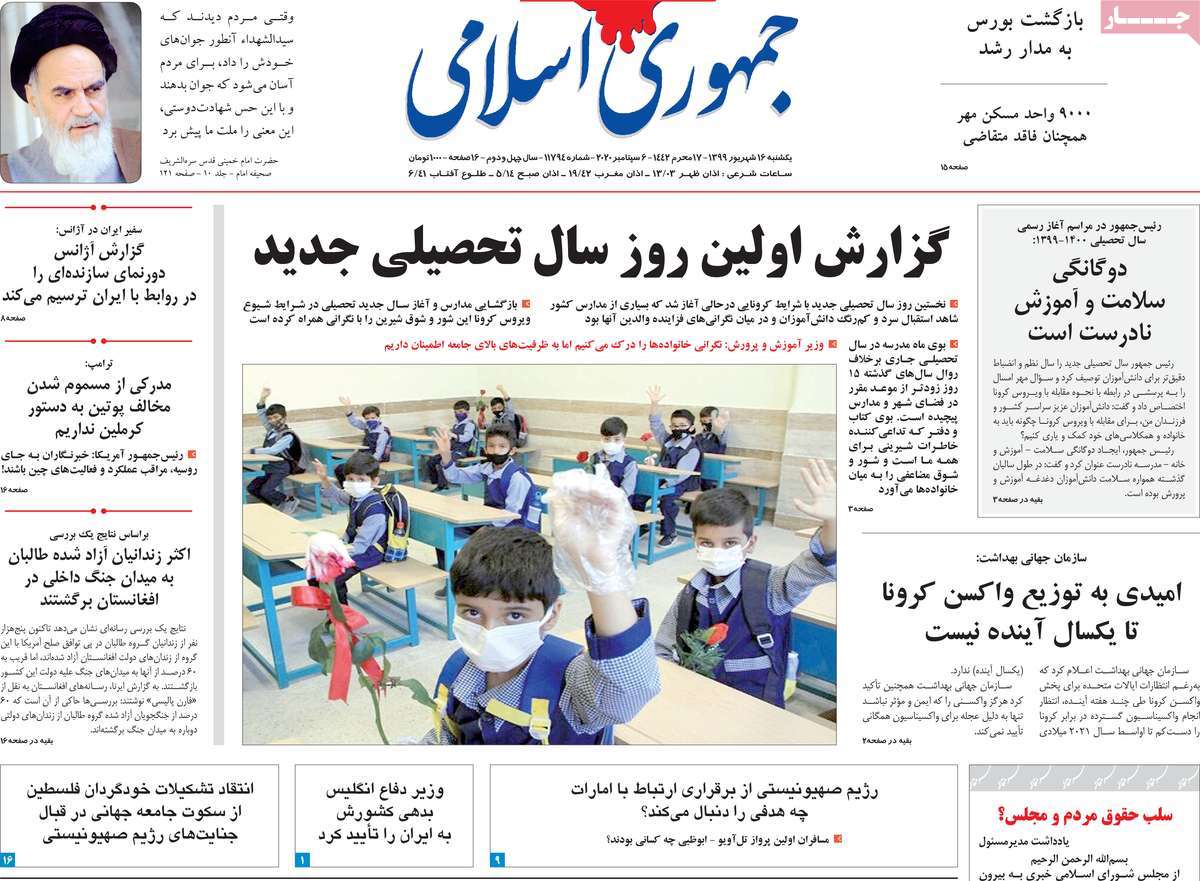
A Look at Iranian Newspaper Front Pages on September 6


Kayhan Newspaper:

1- New School Year Opened in Rouhani’s Absence

2- UK Defence Chief Admits for First Time: we Owe Iran
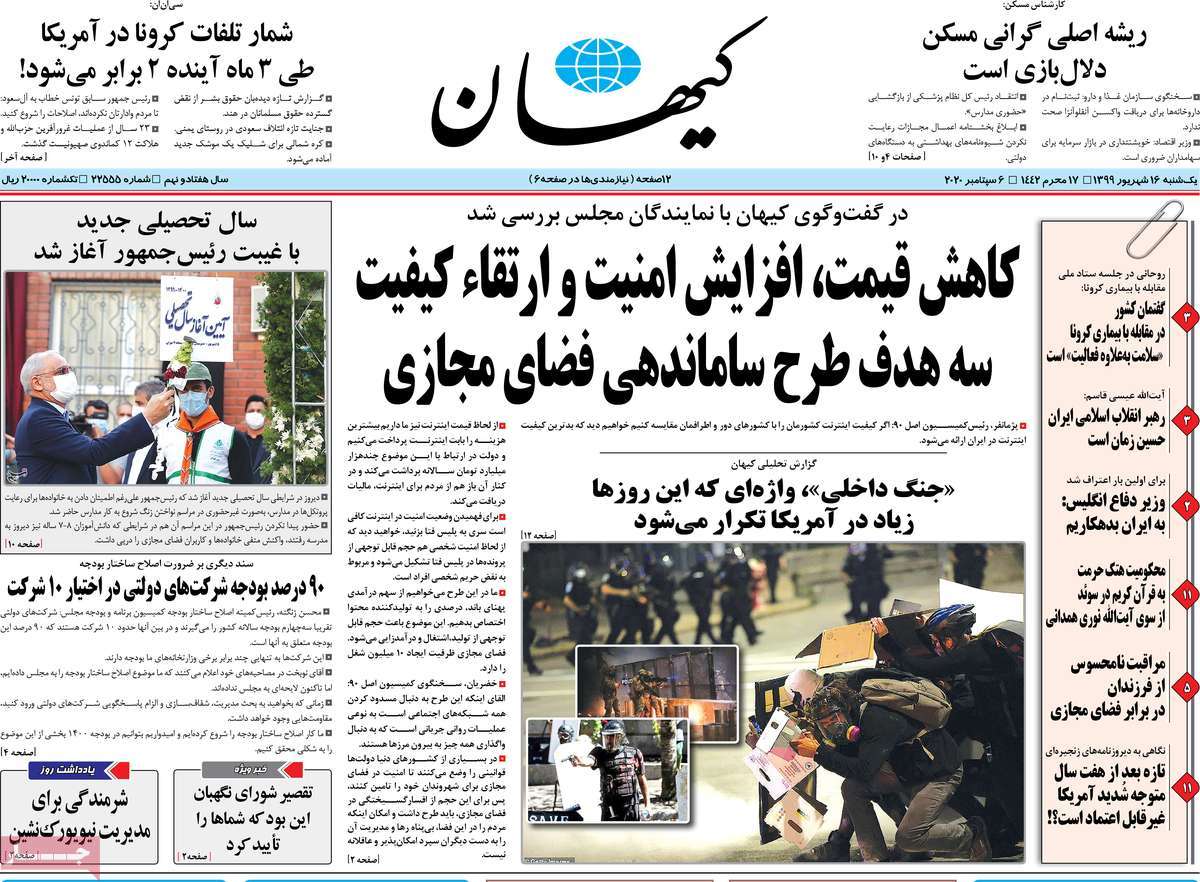
A Look at Iranian Newspaper Front Pages on September 6


Mardom Salari Newspaper:

1- Swiss Top Diplomat Visits Historical Sites of Isfahan

2- Trump Wants Victory Even If It Requires Waging War: Cohen
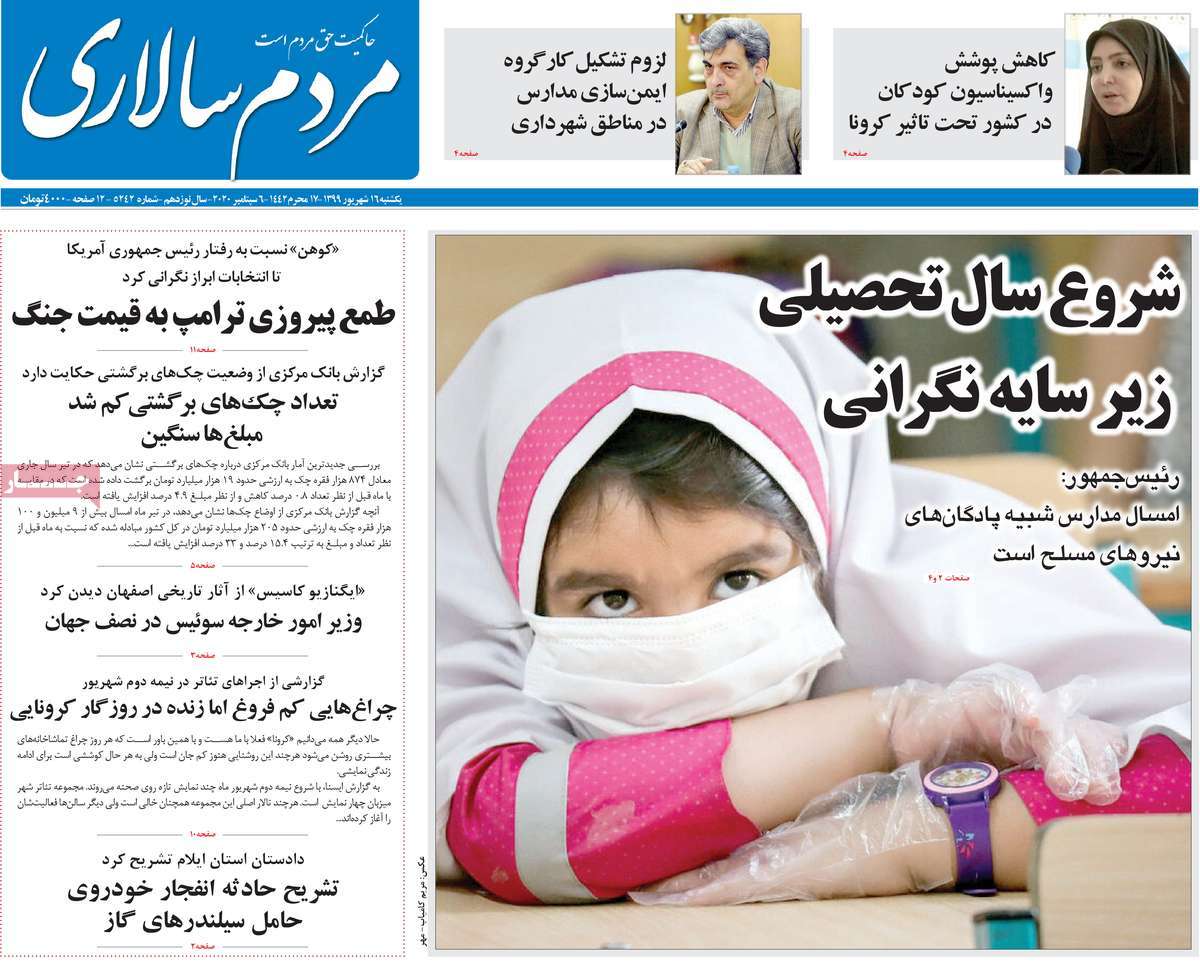
A Look at Iranian Newspaper Front Pages on September 6


Sazandegi Newspaper:

1- Arba’een Pilgrimage Banned This Year over COVID-19: Rouhani

2- Win-Win Game: IAEA Report Shows Progress in Its Ties with Iran
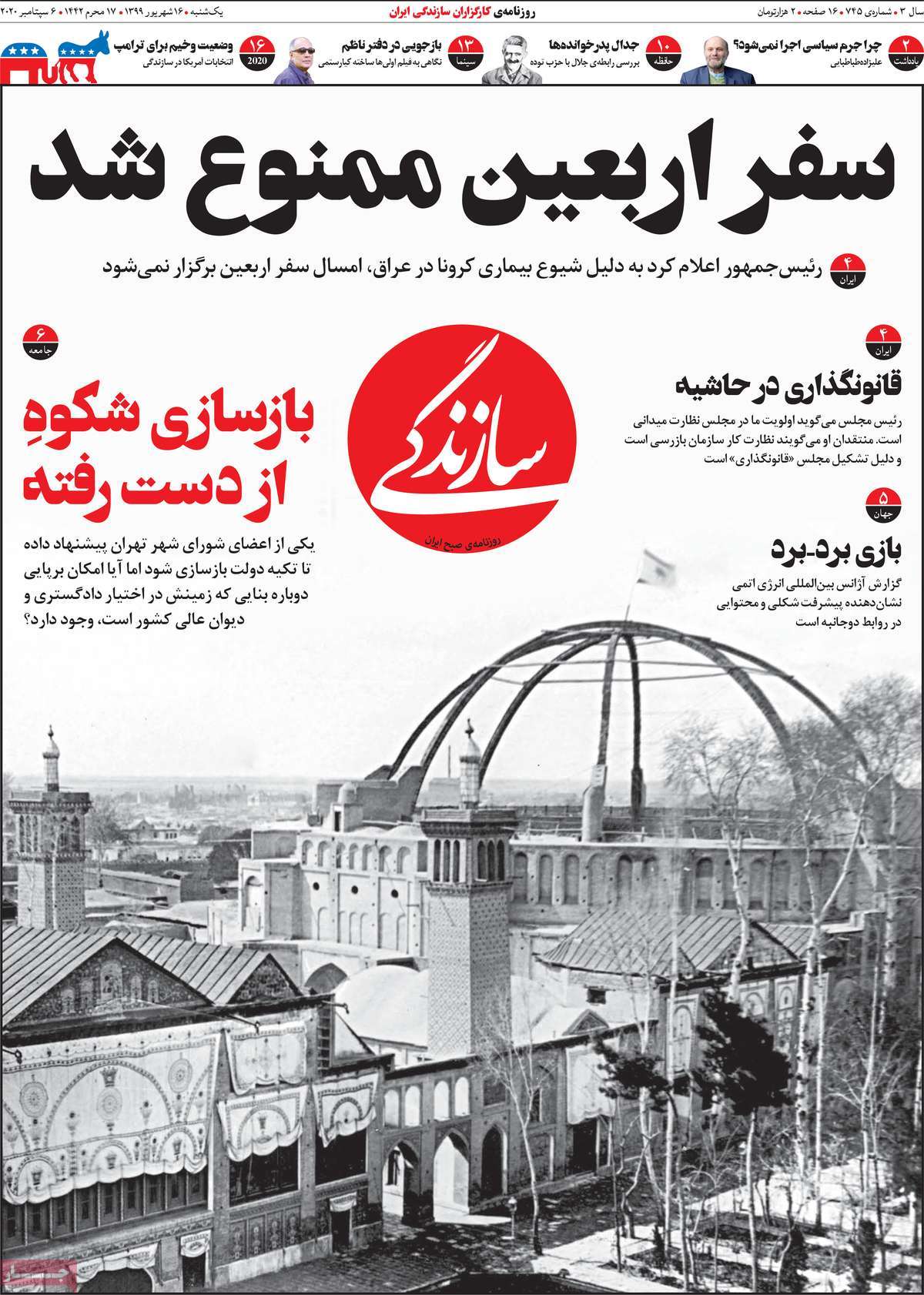
A Look at Iranian Newspaper Front Pages on September 6


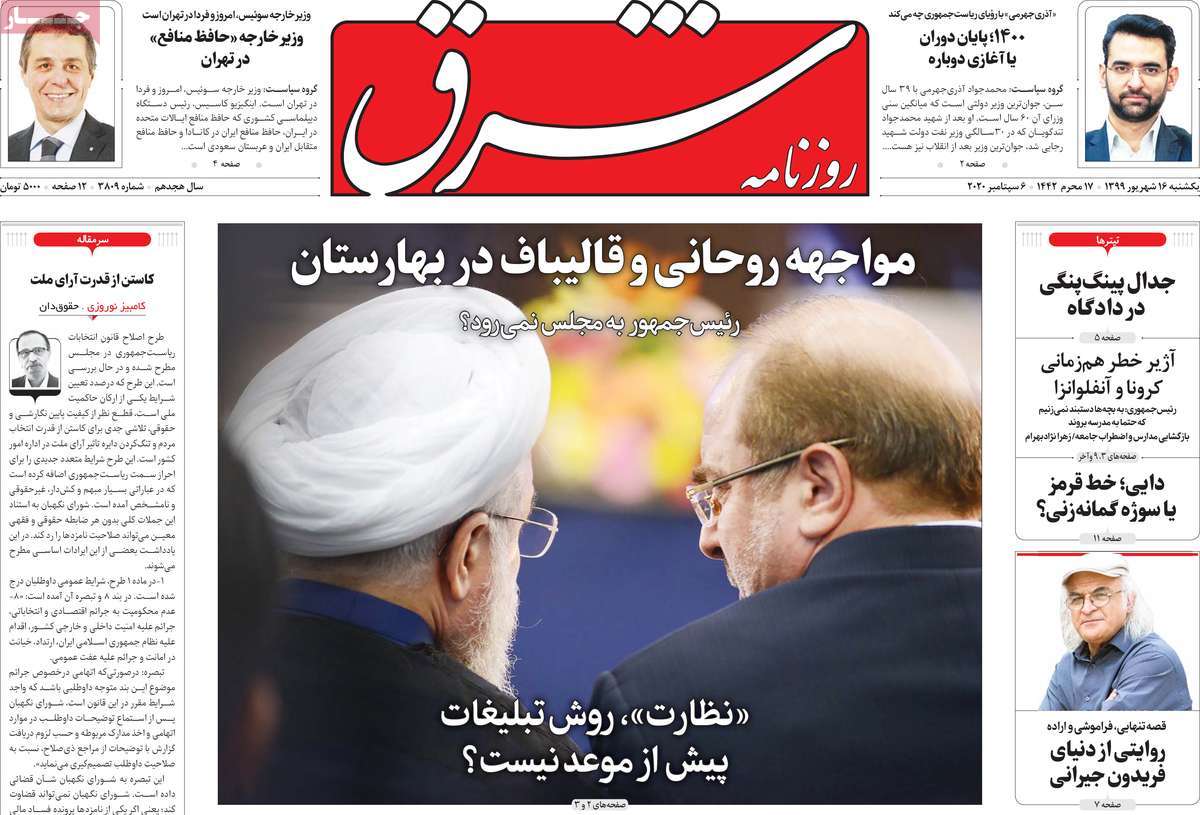
Shargh Newspaper:

1- Swiss Top Diplomat in Tehran
A Look at Iranian Newspaper Front Pages on September 6

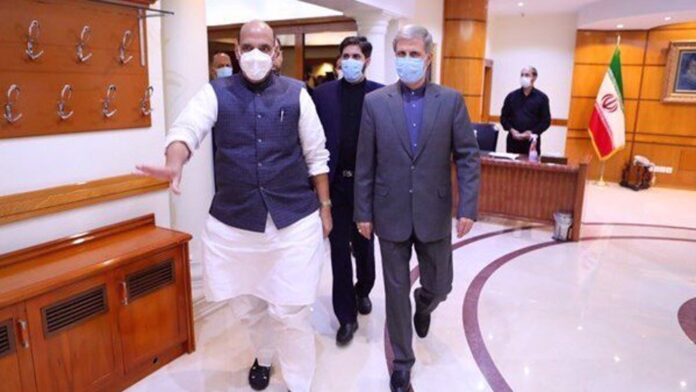
Iranian, Indian DMs Hold ‘Fruitful’ Negotiations in Tehran

Iranian, Indian DMs Hold 'Fruitful' Negotiations in Tehran

In a tweet on Sunday, Singh posted pictures of his meeting with Hatami in Tehran, saying the two sides had also discussed the situation in Afghanistan.

Had a very fruitful meeting with Iranian defence minister Brigadier General Amir Hatami in Tehran. We discussed regional security issues including Afghanistan and the issues of bilateral cooperation . pic.twitter.com/8ZENfAgRPS

— Rajnath Singh (@rajnathsingh) September 6, 2020

In another tweet, the Indian defense minister’s office said the meeting between Singh and Hatami took place in “a cordial and warm atmosphere,” adding both officials “emphasized upon the age-old cultural, linguistic and civilizational ties between India and Iran.”

Singh traveled to Tehran after concluding his three-day visit to Moscow, where he held talks with his counterparts from Russia, China and the Central Asian states.

In an address to a joint meeting of the defense ministers of the Shanghai Cooperation Organization (SCO), the Commonwealth of Independent States (CIS) and the Collective Security Treaty Organization (CSTO), he called on countries in the Persian Gulf region to settle differences through dialogue.

“India has vital interests and links of civilization and culture with all States in the Persian Gulf,” he said. “We call upon countries in the region—all of which are dear and friendly to India, to resolve differences by dialogue based on mutual respect, sovereignty and non-interference in internal affairs of each other.”

India has long sought to use a transit corridor through Iran’s strategic Chabahar port to facilitate trade access to Afghanistan and other Central Asia nations as well as Russia.

Iran Reports Highest Daily COVID-19 Fatalities in Two Weeks

Iran Reports Highest Daily COVID-19 Fatalities in Two Weeks

In a press briefing on Sunday, Sima-Sadat Lari also confirmed 1,992 new cases of infection, raising the total number of infections to 386,658.

So far, she noted, 333,900 patients have recovered from the disease or been discharged from the hospital.

Lari said 3,722 patients are also in critical conditions caused by more severe infection.
The spokeswoman noted that 3,380,264 COVID-19 tests have been taken across the country so far.

She said the high-risk “red” zones include Tehran, Qom, Mazandaran, East Azarbaijan, Isfahan, Yazd, Khorasan Razavi, North Khorasan, Semnan, Gilan, Zanjan, Qazvin, and Kerman provinces.

The “orange” zones also include Lorestan, Ardabil, Golestan, Markazi, Alborz, Hormozgan, Ilam, Fars, Bushehr, West Azarbaijan, Chaharmahal and Bakhtiari, Kermanshah, South Khorasan, Kohgiluyeh and Boyer-Ahmad, and Khuzestan provinces, she added.

Dressed as Clown, Iranian Engineer Visits Hospitals to Make Kids Laugh

Dressed as Clown, Iranian Engineer Visits Hospitals to Make Kids Laugh 11

Hossein Ebadi lives in Mahshahr in southern Iran. He used to work at the road rescue unit of the Red Crescent Society years ago, which triggered him to change his perspective on life.

“I also do theatre work, mostly satire. It was around five or six years ago when a friend of mine, Iman Barshidi, suggested we become clowns and go to hospitals as doctors with subspecialty in ‘laughter’ to make children laugh,” he says.

“We took the first step at the children’s ward of a hospital and gradually got to establish a relationship with these kids,” he adds.

“I feel well when I am with the kids. They make me well. Until three years ago, no one knew that I was a clown! My friends and family got to realize that I was doing this very late,” he says.

“Through all these years, we clowns have only wanted to make these kids happy and soothe their sufferings for a few minutes, so that they will forget everything for a short period of time and become happy,” he noted.

“At times, I think to myself that they make me well, but I can’t make them well,” he notes.
When asked if he has ever failed to make the kids laugh, he says, “Once I went to a Mashhad hospital which treats people suffering from burns. I did my job as usual, but was unable to bring smiles to anyone’s lips on that day. They were tough moments. They were in a lot of pain and couldn’t laugh easily. Their faces were bandaged up all over and they were twisting in pain. How would I make them laugh? Even one of the kids said: I don’t wanna laugh! Get outta here.’”

However, Ebadi has sweet memories, too, of the times he has made people laugh. For example, dressed as a clown, he once went to the house of a girl in Ahwaz who doctors had given up on.

Dressed as Clown, Iranian Engineer Visits Hospitals to Make Kids Laugh 2
Photo by Asma, the girl who died of cancer

“I would never forget Asma. I remember we had begun to act as a clown for her. Asma was a child who neither ate food nor walked. She was suffering from cancer and doctors had given up on her. Once other clowns and I went to her house and began singing songs together. I remember well that we sang ‘The Grandma’s House.’ We drew paintings together, laughed and danced. But what can be done? At the end of the day, she didn’t make it,” he says.

“On many occasions when I go to a hospital and make kids laugh, I hide myself in a closet afterwards and sob for one hour or more,” he says.

When asked if he has a sense of satisfaction with his life these days, he says, “A sense of satisfaction? I have never asked for anything in life. I don’t think about tomorrow. What only matters to me is to make it through the day until night. Who knows what tomorrow brings? I only thank God. I thank God for every single moment of my life.”

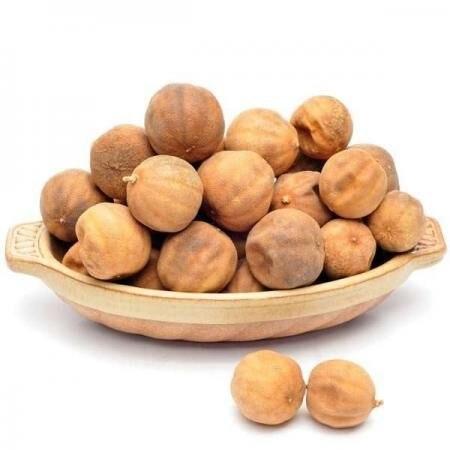
Dried Lime: A Popular Spice in Iranian Cuisine

Dried Lime A Popular Spice in Iranian Cuisine

Dried lime is the main spice used in famous Iranian foods Gheimeh and Ghormeh Sabzi, which are two types of stew. Moreover, it is used in making broth, different types of chicken and viper’s bugloss tea. Dried lime can even be grounded and used as powdered spice.
You may make dried lime at home rather than buy it.

Ingredients:
Limes: 1kg
Vinegar: 1 cup
Salt: as much as necessary

Recipe:
1. Wash the limes well and sprinkle some salt on them. Leave them for one day before washing them with cold water.
2. Pour some water inside a casserole, add vinegar and let it boil. Now, add the limes to the mixture of water and vinegar and allow them to boil for 10 seconds. Then rinse them with cold water.
3. Put the rinsed limes back into the boiling vinegar-contained water and this time allow them to boil for a minute. Then put them in a colander, but don’t drain them.
4. After the limes get cold, create a hole in each one with a toothpick, put them on a dark cotton cloth (to absorb more light) and leave them under sunlight for 10 days until they are dried.
5. Put the half-dried limes in a basket and put them in the shade for another few days until they are dried completely.
6. You may ground the limes to keep them as powdered spice.

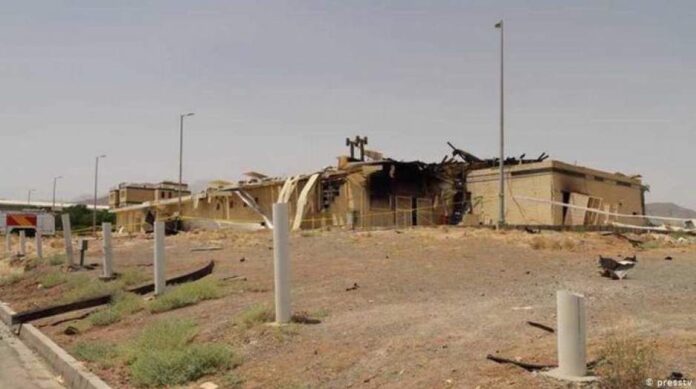
Iran Says Made ‘Promising’ Progress in Nuclear Field

Iran Says Made 'Promising' Progress in Nuclear Field

Behrouz Kamalvandi also elaborated on a recent report by the International Atomic Energy Agency (IAEA) about Iran’s nuclear activities.

He said the agreement reached between Iran and the IAEA during its Director General Rafael Grossi’s visit to Iran has, so far, went “as we expected.”

“And what was mentioned in the IAEA’s reports was what we expected, too,” he added.
Kamalvandi noted when the IAEA’s ambiguities about recent Safeguards Agreement issues are resolved, there will be no grounds any more for the agency to continue issuing reports.

The spokesman was asked if this time, too, the agency has gone too far in its report with regards to revealing the technical details of Iran’s nuclear program, and if the IAEA has failed to keep confidential information from leaking out.

“This will be detrimental for the IAEA’s Secretariat as well as member states,” he responded.

“Details of countries’ nuclear activities and programs should not be released,” he noted.
“Not everyone needs to be informed of technical specifics of a member state,” he noted.
He criticized the publication of the agency’s report in media, saying the report is regarded as confidential.

“Part of the agreement between the IAEA and member states is to keep this report confidential, and this is a legal and moral commitment of the agency,” he added.
Elsewhere in his remarks, Kamalvandi touched upon the amount of enriched UF6 produced in the country.

“At the moment, we have more than 3 tonnes of enriched uranium available to us, and I can say that, at the current rate, we can produce between 250 to 300 kilograms a month, which equals the output capacity we had before the JCPOA was signed,” he noted.
The spokesman underlined that Iran can quickly increase its production output thanks to the new-generation centrifuges it has.

He further said that Iran is making good progress in the production of nuclear materials, research and development, exploration and construction of nuclear power stations.

“For instance, during the time when the JCPOA was being implemented, we would produce 4 tonnes of yellow cake annually, but the figure has reached 10 tonnes now,” he said.
He also referred to the latest developments pertaining to the re-designing of the Arak nuclear reactor based on the agency’s report.

“We will probably begin cold tests at Arak reactor next year, but the trend of the completion of this reactor is forecast to take two to three years,” he said.