Monday, December 22, 2025
Home Blog Page 2688

Iran Exporting Microtubule Inhibitor Used for Cancer Treatment

Iran Exporting Microtubule Inhibitor Used for Cancer Treatment

The anti-cancer medicine, named, Paclinab, has been produced by Nano Daru company, a knowledge-based firm established in 2011.

Paclinab is a microtubule inhibitor indicated for the treatment of patients with Metastatic breast cancer, locally advanced or metastatic non-small cell lung cancer, and Metastatic adenocarcinoma of pancreas.

The company says it is recommended by guidelines such as NCCN and ESMO as first line regimens in metastatic pancreatic cancer in combination with gemcitabine and in nonsmall cell lung cancer in combination with carboplatin.

Mohammad-Saleh Farazandeh, the business development manager of the company, says the drug is one of the most strategic products ever manufactured in the Middle East.

“The product has a turnover of $1 billion annually in the world, and Iran has managed to export this product to Turkey,” Farazandeh said.

“Right now the product is being registered in 12 different markets,” he added.

According to Farazandeh, the company has 150 personnel, and “acts as a bridge from the university to the industry”.

“Nano Darou is well-known in Iran for developing Novel Drug Delivery Systems (NDDS). This category of products consists of four different types: nanoparticulates, microspheres, Antibody-Drug Conjugates (ADCs), and pegylated molecules,” he explained.

He also noted that the company’s products are novel, and for them there are only two or maximum three manufacturers in the world. “Nano Daru is acting as a pioneer in the products it selects.”

Persepolis Reliefs; Symbol of Iran’s Ancient, Rich Civilization

Persepolis Reliefs; Symbol of Iran's Ancient, Rich Civilization 13

Tablets, inscriptions and reliefs of Persepolis mirror many historical and geographical features as well as customs of the ancient Iran.

Many details about the Achaemenid era’s culture, art, clothing and tools can be discovered by looking at these remains- and that includes the wages of craftsmen and workers!
Iranians have combined their local art with that of different nations and lands in the construction of Persepolis.

After the fall of Achaemenids, the architectural and decorative style used in the monument has been propagated inside and outside Iran. It is still a source of inspiration for architects.
An interesting characteristic of Persepolis’ carvings is the absence of ashamed, humiliated figures: the representatives of other nations aren’t pictured as defeated warriors or slaves, but all are equal members of the great world community.

All the nations, from the Medes to Indians, Tunisians, Africans, and Greeks, are portrayed as independent, self-reliant figures. No one is on a horse; no trace of the Persians’ superiority or self-glorification is seen.

Also, it is clear that all people have been free to use their indigenous clothes and culture.
What follows are Honar Online News Agency’s photos of reliefs and sculptures in Persepolis; a stupendous monument that depicts the apogee of Persian art:

Could Iran Become Known as a Major Games Developer?

Could Iran Become Known as a Major Games Developer

44% of Iranian games developers surveyed have revealed that their revenues have increased in 2020 amidst global uncertainty and shifting consumer trends. But what’s behind the success in Iran’s games industry and how might it be reflected globally?

Survey Shows Gaming Success in 2020

The Digital Games Research Centre (DIREC) asked 59 teams of developers and discovered that as well as the revenue increases, 36% reported no change (which could be construed as positive given the upheaval in other sectors), while only 20% reported a decline in revenue. The firms surveyed also suggested that efficiency and productivity were up 66%. The news is positive not just for the future of the games industry in Iran, but on how Iran positions itself as a gaming giant on the world’s stage.

The leap of revenue isn’t something solely based in 2020, though. Stats from 2018 indicated that the Iranian games market was growing to match the status of their GDP in the MENA region. Indeed, the figures surmised that the games market volume was $602 million, with 57% going towards the mobile sector. Being one of the most prominent powers in the MENA region, and given how expansive the global games market is expected to be, it’s no surprise that Iran is seeing economic success in the industry.

Global Opportunities to Help Open Iran’s Gaming Market

Global gaming opportunities are part of the reason why individual countries’ developers can succeed. Instead of working to export the games to one audience, the entire world could viably comprise the target audience. For example, the proliferation of indie developers across Europe being purchased by Chinese company Tencent shows that there is a commitment to help gaming expand horizontally in conjunction with various nations. The joint partnership could help bring European indie tech to Chinese audiences.

The Importance of Gaming

But why is gaming so important? The gaming industry worldwide is one of the fastest-growing, so trends are also part of the reason for the boost to Iran’s gaming industry. Mobile entertainment is significant across the world and the growth of which has allowed an influx of developers and a proliferation of mobile entertainment content. The smartphone means that the target audience can be almost anyone. The games don’t have to apply only to those with expensive equipment. Plus, there is no fighting over potential customers who are loyal to rival companies such as with Xbox and PlayStation. But, which sub-sectors of the growing entertainment and gaming sector are crucial to showing where Iran might continue to grow?

eSports

The legitimization of games considered to be ‘eSports’ is also significant as it helped introduce more people into the industry and helped show that the industry could be profitable. This, in turn, led to greater investment and a greater boost for related tech fields who might help produce future equipment or processes for the industry, such as VR and AR technology.

Online Casino

The online casino industry, for instance, has helped show how a traditional industry can be developed for audiences who want to engage in modern ways, including on mobile devices. Indeed, according to Vegas Slots Online, mobile gaming is important for the online casino sector, too. More than 13 million people play online casino games every month, with the number likely to rise with the growing trends. So, developers need to ensure that games are suitable for mobile as well as desktops. This helps the industry create greater demand for developers to make new content for the players to engage with.

Mobile Gaming

In the USA, mobile gaming has surpassed all other forms of gaming combined, showing how lucrative the market could be. The fact that games from China are popular in the USA, and titles from Sweden are growing in China, means that the global reach of gaming helps each nation’s individual gaming sector rise. These gaming opportunities have shown that smartphone gaming is a viable alternative to other forms of gaming.

Iran’s gaming sector looks to do well throughout 2020. The opportunities for global gaming reach mean that the industry has never been in a better position to create new and exciting content to appeal to a hugely diverse audience. Some economic growth in the sector is promising, and if there is a reported boost during tough global economic times, the outlook is encouraging for times of better economic health.

Iran, UNICEF Sign Cooperation Deal

Iran, UNICEF Sign Cooperation Deal

The cooperation agreement has been signed by Advisor to the Iranian Minister of Culture and Islamic Guidance and General Director of Ministerial Affairs, Mohammad Mahdi Ahmadi, and the UNICEF representative in Iran, Mandeep O’Brien.

Ahmadi said the agreement entails mutual cooperation and partnership in improving the ethical representation of children in the mass media, as in the virtual space and among the media professionals.

The agreement also includes plans to improve child dignity and self-esteem in the motion pictures and photography industries and promote book reading, he noted.

The Iranian official also noted that the new cooperation agreement, signed as part of the second round of collaboration between Tehran and the UNICEF, would provide opportunities to help the teenagers and young people hone their filmmaking skills.

In July, the Iranian Ministry of Cooperatives, Labour and Social Welfare launched a joint cooperation program with the UNICEF in preventing and treating the COVID-19 pandemic.

Iranian Actemra for COVID-19 Patients Available in Hospitals

Iranian Actemra for COVID-19 Patients Available in Hospitals

Manager of the Infectious Diseases Ward at Masih Daneshvari Hospital of Tehran says the results of a study conducted by the Association of International Auditors (Empacta) demonstrates that Actemra medicine reduces the risk of COVID-19 pneumonia patients advancing to mechanical ventilation or death by 44 percent.

Dr. Payam Tabarsi said the initial results of the Empacta trial, involving 389 patients and conducted in the US, Brazil, Kenya and a number of other countries, indicate that that Actemra drug -known as tocilizumab made by Swiss company Roche- reduced the risk of COVID-19 pneumonia patients advancing to mechanical ventilation or death by 44%.

Fortunately, the Iranian Actemra, sold under the trademark TEMZIVA, has been approved by the Food and Drug Administration of Iran and is now available in the pharmacies of a number of hospitals, he added.

The high-quality homegrown drug is 38 times cheaper than the Actemra produced by Switzerland’s Roche, Tabarsi said.

Iranian companies have produced homegrown versions of several drugs for the treatment of coronavirus patients after the outbreak of the pandemic in February, including Favipiravir and Remdesivir.

Vice President for Science and Technology Sorena Sattari announced in July that almost all domestic needs for equipment needed to combat COVID-19 have been met by knowledge-based companies.

Iran Calls for IAEA’s Impartial Verification of Saudi Nuclear Activities

Iran Calls for IAEA’s Impartial Verification of Saudi Nuclear Activities

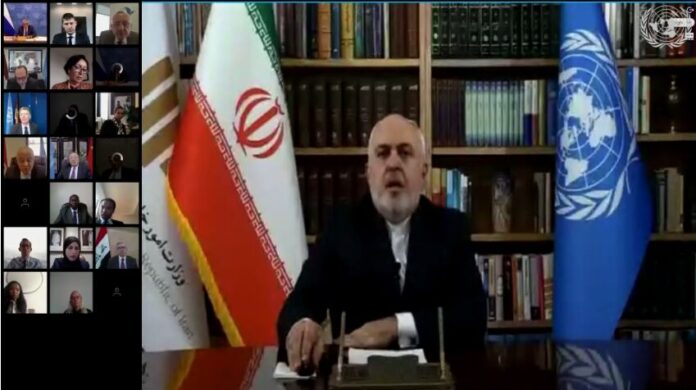
In an online address to the 64th General Conference of held in Vienna International Centre, Iran’s nuclear chief said the professional, impartial, and independent nature of the IAEA’s work would only be guaranteed if the Agency also considers unequivocally and impartially the available information on the nuclear activities of the Kingdom of Saudi Arabia.

“If Saudi Arabia is seeking a peaceful nuclear program, it should act in a very transparent manner and allow the Agency’s inspectors to verify its activities,” Salehi noted.

He also lashed out at “the regime of Israel as a non-party to the NPT” for “continually and adamantly refusing to adhere to the IAEA safeguards”, and said the issue requires an “unbiased and professional approach by the Agency”.

“This regime which is the main source of instability and insecurity in the region as well as a threat to international peace and security, should abandon its Weapons of Mass Destruction program and accede to the NPT without further delay and precondition. Needless to say that, clarifications on the nuclear activities and programs in this regard would certainly strengthen the credibility and professionalism of the Agency,” he added.

He also said the only way to protect multilateralism in the world is to get united and put an end to the destructive behaviour of the current United States administration for the interests of all in the international community.

What follows is the full text of his Monday statement:

The world is enduring very serious and unique circumstances caused by the pandemic COVID-19, which has practically required many fora and organizations, including the Agency, to change their modus-operandi. In view of this, it is a distinct pleasure for me to virtually join the 64th session of the General Conference of the Agency.

Amidst such a unique gloomy and painful environment wherein almost all Members of the Agency have suffered one way or another from the COVID-19, the international community could not witness the tattering of another thread of multilateralism, namely the architecture of the United Nations. It is no secret that international organizations are under political pressures from certain States, and the IAEA is of no exception. At this critical point in time for multilateralism, on the one hand, the raison d’être of the United Nations System has come under serious question; and on the other hand, the International Atomic Energy Agency is facing a very serious challenge of its kind since its inception.

I am proud to say that the international community has successfully passed the first phase of this dire ordeal; the UN Security Council members in New York have rightly shown that they are not willing to compromise on the achievements simply because of the intimidation approach of one specific Member State. 13 out of 15 members of the Security Council not only unanimously rejected the US Resolution on the extension of the arms embargo against Iran but also didn’t recognize the US as a JCPOA participant to use specific mechanisms of the Deal to bring back Council’s already terminated sanctions. That is a real asset that should be preserved.

Also, here in Vienna, the Agency and the Islamic Republic of Iran have shown utmost vigilance in relation to their long term interests with the view that it will be materialized only through mutual cooperation avoiding any outside influence. Thus, within the framework of the safeguards obligations of States under the Comprehensive Safeguards Agreement (CSA) and Additional Protocol (AP), the Agency should show its determination that it will not compromise its impartiality, independence, and professionalism for the sake of short-sighted comforts.

It is worthy to know that Iran, alone, receives 22 percent of the total inspections of the IAEA at the global level, 432 inspections, and 33 complimentary accesses that have also been conducted in Iran in 2019. Furthermore, the Agency has also been able to carry out its verification activities in Iran even during the difficult situation caused by the Covid-19 pandemic. With this transparent and extensive cooperation, Iran and the Agency agreed to work in good faith to resolve three safeguards related questions with an understanding that based on the analysis of information available to the Agency, there will be no other questions or requests for access.

Such approaches taken in New York and in Vienna are the real silver-linings in this gloomy political environment for multilateralism and deserve genuine compliments.

On the current status of the Joint Comprehensive Plan of Action (JCPOA), I would like to say that, while there is still a broad agreement among the international community that the JCPOA should be preserved as the real turning point in the history of multilateralism and as an important achievement of diplomacy, the JCPOA is caught in a quasi-stalemate situation due to the illegal withdrawal of the US from the deal. Therefore, preservation of the JCPOA is also a common responsibility of all members of the international community. In this context, the responsibility of the EU specifically E3 as members of the JCPOA is of utmost importance, i.e. they must implement their obligations fully and effectively. Thus, the Deal is preserved only when its provisions are implemented in a balanced manner by all parties involved. As a result, Iran has and had no other option rather adopt a step-by-step approach in implementing paragraphs 26 and 36 of the JCPOA to restore the lost balance to the Deal.

Nuclear safety is among Iran’s highest priorities. In doing so, progress has been made in establishing an advanced Nuclear Safety Centre (NSC). While the responsibility for nuclear safety and security rests entirely with the Member States, Iran strongly believes that these areas need to be strengthened and enhanced through cooperation between States.

New threats by malicious sides have been observed recently by way of cyber and other technological instruments. In this regard, let me point to the recent explosion at Shahid Ahmadi Roshan (Natanz) Nuclear Facility which was the result of sabotage as already declared. These malicious acts need to be condemned by the Agency and the Member States. Iran reserves its rights to protect its facilities and make necessary reactions to any threat as appropriate.

The Islamic Republic of Iran persists in its path towards the peaceful application of nuclear science and technology in various fields including agriculture, health, and industry while continuing to generate electricity. Here, we reiterate that one of the main missions of the IAEA is “to foster the exchange of scientific and technical cooperation on the peaceful uses of atomic energy” and “to encourage the exchange and training of scientists and experts in the field of peaceful uses of atomic energy” among member states.

One last word of wisdom, the professional, impartial, and independent nature of the work of the Agency would only be guaranteed if the Agency also considers unequivocally and impartially the available information on the nuclear activities of the Kingdom of Saudi Arabia. If Saudi Arabia is seeking for a peaceful nuclear program, it should act in a very transparent manner and allow the Agency’s inspectors to verify its activities. In this context, the regime of Israel as a non-party to the NPT which has continually and adamantly refused to adhere to the IAEA safeguards requires an unbiased and professional approach by the Agency. This regime which is the main source of instability and insecurity in the region as well as a threat to international peace and security, should abandon its Weapons of Mass Destruction program and accede to the NPT without further delay and precondition. Needless to say that, clarifications on the nuclear activities and programs in this regard would certainly strengthen the credibility and professionalism of the Agency.

To conclude, the Islamic Republic of Iran is ready to continue its efforts and cooperation with others in the International Community to bring back multilateralism and diplomacy at the centre of international relations. To this end, there is no way but to get united and put an end to the destructive behaviour of the current United States administration for the interests of all of us in the international community.

Iran Confirms 177 New COVID-19 Fatalities

‘Iran’s Average COVID-19 Death Toll 2.5 Times That of World Average’

In a press briefing on Monday, Sima-Sadat Lari said 425,481 patients have contracted the virus so far, including 3,341 new cases identified in the past 24 hours, the highest daily rise in new patients since June 6.

So far, she added, 361,523 patients have recovered from the disease or been discharged from the hospital.

Lari said 3,912 patients are also in critical conditions caused by more severe infection.

The spokeswoman noted that 3,773,300 COVID-19 tests have been taken across the country so far.

She said the high-risk “red” zones include Tehran, Qom, Mazandaran, East Azarbaijan, Isfahan, Yazd, Ardabil, Khorasan Razavi, Khuzestan, Hamadan, West Azarbaijan, Bushehr, Alborz, Lorestan, Markazi, Ilam, South Khorasan, Kermanshah, North Khorasan, Semnan, Gilan, Zanjan, Qazvin, and Kerman provinces.

The “orange” zones also include Golestan, Hormozgan, Chaharmahal and Bakhtiari, Kohgiluyeh and Boyer-Ahmad, and Fars provinces, she added.

Iranian Forces Attend Russia’s Kavkaz-2020 Military Drills

Iranian Forces Attend Russia's Kavkaz-2020 Military Drills

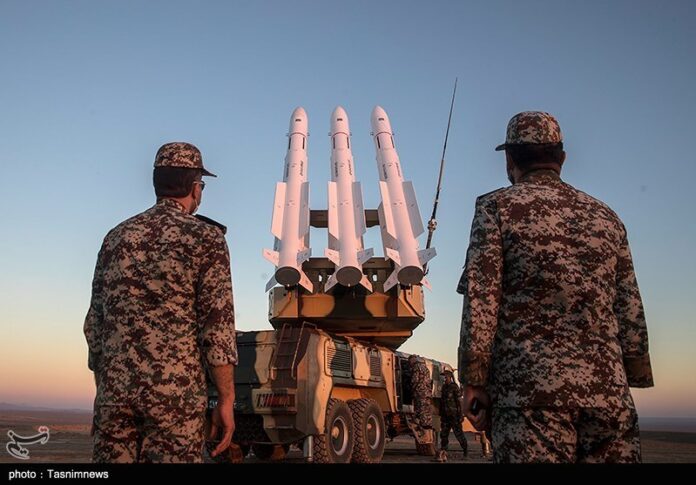
The joint military exercises, which started on September 21 and will run through September 26 involve about 80,000 personnel, including officers of the Russian Emergencies Ministry and the Russian Guard, as well as up troops from Iran, Armenia, Belarus, China, Myanmar and Pakistan.

In addition, more representatives from the armed forces of Iran, Azerbaijan, Indonesia, Kazakhstan, Tajikistan and Sri Lanka will participate as observers of the military drills.

About 12,900 military personnel from the participating countries are going to take part in activities covered by the 2011 Vienna Document of the Negotiations on Confidence-and Security-Building Measures. Most of the action on the ground will be taking place in the Southern Military District.

Up to 250 tanks, 450 infantry fighting vehicles and armored personnel carriers and 200 artillery and missile systems will participate.

Ships of the Black Sea Fleet and the Caspian flotilla will join the action, too, enjoying the company of the Iranian Navy vessels.

About 60 Ilyushin Il-76 military transport planes have been moved to operational airfields as part of the military drills.

The distance of the flights was up to 2,000 km, according to a statement by the Russian Defense Ministry.

Russia’s Armed Forces will pay particular attention to combating cruise missiles and unmanned aerial vehicles during the exercise, the Ministry stated.

“The Kavkaz-2020 drills will particularly focus on combating cruise missiles and unmanned aerial vehicles, as well as on fire and electronic warfare activities against entire enemy formations, on training airborne troops’ vertical envelopment capability and ways to rapidly shift between military activities,” the statement read.

The event is led by Chief of the General Staff Army General Valery Gerasimov.

Iran’s Beauties in Photos: Asiabar Traditional Market

Asiabar Traditional Market 5

Asiabar is located in Deylman region of Siahkal County in northern Iranian province of Gilan. The traditional market of Asiabar is said to date back to the Safavid era.

There used to be more than 50 stalls in the bazaar to meet the needs of people from different villages: traditional forging, sewing, butchery, bakery, coffee house, hostel, carpentry, blacksmithing, pottery, shoemaking, trading, hospital, veterinary, petitionary, school room, pharmacy, apothecary and horseshoe making.

Easy access had been a main factor for the prosperity of Asiabar bazaar in the mountainous region of Deylman. It was registered this year in the list of Iran’s National Heritage as the first traditional market in the north of country.

What follows are ILNA’s photos of Asiabar bazaar: