Thursday, December 25, 2025
Home Blog Page 2665

Iran Says Has Nothing to Hide about Ukrainian Plane Crash

Iran Says Has Nothing to Hide about Ukrainian Plane Crash

The second round of negotiations between the Islamic Republic of Iran and Ukraine about the Ukrainian plane crash is underway in Tehran.

In an event on the sidelines of the new round of talks, Iranian Deputy Foreign Minister Baharvand held a meeting with the families of victims of Ukraine International Airlines Flight 752 (PS752) on Tuesday.

“The Islamic Republic of Iran would never seek to hide details of the Ukrainian plane crash or violate the rights of families of the victims,” the Iranian diplomat stressed.

He also assured the bereaved families that Iran’s diplomatic apparatus will employ all of its capacities and do its utmost to safeguard the rights of victims in cooperation and coordination with all relevant institutions.

Baharvand finally expressed sympathy with the families of victims of the plane crash, pledging that he would pursue plans for a meeting between the families of victims and the Iranian Judiciary officials in order to inform the families of victims about the judicial procedures concerning the incident and to answer questions and clear up doubts about the plane crash.

Iran to Give ‘Direct Response’ to Any Israeli Threat in Persian Gulf

Iran to Give 'Direct Response' to Any Israeli Threat in Persian Gulf

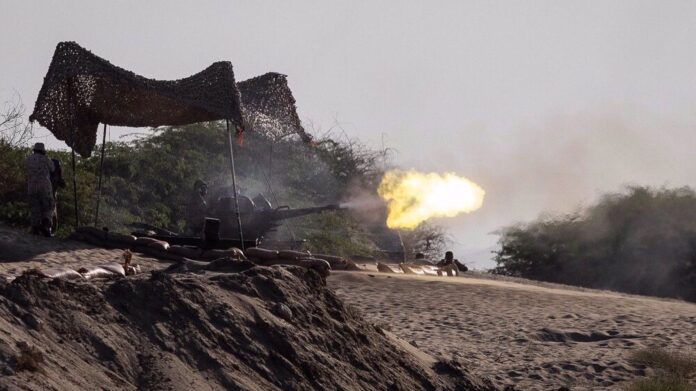
In an interview with Aljazeera network, published on Monday, Brigadier General Amir Hatami reflected on a recent measure by the United Arab Emirates and Bahrain to fully normalize relations with Israel through deals mediated by the administration of US President Donald Trump, noting that such a measure will pose a direct threat to security of the entire Persian Gulf region.

He added, “Any threat posed by the Zionist regime in the Persian Gulf [against Iran’s interests] will be faced with a direct and clear response.”

The United Arab Emirates and Bahrain signed the controversial normalization agreements with Israel at the White House on September 15, amid outrage across Palestine and the Muslim world at the Arab regimes’ betrayal of the Palestinian cause.

Trump, who presided over the signing of the normalization pacts, said “five or six” other countries were close to making similar agreements with Israel, but did not name them.

Reports say Sudan and Oman could be next in line to normalize with Israel.

The US-brokered deals make the UAE and Bahrain the third and fourth Arab states to take such steps to normalize ties since Israel signed treaties with Egypt in 1979 and Jordan in 1994.

Answering a question about the US insisting on inclusion of Iran’s missile capability in any possible future talks, Iran’s defense minister said the Islamic Republic will never engage in negotiations over its missile program with the US, emphasizing, “Nobody has the right to ask us to do this.”

Elsewhere in his interview, the Iranian defense chief pointed to the latest armed conflicts between Armenia and Azerbaijan over the Nagorno-Karabakh region and said the Islamic Republic has given stern and clear warnings to the warring sides about the need to protect security in the border areas.

He rejected claims about Russia’s transfer of weapons to Armenia through Iran’s soil, saying, “We have never allowed Russia to use our borders and territories to transfer Russian weapons to Armenia and this is an accusation leveled against Iran.”

Hatami said, “We expect Turkey, as a friendly and important regional country, to help settle the crisis in the disputed Karabakh region through diplomatic means.”

Karabakh is internationally recognized as part of Azerbaijan, but it is held by ethnic Armenian separatists backed by Armenia since 1992, when they broke from Azerbaijan in a war that killed some 30,000 people.

The conflict re-erupted in late September, leading to the worst fighting in decades in the region.

Baku and Yerevan agreed to a “humanitarian ceasefire” on Saturday after a Russian-brokered truce fell apart, earlier.

The two sides, however, accuse each other of violating the latest truce.

Late on Sunday, the separatist government of Karabakh said it had recorded another 37 deaths among its forces. The latest casualties pushed the toll to 710, Russia’s Interfax news agency reported.

The Iranian Foreign Ministry said on October 7 that it has delivered a note of protest to both Azerbaijan and Armenia over the extension of hostilities to the Islamic Republic’s territory in the ongoing fighting between the two ex-Soviet republics over the disputed Karabakh region.

Spokesman Saeed Khatibzadeh said that the Iranian Foreign Ministry had sent the official note to the Republic of Azerbaijan and Armenia to convey the country’s “strong protest” against the firing of bullets and shelling into the country, which “violated Iran’s territorial integrity, undermined its security and inflicted financial damage” on Iranian citizens.

His remarks came a day after the Iranian defense minister once again warned the warring parties involved in the military clashes that Tehran will take stronger measures than warnings if the shells fired in the fighting continue to hit the country’s border regions even by mistake.

“It is not acceptable at all that a bullet hits the Islamic Republic’s borders due to a mistake or carelessness,” Hatami said at the time.

Iran in Photos: Stepped Village of Sar-e Aqa Seyyed

Stepped Village of Sar-e Aqa Seyyed 8

Sar-e Aqa Seyyed is located in Mouguyi county, 45 km from Chelgard, the centre of Koohrang city.

There is only one path to access this village: a dirt road which is blocked after the first snowfall until next spring.

Its structure is stepped and “Bar-aftow”, that means “facing the sun” in the local language: the houses are built in a way that allows making the most of the sun’s heat during the winter.

The stairs of Sar-e Aqa Seyyed have stories to tell about the residents of each house! The stepped structure gives a special beauty to the village: the yard of an upper house is the roof of the house below. This space is used by people for drying fodder and vegetables, baking bread and making handicrafts.

What follows are IRNA’s photos of Sar-e Aqa Seyyed village:

Kordasht Historical Site: A Must-See Tourist Attraction in Iran

Kordasht Historical Site A Must-See Tourist Attraction in Iran 9

The ancient complex draws thousands of local and foreign visitors every year.

The historical site boasts monuments such as an ancient bath, a historical mosque and a tower. The historical monuments have been restored, and new structures such as a fort and battlements, stables and gates were built following the war between Iran and the former Soviet Union.

The bath which is part of the Kordasht historical complex used to be used by kings only, but upon orders by Agha Mohammad Khan Qajar, the founder of the Qajar dynasty, the bath later became open to the public.

The following are ISNA‘s photos of the village:

Kahak: A Traditional Town with Mesmerizing Tourist Attractions

Kahak A Traditional Town with Mesmerizing Tourist Attractions 1

Nestled in the heart of the desert, Kahak is a summer resort which used to be the residence of renowned Islamic philosopher and sage Molla Sadra Shirazi.

As he was harassed by bigots, the philosopher quit his studies in the city of Shiraz and spent 15 years on retreat in Kahak, praying and meditating all along.

The most important historical attraction of Kahak is Molla Sadra Shirazi’s home left behind from the Safavid era. The building is located in a garden and has a high, dome-shaped ceiling. The top of the dome is made of coloured glass, which let sunlight in.

The basic design of the building is shaped as a hall the four corners of which are surrounded by small rooms and chambers. The building is decorated with stucco and plaster lattice frames on lightwells.

Among the tourist attractions of Kahak is an ancient mill used to produce grape juice or vegetable oil by crushing oil seeds such as ricinus, sesame and the like.

The mill is a one-floor building with a dome-shaped space as well as thick, mud-brick walls.
There is another ancient building which was used to make halva, a traditional Iranian confection.

Roughly in the middle of this building one can see a treadmill which was used to crush seeds such as sesame to produce halva.

What follows are YJC‘s photos of Kahak:

Iran Vows Support for Bolivia’s New Government

Iran Vows Support for Bolivia’s New Government

In a statement on Tuesday, Foreign Ministry Spokesman Saeed Khatibzadeh offered Iran’s congratulations to the Bolivian people and winners of the polls after the South American country held nationwide presidential election in a “calm atmosphere and with a remarkable voter turnout.”

“The Islamic Republic of Iran sees a good omen in the restoration of democracy and power to the real representatives of (Bolivian) people after a year of tensions, congratulates the elected president of that country Mr. Luis Arce, and expresses full support for the elected government and readiness to revive cooperation and strengthen friendship bonds with that country (Bolivia),” he added.

Unofficial counts showed on Monday that Luis Arce, the candidate for Evo Morales’s Movement Towards Socialism (MAS) party, has won more than 50 percent of the vote in Bolivia’s presidential election after 11 months of political turmoil.

Arce, who is expected to take office sometime next month, has called for calm in the polarized nation, and vowed to form a government of national unity.

Observers said the results showed a clear rejection of the right-wing policies of the interim government of Jeanine Anez, a conservative senator who took office after Morales was ousted from power a year ago.

Arce, who served as economics minister under Morales for more than a decade, oversaw policies that led to a surge in growth and a sharp reduction in poverty.

Iran Raps Canadian FM’s ‘Rude’ Comments on Plane Crash

Iran Condemns Canada’s Human Rights Resolution

Asked by reporters about the recent comments from Canadian Foreign Minister Francois-Philippe Champagne about the process of talks about the Ukrainian plane crash, Spokesperson for the Ministry of Foreign Affairs of Iran Saeed Khatibzadeh said at a press conference on Monday, “The ill-mannered language, the impolite phrases, and the very undiplomatic behavior of the minister of foreign affairs of Canada is not something you have seen behind closed doors.”

The spokesman then pointed to a meeting he had attended in Munich, also participated by Champagne and Prime Minister of Canada Justin Trudeau, saying, “They (Canadians) are more polite behind the closed doors, they sit on two knees (Persian expression meaning polite behavior), and say what demonstrates a constant request, because they know that they have no legal position in this subject.”

“Unfortunately, statesmanship in the West has now turned into politics in order to garner a few votes from others. I am very, very deeply sorry that the Canadian nation has to witness such language from such a foreign minister,” Khatibzadeh deplored.

“We recommend that they (Canadian politicians) speak in the same way that they behave and talk behind the closed doors. The etiquette does not allow us to speak like the rude foreign minister of Canada,” he concluded.

The spokesperson was apparently responding to the recent comments from Champagne who said Canada holds the Iranian “regime” accountable.

Earlier in October, Champagne said that Ottawa will not be “intimidated ever by an Iranian regime who would not want us to get to the bottom of this,” referring to the process of talks over the Ukrainian plane crash.

The Kiev-bound UIA Boeing 737 crashed shortly after taking off from Tehran on January 8, killing all 176 people on board, mostly Iranian and Canadian citizens.

Iran said the plane was hit by an anti-aircraft missile due to human error.

Iran-Afghanistan Railway to Open in Coming Days: President

Iran-Afghanistan Railway to Open in Coming Days: President

In a Monday meeting with Head of Afghanistan’s High Council for National Reconciliation Abdullah Abdullah in Tehran, President Rouhani said the inauguration of Khaf-Herat rail route in the coming days will help enhance the economic and trade cooperation between the two states.

The president also expressed Iran’s readiness to connect gas and oil product pipelines to Afghanistan to allow the Afghan people to enjoy the energy carriers.

Hailing the High Council for National Reconciliation’s efforts to establish peace in Afghanistan, President Rouhani said, “Peace, stability, and sustainable security in Afghanistan as a neighbour and brother of the Islamic Republic of Iran is of special significance.”

The president also touched on Iran’s support for the Afghan government and nation against foreign aggression, noting, “What is important is that the people of that country (Afghanistan) would gain real peace to maintain their achievements after years of war and clashes, and the solution to this problem is political talks and intra-Afghan negotiations.”

The US’ interference and presence in Afghanistan as an aggressor has been opposed by the Afghan people, President Rouhani stated, adding, “The US government whose policies in the region and world have been defeated and which has not achieved any success is seeking to take advantage of the peace talks in Afghanistan for (US presidential) election.”

The president finally called for the expansion of ties with Afghanistan in all fields under a long-term agreement, saying, “As we have always stood by the Afghan people, we will continue to support this country, all currents, ethnicities and peace-loving groups, and we hope to see the establishment of sustainable security in that country.”

For his part, Abdullah Abdullah praised Iran as a good friend and neighbor of Afghanistan and admired the Islamic Republic’s contribution to lasting peace and security in his country.

The visiting official also expressed gratitude to Iran for hosting the Afghan refugees during years of war and unrest in Afghanistan.

“I had good meetings with the Islamic Republic’s officials in my visit to Tehran,” the former chief executive officer of the Afghan unity government noted, saying he would convey Iran’s message of support to Kabul and pursue the implementation of bilateral deals.

Abdullah also expressed hope that Iran’s supports would help the Afghan peace talks yield results and lead to sustainable calm and security in Afghanistan.

Iranian, Ukrainian Diplomats Hold New Round of Political Talks

Iranian, Ukrainian Diplomats Hold New Round of Political Talks

Iranian Deputy Foreign Minister for Political Affairs Seyyed Abbas Araqchi and Deputy Foreign Minister of Ukraine Yevgheniy Yenin held the second round of deputy-level political talks.

In the meeting, the two diplomats discussed a range of issues of mutual interest between Iran and Ukraine, reviewed the latest developments of the bilateral ties in the political, economic, cultural, educational and consular fields, and weighed plans for the promotion of relations.

Participants in the political meeting also expressed the two countries’ stances on major regional and international issues such as the developments surrounding the JCPOA, the illegal and unilateral sanctions imposed by the US on Iran, the ongoing developments in the region, the national and international consequences of the outbreak of COVID-19, and the ways to tackle the pandemic.

The third round of Iran-Ukraine political negotiations is set to be held in Kiev.

Iran’s Foreign Minister, Ukrainian Diplomat Discuss Plane Crash

Iran's Foreign Minister, Ukrainian Diplomat Discuss Plane Crash

While diplomats from Iran and Ukraine launched the second round of talks on the issues surrounding the passenger plane crash on Monday, deputy foreign minister of Ukraine and head of the Ukrainian team of negotiators, Yevgheniy Yenin, held a meeting with Foreign Minister Zarif.

In the meeting, the two officials discussed the process of talks on the Ukrainian plane crash.

Foreign Minister Zarif once again expressed his regret at the tragic incident, hailed as positive and constructive the first round of negotiations on the aerial incident, and expressed hope that the negotiations would immediately produce the appropriate and desired results with cooperation and interaction between the two countries.

The two diplomats also talked about Iran-Ukraine relations and the ways to broaden cooperation between the two countries in various fields.

Diplomatic delegations from Iran and Ukraine on Monday began the second round of talks on the Kiev-bound UIA Boeing 737 that crashed shortly after taking off from Tehran on January 8.
The new round of expert negotiations will go on for two days.