Tuesday, April 28, 2026
Home Blog Page 247

Russia warns against military action on Iran’s nuclear program

The statement responded to recent US-Israeli threats against Iran’s nuclear infrastructure, emphasizing Moscow’s opposition to “external threats to bomb nuclear energy facilities.” It stressed that Iran’s enemies “should not use military force to resolve differences with Tehran.”

Russia’s Foreign Ministry asserted that such military actions would lead to “widespread dangerous consequences” in the region and globally.

The statement accused Western countries of violating international resolutions and using the International Atomic Energy Agency (IAEA) for political purposes.

The ministry reaffirmed Iran’s right to peaceful nuclear energy under the Nuclear Non-Proliferation Treaty (NPT).

The warning followed a meeting in Moscow between Russian Deputy Foreign Minister Sergey Ryabkov and his Iranian counterpart Majid Takht-Ravanchi on Wednesday.

Takht-Ravanchi was in Moscow to attend political consultations among deputy foreign ministers of Shanghai Cooperation Organization (SCO) member states and to conduct bilateral meetings.

The Russian statement did not name specific countries but came amid heightened tensions with the US over Iran’s nuclear program and stalled negotiations to revive the 2015 JCPOA nuclear deal, which US unilaterally left in 2018.
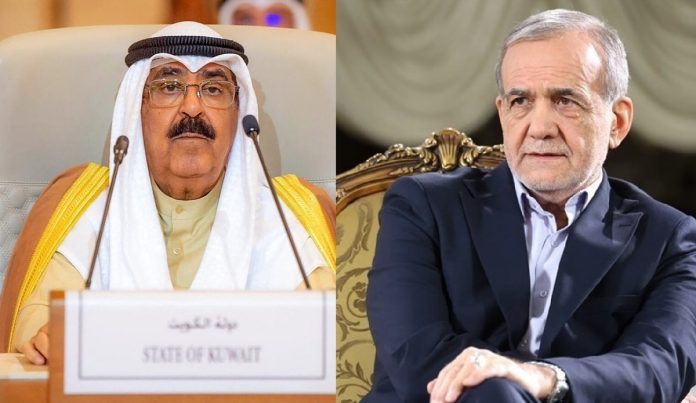
Kuwaiti Emir assures Iran: No aggression from our soil

President Pezeshkian expressed hope that Ramadan and Eid celebrations would strengthen unity and solidarity among Islamic nations and emphasized Iran’s brotherly ties with all Islamic countries and stressed the importance of fostering friendly and cooperative relationships with neighboring states.

He stated Iran’s readiness to enhance bilateral relations in various fields with Kuwait and other neighbors to deepen bonds of fraternity.

On the matter of reducing tensions, Pezeshkian reaffirmed Iran’s commitment to fairness, ensuring actions remain within the bounds of justice and equity.

For his part, Emir Mishal reciprocated the Eid wishes and voiced his pleasure over the friendly relations between Kuwait and Iran.

He conveyed Kuwait’s intention to further strengthen ties and applauded Iran’s constructive approach towards neighbors.

Emphasizing peace and diplomacy, Emir Mishal affirmed Kuwait’s constitutional stance against allowing its soil to be used for any acts of aggression against other nations.

“The government and people of Kuwait will never accept any aggressive act from our soil against another country,” he stressed, adding that this stance “will never change under any circumstances.”

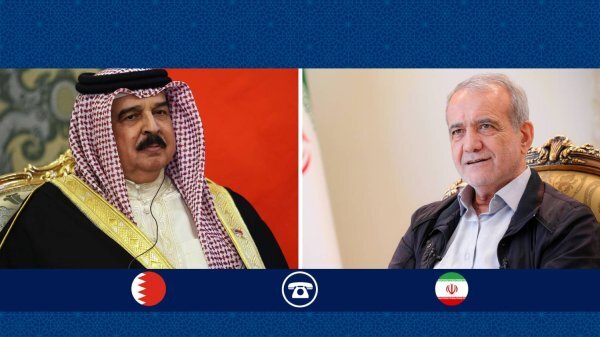
Bahraini king appreciates Pezeshkian’s positive remarks on bilateral ties 

Pezeshkian also said Tehran is very much willing to boost ties with Bahrain and will spare no efforts to pave the way for so doing. Pezeshkian and King Hamad were speaking on the phone.

In other remarks,the Iranian president congratulated the Bahraini king and people on Eid al-Fitrq.

King Hamad for his part congratulated the Iranian president and people on Eid. He noted that Iran and Bahrain have had neighborly and friendly relations since a long time ago and that Manama wants to further expand those ties.

Referring to his visit to Tehran, where he had a meeting with the leader of Iran’s Islamic Revolution, King Hamad asked the president to convey his warm greetings and congratulations to Ayatollah Seyyed Ali Khamenei.

The Bahraini monarch  also thanked Pezeshkian for his  positive and constructive remarks and intentions regarding the expansion of relations with neighboring countries and the region.

He said his is ready to meet in person with Pezeshkian to discuss ways of enhancing bilateral relations.

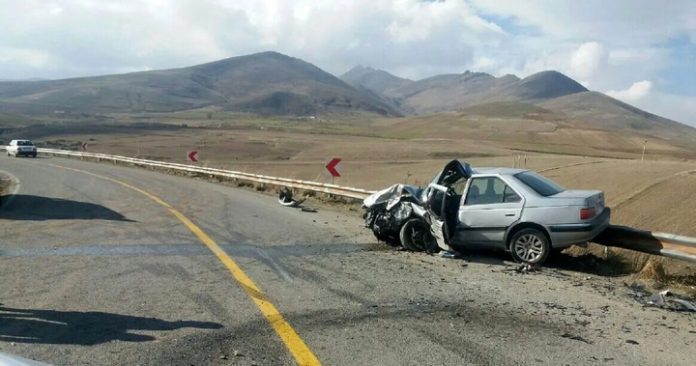
Iran Police: 747 Killed in Nowruz Holiday Road Accidents, Highways Overflow with Vehicles

Seyyed Timour Hosseini stated from the start of the Nowruz traffic plan (March 15) through April 1, a total of 480 million vehicle trips were recorded on the country’s roads – a 3% increase compared to the same period last year.

He added 615 fatal accidents occurred during these 18 days of holiday travels, resulting in 747 deaths, while 13,563 accidents caused injuries to 16,905 people.

Millions of Iranians are now returning to their cities at the end of the Nowruz holidays, causing severe traffic congestion on roads throughout the country.

Iran says UN Security Council Inaction Emboldens Israel’s Violations

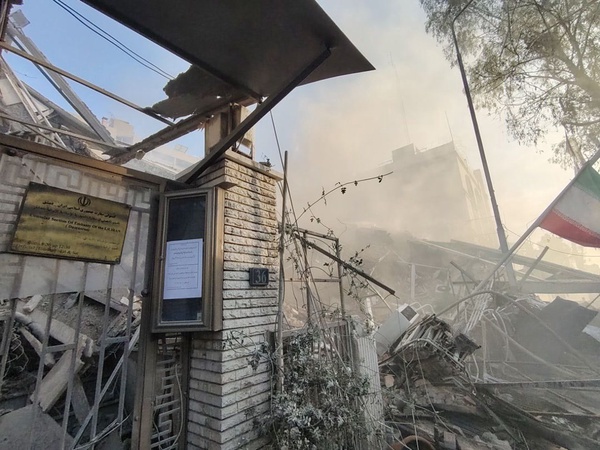
In a Wednesday statement marking the first anniversary of the Zionist regime’s attack on Iran’s embassy in Damascus, Iran’s Foreign Ministry asserted that the ongoing impunity of the Zionist regime, coupled with the US’s blatant obstruction of international legal and judicial mechanisms in holding its leaders accountable for genocide, war crimes, crimes against humanity, and aggression, violates all established international legal principles and moral norms. This fuels further violations and threatens global peace and security.

The statement noted that the UN Security Council’s indifference reflects the full-fledged support of the US, Britain, and certain other Western governments for the Israeli regime’s genocide, occupation, and warmongering in occupied Palestine and across the region—particularly in Lebanon and Syria.

During the Zionist regime’s attack on Iran’s embassy in Damascus on April 1, 2024, several Iranian citizens and anti-terrorism military advisors were martyred and injured, alongside Syrian civilians, prompting Iran to carry out Operation True Promise 1 against Israel.

Despite widespread international condemnation, the statement added, the UN Security Council failed to fulfill its inherent duty under the UN Charter, unable—due to US obstruction—to even issue a brief statement condemning the Israeli regime’s military aggression.

The statement underscored that the Zionist regime’s military-terrorist attack on Iran’s embassy constitutes a blatant violation of the UN Charter, particularly the principle prohibiting the use of force, and a grave breach of international law and norms.

Qazvin: A Prime Destination for Iranian, International Tourists

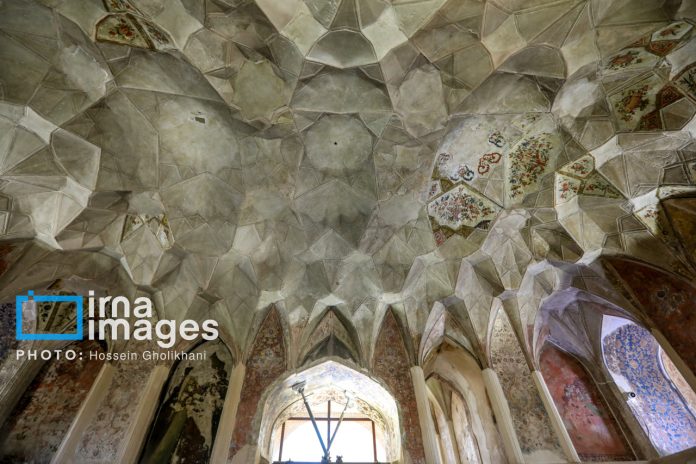
The city’s historical district, featuring landmarks such as the Safavid Government Complex (Dolatkhaneh-e Safavi), Qajar Bathhouse (Hammam-e Qajar), and Sa’d al-Saltaneh Caravanserai, offers a rich cultural experience.

Safavid Government Complex was once the administrative heart of the Safavid dynasty in Qazvin. This complex includes architectural marvels like the Chehel Sotun Palace and Ali Qapu Gateway, showcasing the grandeur of Safavid-era design.

Qajar Bathhouse, now transformed into an Ethnographic Museum, provides a glimpse into the daily lives of people in past eras.

Sa’d al-Saltaneh Caravanserai, as one of Iran’s largest covered caravanserais, features traditional bazaars, old merchant quarters (hujras), and stunning Qajar-era architecture, making it a must-visit for those interested in Iran’s commercial history.

These culturally rich sites offer a unique opportunity to explore Iran’s artistic and historical heritage, making Qazvin a key stop for history enthusiasts and travelers alike.

See related pictures:

Iran Parliament National Security Committee chief warns against US, Israel adventurism

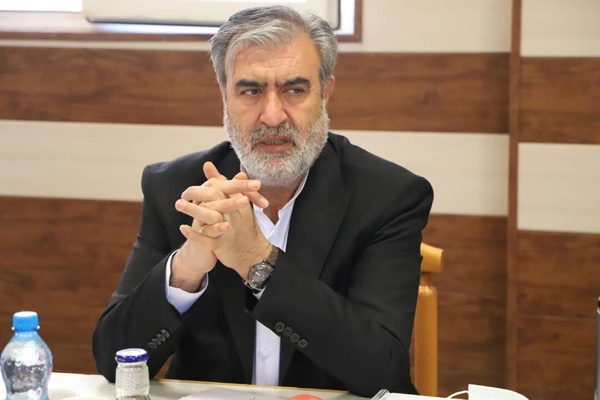
Ebrahim Azizi, emphasized that if the Israeli regime and the US disrupt the peace of the Iranian nation, we will ensure neither the regime nor America enjoys peace anywhere in the world.

He pointed out the Islamic Republic will not initiate any war, but it will crush the rotten bones of any aggressor who dares to violate its territory.

Referring to recent threats by US President Donald Trump about attacking Iran, he declared: “If any aggressor sets foot on the sacred land of the Islamic Republic, we will cut that foot off.”

The National Security Committee Chairman further warned: “Regional countries and America’s allies should know that any cooperation with the US and the Zionist regime will make them a target, and we will consider them part of the battlefield.”

Also speaking about Islamist resistance forces in Lebanon, Palestine, Yemen, and Iraq, Azizi noted: “We do not deny that revolutionary groups within the Axis of Resistance have learned the lessons of steadfastness from Iran’s Islamic Revolution. However, the West should not assume these forces operate under our command—they act based on their religious duties, beliefs, and Islamic values.”

IAEA chief to visit Iran for talks over “unresolved issues”

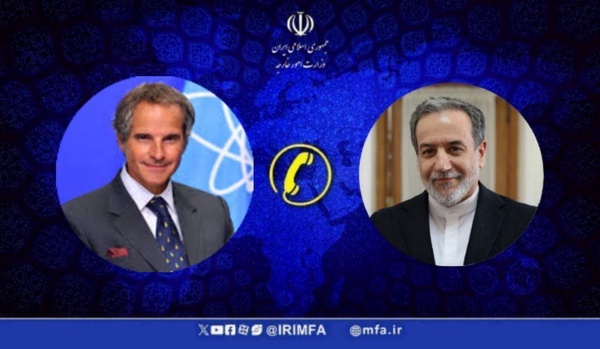
Grossi, in a phone conversation with Iran’s Foreign Minister, Seyed Abbas Araqchi, noted that consultations are ongoing with various stakeholders in an effort to create a conducive environment for resolving outstanding issues.

In this context, he expressed his intention to visit Iran, a request which received the Minister’s approval in principle.

It was agreed that in order to ensure the success of this visit, relevant details would be reviewed and finalized through appropriate diplomatic channels.

During the call, the Iranian Foreign Minister briefed the IAEA Director General on recent developments and diplomatic engagements surrounding Iran’s nuclear program.

Araqchi, while reaffirming Iran’s policy of engagement and cooperation with the IAEA, underscored the imperative for the Agency to adopt a clear position regarding threats posed against the Islamic Republic’s peaceful nuclear installations.

He stressed that in view of the persistence of such threats, the Islamic Republic of Iran shall take all necessary measures to safeguard its nuclear program.

Iranians celebrate Sizdah Bedar, concluding Nowruz festivities  

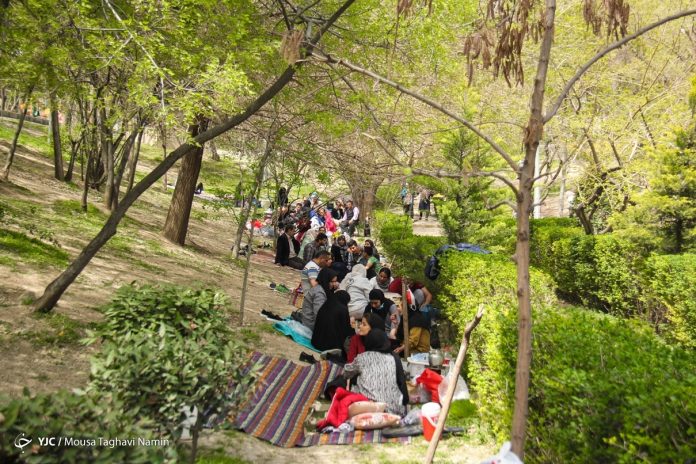
Rooted in ancient tradition, Sizdah Bedar – meaning “thirteen outdoors” – encourages families to spend the day in nature, symbolizing the avoidance of misfortune tied to the number 13 in Persian folklore.

The day is an enduring expression of the nation’s cultural heritage, blending joy, community, and a deep reverence for nature.

It is filled with lively activities, including picnics featuring traditional foods such as Ash-e-Reshteh (a Persian noodle soup) and Kebabs.

Celebrants enjoy picnics, play games, and observe customs such as casting sabzeh – sprouted greens from the Haft-Seen table – into flowing water. The gesture reflects the cultural values of renewal and harmony with the environment.

Traditionally, unmarried individuals, particularly young women, tie grass blades while making wishes for marriage in the coming year.

Despite Iran’s urbanization and changing lifestyles, Sizdah Bedar continues to be widely observed, reaffirming the nation’s love for nature and its collective traditional spirit.

It is a day to cherish the simple joys of life, celebrate unity, and look forward to a prosperous year ahead.

Iran’s culture minister rejects Larijani’s remarks on nuclear fatwa 

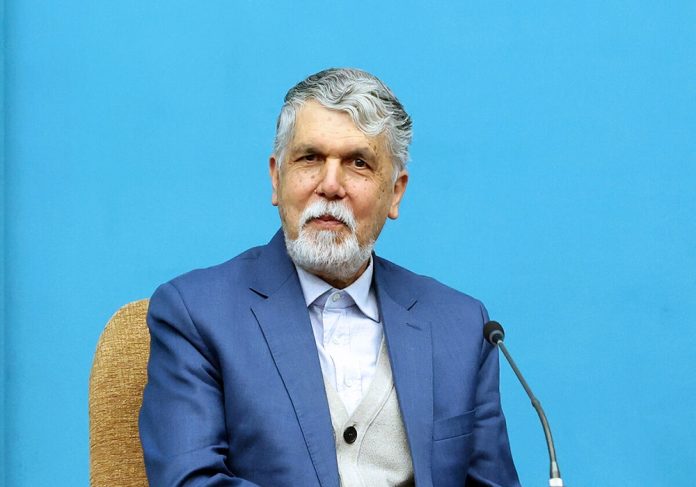
In a post on the social media platform X, Salehi emphasized that the Supreme Leader’s fatwa prohibiting the development and use of nuclear weapons is not a mutable ruling based on jurisprudential discretion or changing political circumstances.

“This is not a fatwa issued in the realm of ijtihadi matters, subject to change,” he wrote. “Rather, it is rooted in foundational and immutable principles of Islam.”

Salehi further stated that Islam must be understood as a religion of peace and a safeguard for humanity, not one that accepts perpetual threats to global security.

His comments came in response to remarks by Ali Larijani, who had suggested that Iran might be compelled to pursue nuclear weapons if the United States acts wrongly abd attacks Iran

“Iran does not seek nuclear weapons, but if the Americans make a mistake, we may be forced to take a different path,” Larijani said in a televised interview.