Friday, December 26, 2025
Home Blog Page 2409

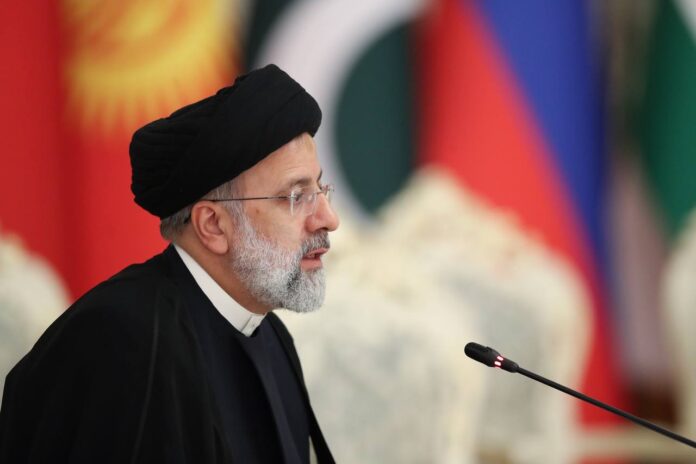
Raisi: Unilateralism on the decline globally

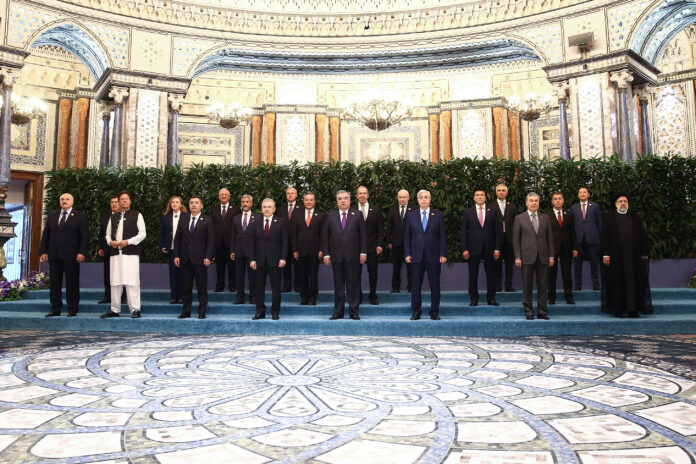
Raisi was addressing the Shanghai Cooperation Organization’s summit in Tajikistan’s capital Dushanbe on Friday.

He said today, the world has entered a new stage and unilateralism is on the decline globally. The world order is shifting toward a bipolar system and redistribution of power among independent countries.

Raisi however noted that the world is now being threatened by domination, terrorism, extremism and separatism.

The Iranian president said peace and development are possible through cooperation among key regional countries and that strengthening infrastructural links between different nations plays an important role in this regard.

Raisi also added that the belt and road initiative, the Eurasian Economic Union, and the North-South Corridor, as key projects, can play a key role in strengthening mutual interests of developing countries and regional peace.

The Iranian president further spoke of the Covid pandemic, saying the challenge is not only endangering the health of people around the world but it also has economic, social and security ramifications.

He also thanked the SCO’s members, China, Russia and India for their help with the global vaccination.

Raisi said Iran believes any action to hamper efforts toward global vaccination under the pretext of sanctions is a violation of human rights and a crime against humanity. He likened sanctions to economic terrorism, which he described as an obstacle to regionalism and convergence. In other comments, Raisi said Iran helped Iraq and Syria in their battle against terrorism and is ready to assist the SCO’s members in tackling the threat.

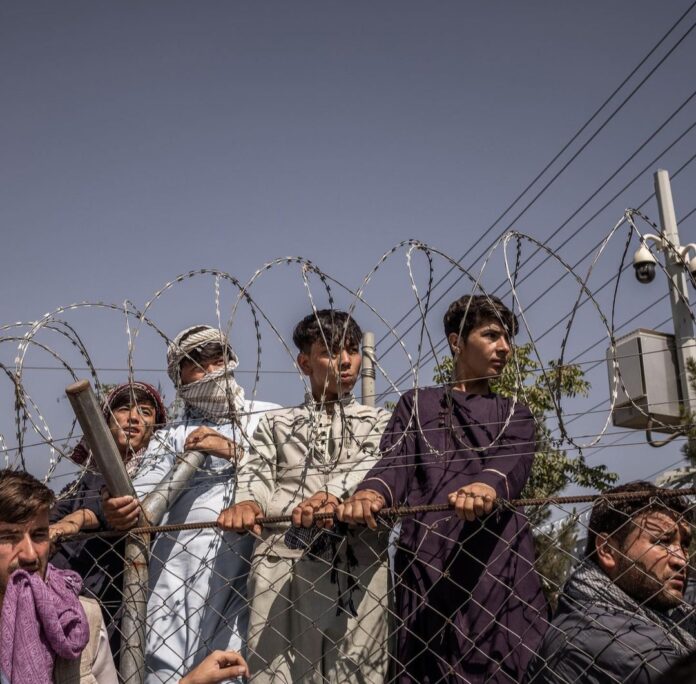
On Afghanistan, Raisi said the US is fully responsible for the dire situation in the country.

Regional countries must join hands and help Afghans overcome their problems. And other countries must only play the role of facilitators in this regard because only Afghans themselves must decide their future without foreign interference.

Turning to the Iran nuclear deal and the Vienna talks, the Iranian president said no one can stop Iran’s nuclear program as all atomic activities of the Islamic Republic are within the confines of international law.

Raisi urged the SCO’s member to not recognize the US’s anti-Iran sanctions, saying the removal of sanctions is an inalienable right of the Iranian people.

Iran becomes full SCO member

The SCO made the unanimous decision to give Iran full membership at its 21st summit in Tajikistan’s capital Dushanbe on Friday.

Iranian President Ebrahim Raisi thanked members of the organization for their unanimous vote.

“We hope that the Shanghai Organization which has succeeded in quickly gaining a prominent regional and international position, will continue on its ascending path,” the Iranian president said in a speech to the summit.

The Shanghai Cooperation Organization now comprises of China, Kazakhstan, Kyrgyzstan, Russia, Tajikistan, Uzbekistan, India, Pakistan and the Islamic Republic of Iran as the permanent member states.

Iran had an observer status at the Eurasian political, economic and security alliance since 2005.

Iran Berates GCC Statement on Three Persian Gulf Islands

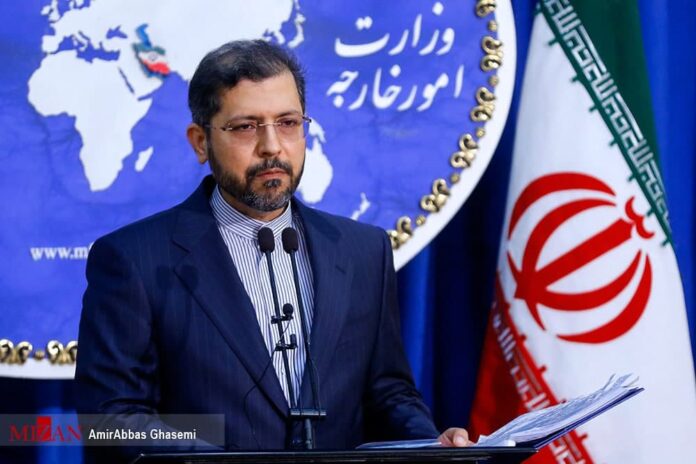
khatibzadeh-Iran

“The three Persian Gulf islands of the Greater Tunb, the Lesser Tunb and Abu Musa definitely belongs to Iran, and annoying and threadbare statements issued in this regard will not change Iran’s eternal ownership of the islands,” said Iranian Foreign Ministry Spokesman Saeed Khatibzadeh.
“The Islamic Republic of Iran rejects any interference in its peaceful nuclear and missile programs as well as issues pertinent to its defense policies,” the spokesman added.
Khatibzadeh once again underscored the priority that Iran, especially of the 13th administration, attaches to the enhancement of cooperation and relations with all neighbouring countries without foreign intervention.
He expressed hope the few GCC member states which seek to impose their anti-Iran viewpoints will change tack and pay attention to intra-regional talks and adopt confidence-building measures to give diplomacy a shot in the arm rather than focus their attention beyond the region and make impractical demands to countries outside the region.
“The GCC should know that making unacceptable demands, levelling baseless accusations against the Islamic Republic of Iran and rehashing threadbare statements are not the solution to the problems facing the region and these countries,” he added.
“Rather, the region needs a paradigm shift to rid itself of outside dependence and turn to constructive intra-regional interaction and go for inclusion rather than exclusion,” he noted.

France says Biden acted like Trump in submarine deal with Australia

“This brutal, unilateral and unpredictable decision reminds me a lot of what Mr. Trump used to do,” Le Drian told franceinfo radio, according to the wire service.

“I am angry and bitter. This isn’t done between allies,”he added.

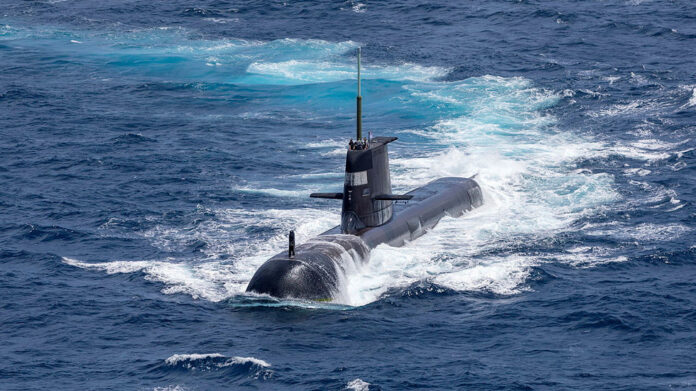
The U.S., Australia and the United Kingdom on Wednesday established a new trilateral security partnership in the Indo-Pacific. The three planned to launch an 18-month review exploring how Australia could best acquire nuclear-powered submarines.

In the process, however, France was left behind.

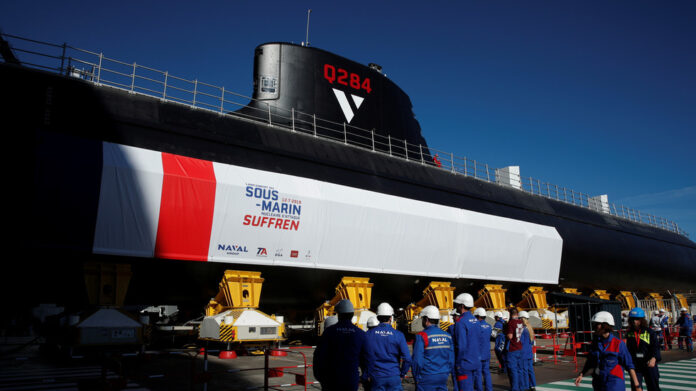
France had worked on the submarines since 2016, when Australia had selected Naval Group, a French shipbuilder, to build $40 billion worth of subs to replace their two-decade-old ones, Reuters reported. Australia even reconfirmed the deal with France just two weeks ago.

“It’s a stab in the back,” Le Drian said of the new deal, according to the news outlet.

“We created a relationship of trust with Australia and that trust has been broken,” he stated.

While Trump and French President Emmanuel Macron did not have a strong relationship, some diplomats say that there have been concerns about Biden’s relationship with EU allies.

On Wednesday, Biden called France a “key partner in the Indo-Pacific”.

Australian Prime Minister Scott Morrison said in a statement that the country looked forward to continuing to work “closely and positively” with France, adding that “France is a key friend and partner to Australia and the Indo-Pacific”.

The New York Times reported French officials on Thursday canceled a gala at the country’s Washington, D.C., embassy over the Biden administration’s decision.

Paris has angrily scrapped the “240th Anniversary of the Battle of the Capes” event meant to take place Friday evening at the French embassy and aboard a French frigate in Baltimore, a French official told The Times.

The event was meant to celebrate the French navy’s aid to America’s fight for independence in 1781.

Following the perceived snub, France’s top naval officer, who had traveled to Washington for the gala, will now return to Paris early.

Asked about France’s displeasure later on Thursday, White House Press Secretary Jen Psaki said that the United States values its relationship and partnership with France “on a variety of issues facing the global community”.

She cited cooperation on economic and security issues and the coronavirus pandemic, and maintained that the Biden administration was engaged with French officials “in advance of the announcement”.

Psaki also indicated that Biden would speak with Macron “soon” but added she had no calls with French officials to preview.

Asked later what Biden thinks about the French foreign minister comparing him to Trump and the French cancelling the gala, Psaki answered that Biden “doesn’t think about it much” and that he is focused on maintaining the U.S. relationship with France, the U.K. and Australia.

She also noted a handful of times that it was Australia’s decision to seek nuclear-powered submarine technology.

Biden is slated to deliver remarks at the U.N. General Assembly in New York on Tuesday. Psaki wouldn’t say whether Biden has plans to meet with Macron on the sidelines of the annual event.

Secretary of State Antony Blinken also on Thursday sought to assure France, stating it was a vital partner, according to remarks made after he spoke with Australian foreign and defense ministers in Washington, Reuters reported.

Dutch FM steps down over Afghanistan crisis

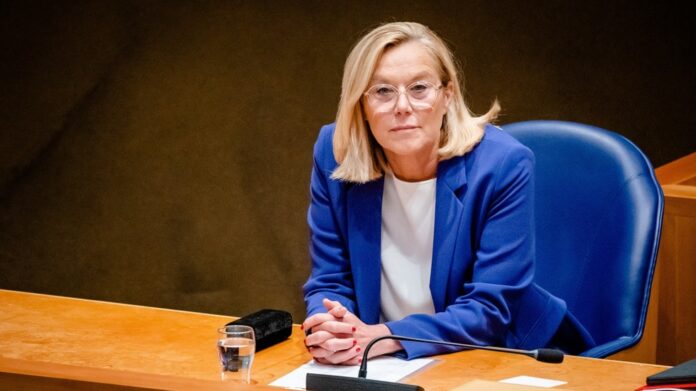
Kaag has resigned from her post amid criticism of the country’s handling of evacuations from Afghanistan.

MPs in the Netherlands passed a motion of censure against both Kaag and Defense Minister Ank Bijleveld on Thursday for failing to ensure the safe passage of dozens of Afghan personnel out of the country following the Taliban takeover.

A day earlier, Kaag had acknowledged that some local embassy staff and translators for Dutch troops had not been evacuated from Kabul. She stated that this was due to the government’s muddled response to warnings about the situation on the ground.

After the motion was passed Thursday, Kaag immediately said she would tender her resignation, noting parliament had decided that “the Cabinet has acted irresponsibly”.

“I can only accept the consequences of this judgment as the minister with ultimate responsibility,” she said in a short resignation speech, adding, “I can do no more than accept the consequences. The minister must go if the policy is rejected.

“The commitment to Afghanistan continues, even without me. I am convinced that the staff of the Dutch Foreign Ministry will continue their excellent work unabated,” she continued.

Kaag is also the leader of liberal democratic party D66 and is involved in drawn-out talks on forming a new coalition government that have run since the general election in March. She took on the foreign ministry brief in May, having previously served as trade minister.

A total of 1,673 people were evacuated by the Netherlands before the operation ended on August 26. They included more than 700 Dutch nationals, close to 600 Afghans who worked with Dutch forces and diplomatic missions, and others considered at-risk such as activists and journalists.

Don Ceder, a member of the faith-based Christian Union, had stated earlier on Thursday that his party supported the motions against Kaag and Bijleveld because the government had “failed to show decisiveness, to show compassion, to pick up on signals and ultimately to take responsibility for people for whom we bear responsibility”.Bijleveld is still in post.

Source: Euro News

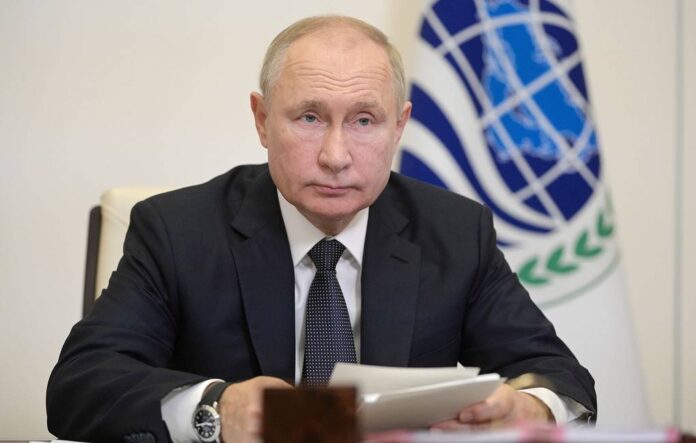
Putin: Iran’s membership in SCO to increase its authority

“All of us attach much importance to the SCO’s cooperation with the countries that seek to build open and equal dialogue with our organization and are considering the possibility of joining its activities,” the Russian head of state pointed out.

“In this regard, Russia supports the decision to start Iran’s SCO membership process, which has been submitted for approval to the SCO Council of Heads of State,” Putin added, addressing an SCO summit via video link on Friday.

“We have always been in favor of Iran’s full-fledged participation in the organization’s work because the country plays an important role in Eurasia and has long been fruitfully cooperating with the SCO,” the Russian leader emphasized.

According to Putin, “Iran’s SCO accession will undoubtedly contribute to enhancing the organization’s international authority.”

Source: TASS

Iran, Russia Discuss Situation in Afghanistan

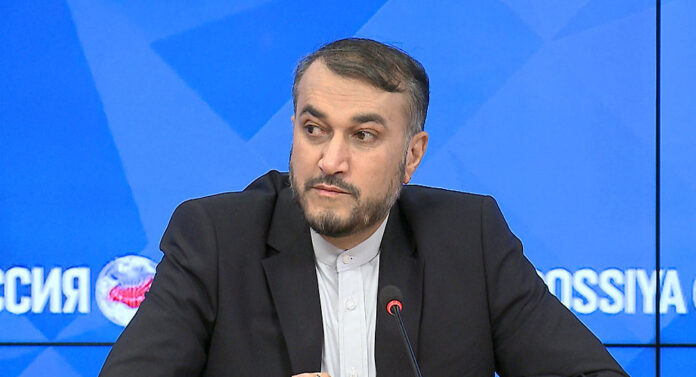
In the meeting held on the fringes of the 21st Summit of the Shanghai Cooperation Organization (SCO) in Tajikistan, the top Iranian diplomat stressed the necessity of consultations between the two countries on regional issues, especially Afghanistan.
Amir Abdollahian recalled the current complex situation in Afghanistan, adding it is the fallout from the United States’ irresponsible and ignominious withdrawal from the country.
Lavrov, for his part, invited Amir Abdollaian to visit Moscow to continue bilateral consultations.
The Islamic Republic believes the issue of Afghanistan will only be settled through the establishment of a broad-based government in Kabul represented by all Afghan groups.
Shanghai Cooperation Organization is an intergovernmental organization currently comprised of China, India, Kazakhstan, Kyrgyzstan, Russia, Pakistan, Tajikistan and Uzbekistan as permanent member states.
SCO summit is being held in the Tajik capital, Doshanbe.

China warns US-UK-Australia military pact undermines regional peace

The move of the United States and Britain to export highly sensitive nuclear submarine technology to Australia is “extremely irresponsible,” the China’s foreign ministry said Thursday, adding that relevant parties should abandon the outdated Cold War zero-sum mentality and narrow-minded geopolitical perception.

The United States, Britain, and Australia announced on Wednesday the creation of a new trilateral security partnership, called “AUKUS”. The first initiative under AUKUS will be delivering a nuclear-powered submarine fleet for Australia.

In response, spokesperson Zhao Lijian said the nuclear submarine cooperation between the United States, Britain, and Australia has severely undermined regional peace and stability, intensified the arms race, and damaged global nuclear non-proliferation efforts.

He added the export of highly sensitive nuclear submarine technology to Australia by the United States and the UK proves once again that they are using nuclear exports as a tool for geopolitical game and adopting double standards, which is extremely irresponsible.

Zhao noted that Australia is a non-nuclear weapon state under the Treaty on the Non-Proliferation of Nuclear Weapons (NPT) and a party to the South Pacific Nuclear Free Zone (SPNFZ) Treaty. He stated the international community, including neighboring countries, has every reason to question Australia’s sincerity in abiding by its nuclear non-proliferation commitments.

“China will pay close attention to the development of the relevant situation,” Zhao continued.

China always believes that any regional mechanism should conform to the trend of peace and development of the times and contribute to enhancing mutual trust and cooperation among regional countries, and should not target any third party or undermine its interests, he said.

“Relevant countries should abandon the outdated Cold War zero-sum mentality and narrow-minded geopolitical perception, respect the will of the people of regional countries and do more to contribute to regional peace, stability and development. Otherwise, they will only end up shooting themselves in the foot,” Zhao added.

Addressing the International Atomic Energy Agency’s (IAEA) Board of Governors meeting here, Wang Qun, Chinese envoy to the United Nations and other international organizations in Vienna, described the trilateral move as “sheer act of nuclear proliferation”.

The U.S. and the UK, both nuclear weapon states, and are state parties to the Treaty on the Non-Proliferation of Nuclear Weapons (NPT) which prevents proliferation of nuclear weapons and technologies, the core obligation for its state parties, Wang stated.

He stressed that such assistance “will apparently give rise to proliferation of nuclear materials and technologies by openly providing assistance to Australia”, a non-nuclear weapon state, in its acquisition and building of the nuclear-powered submarine.

“This contradicts the purpose, objective and core obligation of the NPT to the detriment of the international nuclear non-proliferation regime with the NPT at its core and on-going international efforts on this front,” Wang noted.

“While firmly safeguarding the validity of the international non-proliferation regime, China wishes to register its grave concern at the development,” Wang said.

“In the meantime, we believe that, it is the responsibility of IAEA, as an international organization mandated to implement NPT non-proliferation regime, to openly express its solemn position at the trilateral act by the U.S., the UK and Australia, which contradict their obligations under the NPT,” Wang added.

Wang also stressed that, such an act of nuclear proliferation “will give rise to serious negative implications on the on-going international efforts to address the nuclear issue on the Korean Peninsula as well as the Iranian nuclear issue”.

“Given the ongoing review and discussions of the Korean Peninsula and Iranian nuclear issues at the IAEA Board of Governors and the General Conference, it is essential that all members of the Board and international organizations including IAEA, make solemn position on the trilateral collaboration among the U.S., UK and Australia in helping Australia develop nuclear-powered submarine, in promotion of the full and effective implementation of international non-proliferation obligations under the NPT by all countries,” he stated.

Exporting highly sensitive nuclear submarine technology to Australia has shown that the U.S. and the UK have “once again adopted a double standard on nuclear export”, and “have taken nuclear export as a means of their geo-political game”, Wang pointed out.

Wang said that, in the meantime, it is “utterly irresponsible” for Australia, as a non-nuclear state and state party to the NPT and South Pacific Nuclear Free Zone Treaty, to import nuclear submarine technology with strategic militarily value.

“The international community, including neighboring countries, has every reason to question Australia’s sincerity in implementation of nuclear non-proliferation commitment under the relevant treaties,” he added.

The trilateral collaboration by the U.S., the UK and Australia “will seriously impair the regional peace and stability, escalate arms race, to the detriment of international peace and security,” Wang added.

Wang said that China will closely follow its development and reserve the right to make further responses. In the meantime, China will call on the international community to “work together to check such a dangerous act”.

Source: Xinhua news agency

Russia, Iran, China, Pakistan support natnl. Afghan reconciliation

“A four-way meeting on the situation in Afghanistan was held between Russia, China, Pakistan and Iran in Dushanbe on September 16 on the sidelines of the SCO and CSTO summits. Approaches were compared on issues of facilitating establishment of peace, stability and security in Afghanistan, while the necessity to establish national reconciliation in the country was stressed,” the Russian Foreign Ministry announced in a statement.

After the United States announced the end of its military operation in Afghanistan and the pullout of its troops, the Taliban stepped up their offensive. On August 15, Taliban fighters swept into Kabul without encountering any resistance, and gained full control over the Afghan capital. Afghanistan’s President Ashraf Ghani stepped down and fled the country. The Taliban announced a new government on September 7.

Afghanistan’s neighboring states can help the country’s people overcome the crisis brought by the years of war unleashed by the US and NATO, Russia’s top diplomat Sergey Lavrov said on Thursday at a meeting with his Chinese and Pakistani counterparts as well as the representatives of Iran’s Foreign Ministry in Dushanbe.

“We believe that the countries directly bordering Afghanistan are able to influence the situation in the region, and also to help the Afghan people deal with the crisis caused by the twenty-year war unleashed by the US and NATO. Acting with the best of intentions, we can create the appropriate external conditions, so that Afghans control their own future, without posing a threat to neighboring countries (considering terrorism, drug trafficking and so on),” Lavrov stated.

The Russian foreign minister stressed the importance for the four countries to address the Afghan issue on the sidelines of the SCO summit, adding, “The topic is relevant for everyone. Multiple ways to handle the situation are proposed.”

Chinese State Councilor and Foreign Minister Wang Yi also stated it is necessary for the four countries to strengthen communication and coordination, have a unanimous voice, exert a positive influence, and play a constructive role in stabilizing the situation in Afghanistan.

Countries in the region expect the new Afghan government to be inclusive, anti-terrorist, and friendly to neighbors, he stressed.

The United States is obliged to assume the responsibility for the reconstruction of Afghanistan and to provide economic and humanitarian assistance to it, Wang said at a four-party meeting with his Russian, Iranian and Pakistani counterparts on the sidelines of the SCO and CSTO summits in Dushanbe.

“The hasty pullout of US troops and allied forces has entailed new problems in Afghanistan,” Wang added.

He stressed that Afghanistan’s new political structure had not taken shape yet, ethnic and religious conflicts were serious and the risks of local conflicts high, there were problems with the well-being of the population and the development prospects looked uncertain.

“The United States must comply with the assumed commitments,” Wang continued, noting, “The four countries [China, Russia, Iran and Pakistan] must pool efforts with other countries adhering to similar views to persuade the United States to learn the lesson, to assume the responsibility for the reconstruction of Afghanistan and to provide economic and humanitarian assistance to it. It would be wrong to shirk this responsibility.”

He said China is prepared to enhance coordination with Russia, Iran and Pakistan to play a constructive role in preventing chaos, resisting terrorism and restoring peace in Afghanistan.

“The four countries should enhance communication and coordination, act unanimously, cause positive influence and play a constructive role in stabilizing Afghanistan,” Wang added.

“China is prepared to strengthen coordination with Russia, Iran and Pakistan and other countries of the region to play a constructive role in preventing chaos, maintaining stability, resisting terrorism and violence and also restoring peace to Afghanistan and establishing a lasting peace in the region,” he stated.

He stressed the importance of providing assistance to Afghanistan in getting integrated with the regional cooperation agenda.

“In the long term we can help Afghanistan to gradually develop its potential and get integrated into regional economic cooperation, eradicate poverty and achieve economic development,” Wang continued.

Addressing a summit of the CSTO via video link on Thursday, Russian President Vladimir Putin stated the withdrawal of the western coalition’s troops from Afghanistan was “hasty, mildly speaking”, and noted the related threats in the region.

The environment in the zone of the CSTO’s responsibility and the external borders of its members is “not only unstable, but carries new, truly critical challenges and risks for security of our countries”, he stressed.

“Right after a hasty, mildly speaking hasty withdrawal of the troops of the US and its allies from Afghanistan and the rise to power of the Taliban we shared views on the dangers related to the drastically changed situation in the country at an extraordinary CSTO summit. All approved then the conclusion that amid the current environment a close cooperation between CSTO member-states is required as never before,” Putin emphasized.

Source: TASS, Xinhua news agency

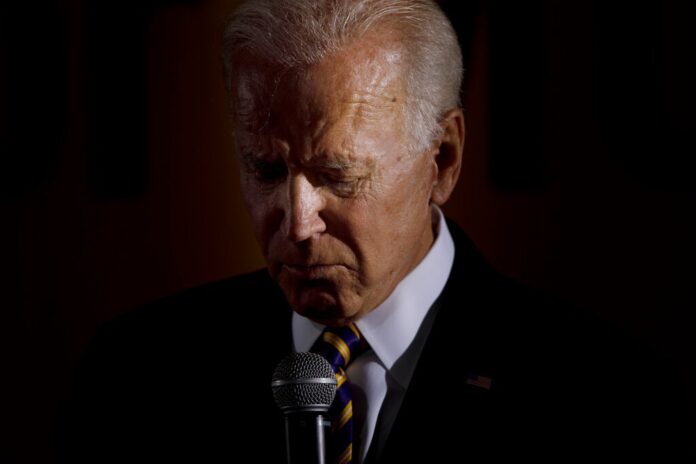
Poll shows Biden’s standing among Americans continues to slide

Facing a barrage of bipartisan criticism for a month over handling of the turbulent U.S. withdrawal and evacuation from Afghanistan, and with an ongoing surge in new COVID cases due to the spread across the country of the highly infectious delta variant, Biden’s approval rating stands at 42% and his disapproval at 50%.

It’s a significant drop from Quinnipiac’s previous national survey in early August, when the president stood at 46% approval 43% disapproval, and it’s the first time Biden’s job approval rating has dropped into negative territory in Quinnipiac polling since the start of his presidency in January.

The president’s approval rating hovered in the low to mid 50s during his first six months in the White House. But Biden’s numbers started sliding last month, as the crisis in Afghanistan dominated media coverage and mask mandates started returning in certain spots across the country as coronavirus cases rose.

The president stands at 45%-50% approval/disapproval in an average of the latest surveys compiled by RealClearPolitics, and at 46%-49% in a compilation by the polling and analysis website FiveThirtyEight.

“If there ever was a honeymoon for President Biden, it is clearly over. This is, with few exceptions, a poll full of troubling negatives… from overall job approval, to foreign policy, to the economy,” Quinnipiac University polling analyst Tim Malloy highlighted.

Nearly seven in ten questioned in the poll said it was the right thing to do to end the war in Afghanistan, and a majority (54%-41%) said they approve of Biden’s decision to withdraw all U.S. troops from the war torn Central Asian nation – ending America’s longest war. But by a 65%-31% margin, Americans said they disapprove of how the president handled the rocky withdrawal and evacuation of U.S. personnel and Afghan allies.

Biden has been pilloried for his handling of the hastily organized evacuation efforts in Afghanistan. While the president has repeatedly declared the withdrawal and evacuation a success – the U.S. airlifted roughly 120,000 people, including more than 5,500 Americans, after the fall of Kabul to repressive Taliban forces in early August through the end of last month – he’s been accused by Republicans and some Democrats for underestimating the Taliban’s lightning fast takeover of the country and overestimating the strength of the now-collapsed, U.S.-backed Afghan government and military.

The president’s approval on handling foreign policy now stands at 34%-59%, and his handling of his duties as Commander in Chief of the U.S. military is also underwater, at 40%-55%.

Biden showcased his foreign policy prowess and his competence in running an administration as he challenged former President Donald Trump in the 2020 election. And while the rocky exit from Afghanistan is a major factor in the president’s approval rating plunge, it’s not the only issue that’s feeding the fall.

One of the issues that vaulted Biden to the presidency was the coronavirus, the worst pandemic to sweep the globe in a century. Biden vowed to do what Trump seemingly couldn’t do – get COVID cases under control, bring back a sense of normalcy to Americans and boost an economy that was severely battered by the pandemic.

But the late-summer COVID surge due to the Delta variant is another blow to the president. Biden’s approval on handling the COVID crisis now stands at 48%, with disapproval at 49%. Biden’s approval on the issue in Quinnipiac polling stood at 65%-30% in May and 53%-40% at the beginning of last month.

On another key issue – the economy – Biden stands at a negative 42%-52%, down from 43%-48% in early August and a positive 48%-43% in May.

Source: Fox News