Friday, December 26, 2025
Home Blog Page 2408

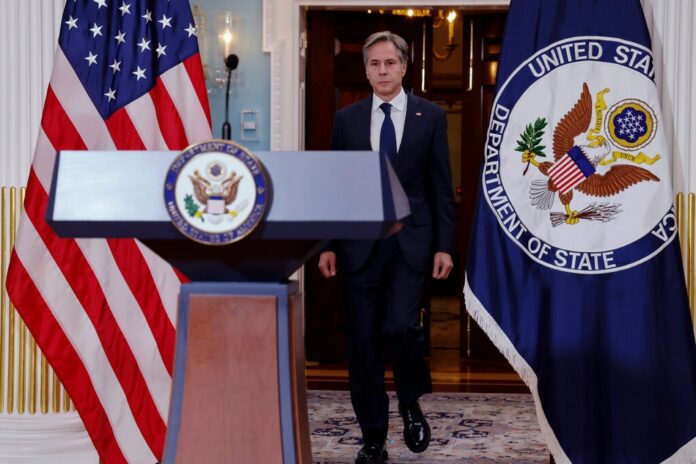
US says no plan for Blinken to meet Iran’s FM at UN

Indirect talks between Iran and the United States in Vienna on reviving a 2015 deal stopped in June. Tehran has announced its nuclear program is for peaceful energy purposes only.

Iran’s President Ebrahim Raisi took office in August and Amirabdollahian is due to travel to New York for the U.N. General Assembly.

“We have been engaged with the Iranians in Vienna, and those discussions will continue,” Thomas-Greenfield, told reporters.

“We have not made any direct plans for bilateral meetings while they are here, but that doesn’t mean that we don’t see value in having discussions with the Iranians because we do want to move forward on issues related to the JCPOA,” she added.

The nuclear deal between Iran, the United States, France, Britain, Germany, Russia and China is referred to as the Joint Comprehensive Plan of Action (JCPOA). Under the agreement Iran accepted curbs on its nuclear program in return for a lifting of many foreign sanctions against it.

However, former U.S. President Donald Trump abandoned the pact in 2018 and reimposed harsh sanctions, prompting Tehran to start violating some of the nuclear limits in 2019.

Source: Reuters

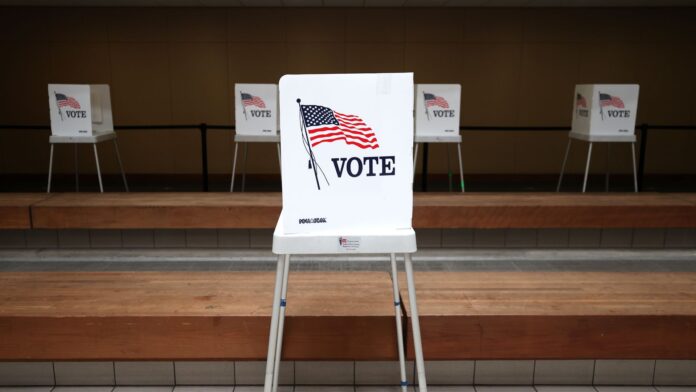
Poll: Majority of Americans believe democracy is under attack

The survey, conducted by CNN and SSRS, found that 56 percent of respondents believe American democracy is under attack.

Thirty-seven percent of those polled said American democracy is being tested but is not under attack, and 6 percent said American democracy is in no danger.

When observing Republicans and Republican-leaning independents, individuals who say former President Donald Trump is the leader of the GOP are far likelier to say democracy is under threat compared to those who do not believe he should lead the party, 79 percent to 51 percent, respectively.

Americans, however, were virtually split when it came to confidence in U.S. elections reflecting the will of the people.

Forty-eight percent of respondents said they were very or somewhat confident in American elections, compared to 52 percent who said they were just a little or not at all confident.

With a margin of error of 2.8 percentage points, those levels are deadlocked.

Those numbers, however, begin to split when looking at the party breakdowns. The poll found that 75 percent of Republicans believe that democracy is under attack, compared to 46 percent of Democrats.

The poll also found that 51 percent of respondents say it is very likely or somewhat likely that in the next few years some elected officials will successfully overturn the results of a U.S. election because their party did not win. Forty-nine percent of respondents said such a situation is not too likely or not likely at all.

The polling comes after Trump and his allies waged a campaign that argued that the 2020 presidential election was fraudulent, despite there being scant evidence to bolster those claims.

A number of GOP-led states have since introduced legislation to combat the alleged fraud.

According to the Brennan Center, as of July 18 states have already enacted 30 laws that will make it more difficult for Americans to vote.

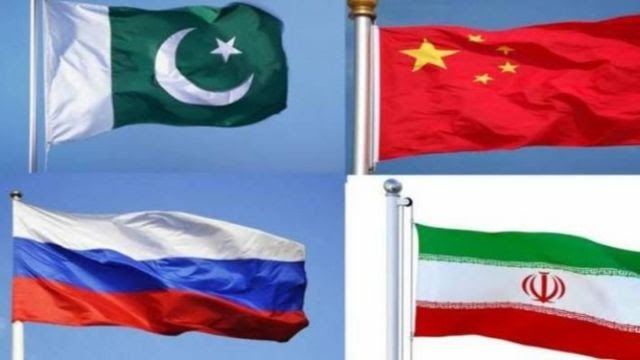
Afghan neighbors Call for “Inclusive” Govt. in “Independent” Afghanistan

The statement was issued by foreign ministers of the four countries on the sidelines of the summit of the Shanghai Cooperation Organization and Common Security Treaty Organization held in the Tajik capital Dushanbe on Friday.

The ministers reaffirmed their intention to promote peace, security and stability in Afghanistan and in the region as a whole.

They also called for the implementation of the principle of “Afghan-led, Afghan-owned” and protection of Afghans’ right to pursue peace, stability, development and prosperity.  

The ministers also stressed the importance of engaging the states which should bear primary responsibility for post-conflict socio-economic reconstruction of Afghanistan, urging them to provide the country with urgently needed economic, livelihood and humanitarian assistance.

They also underlined the need to conclude national reconciliation in Afghanistan to ensure an inclusive government that takes into account the interests of all ethno-political forces in the country.

The ministers also touched on the security challenges rooted in Afghan soil. They called for coordinated efforts to counter threats, especially the spread of terrorism and drug trafficking, in order to ensure regional stability and address legitimate concerns and interests of neighboring states.

The top diplomats also expressed concern about the precarious humanitarian and socio-economic situation in Afghanistan and the possible risk of a refugee influx in the region. 

They called for restoration of peaceful life and economic recovery in Afghanistan and demanded continued humanitarian assistance by the international community.   

The ministers also agreed to continue their coordination on the subject at the ministerial, special envoy and the ambassadorial levels.

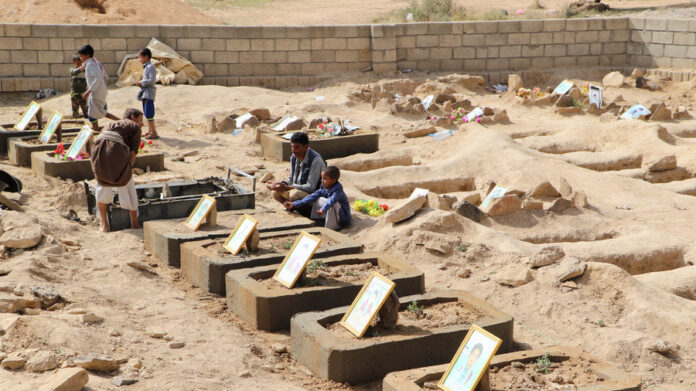
Yemen: Saudi Arabia, US allies source of terrorism

Sharaf stressed that Yemen will never be a safe haven for any terrorist groups, adding that instead of Yemen, the US should blame Saudi Arabia and its allies for supporting terrorist groups in Yemen and the region.

Earlier, Director of the US National Intelligence Avril Haines claimed the greatest threat to the US from international terrorists comes from nations such as Yemen, Somalia, Syria and Iraq, with Afghanistan further down the priority list after the two-decade American troop presence ended.

Since the beginning of the Saudi-led war on Yemen in 2015, Saudi Arabia has supported and used terrorist groups to exert more pressure on Yemeni army in several areas including the oil-rich province of Ma’rib, the last stronghold of Riyadh in northern Yemen.

Observers say the US accusation is part of a larger plan to cover up Washington’s failure in Afghanistan. They believe that the US is creating excuses to launch a new war against Yemenis, especially after the failure of its Saudi proxy in the region to break the steadfastness of the war-ravaged nation.

Source: Press TV

Australia to host US military aircraft, nuclear-powered subs

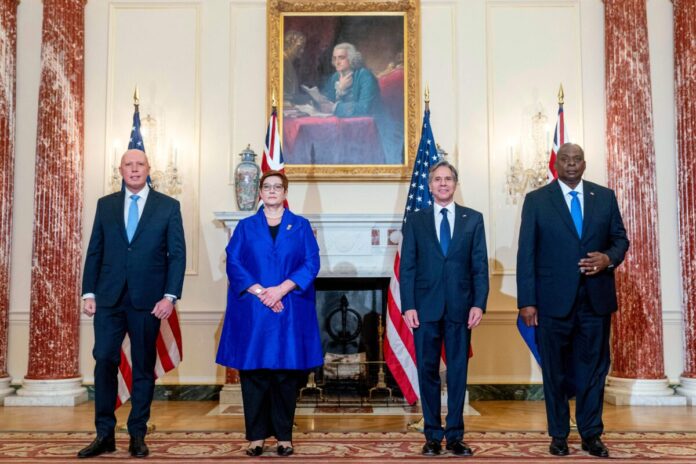
(L-R) Australian Defense Minister Peter Dutton, Foreign Minister Marise Payne, US Secretary of State Antony Blinken and Defense Secretary Lloyd Austin pose for a group photograph at the State Department in Washington, DC, on September 16, 2021. - The US announced a new alliance September 15 with Australia and Britain to strengthen military capabilities in the face of a rising China, with Canberra to get a nuclear submarine fleet and US cruise missiles. (Photo by Andrew Harnik / POOL / AFP) (Photo by ANDREW HARNIK/POOL/AFP via Getty Images)

US Secretary of State Antony Blinken hailed the recently unveiled AUKUS treaty as a sign of “the country’s shared commitment to safeguard peace and stability in the Indo-Pacific now and in the future” during a Thursday press conference in Washington, DC, adding that the US has concerns about Beijing economically pressuring Australia.

Australian Foreign Minister Marise Payne praised the newly strengthened US-UK alliance as “well-suited for countering economic coercion”.

Giving an overview of the “historic new chapter” unveiled on Wednesday by President Joe Biden during his first meeting with the Australian Prime Minister Scott Morrison since becoming president, Blinken noted the signatory nations would be “strengthening joint capabilities and interoperability in cyber, AI, quantum technologies, additional underseas capabilities”, information sharing, industrial bases, and supply chains.

The first project to be undertaken under the treaty is delivering nuclear-powered submarines to Australia, Blinken announced, clarifying that it would be the three nations in the new alliance that would be responsible for sourcing the subs.

In addition to helping to source nuclear-powered subs, the US will provide “rotational deployments of all types of US military aircraft” to Australia, shoring up its air defenses, Defense Minister Peter Dutton said during the news conference.

Cushioning the news a bit, Blinken insisted he “welcomed” the US’ European allies playing an “important role in the Indo-Pacific”, looked forward to continued close cooperation with NATO, the EU, and “others in this endeavor”, and most emphatically denied the existence of any “regional divide” separating the interests of Washington’s Atlantic and Pacific allies.

“France in particular is a vital partner on this and so many other issues, stretching back generations, and we want to find every opportunity to deepen our transatlantic cooperation in the Indo-Pacific and around the world,” Blinken insisted.

Despite the official’s nod to France, however, Paris remains jilted over the announcement that it was the US and UK that would be supplying Australia with a fleet of submarines – something the French already had a $40 billion contract to do. The French government even canceled a gala meant to mark the 240th anniversary of the Battle of the Capes, celebrating US-France relations, over the submarine deal.

Even UK Defense Minister Ben Wallace expressed sympathy for the French following the announcement of the AUUKUS partnership, though he insisted the alliance is not meant to be a “betrayal” of Paris by the trio of allies.

Blinken also promised the US would stand by Australia in the event of attempted Chinese economic coercion, hailing the two countries’ “unshakable alliance” and ability to defend the “international rules-based order”.

Australia will remain undeterred on its path towards obtaining nuclear-powered submarines with the help of the US, despite stern warnings from China, the country’s defense minister said.

“This is not the first time that we have seen different outbursts from China in terms of Australia’s positioning,” Dutton stated, adding that Australia will continue to stand by its neighbors to ensure peace and make the Indo-Pacific “a safer region”.

“That’s the reality. No amount of propaganda can dismiss the facts,” he continued.

Dutton and Payne traveled to Washington to meet with their US counterparts Lloyd Austin and Blinken shortly after the announcement of a trilateral security pact between the US, UK and Australia, known as AUKUS. Under the deal, which rattled China, Washington and London are to help Canberra build nuclear-powered submarines using American and British technology.

Dutton dismissed the fiery tone in the Chinese state-run media condemning the deal as “counterproductive, immature, and, frankly, embarrassing”.

“There is no sense in us pretending if we ordered 100 subs tomorrow we could compete with a superpower like China,” the minister told Sky News.

Asked about a possible “battle” over Taiwan, Dutton replied, “I don’t think it should be discounted.”

“Nobody wants to see conflict but that really is a question for the Chinese,” he noted.

On Friday, China’s Foreign Ministry Spokesperson Zhao Lijian called the AUKUS agreement “extremely irresponsible”, arguing that Australia’s nuclear submarine program will bolster an arms race and undermine regional peace and stability.

“The export of highly sensitive nuclear submarine technology to Australia by the US and the UK proves once again that they are using nuclear exports as a tool for geopolitical game and adopting double standards,” he stressed.

Source: RT

Iran ministry: Corona virus kills 364

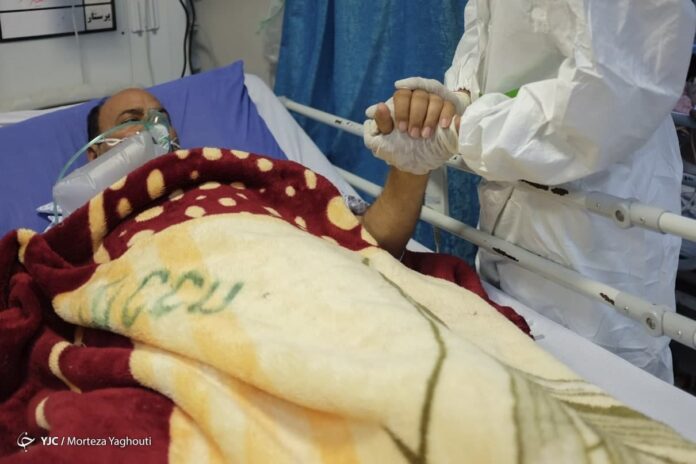
According to the ministry figures, the total Covid death toll now stands at 116,436. Unofficial sources however say the number of people killed by the disease is much higher than what authorities say.
Health Ministry officials also registered 17,605 new infections in 24 hours.
Iran’s total Coronavirus caseload has risen to 5,396,013. The number of infections and deaths are now lower than the early days of the fifth wave of the Coronavirus pandemic. Authorities attribute this to the huge number of daily Covid vaccinations.
Hospitalizations are also down now. Iran started a nationwide vaccination drive months ago to contain the disease. The Iranian Health Ministry says 27,790,835 Iranians have so far received the first dose of the vaccine while 13,459,625 people have been fully inoculated.
The age limit for vaccination in Tehran has been lifted and people from all age groups can now get their jabs. The rising pace of the vaccination is due to a hike in vaccine import and production inside Iran.
Officials say all Iranians will be fully vaccinated in a few months.

Putin says US ‘hasty’ Afghan exit ‘more like an escape’

US Forces Afghanistan

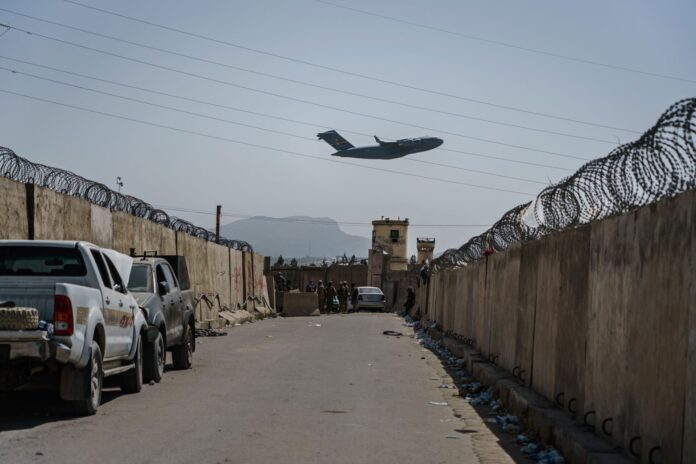
“The urgent task facing our organization is to pursue a single and coordinated policy based on the assessment of serious risks related to the mounting tensions in Afghanistan following the hasty withdrawal – if not more like a downright escape – by US and NATO troops from the country,” Putin emphasized, addressing the Dushanbe-hosted Shanghai Cooperation Organization (SCO) summit via video link.

According to the Russian leader, the developments in Afghanistan are clearly affecting the security interests of SCO nations. He also added that a number of the organization’s members shared borders with Afghanistan.

“I think that first of all, we need to employ the organization’s potential to facilitate the launch of an inclusive intra-Afghan peace process in every possible way and at the same time, make every effort to block the threats of terrorism, drug trafficking and religious extremism emanating from this country,” Putin stated.

He also called for encouraging the new Afghan authorities to make good on their promises.

“The change of government [in Afghanistan] has been practically bloodless, which is, undoubtedly, a positive thing. The Taliban now control almost all of Afghanistan so the new Afghan authorities should be encouraged to fulfill their own promises to establish peace, normalize public life and guarantee security for all,” the Russian head of state stressed.

Putin emphasized that it was symbolic that the SCO’s 20th anniversary summit was taking place in Dushanbe, the city where the leaders of the Shanghai Five nations had supported the establishment of a regional organization for multilateral cooperation back in July 2000.

According to Putin, the SCO has been working successfully throughout its 20-year existence.

“The SCO is rightfully considered to be one of the most influential centers of the multipolar architecture of international cooperation, it contributes a lot to ensuring security in Eurasia and its sustainable socio-economic growth, along with efforts to maintain global peace and stability in general,” the Russian leader noted.

Source: TASS

EU lawmakers call for Lebanon sanctions over ‘corruption’, ‘Beirut blast’

In a vote on Thursday, 571 out of 681 members of European Parliament backed the resolution, which condemned Lebanese political parties for the country’s devastating economic crisis, which has plunged about three-quarters of the population into poverty and for delaying any semblance of economic recovery and accountability.

The resolution, spearheaded by parliamentarian Christophe Grudler, who belongs to the Renew Europe bloc, urged the EU to maintain pressure on political leaders in Lebanon, where a government was formed last week following more than a year of political deadlock.

“We know who is responsible for the political and the economic crisis: all factions, most ministries, many corrupted MPs,” Grudler told Al-Jazeera, adding, “We are writing black and white what everyone in Lebanon knows.”

The resolution notably condemned the rejection of an IMF-approved bailout plan presented by the previous Lebanese government.

It said Lebanese legislators and political leaders rejected the plan as a result of “vested interests in preserving the interests of Lebanon’s banks”, and stalled a forensic audit of the Central Bank while its governor, Riad Salameh, is being investigated by France for money laundering.

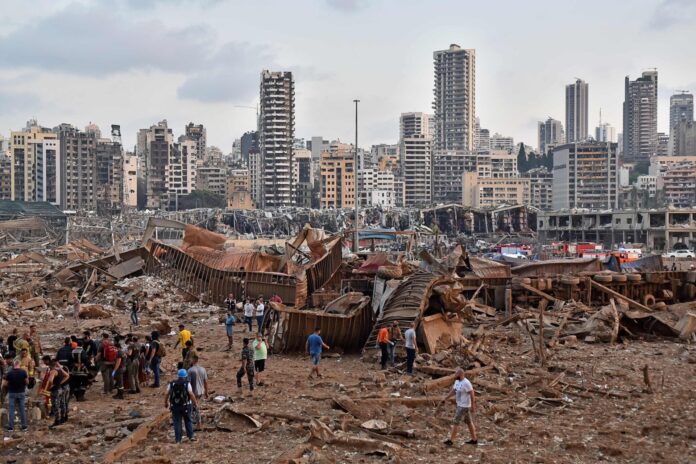
The resolution also slammed officials for obstructing the Beirut Port explosion investigation, and echoed calls from international rights groups Human Rights Watch and Amnesty International, and from some victims’ families, for an international and independent fact-finding mission.

In late July, the EU adopted a legal framework to sanction Lebanese officials engaged in corruption, stalling of economic and accountability reforms, as well as obstructing government formation.

Lebanon last week formed a full-fledged government for the first time in over a year under Prime Minister Najib Mikati.

Grudler noted that all eyes are on the Beirut Port explosion investigation and the economic recovery process.

“We call on all EU Member States, and the UK and Switzerland, to work together and put on the EU sanctions list the names of high-level corrupted politicians, who obstruct the investigation of the explosion, who obstruct the recovery plan,” Grudler said, adding, “We have to freeze the assets and ban the travel of key political figures, at the EU level. We have to listen to the Lebanese people.”

The resolution also called for general elections to be held on time in May 2022 and the creation of an international humanitarian task force under the auspices of the United Nations to ensure that aid distribution is effective and protected from political patronage networks, in order to improve donor confidence.

The resolution is a departure from previous softer efforts to lobby Lebanese officials.

Following the devastating Beirut Port explosion in August 2020, French President Emmanuel Macron has tried to press Lebanese officials into resuming talks with the IMF, and implementing economic reforms, but to no avail.

Imad Salamey, associate professor of Middle East political affairs at the Lebanese American University, says the strongly-worded resolution from Europe is an attempt to “reassert its negotiation leverage and position of power”.

“I think, in general, the European Union led by France in particular … is trying to display a strong stance and ability to penalise those who defy its guidance,” Salamey told Al-Jazeera.

“It also sends a strong message to Lebanese politicians that Europe remains a key player and has not evicted the country to the interests of Iran or Syria,” Salamey added.

The Lebanese government has yet to comment on the resolution.

Schams El Ghoneimi, political adviser for the Renew Europe bloc in the European parliament, told Al-Jazeera that the resolution could signal a potential EU policy shift towards Lebanon.

“We went from statements calling for reforms to an EU sanctions regime against those who obstruct anti-corruption reforms in Lebanon,” he continued.

The resolution could create the political space for European countries to take more hardline stances and measures against the Lebanese authorities for corruption, and for stalling reforms and accountability mechanisms, he added.

US okays $500m copter maintenance deal with Saudi Arabia

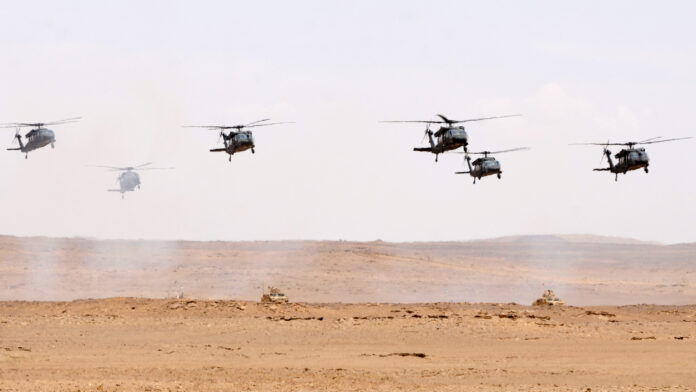
Six UH-60 Black Hawk Helicopters assigned to U.S. and Saudi Arabian forces approach the final objective during Friendship and Ironhawk 3, a two-week military-to-military exercise at the Tactical Training Center in Tabuk, Saudi Arabia, April 14. The exercise allowed the Soldiers assigned to the 2nd Armored Brigade Combat Team, 4th Infantry Division and 42nd Combat Aviation Brigade of the New York National Guard to share tactics, techniques and procedures at the platoon, company, battalion and brigade level in order to improve interoperability and strengthen ties with their Saudi counterparts.

Despite the deal being a continuation of a prior agreement, the US package includes maintenance support services for helicopters, including Saudi Arabia’s Apache and Black Hawk helicopters, as well as a future fleet of CH-47D Chinook helicopters.

“This proposed sale will support US foreign policy and national security objectives by helping to improve the security of a friendly country that continues to be an important force for political stability and economic growth in the Middle East,” the State Department announced.

Washington said the deal would also help improve Saudi Arabia’s capability “to meet current and future threats”.

The deal will also aid in maintaining Saudi Arabia’s rotary-wing aircraft fleet, engines, avionics, weapons, and missile components, the State Department added.

“Saudi Arabia will have no difficulty absorbing these articles and services into its armed forces,” it continued.

The deal has been sent to Congress for review and approval.

Thursday’s announcement comes after the Joe Biden administration froze weapons sales to Saudi Arabia shortly after taking office.

Biden also halted US support to “offensive operations” in Yemen in support of Saudi Arabia while removing the Iran-backed Houthis from the terror blacklist.

Last week, Defense Secretary Lloyd Austin was scheduled to visit Saudi Arabia and meet with Crown Prince Mohammed bin Salman. The visit was rescheduled at the last minute due to a scheduling conflict.

Source: Al-Arabiya

China rules out foreign interference in countries’ affairs

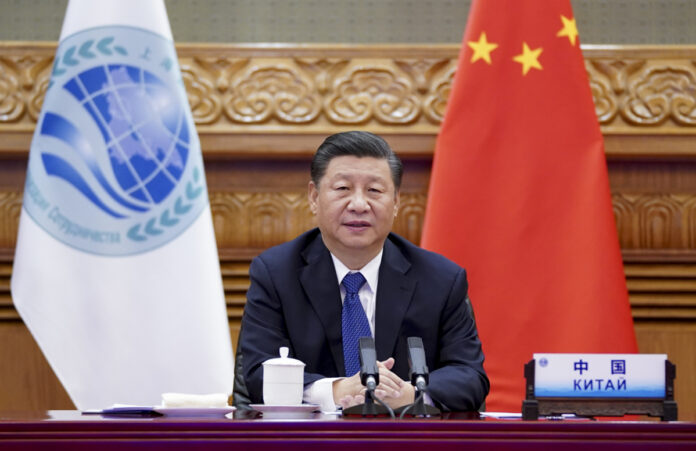
Countries should be firmly supported to explore their own development paths and models of governance suited to their domestic conditions, Xi stated

“The future of our country’s development and progress should lie firmly in our own hands,” he added.

Xi was addressing a meeting of the heads of state of the Shanghai Cooperation Organization (SCO) in Tajikistan via video link.

Source: Reuters