Saturday, December 27, 2025
Home Blog Page 235

Dozens of UK MPs urge PM to recognize Palestine

The appeal follows French President Emmanuel Macron’s pledge to recognize Palestinian statehood at the UN General Assembly in September. Both Israel and the US have criticized the move, arguing that it would embolden Hamas.

In a letter published on Friday, 221 MPs from nine parties urged Starmer and UK Foreign Secretary David Lammy to grant recognition as part of the country’s longstanding support for a two-state solution.

“Whilst we appreciate the UK does not have it in its power to bring about a free and independent Palestine, UK recognition would have a significant impact due to our historic connections and our membership on the UN Security Council,” the letter said. The MPs argued that Britain has a particular responsibility, having administered the Mandate for Palestine from 1919 to 1948.

According to The Guardian, UK Deputy Prime Minister Angela Rayner, Home Secretary Yvette Cooper, and Justice Secretary Shabana Mahmood are among the cabinet ministers lobbying for the move.

Despite growing pressure, Starmer has stopped short of an immediate commitment. “Recognition of a Palestinian state has to be one of those steps. I am unequivocal about that. But it must be part of a wider plan which ultimately results in a two-state solution and lasting security for Palestinians and Israelis,” he said on Friday after a phone call with Macron and German Chancellor Friedrich Merz.

The three leaders called for a ceasefire and urged Israel to “immediately lift restrictions on the flow of aid” into the besieged enclave. They also said Hamas must disarm and “must have no role in the future of Gaza.”

The Kremlin reaffirmed on Friday that Russia has recognized Palestinian statehood since Soviet times and continues to support a two-state solution under international law.

European countries urge end to Gaza ‘humanitarian catastrophe’

Gaza War

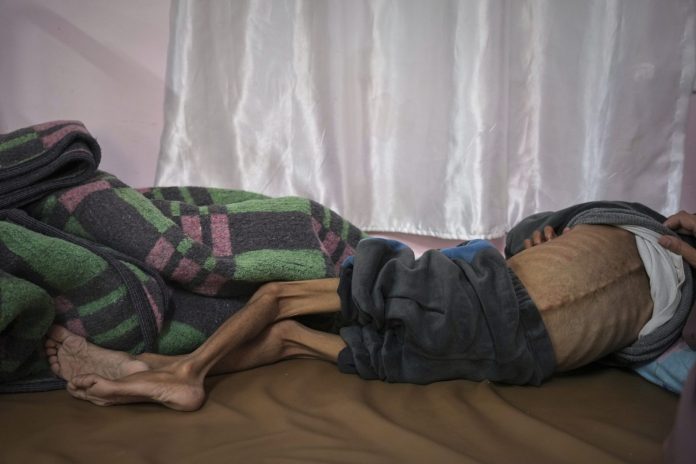
Alarm has been mounting about the deepening crisis in Gaza, with aid groups saying that “mass starvation” is spreading after more than 21 months of conflict.

In a joint statement, the leaders of the three European powers urged Israel “to immediately lift restrictions on the flow of aid and urgently allow the UN” and NGOs to “take action against starvation”.

“The most basic needs of the civilian population, including access to water and food, must be met without any further delay,” they said.

“Withholding essential humanitarian assistance to the civilian population is unacceptable. Israel must uphold its obligations under international humanitarian law.”

Italian Foreign Minister Antonio Tajani added his voice to the criticism, stating his country cannot accept “carnage and famine” in Gaza.

Concern is growing in particular about surging numbers of malnourished children. Doctors Without Borders (MSF) says that a quarter of the young children and pregnant or breastfeeding mothers it had screened at its clinics last week were malnourished.

Warning that the crisis had reached “new and astonishing levels of desperation”, the United Nations food agency announced: “Nearly one person in three is not eating for days.”

“Malnutrition is surging with 90,000 women and children in urgent need of treatment,” said the Rome-based World Food Programme.

“Food aid is the only way for people to access any food as food prices are through the roof… People are dying from lack of humanitarian assistance,” it added.

Israel has rejected accusations it is responsible for the deepening crisis in Gaza, which the World Health Organization has called “man-made”.

Israel placed the Gaza Strip under an aid blockade in March, which it only partially eased two months later while sidelining the longstanding UN-led distribution system.

In their joint statement, Germany, France and Britain also stressed that “the time has come to end the war in Gaza.

“We urge all parties to bring an end to the conflict by reaching an immediate ceasefire.”

In a separate statement Friday, British Prime Minister Keir Starmer signalled that London will not imminently recognise a Palestinian state, after French President Emmanuel Macron said a day earlier that his country intended to do so in September.

Starmer stated that he was “unequivocal” Britain should eventually recognise a Palestinian state, but that this step “must be part of a wider plan which ultimately results in a two-state solution”.

He is facing mounting pressure however, with more than 220 British MPs, including dozens from the ruling Labour party, demanding that his government formally recognise a Palestinian state.

Britain’s position is similar to that of Germany, which noted it regarded the recognition of a Palestinian state as “one of the final steps on the path to achieving a two-state solution”.

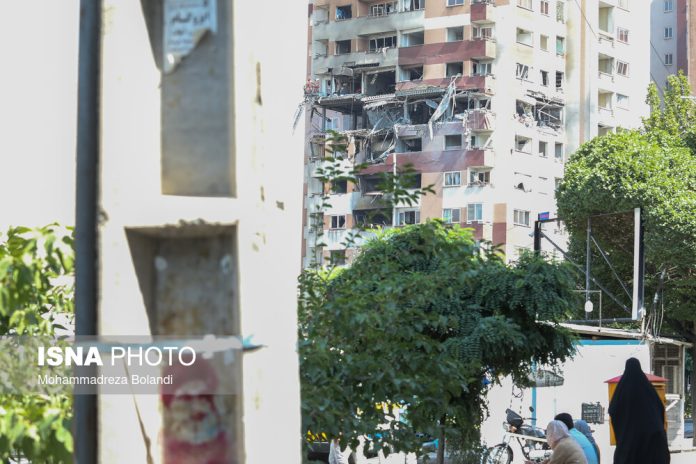
Deadly armed attack on courthouse in Iran’s Zahedan leaves at least five dead, 13 injured

Crime Scene

The attack was carried out by armed assailants, and explosions and gunfire were heard from the scene shortly afterward.

Security forces and emergency responders quickly arrived at the site, evacuating wounded individuals and courthouse staff.

Ambulances transported the injured to local medical centers, while police forces secured the surrounding area and entered the building.

The extremist terror group Jaish al-Adl claimed responsibility for the attack through an online statement.

Initial reports suggest the possibility of a suicide bomber, although the exact cause of the explosion has not been confirmed.

According to security sources, three attackers were killed during the assault, which began with gunfire directed at the courthouse and later extended indiscriminately to nearby civilians. Damage was also reported to private property.

Investigations are ongoing to assess the full scope of the incident.

Zahedan, the capital of Sistan and Baluchestan Province, has experienced periodic unrest and militant attacks in recent years.

Iranian daily questions credibility of Friday Prayers cleric linked to financial scandals

Without openly naming cleric Kazem Sedighi, Javan argued in a scathing editorial that national unity cannot be achieved merely through rhetoric or ceremonial addresses.

Sedighi’s sons have been involved in a corruption case.

The daily emphasized that the return of controversial figures to public platforms is seen by many as a disregard for public sentiment and a betrayal of social demands for integrity in leadership.

The piece stresses that genuine unity requires difficult yet honest actions, including appointing public figures who carry no negative associations in the collective memory.

The decision to reinstate the cleric, despite his family’s financial scandals, is portrayed not as a signal of stability but as an insult to public trust, the daily argued.

“How can a war-weary nation be expected to move toward solidarity,” the paper asked, “when it sees individuals with problematic pasts once again occupying official tribunes?”

Ayatollah Sistani urges Islamic world to act against humanitarian crisis in Gaza

Ayatollah Sistani

In a statement released by his office, Ayatollah Sistani expressed grave concern over the dire conditions faced by Palestinians, particularly the severe food shortages that have resulted in widespread famine.

“Even children, the sick, and the elderly have not been spared,” the statement noted.

The senior Shia cleric condemned the Israeli occupation forces, saying their actions reflect ongoing efforts to displace Palestinians from their homeland.

He called on Arab and Islamic nations to intensify diplomatic and humanitarian efforts to compel Israel and its allies to allow immediate delivery of food and essential aid to civilians in Gaza.

The statement warned that the horrifying images of hunger circulating in global media should shake the conscience of all people.

Ayatollah Sistani’s statement adds to growing regional calls for urgent international pressure to address the deepening crisis in Gaza.

Hamas will be ‘hunted down’ as Gaza ceasefire negotiations wane: Trump

Gaza War

Trump’s comments at the White House on Friday appear to suggest that the US and Israel are not ready to guarantee a lasting end to the war but rather a short-term truce to get Israeli captives out of Gaza.

“We’re down to the final hostages, and they know what happens after you get the final hostages,” the US president told reporters.

“And basically because of that, they really didn’t want to make a deal.”

Trump blamed the Palestinian group solely for the apparent collapse of the ceasefire talks, saying the group is going to be “hunted down”.

“Hamas didn’t really want to make a deal. I think they want to die, and it’s very, very bad,” he added.

On Thursday, Trump’s Middle East envoy Steve Witkoff said Washington was cutting short its involvement in the negotiations, accusing Hamas of showing “a lack of desire to reach a ceasefire”.

Israel also announced it withdrew its negotiators from Qatar, where the ceasefire talks were taking place.

Hamas expressed bewilderment at the US position, saying it had made “a sincere commitment to the success of the mediators’ efforts” to reach a deal.

The group also stressed that the mediators — Qatar and Egypt — welcomed its “constructive and positive” position.

Talks have been ongoing for months to secure a 60-day truce that would see the release of 10 Israeli captives and a pause in the Israeli bombardment of Palestinians in Gaza.

Hamas has insisted that it is seeking a permanent ceasefire.

Witkoff previously emphasized that the truce “will lead to a lasting peace in Gaza”.

However, Israeli officials repeatedly described plans to return to the fighting and remove all Palestinians from Gaza after the captives are released.

In fact, Israeli Minister of Defence Israel Katz has said that Tel Aviv would use the truce to move hundreds of thousands of Palestinians to an internment camp in southern Gaza, in preparation for their removal from the territory altogether.

Israeli Prime Minister Benjamin Netanyahu said during a visit to Washington, DC, earlier this month that Israel “still has to finish the job in Gaza” despite the ceasefire talks.

In February, Trump called for depopulating Gaza and turning the territory into a “Riviera of the Middle East” — a proposal that legal experts say would amount to ethnic cleansing, a crime against humanity.

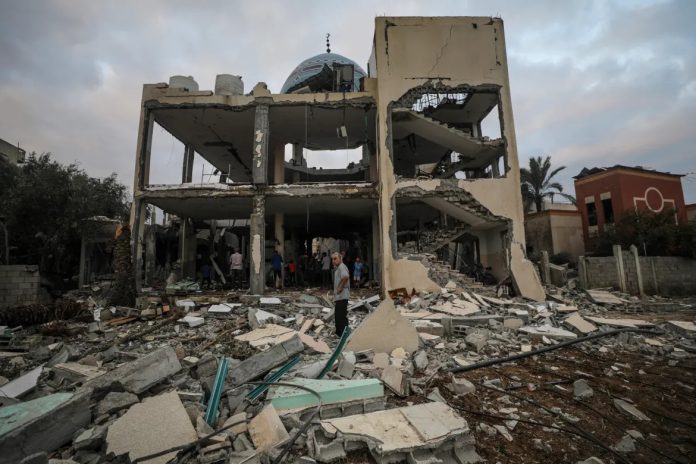
Israel has systematically flattened large parts of Gaza, using bombardment, explosives and bulldozers in what advocates say is an effort to make the territory unliveable.

Netanyahu has argued, however, that the departure of Palestinians would be “voluntary”.

But human rights experts warned that people do not actually have a choice when they are under the threat of bombardment and starvation.

On Thursday, Trump suggested that Gaza is set to experience more violence, saying Israel is “going to have to fight”.

“They’re going to have to clean it up. You’re going to have to get rid of it,” he added.

The US president’s comments come as deadly hunger continues to spread in Gaza due to an Israeli blockade impeding the flow of aid and other essential supplies into the territory.

The Israeli-imposed starvation in Gaza has garnered international condemnation, even from close allies of the US and Israel.

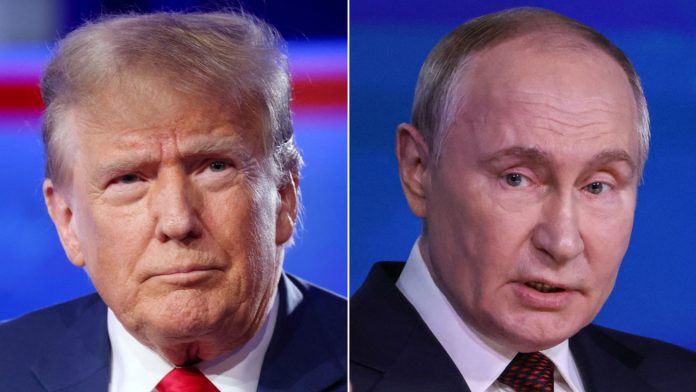
Putin-Zelensky meeting ‘is going to happen’: Trump

Putin Zelensky

Trump made the comments on Friday when asked by reporters what it would take for Putin and Zelensky to sit down together – possibly with him in the room.

”It’s going to happen, but it should have happened three months ago. It’s going to happen,” he said, without offering a timeframe.

Trump has pushed for a settlement to the conflict since taking office in January. Earlier this month, he threatened to impose “severe” secondary tariffs of up to 100% on Russia’s trading partners unless a deal is reached within 50 days – by early September.

Moscow maintains it is open to a diplomatic settlement, but in a way that would address the conflict’s “root causes” and its security concerns. It insists on Ukraine’s neutrality and recognition of the “territorial reality on the ground,” as well as demilitarization and denazification.

Zelensky has repeatedly called for a direct meeting with Putin. Ukrainian negotiators also raised the idea at this week’s bilateral talks in Istanbul, framing such a summit as essential to ending the fighting. The Kremlin has not ruled out a meeting but insists the groundwork must be in place first.

Kremlin spokesperson Dmitry Peskov has stated the two men should meet only after meaningful progress has been achieved at the working level.

“It is impossible to do the opposite,” he stressed.

Moscow has also raised concerns about Zelensky’s legal authority. His five-year presidential term expired in May 2024, but he has refused to call new elections, citing martial law. Russian officials have suggested that any documents signed under his name could later be challenged. Putin said last month he was open to a meeting with Zelensky – if it came at the final stage of talks.

In addition, Russia has demanded that Ukraine lift martial law and hold elections within 100 days as part of any lasting ceasefire.

Imam Khomeini’s grandson: Iran has reached “patriot vs. traitor” divide

Ahmad Khomeini

In remarks shared on his Instagram account on Friday, Khomeini praised the national unity demonstrated during US-Israeli assaults last month, noting that even those less religiously observant came forward in defense of Iran.

“Every Iranian felt personally attacked,” he said, adding that the threat to the country’s territorial integrity mobilized a broad spectrum of society, including ethnic minorities, Sunnis, political dissidents, and Iranians abroad.

He recounted discussions with political figures such as Ali Larijani and Ali Akbar Nategh-Nouri regarding coordinated public responses, emphasizing that figures like Mohammad Khatami and Mehdi Karroubi had already issued strong statements of support.

Khomeini credited the Iranian military’s response for deterring adversaries and highlighted the enduring loyalty of Iran’s underprivileged classes, whom he said have consistently supported the establishment despite economic hardship.

He stressed the role of Iran’s Leader and called for a more inclusive approach in the country’s political, economic, and social structures to preserve national unity.

Ayatollah Khamenei: Iran will grow stronger than ever

Ayatollah Khamenei

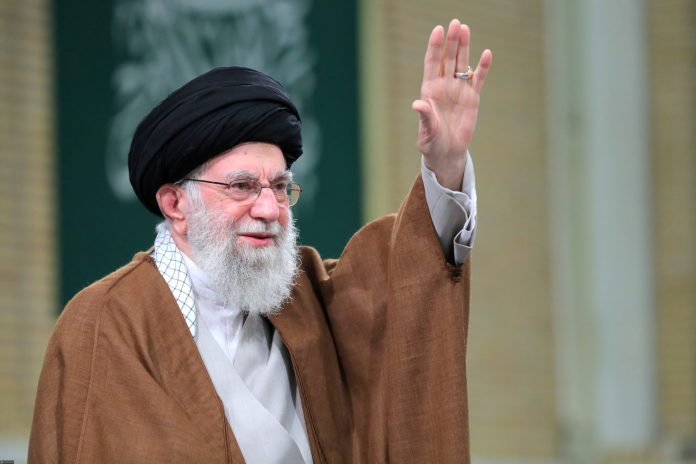
Ayatollah Khamenei made the remarks in a message on the occasion of the fortieth day after the martyrdom of many Iranians in attacks by the Zionist regime against Iran, including military commanders and nuclear scientists.

Ayatollah Khamenei said, with divine grace, the Islamic Republic of Iran will grow stronger every day, stressing the importance of not forgetting this truth and the responsibilities that come with it.
Ayatollah Khamenei said preserving national unity is the duty of every citizen.

He added that speeding up scientific and technological progress in all sectors is the responsibility of the country’s academic and research elites.
The leader noted that maintaining the dignity and reputation of the Iranian nation is a serious obligation for all public speakers and writers.
He also said constantly equipping the country with tools to safeguard national security and independence is the responsibility of military commanders.
Ayatollah Khamenei added that it is the duty of all executive institutions to show seriousness, persistence, and efficiency in solving the country’s problems and completing unfinished tasks.

Ayatollah Khamenei also said keeping the revolutionary spirit and motivation alive is a duty that lies on everyone’s shoulders.

The Leader then paid tribute to the Iranian nation and all the martyrs, along with their grieving families.

Iranian deputy FM: Uranium enrichment inside Iran non-negotiable

Iran nuclear program

Takhte Ravanchi was speaking after the latest round of talks with the E3 and the EU in Istanbul on Friday.

“We clearly declared that enrichment must continue inside the country”.

He added that enrichment is a fundamental and legitimate right of Iran, and there is no compromise on this issue.

The Iranian delegation met with their European counterparts from the E3 group consisting of the UK, France and Germany to discuss nuclear negotiations.

Takhte Ravanchi noted that the talks took place against the backdrop of aggression by the Zionist regime and the US, which he condemned as violation of international law and the UN Charter.

“We criticized the silence and unbalanced reactions of some European governments regarding this aggression, which constitutes a blatant breach of international norms”, he said.

According to the Iranian deputy foreign minister, another point of contention discussed was the re-imposition of sanctions and the so-called snapback mechanism.