Friday, December 26, 2025
Home Blog Page 2337

Senior Iranian diplomat calls for eradication of terrorism in Syria

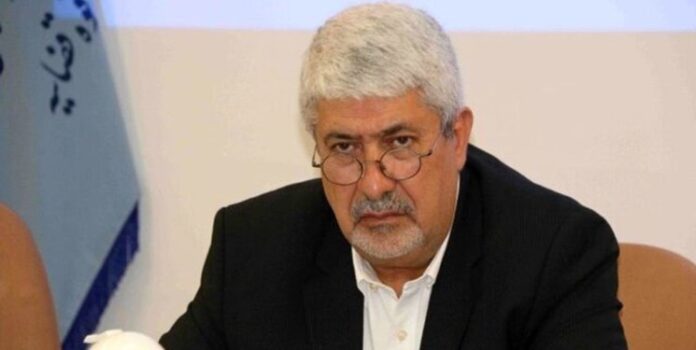
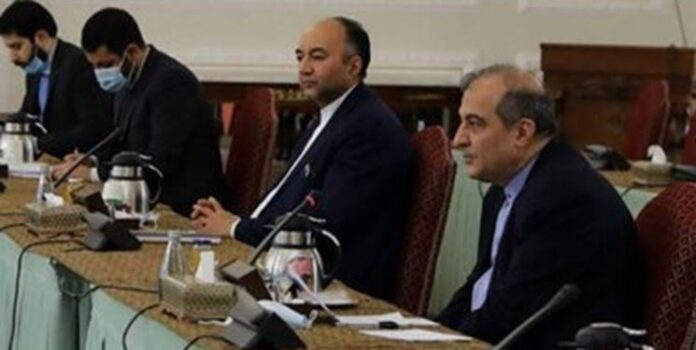
Italian Special Envoy for Syria Stephen Ravanan has met with the Iranian foreign minister’s senior advisor on special political affairs Ali Asghar Khaji.
The meeting was held on October 19 on the

sidelines of the meeting of the Syrian Constitutional Committee in Geneva. The two sides discussed the latest developments in Syria.

In this meeting, Ravanan stressed the importance of Iran’s regional role, especially in Syria.

He added that the Italian government is involved in the fight against terrorism, pursuing a political solution to the Syrian crisis and providing humanitarian assistance to the Syrian people through the European Union and the United Nations.

In this meeting, the senior advisor to the Iranian minister of foreign affairs said the Syrian people are basically in need of humanitarian aid.

He further called for the return of refugees to their country and the eradication of terrorism in Syria, stressing that tranquility in Syria will lead to stabilization of the region. Khaji said the continuation of U.S. and European sanctions policies will not help resolve the Syrian crisis.

In the end, the two sides agreed to continue their consultations in the future on helping with the Syrian crisis.

IAEA chief calls for meeting with Iran’s FM

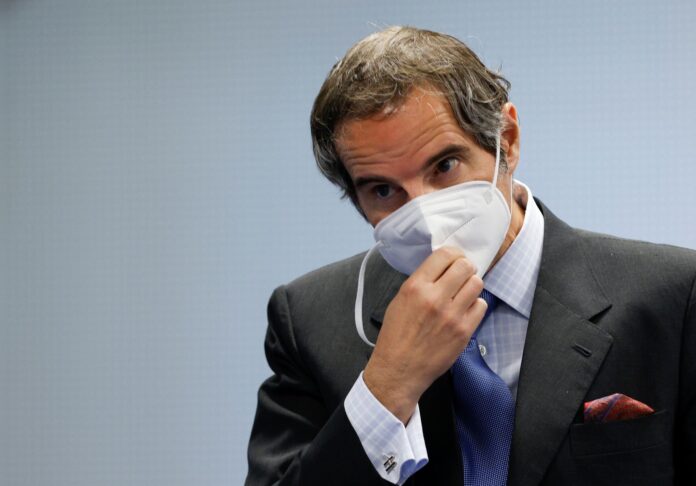
Grossi said in an interview he urgently needed to meet Tehran’s foreign minister to discuss proposals to reinvigorate the fragile surveillance programme.

“I haven’t been able to talk to [Iran’s new] foreign minister,” Grossi told the Financial Times during a visit to Washington.

“I need to have this contact at the political level. This is indispensable. Without it, we cannot understand each other,” he added.

The head of the UN’s atomic watchdog has warned that stop-gap measures to monitor Iran’s nuclear activities are no longer “intact” amid concerns that talks to resurrect a global agreement to curb Tehran’s atomic work have stalled.

The continued surveillance of Tehran’s nuclear activity through cameras and other devices has sustained hope that a global deal to curb Tehran’s nuclear activity and lift sanctions can be resurrected. In 2018, Donald Trump withdrew from the 2015 multi-party nuclear pact with Iran and imposed hefty new sanctions. Tehran has since rejected key monitoring efforts while increasing the volume and purity of its fissile material. The country has always denied it is trying to build a nuclear weapon.

Joe Biden’s administration is seeking to re-enter the deal but six rounds of indirect talks have stalled since the election of President Ebrahim Raisi in June.

Grossi noted Iran was “within a few months” of having enough material for a nuclear weapon, although he said he did not think it was pursuing one.

The so-called breakout time was “continuously lessening” as Iran enriched more uranium, with more efficient centrifuges, he added.

“It is becoming shorter and shorter,” Grossi added, saying he needed working cameras reinstalled at Tesa Karaj — a manufacturing complex west of Tehran that fabricates parts for centrifuges — “yesterday”.

Grossi negotiated a last-minute compromise in February to keep cameras recording — temporarily forgoing examination of footage — at key sites in Iran after Tehran’s parliament voted to end snap inspections by the IAEA. But late last month Grossi reported Iran had broken an agreement by refusing to grant surveillance access to Tesa Karaj, a “very important” facility that produces parts for centrifuges and whose data Grossi stated were essential to “reconstruct” the record of Iran’s nuclear activities.

Iran has defended its decision not to allow cameras to be installed. It announced Israel sabotaged its facilities in Tesa Karaj in a June attack it said had “severely damaged” the site, including cameras. Iran wants the international community and the IAEA to condemn the attack.

Grossi stated, “There is this issue with Karaj, and I’m working on it . . . Our stop-gap has been seriously affected so it’s not intact. But it’s not valueless either.”

Western officials hope negotiations will pick up next month, ahead of the next quarterly meeting of the IAEA board of governors, where any prospect of western powers pushing to censure Iran formally would embarrass Tehran.

Ali Vaez, Iran director at the International Crisis Group, said Iran wanted to avoid such a resolution but it did not want to yield unilaterally to inspections pressure while it was under such harsh sanctions.

Grossi spoke to the FT after meeting US Secretary of State Antony Blinken earlier on Monday.

“We both want this to work and at the moment it’s not sure, it’s not certain that it will work,” he said of his talks with America’s top diplomat.

Grossi added Tehran had told him he could meet the foreign minister “but they are taking their time”.

The US Department of State announced on Monday it wanted talks to resume in Vienna “as soon as possible” but that Biden had “made clear that if diplomacy fails we are prepared to turn to other options” he had yet to spell out. Israel is pushing for an aggressive “Plan B”.

Raisi said on state TV on Monday night that his government was “serious” about chasing nuclear negotiations.

“[Talks] . . . must bear results for the Islamic republic. The readiness of the other parties for lifting of sanctions can be regarded as a sign of their seriousness,” he added.

Iran reiterates determination to fight narcotics trafficking

“If, God forbid, we ever wanted to turn a blind eye to drug trafficking, not a single young person in Europe would have remained safe today,” Omrani said in a technical session held to review the consequences of the developments in Afghanistan for the battle against narcotics.

He said the judiciary with all its capabilities in Tehran and provinces backs the anti-narcotics task force and “no excuse will be accepted in this regard”.

He said the Leader of Iran’s Islamic Revolution Ayatollah Seyyed Ali Khamenei has personally held three meetings with officials on the subject of drugs in which the Leader stressed that the drug traffickers’ financial network must be disrupted.

Iran’s neighbor Afghanistan produces 90 percent of the world’s opium and almost the entire heroin in the world comes from Afghan opium.

Drug traffickers see Iran as the main transit route for Afghan-produced opiates to Europe and beyond.

Iranian law enforcement forces seize and destroy hundreds of tones of illicit drugs every year especially in the country’s eastern border areas.

Taliban’s acting FM to hold talks with Chinese counterpart

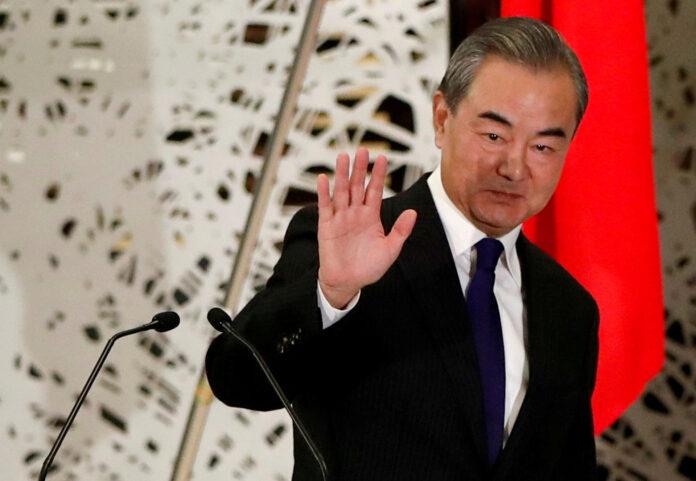
Muttaqi was given assurance of the meeting by Wang Yu, China’s ambassador in Kabul, whom he met on Sunday evening, according to Abdul Qahar Balkhi, spokesperson for the Taliban’s interim Foreign Ministry.

The date and venue of Muttaqi’s meeting with the Chinese foreign minister “will be determined later,” Balkhi said on Twitter.

If the meeting materializes, Wang Yi will be the fourth foreign minister to meet officials of the interim Taliban government, following his counterparts from Turkey, Uzbekistan, and Qatar.

The acting Afghan foreign minister and Chinese ambassador also discussed the resumption of exports of pine nuts from Afghanistan to China.

The Chinese side has assured “that they will make all necessary arrangements and begin exports soon,” Balkhi added.

Iran Health Minister: Sixth Covid peak inevitable in Nov.

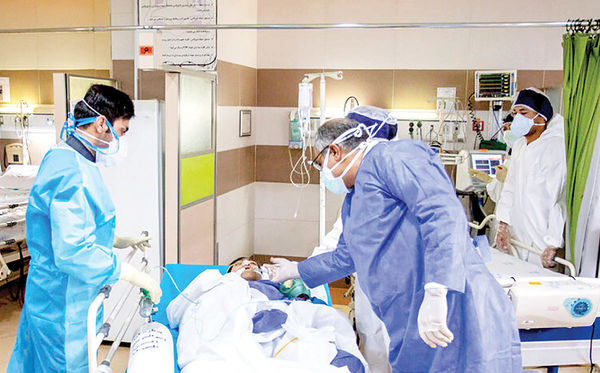
Bahram Einollahi added that so far, Iran has imported 120 million doses of vaccine. Vaccine imports will continue until the first week of November and the number of imported doses will definitely reach 160 million.

The health minister hailed the pace of vaccination in Iran adding health personnel made a staggering statistic, and today international organizations are surprised by the huge rise in the number of vaccinations in Iran.

The health minister underlined that the vaccination is not enough yet and in order for Iran to be relieved, 80% of people must be given two doses of the vaccine.

Einollahi said that the production of domestic vaccines has accelerated, adding, “In addition to the Barakat vaccine, which was approved 3 to 4 months ago, Razi, Sinagen and Fakhra vaccines have also been produced today, and I think in the future with the increase in production, there will be no need to worry about vaccination”.

Einollahi said in the current lunar month, various ceremonies are held and authorities are a little worried and advised people to take care of themselves and follow the health tips.
Einollahi said about 230 of health personnel were martyred during service, which shows that it is the people who are working hard for the country.

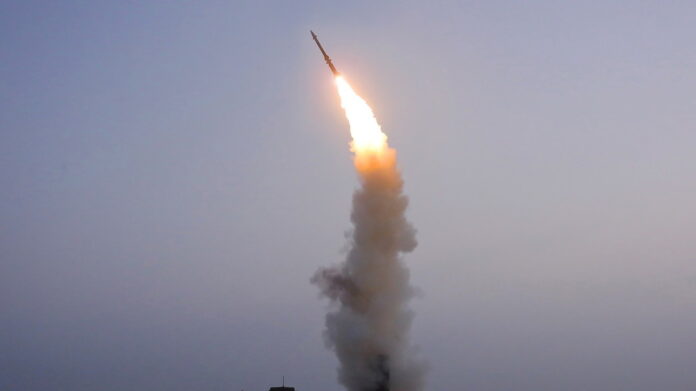
Japan says to build up defense following N. Korea missile test

“We strongly condemn North Korea’s missile launches. This violates provisions of the UN Security Council resolutions,” Prime Minister Fumio Kishida told reporters on Tuesday.

“For the safety of our citizens, I instructed responsible agencies to analyse information through surveillance and intelligence gathering and to closely interact on this issue with the international community, including the United States”, Kishida added.

Kishida also announced that the government “intends to continue to significantly increase the country’s defence capabilities to protect Japan’s territory, waters, residents and airspace”.

The statement by the Japanese PM was issued after Pyongyang reportedly conducted a short-range ballistic missile test, raising concerns in Seoul and Tokyo.

According to Yonhap news agency, citing South Korean officials, the missile flew 430-450 kilometres (267-279 miles), reaching an altitude of 60 kilometres (37 miles).

Kishida has interrupted his working trip to the country’s regions and decided to return to Tokyo after the North Korean missile launches, the Kyodo news agency reported.

Beijing announced it is aware of the DPRK’s ballistic missile firing, hoping all sides to remain restrained and jointly promote the political settlement of the Korean Peninsula issue, according to Chinese foreign ministry spokesperson Wang Wenbin, CGTN reported.

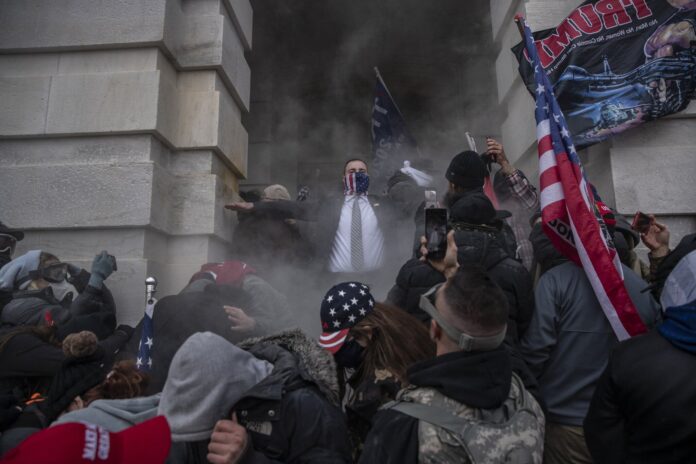
Trump sues panel probing capitol riot

The suit accuses the select committee and its chairman, Rep. Bennie Thompson, D-Miss., of harassing Trump and senior members of his administration with “an illegal, unfounded, and overbroad records request to the Archivist of the United States.”

The suit also accuses President Joe Biden of “a political ploy” by refusing to assert executive privilege over the records to keep them from going to the House Select Committee to Investigate the January 6th Attack on the United States Capitol.

“The Committee’s request amounts to nothing less than a vexatious, illegal fishing expedition openly endorses by Biden to unconstitutionally investigate President Trump and his administration,” the suit says.

The lawsuit was filed in U.S. District Court in Washington, D.C.

In addition to Thompson and the committee, Trump also is suing the National Archives and Records Administration, and David Ferriero, the Archivist of the United States.

Ferriero received requests for documents and records from Thompson as part of his probe in late August.

“Because the Committee’s requests seek to expose confidential and privileged information while lacking ‘a legitimate legislative purpose,’ this Court has the power to declare the requests invalid and to enjoin their enforcement,” the suit adds.

The lawsuit was filed as the committee pushes ahead with its investigation of the riot, in which hundreds of Trump’s supporters violently stormed the U.S. Capitol and forced a joint session of Congress into hiding.

The committee, which consists of seven Democrats and two Republicans, has vowed to proceed quickly, and has issued subpoenas to witnesses considered unlikely to cooperate.

On Tuesday, the committee is set to convene to advance criminal contempt proceedings for former senior Trump advisor Steve Bannon over his refusal to comply with a subpoena.

The riot began shortly after Trump urged supporters at a rally outside of the White House to march to the Capitol, where a joint session of Congress that day had just begun meeting to confirm the election of Biden as president.

Thousands of people swarmed around and in the Capitol complex, with some members of the mob battling with police who tried to ward them off.

Five people died during or the day after the riot, including a Capitol Police Officer Brian Sicknick, who was assaulted by some of the rioters.

Trump was impeached by the House for inciting the riot. But he was acquitted by the Senate in a trial that was held after he left office.

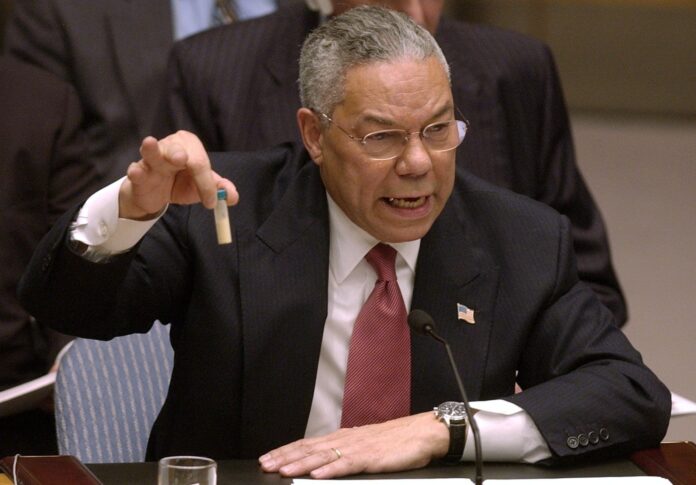
“War Criminal” trends after death of Colin Powell

The death of Powell has drawn an outpouring of sympathy and praise from politicians, but social media users made “war criminal” trend instead, having not forgiven the ex-secretary of state for his role in the 2003 invasion of Iraq.

Powell died on Monday of complications from Covid-19, according to his family. He was eulogized in major media outlets as the first black secretary of state and chairman of the Joint Chiefs of Staff. President Joe Biden stated Powell embodied “the highest ideals of both warrior and diplomat,” while 43rd president George W. Bush called him a “great public servant.”

Another image, however, dominated the social media reactions to his death: that of Powell holding up a vial of fake anthrax in the UN General Assembly in 2003, claiming that Iraq had weapons of mass destruction (WMD) and making the case for the US invasion that followed.

Others noted that Powell’s connection to US atrocities goes back to the Vietnam War.

“Colin Powell was a liar and a war criminal,” noted anti-war activists Code Pink.

Others, like the Intercept’s Ken Klippenstein, opted for sarcasm, calling Powell “a man of unparalleled integrity and courage” – as caption to the infamous UN photo.

When Congressman Jamaal Bowman (D-New York) praised Powell as an inspiration to himself as “a Black man just trying to figure out the world,” one socialist publication accused him of praising a war criminal.

Grayzone’s Max Blumenthal mocked MSNBC’s Joy Reid for saying Powell “had some tough moments around our wars, but was a fundamentally good and decent man and a great American we could all be proud of.”

The opprobrium over Powell seemed particularly in evidence on the political left.

Andray Domise, who describes himself as a “Marxist-Dessalinist,” said that not criticizing a black war criminal amounted to “benevolent racism,” and that atrocities don’t disappear “when it’s a Black person giving the green light.”

Noname Book Club, a “community dedicated to uplifting POC voices” with nearly 600,000 followers, criticized the treatment of Powell as “first black,” arguing that this was a feature of “white domination” that “reduces our desire for collective liberation and makes us hyper focus on white approval” and well as idolizes “the first black billionaire or war criminal.”
Born in New York of Jamaican parents, Powell was in Vietnam on two occasions – first as a captain, advising the South Vietnamese Army, and later as a major investigating the unit behind the My Lai massacre. He rose to the top of the US military hierarchy by the late 1980s, serving as chairman of the Joint Chiefs of Staff under President George H.W. Bush during the 1991 war against Iraq over Kuwait. He would return to the Middle East as the younger Bush’s secretary of state a decade later.

Powell retired from the State Department in January 2005, and was replaced by Condoleezza Rice.

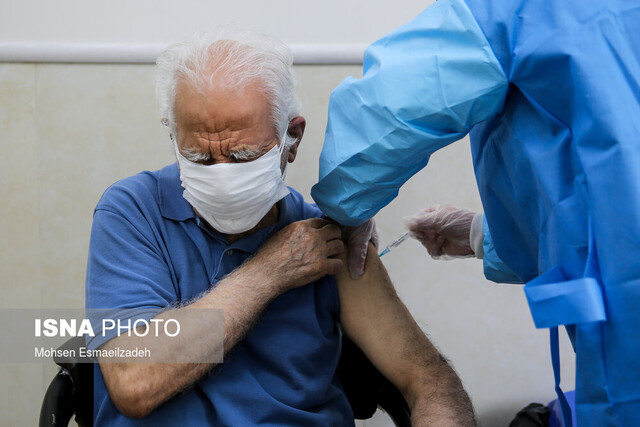
More than 75mn Iranians vaccinated against Covid-19

COVID-19 Vaccine in Iran

According to the Health Ministry, more than 49 million people have received one shot and over 26 million others have been fully inoculated.

Meanwhile, 167 more people have died of Covid-19 in the past 24 hours, that’s according to the Tuesday report of the Health Ministry.

The fatalities push to 124,423 the death toll since the pandemic started.
The downward trend in Covid deaths, infections and hospitalizations has held in the past weeks.

Currently, 9 cities are marked red, the highest level of risk from Covid, while other cities and towns are either orange, yellow or blue, the latter being the lowest level of danger.
Authorities attribute this to the rising rate of vaccination across Iran. They have lifted some Covid-related bans like restrictions on working and businesses. But officials have warned people against relaxing health protocols, saying a sixth peak of the disease could be around the corner.

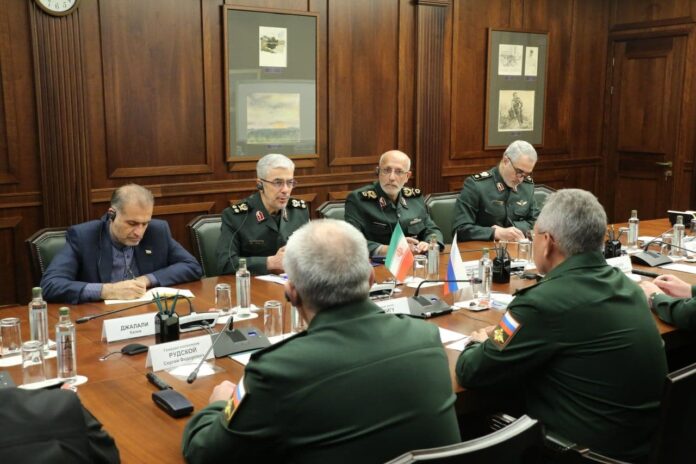
Iran, Russia stress need to bolster defense ties

The Chief of Staff of Iranian Armed Forces Major General Mohammad Baqeri and Russian Defense Minister Sergei Shoigu, who sat down for talks in Moscow on Tuesday, assessed the level of bilateral military relations as favorable and emphasized the need to strengthen cooperation.
The Russian defense minister expressed satisfaction with bilateral defense and military ties stressing that Russia is ready to support dynamic military cooperation with Iran.

“Iran is an active player in the region, especially in the Syrian issue, and Moscow is interested in developing relations with Iran,” Shoigu stated.

Baqeri appreciated the Russian government’s support for Iran’s accession to the Shanghai Cooperation Organization adding that Iran’s presence in this organization will strengthen ties with member states, especially Russia and China.

Later, the chief of staff of Iranian armed forces told Russian media that he had very useful talks in Moscow on some issues, including the implementation of a contract for the purchase of fighter jets, combat helicopters and training jets as well as exchange of experiences and military training of forces.

Baqeri touched on his talks with his Russian counterpart General Valery Gerasimov on Monday saying the two sides discussed the continuation of cooperation in Syria to eradicate terrorism and restore full security to the country.

He added that Iran and Russia have close views on the developments in Afghanistan and in the South Caucasus