Tuesday, December 23, 2025
Home Blog Page 228

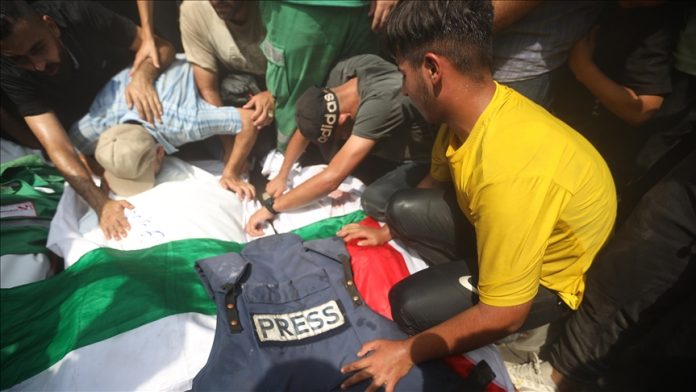
Israeli military claims it allowed limited aid airdrop into Gaza amid genocide

Gaza War

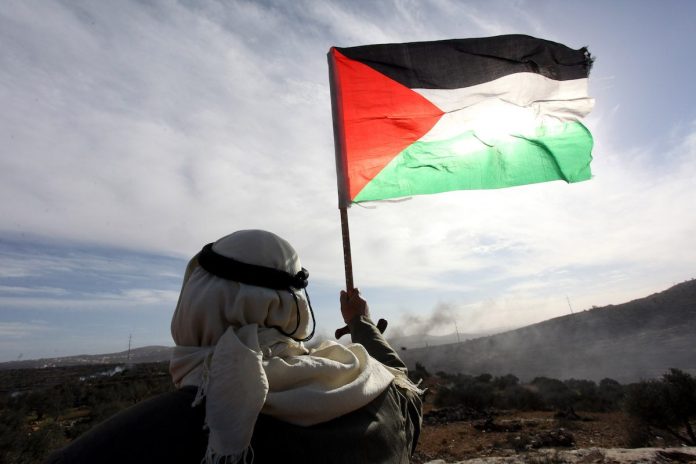
It comes amid growing regional and international pressure on Tel Aviv to allow aid into the enclave because of the worsening famine in Gaza and warnings of a mass death that is threatening more than 100,000 children.

The Israeli army said it would “resume the aerial airdrops of humanitarian aid, as part of ongoing efforts to allow and facilitate the entry of aid to Gaza,” in what appears to be an attempt to deflect from allegations that it is deliberately starving Palestinians in the enclave.

The army added that the airdrop “will include seven pallets of aid containing flour, sugar, and canned food to be provided by international organizations.”

Meanwhile, the UN refugee agency for Palestine, or UNRWA, announced that Gaza requires between 500 and 600 aid trucks daily, managed by the UN, to meet the minimum humanitarian needs.

Earlier Saturday, UNRWA Commissioner-General Philippe Lazzarini described the idea of airdropping aid into Gaza as a “distraction” and a “smokescreen” to divert attention from the true scale of the humanitarian catastrophe.

The Israeli army claimed it launched a series of measures “to improve the humanitarian response” in Gaza.

It also announced its intention to “open humanitarian corridors” to facilitate UN and relief organizations’ convoys, claiming a readiness for “humanitarian pauses” in densely populated areas.

The army also affirmed that military operations in Gaza “have not ceased,” vowing to continue “fighting to return all hostages and defeat Hamas.”

Since May 27, Israel has launched a separate aid distribution initiative through the Gaza Humanitarian Foundation (GHF), bypassing the UN and international humanitarian agencies. The move has been widely rejected by the global relief community. The GHF is supported by the US.

Meanwhile, Israeli soldiers continue to open fire on Palestinians gathered near distribution centers, killing hundreds of aid seekers.

Gaza’s hunger crisis has spiraled into a humanitarian catastrophe. Harrowing footage shows severely emaciated residents, some reduced to skin and bone, collapsing from exhaustion, dehydration and prolonged starvation.

Gaza’s Health Ministry reported Saturday that five more Palestinians, including two children, have died from hunger and malnutrition in the last 24 hours, pushing the death toll since October 2023 to 127, including 85 children.

On Tuesday, the World Food Program warned that one in every three people in Gaza had gone without food for several days due to the Israeli blockade.

Rejecting international calls for a ceasefire, the Israeli army has pursued a brutal offensive on Gaza since Oct. 7, 2023, killing more than 59,700 Palestinians, most of them women and children. The relentless bombardment has destroyed the enclave and led to food shortages.

Last November, the International Criminal Court issued arrest warrants for Israeli Prime Minister Benjamin Netanyahu and his former Defense Minister Yoav Gallant for war crimes and crimes against humanity in Gaza.

Israel also faces a genocide case at the International Court of Justice for its war on the enclave.

Two MKO terrorists hanged in Iran

Iran Prison

The two elements of the notorious group were sentenced to death by the Iranian Judiciary for attacking residential, training and service centers with handmade mortars.

Mahdi Hassani and Behrouz Ehsani, operating under the alias Fardin and Behzad, were two operational elements of the MKO terrorist group.

The two men used improvised launchers and handmade mortars to kill civilians in residential areas, administrative and service sites, training centers and charity organizations with the purpose of upsetting social security.

The two convicts were in contact with the MKO intermediaries and had leased a house in Tehran to carry out their sinister plots.

MKO members spent many years in Iraq, where they were hosted and armed by the former Iraqi dictator Saddam Hussein. They sided with Saddam during the 1980-88 imposed war against Iran and then helped him quell domestic uprisings in various parts of the Arab country.

The hated group is responsible for killing thousands of Iranian civilians and officials after the victory of the Islamic Revolution in 1979.

More than 17,000 Iranians, many of them civilians, have been killed at the hands of the MKO in different acts of terrorism including bombings in public places, and targeted killings.

Iran’s president reflects on Israeli bombing of National Security Council

Masoud Pezeshkian

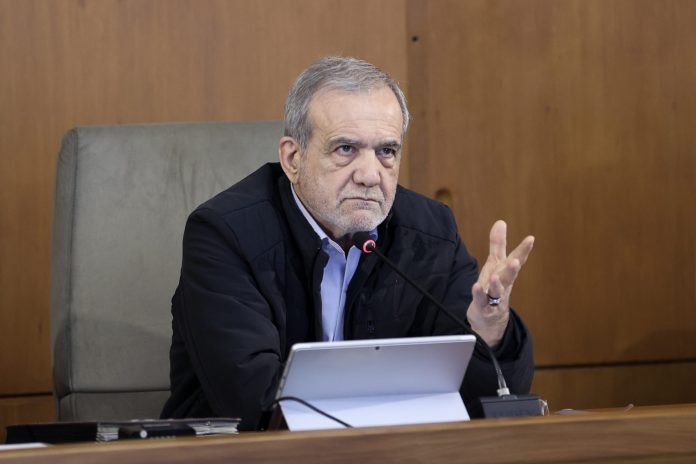
“If we had been martyred in that bombing, it would have been a great honor for us,” Pezeshkian said during a visit to Iran’s Qom province, adding, “But the country would have been thrown into disarray by the wrong people.”

He emphasized that the session had gathered all top officials, including heads of government branches, senior military commanders, and several cabinet ministers.

The president recalled the moment of the attack, saying, “There was just one hole, and we saw air coming through it. We said, at least we won’t suffocate now.”

Pezeshkian stressed that while life can be fleeting, service to the people remains paramount.

Several top Iranian military commanders and scientists along with over a thousand civilians were killed in the Israeli invasion, widely supported by the US, which started on June 13 and culminated in a ceasefire on June 24.

Iranian Parliament speaker: Any IAEA moves must follow domestic law

IAEA

Speaking during Sunday’s open session of parliament, he referred to the law mandating conditional cooperation with the agency, underscoring that the legislation is “clear and unambiguous.”

Ghalibaf stated, “Any movement toward suspending cooperation with the IAEA must be pursued within the legal framework.”

His comments followed a parliamentary discussion on national energy management and the proposed formation of an energy optimization body.

Earlier in the session, Tehran MP Hamid Rasaei criticized news of an upcoming visit by the IAEA Deputy Director General, Rafael Grossi, to Tehran.

He argued that such actions contradict legislation that makes cooperation conditional on safeguarding national sovereignty and nuclear security.

Rasaei questioned the utility of passing laws if the executive branch fails to implement them.

Tensions between Iran and the IAEA have escalated under Grossi, particularly after his recent report included disputed allegations that paved the way for an anti-Iran resolution.

Iran has also criticized Grossi for failing to condemn US-Israeli aggression against its nuclear facilities while maintaining close ties with Israeli officials.

FM Araghchi rejects criticism, says Iran won the 12-day war with Israel

Abbas Araghchi

Responding to a question about direct communication with Iran’s Leader during the war, Araghchi dismissed doubts, stating, “Who says there is no direct contact?” He emphasized that full coordination was in place at the highest levels.

Araghchi also revealed he was in direct communication with US negotiator Steve Witkoff, saying, “I told him Israel is making excuses. Iran is not Lebanon.”

His remarks were featured in a preview of the upcoming documentary The Story of the War.

When asked about reports of an explosion near his residence, Araghchi nodded in confirmation. He asserted that Iran had been fully prepared for the conflict and not caught off guard.

Addressing criticism of the ceasefire, Araghchi said, “People should ask themselves, why the armed forces obeyed when the foreign minister announced a ceasefire?”

He argued that Iran emerged victorious, stating, “You say it was a draw. I say we won. We delivered the final blow.”

Israel’s Gaza aid drops are ‘a smokescreen’: UN

Gaza War

The official dismissed the tactic as ineffective and urged Israel to lift its blockade of the densely populated enclave.

His remarks came after the UN’s food aid program reported that 90,000 Palestinian women and children are suffering from malnutrition.

“Gaza airdrops will not reverse the deepening starvation. They are expensive, inefficient, and can even kill starving civilians. It is a distraction and screensmoke,” Lazzarini wrote on X on Saturday.

He called on Israel to “lift the siege” and guarantee safe access for humanitarian workers.

“At UNRWA, we have the equivalent of 6,000 trucks in Jordan and Egypt waiting for the green light to get into Gaza,” he wrote.

“Driving aid through is much easier, more effective, faster, cheaper, and safer. It’s more dignified for the people of Gaza,” he added.

The Israel Defense Forces (IDF) said on Saturday that it had dropped seven pallets containing flour, sugar, canned food, and other supplies. The army pledged to provide safe passage for UN aid convoys and said “local humanitarian pauses” could be implemented.

A video posted on social media reportedly shows desperate Palestinians fighting over food.

The UN, relief groups, and several European governments have stepped up criticism of Israel in recent weeks, as the death toll in Gaza approaches 60,000.

US President Donald Trump told reporters earlier this week that Israel would have to “get rid” of Hamas in Gaza, after ceasefire talks once again stalled.

Syria, Israel hold talks over conflict in Suwayda

The meeting on Saturday was held to address recent security developments around the southern Druze-majority city of Suwayda, which has been the scene of fierce fighting in recent weeks between Bedouins and Druze fighters.

Israel intervened in the conflict, striking government buildings in Damascus and government soldiers in Suwayda province, saying it was doing so to protect the Druze.

The Syrian official told Al Jazeera Arabic that Damascus’s delegation at the Paris meeting emphasised that the unity and sovereignty of Syria are nonnegotiable and Suwayda and its people are an integral part of Syria. It also rejected any attempt to exploit segments of Syrian society for partition, the official added.

The source stated that the Syrian delegation held Israel responsible for the recent escalation and demanded the immediate withdrawal of Israeli forces from the points they had recently advanced to during the unrest.

Syria’s state-run Ekhbariya TV, quoting its own diplomatic source, reported that the meeting did not result in any final agreements but the parties had agreed to continue talks aimed at maintaining stability.

The TV source described the dialogue as “honest and responsible” in the first confirmation from the Syrian side that talks had taken place.

On Friday, US envoy Tom Barrack said officials from both sides spoke about de-escalating the situation in Syria during talks on Thursday.

Hundreds of people have been reported killed in the fighting in Suwayda, which also drew in government forces. Israel, which carried out air strikes, during this month’s violence, has regularly struck Syria and launched incursions into its territory since longtime former President Bashar al-Assad was toppled in December.

Last week’s fighting stressed the challenges interim President Ahmed al-Sharaa faces in stabilising Syria and maintaining centralised rule.

Syria’s government announced a week ago that Bedouin fighters had been cleared out of Suwayda and government forces were deployed to oversee their exit from the entire province.

The announcement came after al-Sharaa ordered a new ceasefire between Bedouin and Druze groups after a separate US-brokered deal to avert further Israeli military attacks on Syria.

The diplomatic source, who spoke to Ekhbariya TV, said the meeting on Saturday involved initial consultations aimed at “reducing tensions and opening channels of communication amid an ongoing escalation since early December”.

Israel to start humanitarian pause in Gaza early Sunday: Report

Gaza War

“The Israeli government announced a humanitarian pause from 10 a.m. on Sunday until the evening in several humanitarian centers across the Gaza Strip,” according to Channel 12.

The broadcaster cited a senior unnamed official who said a meeting was held between Prime Minister Benjamin Netanyahu, Defense Minister Yisrael Katz, Foreign Minister Gideon Sa’ar and top security officials, during which it was decided to begin a “humanitarian pause” in Gaza.

The source did not specify the hours during which the pause would end, nor the exact areas it would cover.

The Israeli army also announced its intention to “open humanitarian corridors” to facilitate UN and relief organizations’ convoys, claiming a readiness for “humanitarian pauses” in densely populated areas.

Since May 27, Israel has launched a separate aid distribution initiative through the Gaza Humanitarian Foundation (GHF), bypassing the UN and international humanitarian agencies. The move has been widely rejected by the global relief community. The GHF is supported by the US.

Meanwhile, Israeli forces continue to open fire on Palestinians gathered near distribution centers, killing hundreds.

Gaza’s hunger crisis has spiraled into a humanitarian catastrophe. Harrowing footage shows severely emaciated residents, some reduced to skin and bone, collapsing from exhaustion, dehydration and prolonged starvation.

Gaza’s Health Ministry announced Saturday that five more Palestinians, including two children, have died from hunger and malnutrition in the last 24 hours, pushing the death toll since October 2023 to 127, including 85 children.

On Tuesday, the World Food Program warned that one in every three people in Gaza had gone without food for several days due to the ongoing Israeli blockade.

Rejecting international calls for a ceasefire, the Israeli army has pursued a brutal offensive on Gaza since Oct. 7, 2023, killing more than 59,700 Palestinians, most of them women and children. The relentless bombardment has destroyed the enclave and led to food shortages.

Last November, the International Criminal Court issued arrest warrants for Israeli Prime Minister Benjamin Netanyahu and his former Defense Minister Yoav Gallant for war crimes and crimes against humanity in Gaza.

Israel also faces a genocide case at the International Court of Justice for its war on the enclave.

Iranian Deputy FM: Messages being exchanged with US via mediators

Iran US Flags

Takhte Ravanchi stressed that despite ongoing negotiations, Iran was targeted by attacks, first by the Zionist regime and then by the US.

“These strikes took place in the middle of diplomatic efforts and it was a betrayal of diplomacy, an assault on diplomacy”, he said.

Takhte Ravanchi stressed that before entering a new round of negotiations with the US, Iran must receive guarantees that similar attacks will not happen.

“We don’t want a repeat of the same game…the US must convince us that it won’t take such actions again”, he added.

The Iranian deputy foreign minister underlined that any agreement must be based on the principle of a win-win outcome.

“Both sides must feel they have achieved something. We cannot accept US impositions.”

Takhte Ravanchi further touched on the damage to Iranian nuclear facilities as a result of US and Israeli attacks. He said the extent of the damage is serious, though exact figures are still under evaluation by the Atomic Energy Organization of Iran (AEOI).

He confirmed that IAEA inspectors were aware of the location of Iran’s nuclear materials prior to the attack.

Takhte Ravanchi reaffirmed Iran’s commitment to the fatwa of Leader of Iran’s Islamic Revolution Ayatollah Seyyed Ali Khamenei banning nuclear weapons.

He said, “Nuclear weapons have no place in our defense doctrine and our uranium enrichment is for peaceful purposes and in line with the NPT”.

The deputy foreign minister of Iran also condemned the relentless aggression by the Zionist regime in the region, urging regional unity and international pressure on the US to halt its military and diplomatic support for Tel Aviv.

“Otherwise, the Zionist regime may consider attacking other countries, which would pose a grave danger to the wider region”, he warned.

Sunni Friday prayer leader in SE Iran condemns terrorist attack on Zahedan courthouse

Mowlavi Abdolhamid

In a statement, Molavi Abdolhamid expressed deep sorrow over the deadly assault and underlined that any form of insecurity harms the interests of the people of the province. “Unfortunately, armed assailants attacked the provincial courthouse in Zahedan this morning, resulting in several people being killed and injured”, the statement said.

“I strongly condemn this inhumane attack, which targeted a public, non-military institution and led to the deaths of unarmed civilians, including a woman and a child.”

Molavi Abdolhamid added that such actions are religiously unjustifiable.

“Armed attacks do not serve the interests of the people of Sistan and Baluchestan”, he noted, saying, “Any form of insecurity undermines the well-being and prosperity of the province”.

Gunmen opened fire on the Zahedan courthouse earlier on Saturday, leading to multiple casualties.

The Quds Base of Iran’s Islamic Revolution Guard Corps (IRGC) confirmed that the terror attack claimed the lives of six people and injured at least 22 others.