Tuesday, December 23, 2025
Home Blog Page 227

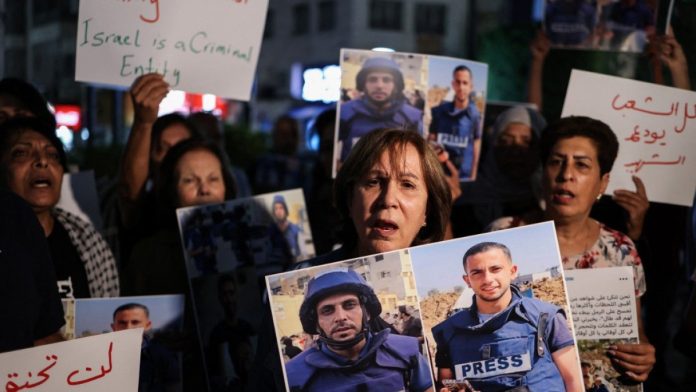
More Gazans, including children, die from starvation amid Israeli blockade

Gaza War

“Hospitals recorded six new deaths in the past 24 hours due to famine and malnutrition, including two children who exhausted by hunger,” the ministry said in a statement.

The new fatalities brought the death toll from starvation in Gaza since October 2023 to 133, including 87 children.

“These numbers reflect the catastrophic impact of the ongoing Israeli blockade and the prevention of food and aid deliveries into Gaza,” the ministry said.

Israel has imposed a blockade on Gaza for 18 years, and since March 2 has shut down all crossings, blocking the entry of aid convoys and ignoring international calls to reopen them.

Rejecting international calls for a ceasefire, the Israeli army has pursued a brutal offensive on Gaza since Oct. 7, 2023, killing more than 59,700 Palestinians, most of them women and children. The relentless bombardment has destroyed the enclave and led to food shortages.

Last November, the International Criminal Court issued arrest warrants for Israeli Prime Minister Benjamin Netanyahu and his former Defense Minister Yoav Gallant for war crimes and crimes against humanity in Gaza.

Israel also faces a genocide case at the International Court of Justice for its war on the enclave.

At least 18,500 Israeli soldiers injured since outbreak of Gaza war: Report

Israel Army

The Yedioth Ahronoth newspaper said that the Defense Ministry’s Rehabilitation Division received 18,500 soldiers and other security forces wounded with varying severity.

However, official Israeli military figures widely differed, saying that only 6,145 soldiers have been injured and 895 others killed.

According to the daily, more than 10,000 Israeli soldiers have suffered from mental health ailments, including 3,679 diagnosed with post-traumatic stress disorder.

The paper added that 9,000 soldiers submitted requests to have psychological injuries recognized, including anxiety, adjustment disorders, post-traumatic stress disorder, and depression in 2024 alone.

Rejecting international calls for a ceasefire, the Israeli army has pursued a brutal offensive on Gaza since Oct. 7, 2023, killing more than 59,800 Palestinians, most of them women and children. The relentless bombardment has destroyed the enclave and led to food shortages.

Last November, the International Criminal Court issued arrest warrants for Israeli Prime Minister Benjamin Netanyahu and his former Defense Minister Yoav Gallant for war crimes and crimes against humanity in Gaza.

Israel also faces a genocide case at the International Court of Justice for its war on the enclave.

Rubio says Trump ‘losing patience with Russia’, despite giving Putin 50-day peace accord deadline

Russia Ukraine War

Rubio’s remarks come nearly two weeks after Trump gave Russia a 50-day deadline to agree to a peace deal or face “severe” tariffs. Since the announcement, Russia has only intensified its attacks on Ukrainian cities and continued to advance along the front line.

Rubio said Trump is eager to secure a peace deal and end the war he “inherited” from the Biden administration, and described the president’s growing frustration with Russian President Vladimir Putin.

“Despite having very good interactions with Vladimir Putin and phone calls, it never leads to anything,” Rubio continued, adding, “So, the time has come for some action.”

Critics say Trump’s latest 50-day timeline effectively gives the Kremlin seven more weeks to continue launching deadly airstrikes across Ukraine. The proposed tariffs, at around 100%, are also below the 500% rates proposed in a bipartisan Senate bill targeting countries that buy Russian oil.

Rubio also acknowledged in the Fox News interview China’s growing role in prolonging the war, accusing Beijing of propping up Moscow’s economy and military efforts.

“China is giving Russia as much aid as they can get away with without being discovered,” Rubio said, adding, “There’s no way Putin could have sustained this war without Chinese support, particularly buying his oil.”

Rubio also highlighted the geopolitical triangle between Russia, China, and Iran, suggesting Beijing benefits from a prolonged war that keeps the U.S. distracted.

Following talks with Foreign Minister Sergey Lavrov in Beijing earlier in July, Chinese President Xi Jinping vowed to deepen strategic cooperation and hailed the partnership as “a model for a new type of international relations.”

Despite China’s repeated claims of neutrality in the Russia-Ukraine war, its support for Russia’s economy and defense industry has established Beijing as one of Moscow’s most crucial partners.

Ukrainian officials reported the presence of Chinese components in Russian attack drones, and intelligence suggests Beijing may be helping Moscow bypass sanctions to ramp up drone production.

Iranian MP criticizes draft bill targeting ‘false news’ on social media

Iran's parliament

During a parliamentary session on Sunday, Azari voiced his opposition to the bill’s urgency status, warning that its approval would harm press freedom and the journalism profession.

Azari stated that the proposed legislation includes punishments for media outlets which, in his view, could create a “safe haven” for corrupt individuals in both governmental and non-governmental sectors.

“The bill is too underdeveloped to manage the complexities of cyberspace,” he said.

He further criticized the bill’s use of vague and interpretive language, citing terms like “false content,” “public confusion,” “stakeholder,” and “irreparable damage,” which, he argued, are open to arbitrary interpretation.

Azari warned that if passed, the bill could result in an overload of criminal cases and place additional strain on the judiciary.

He called for a more thoughtful and precise approach to regulating online content, emphasizing the need to uphold freedom of expression and prevent legislative overreach.

Israel announces ‘tactical suspension’ of military operations in three parts of Gaza

Gaza War

The suspension began at 10 am local time (0700GMT) in three key areas of Al-Mawasi, Deir al-Balah, and Gaza City, covering parts of the central, southern, and northern Gaza Strip, the Israeli army spokesman said, according to the daily newspaper Yedioth Ahronoth.

Al-Mawasi is a stretch of sandy coastal territory running from southwest Deir al-Balah through western Khan Younis to western Rafah in southern Gaza. It has become a zone where many displaced Palestinians have sought refuge.

The announcement came hours after Israel’s Channel 12 reported that top Israeli leaders, including Prime Minister Benjamin Netanyahu, Defense Minister Israel Katz, and Foreign Minister Gideon Sa’ar, had agreed to a limited humanitarian pause. No exact timeframe was provided for the end of the suspension.

Since May 27, Israel has launched a separate aid distribution initiative through the Gaza Humanitarian Foundation (GHF), bypassing the UN and international humanitarian agencies. The move has been widely rejected by the global relief community. The GHF is supported by the US.

Meanwhile, Israeli soldiers continue to open fire on Palestinians who gather near distribution centers, killing hundreds.

Gaza’s hunger crisis has spiraled into a humanitarian catastrophe. Harrowing footage shows severely emaciated residents, some reduced to skin and bone, collapsing from exhaustion, dehydration, and prolonged starvation.

Rejecting international calls for a ceasefire, the Israeli army has pursued a brutal offensive on Gaza since Oct. 7, 2023, killing more than 59,700 Palestinians, most of them women and children. The relentless bombardment has destroyed the enclave and led to food shortages.

Last November, the International Criminal Court issued arrest warrants for Israeli Prime Minister Benjamin Netanyahu and his former Defense Minister Yoav Gallant for war crimes and crimes against humanity in Gaza.

Israel also faces a genocide case at the International Court of Justice for its war on the enclave.

Zangezur Corridor US project targeting Iran, Russia: Iranian leader’s aide

Ali Akbar Velayati

In remarks at a ceremony in Tehran to commemorate Sheikh Safi al-Din Ardabili, Velayati addressed geopolitical concerns surrounding the Republic of Azerbaijan and the proposed Zangezur Corridor.

He stated that enemies of Iran—particularly global Zionism and the United States—have long been disturbed by Iran’s historic unity and deep cultural ties in the region.

“These actors seek to weaken the foundations of Iranian identity as a means to harm the country’s national security,” he stated.

Velayati said plans like the Zangezur Corridor serve as a cover for larger geopolitical projects.

He warned that the primary aim is to weaken the resistance axis, sever Iran’s connection to the Caucasus, and impose a land blockade on both Iran and Russia in the region’s south.

Velayati stressed that Iran’s national security remains a red line.

The full text of Velayati’s statement is as follows:

In the Name of God, the Compassionate, the Merciful,

Greetings and salutations to the brave and cultured people of Azerbaijan, especially the proud province of Ardabil. I offer special thanks to Ayatollah Seyed Hassan Ameli, the Leader’s representative and the esteemed Friday Prayer Leader of Ardabil, whose dedication and efforts enabled the holding of this grand ceremony honoring the lofty status of Sheikh Safi al-Din Ardabili.

I also express gratitude to all those who have played a significant role in honoring this prominent scholarly, and national figure.

Dear guests, respected scholars and intellectuals,
Throughout history—and especially in the contemporary era against the recent aggressions of the Zionist regime and the United States—the great nation of Iran has displayed an exceptional unity, vigilance, and solidarity. This unity, rooted in Iran’s rich Iranian-Islamic culture, has always been a source of inspiration for freedom-seeking nations worldwide.

Iranian culture holds two distinctive features: first, internal cohesion among diverse ethnic groups; and second, a historical continuity that, like the weave of a Persian carpet, has fortified our ancient civilization.

Iranian identity has always been based on monotheism. From ancient times until today, Iranians have followed monotheistic faiths. As historians like Shahrestani and Masoudi have written, even ancient Iranian kings considered themselves descendants of Prophet Abraham (AS).

With the advent of Islam, the Iranian people—who had previously followed Zoroastrianism, a monotheistic religion—embraced this divine faith wholeheartedly. Interestingly, according to most historians, Zoroaster himself originated from the Azerbaijan region.

Iranians have historically led the fight against oppression—from Abu Muslim Khorasani’s uprising against the Umayyads, to Khajeh Nasir al-Din Tusi’s efforts during the Mongol era, and the Shiite movements before the Safavid period.

However, the turning point of this historical path was the establishment of the Safavid state, which, under Shah Ismail Safavi and inspired by the teachings of Sheikh Safi al-Din Ardabili, united Iran after centuries of division.

Sheikh Safi al-Din Ardabili, a mystic and devout jurist descending from Imam Musa al-Kazim (AS), not only founded a genuine spiritual and intellectual movement, but also united Iran by linking mysticism, Shiism, and Iranian identity.

He laid the foundations of institutions and structures whose signs are still alive in our culture today.

Today, just as in the past, Azerbaijan remains a source of faith, a stronghold of Shiism, and a pioneer in Iranian-Islamic identity.

This region has always been at the forefront of defending territorial integrity, independence, and the values of the Islamic Revolution—and this historic role must be preserved.

Iran’s enemies, especially global Zionism and the US, have been disturbed by this historical unity and strategic cultural depth.

They have consistently attempted to undermine the foundations of this identity to harm our national security.

In this context, plans such as the “Zangezur Corridor” are pursued as covers for broader geopolitical projects.

The main goal is to weaken the Resistance Axis, sever Iran’s link with the Caucasus, and impose a land blockade on Iran and Russia in the region’s south.

This project is not only part of America’s strategy to shift pressure from Ukraine to the Caucasus, but is also supported by NATO and certain pan-Turkist movements.

Yet, Iran has clearly and decisively opposed these actions from the outset, even deploying forces to the borders and conducting deterrent exercises to show that national security is our red line.

The policy of “active prevention” rather than “passive reaction” is the intelligent strategy adopted by the Islamic Republic.

The heroic people of Azerbaijan—those who stood against Ottoman and Tsarist Russian invaders, under commanders like Abbas Mirza and the support of grand Shiite scholars such as the late Seyed Mohammad Mojtahed, and who, during the episode of Democratic Party of Azerbaijan cult, under the leadership of scholars and senior clerics, foiled the colonial conspiracy and did not allow Iran’s territory to be divided—remain firm.

Today, too, the enemy seeks to penetrate Iran’s geopolitical depth under the cover of seemingly economic, but in truth, separatist, projects.

However, the Iranian nation, inspired by the teachings of its great figures—especially Sheikh Safi al-Din Ardabili—stands and will continue to stand against these conspiracies.

Just as that divine mystic confronted division in his time, today the Iranian nation will foil the enemy’s sinister plans through unity, vigilance, and faith.

May the memory of Sheikh Safi al-Din endure.

May his path be widely followed.

Iran’s health minister urges immediate global intervention to stop Gaza humanitarian catastrophe

Gaza War

In the letter, Zafarghandi expressed deep sorrow over the escalating humanitarian disaster, stressing that the scale and targeting of destruction against civilians, especially women and children, have surpassed all thresholds of crisis.

He warned that Gaza’s public health system has collapsed and accused Israeli regime forces of committing collective punishment, ethnic cleansing, and genocide.

He highlighted severe malnutrition, dehydration, and famine among children, noting that over 32% of children under two now suffer from acute malnutrition. “This represents the fastest-developing famine in recorded history,” he wrote.

Zafarghandi described horrifying scenes where mothers endure stillbirths and miscarriages in bombed hospitals lacking anesthesia, electricity, or water.

Many women, suffering from anemia and malnutrition, are unable to breastfeed, forced to witness their infants’ slow deaths.

The minister condemned Israel’s aggression and called for the deployment of field hospitals, nutritional crisis teams, UN humanitarian flights, and binding Islamic cooperation resolutions.

“Every hour of delay costs innocent lives,” he wrote, urging immediate global moral and medical response.

OPEC says Iran’s oil export revenues up 14% to nearly $47bn in 2024

Iran Oil

The data by the Organization of the Petroleum Exporting Countries cited in a Saturday report by the Iranian Oil Ministry showed that Iran had exported more than $46.776 billion worth of crude oil in 2024, up by 13.62% from the year before.

The data showed that Iran had experienced the largest increase in oil export revenues last year compared to 11 other members of OPEC.

The rise came despite a fall in overall OPEC oil export revenue in 2024 as the bloc saw its earnings drop from $678 billion in 2023 to $652 billion last year, according to the same figures.

Saudi Arabia, the leading OPEC producer and the world’s largest oil exporter, reported a $24 billion fall in its oil exports as shipments reached $223 billion, the figures showed.

The data showed that Iran’s oil export revenues had nearly doubled in the three years to 2024

Iran has steadily increased its oil exports in recent years despite being subject to an unprecedented regime of US sanctions, which impose heavy penalties on buyers of Iranian oil.

Oil exports from the country have increased from historic lows of below 0.3 million barrels per day (bpd) reported in 2019 to records of more than 1.8 million bpd in recent months.

That comes as the US government has announced multiple rounds of sanctions on Iran’s oil exports and its foreign partners in recent months, with the stated aim of cutting the shipments to below 0.1 million bpd.

Hamas didn’t steal UN aid in Gaza: Israeli officers

Gaza Humanitarian Aid

The unnamed officers, along with two other Israeli officials involved in aid monitoring, admitted the UN’s aid distribution system, long disparaged by Israel, was in fact “largely effective in providing food to Gaza’s desperate and hungry population.”

“For nearly two years, Israel has accused Hamas of stealing aid,” NYT daily reported, noting these unproven claims were used to justify policies that pushed Gaza’s population towards starvation by blocking humanitarian supplies.

“There was no evidence that Hamas regularly stole from the United Nations, which provided the largest chunk of the aid,” one official told the newspaper.

Georgios Petropoulos, the UN humanitarian coordinator who liaised with Israeli authorities during the war, condemned the smear campaign.

“For months, we and other organisations were dragged through the mud by accusations that Hamas steals from us,” he stated.

The Times’ reporting marks a significant reversal from its earlier coverage, which largely echoed Israeli talking points that painted Hamas as hijacking aid. The paper has long faced accusations of systemic pro-Israel bias, with nearly two dozen top editors and reporters linked to pro-Israel advocacy groups.

This latest revelation reinforces what critics and humanitarian groups have insisted for months: there was no organised Hamas theft of international aid.

Earlier this week, Reuters revealed an internal US government review, carried out by a bureau of the US Agency for International Development (USAID), found no proof that Hamas systematically diverted US-funded humanitarian aid in Gaza.

The investigation covered 156 reports of theft or loss of US aid from October 2023 to May 2025 and concluded there were “no reports alleging Hamas” gained from the aid.

Instead, 44 of those cases were directly or indirectly blamed on Israeli forces, including 11 linked to air strikes and others tied to military-imposed delivery routes known to be vulnerable to looting.

The USAID findings further discredit the Israeli claims that helped justify the controversial Gaza Humanitarian Foundation (GHF), a mechanism backed by both Israel and the US but rejected by the UN and international aid groups for violating neutrality principles.

The UN reports that more than 1,000 Palestinians have been killed by Israeli forces while trying to collect aid, most of them near GHF distribution zones, which are heavily militarised.

Since 2 March, Israel’s siege has prevented UN and partner agencies from delivering humanitarian supplies to Gaza, pushing the population to the edge of famine. The Palestinian health ministry says at least 115 people, including 80 children, have died of starvation since then, 15 of them on Monday alone.

Israel’s assault on Gaza has killed more than 59,000 Palestinians and wounded over 142,000 others since October 2023.

Iranian parliament approves urgent review of bill targeting false news on social media

Iran's parliament

The proposal, submitted by the administration of President Massoud Pezeshkian, was passed with 205 votes in favor, 49 against, and 3 abstentions out of 260 lawmakers present.

Titled “Combating the Publication of False News Content in Cyberspace,” the 22-article bill introduces penalties for users who publish or distribute misleading or manipulated news online. These include imprisonment, financial fines, and access restrictions.

The bill assigns the Ministry of Culture and Islamic Guidance to establish a nationwide reporting system for digital activity and coordinate with the judiciary by forwarding reports of violations. The government argues the move will protect public trust and national unity.

Defending the urgency of the legislation, government representative Kazem Delkhosh stated that while cyberspace has clear benefits, unregulated content can harm societal cohesion and state authority.

However, some lawmakers voiced concern. MP Farid Mousavi criticized the bill’s prioritization, arguing that in the aftermath of the recent war with Israel, national unity and transparency are more urgent than policing online content.