Friday, December 26, 2025
Home Blog Page 2253

Hamas to take legal action against UK for declaring it “terror group”

Speaking at an online conference held by the Center for Palestinian Refugee Studies, Hamas Political Bureau chief Mousa Abu Marzouk said the group is actively working with various institutions and organizations against the move.

Hamas is working on a strategy with British lawyers for the cancellation of the decision, Marzouk added.

He noted that causing division in Palestine would not serve the interests of Hamas, adding the movement intends to protect its homeland and the resistance.

Marzouk also urged the Palestinian administration and the Fatah movement to reconciliate on the basis of the interests of the Palestinian public, partnership and resistance.

The UK’s Interior Ministry declared in a statement that Hamas was included on a list of banned terrorist organizations after legislation was approved by parliament on Nov. 19.

The statement announced members of Hamas or those who support it could be sentenced up to 14 years in prison.

The UK outlawed Hamas’ military wing, known as the Izz ad-Din al-Qassam Brigades, in 2001.

Iran schools hold key annual earthquake safety drills

The 23rd General Earthquake and Safety Maneuvers were held at a girls’ school in the capital Tehran and virtually across the country.

Officials said the purpose of the drills is increasing students’ awareness on tremors and preparing them for proper and quick response during quakes.

The drills were also aimed at promotion of safety against temblors, strengthening of buildings and reduction of casualties during earthquakes.

During the drills, the students practiced safe sheltering, safe emergency exiting, evacuation of the possible injured and extinguishing fires. 

Earthquakes maneuvers are Iran’s largest public educational activity for the purpose of schools’ safety against tremors.

It was first held 25 years ago and is organized annually with the cooperation of the Ministry of Science, Research and Technology, the Ministry of Education and the Interior Ministry as well as Iran’s Red Crescent Society.

Iran FM: Baku stance on Tehran concerns promising

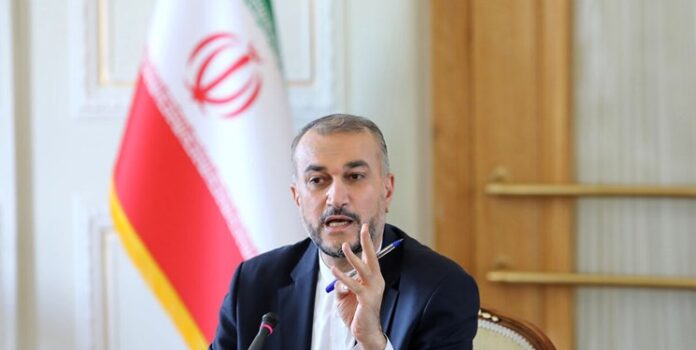
“On our concerns, the Azerbaijani president had promising comments [during his meeting with his Iranian counterpart] and reiterated that Baku will act accordingly,” Amir Abdollahian said in an Instagram post.

“The will of the president is all-out expansion of ties. Cooperation in the fields of transit, energy, tourism, culture, … is among the topics reiterated and agreed by both sides.”

The foreign minister also described relations between the two countries and nations as “beyond being neighbors” and into “kinship”. 

He also said Tehran and the Azerbaijan Republic had important political, diplomatic and security consultations a day before the presidents’ meeting, stressing that Iran will continue to expand ties with the neighboring countries.

‘UK, Israel to work together to stop Iran gaining nuclear weapons’

“The clock is ticking, which heightens the need for close cooperation with our partners and friends to thwart Tehran’s ambitions,” the UK’s Liz Truss and her Israeli counterpart Yair Lapid wrote in the Telegraph newspaper on Sunday.

Israeli Prime Minister Naftali Bennett stated earlier in the day that his country was “very worried” that world powers will remove sanctions on Iran in exchange for insufficient caps on its nuclear programme, as negotiators convene in Vienna on Monday in a last-ditch effort to salvage a nuclear deal.

Iranian officials have stressed the country “has not been and is not after nuclear weapons” and the nation will keep on paving the path of peaceful nuclear energy and technology. Tehran has also called on the world for the total elimination of nuclear weapons throughout the world.

Iranian Supreme Leader Ayatollah Sayed Ali Khamenei has on many occasions stated the Islamic Republic considers the pursuit and possession of nuclear weapons “a grave sin” from every logical, religious and theoretical standpoint. In April 2010, Ayatollah Khamenei issued a fatwa declaring that the production, stockpiling, and use of nuclear weapons are all haram (religiously banned).

Israel is the only holder of nuclear weapons in the West Asian region, and that regime has so far refused to sign the Nuclear Non-Proliferation Treaty (NPT).

Iran, however, is a signatory to the NPT, and Iran’s nuclear program is closely monitored by the International Atomic Energy Agency (IAEA) inspectors.

Several countries pledge additional support for Afghanistan

Leaders from Iran, Turkey, Turkmenistan and Pakistan — member nations of the Economic Cooperation Organization — announced during a Sunday summit in Turkmenistan that nations needed to provide support to Afghanistan to avoid further economic turmoil and a wave of refugees from fleeing the country.

Iran’s President Ebrahim Raisi — noting that Afghanistan would need fuel, food and other means for the upcoming winter — stated that his country would assist its people.

Pakistani President Arif Alvi urged countries to provide humanitarian assistance, help the country improve its education and health systems and strengthen its weakened economy. He added the measures were necessary to prevent a “catastrophe that could foment chaos and conflict” should the country’s economy spiral.

Turkish President Recep Tayyip Erdogan also warned of the possibility of a wave of Afghan refugees fleeing their country as a possible consequence of what could happen if countries do not step up and assist Afghanistan, according to the news outlet.

The Taliban has urged for its billions of dollars of frozen assets to be released to help improve critical financial and humanitarian issues facing the country. 

In his first public address to Afghanistan, Taliban Prime Minister Mullah Mohammad Hassan Akhund said on Saturday his government “wants good relations with all countries and economic relations with them”.

Akhund also claimed that the country’s woes had already begun before the Taliban assumed power, pointing the finger at former President Ashraf Ghani’s government.

“Nation, be vigilant. Those left over from the previous government in hiding are … causing anxiety, misleading the people to distrust their government,” Akhund stated in his address.

Bagheri: Iran focusing on sanctions removal during Vienna talks

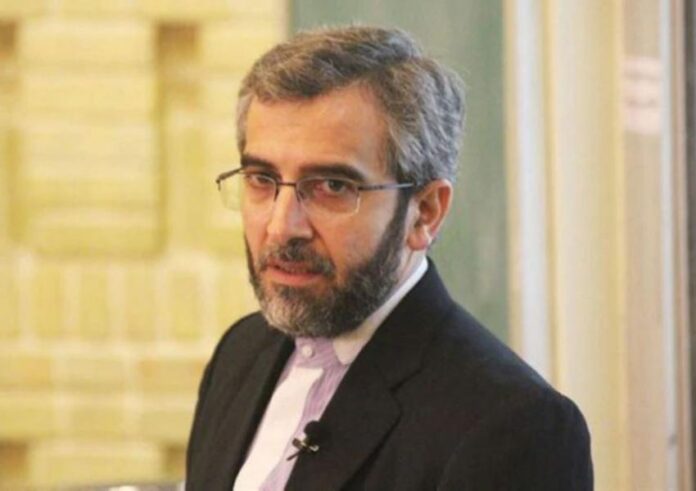
Ali Bagheri made the comment late Sunday after meeting with heads of the Chinese and Russian negotiating teams as well as Deputy Secretary-General of the EU External Action Service Enrique Mora, who is head of the Joint JCPOA Commission.

“We had consultations with some parties to the talks before the start of the fresh round of talks,” he told reporters.

“Yesterday and today, Iran’s expert teams had fruitful meetings with those of Russia and China. Also today, Russian and Chinese ambassadors, who lead their negotiating teams in talks between the 4+1 group and Iran, met me at the site of the Islamic Republic of Iran’s mission to Vienna-based international organizations,” he added.

“In these meetings, we had different and fruitful discussions with the Russian and Chinese sides to get prepared to kick off talks between Iran and the 4+1 group in the new round of negotiations slated to start in Vienna on November 29, 2021,” he explained.

He said Iran is determined to get the United States’ illegal and cruel sanctions lifted.

“In this round of negotiations, the focus will be on the lifting of sanctions,” he added.

Iran president, Azeri counterpart discuss key issues

Ebrahim Raisi told his opposite number Ilham Aliyev from the Azerbaijan Republic that people of both countries enjoy deep-rooted civilizational, cultural and religious bonds.

“The two countries have age-old and deeply entrenched ties, and we will never allow these relations to be affected by enemies,” said Raisi in the meeting held on the margins of a summit of the Economic Cooperation Organization (ECO) in Turkmenistan’s capital, Asghabat.

Raisi recalled Iran’s support for the Azerbaijan Republic’s independence and territorial integrity, saying, “Experience shows whenever regional countries settled their issues through understanding and dialog, the path to creating sedition and foreign meddling was blocked,” the Iranian president said.

He voiced concern over insecurity and foreign presence in the region, saying, “the ISIS and Zionist terrorism are two sources of threat in the region and should be tackled,” Raisi noted.

He then touched upon the United States and Israeli regime’s objective of disrupting the relationship between Iran and the Azerbaijan Republic, saying, “Foreign interference is to the detriment of the regional countries, and we should remain vigilant against their plots,” President Raisi said.

He also welcomed his Azeri counterpart’s request to boost economic ties between the two countries and extending transportation routes with the cooperation of Iranian companies.

Aliyev, for his part, said an ad hoc working group comprised of senior government officials will be set up to follow up on the implementation of the agreements reached between the two countries.

Aliyev also lauded Iran’s support for his country’s independence.

He said Baku attaches great importance to its relations with Tehran and will not allow those ties to be harmed.

Iran’s negotiating team in Vienna comprised of seasoned experts

The negotiating team is comprised of a host of top experts in various legal, banking and energy sectors hit hard in recent years by the United States’ cruel sanctions.

One of the negotiators is Mehdi Safari, the deputy foreign minister for economic and diplomacy affairs. He used to serve as Iran’s ambassadors to Austria, Russia and China.

He also served as former deputy foreign minister for Asia-Pacific affairs as well as former deputy foreign minister for Europe-US affairs.

Safari holds a Ph.D. degree in Electricity and Communications.

Another member of Iran’s negotiating team is Reza Najafi, the deputy foreign minister for legal and international affairs.

He served as Iran’s ex-ambassador to the International Atomic Energy Agency (IAEA).

He also used to be the director general for international peace and security at the Iranian Ministry of Foreign Affairs, holding a Ph.D. degree in International Law.

Ebrahim Sheibani, the chairman of the Economic Commission of the Strategic Foreign Relations Council, is also part of Iran’s team of negotiators.

He used to serve as Iran’s ambassador to Vienna, the Austrian capital.

He has a Ph.D. degree in Economics and has served as Governor of the Central Bank of Iran as well as the economic advisor to the first vice president.

Another negotiator is Ali Fekri, the deputy minister of finance and economy as well as the director general of the Investment Organization.

He used to serve as Iran’s deputy ambassador to Beijing. A high-profile figure in the domain of economic diplomacy, Fekri was the head of the department charged with countering sanctions and also used to serve as the head of the Economic Programs Office of the Ministry of Foreign Affairs.

Iran’s negotiating team also boasts Ahmad Asadzadeh, the acting head of the International and Trade Department of the Oil Ministry.

He holds a doctorate degree in Strategic Management and served as former secretary of the Energy Committee of the Secretariat of the Supreme National Security Council.

And the last but not least is Gholamreza Panahi, a member of the Executive Board of the Central Bank of Iran and the bank’s deputy governor for forex and international affairs.

He used to sit on the Board of Directors of Iran’s Melli Bank and serve as the bank’s deputy chief for forex and international affairs.

Holding a Master’s Degree in Banking Sciences Management, Panahi was a freelance former member of the Board of Directors of London-based Persia International Bank PLC, a freelance former member of the Board of Directors of Mir Business Bank in Moscow and an ex-member of the High Credit Committee of Iran’s Melli Bank in Dubai.

A glance at the line-up of Iran’s new negotiating team in Vienna led by Deputy Foreign Minister Ali Bagheri shows the 13th Iranian administration’s strategy for taking part in the talks and achieving the final goal, i.e., the lifting of cruel and illegal sanctions against Iran, has changed considerably compared to the past.

Given the line-up, particularly the presence of economic experts on the team and their impressive track record in the domains of international economy, one can realize that Iran is set to achieve a precise and comprehensive political-economic agreement.

Another noteworthy point is that the economic experts on the negotiating team have been selected irrespective of their political affiliations. Almost all of the economic experts on the team used to serve in top political, economic and international posts in the previous administrations.

Pakistani president: Unilateral sanctions threaten regional security

Alavi made the comments in his speech at the Economic Cooperation Organization (ECO) summit in Ashgabat and was apparently referring to the US’s unilateral sanctions on the Islamic republic of Iran.

The Pakistani president added that no one knows better than “our Iranian brothers” the implications of unilateral sanctions. Alavi said, “We are witnessing the adverse effects of unilateral sanctions in our region. Freezing assets and imposing banking restrictions worsen human ordeal.“

Alavi noted that intra-regional trade between ECO members constitutes only 8% of their total trade and unlocking the potential for regional integration provides a significant impetus for growth and development in all member states. Alavi also referred to the situation in Afghanistan, saying regional relations largely depend on peace in Afghanistan. He said the war in Afghanistan is over after 40 years, but a humanitarian crisis and the specter of economic collapse are looming over the nation.

The Pakistani president called on the Muslim world, including members of ECO, to help prevent a humanitarian catastrophe in Afghanistan that could reignite chaos, conflict and threat of terrorism in the country.

He stressed that Afghanistan’s frozen assets should be released to help alleviate the sufferings of the Afghan people.

Iranian president back home after ECO summit

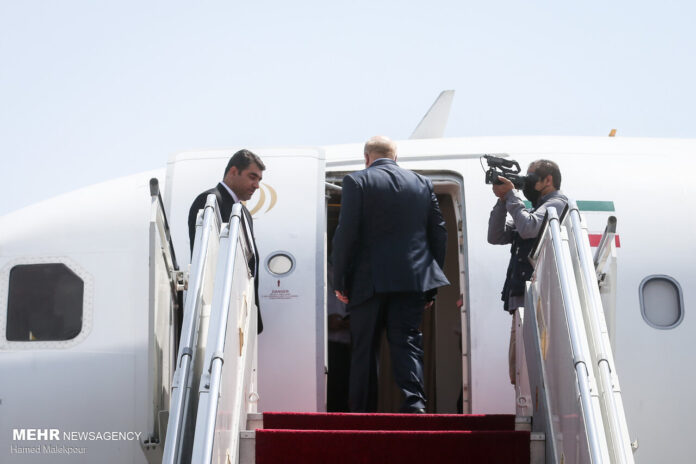
Raisi made the comment in Tehran on Sunday night upon returning from the meeting in Turkmen capital, Ashgabat.

He said Iran’s participation in the ECO Summit as one of its founders had different messages and that a lot work has been done, but it is not enough and “we have to take bigger steps”.

He added that Afghanistan was a common concern of all members that was raised at the summit and all came to the conclusion that Afghanistan will achieve security and stability with an inclusive government representing all ethnic and religious groups.

Referring to his meeting with Turkmenistan’s president, Raisi said the transit issue topped the agenda of talks at the meeting, and the ambiguities and problems were resolved and Iran can now have good trade and economic ties with East Central Asian countries.

He added that the issue of gas was another topic and the two sides signed a contract which will dispel concerns over gas outages in the winter.

Raisi referred to his meeting with Iranian businessmen and traders in Turkmenistan. He said the businessmen had problems that are serious and some were resolved with the gas contract, and the Foreign Ministry and the Chamber of Commerce were instructed to pursue those matters.

The president noted that the neighborhood policy has worked and that his administration insists on pressing ahead with that policy.

Afghanistan, Republic of Azerbaijan, Iran, Kazakhstan, Kyrgyzstan, Pakistan, Tajikistan, Turkey, Turkmenistan and Uzbekistan are member states of the Economic Cooperation Organization, ECO.