
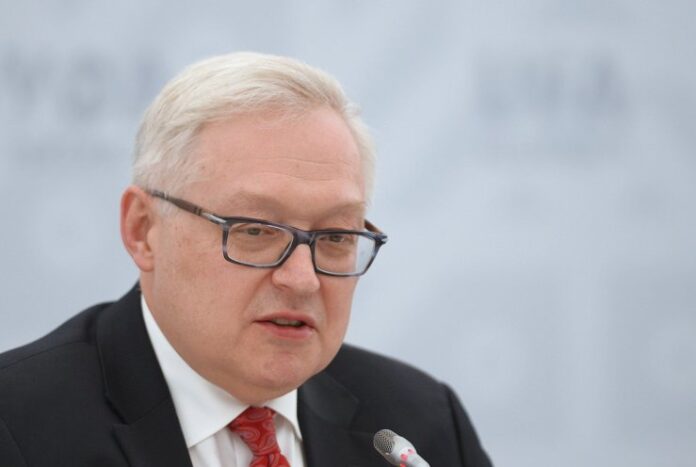
Sergei Ryabkov however described this round of talks aimed at reviving the JCPOA as complicated.
He noted however that the complexity of the task does not justify inaction.
He said this time around, the talks will take time as they are more complex than the previous six rounds of negotiations.
Ryabkov added that all parties to the talks must act in concert to resolve problems.
The Russian diplomat said, “We will try to pave the way for the continuation of talks”. Ryabkov described the Vienna talks as positive, saying multilateral efforts have started to revive the JCPOA.
Russia: All Negotiating teams interested in preserving JCPOA
Iran denounces ‘politicization of sport’ by US and UK
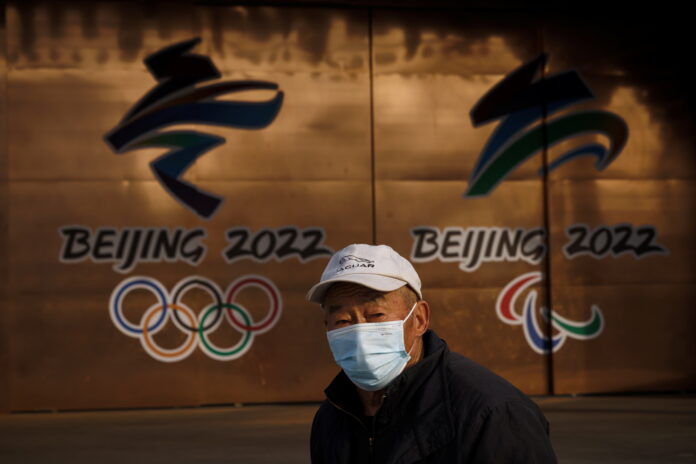
“Whether it’s ‘diplomatic boycott’ of #Beijing22, or depriving Iranian teams from accessing financial resources, everyone should denounce politicization of sport,” Spokesman of Iranian Foreign Ministry Saeed Khatibzadeh wrote in a post on his Twitter account on Thursday.
He added, “Looking forward to participation in the event, we express solidarity with China that is targeted by smear campaign.”
The diplomat’s expression of support for the major international sport event came days after China reacted strongly to reports that US President Joe Biden is contemplating “a diplomatic boycott” of the event, describing the scheme as “a naked political provocation.”
“The Winter Olympics is not a stage for political show and political manipulation,” China’s Foreign Ministry Spokesman Zhao Lijian told a daily news briefing on Monday.
He said a diplomatic boycott would be “a serious stain on the spirit of the Olympic Charter” as well as “a naked political provocation, and a serious offense to the 1.4 billion Chinese people.”
After the formal announcement of the US boycott by White House Press Secretary Jen Psaki later on Monday, the spokesperson threatened on Tuesday to take “resolute countermeasures” against the move and warned about its “grave consequences.”
“Out of ideological bias and based on lies and rumors, the US is trying to disrupt the Beijing Winter Olympics. This will only expose its sinister intention and further erode its moral authority and credibility,” Zhao emphasized.
In announcing Washington’s decision, Psaki stated the Biden administration would not contribute to the “fanfare” of the Olympics.
US diplomat: Saudis need our weapons in Yemen war

Brett McGurk, the US National Security Council’s coordinator for the Middle East and North Africa, told The Gulf States Institute in Washington the President Joe Biden’s administration is committed to helping Riyadh defend its territory.
He noted there are “many issues in the bilateral relationship with Saudi Arabia, but we are fundamentally committed to the territorial defence of Saudi Arabia, no questions asked”.
“Helping our partners defend themselves is an axiomatic principle across the region,” McGurk stated, pointing to the recent vote in the Senate that prevented a block on an arms sale to Riyadh.
“The Saudis need [these weapons] because the Houthis, with Iranian backing, are launching dozens of drones and missiles from Yemen into Saudi Arabia,” he stressed.
The Saudis are currently defeating “nine of 10 of these threats”, he claimed, adding, “Of course, we want to get that up to 10 of 10.”
The US State Department has recently approved its first major arms sale to Riyadh under Biden with the sale of air-to-air missiles valued at $650 million, according to the Pentagon.
Saudi Arabia and its allies launched a war against the Arab world’s most impoverished nation in March 2015. The war has been seeking to restore power in Yemen to Riyadh’s favorite officials.
The death toll of the war, now in its seventh year, will reach an estimated 377,000 by the end of 2021, according to a recent report from the UN’s Development Programme.
The fighting has seen some 80 percent of the population, or 24 million people, relying on aid and assistance, including 14.3 million who are in acute need.
As to Syria, McGurk said the US has no intention of withdrawing its small number of troops in the country.
“We are not there for oil, we are not there for regime change,” he stated, explaining that the mission is focused on countering terrorism.
Asked about the US position on Syrian President Bashar Al Assad, McGurk noted the US has accepted the current reality that he is staying in power.
“I think we have to recognise the reality of the staying power of Al Assad and that does not mean, however, we would engage with him,” he added.
The US official announced the Biden administration is looking to prevent the creation of failed states and power vacuums in the region.
He pointed to mistakes in the past 20 years made “not just by the United States, but by other actors in the region, in which the hope was that vacuums might be filled by moderate actors, and in fact, we see vacuums filled by Iranian back networks and extremists of Daesh”.
Syria has been gripped by foreign-backed militancy since March 2011. However, Syrian government forces, backed by Iran and Russia, have managed to win back control of almost all regions from terrorists. The US and its allies invaded Syria in 2014 under the pretext of fighting the Daesh terror group. Washington has long been training militants, collaborating with anti-Damascus militants, and stealing Syria’s oil, ignoring repeated calls by Damascus to end its occupation of the country.
McGurk has also claimed advances in Iran’s nuclear programme are reaching a “crisis point” as negotiators return to Vienna to continue nuclear deal talks. He saw the Vienna talks as more urgent than ever.
The Iranian nuclear programme is “advancing so rapidly that it is approaching a crisis point, [by] the first part of next year, and I think that is lending some urgency to the negotiations”, McGurk said.
He stated the goal of President Biden’s administration is reining in Iran’s nuclear programme in a way that satisfies US, international and regional interests.
“The only way that Iran can come out of the sanctions is through returning — getting its nuclear programme back in a box,” McGurk added.
Last month, McGurk told the Manama Dialogue conference that if diplomacy fails with Iran, the US is “prepared to use other options”.
He drew a distinction between military action aimed at regime change in Iran and at halting its nuclear progress.
“When it came to military force for behaviour change, that is a pretty fuzzy objective for a military force. When it comes to military force to prevent a country from obtaining a nuclear weapon, that is a very achievable objective,” he noted.
Tehran denies seeking nuclear weapons, stressing it wants to master nuclear technology for peaceful purposes. Iranian officials have also stressed the country reserves the right to respond to any adventurism by the United States and Israel.
At the same time, McGurk welcomed dialogue with Iran as well as between major regional players, pointing to how the UAE had reached out to both Turkey and Iran and to Saudi Crown Prince Mohammed bin Salman’s recent visit to Qatar.
“That’s something, by the way, that we very much encourage. We do think, at this time in the world, coming out of the pandemic, coming out of all these crises, it is time to open dialogue across borders,” he stated.
Negotiating teams working on text of Iran’s demands in Vienna
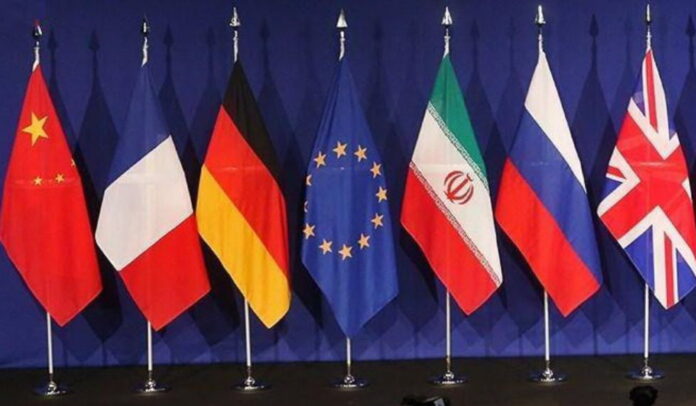
In a report, IRNA said Tehran’s proposals have been explained to the other sides and ambiguities are being cleared.
Meanwhile, Russian representative to the meeting Mikhail Olyanov said at the first meeting of the second round of talks that important ambiguities in the talks have been resolved and the negotiations are proceeding.
Reports also say the European troika have returned to Vienna with a more realistic approach after examining Tehran’s proposals.
Some members of the Iranian negotiating team say Tehran’s insistence on its demands made the European sides become more realistic.
The negotiating teams are beginning to work on the text of Iran’s proposals about sanctions removal and its nuclear activities.
Iran has said it’s ready to continue the Vienna talks as long as needed and this has been welcomed by the other sides especially China and Russia.
Owner of Tehran’s first pizza restaurant dies
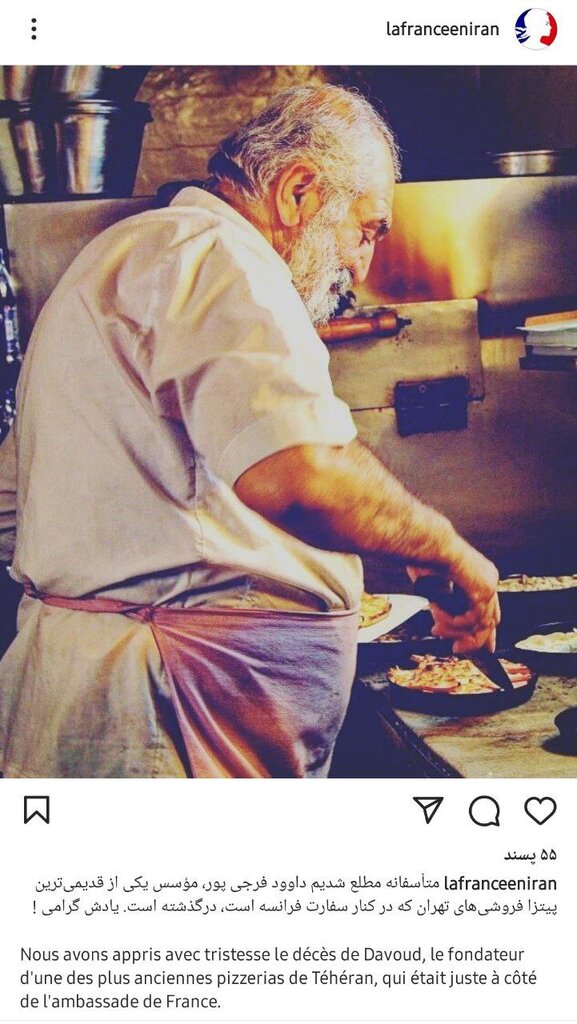
His restaurant was a haunt of artists and all customers have good memories of Davoud.
Renowned Iranian actress Shohreh Soltani spoke highly of him, describing him as amicable. She said Davoud helped her wheelchair-bound father and other people when they were both alive.
Davood used to call all his customers by their first names and having so much appetizer for free was a must for all people who chose his restaurant to eat pizza.
The embassies of a few countries like France, the UK and Russia are located near his restaurant in the capital.
“Afghanistan’s humanitarian crisis may cause 1m deaths in winter”
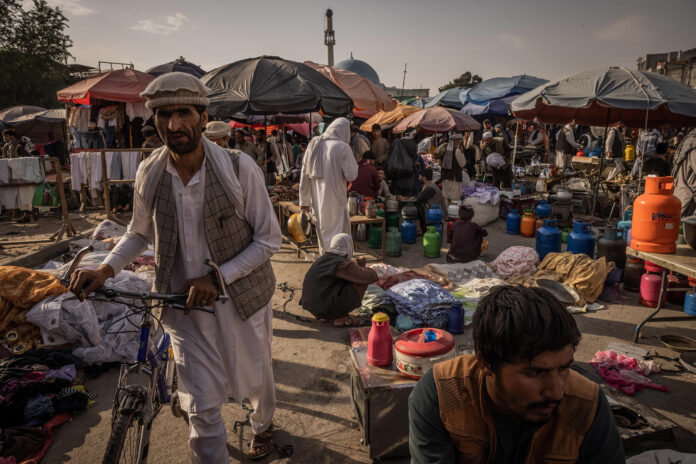
The group has called on the International community to step forward and lift its sanctions to avert mass starvation as the country is facing deadly winter ahead, according to Khaama press news agency.
In the meantime, the group has warned that the ongoing crisis and starvation will cause more deaths than the two decades of war in Afghanistan.
“The Afghan state is falling after the world responded to the Taliban’s takeover by freezing assets, cutting aids and offering only limited sanctions relief for humanitarian purposes. Government employees lack salaries, basic services are not being delivered and the financial sector is paralyzed,” according to the latest report of the Crisis Group.
The reports also criticized the international community to be the real culprit as they had made a dependent government to foreign aid and then imposed sanctions on the country after they withdrew from Afghanistan.
The group has cited World Health Organization’s report saying Afghanistan will face a terrible economic and financial situation in 2022 and that the salaries of teachers and health workers must be paid.
On the other hand, the Islamic Emirate of Afghanistan has been demanding the release of over $9.5 billion but says that the situation is not that bad that will starve people.
No or 1 Covid death in 18 Iranian provinces
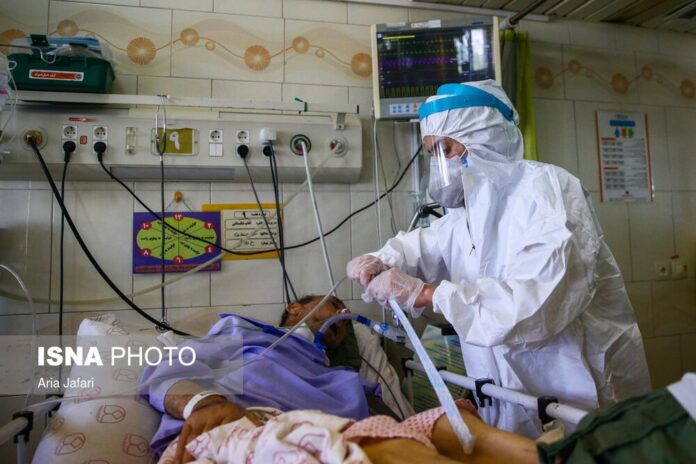
Meanwhile, 79 people died of the disease during the period.
Covid has claimed 130,603 lives in Iran since the pandemic started some two years ago.
A downward trend in Covid deaths and infections has held in the country in recent months thanks to a nationwide vaccination campaign that has seen nearly 110 million doses of vaccine administered to people. Most Iranian cities and towns are marked blue which means they face the lowest level of risk from Covid. There are only two red zones in Iran in terms of threat from the Coronavirus.
Iran says UK discussing how to repay £400m debt
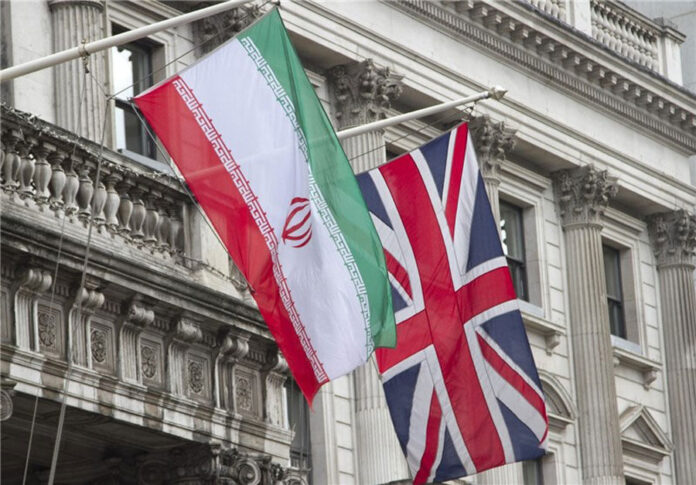
Mohsen Baharvand added he was in live discussions with the Foreign Office over the issue, stating the issues were not insurmountable.
The UK Foreign Office has refused to discuss any details of the payment to Tehran, or what has been holding up the settling of the £400m debt dating back to an arms sale to Iran in the mid-1970s.
Families of the UK dual nationals detained in Iran have repeatedly noted they believe their family members are being held hostage until the debt is paid. The former foreign secretary Jeremy Hunt has also stated he does not think the UK dual nationals will be released until the debt is paid.
Baharvand, speaking to reporters in London on Friday, said Iran and the UK had been close to an agreement on the debt in the summer.
“We wanted to use that deal to ask our people that we are seeing a good sign from the UK and then that gives us a possibility to expedite our efforts to help the dual nationals and things like that. Then we had a deal. We signed it but two days after the signature of that deal the UK government said they could not implement it because of US sanctions,” he continued.
“We are trying. We should not be that pessimistic. We are working with our Foreign Office colleagues maybe to reach that deal. We are in the process of discussions. Last week there was a delegation from the UK in Iran and personally I was talking to the Foreign Office and I am hopeful we will reach an agreement,” he added.
Referring to reports that the money could be paid in the form of humanitarian aid, he said: “It’s not aid. Our money is here and we want our money. That is very simple. We want to receive our money. We are not insisting on interest. Otherwise it would be billions. We are talking to our UK colleagues as to which channel is the most probable to transfer that money to our accounts.”
Asked if the US could give a letter of comfort to the UK to guarantee that the payment would not be sanctioned, he stated: “The US are not doing that. They have to help the UK government to do that. It is not impossible.”
“Obstacles are not insurmountable, but we have to discuss, negotiate and find a way. We are now discussing through what channel that money be transferred. There is a negotiating process now,” he added.
He also stressed that the issue of the detainees’ release was a matter for the Iranian judiciary, and could not be mixed up with the wider issue of the Iran nuclear talks in Vienna.
The Foreign Office has been contacted for comment.
In a question and answer session at the thinktank Chatham House this week, the foreign secretary, Liz Truss, acknowledged that the UK owed the debt. She has met the families of two UK-Iranian dual national detainees, Nazanin Zaghari-Ratcliffe and Anoosheh Ashoori.
New shipment of Covid vaccine arrives in Iran
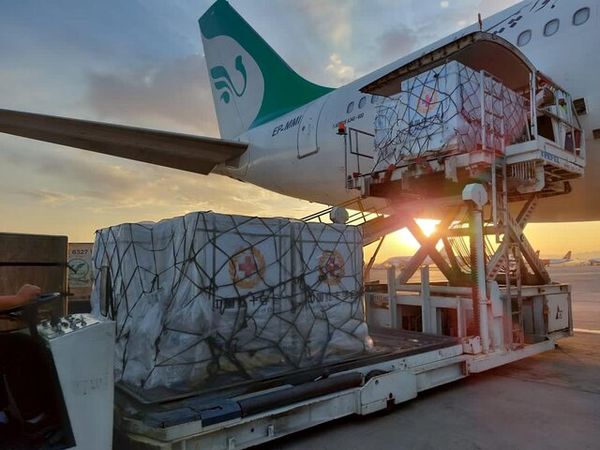
Mehrdad Jamal Arvanaghi said the shipments contain over a million doses including 218 thousand doses of AstraZeneca vaccine.
Iran has so far imported some 150, 002,708 doses of Covid vaccine. The imports have been credited with the fast vaccination campaign that saw tens millions of people inoculated in a matter of months.
The vaccination process helped contain the Covid. outbreak in Iran
Report: Iran has started positive interaction with IAEA
Nour News noted that new measures are afoot now to pave the way for the IAEA to pursue its work regarding Iran’s atomic program.
The news outlet maintained that this will complement Iran’s active diplomacy and neuter the recent spiteful actions against the Islamic Republic’s nuclear program.
It said Tehran’s close and positive interaction with the UN atomic agency has dispelled ambiguities that were created by the Zionist regime regarding the Iranian nuclear program.
Nour News also said, alongside interaction with the agency, Iran’s active diplomacy and consistent dialog with the European troika as well as China and Russia was conducive to foiling the Israeli regime’s scheme.
The news website added that the Zionists’ false claim that Iran had begun enrichment of uranium to 90 percent purity overshadowed the Vienna talks. It also said the false accusations about the 90% enrichment were aimed at putting pressure on the Iranian negotiating team.
