Thursday, December 25, 2025
Home Blog Page 2255

Iran team meets Chinese, Russian, EU diplomats

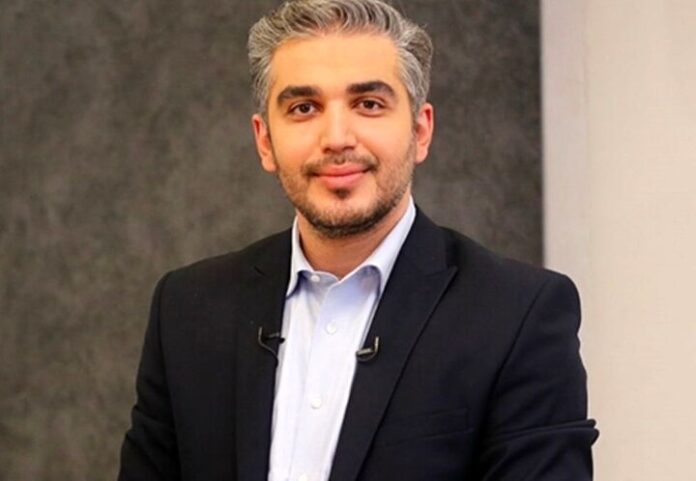
“The Iranian team arrived on Saturday in Vienna and started meetings which continued on Sunday at an expert level with the heads of the Russian and Chinese negotiating teams, as well as the EU Coordinator Enrique Mora,” Iranian diplomat Mohammadreza Ghaebi told ISNA.

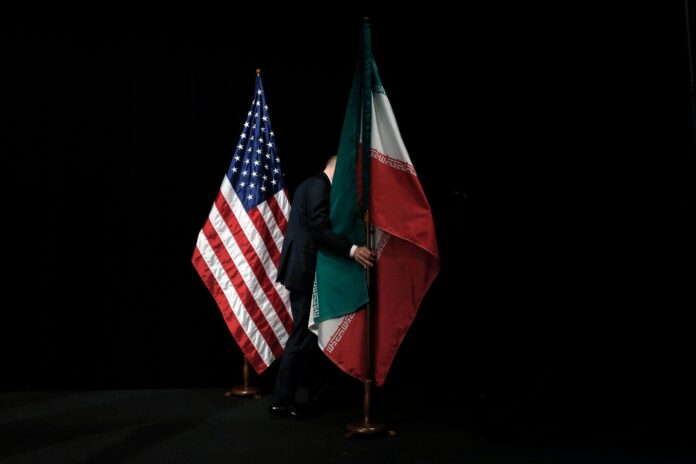
The meetings at the International Atomic Energy Agency’s Vienna headquarters came ahead of a resumption of talks to salvage the landmark 2015 nuclear deal after former US President, Donald Trump withdrew from the agreement, dismaying the other world powers involved – Britain, China, France, Germany and Russia. With the withdrawal, Washington also re-imposed sanctions on Tehran that were lifted under the accord’s terms. 

Tehran has stated Washington should stop demands and remove the illegal sanctions against Iran.

Bagheri, the top negotiator, has stressed Washington must remove all sanctions against Tehran and provide guarantees that future US administrations will not leave the 2015 nuclear deal again.

The indirect negotiations in Vienna will resume Monday after a five-month suspension imposed by Iran.

Raisi: US sanctions not to hinder Iran cooperation with others

“The United States’ cruel sanctions against Iran will not have the slightest impact on the Islamic Republic of Iran’s policy of maximum interaction with neighboring and regional countries,” said Seyyed Ebrahim Raisi at a summit of the Economic Cooperation Organization (ECO) in Turkmenistan’s capital, Ashghabat on Sunday.

Elsewhere in his remarks, Raisi said Iran unconditionally supports the ECO and its activities.

“The Islamic Republic of Iran attaches special importance to cooperation and economic partnership with Asian countries, especially its neighbors in South Asia, West Asia, Central Asia and the Caucasus,” he noted.

“Indubitably, we pay due regard to the reinforcement of the role and status of regional organizations as facilitators of bilateral and multilateral cooperation a clear example of which is the ECO,” President Raisi explained.

“Good achievements and progress have been made within the ECO over the past years, but there still is a meaningful gap between the accomplishments achieved and the real potential of the organization. For instance, intra-regional trade is less than 10% despite the great trade potential which exists,” he said.

Raisi said Iran seeks to elevate the status of the ECO in regional and international relations, adding effective tools exist for the organization to leap forward.

He called on member states to work together in a range of fields, from the creation of a regional electricity market, to water transfer projects as well as energy ventures. 

He said Iran is ready to help connect the fiber optic networks of member states as well as promote artificial intelligence projects and virtual education programs. 

President Raisi also proposed that the organization create an internal financial mechanism to boost its efficacy.

‘Inoculation of 4m Afghan migrants against Covid key Iran achievement ‘

“Providing coronavirus vaccines for migrants who live in Iran is a great job completed by the government of this country,” said Jaffar Hussain, who heads the WHO mission in Iran.

“Through expansion of general vaccination in Iran, daily fatalities due to Covid have fallen down below 100 people and most provinces are now out of the red alert and into the orange and blue zones.”

Hussain added that some one million people in Iran have received the booster dose of the Covid vaccine. He said the WHO is helping Pasteur Institute of Iran and its Barekat group to complete their evidence on their vaccines and receive the organization’s quality certificate, so that they can export their jabs to the regional countries and Africa.

He added that Iran now has over 160 million doses of Covid vaccines available for administration, stressing that the public vaccination campaign that saw up to 1.5 million doses administered in 24-hour periods show I0ran’s capability in the field.

Iran-Turkmenistan natural gas deal to be revived: President Raisi

Under a 25-year contract signed between Iran and Turkmenistan back in 1997, the latter undertook to export between 8 to 10 billion cubic meters of natural gas to Iran annually. Iran, in turn, was obliged to make payments for the imported gas to the Turkmen Gas Company. 

The agreement remained in effect even at a time of toughest sanctions, but its implementation halted in 2016 due to financial disputes.

Seyyed Ebrabim Raisi also touched upon a meeting with his Turkmen counterpart Gurbanguly Berdimuhamedow where, as he said, the two sides discussed the promotion of Tehran-Asghabat ties on different fronts, namely in the oil and gas sector.

“Turkmenistan has received assurances that the Iranian government is set to remove the existing problems and obstacles,” Raisi said.

He further stressed that impediments to the activities of businessmen and exporters should be removed, too. 

Raisi said his administration’s policy is to forge closer ties with neighboring countries.

“Suitable economic and trade infrastructure exists for the promotion and upgrading of our country’s bilateral and regional cooperation, and we should step in that direction by facilitating the activities of businessmen and exporters,” he explained.

President Raisi is in Turkmenistan to attend the Economic Cooperation Organization summit in Asghabat.

Iranian athletes win 3 medals at World Taekwondo Women’s Open

The Iranian female taekwondo practitioners have finished the World Taekwondo Women’s Open Championships after winning three medals on Saturday.

On the last day of the World Taekwondo Women’s Open Championships on Saturday, Zahra Sheidaei of Iran in the final of under-57kg division defeated Russia’s Margarita Blizniakova to bag the gold medal for her country.

Accordingly, the Iranian women ended the World Taekwondo Women’s Open Championships with a gold medal and two bronze medals by Melika Mirhosseini and Kowsar Asaseh. The other Iranian fighters Saeedeh Nasri, Ghazal Soltani, Nahid Kiani, Narges Mirnorollahi and Zeinab Esmaeili were eliminated from the competition earlier.

The championships took place for the first time, in Riyadh, Saudi Arabia.

Iranian MPs confirm Yousef Nouri as new Education Minister

Nouri made it to the top post with 194 votes in favor, 57 against and 17 abstentions.

He had been nominated by President Ebrahim Raisi for the post of Education Minister.

Speaking on Parliament floor during the confirmation session on Sunday, Noursi criticized the performance of the Education Ministry.

He said the Supreme Council of the Education Ministry did not do enough to counter Education Document 2030, and that even some of the councilors supported that document.

“Those behind Education Document 2030 will have no place in the education system,” he noted.

“During the second phase of the Revolution, we will take a leap toward new Islamic civilization, which requires the education of a generation with a model of new Islamic civilization,” he explained.

Two other nominees, namely Hossein Baghgoli and Masoud Fayazi, had previously failed to get the Parliament’s approval.

EU says does not recognize Taliban regime

“The European Union does not recognize the new regime, imposed through violence, but we need to prevent the imminent economic and social collapse that the country faces,” she stated.

“We need to stand by the people of Afghanistan”, she added, reminding of the EUR 1 billion worth support package the EU announced in October 2021.

Meantime, the Taliban prime minister said in his first public address the new rulers of Afghanistan “wants good relations with all countries and economic relations with them”, as the war-ravaged nation grapples with an economic and humanitarian crisis, according to Bloomberg.

Taliban Prime Minister Mullah Mohammad Hassan Akhund during his Saturday address called for the release of billions of dollars in Afghan assets now sitting in US banks in order to alleviate Afghanistan’s economic and financial issues, according to the news outlet.

The group has claimed that the US government has prevented it from accessing some of the country’s assets. Bloomberg reported that concerns over human rights abuses, the lack of inclusivity in the Taliban’s cabinet and the regime’s terrorist ties have led the US to withhold that money.

Akhund also assigned blame to former President Ashraf Ghani’s government for the present-day turmoil that the country has been mired in, saying those issues started prior to the Taliban’s rule.

“Nation, be vigilant. Those left over from the previous government in hiding are … causing anxiety, misleading the people to distrust their government,” Akhund added.

Akhund stated that his cabinet has started taking steps to address the economic crisis, including issuing government workers payments again after many of them had not received paychecks for weeks, The Associated Press reported.

The remarks come as international organizations sound the alarm on a worsening crisis within Afghanistan as the country has dealt with a wave of Daesh attacks last month, food insecurity and poverty.

Earlier this week, the United Nations’s Development Programme cautioned in a report that Afghanistan’s financial system could collapse in months due to a buildup of unpaid loans straining the country’s banks.

Meanwhile, a report from the UN’s World Food Program and Food and Agriculture Organization in October noted that roughly half of Afghanistan’s population were facing “high levels of acute food insecurity.” The UN also warned in mid-September that one million Afghan children were on the brink of starvation before the winter.

Akhund in his Saturday address called the lack of food “a test from God, after people rebelled against him”, and asked people to pray it would end soon.

China: West employing nuclear double-standard

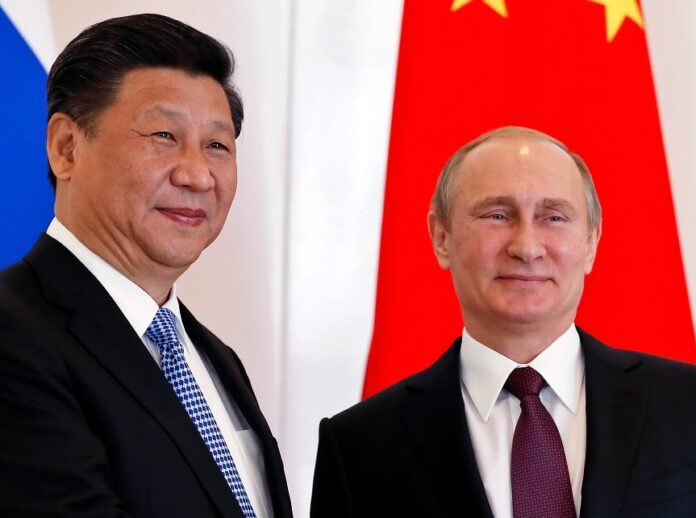
Chinese envoy to the International Atomic Energy Agency (IAEA), Wang Qun, has suggested that the upcoming handover of nuclear submarine technologies to Australia under the AUKUS security pact is a pressing issue similarly worthy of the attention of the IAEA like the restoration of the Iran nuclear deal, Bloomberg has reported, citing an obtained note.

The latter was reportedly circulated by China among diplomats gathered in Vienna for a new round of Iran nuclear deal negotiations.

“Why do the US and UK say Iran can’t manufacture enriched uranium above 3.7%, while on the other hand openly and directly transferring to Australia tonnes of 90% highly-enriched nuclear-weapons material? This is a classic case and point of a double standard”, he stated.

The official accused western nations of following double standards as they push for a renegotiation of the nuclear accord with Iran that would ban the Islamic Republic from producing military-grade enriched uranium akin to that the US and the UK will be handing over to Australia as part of their security pact.

Beijing has repeatedly insisted that this provision of the AUKUS security agreement, which is seen as directed against China by many political analysts, violates the principles of nuclear non-proliferation.

Wang also stressed that AUKUS “constitutes serious risks of nuclear proliferation” and condemned the pact as a “small Anglo-Saxon clique” in his note, Bloomberg claims.

The Chinese diplomat suggested that by handing over the submarine technologies to Australia, the US and UK will prompt more countries to go nuclear. He suggested that the pact should be scrutinised by the IAEA and the international community. The Russian Ambassador to the Vienna talks, Mikhail Ulyanov, echoed Wang’s statements.

Australia’s envoy to the IAEA, Richard Sadleir, rejected China’s suggestion insisting that the transfer of nuclear technologies under the AUKUS deal does not fall under the purview of the international organisation, which monitors the use of nuclear energy by countries making sure they don’t utilise the technology for military purposes.

Sadleir insisted that it was not the IAEA’s place to discuss the “full scope” of AUKUS. He also promised that his country will continue to provide the agency with all the necessary information.

“Many of these factors are beyond the scope of the board’s purview and would be inappropriate for the board’s agenda at any time. We will continue to provide updates at the IAEA and elsewhere as appropriate,” Sadleir continued.

China has been opposing AUKUS since its announcement in August of this year and the next round in Beijing’s fight against it comes right ahead of a new attempt by the signatories of the Joint Comprehensive Plan of Action (JCPOA, also known as the Iran nuclear deal) to revive the accord with Tehran. The last round of talks in Vienna in May did not result in a breakthrough in negotiations between Iran and the US, who had jeopardized the 2015 accord by withdrawing from it in 2018 and slapping sanctions on the Islamic Republic. Since 2019, Tehran has been systematically backtracking on its JCPOA commitments to convince the US to change its course and lift the aforementioned sanctions. Washington under the new administration of Joe Biden suggested that the lifting of economic measures is possible but not until after Iran returns to compliance with the deal that was undermined by the US in 2018. Tehran has so far refused to do that, but a new round of talks in Vienna will be carried out with Iran represented by a new delegation and a new presidential administration following elections in June 2021.

Iran president calls for closer ties with Turkmenistan

“Our bonds with Turkmenistan are ideological, civilizational and come from the heart,” said Seyyed Ebrahim Raisi in a meeting with Iranian expatriates at the Iranian embassy in Ashgabat.

He urged Iranian embassies to facilitate travel by Iranian expats to their homeland.

The president said the level of ties between the two countries is not sufficient.

“Our political, economic and cultural relations with Turkmenistan should expand,” he stressed.

“The people of Turkmenistan are very much interested in Iranian goods and services, but this potential is not utilized as much as it should,” he explained.

Raisi also touched upon his meeting with the Turkmen president where the two sides emphasized the necessity of forging closer ties.

President Raisi also met with Iranian businessmen residing in Turkmenistan as well as businessmen taking part in a meeting of the Economic Cooperation Organization (ECO) hosted by Ashghabat.

He said the problems and concerns of Iranian businessmen can be settled, and promised to follow up on the issue.

President Raisi has travelled to Ashghabat at the official invitation of his Turkmen counterpart to attend the ECO summit.

Iranian, Turkmen presidents hold meeting in Ashgabat

The meeting took place in Ashgabat where the Iranian president has traveled to attend the 15th summit of the Economic Cooperation Organization (ECO).

The event will open on Sunday, December 27th, with Turkmenistan hosting it as the chair the ECO.

President Raisi arrived in Turkmenistan Republic’s capital city Ashgabat Saturday night and was officially received by his counterpart and a number of Turkmenistan government’s high ranking officials at the airport.

The 15th ECO Summit, hosted by Turkmenistan, the ECO rotating head, will start tomorrow, on Sunday Nov 28.

President Raisi is scheduled to address at the ECO Summit Meeting, in which he will elaborate on Iran’s stands and present the Islamic Republic of Iran’s proposals on strengthening ECO’s regional and international relations, and further expansion of economic transactions among member states.

The president will in this trip also meet and confer with his counterparts from participating countries, and during bilateral talks try to strengthen ties and further expand them.

Meeting with the Iranians residing in Turkmenistan, the Iranian merchants, and the participants at ECO summit are among the president’s other programs.

Iran, Turkey, Pakistan, Afghanistan, Turkmenistan, Kyrgyzstan, Uzbekistan, Kazakhstan, Tajikistan, and Azerbaijan are ten members of the ECO. The president will in this trip also meet and confer with his participating counterparts, and in bilateral talks try to strengthen ties and further expand them