Saturday, December 27, 2025
Home Blog Page 2111

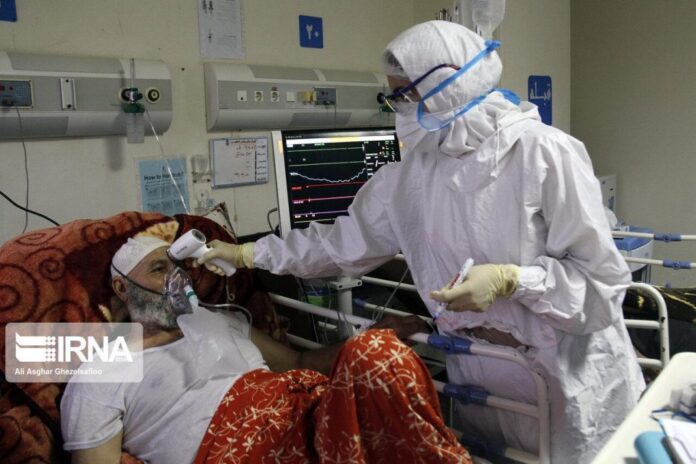
Covid fatalities soaring in Iran; 114 deaths

The latest fatalities push to 133,048 the total death toll since the Covid pandemic started two years ago. 

Over the past 24 hours, 38,757 new Coronavirus cases were also logged in Iran including 2,744 hospitalizations. 

The jump in Covid deaths and infections is blamed on the Omicron strain of the disease. The variant is highly contagious than others. Iranian medical authorities say it has some sub-variants as well and, as a result, Iran is facing an uphill task brining it under control. The rise in the number of Covid deaths and infections comes as Iran is vaccinating citizens at a high speed. 

The number of third shots of vaccine administered so far has crossed the 20 million mark in the country. 

The total number doses injected stands at 136,080,644. The vaccination of 5 to 9-year-old children started on Tuesday. 

Most cities across Iran are now marked red or orange, which respectively denote the highest level of danger from Covid. 

The number of blue cities is single digit now.

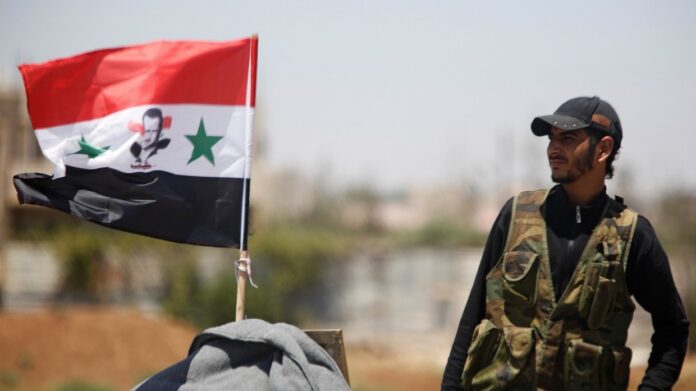
Report: US plans to incite forces against Syria, Iran, Russia targets

“To achieve their goals in Syria, the Americans are actively using their close contacts with the so-called armed opposition, and in fact – with radical Islamist groups”, the press service of Russia’s Foreign Intelligence Service said in a statement on Tuesday.

“US intelligence agencies plan to direct the ‘sleeper cells’ of extremists in the capital Damascus, the adjacent region and the province of Latakia to carry out targeted actions against members of Syrian law enforcement agencies, as well as Iranian military advisers and Russian military personnel”, the statement added.

The press service also said that the US intends to launch a media campaign to inspire protests in Syria.

“The information received by the Russian Foreign Intelligence Service proves that the US administration aims to maintain the American presence in Syria, preventing the stabilisation of the situation in this country. Washington intends to launch a broad media campaign, including on Arabic-language social networks, to inspire protest moods in Syrian society,” the press service pointed out.

Additionally, the Russian Foreign Intelligence Service announced that Washington actively participates in the shadow trade of Syrian oil, as US troops accompany oil trucks from Syria to Iraqi Kurdistan.

“Against this background, the plundering of Syrian natural resources by US companies continues. Washington remains actively involved in the illegal trade of oil produced in the occupied territories of northeastern Syria. Up to 3 million barrels of raw materials are extracted from fields in the provinces of Al Hasakah, Raqqa, and Deir ez-Zor every month. About a third of the stolen oil, through the mediation of the Americans, is sold to the Kurdish Autonomous Region of Iraq at a price of $35-40 per barrel,” the statement added.

The US deployed its troops in Syria under the pretext of fighting Daesh, but has not completely withdrawn them despite declaring the terrorist organisation defeated. Washington also lacks a UN Security Council mandate or an invitation from the Syrian government to justify the deployment of American forces in the Arab country.

Damascus and Moscow have repeatedly objected to the continuing stay of American troops in Syria, calling it illegitimate. Washington, in turn, claims that its forces have stayed behind to prevent the local oil resources from ending up in the hands of terrorists. However, the Syrian government insists the US troops are, in fact, engaged in the theft of the nation’s oil resources.

Iran begins vaccinating kids over 5 against Covid

Mohammad Hashemi has urged parents to get their 5 to 9-year-old children vaccinated as soon as possible, warning that kids account for 20 percent of new hospitalizations due to Covid.

Iran is advising two doses of Sinopharm and PastoCovac vaccines for children. 

That’s amid a new surge in infections and deaths as the Omicron variant rages in the country.

New daily infections hit nearly 40,000 on Monday as officials said 120 cities across the country have entered the red zone in terms of the intensity of Covid outbreak.

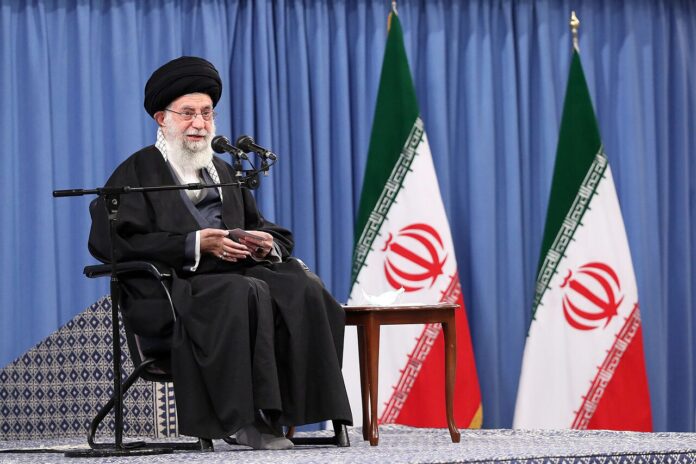
Iran Leader: Former, current U.S. presidents destroying America’s image

“Today, the two presidents of the United States – the former president and the current president – have joined hands to tarnish what’s left of the image of the United States and they are doing so,” Ayatollah Khamenei made the remarks on Tuesday in a meeting with commanders and staff of Iran’s Air Force and Air Defense Force on the 43rd anniversary of a meeting between Air Force officers with Imam Khomeini just days before the victory of the Islamic Revolution in 1979.

The leader said the enemies of Iran have launched a complex and collective offensive with economic, political, security, media and diplomatic aspects against the Islamic Republic, and that the country needs to make efforts in all directions in response.

“In the face of this combined and collective attack, we cannot always remain in a defensive position, and we must also launch a combined attack in different fields, including media, security and economic spheres,” the leader explained.

Ayatollah Khamenei also referred to the 1979 meeting, where Air Force officers pledged allegiance to Imam Khomeini, saying this allegiance was not to a person but rather to the goals and ideals of the sacred movement that Imam Khomeini led.

“The move by the Air Force that day was the last blow dealt to the rotten body of the Pahlavi regime,” the Leader of the Islamic Revolution added.

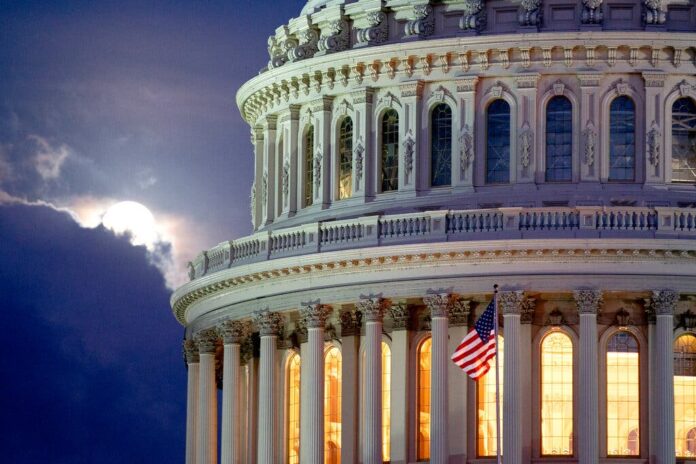
Republican US senators threaten to thwart deal with Iran

Led by Senator Ted Cruz, a long-time opponent of the 2015 nuclear deal, the senators told Biden in a letter dated Monday that they would use “the full range of options and leverage available” to ensure that his government adhered to US laws governing any new accord with Iran.

Cruz and other senior Republican senators told Biden that implementation of any new deal would be “severely, if not terminally hampered” if he did not meet statutory obligations aimed at ensuring congressional oversight over revisions or changes to the 2015 Iran nuclear accord.

They provided no details about their plans, but Republicans have used various tactics to slow down other legislation or put holds on Biden’s nominees, including many for ambassador posts.

Democrats control the 50-50 Senate only by virtue of a tie-breaking vote that can be cast by Vice President Kamala Harris, but they could lose control of the Senate and the House of Representatives in mid-term elections later this year.

The senators argued any nuclear agreement with Iran was of “such grativity for US national security” that it would by definition be a treaty requiring the advice and consent of two-thirds of the Senate.

Any deal that fell short of Senate-ratified treaty would “likely be torn up in the early days of the next presidential administration,” they added, anticipating a Republican victory in the 2024 presidential race.

In addition, they noted that a 2015 law passed before completion of the initial nuclear deal requires that any new “agreement” related to Iran’s nuclear program to be transmitted to Congress for a 60-day review period during which Congress could pass a joint resolution of disapproval that would essentially prevent the deal from going into effect.

It said those mandates would be triggered by Iran’s progress toward developing a nuclear weapon over the past year, which would require new oversight measures.

Tehran denies seeking nuclear weapons, stressing it wants to master nuclear technology for peaceful purposes.

It comes just days after 110 Republican lawmakers called on the Biden administration to abandon negotiations with Iran and issue new sanctions against Tehran.

In 2018, the US, under President Donald Trump, pulled out of the pact and reinstated sanctions under the so-called ‘maximum pressure campaign’ against Tehran, effectively depriving Iran of the deal’s benefits by forcing third parties to stop doing business with Iran.

Iran remained patient for an entire year, after which it began to take incremental steps away from its nuclear obligations, especially after Europeans failed to salvage the deal under the US pressure.

Iran and the five remaining parties to the Joint Comprehensive Plan of Action (JCPOA) — Germany, Britain, France, Russia and China — began the talks in the Austrian capital in April with the aim of removing the sanctions after the US voiced its willingness to return to the agreement.

During the seventh round of the Vienna talks, the first under President Ebrahim Raeisi, Iran presented two draft texts which address, separately, the removal of US sanctions and Iran’s return to its nuclear commitments under the JCPOA. Tehran also said it was preparing a third draft text on the verification of the sanctions removal.

The eighth round of talks kicked off in Vienna in late December. The negotiations seek to restore the JCPOA in its original form and bring the US back into the agreement.

Iran insists that the talks must lead to the removal of all American sanctions that were imposed against Tehran following Washington’s unilateral withdrawal from the landmark agreement in May 2018. Tehran has also demanded credible guarantees that Washington will not abandon the deal again.

Shamkhani: No Vienna agreement without US abandoning illusions

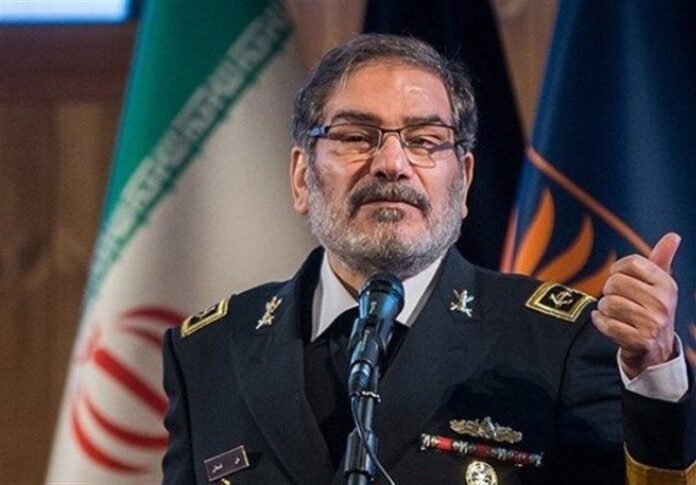
Ali Shamkhani

“The current US administration has so far maintained [former US President Donald] Trump’s maximum pressure policy against Iran, trying to use empty promises to materialize objectives he failed to achieve by bullying,” Secretary of the Supreme National Security Council Ali Shamkhani said in a tweet.

“Without Washington abandoning the current illusions, the path to the Vienna negotiations won’t be smooth.”

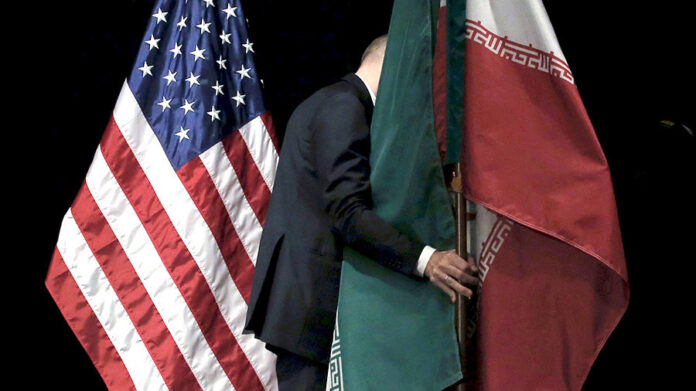
The eighth round of the talks aimed at reviving the 2015 nuclear deal is scheduled to resume in Vienna on Tuesday. Negotiators of Russia, China, France, Britain and Germany are expected to attend the talks. The US, that withdrew from the Iran nuclear deal in 2018, is indirectly involved in the process of the talks. 

Iran has stressed that it requires the removal of all JCPOA-related sanctions against the country in a verifiable manner and guarantees that the US will not pull out of the deal again, before any agreement can be reached in Vienna.

Shamkhani had earlier also dismissed Washington’s move to reintroduce some waivers for other countries’ nuclear cooperation with Iran, as “not constructive”.

Back then, he said “real economic benefits” that are verifiable by Iran, are pre-requisites for an agreement to take shape.

US says deal with Iran ‘in sight’

The nuclear negotiations will resume on Tuesday in Vienna after being halted at the end of last month. Talks come after parties in recent weeks cited progress in seeking to revive the 2015 accord.

“A deal that addresses all sides’ core concerns is in sight, but if it is not reached in the coming weeks, Iran’s ongoing nuclear advances will make it impossible for us to return to the JCPOA,” a US State Department spokesperson said, referring to the 2015 landmark agreement.

In 2018, the US pulled out of the pact and reinstated sanctions under the so-called ‘maximum pressure campaign’ against Tehran, effectively depriving Iran of the deal’s benefits by forcing third parties to stop doing business with Iran.

Iran remained patient for an entire year, after which it began to take incremental steps away from its nuclear obligations, especially after Europeans failed to salvage the deal under the US pressure.

The Islamic Republic’s decision to ramp up its nuclear activities prompted other parties to revive talks.

On Monday, Foreign Ministry Spokesman Saeed Khatibzadeh said Iran is waiting for the US to change its behavior in practice.

Speaking at his weekly press briefing, Khatibzadeh added that all statements about positive talks must now translate into action.

He noted that Iran is after a good and reliable deal in Vienna and the US must pay the price for violating the Iran nuclear deal and UN Security Council Resolution 2231. 

The spokesperson urged the European parties to the talks to end their inaction regarding the US violations.

The secretary of Iran’s Supreme National Security Council Ali Shamkhani has also rejected any agreement with the P4+1 in Vienna that does not lead to the removal of anti-Iran sanctions.

“The agenda of the Iranian negotiators for the continuation of the eighth round the [Vienna] talk has been carefully laid out,” Shamkhani said in a tweet.

“An agreement under which, the maximum pressure campaign [of the US] is not ended will make the economy of the country conditional, and cannot be the basis for a good agreement,” he added.

Iran: Effective removal of sanctions needed before Vienna agreement

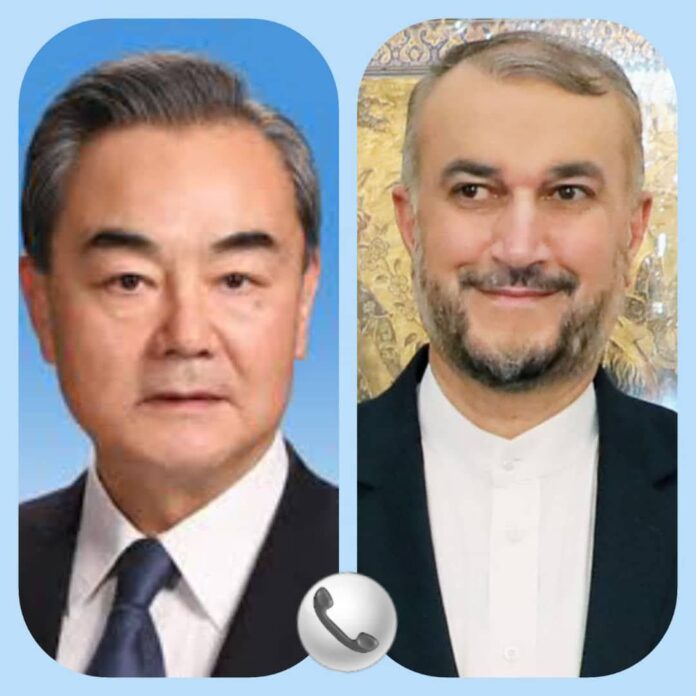
Amir Abdollahian says they should also show a meaningful departure from the failed policies of the previous US administration. 

“This will be possible through elimination of all sanctions that go against the Joint Comprehensive Plan of Action and serious measures to provide relevant guarantees,” he says. 

The foreign minister made the comments in a phone call with his Chinese counterpart Want Yi, which partially focused on the Vienna talks on the 2015 nuclear deal, scheduled to resume Tuesday.

Iran and the P4+1 group of countries, China, Russia, France, Britain and Germany, have been engaged in intensive talks in Vienna aimed at lifting the anti-Tehran sanctions, the revival of the the Iran nuclear deal and a possible return of the US to the agreement. 

Almost all parties involved in the talks say they are progressing and an agreement may be within the reach. But Iran has stressed that removal of sanctions in a verifiable manner is a must before any agreement can be reached.

The Chinese foreign minister, for his part, described the US’s unilateral withdrawal from the JCPOA as damaging and a violation of Iran’s legitimate rights.

“Cooperation and consultations during the process of the Vienna negations and tabling logical demands and improved proposals by the Iranian side are supported by China,” he stressed.

The two sides also discussed the letter by Iranian President Ebrahim Raisi to his Chinese counterpart  Xi Jinping on Tehran-Beijin relations.

Wang Yi said Beijing is ready for all-out expansion and deepening of bilateral relations and closer cooperation between the two countries.

Iran and China made their 25-year strategic cooperation partnership agreement operational last month. It envisages raising bilateral cooperation to the 400 billion-dollar mark.

Eslami: Iran’s first nuclear power plant saved $6bn

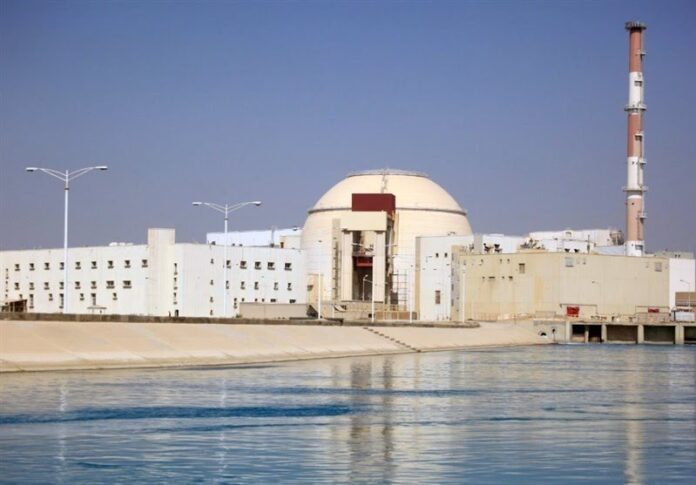
“So far, we have saved 80 million barrels of oil and injected nearly 52 billion kilowatts of electricity into the national grid, which is equivalent to about $6 billion in savings, which means that in this short period of time, it has been able to return twice the money spent on it,” Mohammad Eslami explained.

The Iranian nuclear chief said Tehran plans to invest about $40 billion in nuclear power plants development over the next two decades.

“We believe that nuclear power plants mean sustainable electricity, which reduces the production of pollutants and greenhouse gas emissions. That is one of the competitive advantages of investment in this field, which has been well-received and countries are moving towards it. I hope we can overcome this delay of several years and speed up projects,” Eslami added.

He asked Iranian and foreign investors to participate in Iranian nuclear energy projects.

The Bushehr plant is Iran’s first nuclear power station. It was connected to the national electricity grid in 2011. Iran has planned to build several more atomic power stations to meet its rapidly increasing power needs.

Russia: Final document on restoration of JCPOA drafted

“There is always a probability that someone may make reckless steps that would simply undermine the Vienna talks. Such a possibility cannot be ruled out completely,” he said in an interview with the Kommersant daily.

“But such a situation will speak about the utter irresponsibility of the one who ventures such steps. At the current advanced stage of the talks – a very advanced stage – it is absolutely inadmissible to create excessive tensions, to put a positive outcome at risk,” the Russia’s Permanent Representative to the Vienna-based international organizations noted.

“We are five minutes from the finish. And we must master this final stretch quite quickly and effectively,” he added.

The Joint Commission of the JCPOA has had seven offline meetings in Vienna since April to find ways to restore the nuclear deal in its original form. The eighth round of talks kicked off in December 2021.

Moscow seeks to complete talks on the return to the JCPOA in February this year, Ulyanov continued.

“Either way, we will aim to complete negotiations as soon as possible, preferably in the current month,” he stated.

Ulyanov noted that Moscow categorically rejected the establishment of “artificial deadlines” for the completion of negotiations, but believes that they should not be delayed.

“In terms of the Russian Federation, we are strongly against setting artificial deadlines. At the same time, we agree that negotiations should not drag on and if desired, they can be finished by the end of this month. This is real in the presence of political will and readiness of the parties to show reasonable flexibility,” he said.

According to Ulyanov, a final document on the restoration of the Iran nuclear deal has already been drafted.

“I think yes, the current stage can be called the final one. A lot of work has been done,” he stated when asked at which stage the talks currently are.

“A final document has been drafted. It has several provisions requiring additional work but the paper is on the table. It is quite long, having more than 20 pages. This is the basis to finish the talks within a short time,” he noted.

According to the Russian diplomat, it will be a political document outlining concrete steps to return to the original nuclear deal.

“A political section and supplements. The document covers the issues of cancelling US sanctions, as well as steps in the nuclear sphere Iran will have to make, and, finally, the sequence of the implementation of these agreements,” he explained.

“When the final agreement is reached, a period of preparations for its implementation will begin. It may take a couple of months. And after that, a day will come when we, ultimately, see the JCPOA in action in the format it was agreed back in 2015. But this is only a rough plan and we will have to work on it further,” Ulyanov stressed.

When asked whether the final document will require any actions by the United Nations Security Council, which passed a special resolution in support for the JCPOA back in 2015, Ulyanov noted that the topic of another UN resolution has not been raised.

“Probably, there will be no need in it,” he added.