Sunday, December 21, 2025
Home Blog Page 21

US set to deport more Iranians back to their home country: CNN

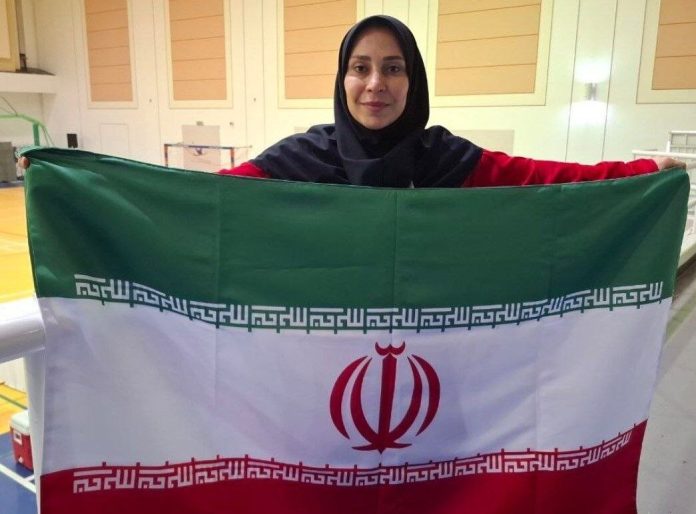
Iran Flag

It is the second such deportation flight after a rare agreement between Washington and Tehran, which do not have diplomatic relations, amid the Trump administration’s extreme push to expel undocumented immigrants.

There are serious concerns from human rights and advocacy organizations about the Iranians who fled to the US and may now be forced to return. The State Department’s latest human rights report, issued under the Trump administration, claimed there are “significant human rights issues” in Iran.

The National Iranian American Council, a nonprofit organization, called on the administration to halt the flight.

According to the source familiar with Sunday’s deportation flight, it is expected to stop in Kuwait en route to Iran. The first deportation flight was in September.


Japan accuses Chinese fighters of directing fire-control radar at its aircraft

In a post on X early on Sunday, Koizumi said that Tokyo has lodged a “strong protest” about the two incidents and made “a stern demand for measures to prevent recurrence”.

“The radar illumination… was a dangerous act that exceeded the range necessary for safe aircraft flight,” he added.

A fire-control radar lock is one of the most threatening acts a military aircraft can take, because it signals a potential attack, forcing the targeted aircraft to take evasive action.

In response later on Sunday, a Chinese navy spokesperson stated that a Japanese self-defence force aircraft repeatedly approached and disrupted the Chinese navy as it was training, adding that Japan’s claims were inconsistent with the facts.

The encounters over the islands, which are close to disputed territory claimed by both Japan and China, are the most serious run-ins between the two militaries in years.

They came as relations between the two countries sour over Japanese Prime Minister Sanae Takaichi declaring in November that Tokyo could respond to Chinese military action against Taiwan if the moves also threatened Japan’s security.

Democratically governed Taiwan is claimed by Beijing and lies just 110km (68.4 miles) from Japan’s westernmost Yonaguni Island.

Japan hosts the biggest overseas concentration of United States military power, including warships, aircraft and troops, with a big chunk of that contingent, including thousands of US Marines, based in Okinawa.

According to Koizumi, the Chinese J-15 jets involved in the two incidents on Saturday were launched from China’s Liaoning aircraft carrier, which was manoeuvring south of the Okinawan islands along with three missile destroyers.

“It is extremely regrettable that such incidents have occurred,” Koizumi’s statement noted.

No damage or injuries were reported from Saturday’s incidents near Okinawa, Koizumi added in his post.

The Reuters news agency, citing sources and intelligence reports, said that China deployed a large number of naval and coastguard ships across East Asian waters on Thursday. The boats at one point numbered more than 100, Reuters reported.

Taiwan’s government described that build-up as posing a threat to the Asia Pacific region. Japan announced it was monitoring Chinese activity closely.

Taiwan’s coastguard announced on Sunday that it was monitoring drills by three Chinese maritime safety ships on the western side of the Taiwan Strait’s median line, but added the situation in the waters surrounding Taiwan was currently “normal”.

Chinese state media said the search-and-rescue drills were in the central waters of the Taiwan Strait, patrolling “high-traffic areas, and areas with frequent accidents”.

Taiwan’s coastguard said China was using “misleading and false wording” about what it was doing, with the aim of harassing Taiwan and carrying out psychological warfare.

China claims it alone exercises sovereignty and jurisdiction over the strait, a major trade route for about half of global container ships. The US and Taiwan say the strait is an international waterway.

Two key organizers of Kish marathon detained over violating Iranian law

According to the prosecutor, judicial supervision orders have also been issued.

A government official involved in organizing the marathon has been banned from employment in state institutions, while the private-sector organizer has been prohibited from engaging in sports management activities and organizing athletic events.

The prosecutor explained that one of the detainees is an official of the Kish Free Zone Organization, and the other is an individual from the private company responsible for running the marathon.

After the charges were formally presented to them, both suspects were issued bail orders. Meanwhile, temporary judicial supervision orders were issued under Article 247 of Iran’s Code of Criminal Procedure. These include the employment ban for the government official and the prohibition on sports-related managerial activities for the private-sector organizer.

The Kish prosecutor underscored that lawful recreational and sports activities that promote economic vitality are supported, but the judiciary will firmly pursue the case to uphold national laws and regulations, ensure adherence to religious principles, and enforce deterrent action against violations in public events.

Canada removes Syria from its list of countries that support “terrorism”

The announcement on Friday comes as Syria prepares to mark one year since the toppling of longtime ruler Bashar al-Assad.

Canada’s foreign ministry said it was also revoking the “terrorist” designation for Hayat Tahrir al-Sham (HTS), the group that spearheaded the alliance that helped remove al-Assad.

In a statement, the ministry announced that the decisions were “not taken lightly”.

“These measures are in line with recent decisions taken by our allies, including the United Kingdom and the United States, and follows the efforts by the Syrian transitional government to advance Syria’s stability, build an inclusive and secure future for its citizens, and work alongside global partners to reinforce regional stability and counter terrorism,” it added.

Canada had listed Syria as a “state supporter of terrorism” in 2012, as al-Assad’s crushing of pro-democracy protests plunged the country into civil war.

HTS had been widely sanctioned over its links to al-Qaeda, but several Western states have delisted the group to allow for better collaboration with the new Syrian government.

Since taking power, Syria’s new leaders have sought to break from their violent past and present a more moderate image to Syrians and foreign powers.

The ministry said it was still maintaining sanctions on 56 Syrian individuals, including former officials from al-Assad’s former government and members of the toppled president’s family.

The US partially suspended sanctions against Syria in June and then extended the suspension in November, following talks between al-Sharaa and his American counterpart, Donald Trump, at the White House.

Days before that meeting, the US had said that al-Sharaa was no longer a “specially designated global terrorist”.

Al-Sharaa, who once led al-Qaeda’s branch in Syria, split from the group in 2016.

Since removing al-Assad, al-Sharaa has further reinvented his image, dropping the alias Abu Mohammed al-Julani for his birth name and promoting a tolerant and inclusive Syria.

The interim leader also addressed the United Nations General Assembly earlier this year, saying that his country is “reclaiming its rightful place among the nations of the world” and has sought to strengthen economic ties with the US and the European Union.


EU says Washington ‘biggest ally’ despite US security downgrade

Speaking at the Doha Forum in Qatar on Saturday, Kallas said some of the US National Security Strategy’s criticism of Europe, which included charges of lacking in “self-confidence” and facing “civilizational erasure”, a widely dismissed claim, were true, but insisted the EU and US should “stick together”.

“I think we haven’t always seen eye to eye on different topics, but I think the overall principle is still there. We are the biggest allies,” she stated, adding that the goal of the US should be to help Europe “correct its current trajectory”.

The document, which said Europe might one day lose its status as a reliable ally, struck a similar tone to the offensive launched by US President Donald Trump’s administration against Europe earlier this year as it pressed for countries to up their NATO contributions, accusing them of taking advantage of Washington’s generosity amid the Ukraine war.

Trump has taken a lead in efforts to end the war, which started with Russia’s invasion of Ukraine in 2022, coming up with a plan that involves Ukraine surrendering land that Russia has not been able to win on the battlefield in return for security promises that fall short of Kyiv’s aspirations to join NATO.

US officials are holding a third straight day of talks on Saturday with Ukrainian counterparts who have pushed for revisions to that draft, as a follow-up to five hours of talks in Moscow on Tuesday, which confirmed Russian President Vladimir Putin is not giving up on his maximalist demands and territorial claims.

After the second day of talks on Friday, Washington had said “real progress” would depend on “Russia’s readiness to show serious commitment to long-term peace, including steps toward de-escalation and cessation of killings”.

Referring to previous US pressure applied on Kyiv to cede to Russian demands, Kallas told the Doha Forum that placing “limitations and stress on Ukraine actually does not bring us long-lasting peace”.

“If aggression is rewarded, we will see it happen again, and not only in Ukraine or Gaza, but all around the world,” she said.

Kallas added that Europe, which is nervous of a spillover from the war, had been “underestimating its own power”.

“Towards Russia, for example… we should be more self-confident,” she continued.


Iran’s intelligence agents detain 3 additional members of anti-security network in Mazandaran

Iran Police

Intelligence agents identified and detained the suspects in western parts of Mazandaran.

In its statement, the Intelligence Department said the channel had been spreading false information and provocative content aimed at creating public unrest and encouraging anti-security actions.

The agency added that intelligence operatives successfully identified and dismantled the channel’s support network through extensive monitoring and operational efforts. Authorities underlined that all followers and collaborators of the channel have been identified, urging them to exit the platform immediately.

They also said that individuals who voluntarily turn themselves in to judicial or security authorities may receive leniency under Islamic clemency provisions.
Officials noted that citizens who were defamed or exploited by the channel may file complaints with judicial bodies.

Earlier, the head of Mazandaran’s Judiciary confirmed the arrest of the channel’s main operatives across several western cities, stating that eight core members were detained after ten months of surveillance. Charges include forming and operating a network aimed at disrupting national security and conducting propaganda activities.

Arab, Muslim nations refute Israel exit-only plan for Gaza’s Rafah crossing

Their warning comes as Israel’s genocidal war on Gaza continues unabated, with some 600 violations of the ceasefire in the last seven weeks, and reports that two people were killed in the latest round of attacks on Saturday in the northern town of Beit Lahiya.

The foreign ministers of Egypt, Indonesia, Jordan, Pakistan, Qatar, Saudi Arabia, Turkiye and the United Arab Emirates issued a joint statement on Friday that expressed “deep concern” over a recent Israeli military announcement that the “Rafah Crossing will open in the coming days exclusively for the exit of residents from the Gaza Strip to Egypt”.

The announcement, which breaches Israeli obligations under the first phase of a United States-led peace plan, was made on Wednesday by an Israeli military unit called the Coordination of Government Activities in the Territories (COGAT), stating that one-way crossing would be allowed with Israeli “security approval” in coordination with Egypt.

However, Egypt and its cosignatories slammed the plan, expressing their “complete rejection of any attempts to displace the Palestinian people from their land” and stressing the need for Israel to fully comply with US President Donald Trump’s 20-point plan, which calls for the Rafah crossing to be opened in both directions.

The Rafah crossing has been mostly closed throughout the war.

Since the October 10 ceasefire took effect under Trump’s plan, Israeli authorities have stalled on reopening it to allow desperately needed aid to enter and people requiring medical treatment to leave, citing Hamas’s failure to return the bodies of all captives and the need for coordination with Egypt. Only one captive’s body remains in Gaza, and retrieval has been hampered by the widespread destruction of the enclave under Israeli bombardment.

The ministers said they appreciated Trump’s peace efforts, which foresee the formation of a technocratic Palestinian government supported by a multinational stabilisation force under the supervision of an international “board of peace”, insisting that his plan move forward “without delay or obstruction”.

They urged that conditions be established allowing the Palestinian Authority to “resume its responsibilities in Gaza”, calling for “sustainable peace” that would enable the two-state solution to be rolled out, with “an independent Palestinian state on the June 4, 1967 borders, including Gaza and the West Bank, with East Jerusalem as its capital”.

The Israeli army continues to control the southern and eastern belts of the Strip, along with large parts of northern Gaza, spanning more than 50 percent of the enclave’s total area.

Israel’s genocidal war on Gaza has killed at least 70,125 Palestinians and wounded 171,015 since October 2023.


Asia floods death toll exceeds 1,750

In Indonesia, at least 908 people were confirmed dead and 410 were still missing, according to the latest data on Saturday from the island of Sumatra in Aceh province, where more than 800,000 people have also been displaced.

In Sri Lanka, the government has confirmed 607 deaths, with another 214 people missing and feared dead, in what President Anura Kumara Dissanayake has called the country’s most challenging natural disaster.

The floods also caused at least 276 deaths in Thailand, while two people were killed in Malaysia and two people died in Vietnam after heavy rains triggered more than a dozen landslides, according to state media.

On Indonesia’s Sumatra, many survivors were still struggling to recover from the flash floods and landslides that hit last week as Indonesia’s meteorological agency warned Aceh could see “very heavy rain” through Saturday, with North and West Sumatra also at risk.

Aceh Governor Muzakir Manaf said response teams were still searching for bodies in “waist-deep” mud.

However, starvation was one of the gravest threats now hanging over remote and inaccessible villages, he added.

“Many people need basic necessities. Many areas remain untouched in the remote areas of Aceh,” he told reporters.

“People are not dying from the flood, but from starvation. That’s how it is.”

Entire villages had been washed away in the rainforest-cloaked Aceh Tamiang region, Muzakir said.

“The Aceh Tamiang region is completely destroyed from the top to the bottom, down to the roads and down to the sea. Many villages and sub-districts are now just names,” he added.

In Sri Lanka, where more than two million people – nearly 10 percent of the population- have been affected, officials warned on Friday of continuing heavy rains causing new landslide risks.

Sri Lanka’s Disaster Management Centre (DMC) said more than 71,000 homes were damaged, including nearly 5,000 that were destroyed by last week’s floods and landslides.

The DMC said on Friday that more rain was expected in many parts of the country, including the worst-affected central region, triggering fears of more landslides, hampering cleanup operations.

 

UN sounds alarm over repeated Israeli attacks near peacekeepers in Lebanon

UNIFEL

“On Thursday afternoon, peacekeepers from the peacekeeping mission in southern Lebanon, known as UNIFIL, observed a series of Israeli airstrikes in its area of operations in south Lebanon,” UN spokesperson Stephane Dujarric said at a news conference, adding that the Israeli attack “comes as the Lebanese Armed Forces continue operations to control unauthorized weapons and infrastructure in south Lebanon.”

“These actions are clear violations of Security Council resolution 1701,” he continued, urging the Israeli military to “use the liaison and coordination mechanisms available to them to settle these issues.”

Late Thursday, UN peacekeepers in Lebanon were “approached by six men on three mopeds near the Bint Jbeil area, with one man firing approximately three shots into the back of a UN vehicle,” Dujarric stated, emphasizing that “attacks on peacekeepers are unacceptable and serious violations of resolution 1701.”

The resolution calls for a cessation of hostilities between Hezbollah and Israel, as well as for the establishment of a weapons-free zone between the Litani River and the Blue Line boundary mapped by the UN that separates Lebanon from Israel and the Israeli-occupied Golan Heights.

“We remind the Lebanese authorities of their obligations to ensure the safety and security of peacekeepers, and we demand a full and immediate investigation to bring the perpetrators to justice,” he added.

A ceasefire was reached between Tel Aviv and Beirut last year, after more than a year of attacks against the backdrop of the genocide in the Gaza Strip. More than 4,000 people were killed, and 17,000 were injured.

At least 335 people have been killed and 973 others wounded in 1,038 Israeli attacks since the ceasefire agreement came into effect in November 2024, according to Lebanon’s Health Ministry.

The Israeli army was supposed to withdraw from southern Lebanon in January 2025 under the ceasefire but instead only partially pulled out and continues to maintain a military presence at five border outposts.


Major seawater transfer project in Iran reduces industrial reliance on Zayandeh-Rud river in Isfahan

The project ensures that Isfahan’s large industries, including Foolad Mobarakeh, no longer rely on water from the Zayandeh-Rud River. According to officials, the initiative could fundamentally change industrial development patterns in central Iran.

Minister of Industry, Mine, and Trade, Seyed Mohammad Atabak, emphasized the project’s importance amid growing water scarcity, noting that it secures the water needs of major industries without tapping river resources.

Foolad Mobarakeh CEO, Saeed Zarandi, announced the company’s major investment in the project. The water transfer network spans over 800 kilometers, with 530 kilometers using gravity-fed methods to minimize energy consumption. Zarandi highlighted that the project was completed in just two years, setting a national record.

He also noted the company’s energy self-sufficiency initiatives, including solar power expansion and natural gas investments, while emphasizing efforts to reduce industrial water consumption.

Officials hailed the project as a significant step toward sustainable industrial development and water management in Isfahan.