Sunday, December 21, 2025
Home Blog Page 20

Europe fears full US exit from Ukraine war: Bloomberg

Officials fear Trump could make a deal with Moscow that leaves Kiev’s remaining backers managing the conflict without Washington’s military or security support, the news outlet has said, citing sources.

On Tuesday, Trump’s special envoy Steve Witkoff and his son-in-law Jared Kushner visited Moscow to discuss possible paths toward a settlement with Russian President Vladimir Putin. Putin called the talks “necessary” and “useful” but rejected parts of the US proposal. Trump, however, said the negotiators left Moscow confident that both sides want to end the conflict.

A Western European official cited by Bloomberg described the worst-case scenario as a full US withdrawal, the lifting of pressure on Russia, a ban on the use of US weapons by Ukraine, and an end to intelligence sharing.

A less-damaging option would be the US stepping back from talks but still selling arms to NATO for onward transfer to Ukraine, while intelligence cooperation would be kept in place.

The unease has been compounded by Trump’s release of a 33‑page National Security Strategy, which warned that Europe risked being “wiped away” unless it overhauled its politics and culture.

The document accused Washington’s European partners of harboring “unrealistic expectations” regarding the conflict and displaying a “lack of self‑confidence” in dealing with Russia. It also stated that the US remains “open to structured diplomatic channels with Russia” wherever such engagement aligns with broader American interests.

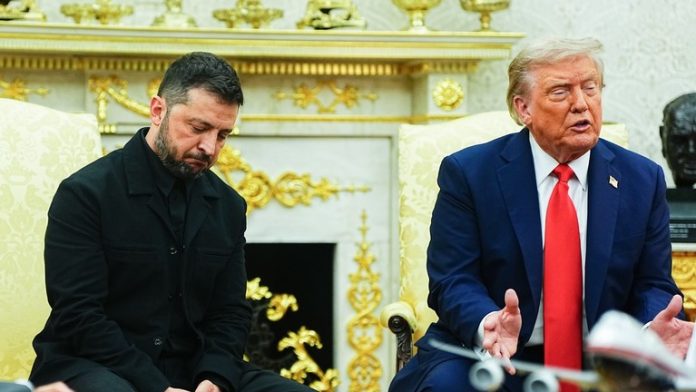
“The risk remains that the US walks away from the whole issue and leaves it up to the Europeans,” said John Foreman, former UK defense attaché to Moscow and Kiev.

Earlier, Bloomberg reported that Witkoff had advised Russia on how to shape a peace proposal that Trump might find acceptable. In parallel, French President Emmanuel Macron reportedly warned that the US could “betray” Ukraine, while Chancellor of Germany Friedrich Merz was said to have accused Washington of “playing games.”

The EU is exploring ways to use roughly €260 billion ($280 billion) in frozen Russian central bank assets held at Euroclear, but efforts remain stalled. Belgium has demanded strong safeguards, while Hungary has blocked earlier funding plans.

Washington opposes fully seizing the assets and prefers using only the generated profits, slowing agreement further. Merz argued the funds should stay under EU control and support Europe’s own priorities.


Iran’s president marks Students Day, calls for dialogue and national unity

Speaking to students, Pezeshkian said public debate must be conducted “with kindness, logic and reason, without accusations or mockery.”

He emphasized humility and avoiding ridicule, noting that Iranians should not divide one another into “insiders and outsiders.”

Referring to low voter turnout in recent elections, the president said both those who voted and those who abstained “belong to Iran,” adding that honest conversation is needed to rebuild trust.

“If we want to preserve our country, we must answer people’s concerns,” he said.

Pezeshkian acknowledged longstanding structural problems, including shortages in electricity, water and foreign currency, and said they stem from decades of policy imbalance.

The president called on students to accept competing viewpoints and avoid disrupting each other’s speech. “Everyone who spoke today wants this country to improve,” he said, urging cooperation with experts and experienced figures to find viable solutions.

National Student Day commemorates the murder of three students of University of Tehran on December 7, 1953, by the Iranian police during the reign of the US-backed Pahlavi regime in Iran.

Annually, student movements at various universities across Iran hold gatherings and seminars to observe the occasion.

US national security document serves Israel’s interests: Iran

Esmael Baghaei

Speaking at a press conference on Sunday, Baqaei said the United States has placed itself “in the position of judging all countries” and is solely focused on maintaining Israeli dominance in the region.

“This in itself is evidence of America’s complicity in the crimes committed by the Israeli regime,” he added.

Baqaei said the document explicitly mentions ensuring the security of the Israeli regime and securing energy resources.

He went on to say that the Israeli regime’s crimes in the region and in Gaza continue, noting that nearly 400 innocent people have recently lost their lives.

“Israel is destroying whatever remains of Gaza,” he said, adding that UN reporters are being seriously threatened — a sign of US-granted impunity to the Israeli regime.

Responding to the Persian Gulf Cooperation Council’s renewed claims over the three Iranian islands in the Persian Gulf, Baqaei said there is no historical or legal doubt about Iran’s sovereignty over Abu Musa, Greater Tunb and Lesser Tunb.

“This statement is merely a repetition of past claims, and we reject it,” he said.

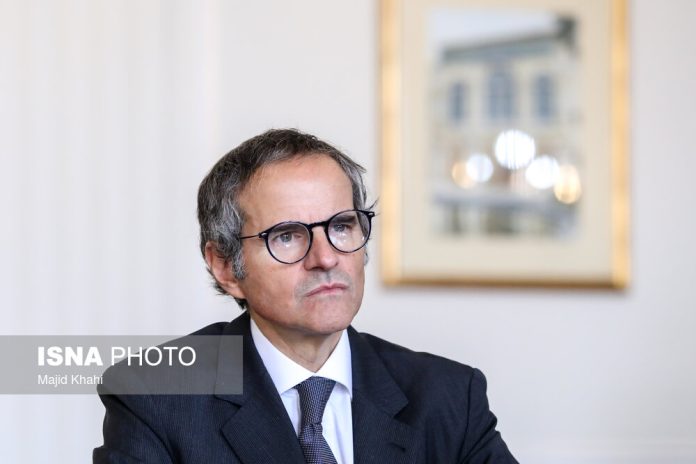
Regarding IAEA Director General Rafael Grossi’s recent consultations with EU foreign policy chief Kaja Kallas and Egypt’s foreign minister about Iran, Baqaei said: “As a member state, we are in direct contact with the Agency through our mission in Vienna. There is no mediation involved.”

On the exchange of messages between Iran and the United States through other countries, he added: “It is common for regional officials to convey messages. Our official channel of communication with the US is the US Interests Section in Iran, namely the Swiss Embassy.”

Iran’s parliament speaker warns regional states against challenging sovereignty over Persian Gulf islands

Mohammad Bagher Ghalibaf

Speaking in a pre-session address, he called the claim “baseless, absurd and made under foreign influence,” insisting that the three islands are an inseparable part of Iran’s sovereign territory.

Ghalibaf urged the neighboring states “not to test the will of the Iranian nation” in defending its territorial integrity, adding that Iran seeks stability, peace and good-neighborly relations but expects the same approach from regional governments.

He also called on the Iranian administration to allocate special funding in next year’s budget to support development plans for the three islands under Article 61 of the Seventh Development Plan.

Ghalibaf further commended the Islamic Revolution Guard Corps Navy for its large-scale military exercise held in the Persian Gulf, the Naze’at Islands and the Strait of Hormuz, noting the “precise and successful” launch of domestically developed missiles with ranges exceeding the length of the Persian Gulf.

He also praised the historical role of university students in confronting foreign domination, arguing that global powers, particularly the US, hold “longstanding hostility” toward Iranian students for resisting foreign interference.

US yet unwilling to engage in serious talks: Iran

In an interview with Japan’s Kyodo News agency on Saturday, the top diplomat said the Islamic Republic’s nuclear facilities were “bombarded, destroyed, and heavily damaged” during the unprovoked and illegal Israeli-American war against the country in June.

He described the assault as “perhaps the biggest violation of international law” ever committed against a safeguarded facility monitored by the International Atomic Energy Agency (IAEA).

Araghchi said the strikes had created structural damage and potential radiation risks that Tehran “has never seen before,” adding that there was “no precedent of a peaceful nuclear facility being bombarded.”

He added that the situation had exposed a procedural gap inside the IAEA regarding how to inspect such sites in light of this precedence.

He noted that the Islamic Republic and the IAEA had reached a framework in Cairo earlier this year to define a mechanism for inspecting and stabilizing the damaged facilities, but that the process was undermined when the United States and the three European parties to a 2015 nuclear deal with Tehran sought to restore previous UN Security Council sanctions against the nation.

Araghchi called on Japan to share its technical expertise in nuclear safety, citing its experience following Hiroshima, Nagasaki, and the Fukushima Daiichi disaster.

He emphasized that any cooperation with Japan would be limited to technical safety issues, not inspections, which he said remained an IAEA responsibility. “On the technical aspects of these safety challenges, cooperation with Japan can be very useful,” the official noted.

Addressing prospects for nuclear talks, Araghchi said Iran remained open to diplomacy, but wanted guarantees of a “fair and balanced” outcome.

He reiterated that the deadlock affecting diplomacy stemmed from American demands, introduced under President Donald Trump, for the Islamic Republic to halt all uranium enrichment processes, a position Tehran categorically rejects.

The foreign minister said the core issue remained Washington’s reluctance to recognize Iran’s right to peaceful nuclear technology, including enrichment, under the NPT.

According to Araghchi, the Islamic Republic was prepared to accept limitations on enrichment levels and centrifuge types, and negotiations could progress once the United States accepted the country’s peaceful nuclear energy program and lifted the illegal and unilateral sanctions it had imposed on the country.

“For the time being [though], we are not convinced they are ready for a real, serious negotiation,” he added.


Syria’s president accuses Israel of ‘exporting crises’ to distract from Gaza ‘massacres’

Addressing the Doha Forum in the Qatari capital, Sharaa claimed that Israel was attempting to justify its actions against several Middle Eastern countries under the false pretext of “security concerns”.

“Israel… tries to run away from the horrifying massacres committed in Gaza, and it does so by attempting to export crises,” Sharaa said in conversation with CNN’s chief international anchor Christiane Amanpour.

“Israel has become a country that is in a fight against ghosts,” he continued, before adding that Israel was exploiting the events of 7 October to justify an aggressive posture.

“Since we arrived in Damascus, we sent positive messages regarding regional peace and stability… and that we are not interested in being a country that exports conflict, including to Israel,” Sharaa stated.

“But in return, Israel has met us with extreme violence,” he added, saying that Israel had carried out more than 1,000 air strikes and 400 ground incursions since the fall of the Assad dynasty on 8 December 2024.

The interim leader also reiterated his call for Israel to withdraw from territories seized by Israel since then, and claimed that negotiations were under way with the United States for an Israeli withdrawal.

Israeli forces crossed into southern Syria as the Bashar al-Assad government fell, and continue to occupy a United Nations buffer zone – the strategic heights of Mount Hermon – which overlooks Israel, Lebanon and Syria.

Earlier this week, US President Donald Trump issued a veiled warning to Israel, and said it should not interfere with Syria’s “evolution” after it carried out a deadly raid that killed more than a dozen people.

“The United States is very satisfied with the results displayed, through hard work and determination, in the country of Syria,” Trump wrote on his social media platform, TruthSocial.

“It is very important that Israel maintain a strong and true dialogue with Syria and that nothing takes place that will interfere with Syria’s evolution into a prosperous state,” he added.

In his conversation on Saturday, Sharaa expressed his support for the 1974 disengagement agreement with Israel, adding that tampering with it “and seeking other agreements such as a demilitarised zone… could lead us to a dangerous place”.

“Who will be protecting this buffer zone or this demilitarised zone if the Syrian army or Syrian forces aren’t going to be there?” he asked.

Sharaa also told the forum that the Assad government had left behind deep sectarian divisions, but claimed his “administration prioritised reconciliation and forgiveness to build a sustainable peace”.

The president pointed to economic recovery as a driver of stability, noting efforts to convince Washington to lift the Caesar Act sanctions, which he said were originally imposed to punish the former regime.

Despite lingering challenges, Sharaa insisted Syria was on a “positive path toward stability and economic growth”.

He stressed that today, “everyone is represented in government according to competence, not sectarian quotas”, describing this as a new path from which others could learn how to manage affairs after wars and crises.

He added that Syria’s reconstruction was not tied to individuals but to institutions, calling this “the greatest challenge of the transitional phase the country is going through”.


Kiev’s European backers secretly admit territory loss likely: El Pais

According to the newspaper, the change in stance became prominent during recent meetings between Ukrainian negotiator Rustem Umerov and envoys from France, Germany, Finland, Italy, and the UK.

The discussions reportedly highlighted diverging positions among the European group, with some officials suggesting that a durable ceasefire would be unlikely without major territorial compromises by Ukraine. Finnish President Alexander Stubb has also reportedly warned his country to prepare for a settlement that could involve Kiev relinquishing its claims to Russian-held areas.

US Secretary of State Marco Rubio has likewise outlined the territorial question as the principal obstacle to a peace deal, saying Washington is trying to identify a solution to the impasse.

El Pais noted that the idea of concessions remains unacceptable to Poland and the Baltic states, whose governments claim that any agreement involving territorial losses, even temporary or linked to a frozen-conflict arrangement, would endanger their own security. Moscow has consistently denied having any intention of attacking NATO or EU states.

The reported shift comes as several European leaders have voiced concern about Washington’s role in the peace talks and about the EU being sidelined. In a leaked transcript published by Der Spiegel on Monday, French President Emmanuel Macron reportedly told other EU leaders that the US could “betray” Ukraine on the territorial question without providing security guarantees.

German Chancellor Friedrich Merz, NATO Secretary-General Mark Rutte, and Finland’s Stubb reportedly also shared Macron’s view that continued peace efforts could pose a “great danger” for Ukraine’s Vladimir Zelensky personally.

Moscow has announced the EU effectively shut itself out of the process by pursuing “fantasies” about inflicting a strategic defeat on Russia, presenting “unacceptable” demands, and lacking a “peaceful agenda.”

US set to deport more Iranians back to their home country: CNN

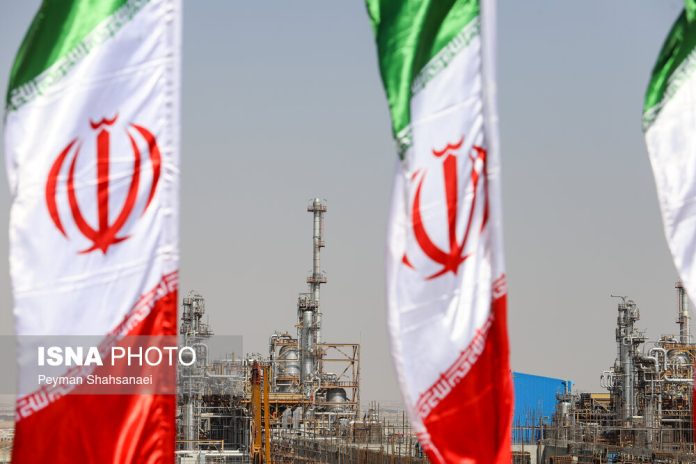
Iran Flag

It is the second such deportation flight after a rare agreement between Washington and Tehran, which do not have diplomatic relations, amid the Trump administration’s extreme push to expel undocumented immigrants.

There are serious concerns from human rights and advocacy organizations about the Iranians who fled to the US and may now be forced to return. The State Department’s latest human rights report, issued under the Trump administration, claimed there are “significant human rights issues” in Iran.

The National Iranian American Council, a nonprofit organization, called on the administration to halt the flight.

According to the source familiar with Sunday’s deportation flight, it is expected to stop in Kuwait en route to Iran. The first deportation flight was in September.


Japan accuses Chinese fighters of directing fire-control radar at its aircraft

In a post on X early on Sunday, Koizumi said that Tokyo has lodged a “strong protest” about the two incidents and made “a stern demand for measures to prevent recurrence”.

“The radar illumination… was a dangerous act that exceeded the range necessary for safe aircraft flight,” he added.

A fire-control radar lock is one of the most threatening acts a military aircraft can take, because it signals a potential attack, forcing the targeted aircraft to take evasive action.

In response later on Sunday, a Chinese navy spokesperson stated that a Japanese self-defence force aircraft repeatedly approached and disrupted the Chinese navy as it was training, adding that Japan’s claims were inconsistent with the facts.

The encounters over the islands, which are close to disputed territory claimed by both Japan and China, are the most serious run-ins between the two militaries in years.

They came as relations between the two countries sour over Japanese Prime Minister Sanae Takaichi declaring in November that Tokyo could respond to Chinese military action against Taiwan if the moves also threatened Japan’s security.

Democratically governed Taiwan is claimed by Beijing and lies just 110km (68.4 miles) from Japan’s westernmost Yonaguni Island.

Japan hosts the biggest overseas concentration of United States military power, including warships, aircraft and troops, with a big chunk of that contingent, including thousands of US Marines, based in Okinawa.

According to Koizumi, the Chinese J-15 jets involved in the two incidents on Saturday were launched from China’s Liaoning aircraft carrier, which was manoeuvring south of the Okinawan islands along with three missile destroyers.

“It is extremely regrettable that such incidents have occurred,” Koizumi’s statement noted.

No damage or injuries were reported from Saturday’s incidents near Okinawa, Koizumi added in his post.

The Reuters news agency, citing sources and intelligence reports, said that China deployed a large number of naval and coastguard ships across East Asian waters on Thursday. The boats at one point numbered more than 100, Reuters reported.

Taiwan’s government described that build-up as posing a threat to the Asia Pacific region. Japan announced it was monitoring Chinese activity closely.

Taiwan’s coastguard announced on Sunday that it was monitoring drills by three Chinese maritime safety ships on the western side of the Taiwan Strait’s median line, but added the situation in the waters surrounding Taiwan was currently “normal”.

Chinese state media said the search-and-rescue drills were in the central waters of the Taiwan Strait, patrolling “high-traffic areas, and areas with frequent accidents”.

Taiwan’s coastguard said China was using “misleading and false wording” about what it was doing, with the aim of harassing Taiwan and carrying out psychological warfare.

China claims it alone exercises sovereignty and jurisdiction over the strait, a major trade route for about half of global container ships. The US and Taiwan say the strait is an international waterway.

Two key organizers of Kish marathon detained over violating Iranian law

According to the prosecutor, judicial supervision orders have also been issued.

A government official involved in organizing the marathon has been banned from employment in state institutions, while the private-sector organizer has been prohibited from engaging in sports management activities and organizing athletic events.

The prosecutor explained that one of the detainees is an official of the Kish Free Zone Organization, and the other is an individual from the private company responsible for running the marathon.

After the charges were formally presented to them, both suspects were issued bail orders. Meanwhile, temporary judicial supervision orders were issued under Article 247 of Iran’s Code of Criminal Procedure. These include the employment ban for the government official and the prohibition on sports-related managerial activities for the private-sector organizer.

The Kish prosecutor underscored that lawful recreational and sports activities that promote economic vitality are supported, but the judiciary will firmly pursue the case to uphold national laws and regulations, ensure adherence to religious principles, and enforce deterrent action against violations in public events.