Sunday, December 21, 2025
Home Blog Page 19

New wave of mysterious Caspian seal deaths raises alarm across region

Local authorities in Kazakhstan’s Mangystau region reported that roughly 500 seals have died along the coast since the beginning of the year, with more than 180 carcasses found in early November alone.

Officials say over 3,500 seals have been recorded dead in the area since 2022.

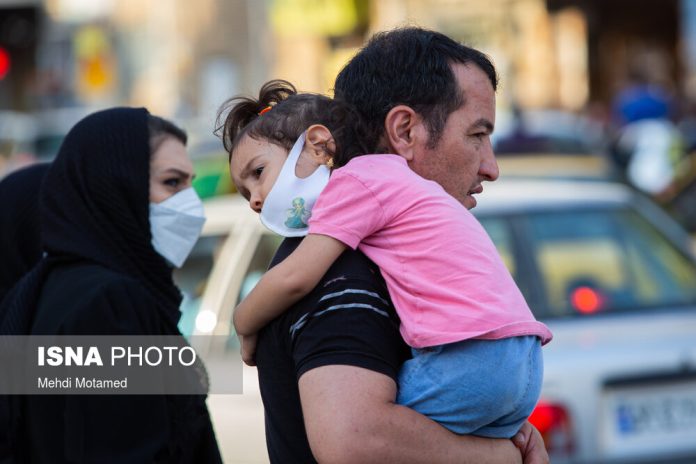
The incident has drawn attention in Iran as well, where 54 dead seals have been recovered along the country’s northern shores since spring.

Iranian environmental officials say most carcasses discovered on Iranian beaches likely drifted southward from northern parts of the Caspian Sea.

Preliminary assessments in Kazakhstan show no evidence of oil contamination, chemical spills, or fishing-net entanglement.

Experts say viral infection, weakened immunity and declining food resources remain possible causes, though conclusive results await laboratory analysis.

Environmental groups in Kazakhstan and Iran have urged authorities to establish clear protocols for responding to stranded or dead seals and to expand coastal monitoring.

Scientists warn that falling water levels, shrinking wetlands and habitat disruption across the Caspian basin are intensifying risks for the species and demand coordinated action among all five coastal countries.

Trump claims Zelensky ‘isn’t ready’ to accept US peace accord

“I’m a little bit disappointed that President Zelensky hasn’t yet read the proposal, that was as of a few hours ago. His people love it, but he hasn’t,” Trump claimed as he spoke with reporters on Sunday night.

Days of negotiations between US and Ukrainian officials ended Saturday without an apparent breakthrough, with Zelensky calling the discussions “constructive, although not easy.”

His comments come as Zelensky was set to meet with the leaders of Britain, France and Germany in London on Monday, with discussions set to focus on the continuing talks between the US and Ukraine.

Off the back of the Trump-backed Gaza ceasefire, the US has been working to push through a peace deal between Ukraine and Russia. US officials claim they are in the final stage of reaching an agreement, but there is little sign that either Ukraine or Russia is willing to sign the framework deal drawn up by Trump’s negotiating team.

In his comments on Sunday, Trump said “Russia is, I believe, fine with [the deal], but I’m not sure that Zelensky’s fine with it. His people love it. But he isn’t ready.”

Russian President Vladimir Putin hasn’t publicly expressed approval for the White House plan and last week said that aspects of Trump’s proposal were unworkable. US envoys Steve Witkoff and Jared Kushner met Putin at the Kremlin last week but failed to achieve an obvious break through.

The US plan has been through several drafts since it first emerged in November, with criticism it was too soft on Russia. Despite ongoing efforts from Trump and his team to push through a deal, progress in the peace talks has been slow, with disputes over security guarantees for Kyiv and the status of Russian-occupied territory still unresolved.

“The American representatives know the basic Ukrainian positions,” Zelensky stated in his nightly video address on Sunday.

Trump has had a hot-and-cold relationship with Zelensky since reentering the White House, and has repeatedly urged the Ukrainians to cede land to Russia to bring an end to a conflict he says has cost far too many lives.

Zelensky stressed on Saturday he had a “substantive phone call” with the American officials engaged in the talks with a Ukrainian delegation in Florida. He said he had been given an update over the phone by US and Ukrainian officials at the talks.

“Ukraine is determined to keep working in good faith with the American side to genuinely achieve peace,” Zelensky wrote on social media.

Trump’s criticism of Zelensky came as Russia on Sunday welcomed the Trump administration’s new national security strategy. Spokesperson Dmitry Peskov said the updated strategic document, which spells out the administration’s core foreign policy interests, was largely in line with Moscow’s vision.

The document released Friday by the White House said the US wants to improve its relationship with Russia after years of Moscow being treated as a global pariah. The document was also highly critical of European countries, and said that the continent was at risk of “civilisational erasure”.

Trump’s outgoing Ukraine envoy, Keith Kellogg, stated at a defence forum on Saturday that the administration’s efforts to end the war were in “the last 10 metres”. He added there were two outstanding issues: territory and the fate of the Zaporizhzhia nuclear power plant.

Kellogg is seen as among the US officials most sympathetic to Kyiv’s position, but is due to leave his role in January and was present at the Florida talks. Many others in Trump’s orbit, including Witkoff, have been much more open to adopting Russian positions. Trump’s son, Donald Jr, said at a forum in Doha on Sunday that Zelensky was deliberately continuing the conflict for fear of losing power if it ended. He said the US would not be “the idiot with the chequebook” any longer.


Israeli PM rules out creation of Palestinian state

Netanyahu made the remarks on Sunday in Jerusalem during a joint press conference with German Chancellor Friedrich Merz. While Merz reaffirmed Berlin’s commitment to the creation of an independent Palestinian state, Netanyahu openly disagreed with him, claiming that such an entity would be “committed to our destruction at our doorstep.”

“They already had a state in Gaza, a de facto state, and it was used to try to destroy the one and only Jewish state,” Netanyahu stated, referring to the Palestinian enclave that has been effectively run by Hamas.

Israel believes that there’s “a path to advance a broader peace with the Arab states” and to “establish a workable peace with our Palestinian neighbors” that does not involve the creation of an independent entity, he added.

Israel’s prime minister has repeatedly rejected the two-state solution proposed by the UN Security Council. The scheme entails the creation of a Palestinian state within the armistice lines that existed before the 1967 Six-Day War with East Jerusalem as its capital.

The original UN plan for partition in 1947 envisioned separate Jewish and Arab states, but a series of subsequent wars allowed Israel to seize most of the land which had been allocated to the Palestinians.

Netanyahu noted that the occupation of the West Bank, considered to be illegal under international law, remains a subject of discussion, yet signaled that the status quo is expected to remain in place for the foreseeable future.


New US security strategy accords largely with Russia’s view: Kremlin

Kremlin

The U.S. National Security Strategy described Trump’s vision as one of “flexible realism” and argued that the U.S. should revive the 19th century Monroe Doctrine, which declared the Western Hemisphere to be Washington’s zone of influence.

The strategy, signed by Trump, also warned that Europe faces “civilizational erasure”, that it was a “core” U.S. interest to negotiate an end to the war in Ukraine, and that Washington wanted to reestablish strategic stability with Russia.

“The adjustments that we see correspond in many ways to our vision,” Kremlin spokesman Dmitry Peskov told state television reporter Pavel Zarubin when asked about the new U.S. strategy.

Such fulsome public agreement between Moscow and Washington on the tectonic plates of global politics is rare, though they did cooperate closely after the 1991 fall of the Soviet Union on returning nuclear weapons from former Soviet republics to Russia, and after the deadly Sept. 11, 2001, attacks on the United States.

During the Cold War, Moscow portrayed the United States as a decadent capitalist empire doomed by the historical certainties of Marxism, while U.S. Ronald Reagan in 1983 called the Soviet Union an “evil empire” and the “focus of evil in the modern world.”

After the Soviet collapse, Moscow expressed hopes for a partnership with the West but as Washington moved to support the enlargement of the NATO alliance, as outlined in President Bill Clinton’s 1994 strategy, tensions began to mount. They were pushed to breaking point under President Vladimir Putin, who rose to the top Kremlin job on the last day of 1999.

Asked about the pledge in the U.S. document to end “the perception, and preventing the reality, of the NATO military alliance as a perpetually expanding alliance”, Peskov stated it was encouraging.

But Peskov also cautioned that what he said was the U.S. “deep state” saw the world differently to Trump, who has used the term to refer to an allegedly entrenched network of U.S. officials who seek to undermine those who challenge the status quo, including Trump himself.

Critics of Trump say there is no such thing as a “deep state,” and that Trump and his allies are trafficking in a conspiracy theory to justify an executive-branch power grab.

Since Russia’s 2014 annexation of Crimea and its 2022 invasion of Ukraine, U.S. strategies have designated Moscow as an aggressor or a threat that was trying to destabilise the post-Cold War order by force.

In comments to the state-run TASS news agency, Peskov added calling for cooperation with Moscow on strategic stability issues rather than describing Russia as a direct threat was a positive step.


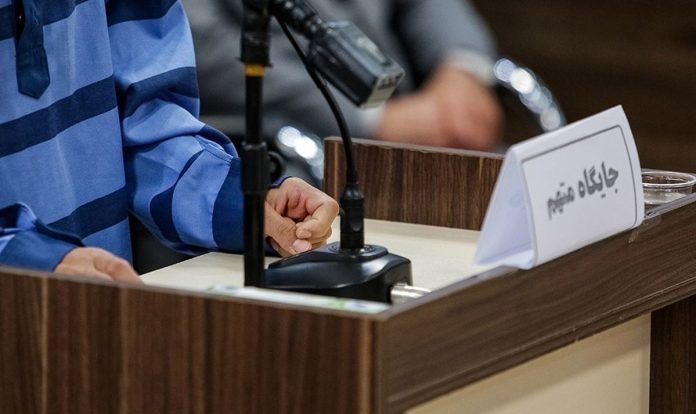
Appeals court lifts detention order for actor Pejman Jamshidi, cites lack of new evidence

Kambiz Barjas, Jamshidi’s lawyer, said that the only medical report in the case file dates back to the early days of the complaint and that neither party had been referred to the forensic medical authority again afterward.

“The medical information in the case is the same initial data. No new documentation has been added,” he said.

Barjas stated that the ruling issued by Branch One of the Court of Appeals fully aligned with the legal team’s arguments.

“If the forensic report or any other evidence in the file contained proof supporting the alleged accusations od sexual misconduct, the appeals court would not have overturned the initial verdict,” he noted.

He emphasized that the case contains a fixed set of evidence that has not changed over time.

“This is not a matter of competing claims. The final decision rests with the appeals court, which examined the same documents and determined whether the allegations were substantiated,” he said.

Barjas noted that the appeals court explicitly stated there was “no new evidence that would justify the continuation of Jamshidi’s detention,” and that under the law, the court was obligated to lift the detention order and overturn the preliminary ruling.

Reports first surfaced on October 20 regarding the arrest of a “well-known actor.” Hours later Jamshidi was identified as the individual involved in the complaint. The case was filed following a complaint by a woman, and Jamshidi was initially detained before being released on bail.

IRGC: Iran struck Haifa refinery twice, killed 36 in attack on Mossad facility

Brigadier General Nayini, the IRGC spokesperson, said the conflict began after a “miscalculation” by Israel, assuming Iran was weakened and unable to respond.

According to him, Israeli planners believed that hitting Iran’s nuclear and missile infrastructure and removing senior commanders would prevent Tehran from mounting a counterattack.

According to Nayini, Iran’s armed forces rapidly restored command-and-control structures on the first day of the conflict, enabling the launch of the “Operation True Promise” only hours later. He characterized the response as a coordinated campaign involving electronic warfare, cyber operations, missiles, and drones, asserting that Iran had “full intelligence visibility” over Israeli targets.

Nayini added that after an Israeli strike on a fuel storage facility in Tehran, Iran responded within five hours by hitting the Haifa refinery “in two waves,” asserting that the refinery was put out of operation.

He also said Iran targeted an Israeli intelligence site, which was a “Mossad center,” stressing that the attack resulted in 36 casualties.

Ukraine leader had a ‘difficult’ call with US negotiators: Axios

Zelensky

Zelensky spoke over the phone on Saturday with US peace envoy Steve Witkoff and President Donald Trump’s son-in-law and informal adviser Jared Kushner.

According to Axios, the discussion about territory was “difficult,” as Kiev has rejected Russia’s key demand to withdraw troops from the Donbass. The US has been “trying to develop new ideas to bridge the issue,” the publication cited its source as saying.

The sides made “significant progress and neared agreement” on US security guarantees for Ukraine.

Zelensky described the call on X as “long and substantive,” adding that Ukraine was “determined to keep working in good faith with the American side to genuinely achieve peace.”

Trump previously hinted that Ukraine may have to make territorial concessions to Russia, arguing that Moscow would eventually take full control of the Donbass.

Witkoff and Kushner met with Russian President Vladimir Putin in the Kremlin on Tuesday. Russian presidential aide Yury Ushakov said that although the sides had disagreements, the conversation was “very useful and constructive.”

During his trip to India on Thursday, Putin told local media that Russia would push Ukrainian troops out of the Donbass by force if they refused to withdraw. He previously said that, for a lasting peace, Ukraine must recognize Russia’s new borders and drop its bid to join NATO in favor of permanent neutrality.


Hamas says will hand over weapons to a Palestinian authority ‘if the occupation ends’

Hamas

“Our weapons are linked to the existence of the occupation and the aggression,” Hamas chief negotiator and its Gaza chief Khalil al-Hayya said in a statement, adding: “If the occupation ends, these weapons will be placed under the authority of the state.”

Asked by AFP, Hayya’s bureau said he was referring to a sovereign and independent Palestinian state.

“We accept the deployment of UN forces as a separation force, tasked with monitoring the borders and ensuring compliance with the ceasefire in Gaza,” Hayya continued, signalling his group’s rejection of the deployment of an international force in the Strip whose mission would be to disarm it.

While the ceasefire halted the heavy fighting of the two-year war, Gaza health officials say that Israel has killed more than 360 Palestinians since the truce took effect on October 10.


Herzog pushes back against Trump’s pressure to pardon Netanyahu on corruption charges

Trump and Netanyahu

Speaking to Politico, Isaac Herzog confirmed that his office had received a pardon request from Netanyahu and that it is being reviewed through “a process which goes through the Justice Ministry and my legal adviser and so on.”

“This is certainly an extraordinary request and above all when dealing with it I will consider what is the best interest of the Israeli people,” he added.

Rebuffing Trump’s pressure, Herzog said he values the US president’s friendship and views but stressed that Israel’s institutions operate independently.

“Israel, naturally, is a sovereign country and we fully respect the Israeli legal system and its requirements.”

Asked what would happen if he rejects the pardon, Herzog said Israel’s relationship with the US and with Trump remains “warm,” adding that the issue should be viewed in the proper context and warning against “doomsday analysis.”

On Israel’s elections set for next year, Herzog added the key question will be “how Israelis view the future of the relationship with the Palestinians.”

Israeli prosecutors on Wednesday resumed questioning Netanyahu in court over the corruption charges against him.

This was the second hearing since Netanyahu submitted a request on Sunday to Herzog to pardon him in his corruption trial, a move that sparked division between supporters and opponents.

Since the start of his trial, Netanyahu has refused to admit guilt, while Israeli law allows the president to grant a pardon only after a defendant acknowledges guilt.

Netanyahu also faces charges of war crimes and crimes against humanity, with the International Criminal Court issuing arrest warrants for him and former Defense Minister Yoav Gallant in November 2024 over atrocities in Gaza, where over 70,000 people, mostly women and children, have been killed since October 2023.

Europe fears full US exit from Ukraine war: Bloomberg

Officials fear Trump could make a deal with Moscow that leaves Kiev’s remaining backers managing the conflict without Washington’s military or security support, the news outlet has said, citing sources.

On Tuesday, Trump’s special envoy Steve Witkoff and his son-in-law Jared Kushner visited Moscow to discuss possible paths toward a settlement with Russian President Vladimir Putin. Putin called the talks “necessary” and “useful” but rejected parts of the US proposal. Trump, however, said the negotiators left Moscow confident that both sides want to end the conflict.

A Western European official cited by Bloomberg described the worst-case scenario as a full US withdrawal, the lifting of pressure on Russia, a ban on the use of US weapons by Ukraine, and an end to intelligence sharing.

A less-damaging option would be the US stepping back from talks but still selling arms to NATO for onward transfer to Ukraine, while intelligence cooperation would be kept in place.

The unease has been compounded by Trump’s release of a 33‑page National Security Strategy, which warned that Europe risked being “wiped away” unless it overhauled its politics and culture.

The document accused Washington’s European partners of harboring “unrealistic expectations” regarding the conflict and displaying a “lack of self‑confidence” in dealing with Russia. It also stated that the US remains “open to structured diplomatic channels with Russia” wherever such engagement aligns with broader American interests.

“The risk remains that the US walks away from the whole issue and leaves it up to the Europeans,” said John Foreman, former UK defense attaché to Moscow and Kiev.

Earlier, Bloomberg reported that Witkoff had advised Russia on how to shape a peace proposal that Trump might find acceptable. In parallel, French President Emmanuel Macron reportedly warned that the US could “betray” Ukraine, while Chancellor of Germany Friedrich Merz was said to have accused Washington of “playing games.”

The EU is exploring ways to use roughly €260 billion ($280 billion) in frozen Russian central bank assets held at Euroclear, but efforts remain stalled. Belgium has demanded strong safeguards, while Hungary has blocked earlier funding plans.

Washington opposes fully seizing the assets and prefers using only the generated profits, slowing agreement further. Merz argued the funds should stay under EU control and support Europe’s own priorities.