Sunday, December 21, 2025
Home Blog Page 18

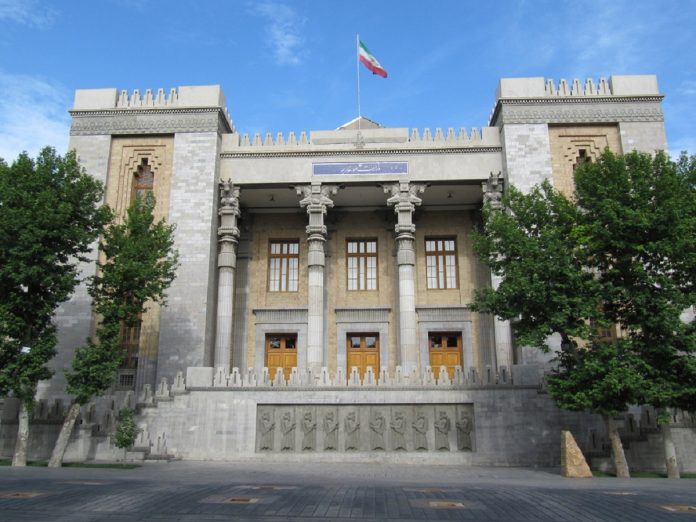
Azerbaijan’s president voices commitment to promotion of ties with Iran

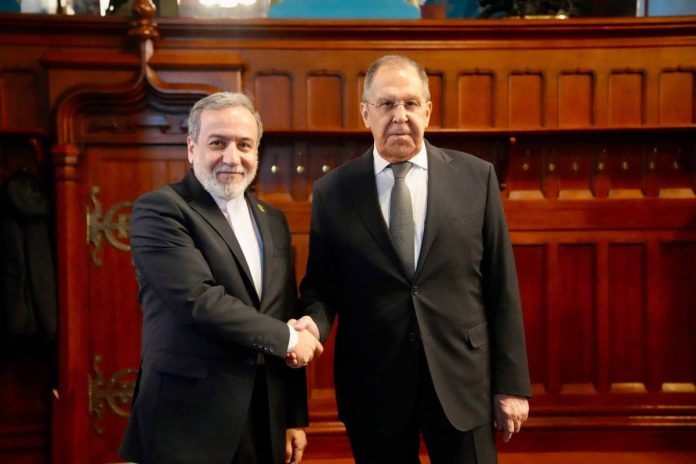
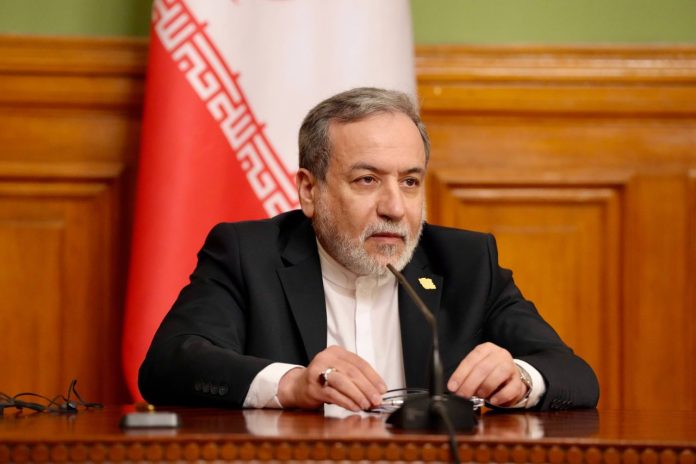
Aliyev made the remarks during a meeting with visiting Iranian Foreign Minister Abbas Araghchi in Baku on Monday.

The talks focused on key bilateral issues, including political cooperation, neighborly relations, and mechanisms for managing ties between the two countries.

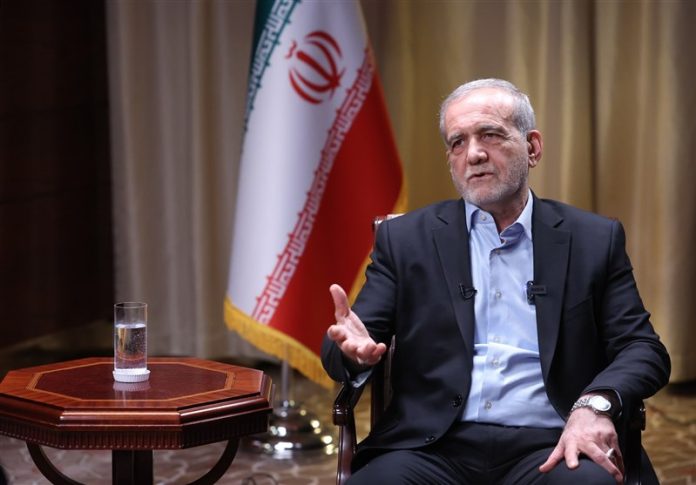
Araghchi conveyed greetings from Iranian President Masoud Pezeshkian and highlighted the Islamic Republic’s determination to deepen cooperation across all areas of mutual interest.

Emphasizing the importance of continuous diplomatic engagement, the top diplomat stressed that sustained consultations help resolve misunderstandings and manage bilateral issues effectively.

Aliyev described the visit as historic and pivotal for enhancing mutual understanding, while expressing satisfaction with the steady growth of the Tehran-Baku relations.

During his visit, Araghchi also discussed Tehran’s perspective on regional developments with senior Azerbaijani officials, including his Azeri counterpart.

Commenting on the pending meeting, Iranian Foreign Ministry spokesperson Esmaeil Baghaei on Saturday had highlighted the significance of the bilateral relationship, noting shared culture, religion, and historical ties. He had emphasized that diplomatic visits like the one set to be paid by Araghchi aimed to reinforce cooperation and contribute to peace and stability in the Caucasus region.

The Iranian foreign minister’s visit took place around three months after the conclusion of a United States-mediated agreement between Azerbaijan and Armenia, which triggered warnings about Washington’s interventionist intentions concerning the region.

In reaction to the agreement, the Islamic Republic has welcomed regional peace, but invariably warned about the repercussions of foreign intervention, stressing that it constantly observes ongoing regional developments as a means of guarding against uncalled-for interference.


Official: 1.8 million Afghans exit Iran via Dogharoon; northeast border 50% secured

Amrollah Shamaghdari told Tasnim News Agency that the outflow, which surged during Iran’s war with Israel in June, has now stabilized and slowed significantly.

Shamaghdari noted that the departures involve Afghans residing in Khorasan Razavi as well as 11 other provinces, marking one of the largest waves of migration in recent years.

Despite concerns that such a mass exodus could disrupt the labor market or local services, official data indicate that impacts on employment, urban services, and security have been limited to around 10 percent.

The official highlighted a new approach to Afghan investment in Iran, emphasizing formal employment and registration of economic activities through a private-sector database, which he said would help regulate migration and prevent illegal entry.

Also regarding border security, Shamaghdari reported that nearly 50 percent of the northeastern border has been secured with walls, towers, thermal cameras, and night-vision equipment.

A joint Afghan delegation is expected to visit the region to coordinate final border construction. Completion of the Iran-Afghanistan border wall is projected over three years, contingent on bilateral cooperation.

Iran resumes flights to Sharjah from five cities months after conflict with Israel

Iran Airport

The flight left Imam Khomeini International Airport at 10:30 a.m. local time.

Speaking to reporters at the airport, Hormatollah Rafiei, head of Iran’s Association of Air Travel and Tourism Agencies, said the resumption marks an important step toward normalizing regional travel following a period that had “deeply affected public sentiment and the country’s economic conditions.”

He noted that one Iranian carrier had taken the lead in reopening the route.

Rafiei said flights to Sharjah, one of the busiest and most in-demand regional destinations, have now restarted from five Iranian cities: Tehran, Lar, Bandar Abbas, Qeshm and Ahvaz.

He added that the schedule includes 14 weekly flights, expressing hope that the restored route will support a broader recovery in Iran’s tourism and aviation sector.

“We expect these flights to continue steadily and pave the way for expanding international operations,” he said.

At least 80k Israeli soldiers treated for psychological disorders since Gaza war: Report

Israeli Army

Tamar Shimoni, deputy head of the ministry’s Rehabilitation Department, told Army Radio that the ministry treated about 62,000 psychological cases on the evening of Oct. 7, 2023, and the figure has climbed to roughly 85,000—an increase she described as “unprecedented.”

She said one-third of Israeli soldiers face psychological problems linked to the events of Oct. 7.

Shamoni added a single therapist now handles up to 750 patients, and in some areas even more, making it difficult to reach everyone who needs care quickly.

In November, the newspaper Yedioth Ahronoth warned of a “widespread psychological crisis” in Israel, citing rising drug addiction and nearly two million people in need of mental health support, including large numbers of soldiers.

Israeli media has also reported a rise in suicides within the military. The daily Maariv reported Saturday that a soldier died by suicide after suffering from post-traumatic stress following combat.

It added that a reserve officer from the Givati Brigade also died by suicide last week after a psychological struggle.

According to Israeli military data published in October, the army recorded 279 suicide attempts over 18 months, including 36 deaths.

Israel has killed more than 70,000 people, mostly women and children, and injured over 171,000 others in Gaza since October 2023.


Europe may need to shoot down Russian aircraft, drones violating NATO airspace: Czech president

NATO

“I believe there will be a moment, if these violations continue, where we will have to use stronger measures, including potentially shooting down a Russian airplane or drones,” Pavel told the Times.

“Russia wouldn’t allow repeated violations of their airspace. And we have to do the same.”

Pavel added that Russian aircraft and drones entering NATO airspace are “deliberate, well-planned and focused on several objectives,” including demonstrating that Russia “can do it,” testing Western air defense systems, and “testing our resolve to act in self-defense.”

Pavel has issued similar warnings before. In a Sept. 20 interview with public broadcaster Czech Television, he said NATO must remain united and “act firmly” in response to Russian provocations, including militarily if airspace violations continue, warning that “giving in to evil is simply impossible.”

Beyond Russia’s war in Ukraine, Pavel stated Europe will eventually need a new continent-wide security arrangement with Moscow, once a peace deal is reached on terms that uphold Ukraine’s sovereignty.

He added the “modern version” of such a framework would be a pan-European pact in which Russia recognizes the territorial sovereignty of all signatories and accepts “enforceable constraints on its behavior,” in a way that would echo the 1975 Helsinki Accords.

“Such a negotiation will have to be led with two equal sides,” Pavel said, adding, “Not Russia imposing on us, but rather coming to an agreement that will recreate, somehow, the situation which we had in the late Seventies.”

Pavel also argued that Europe should be able to fight and win a war on its own without substantial help from the United States. He warned that if the U.S. were “busy elsewhere, Asia-Pacific, for example,” and unable to provide key capabilities such as intelligence, transport, communications, and logistics, “We in Europe should be able to do it on our own.”

Russian missiles and drones have repeatedly violated NATO airspace during mass attacks on Ukraine, with Poland and Romania reporting incursions and debris falling on their territory since late 2023. Romania has authorized its military to shoot down drones that breach its airspace and has urged a more “robust” NATO response to such incidents.

Czechia has been one of Ukraine’s most active supporters, spearheading a Czech-led ammunition initiative that supplied 1.5 million shells in 2024 and aims to deliver up to 1.8 million more by the end of 2025. Prague has also provided extensive military aid, hosted large numbers of Ukrainian refugees, and backed closer security ties during President Volodymyr Zelensky’s visits to the country.


US to spend $800mn on support for Ukraine in 2026, 2027: Pentagon budget draft

The document also obligates the Pentagon chief to report to the House of Representatives and Senate on the temporary suspension or cessation of intelligence provision to Ukraine.

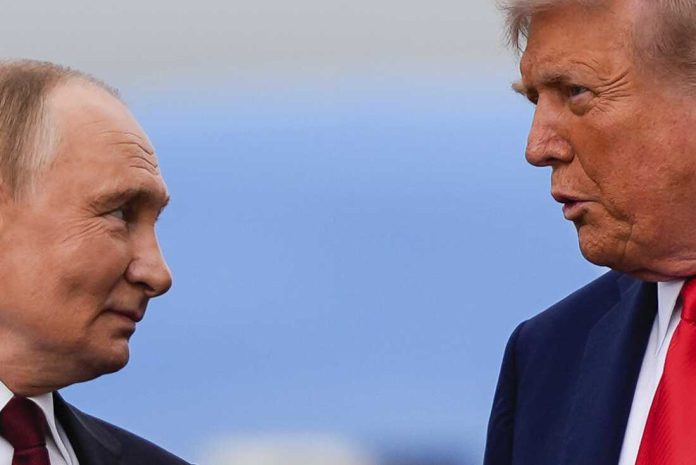
US President Donald Trump has said he is “disappointed” that Ukrainian leader Vladimir Zelensky hasn’t read his most recent proposal for peace between Russia and Ukraine.

“I have to say that I’m a little bit disappointed that President Zelensky hasn’t yet read the proposal, that was as of a few hours ago,” Trump told reporters in Washington, DC, on Sunday, without elaborating.

The US president added that Russia was “fine” with the plan but not the Ukrainian leader.

“I’m not sure that Zelensky is fine with it. His people love it, but he isn’t ready,” Trump added.

Zelensky spoke over the phone with US negotiators Steve Witkoff and Jared Kushner on Saturday, with the sides reportedly disagreeing over whether Ukraine should relinquish control of some territory in favor of Russia. In a video address late on Sunday, Zelensky said Ukraine “deserves a dignified peace,” and that he would hold consultations with Kiev’s European backers in the coming days.

Trump has argued in the past that Ukraine may have to withdraw troops from Donbass in accordance with Russia’s ceasefire terms. Zelensky, however, has ruled out abandoning any territory.

Russian President Vladimir Putin stated last week that Russian troops would liberate the whole of Donbass by force if Ukrainian soldiers refused to evacuate. Moscow has demanded that Kiev recognize Russia’s new borders, including Crimea and the two Donbass republics, as well as abandon its plan to join NATO and restrict the size of its military.


Off-road drivers compete in Iran’s national championship

Drivers from various provinces showcased their technical skills and endurance on challenging dirt tracks designed to test acceleration, control and obstacle navigation.

Organizers said the event reflects the growing popularity of off-road motorsport in Iran and highlighted the strong participation of female drivers.

More in pictures:

Kazakhstan announces upcoming visit by Iran’s President Pezeshkian

Masoud Pezeshkian

According to the statement, the trip is aimed at advancing bilateral cooperation and will include high-level talks focused on expanding economic and trade ties, enhancing transport and logistics connectivity, and promoting cultural and humanitarian exchanges between the two countries.

Kazakh news agency Kazinform, cited by IRNA, reported that officials in Astana view the visit as part of ongoing efforts to strengthen strategic cooperation. The agenda reflects growing momentum in relations, with bilateral trade nearly doubling over the past two years.

The Iranian delegation will include a large contingent of private-sector representatives. Hamed Asgari, deputy for international affairs at Iran’s Chamber of Commerce, said ahead of the trip that the business community is prepared to play a leading role in boosting economic engagement with Kazakhstan.

He described the visit, accompanied by more than 100 major Iranian companies, as a “turning point,” signaling a shift from general dialogue to concrete, project-based cooperation.

Asgari added that the scale of private-sector participation demonstrates Iran’s intention to expand its presence in Kazakhstan’s market and deepen long-term economic partnerships.

UN committed to supporting Syrian-led transition: Secretary-General

Syria War

“Today marks one year since the fall of the Assad government and the end of a decades-old system of repression,” Guterres said Sunday in a statement.

He paid tribute to the resilience and courage of the Syrian people, “who never stopped nurturing hope despite enduring unimaginable hardship,” calling it a day to honor their sacrifices and renew aspirations that fueled “historic change.”

Guterres added what lies ahead is more than a political transition but rather a chance to rebuild “shattered communities” and “heal deep divisions.”

“It is an opportunity to forge a nation where every Syrian — regardless of ethnicity, religion, gender or political affiliation — can live securely, equally, and with dignity,” he continued.

The UN chief noted the past year showed that meaningful change is possible when Syrians are empowered and supported in driving their own transition, stressing that challenges ahead are “not insurmountable.”

While humanitarian needs “remain immense,” Guterres noted progress in restoring essential services, expanding humanitarian access and creating pathways for refugees and displaced persons to return.

“The international community must stand firmly behind this Syrian-led, Syrian-owned transition,” he said, adding, “This includes ensuring respect for Syria’s sovereignty, removing barriers to reconstruction, funding humanitarian appeals, (and) promoting economic development.”

“On this anniversary, we stand united in purpose – to build a foundation of peace and prosperity and renew our pledge to a free, sovereign, united, and inclusive Syria,” he stated.

Syria is marking a year since the fall of Assad, which opened a transformative new era.

In early December 2024, the rule of the Baath Party, which came to power in 1963, collapsed when Damascus was seized and Assad fled to Russia.


Israeli PM says will not quit politics if he receives pardon

Benjamin Netanyahu

Asked by a reporter if planned on retiring from political life if he receives a pardon, Netanyahu replied: “no”.

Netanyahu last month asked President Isaac Herzog for a pardon, with lawyers for the prime minister arguing that frequent court appearances were hindering Netanyahu’s ability to govern and that a pardon would be good for Israel.

Pardons in Israel have typically been granted only after legal proceedings have concluded and the accused has been convicted. There is no precedent for issuing a pardon mid-trial.

Netanyahu has repeatedly denied wrongdoing in response to the charges of bribery, fraud and breach of trust, and his lawyers have said that the prime minister still believes the legal proceedings, if concluded, would result in a complete acquittal.

U.S. President Donald Trump wrote to Herzog, before Netanyahu made his request, urging the Israeli president to consider granting the prime minister a pardon.

Some Israeli opposition politicians have argued that any pardon should be conditional on Netanyahu retiring from politics and admitting guilt. Others have said the prime minister must first call national elections, which are due by October 2026.