Tuesday, December 30, 2025
Home Blog Page 2099

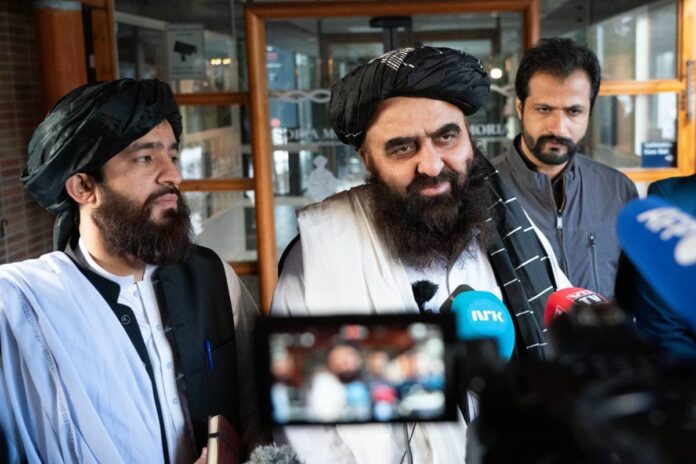
Acting Afghan FM says progress made in Norway talks

The Taliban and western diplomats have begun their first official talks in Europe since they took over control of Afghanistan in August.

The closed-door meetings were taking place at a hotel in the snow-capped mountains above the Norwegian capital.

Taliban representatives will be certain to press their demand that nearly $10 billion frozen by the United States and other Western countries be released as Afghanistan faces a precarious humanitarian situation.

“We are requesting them to unfreeze Afghan assets and not punish ordinary Afghans because of the political discourse,” said Taliban delegate Shafiullah Azam, adding, “Because of the starvation, because of the deadly winter, I think it’s time for the international community to support Afghans, not punish them because of their political disputes.”

Ahead of the talks, western diplomats met with Afghan women’s rights activists and human rights defenders to about their demands and assessment of the current situation on the ground. The meeting was attended by representatives of the EU, the US, Britain, France, Italy and hosts Norway.

Standing silent as attendees gathered, women’s rights activist Heda Khamoush, who lives in Kabul, held up the photos of Tamana Zaryabi Paryani and Parwana Ibrahimkhel, two women arrested by the Taliban last week following an anti-Taliban protest. They haven’t been seen since.

Rejecting the accusation the Taliban had abducted them, Azam stated he was “not aware of that” and suggested activists may be using this event to seek asylum.

The three-day talks opened on Sunday with direct meetings between the Taliban and civil society representatives.

On Monday the Taliban’s acting foreign minister spoke to reporters, saying meetings with Afghanistan’s civil society were not a negotiation, but rather a constructive exchange.

The country’s new rulers have been sharply criticized for their heavy-handed approach to security, dispersing women demonstrators with pepper spray and firing in the air, intimidating and and beating journalists and coming in the night to arrest anti-government demonstrators.

The Taliban have been criticized for establishing an interim Cabinet that is all-male and all-Taliban. Most are ethnic Pashtuns. Successive Afghan organizations as well as the international community have urged the Taliban to open the government to non-Taliban, as well as a strong showing of ethnic and religious minorities and women.

Muttaqi stated most of the civil servants who have returned to work are from the previous government and about 15,000 women are working in the health and education sectors. There has been no decision yet he said on more women in the government work force.

“We have not dismissed anyone,” he continued, adding that “this is progress, but of course it is not enough”.

Talks with European and US representatives were expected to cover everything from education to humanitarian aid to greater inclusivity.

Muttaqi said he had a message to Afghans and the international community, adding, “Our message is that after 40 years of war Afghans are in peace. War is ended and now is the time for progress and economic activity . . . We want Afghans to be happy after all those years of suffering. We want good relations with the world, with our neighboring countries, with the European countries . . . We have had good results and progress in our meetings.”

Women’s rights activist Mahbouba Seraj acknowledged the progress made.

“Yes, they were listening. I should say that,” she said Monday morning, adding, “We gave them a paper. We asked them what we wanted. They took it. They were very, very cordial about it.”

The talks come at a crucial time for Afghanistan as freezing temperatures are compounding misery from the downward spiral that has come with the fall of the US-backed government and the Taliban takeover.

Aid groups and international agencies estimate about 23 million people, more than half the country, face severe hunger and nearly 9 million are on the brink of starvation. People have resorted to selling possessions to buy food, burning furniture for warmth and even selling their children. The United Nations has managed to provide some liquidity and allowed the Taliban administration to pay for imports, including electricity.

Faced with the Taliban’s request for funds, Western powers are likely to put the rights of women and girls in Afghanistan high on their agenda, along with the West’s recurring demand for the Taliban administration to share power with Afghanistan’s minority ethnic and religious groups.

Since sweeping to power in mid-August, the Taliban have imposed widespread restrictions, many of them directed at women. Women have been banned from many jobs outside the health and education fields, their access to education has been restricted beyond sixth grade.

The Taliban have increasingly targeted Afghanistan’s beleaguered rights groups, as well as journalists, detaining and sometimes beating television crews covering demonstrations.

In a tweet Monday the US Special Representative for Afghanistan Tom West welcomed talks between Taliban and the country’s civil society representatives and noted, “We will continue clear-eyed diplomacy with the Taliban regarding our concerns and our abiding interest in a stable, rights-respecting and inclusive Afghanistan.”
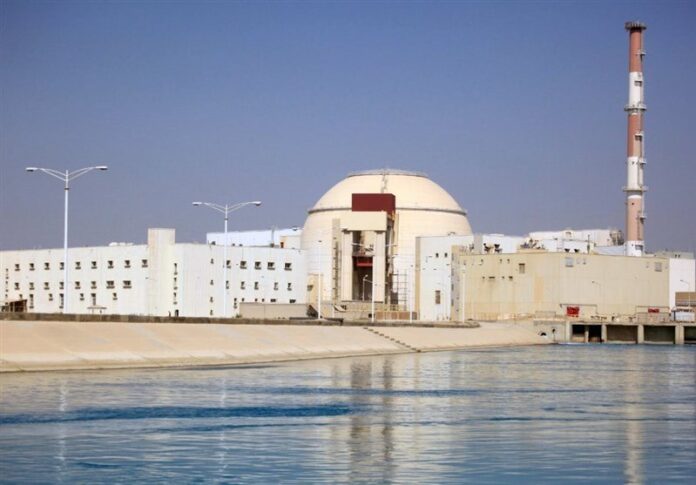

Iran plans to produce 17k MW of nuclear power in 20 years

Mohammad Eslami, who is visiting the southern city of Abadan, says Bushehr nuclear power plant has already saved Iran 80 million barrels of crude oil and has been a great boon to addressing shortage of electricity supply in the country. 

“Expanding power generation capacity through nuclear power plants is one of the objectives of the 13th administration. The Darkhovein site is part of the planning in this regard,” the vice president said.

“Today, using nuclear power plants is the cleanest, the most long-lasting, the most reliable and the most economical solution for power generation in the world. Seeing the emphasis by the Islamic Revolution Leader on production of 17,000 MW of nuclear power in the country, we included production of 10,000 MG of nuclear power in the next year’s budget,” he said. 

Eslami added that planning is needed to ensure enough power generation to address the needs of the future generations.

Iran stands 23rd in 2021 world nano patent registration rankings

Iran-Made Nano-Spray Disinfects Wound Infections

Based on the data released by StatNano, 23,750 inventions in the nanotechnology were registered in USPTO in 2021, with nearly half of patent applications belonging to the United States. China, South Korea, Japan, and Taiwan follow the U.S., respectively.

Out of the 55 nano inventions that Iran submitted to the U.S. office, 21 were registered and their patents were granted while applications for the remaining 34 were published by the United States Patent and Trademark Office.

Iran ranked 23rd in both categories in the previous year’s standings.

In an exhibition held last week, Iran unveiled more than 50 nanotechnology products that meet the country’s needs in medical, industrial, aviation, and construction sectors.

Over 450 knowledge-based and industrial companies in Iran have so far produced mor than 800 types of nano products that are used inside the country and also exported to over 40 countries.

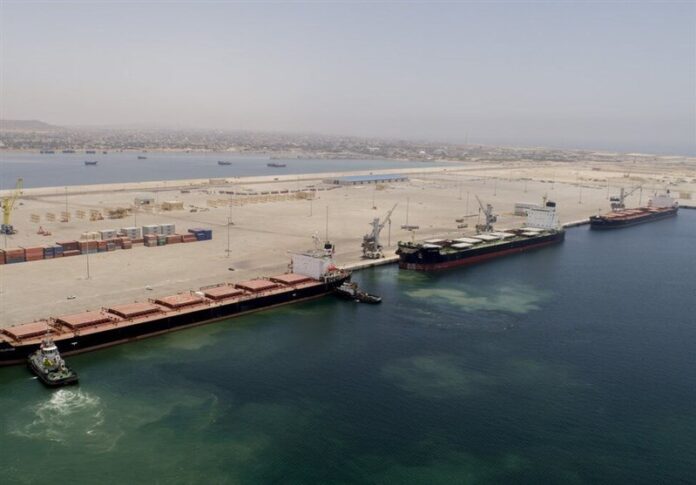
Uzbekistan finalizes Chabahar Agreement accession

Director General of Sistan and Baluchestan Ports and Maritime Organization Behrouz Aghaei said on Tuesday that Uzbekistan’s deputy ministers of transport and trade were present in the Iranian city of Chabahar to put the finishing touches on the accession.

“A draft of the accession has been prepared, and within a month at a meeting in Tehran, Uzbekistan will be formally added to the Chabahar International Agreement,” Aghaei stated.

The agreement aims to create a new transport corridor for shipment of goods among Afghanistan, India, and Iran through the Iranian Chabahar Port.

“The agreement’s ultimate goal is to add all the countries of the commonwealth of Central Asia and then expand to the Caucasus and Eastern Europe. The port of Chabahar is the most cost-effective, safest and most economical way to trade for more than 3 billion people in different parts of the Indian Ocean, Central Asia, the Caucasus and Eastern Europe. According to international experts, this port will soon replace the Suez Canal route for trade in Europe, Asia and Africa,” Aghaei explained.

Turnip Soup: A tasty antibiotic recipe

Soup is rich in nutrients and a variety of vitamins, so it boosts the body’s resistance to diseases. It also keeps us well hydrated.

With any vegetables you have at home, you can prepare a delicious and nutrient soup and guard against different diseases in winter. 

Turnips are one of the roots known as natural antibiotics.

It is important to know that turnips strengthen women’s uterus making them able to grow healthy and strong babies. Turnips calm and heal wounds quickly and are useful for strengthening the liver. Due to their high fiber content, they are a strong intestines cleanser. The calming properties of turnips make them a natural sleep-inducing food.

Turnips have powerful antioxidant properties and are rich in vitamin C. That’s why they prevent the formation of free radicals in the body. Meanwhile, the large amount of phosphorus in turnips is effective in strengthening your memory and nervous system.

Ingredients for turnip and carrot soup

1-Three to four cups of chicken or lamb stock

2-One finely chopped big carrot

3-One cup of rolled oats

4-One spoonful of rice

5-Tomato paste

6-Parsley and coriander 

7-A finely chopped tomato

8-Five half cooked turnips

9-Vermicelli

10-Turmeric, salt and pepper

 How to make turnip soup:

First, pour the chicken or lamb stock with rice, carrots, rolled oats, potatoes and spices and a little oil into the pot and put it on low heat to cook.

When the ingredients are half cooked, add the turnips. Then wait for your soup to thicken.

Once your soup is thick enough, add the tomato paste, vermicelli and vegetables in order, and give it one more hour to cook well.

Once the soup is ready, you can add lemon juice and pepper and then serve it.

Bon appétit!

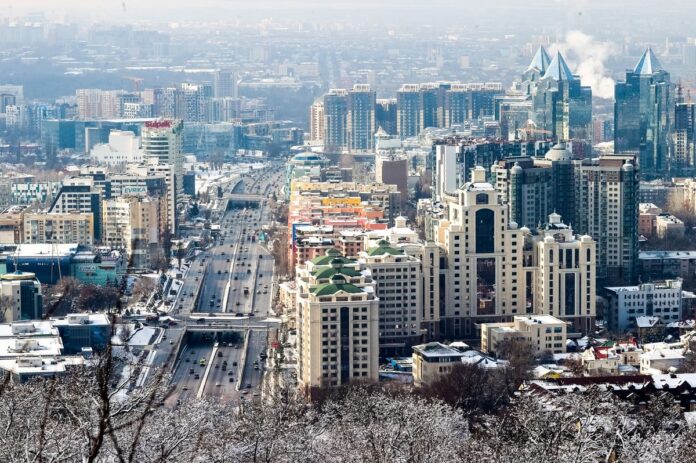
Central Asian countries hit by power outages

In Uzbekistan, the Ministry of Energy announced on Tuesday on Telegram, “Today, on January 25, at 11:00 [local time, 06:00 GMT), there was a major power outage in some regions of the country. Technicians are currently working on troubleshooting.”

The ministry added that the causes were being investigated.

The metro service in the capital Tashkent has been disrupted, with passengers being evacuated.

A photo was shared online, showing one of the metro stations in darkness following the blackout.

A cable car system in Amirsoy ski resort in Uzbekistan came to a stop due to a power outage. Twenty skiers have been rescued from stranded cable cars, local emergency services stated.

A video from one of the cable cars emerged online.

Power outages have occurred in the capital of Kyrgyzstan, Bishkek, and the second-largest city, Osh. Water supply disruptions were also reported in the capital of Kyrgyzstan, with pumping stations not working due to the outage. There is no central heating in Bishkek, a local operator said, adding that restoration works are currently underway.

To operate normally, the Manas International Airport in Bishkek has switched to an autonomous power supply, local media reported.

The outage has affected traffic in major cities across the region hit by the blackout.

In Kazakhstan, there is no electricity in central Almaty, in Taraz and Taldykorgan. The airport of Almaty is operating at full capacity, its press service said. According to the city administration, power supplies have been partially restored.

An accident in the power supply system that affected several countries in Central Asia has occurred due to an overload of a transit line in Kazakhstan, the Kazakhstan Electricity Grid operating Company (KEGOC) said.

“At 11:59 [05:59 GMT], due to a significant emergency imbalance created by the energy system of Central Asia, there was a power surge for the electricity transit … As a result, an emergency separation of the transit ‘North-East-South of Kazakhstan’ occurred with the repayment of a significant part of consumers in the southern zone of Kazakhstan,” the operator announced in a statement.

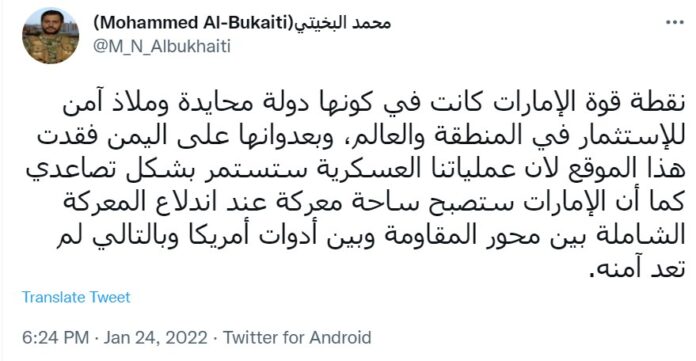
Yemen Ansarullah warns UAE no more safe for investment

“The strength of the UAE was that it was a neutral country and a safe place in the region and the world for investment. But it lost its place by attacking Yemen, because our military operations [against the UAE] will widen by the day,” Mohammed al-Bukaiti said in a tweet.

“Also, if a full-scale conflict erupts between the resistance front and the US puppets, the UAE will become a battleground. That’s why it is no longer safe.”

“The Emirates, amid the epidemic of war that had spread across the region, could become the Switzerland of this region. That was the reason for our previous advice [to them] to complete their withdrawal from Yemen and avoid escalating tensions. But now we advise the investors to move their capitals out of the UAE, because the Emirati government, led by [Mohammed] bin Zayed, has abandoned the policies of his father.”

Yemeni armed forces have carried out a series of missiles and drone strikes against the UAE over the past days. The military operations came after the UAE conducted deadly airstrikes on the Yemeni cities of Hudaydah and Sa’ada, killing dozens including children, and injuring hundreds of others.

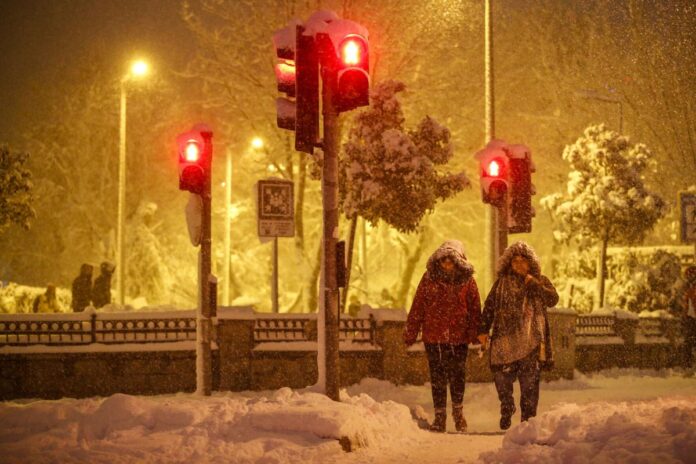
Thousands stranded in Istanbul due to extreme weather

Highways and roads in the city came to a standstill on Monday after the storm pounded Istanbul – a city of some 16 million people which straddles the European and Asian continents – accumulating more than 80 centimeters (31 inches) of snow in some areas.

Stranded motorists either spent the night in cars, abandoned their vehicles to walk home or crowded metros and other public transportation. A lucky few were rescued and taken to hotels.

The city’s Disaster Coordination Center, or AKOM, says an Icelandic low-pressure system is behind the cold front and precipitation affecting most of the country. The storm also caused havoc in neighboring Greece, snarling traffic in Athens and putting most public transport out of action.

Flurries are forecast to continue through Wednesday. Istanbul Mayor Ekrem Imamoglu said more heavy snowfall was likely Tuesday evening.

AKOM teams and other units worked overnight to clear snowy roads and highways but abandoned vehicles hampered their operations. Istanbul Governor Ali Yerlikaya urged motorists to return to their vehicles and move them.

A flight suspension in and out of Istanbul Airport on Monday was extended until 1 p.m. Tuesday (1000 GMT) over safety concerns, while the governor’s office banned the use of private cars until the same time. Istanbul’s second airport, Sabiha Gokcen, was operating limited services.

“Nothing is moving. The snow ploughs can’t even reach us,” Ahmet Odabasi, 40, one of thousands of travelers stranded overnight on a highway west of Istanbul told The Associated Press by telephone.

“I have been stuck here for 12 hours now. I am lucky that I have gas, food and water,” added the motorist, who was driving to Istanbul from the city of Edirne, near the border with Greece.

AKOM manager Selcuk Tutuncu told the AP that 40,000 tons of salt have been used since the beginning of the storm.

“Right now there are over 1,500 vehicles and over 7,000 personnel working out in the field nonstop,” Tutuncu continued.

On Monday, authorities in Istanbul suspended intercity bus services and blocked travel to the city from Turkey’s northwestern Thrace region.

The Istanbul governor’s office announced that civil servants would be allowed to stay at home Tuesday, except for those employed in security, health and transportation sectors. Schools across Turkey were already closed for a winter break.

Imamoglu said the municipality has provided shelter to around 1,500 homeless people. Another 1,500 people stranded at a bus terminal due to the suspension of intercity services were taken to hotels or hostels.

Teams have left some two tons of food for stray cats and dogs, Imamoglu added.

US architect of Iran sanctions leaves negotiation team

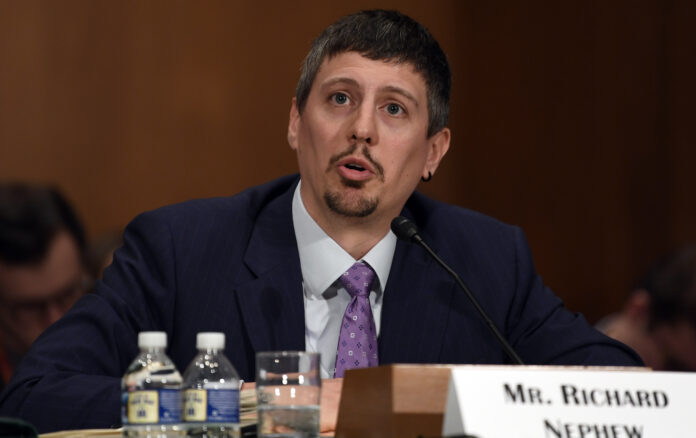
Richard Nephew, the deputy special envoy for Iran, left his post as part of the US team negotiating with Tehran.

A State Department official confirmed to Reuters on Monday that Nephew was no longer part of the US negotiating team, but he will remain a State Department employee. The official did not provide a reason for Nephew’s resignation but noted that such a move was “very common” after a year in the administration.

Earlier on Monday, The Wall Street Journal reported that Nephew had resigned due to a difference of opinion on how to approach the negotiations with Iran, reportedly advocating for a tougher posture in negotiations.

The US has yet to directly engage in negotiations, participating through European allies.

Administration officials told the Journal that two other members of the negotiating team had decided to step back from engaging in talks due to sharing in Nephew’s opinion of having a tougher approach.

As Reuters reported, news of these internal disagreements within the US negotiating team comes at a critical point in the talks with Iran, with the US and its European allies recently stating there are only weeks left to salvage the agreement.

Iran has rejected US officials’ remarks about a deadline for reaching an agreement and stressed the country is only after a good agreement.

Tehran says the Iranian negotiators in Vienna talks on removal of US sanctions will continue their presence in the Austrian capital as long as needed and will not pay attention to the deadlines set by the other sides.

Iran and the five remaining parties to the Joint Comprehensive Plan of Action (JCPOA) — Germany, Britain, France, Russia and China — began the talks in the Austrian capital in April with the aim of removing the sanctions after the US voiced its willingness to return to the agreement.

During the seventh round of the Vienna talks, the first under President Ebrahim Raeisi, Iran presented two draft texts which address, separately, the removal of US sanctions and Iran’s return to its nuclear commitments under the JCPOA. Tehran also said it was preparing a third draft text on the verification of the sanctions removal.

The eighth round of talks kicked off in Vienna in late December. The negotiations seek to restore the JCPOA in its original form and bring the US back into the agreement.

Iran insists that the talks must lead to the removal of all American sanctions that were imposed against Tehran following Washington’s unilateral withdrawal from the landmark agreement in May 2018. Tehran has also demanded credible guarantees that Washington will not abandon the deal again.

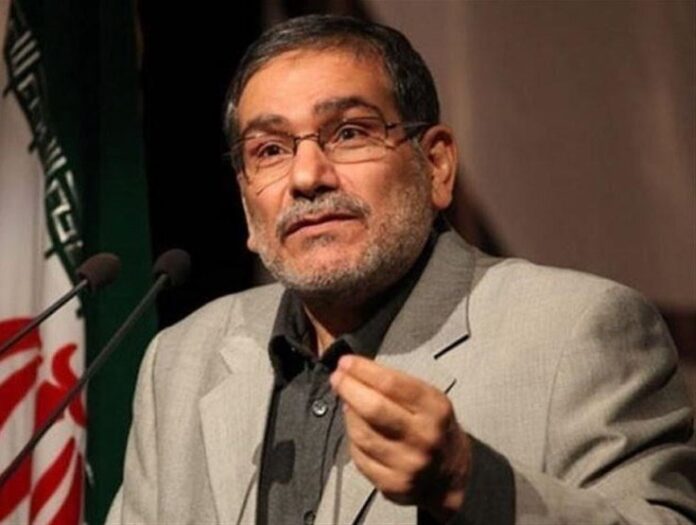
Shamkhani: Iran-U.S. talks method would change if good deal reachable

“So far, contact with the U.S. delegation in Vienna has been through informal exchanges of texts, and there has been no need for more. This communication method can only be replaced by other methods when a good agreement is available,” Shamkhani wrote in a twitter post.

On Monday, Iranian Foreign Minister Hossein Amir Abdollahian dismissed reports of direct talks between the United States and Iran in the Austrian capital where Tehran and the P4+1 are trying to find a way to revive the 2015 nuclear deal known as the Joint Comprehensive Plan of Action.

“However, if we get to a stage where reaching a good deal with strong guarantees necessitates direct talks with the U.S., we will consider it,” Amir Abdollahian added.

The two sides have held eight rounds of talks over the past year. Iran refuses to sit down directly with American diplomats, meaning negotiators from Britain, China, France, Germany and Russia must shuttle between Iranian and American diplomats.

Iran insists that America must remove all sanctions imposed on Tehran after former U.S. president Donald Trump abandoned the deal in May 2018. It also says Washington must provide guarantees that it will not leave the deal again.