Tuesday, December 30, 2025
Home Blog Page 2100

Iran: UN should hold ‘Yemen crime’ perpetrators to account

Photo: GETTY IMAGES

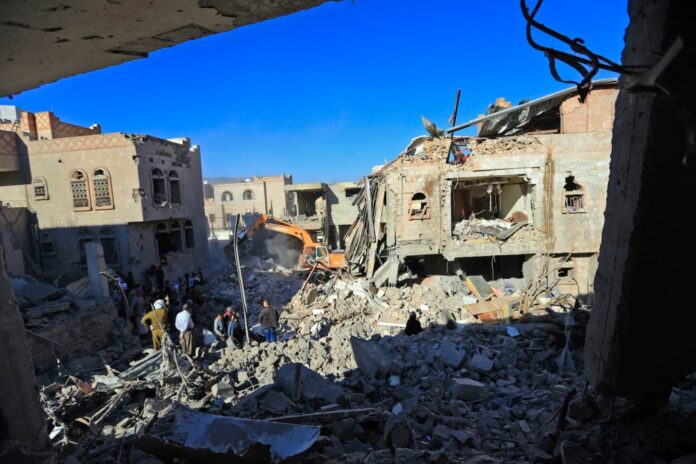
Kazem Gharibabad, Secretary of Iran’s High Commission for human Rights, wrote in a letter to the UN High Commissioner, “The world once more witnessed a criminal, cruel, inhuman act that goes against all principles of international law, especially the international humanitarian and human rights laws.”

He was referring to the January 21 attacks that killed over 100 Yemenis, including 3 children, and injured more than 260 others.

Gharibabadi said the coalition has conducted at least 839 airstrikes on civilian targets and infrastructure in Yemen despite all such attacks being prohibited under international law.
“In the atrocious attack, the principles of dissemination, proportionality and necessity were, by no means, observed,” he said.

He cited the remarks by the high commissioner’s spokesman three days before the attack that “Failure to respect such principles amount to war crimes”.

He said this, per se, is a license for referral of the case to competent international bodies.
“The people of Yemen are victims of the passive, dual, instrumental and anti-human rights policies of countries that claim to champion these rights,” he said.

Gharibabadi added that this makes it incumbent on international organizations to strongly condemn such crimes and ensure they are not repeated while holding the perpetrators to account.

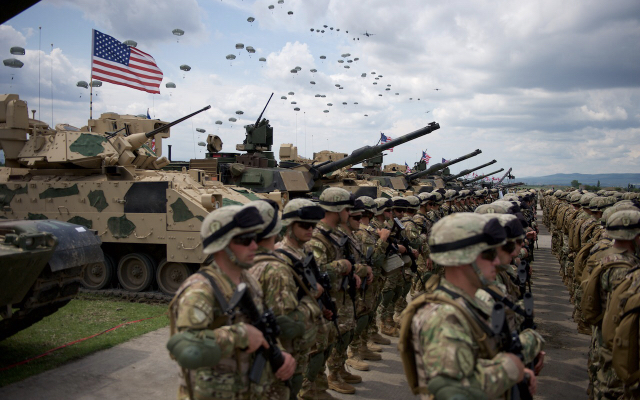
Pentagon puts 1,000s troops on alert over Russia tensions

The move comes as NATO weighs a possible activation of its response force to beat back a Russian invasion of Ukraine, which the West fears is imminent.

Austin “has placed a range of units in the US on a heightened preparedness to deploy, which increases our readiness to provide forces if NATO should activate the [NATO Response Force] or if other situations develop,” Pentagon spokesperson John Kirby said at a news briefing.

“Specifically, this will ensure that the United States and our commitment to the [NRF] is consistent with their readiness for rapid deployment, again, if activated,” Kirby added.

If NATO moves to activate the response force, or in the event of a “deteriorating security environment,” Kirby stated the US “would be in a position to rapidly deploy additional brigade combat teams, logistics, medical, aviation, intelligence, surveillance and reconnaissance, transportation, and additional capabilities into Europe.”

The Pentagon’s announcement comes after The New York Times reported Sunday that President Joe Biden was considering deploying thousands of US troops, as well as warships and aircraft, to NATO allies in the Baltic States and Eastern Europe.

Earlier Monday, NATO announced that European allies were deploying additional ships and fighter jets to Eastern Europe and putting new forces on standby in response to Russia’s continued troop buildup along Ukraine’s border.

Kirby noted at his news briefing that Austin “will continue to consult” with Biden, and the US “will maintain close coordination with allies and partners as we continuously review our force posture and make decisions regarding movement of forces into and within Europe.”

Meanwhile at the White House, Biden held a secure video call in the Situation Room to discuss the Russia-Ukraine crisis with the leaders of France, Germany, Italy, Poland and the UK. NATO’s secretary general and the presidents of the European Commission and the European Council also participated in the call.

Of the roughly 8,500 US-based personnel who Austin placed on heightened alert, “the bulk of them are intended for” the NATO Response Force, Kirby said, although Austin wants the US “to be ready for any other contingencies, as well.”

Kirby said he was unable to provide a breakdown on the number of troops who would contribute to the NATO force and who would represent the US unilaterally.

“It really depends on the need” among America’s allies, he added.

The White House announced in a statement Biden and some of his European counterparts, as well as the European Commission president and the NATO secretary general discussed earlier security consultations with Russia and possible anti-Russian sanctions.

“President Biden held a secure video call with European leaders today. They reiterated their continued concern about the Russian military build-up on Ukraine’s borders and expressed their support for Ukraine’s sovereignty and territorial integrity,” the statement said, adding, “The leaders underscored their shared desire for a diplomatic resolution to the current tensions and reviewed recent engagements with Russia in multiple formats.”

“The leaders also discussed their joint efforts to deter further Russian aggression against Ukraine, including preparations to impose massive consequences and severe economic costs on Russia for such actions as well as to reinforce security on NATO’s eastern flank,” the White House press service added, saying, “They committed to continued close consultation with transatlantic Allies and partners, including working with and through the EU, NATO, and the OSCE.”

Biden stated he had had “total unanimity” with European officials and leaders during a Ukraine-themed conversation on Monday night.

“I had a very, very, very good meeting. Total unanimity with all the European leaders. We’ll talk about it later, thank you,” he told members of his administration during a meeting, broadcast by the White House’s website.

Biden’s conversation with European leaders and officials lasted more than one hour, a White House official has told reporters.

The UK prime minister’s press office said in a statement after a video conference on Monday night that leaders of the United Kingdom and other leading NATO member states agreed that “an unprecedented package of sanctions” should be imposed on Russia if it invades Ukraine.

“The leaders agreed that, should a further Russian incursion into Ukraine happen, allies must enact swift retributive responses including an unprecedented package of sanctions. They resolved to continue coordinating closely on any such response,” the statement added.

The West and Kiev have recently been spreading allegations about Russia’s potential ‘invasion’ of Ukraine. Kremlin Spokesman Dmitry Peskov castigated these claims as “empty and unfounded”, serving as a ploy to escalate tensions, pointing out that Russia did not pose any threat whatsoever to anyone. However, Peskov did not rule out the possibility of provocations aimed at justifying such allegations and warned that attempts to use military force to resolve the crisis in southeastern Ukraine would have serious consequences.

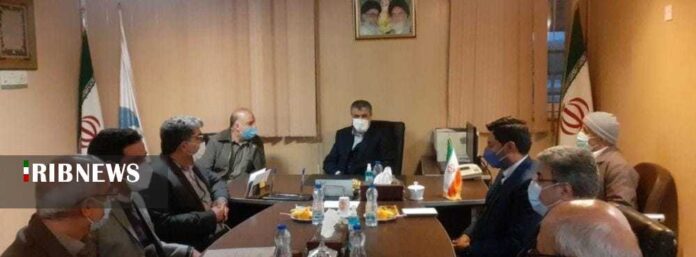
‘Developing nuclear power plants Iran’s key strategy’

Director of the Atomic Energy Organization of Iran Mohammad Eslami made the comment during a visit to the nuclear site in Darkhovein near the southwestern city of Shadegan.

“In the world, things are being navigated toward using clean renewable energy and this is a key issue and a priority of the 13th administration,” he said.

“Today, nuclear economy has a high added value and it has zero pollution and is considered the cleanest power production industry in the world. That is why we should leap in nuclear science and technology.”

Eslami stressed that Darkhovein site is among the most important nuclear facilities in the country, adding that its objective is supplying the electricity needed in the south western province of Khouzestan, which has been facing shortages over the past years.

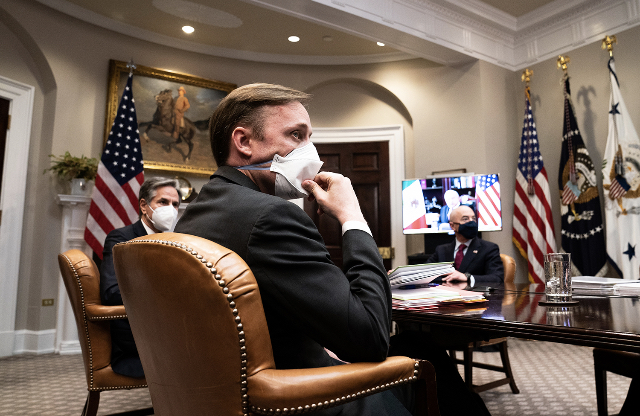
Top US security official holds talks with Saudi, UAE envoys

The ambassadors and Sullivan discussed joint efforts to hold the Houthis accountable, without referring to the crimes of the Saudi-UAE coalition on Yemeni civilians.

Sullivan reiterated the United States’ commitment to the security of both the UAE and Saudi Arabia, where tens of thousands of American citizens live and work, the White House said.

He also welcomed their commitment to supporting UN-led efforts to ultimately end the war in Yemen through a political process, and underscored the importance of all parties to the conflict abiding by their obligations under international humanitarian law, it added.

On Monday, Yemeni armed forces launched massive missile and drone strikes against the United Arab Emirates (UAE) and Saudi Arabia, only a week after they carried out a series of attacks against the UAE in retaliation for its involvement in the devastating Saudi-led war on Yemen.

The US embassy and consulate in the UAE advised American citizens in the Persian Gulf country to “maintain a high level of security awareness.”

Such statements are rare, for the UAE is largely viewed as a safe place in the Middle East, but the US Embassy issued a similar security alert last week when Abu Dhabi was targeted by the Yemeni forces.

Yemeni forces carried out retaliatory airstrikes against strategic facilities deep inside the UAE on January 17, using domestically-manufactured combat drones and ballistic missiles. At least three people have been killed and six others wounded in the suspected drone attack, according to Emirati authorities.

Riyadh has lately ramped up its airstrikes against various regions across Yemen. At least 90 people were killed when a Saudi strike hit a detention center in the northern province of Sa’ada on Friday, and nearly two dozen were killed in the capital of Sana’a in an operation on Tuesday.

Saudi Arabia and its allies launched a war against the Arab world’s most impoverished nation in March 2015. The war has been seeking to restore power in Yemen to Riyadh’s favorite officials.

The death toll of the war, now in its seventh year, will reach an estimated 377,000 by the end of 2021, according to a recent report from the UN’s Development Programme.

The fighting has seen some 80 percent of the population, or 24 million people, relying on aid and assistance, including 14.3 million who are in acute need.

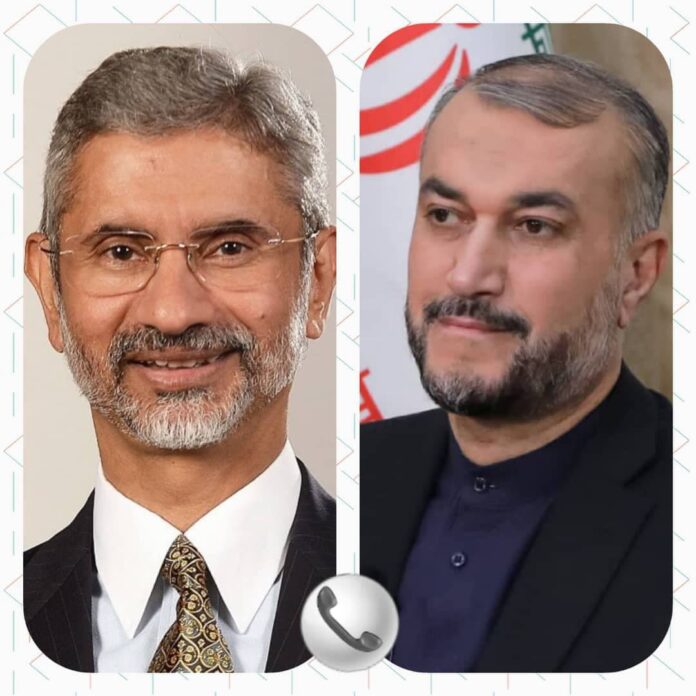
Iran FM congratulates India on Republic Day

“Warm wishes to my colleague External Affairs Minister Dr. S Jaishankar and the Government and People of Republic of India as they celebrate their Republic Day,” the tweet read.

“We will continue to work towards further expansion of all-out relations, bilaterally, regionally and at international fora,’ added Amir Abdollahian. 

India marks 26 January as its Republic Day which is a national holiday in the country.

US says prepared for direct talks with Iran

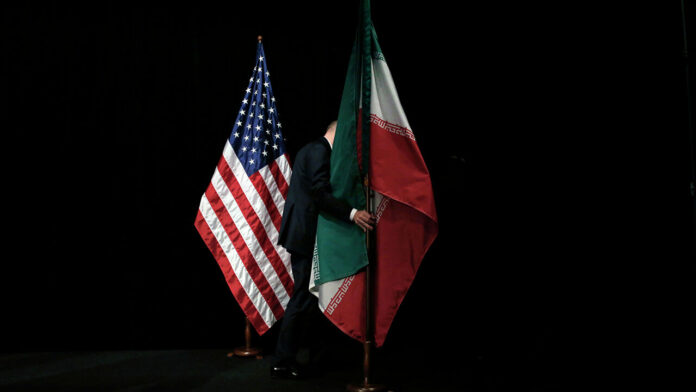
“We are prepared to meet directly” with Iran to resolve talks on reviving the Joint Comprehensive Plan of Action (JCPOA), which has so far been negotiated by Eurasian partners on Washington’s behalf, a US State Department spokesperson told Sputnik on Monday.

“We have long held the position that it would be more productive to engage with Iran directly, on both JCPOA negotiations and other issues. This extends to bilateral and multilateral formats,” the spokesperson added.

Earlier, the Iranian foreign minister said Tehran does not ignore direct negotiations with Washington to reach a good nuclear agreement during the Vienna talks.

Hossein Amir Abdollahian added if face-to-face talks are necessary for a good deal with a high level of guarantee, the Islamic Republic will not rule out one-on-one negotiations with Washington.

The top Iranian diplomat however denied social media reports that the Iranian negotiating team is holding direct talks with the US in Vienna.

He noted that the US has called for one-on-one negotiations with Iran but Tehran has not yet arrived at the conclusion that it needs to hold direct talks with the Americans.

The FM also stated the Vienna talks aimed at reviving the 2015 nuclear deal are headed for a point where technical discussions reach saturation and all sides must make political decisions.

Iran had previously ruled out direct meetings with the US. Instead, the two sides have been negotiating indirectly in Vienna.

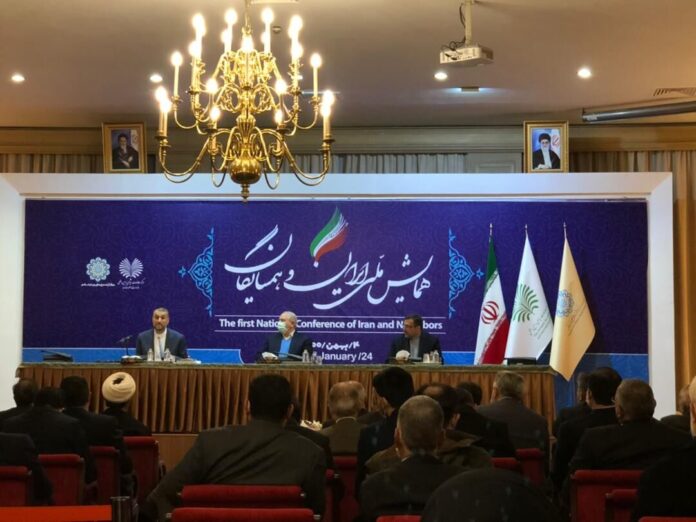
Iranian FM says Tehran does not rule out talks with US over good deal

Hossein Amir Abdollahian added if face-to-face talks are necessary for a good deal with a high level of guarantee, the Islamic Republic will not rule out one-on-one negotiations with Washington.

He made those comments in his closing speech at the National Conference of Iran and Neighbors in Tehran on Monday.

The top Iranian diplomat however denied social media reports that the Iranian negotiating team is holding direct talks with the US in Vienna.

He noted that the US has called for one-on-one negotiations with Iran but Tehran has not yet arrived at the conclusion that it needs to hold direct talks with the Americans.

Iran’s Foreign Minister also said the Vienna talks aimed at reviving the 2015 nuclear deal are headed for a point where technical discussions reach saturation and all sides must make political decisions.

Amir Abdollahian spoke of the European troika’s conduct in the talks. He said when Iran raises the issue of sanctions, the European signatories to the Iran nuclear deal throw the ball into the court of the US.

According to the foreign minister, the Europeans also say the sanctions are about non-paper issues between Tehran and Washington and that the EU only acts as a mediator.
Amir Abdollahian also said when the nuclear issues are involved, the Europeans voice concern and say they are ready for negotiations over all related matters.

The foreign minister said Iran is critical of the European troika because they failed to come up with a new, constructive initiative and tried instead to be logical during the talks in the past few weeks.

Amir Abdollahian singled out France as an example, saying Paris is no longer playing the bad cop role.

He then referred to the role of Russia and China, the other two members of the P4+1 group of countries. Amir Abdollahian said Moscow and Beijing are playing a constructive and positive role and at times they act as conveyors of the messages of the US.

NATO sends additional ships, jets to Eastern Europe amid tensions with Russia

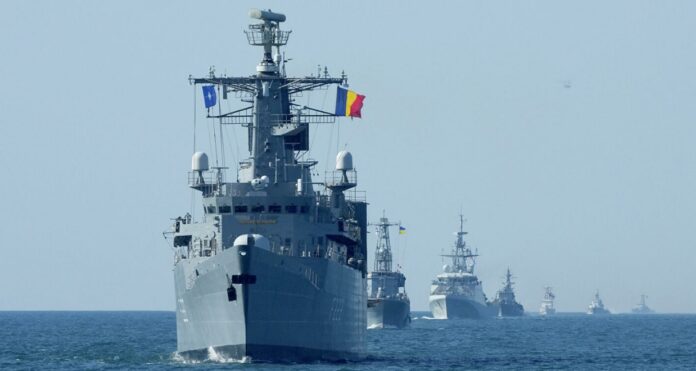
“Denmark is sending a frigate to the Baltic Sea and is set to deploy four F-16 fighter jets to Lithuania in support of NATO’s long-standing air-policing mission in the region,” the alliance said in a statement on Monday.

“Spain is sending ships to join NATO naval forces and is considering sending fighter jets to Bulgaria. France has expressed its readiness to send troops to Romania under NATO command,” it added.

The alliance also announced that the Netherlands was putting “a ship and land-based units on standby for NATO’s Response Force”, and as of April would send two F-35 fighters to Bulgaria to support the alliance’s air-policing activities in the Black Sea region.

NATO’s announcement comes amid reports that senior Pentagon officials on Saturday presented US President Joe Biden with options for adopting a more aggressive posture toward Russia. This would include deploying additional military forces and equipment to Eastern Europe, according to The New York Times.

“NATO will continue to take all necessary measures to protect and defend all Allies, including by reinforcing the eastern part of the Alliance,” Secretary-General Jens Stoltenberg, the alliance’s top civilian official said in the statement.

“We will always respond to any deterioration of our security environment, including through strengthening our collective defence,” he added.

While some of the NATO movements seemed to involve personnel or equipment previously committed by allies, the effort to publicize the deployments signalled that Western powers wanted to raise the volume in their warnings to the Kremlin about any potential military strike.

While Ukraine is not an ally, NATO countries have threatened severe sanctions in response to any attack, and Stoltenberg has stressed that the alliance will move quickly and forcefully to protect its members, including the small Baltic nations, under Article 5, the collective defense clause in the NATO treaty.

As part of Russia’s recent ultimatums, the Kremlin has demanded last Friday a raft of security guarantees including the withdrawal of NATO forces from countries that were not members of the alliance prior to 1997 — namely Bulgaria and Romania. The redeployments indicate that NATO is not only rejecting Russia’s request but, in fact, increasing its presence.

US Secretary of State Antony Blinken was due to meet later Monday by videoconference with EU foreign affairs ministers to discuss the ongoing tensions with Russia, as well as the effort to develop a package of heavy sanctions to be imposed in the event of any attack. Russian Foreign Minister Sergey Lavrov has noted he expects Washington and NATO to issue their written replies to Russia’s security demands later this week.

Recently, the West and Ukraine frequently echoed an allegedly looming Russian invasion of Ukraine. Kremlin Spokesman Dmitry Peskov castigated these statements as an empty and groundless escalation of tension, emphasizing that Russia posed no threat to anyone. At the same time, the Kremlin press secretary did not exclude some possible provocations to justify such claims and warned that the attempts to resolve the Ukrainian conflict by force would carry extremely serious consequences.

Azerbaijani defense minister due in Tehran Tuesday

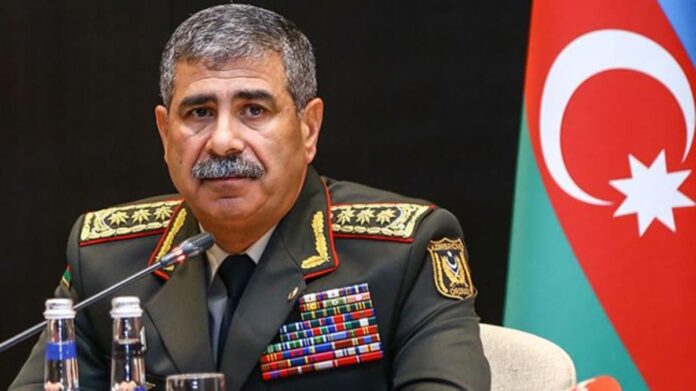
Azerbaijan Ambassador to Iran Ali Alizadeh in a tweet announced that Zakir Hasanov will leave Azerbaijan for Iran on Tuesday.

Earlier, Iranian Defense Minister Brigadier General Mohammad Reza Ashtiani met and held talks with Alizadeh on military cooperation.

During the meeting, the sides emphasized Azerbaijani and Iranian presidents’ special attention to the bilateral relations and hailed the close ties between the two countries.

They stressed the necessity of continuing cooperation between Azerbaijan and Iran in all fields as friendly and close neighbors. They touched upon issues of cooperation in military and military-technical fields.

The two sides also had a broad exchange of views on prospects for strengthening fruitful cooperation, as well as the organization of reciprocal visits, enhancing the exchange of information and implementation of joint projects.

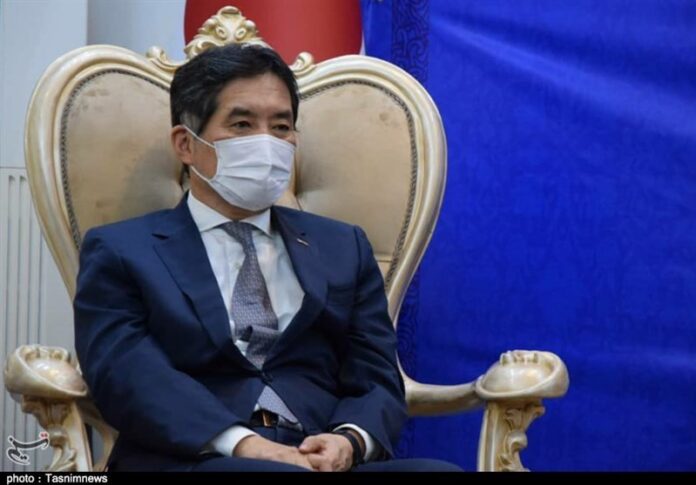
Japanese ambassador to Tehran visits southern city of Ahvaz

Ikawa was speaking on the sidelines of a conference on exploring investment opportunities in the southern Iranian city of Ahvaz.

He made the comments in a meeting with the mayor of Ahvaz and other local officials during which investment opportunities and ways of development of the city were examined.

The Japanese ambassador to Iran added that Khuzestan province has many rich capacities in fields such as energy.

Regarding Japan’s efforts in the fight against Covid-19 in Iran, Ikawa said his country has so far sent more than 30 million doses of vaccine to the Islamic Republic, which have been distributed among different provinces, including Khuzestan.

Regarding clean energy in Khuzestan province, the Japanese ambassador said Khuzestan has very good capacities for the fight against global warming, including in the field of agriculture.

Reza Amini Ahvaz’ mayor also said the Japanese ambassador’s visit to Ahvaz shows Japan welcomes the idea to help the development of this city.

The mayor of Ahvaz stressed investment opportunities that were discussed in the presence of the Japanese envoy are related to environment, waste recycling, and renewable energy such as solar energy and natural energy. Amini said Iwaka promised that he will inform Japanese investors of investment opportunities in Ahvaz and that the development of Ahwaz will be accelerated by attracting international investment.