Friday, December 26, 2025
Home Blog Page 2092

Expert: Iran can’t benefit from Ukraine crisis for gas exports

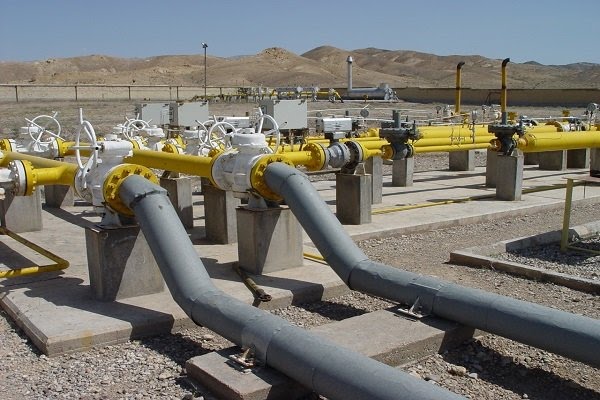
Iran can’t benefit from Ukraine crisis for gas exports

Speaking in an interview with Entekhab News Website, Alireza Soltani also said the Russians will use all tools at their disposal to prevent Europe from ending its dependence on Russian gas.

Meanwhile, Soltani underlined that Iran is also incapable of selling gas to Europe due to economic, technical and political difficulties.

According to the analyst, politically, Iran’s presence in the European gas market is opposed by the big powers; economically it costs too much, and technically it requires the presence of world-class companies, and it is certainly very difficult to provide such economic, political and technical conditions for Iran’s presence in the European gas market.

He added that Iran itself is not willing to antagonize Russia by trying to make inroads in the European gas market, it wants to position Russia as a strategic partner.

Soltani also maintained that Iran can only compensate for part of the shortage of Russian gas exports to Europe by activating a pipeline to Russia that was built under the previous regime and sending gas to the Russian transmission network.

He said in this way, it may be possible to encourage the Russians to take action on Iranian gas.

Elsehwre, Soltani spoke of the prospects of the military tension between Russia and Ukraine backed by its allies. He said chances of a Russian invasion of Ukraine is very low as the age of such conflicts is over and that Russia and the West have reached enough political maturity to not get themselves bogged down in such a costly war.

Soltani added that Russian President Vladimir Putin aims to stop NATO’s eastward expansion and the West is trying to check Putin’s expansionist moves.

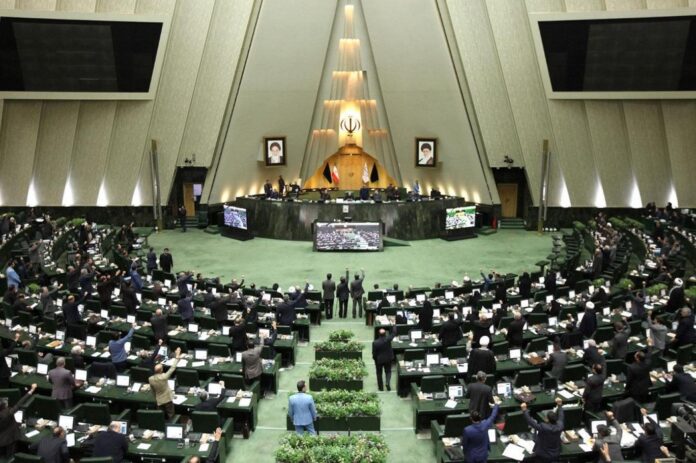
Lawmakers approve budget on tar and natural gas for underprivileged areas

This was announced by the commission’s spokesman Rahim Zare. He said part of the funding for natural gas pipelines covers incomplete projects with a focus on projects in villages and cities in the southeastern province of Sistan and Balouchestan, southern oil and natural gas producing provinces, cold areas of the provinces that lie on Zagros mountain chain as well as other mountainous and remote villages along with areas with urban and rural access to natural gas at a level below the national average.
The lawmaker added that the free tar will be distributed among the Housing Foundation of the Islamic Revolution for asphalt pavement of roads, to the Ministry of Roads and Urban Development for asphalt pavement of byways and rural routes as well as other road links and the Education Ministry for renovation of schools, among others.

He also stressed that the commission authorized the Oil Ministry to construct a petrochemical plant for heavy crude processing with an input capacity of 300,000 barrels of oil per day, using the cooperation of the private sector and through foreign investment, or investment in exchange for oil.

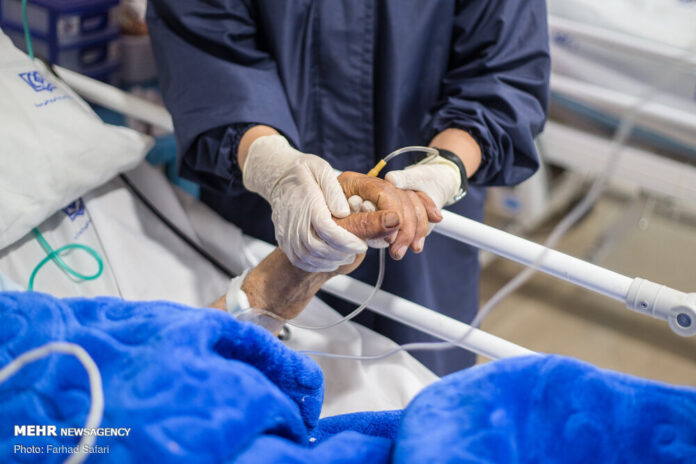
Official: Number of Covid deaths, infections doubled in Iran

Ali Nasiri added that projections show the new wave of Covid driven by the variant will reach its peak on March 1.

Nasiri also said hospitals will be overwhelmed in the coming weeks.

The director of Tehran’s Crisis Prevention and Management Organization warned against underestimating Omicron, saying all people should give up the false notion that the strain is harmless.

Nasiri also spoke of the vaccination campaign in Iran, saying, “Unfortunately, so far less than 30 people of people have got their boosters (third dose of Covid vaccine)”.

He noted that Omicron does not differentiate between different age groups and even infants and kids are vulnerable to the variant.

Meanwhile, Iranian Health Ministry figures give credence to Nasiri’s remarks. The figures on Wednesday showed that 185 people died of the disease in the past 24 hours.

The total death toll now stands at 134,238. The daily caseload on Wednesday was 16,310 including 2,275 hospitalizations.

The Health Ministry says so far 21,689,655 people have been triple-vaxxed in Iran. Officials urge people to get their boosters because it considerably decreases the likelihood of death after contracting Omicron or weakens the strain in the event of infection.

Hospital data shows Omicron can infect lungs: Iranian official

Alireza Zali, the director of the Tehran Coronavirus Taskforce, said Wednesday that there are currently cases among the hospitalized COVID-19 patients that are suffering from infection in the lungs as a result of Omicron.

He said Omicron usually manifests itself by flu-like symptoms since the virus replicates primarily in the upper part of the respiratory system and tends to be less sticky in the lung tissue compared to the previous variants.

The assumptions, however, that Omicron does not affect the lungs at all are wrong, said the official.

Studies abroad and at home suggest that the lungs could be infected in the course of infection with Omicron, especially if there is a heavy load of virus in the airways, Zali said.

The Omicron variant spreads more easily than the original virus that causes COVID-19 and the Delta variant.

Preliminary data suggests that Omicron may cause more mild disease, although some people may still have severe disease, need hospitalization, and could die from the infection with this variant.

In Iran and many other countries around the world, Omicron has rapidly surged past other variants to become the dominant strain.

IAEA chief says helping Saudi Arabia and Egypt with nuclear power

IAEA head Rafael Grossi told a conference in Saudi Arabia on Wednesday that the organization is working with Saudi Arabia and Egypt to help them to develop nuclear power.

In January, Saudi Energy Minister Prince Abdulaziz bin Salman Al Saud revealed Riyadh aims to take advantage of its uranium resources to develop its nuclear power program.

Saudi Arabia’s nuclear ambitions have prompted worries in the global community over the past few years, especially after Saudi Crown Prince Mohammed bin Salman hinted in 2018 that the kingdom may go for nukes.

Citing Western officials, The Wall Street Journal reported that Saudi Arabia, with Chinese help, has built a facility for extraction of yellowcake from uranium ore near the remote town of al-Ula.

The New York Times also reported American intelligence agencies had spotted what appeared to be an undeclared nuclear site not too far from the Saudi town of al-Uyaynah.

Iran has warned that Saudi Arabia’s opposition to the UN nuclear watchdog’s access to its nuclear facilities reinvigorates speculations that the Arab country intends to develop atomic weapons.

Iranian exports to Iraq increase 15% compared to last year

Hamid Hosseini said for the first time, during that period, Iraq exported $920 million worth of goods to Iran, showing a 15 percent rise compared to last year. 

According to the official, the imports from Iraq were done out of the frozen Iranian assets in the neighboring country.

He said that before this, Iraq’s exports to Iran were about $ 100 million a year, adding with this amount of imports by Iran, Iraq’s rank was raised from the twenty-sixth importer to the sixth place.

Hoseini noted that importing goods from Iraq means that trade is not one-sided and Iraq also benefits from establishing trade relations with Iran, and this will help develop trade ties between the two countries. 

He said the recent decrease in Covid cases and the increase in commodity prices have been conducive to the rise in exports, but there are still problems for exporting technical and engineering projects and participating in tenders in Iraq. 

Hosseini expressed hope Iran will be able to use the current possibilities to develop trade with Iraq.

Iran develops new vaccine against Omicron variant of coronavirus

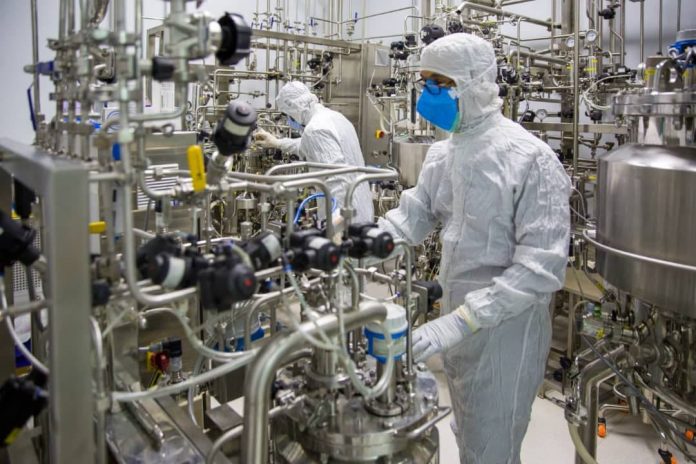
In a statement, Iran’s Shifa Pharmed Biotechnology Company said it began work to develop the vaccine, named Barekat Plus, after scientific findings suggested that the antibody produced by earlier versions of COVID-19 vaccines do not effectively work against Omicron.

A month into Omicron’s detection, Shifa Pharmed began producing the vaccine on the back of monitoring relevant scientific findings and consulting with experts in the field and conducted experiments on animals, the statement said.

The preliminary results of the studies indicate the 100% effectiveness against the Omicron strain and safety in animal experiments, it added.

Shifa Pharmed, the statement said, has started mass production of the vaccine amid the speedy spread of Omicron in the country and following the promising results of animal studies.

To get the necessary permit, Shifa Pharmed has submitted “proposed protocols” for clinical studies needed for decision-making to the Food and Drug Administration of the Ministry of Health and the Ethics Committee, it added.

Shifa Pharmed is the developer of the COVIran Barekat against COVID-19.

The country has sped up its vaccination campaign over the past weeks as it grapples with a sixth wave of infections with COVID-19, triggered by the fast-spreading Omicron variant.

Shamkhani: US, Europe failed test of fulfilling commitments

commitments under the 2015 nuclear deal, officially known as the Joint Comprehensive Plan of Action, JCPOA. 

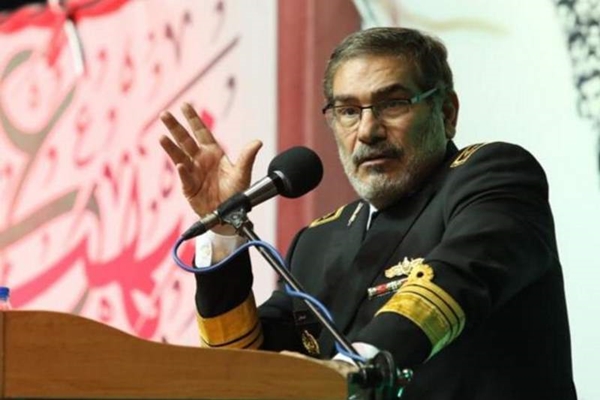
Ali Shamkhan said in a tweet that the JCPOA is now an empty nutshell in terms of economic benefits and sanctions removal. He promised that Iran will not hold any negotiations with the “unfaithful” US and Europe beyond the JCPOA. 

By Europe, Shamkhani means the European Union and the EU’s troika that are parties to the Vienna talks aimed at reviving the nuclear deal. 

His comments come as efforts are continuing in the Austrian capital to resuscitate the agreement and get the anti-Iran sanctions terminated. 

Iran says it will be difficult to enter into a deal if the US does not lift all sanctions and does not commit to not violate or leave the deal again. 

Former US President Donal Trump withdrew Washington from JCPOA in 2018 leaving the internationally-recognized agreement in disarray.

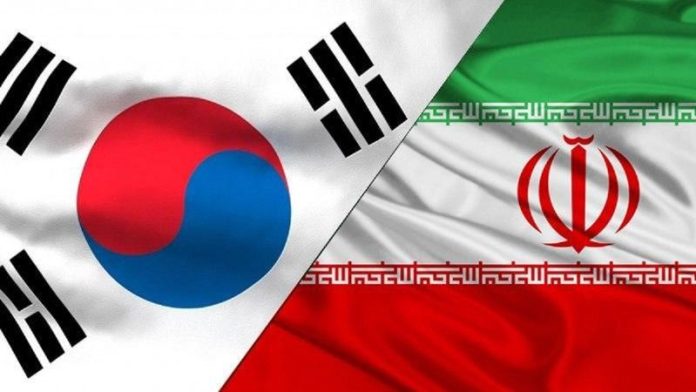
Report: South Korea plans to resume oil imports from Iran

South Korea’s Yonhap News Agency said with the Vienna talks entering their final stage, Iranian bankers and Oil Ministry officials are in Seoul for talks with South Korean officials over pending economic issues. 

Meanwhile, South Korea’s Foreign Ministry said Wednesday that the country is holding consultations with Iran over how the two sides can resolve their differences over Iranian assets frozen in the Southeast Asian nation due to US sanctions. Over 7 billion dollars are frozen in South Korean because of the sanctions. 

During the two-day visit of the Iranian delegation, Tehran and Seoul will explore ways of payment of the assets to the Islamic Republic and resumption of oil sales by Iran to South Korea. 

The Iranian officials are going to meet with officials from at least two refineries in South Korea for talks on resuming oil exports to the country. 

Prior to the US sanctions, Iran was the main crude supplier for South Korea. 

Bloomberg news outlet also confirmed in a report that Iran is taking steps toward returning to the oil markets.

Iran urges US Congress commitment to nuclear deal

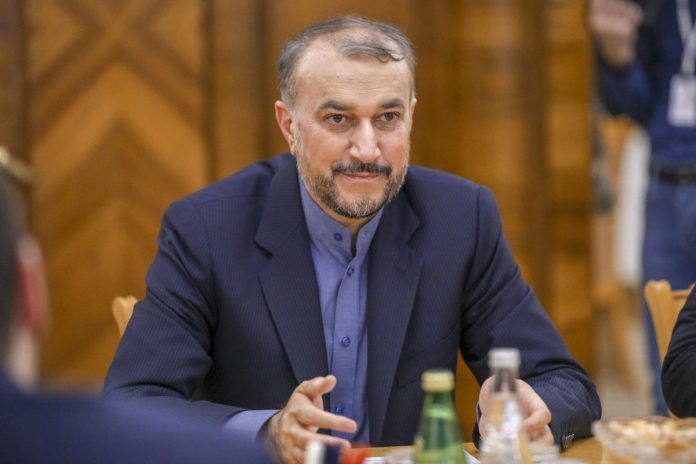
In an exclusive interview with the Financial Times, Foreign Minister Hossein Amir Abdollahian said Washington had failed to address Iran’s demand for guarantees that no party is able to abandon the deal, as the US did under former President Donald Trump in 2018. Tehran also wants all sanctions imposed by Trump to be lifted.

“As a matter of principle, public opinion in Iran cannot accept as a guarantee the words of a head of state, let alone the United States, due to the withdrawal of Americans from the JCPOA,” Amir Abdollahian stated, using the acronym for the accord, the Joint Comprehensive Plan of Action.

Experts say it is virtually impossible for the Joe Biden administration to provide the legal assurances Tehran demands. But Amir Abdollahian noted he had told Iran’s negotiators to propose to Western parties that “at least their parliaments or parliament speakers, including the US Congress, can declare in the form of a political statement their commitment to the agreement and return to the JCPOA implementation”.

Amirabdollahian said, “Iran’s commitments are as clear as a mathematical formula. It is absolutely clear what we are supposed to do and how these measures will be verified through the IAEA [the UN nuclear watchdog]. Therefore the other side can have no concern; But we remain concerned primarily about the guarantees [that the US would not withdraw].”

Expressing Tehran’s frustrations with Washington’s position as weeks of talks in Vienna appear at risk of stalling, Amir Abdollahian added, “We are facing problems during this period because the other party lacks a serious initiative.”

Amirabdollahian said that Iran wanted the negotiations to lead to the “total lifting” of sanctions. The challenge, however, was that the Biden administration was only willing to remove the economic sanctions authorised by Trump, he added.

“This is not all we are looking for. That Trump unilaterally and unjustly imposed sanctions on real and legal entities in Iran under some allegations as Iran’s missile programme, regional issues or human rights is not acceptable,” the foreign minister continued.

He noted that “this is also one of the challenges which remains on the negotiating table in Vienna”.

Amirabdollahian said US officials had sent “many messages” to have direct talks with Iran, but ruled out any such move.

“Our last response to Americans and intermediaries was: any direct dialogue, contact and negotiation with the US would have very huge costs for my government,” the foreign minister added.

“We are not ready to enter into the process of direct talks with the US if we do not have a clear and promising outlook to reach a good agreement with sustainable guarantees in front of us,” he stated.

He noted that Tehran had indicated to the US that if Washington’s “intentions are genuine, you should take some practical and tangible steps on the ground before any direct talks and contacts can take place”.

This could include unfreezing billions of dollars of Iranian petrodollars stuck in foreign central banks because of Trump’s sanctions or a presidential executive order to lift some of the sanctions, he continued. 

Amirabdollahian said that in “general, we are optimistic”, adding, “We also welcome a good deal in the shortest time however this deal must uphold the rights of the Iranian people.”

Intensive diplomatic talks continue in the Austrian capital of Vienna between Iran and the P4+1 group of countries to discuss all possible ways to salvage the 2015 nuclear deal by removing all sanctions imposed by Washington against Tehran.

Recently, a group of 33 Republican senators have warned Biden that they would work to thwart implementation of any new Iran nuclear agreement if his government did not allow Congress to review and vote on its terms. It comes after 110 Republican lawmakers called on the US administration to abandon negotiations with Iran and issue new sanctions against Tehran.

In 2018, the US, under Trump, pulled out of the pact and reinstated sanctions under the so-called ‘maximum pressure campaign’ against Tehran, effectively depriving Iran of the deal’s benefits by forcing third parties to stop doing business with Iran.

Iran remained patient for an entire year, after which it began to take incremental steps away from its nuclear obligations, especially after Europeans failed to salvage the deal under the US pressure.

Iran insists that the talks must lead to the removal of all American sanctions that were imposed against Tehran following Washington’s unilateral withdrawal from the landmark agreement in May 2018. Tehran has also demanded credible guarantees that Washington will not abandon the deal again.