Friday, December 26, 2025
Home Blog Page 2093

Iran FM: West’s responsible behavior needed to reach deal in Vienna

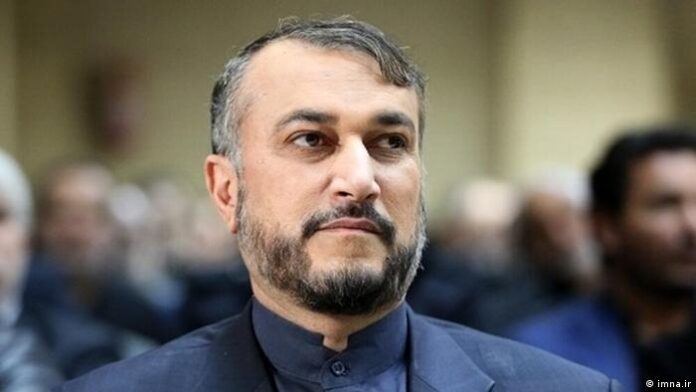
In a tweet on Wednesday, the top diplomat said he had held a phone call with the European Union’s foreign policy chief, Josep Borrell, on the latest developments in the negotiations in the Austrian capital between Iran and the P4+1 states on saving the 2015 nuclear deal.

“The process is forward-moving but certain important issues are still before us,” he said. “It is of vital importance for us to abide by Iran’s red lines.”

Amir Abdollahian said the initiatives put forward by Tehran in the course of the talks have made an agreement “accessible,” but achieving the deal “depends on the Western side’s responsible behavior.”

Iran has been complaining that the Western side’s failure to offer meaningful initiatives have been prolonging the negotiations, aimed at getting the US back into compliance with the 2015 nuclear deal.

There have also been reports of growing differences in Washington’s negotiating team on how to proceed with the talks, prompting calls for the White House to take a political decision to facilitate the advance of the talks.

Meanwhile, a surprise trip by an Israeli delegation to Vienna is also expected to further complicate the process. The regime has a long record of attempts at sabotaging the Iran deal.

Iran, South Korea hold working group talks on frozen assets

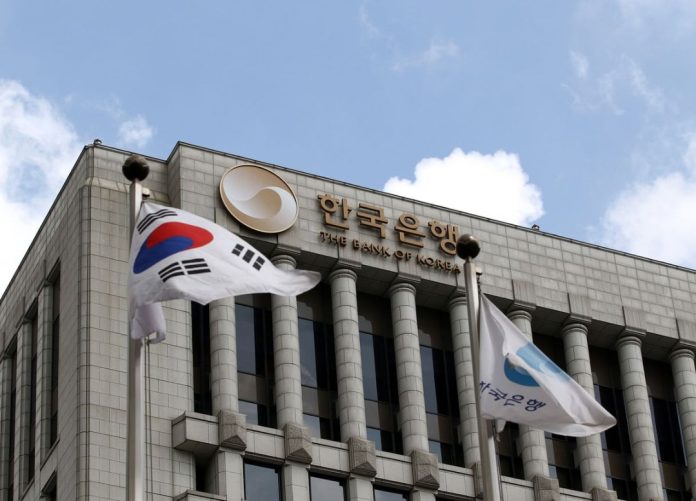
Iranian bankers and officials from the state-run oil company and the petroleum ministry are in the nation to meet with South Korean government and company officials to talk about pending economic issues as multilateral talks to revive the 2015 Iran nuclear deal enter the final stretch.

Bilateral relations remain frayed over US$7 billion in Iranian funds locked in two Korean banks under U.S. sanctions, which were reimposed after former President Donald Trump in 2018 withdrew from the landmark agreement.

During the two-day meetings from Tuesday, the two sides discussed detailed payment options and the possibility of resuming oil trade in preparation for potential U.S. sanctions relief on Iran.

The country, which sits on the world’s fourth-largest oil reserves, had been a key oil supplier to South Korea, importing its goods such as industrial equipment, household appliances and vehicle parts.

In January, the top Iranian negotiator met with South Korea’s deputy foreign minister to discuss release of Tehran’s frozen assets in Seoul.

Ali Bagheri Kani, who is also Iranian deputy foreign minister for political affairs, said in the meeting held with Choi Jong-kun that regardless of the outcome of the talks in Vienna, the South Korean government is obliged to unfreeze Iran’s frozen funds, stressing that unilateral U.S. sanctions cannot justify the non-payment of Seoul’s debts to Tehran.

“The South Korean government is obliged to release Iran’s blocked assets, and unilateral U.S. sanctions cannot justify non-payment of debts to Iran,” he stated.

The Iranian diplomat also stressed that South Korea’s illegal and unjustifiable refusal to repay its debts to Iran would be a dark spot in the history of relations between the two countries, adding that Seoul should act as soon as possible to unfreeze Iran’s assets.

South Korea’s ambassador to Iran Yun Kang-hyeon has also noted the country has suffered badly from more than three years of U.S. sanctions on Iran as he insists that Seoul has been working hard to maintain its trade and energy ties with Iran despite excessive U.S. pressure.

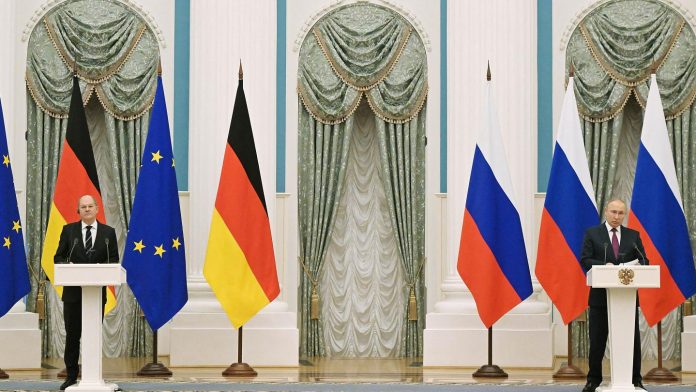
Putin: Russia does not want any war, seeks negotiations

Putin hosted Scholz on Tuesday, where the two met for just over three hours, according to Kremlin Press Secretary Dmitry Peskov. Afterwards, the two gave a joint press briefing, during which both leaders stated the need for continued dialogue between Russia and the West, despite the significant differences between the two sides.

“Do we want it or not? Of course, not,” the Russian leader said in response to a question from Deutsche Welle about whether he ruled out the possibility of a war in Europe.

He emphasized that “this is why, we put forward the proposals on the negotiating process that must result in an agreement on ensuring equal security for all states, including our country.”

Unfortunately, Moscow has not received a substantive and constructive reply to its proposals, the Russian leader added.

Nonetheless, Russia sees in the documents received from the United States and NATO “some elements that can be discussed,” Putin pointed out.

“But we are ready to do this only in conjunction with those fundamental issues that are of top priority for us,” the Russian leader continued.

Moscow expects the dialogue to develop precisely in this way, Putin said.

“Depending on how it will develop, it will be crucial for the situation to develop on all the other tracks that are of your and our concern,” the Russian leader stressed.

“And they concern us just in the same way as they concern you, I can assure you,” he added.

Russia cannot turn a blind eye on the fact that the United States and NATO are interpreting the principle of indivisible security “quite freely and for their own benefit,” Putin said.

“Russia cannot turn a blind eye on how the United States and the North Atlantic Alliance are interpreting, quite freely and for their own benefit, the key principles of equal and indivisible security, which are committed to paper in many European documents,” he added.

He recalled that this principle includes not only the right to choose ways of ensuring own security and join any military unions or alliances, but also the liability not to strengthen one’s security at the expense of the security of other countries. He noted that although under article 10 of the 1949 North Atlantic Treaty the alliance is free to invite other countries, it is not obliged to do it.

Putin stated they “frankly exchanged views” with Scholz on the situation around Russia’s proposals on security guarantees.

“We also spoke about [Moscow’s] basic demands, the most essential of which are to stop NATO’s further eastwards expansion, not to deploy offensive weapons near Russian borders and to return the bloc’s military potential and infrastructure in Europe to the state of 1997 when the Russia-NATO Founding Act was signed,” Putin continued.

The German leader stated that the accession of Ukraine to NATO, which Russia has strongly advocated against, is not currently on the table, and said that while every country should be allowed to choose its own alliances, “but still, we should look at reality and that is: there is a conflict that we want to de-escalate. That is the task of the hour.”

Scholz also said that he hoped that a Tuesday announcement that Russia was bringing home some of its troops from Belarus, where they had been deployed near the Ukrainian border, was a sign that further withdrawal would follow. However, he warned that if an invasion did take place, there would be “harsh consequences” for Russia.

The West and Kiev have recently been spreading allegations about Russia’s potential ‘invasion’ of Ukraine. Moscow has repeatedly rejected these claims. However, the Kremlin did not rule out the possibility of provocations aimed at justifying such allegations and warned that attempts to use military force to resolve the crisis in southeastern Ukraine would have very serious consequences.

Putin has also said that the positions of Moscow and Berlin on Iran’s nuclear program are rather close.

The Russian head of state stated that they discussed some relevant global issues, including the situation around Iran’s nuclear program.

“We are in constant contact on this issue at the level of the ministries of foreign affairs, and I should point out that our positions are rather close,” the Russian leader added.

Intensive diplomatic talks continue in the Austrian capital of Vienna between Iran and the P4+1 group of countries to discuss all possible ways to salvage the 2015 nuclear deal by removing all sanctions imposed by Washington against Tehran.

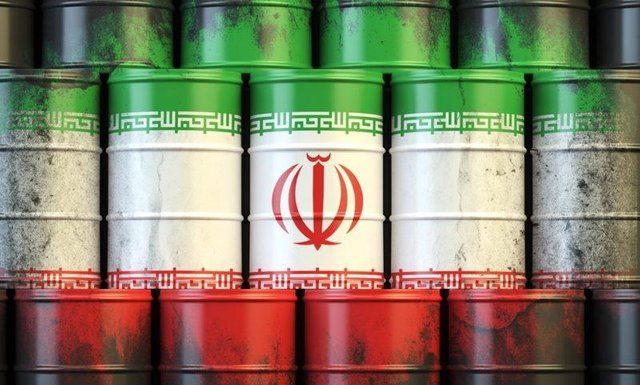
OPEC: Iran’s 2021 oil output grew 21% compared with 2020

OPEC: Iran's 2021 oil output grew 21% compared with 2020

Iran’s oil output in 2020 stood at 1.98 million barrels per day. It increased to 2.4 million barrels in 2021.

Global oil production, which reached about 91 million barrels per day in 2020, right in the midst of the coronavirus pandemic, grew by about 6.2% to 96.6 million (bpd) last year with an increase in crude demands.

Although the oil market continued to be affected by the coronavirus pandemic last year, vaccination campaigns worldwide led to relative containment of the disease which saw a resumption of economic activity across the world.

Things look brighter for 2022, with global production expected to reach more than 100 million (bpd).

Statistics show that oil production among OPEC members in 2021 compared to the previous year, has experienced less growth than the global average.

That’s due to the implementation of a reduction agreement among its members. OPEC production growth was about 2.6 percent, from 25.6 million (bpd) in 2020 to 26.3 million (bpd) last year.

Iran has been boosting its oil output over the past few months following the recovery of the global markets and as expectations grow for the unraveling 2015 nuclear deal to be revived.

Iran has said it is ready to immediately increase its supply of oil to global markets if American sanctions are lifted.

Angry Afghans protesters call on US to return frozen assets

Angry Afghans protesters call on US to return frozen assets

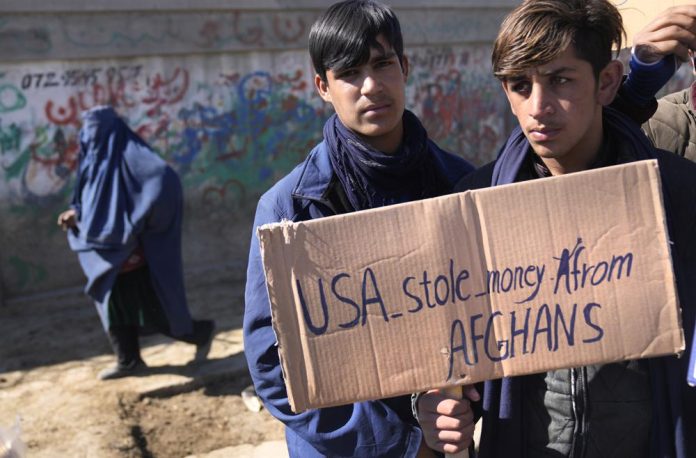
With people carrying banners and placards with slogans reading “Biden the World Thief of 2022”, “U.S. destroyed Afghanistan” and “America should return Afghanistan’s assets”, the demonstration march started from the main money exchange market Sarai Shahzada and ended peacefully in front of the United Nations Assistance Mission in Afghanistan (UNAMA) office.

The demonstrators demanded the return without any condition of all the assets of the Afghan central bank that have been frozen by the United States following the Taliban’s takeover of the Central Asian country in mid-August 2021.

The protest came in response to an executive order signed recently by U.S. President Joe Biden for diverting 3.5 billion U.S. dollars from the frozen Afghan assets to compensating the families of 9/11 terror attacks’ victims.

At the end of the demonstration, the protestors issued a declaration terming the U.S. decision as a breach of international law and vowed to continue the protest until its revocation.

Hajj Mir Afghan Safi, head of Sarai Shahzada money changers union, said that Afghan people demonstrated in almost all big cities on Tuesday demanding the return of Afghanistan’s assets.

Nasir Ahmad, a money changer said, “The money belongs to the hungry people of Afghanistan and should be returned to Afghans. And President Biden’s decree with regard to the assets is unjust.”

The U.S. freezing of the Afghan central bank’s assets is widely seen as the primary factor leading to the current economic crisis and humanitarian disaster in the war-torn country of some 39 million people.

Deputy spokesman of the Taliban-led administration Inammullah Samangani and former Afghan president Hamid Karzai have both recently denounced Biden’s decision as unjust and demanded the return of the frozen assets to Afghanistan.

The acting Afghan foreign minister has also accused the United States of not following through on the commitments it made during talks in Qatar’s Doha.

“No, the United States has not taken action in some aspects [of the 2020 Doha agreement],” Amir Khan Muttaqi told Sputnik in an interview.

The Taliban had to free its men from prisons after the US-installed government fell, in what Muttaqi argued was a breach of a US promise to facilitate their gradual release.

The Taliban official added that Washington did not deliver on its promise to have Taliban members removed from international blacklists and help the interim government rebuild the war-torn country.

“It was promised that the US would cooperate in the reconstruction of Afghanistan and encourage other countries to do the same. Instead of cooperating, they imposed sanctions,” Muttaqi said.

But he stressed that the caretaker Afghan government stayed true to its commitment to prevent terrorists from using Afghan soil to threaten the security of the US and its allies.

“So far, this soil has not been used against them. We promised them that we would maintain economic and diplomatic relations with the US. We stand by that promise,” he continued.

The acting FM has also said the interim Afghan government has agreed sanctions relief with Western envoys during January’s talks in Oslo.

Muttaqi, who lead the delegation of the Taliban to Oslo, met with EU, US and Norwegian officials from January 23-25.

“Of course, they had concerns and we had demands but the meetings were very successful. We were able to convince them on many issues. Especially in talks with the US we made progress in lifting sanctions,” he added.

Cash-strapped Afghanistan has seen prices skyrocket since the Taliban takeover in August. Its interim administration has requested that the West unfreeze Afghan reserves abroad to lift the nation out of poverty.

Muttaqi stated Western diplomats had agreed to issue the Taliban with licenses that would bring some assets back to Afghanistan and pledged further humanitarian assistance.

“As the situation improves, other countries have pledged humanitarian assistance, which has now expanded… The Norwegian meeting was a great opportunity, a great meeting full of achievements,” he noted.

The Taliban delegation headed by Muttaqi paid a three-day official visit to the Norwegian capital in late January on the invitation of the kingdom. The delegation met with special representatives and envoys from the US, the EU, France, Germany, Italy, Norway, and the UK. Muttaqi described the visit as successful, and the delegation thanked the Norwegian government for its hospitality and contribution to the strengthening of trust.

The Taliban took control of the Afghan capital of Kabul on August 15, 2021, and established an interim government headed by Mohammad Hassan Akhund in September. Since then, international organizations have repeatedly warned of the worsening humanitarian situation in the country. While the government has not been internationally recognized, many countries have called on the movement to demonstrate respect for human rights and inclusivity.

Iran Envoy: Anti-Tehran sanctions ‘crime against humanity’

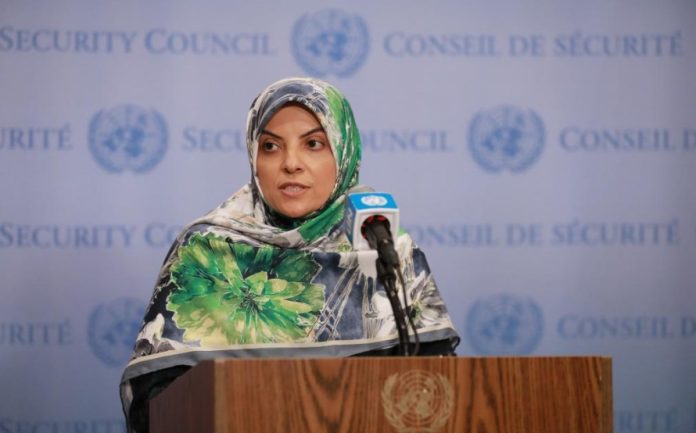
Zahra Ershadi

“As our President stated in his address to the UNGA session, imposing unilateral sanctions against the Iranian people, particularly sanctions on medicine and humanitarian items, are criminal acts on par with crimes committed against humanity. Those who sanction countries should not go unpunished for such heinous crimes,” Ershadi said addressing the United Nations Commission for Social Development.

“The Islamic Republic of Iran highlights the importance of national development policies and strategies as an appropriate platform for addressing the national priorities and requirements of Member States,” she said.

“In this connection, Iran is implementing its ‘6th Five-year National Development Plan’ through the reinforcement of a knowledge-based economy together with the development of advanced technology among a wide variety of subjects,” she added.

“Further, a strong legal and legislative framework has been created that provides a solid platform for planning, implementing and following-up with national development strategies and policies, particularly regarding poverty eradication,” she noted.

“Significant achievements have been made so far despite the external challenges ranging from unlawful unilateral coercive measures (UCMs) including sanctions and the COVID-19 pandemic,” she stated.

“Under the current circumstances, the Government of Iran has provided special financial packages as well as social and economic rehabilitation plans for poor and people in vulnerable situation along with economic support measures, especially for small businesses,” the Iranian diplomat said.

“In the meantime, treatment programs have been provided for around 4 million legal and illegal Afghan refugees,” Ershadi added.

She went on to say, “The United Nations system and its specialized agencies can play an important role in exchanging countries’ successful experiences in implementing post- COVID economic and social rehabilitation projects, as well as mobilizing international financial resources to achieve the desired national goals in the post- COVID era.”

“The COVID-19 pandemic is affecting the daily life of every single person. Women, children, the elderly, medical personnel, refugees, migrants and those suffering from chronic and rare diseases are the most affected,” she noted.

“In fact, the pandemic has made the negative humanitarian effects of unilateral sanctions far more obvious and more disastrous,” the diplomat stressed.

“The illegal sanctions have hampered access of vulnerable segments of the society in affected countries, including my country, to basic medical items and requirements extremely difficult, thus endangering the lives and health of those citizens,” Ershadi said.

“Medicines, medical supplies and health commodities have been targeted through tight restrictions of foreign exchange resources, even for these humanitarian items,” she added.

“These illegal actions have directly impacted the lives of Iran’s most vulnerable citizens, including women, children and patients,” she noted.

“What is further distressing is the reality that many children have lost their lives as a result,” Ershadi continued.

“As our President stated in his address to the UNGA session, imposing unilateral sanctions against the Iranian people, particularly sanctions on medicine and humanitarian items, are criminal acts on par with crimes committed against humanity,” she noted.

“Those who sanction countries should not go unpunished for such heinous crimes,” the Iranian diplomat added.

“The deteriorating economic situation as a result of illegal sanctions severely affects the exercise of economic and labor rights which, in the long run, will increase poverty and impede the achievement of sustainable development goals,” she noted.

“As the representative of a country whose people are subjected to the most brutal form of economic terrorism and illegitimate unilateral coercive measures by the United States, I call for the complete and immediate lifting of all unilateral coercive measures including sanctions in order to ensure the full achievement of economic and social development and enable the targeted countries to repair their economies while guaranteeing the well-being of their people in the aftermath of the pandemic,” Ershadi stated.

EU watchdog seeks ban on Israeli surveillance tool Pegasus

The EDPS said on Tuesday use of Pegasus might lead to an “unprecedented level of intrusiveness, able to interfere with the most intimate aspects of our daily lives.”

Israel has come under global pressure over allegations that Pegasus has been abused by some foreign client governments to spy on human rights activists, journalists and politicians.

NSO has said it could not confirm or deny any existing or potential customers for Pegasus. It added it does not operate the system once sold to its governmental customers nor is it involved in any way in the system´s operation.

“A ban on the development and the deployment of spyware with the capability of Pegasus in the EU would be the most effective option to protect our fundamental rights and freedoms”, the EDPS said.

“At the center of debate on tools like Pegasus should not only be the use of the technology, but the importance we attribute to the right to privacy,” the EDPS added.

An investigation published last year by 17 media organizations, led by the Paris-based non-profit journalism group Forbidden Stories, said the spyware had been used in attempted and successful hacks of smartphones belonging to journalists, government officials and human rights activists on a global scale.

Taliban accuse US of breaking its promises

“No, the United States has not taken action in some aspects [of the 2020 Doha agreement],” Amir Khan Muttaqi told Sputnik in an interview.

The Taliban had to free its men from prisons after the US-installed government fell, in what Muttaqi argued was a breach of a US promise to facilitate their gradual release.

The Taliban official added that Washington did not deliver on its promise to have Taliban members removed from international blacklists and help the interim government rebuild the war-torn country.

“It was promised that the US would cooperate in the reconstruction of Afghanistan and encourage other countries to do the same. Instead of cooperating, they imposed sanctions,” Muttaqi said.

But he stressed that the caretaker Afghan government stayed true to its commitment to prevent terrorists from using Afghan soil to threaten the security of the US and its allies.

“So far, this soil has not been used against them. We promised them that we would maintain economic and diplomatic relations with the US. We stand by that promise,” he continued.

The acting FM has also said the interim Afghan government has agreed sanctions relief with Western envoys during January’s talks in Oslo.

Muttaqi, who lead the delegation of the Taliban to Oslo, met with EU, US and Norwegian officials from January 23-25.

“Of course, they had concerns and we had demands but the meetings were very successful. We were able to convince them on many issues. Especially in talks with the US we made progress in lifting sanctions,” he added.

Cash-strapped Afghanistan has seen prices skyrocket since the Taliban takeover in August. Its interim administration has requested that the West unfreeze Afghan reserves abroad to lift the nation out of poverty.

Muttaqi stated Western diplomats had agreed to issue the Taliban with licenses that would bring some assets back to Afghanistan and pledged further humanitarian assistance.

“As the situation improves, other countries have pledged humanitarian assistance, which has now expanded… The Norwegian meeting was a great opportunity, a great meeting full of achievements,” he noted.

The Taliban delegation headed by Muttaqi paid a three-day official visit to the Norwegian capital in late January on the invitation of the kingdom. The delegation met with special representatives and envoys from the US, the EU, France, Germany, Italy, Norway, and the UK. Muttaqi described the visit as successful, and the delegation thanked the Norwegian government for its hospitality and contribution to the strengthening of trust.

The Taliban took control of the Afghan capital of Kabul on August 15, 2021, and established an interim government headed by Mohammad Hassan Akhund in September. Since then, international organizations have repeatedly warned of the worsening humanitarian situation in the country. While the government has not been internationally recognized, many countries have called on the movement to demonstrate respect for human rights and inclusivity.
Covid kills 167 more people in Iran

Over 800,000 Iranians Infected by Coronavirus

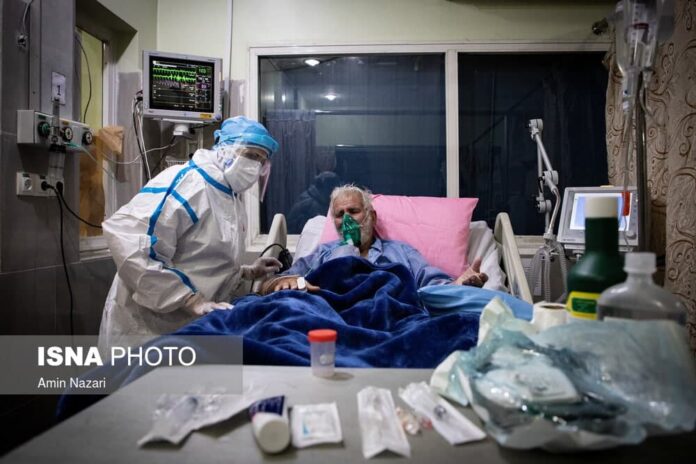
Iranian Health Ministry figures on Tuesday showed 167 people died of Covid-19 in the past 24 hours, pushing the total fatalities since the start of the pandemic to 134.053.

Over the past day, 25,034 new Covid cases were also logged including 2,768 hospitalizations.

Until several weeks ago, most Iranian cities were marked blue, which denotes the lowest level of risk from Covid. Now there are no blue areas countrywide.

The surge in cases is blamed on Omicron, which is highly contagious though less fatal.

To tackle this, Iranian officials are urging citizens to get their third dose of vaccine, or the booster.

Over 21 million people have so far done so. But officials say all people must be triple-vaxxed. They say this will be instrumental in containing Omicron.

IRGC launches airport on Iran’s Greater Tunb Island

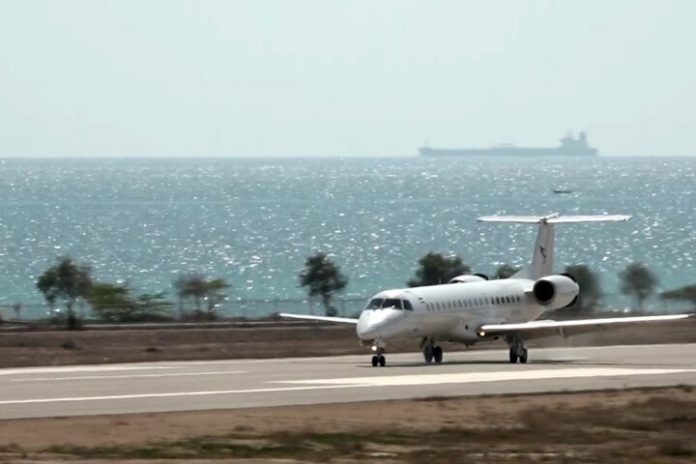
Imam Ali Airport was launched during a ceremony attended by Admiral Alirzea Tangsiri, commander of the IRGC Navy, and Deputy Minister of Roads and Urban Development and Head of the Civil Aviation Organization Mohammad Mohammadi Bakhsh.

The first flight landed at the airport from Tehran.

Admiral Tangsiri said that people’s settlement on Iranian islands will materialize with their active presence on the islands and everyone should help this continue with the launch of regular flight lines.

The Commander of the IRGC’s Navy emphasized that with the launch of this airport, the groundwork for the development and economic prosperity of the sea will be laid and the level of sustainable security in the maritime geography of the Persian Gulf will be strengthened.

Also, the head of the Civil Aviation Organization said at the ceremony that efforts are underway to improve the status of flights by using and installing sound safety systems. Mohammadi Bakhsh noted that establishing regular flights to Greater Tunb Island will be established by providing necessary airport facilities for easy travel from cities such as Bandar Abbas and Bandar Lengeh.