Monday, December 29, 2025
Home Blog Page 2083

Report: Israel simulates massive attack on Iran’s nuclear sites

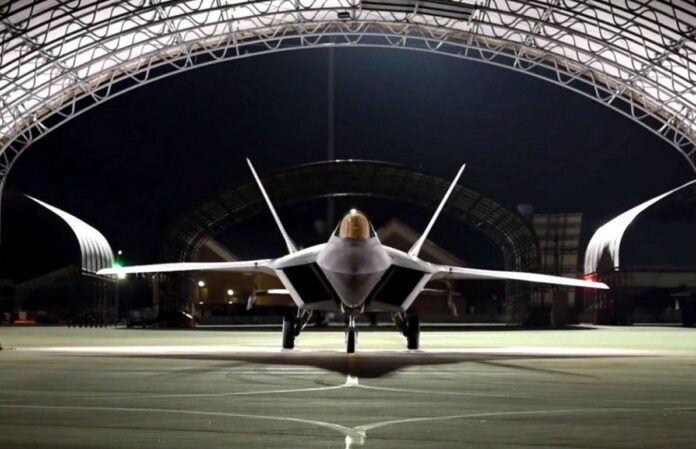
Held in mid-January, the classified exercise envisioned a “massive” strike on Iran’s nuclear facilities and played out multiple scenarios, including mid-air refueling, responding to anti-aircraft munitions, and performing long-range attacks.

An unnamed US Air Force officer allegedly attended the drill as an observer, the outlet added, noting that the official’s presence was unusual for this type of exercise.

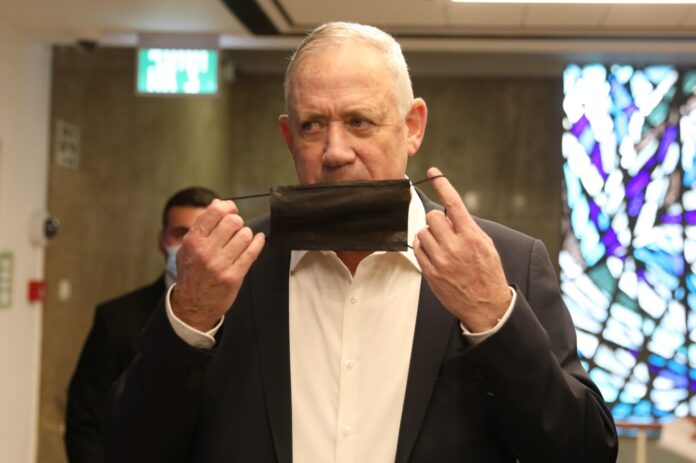
The report follows a meeting between US military officials and Israeli Defense Minister Benny Gantz in December, during which similar drills were discussed, according to a senior US official cited by Reuters. While the official declined to elaborate on the plans, they said the exercise would prepare for a “worst-case scenario to destroy Iran’s nuclear facilities should diplomacy fail.”

Earlier on Tuesday, the Israeli military announced that it would take part in the massive, US-led International Naval Exercise involving 50 vessels from 60 partner nations and 9,000 personnel. Launched earlier this week, the 18-day drill is being held in the Red Sea off the coast of Bahrain, near the headquarters of the US 5th Fleet.

Tehran denies seeking nuclear weapons, stressing it wants to master nuclear technology for peaceful purposes. Iranian officials have also stressed the country reserves the right to respond to any adventurism by the United States and Israel.

Tehran says Israel is well aware of Iran’s capabilities and capacities and its own limited capabilities as well as the fact that the Islamic Republic does not compromise or joke about its national security.

In late December, Iran simulated an attack on the Zionist regime’s nuclear facilities known as Dimona during extensive military drills.

Iran has stressed that the recent wargames were intended to send a warning to Israel.

Commander of the Islamic Revolution Guards Corps (IRGC) Major General Hossein Salami stated after the exercises that Iran will cut off the hands of enemies if they make a wrong move and that the distance between actual operations and military exercises is only a change in the angle of launching the missiles.

Major General Mohammad Bagheri has also noted the exercise made it clear that Israel’s Iron Dome system can be defeated and penetrated if a barrage of missiles is fired from different directions at a target at once.

The top Iranian general described the drill as one of Iran’s most successful military exercises.

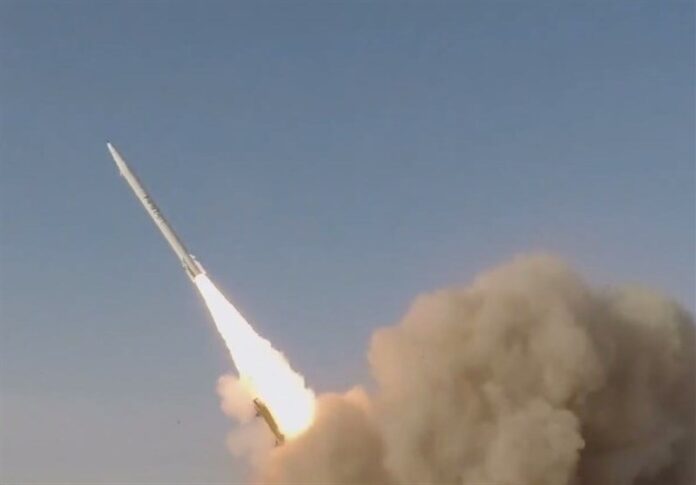
Iran’s ballistic missiles have a range of 2,000 km and the entire occupied Palestine and US bases in the region are within their reach.

In photos: Iran’s administration, led by President Ebrahim Raisi

Officials caution against Omicron’s quick spread in Iran

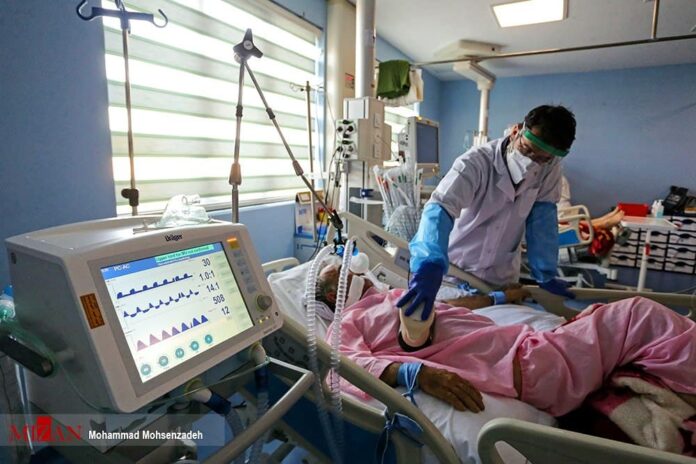
Alireza Oliyayi-Manesh, with Tehran’s National Committee to Combat the Coronavirus, said on Wednesday that Omicron was highly transmissible and thus, the latest wave of the pandemic in Iran had peaked quickly.

“Predictions are that daily infections will reach very high levels,” he warned, adding, however, that since the Omicron variant does not engage the lungs, it is less perilous.

“The main hazard is directed at people who are not vaccinated, or not fully vaccinated,” Oliyayi-Manesh said, advising people to receive their third doses of inoculation at the earliest.

Meanwhile, another Iranian health official warned on Wednesday that the lightning spread of the Omicron variant could lead to “a grave crisis.”

Ramin Sarrafi Foroushani, a member of the Jahad-e Daneshgahi Coronavirus Committee, said that while scientific data showed that the new variant was less of a health risk, public inattention could lead to serious problems both for citizens and the administrative apparatus of the country.

He also urged officials to reconsider plans to reopen schools and public facilities, given the fast pace of the virus’ spread.

Separately, Tehran’s Provincial Governor Mohsen Mansouri said that elementary schools in Tehran Province would hold classes remotely for one week because of the quick spread of Omicron.

He said 78 percent more people were visiting medical centers compared to the last week and 61 percent more hospitalizations were taking place.

The Health Ministry announced on Wednesday over the past 24 hours, Iran recorded 59 deaths from the coronavirus, registering an upward trend compared to the recent days.

Also, 38,160 new infections were logged, taking the overall infection toll since the pandemic began in Iran to 6,446,404.

A total of 132,563 Iranians have lost their lives to COVID-19 so far.

‘Conditions right for win-win nuclear deal’

Mahmoud Abbaszadeh, spokesman for the Iranian Parliament’s National Security and Foreign Policy Commission made the remarks on Tuesday after the body’s members met with chief nuclear negotiator Ali Bagheri Kani. 

Abbaszadeh said Bagheri outlined the National Security and Foreign Policy Commission on the talks in Vienna with the P4+1 group of countries and answered their questions. 

Abbaszadeh also quoted Bagheri as describing the trend of negotiations as positive. 

According to the MP, Bagheri also underlined the Islamic Republic of Iran’s good will and seriousness in the talks, saying the Iranian delegation has had no direct talks with the US negotiating team yet. 

Abbaszadeh stressed the outcome of possible negotiations with the US is not clear yet. 

The spokesman of the National Security and Foreign Policy Commission added that for all the talks with the P4+1 being positive and moving forward, key issues remain to be resolved. 

Abbaszadeh noted that Iran has a right to sanctions removal but the other side (the US) has so far agreed to partially lift the bans. 

The Iranian MP also called on the Western parties to the Vienna negotiations to show seriousness and good will so as to set the stage for a ‘good, win-win’ deal. 

The administration of Iranian President Ebrahim Raisi began talks with the P4+1 namely Russia, China, Britain, France and Germany, several months ago. 

The negotiations aim to revive the Iran nuclear deal by enabling anti-Iran sanctions removal and the US return to the agreement. The negotiators of all sides have now returned to their capitals for consultations over what decisions to make as to the future course of the talks.

Turkey says hit Kurdish targets in Syria, Iraq

All the planes taking part in the operation, which it said targeted the areas of Derik, Sincar and Karacak, subsequently returned to their bases.

It did not provide any information on casualties resulting from the strikes.

“Terrorists’ shelters, caves, tunnels, ammunition depots and so-called headquarters and training camps were targeted,” the statement added, without specifying exactly when the strikes occurred.

It said the air operation targeted militants of the Kurdistan Workers Party (PKK), which has bases in Iraq, as well as the Syrian Kurdish YPG militia, both of which Turkey regards as terrorist groups.

Turkish fighter jets have carried out similar air strikes in the past.

Leaked documents show US failures in Afghanistan

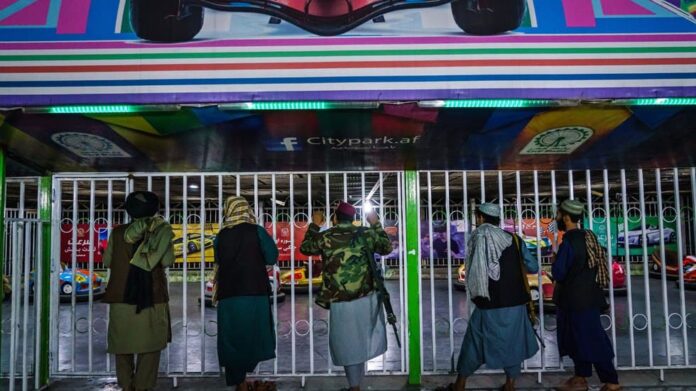
Hours before the Taliban seized control of Afghanistan’s capital on Aug. 15, 2021, senior Joe Biden administration officials were still discussing and assigning basic actions involved in a mass civilian evacuation.

Outsiders were frustrated and suspicious the administration was having plenty of meetings but was stuck in bureaucratic inertia and lacked urgency until the last minute.

While the word “immediately” peppers the document, it’s clear officials were still scrambling to finalize their plans — on the afternoon of Aug. 14.

For example, they’d just decided they needed to notify local Afghan staff “to begin to register their interest in relocation to the United States,” the document says.

And they were still determining which countries could serve as transit points for evacuees.

President Biden was determined to end the country’s involvement in its longest war, and last April he announced his plans to withdraw all U.S. forces from Afghanistan by Sept. 11, 2021.

President Donald Trump had previously cut a deal for a U.S. withdrawal by May 2021.

Biden’s approval ratings still haven’t recovered from the chaotic scenes of those final moments, with Afghans falling to their death from military transports and a suicide blast that killed 13 U.S. service members and scores of Afghans outside the gates of Hamid Karzai airport.

The Atlantic reported this week that thousands of vulnerable Afghans remain stuck in bureaucratic hell, terrified the Taliban they fought for years will hunt them down.

Later this month, Congress will name members to a bipartisan, 12-person commission that will study the war and issue a report similar to the 9/11 Commission.

Axios obtained the NSC’s “summary of conclusions” for a meeting of the so-called Deputies Small Group.

It assembles top aides to various Cabinet members, and usually lays the groundwork for Deputies’ or Principals’ sessions, or works out practical details for executing decisions already made by their bosses.

The document regarded “Relocations out of Afghanistan,” and the meeting was held from 3:30-4:30pm on the afternoon of Aug. 14, Washington time.

At that moment, Taliban fighters were descending upon Kabul.

The meeting was chaired by National Security Council official Liz Sherwood-Randall and included senior officials across multiple agencies, including Gen. John Hyten, vice chairman of the Joint Chiefs of Staff.

The meeting notes highlight how many crucial actions the Biden administration was deciding at the last minute — just hours before Kabul would fall and former Afghan President Ashraf Ghani would flee his palace in a helicopter.

Action items decided in meeting included:

“State will work to identify as many countries as possible to serve as transit points. Transit points need to be able to accommodate U.S. citizens, Afghan nationals, third country nationals, and other evacuees. (Action: State, immediately)”

“Embassy Kabul will notify LES [locally employed staff] to begin to register their interest in relocation to the United States and begin to prepare immediately for departure… (Action: Embassy Kabul, immediately)”

“While we’re not going to comment on leaked internal documents, cherry-picked notes from one meeting do not reflect the months of work that were already underway,” NSC spokesperson Emily Horne told Axios.

“Earlier that summer, we launched Operation Allies Refuge and had worked with Congress to pass legislation that gave us greater flexibility to quickly relocate Afghan partners,” Horne stated.

Horne added, “It was because of this type of planning and other efforts that we were able to facilitate the evacuation of more than 120,000 Americans, legal permanent residents, vulnerable Afghans and other partners.”

By the time the Saturday afternoon meeting happened, senior Biden officials across the government had been meeting around the clock to deal with the high-speed unraveling of Afghanistan.

The administration had taken some measures that would help them ultimately evacuate more than 120,000 people out of Kabul airport by Aug. 31 — the president’s revised withdrawal deadline.

Amid chaos and death, the effort to remove both U.S. citizens and cooperative Afghan nationals was executed in partnership with allies and many desperate improvised efforts from the private sector and veterans groups.

Troops were pre-positioned in the region so they could get quickly to Kabul airport to run the evacuation. The administration had accelerated the Special Immigrant Visa [SIV] approvals. And Biden officials had explored with other countries the possibilities of them serving as transit points for evacuees — which ultimately led to a network that hosted tens of thousands of Afghans waiting for processing.

Nonetheless, many of the key decisions hadn’t been made on the eve of Kabul’s fall.

The president himself — and his intelligence community — overestimated the ability of the Afghan military to defend their territory against the Taliban.

And complicating the situation further, Ghani had personally pleaded with Biden not to do mass evacuations of Afghans earlier in the year.

He feared it would signal a loss of faith in his government.

Many outside advisers were sounding the alarm as the Taliban swept through provincial capitals heading into August.

“I kept being told by people in the [White House] the thing they were most concerned about was the optics of a chaotic evacuation,” said Matt Zeller, a former CIA officer who contacted administration officials in February 2021 about protecting Afghans who worked with the Americans.

“They treated us like we were Chicken Little. They didn’t believe the sky was falling,” Matt continued.

“On the 13th of July, we offered to work with them to help evacuate our partners,” Zeller added.

“We all saw this disaster coming before the inevitable occurred. They didn’t get back to us until Aug 15, the day Kabul fell,” Zeller stressed.

Mark Jacobson, deputy NATO representative in Afghanistan during the Barack Obama administration, told Axios, “That so much planning, prioritizing and addressing of key questions had not been completed, even as Kabul was about to fall, underscores the absence of adequate interagency planning.”

“This is especially surprising given the depth of experience on Afghanistan and contingency operations at that table,” he announced.

Raisi, cabinet pay respect to Imam Khomeini

Raisi and his cabinet ministers visited Imam Khomeini’s mausoleum, south of Tehran, on Wednesday to renew their allegiance to the ideals of the iconic religious-political leader, who successfully guided Iran’s years-long uprising against Pahlavi to victory in 1979.

Delivering a speech at the site, the president praised the nation’s firm resistance against America’s pressure tactics over the past four decades.

“Today, the nation’s maximum resistance against seditious plots and sanctions has paid off and [America’s] maximum pressure has faced a humiliating defeat,” he said.

He said the country should learn the lesson from Imam Khomeini’s political school of thought that people have a significant role in the nation’s development.

Imam Khomeini, he added, had faith in people and their participation in state affairs.

Whenever the people stepped in a field, the country achieved a victory, the president said.

Raisi warned that enemies are making attempts to prevent any religion-oriented system from growing. 

Iran on Tuesday began celebrations to commemorate the 43rd anniversary of the Islamic Revolution.  

The festivities, known as the Ten-Day Dawn, started with marking the return to Iran of Imam Khomeini after 15 years in exile. The festivities usually culminate in nationwide mass rallies on February 11, the Islamic Revolution’s anniversary.

Since the outbreak of COVID-19, however, the ceremonies have been held under restrictions against the highly-infectious coronavirus.

IRIB’s web TV targeted with new ‘large-scale’ cyberattack

The streaming platform confirmed the hacking attack on Tuesday and said the “large-scale” assault caused disruptions to Telewebion’s “infrastructure,” which lasted for some 21 hours.

Telewebion is a live broadcast and archive of the Islamic Republic of Iran Broadcasting (IRIB).

In a tweet, Telewebion said despite the attack, four million people managed to watch the Iran-UAE soccer game live on the platform.

On Thursday, Telewebion and several IRIB TV channels and radio services briefly came under cyberattacks.

For about 10 seconds, broadcasts on the IRIB’s Channel 1 and Quran Channel were interrupted and replaced with pictures of the heads of the notorious Mujahedin-e-Khalq (MKO) terror group, which has the blood of thousands of Iranians on its hands.

The MKO has been behind numerous assassinations and bombings against Iranian officials and civilians since the 1979 Islamic Revolution.

US Senator says Washington got nothing from ‘maximum pressure’

“The United States got nothing from Trump’s ‘maximum pressure’ sanctions on Iran,” he wrote on Twitter.

“In fact, things got worse,” Murphy stated, claiming that the attacks have increased on American troops in the Middle East while the Iranian nuclear program has expanded.

“We should be ready to release those sanctions in exchange for Iran coming back into compliance with the deal,” he added.

The nuclear deal was inked by Iran and six world powers in 2015. Under the deal, Tehran agreed to put limits on certain aspects of its nuclear activities in exchange for the removal of draconian international sanctions imposed against the country.

In 2018, however, the US pulled out of the pact and reinstated sanctions under the so-called ‘maximum pressure campaign’ against Tehran, effectively depriving Iran of the deal’s benefits by forcing third parties to stop doing business with Iran.

Iran remained patient for an entire year, after which it began to take incremental steps away from its nuclear obligations, especially after Europeans failed to salvage the deal under the US pressure. The Islamic Republic’s decision to ramp up its nuclear activities prompted other parties to revive talks earlier this year.

Iran and the five remaining parties to the JCPOA — Germany, Britain, France, Russia and China — began the talks in the Austrian capital in April with the aim of removing the sanctions after the US voiced its willingness to return to the agreement.

During the seventh round of the Vienna talks, the first under President Ebrahim Raeisi, Iran presented two draft texts which address, separately, the removal of US sanctions and Iran’s return to its nuclear commitments under the JCPOA. Tehran also said it was preparing a third draft text on the verification of the sanctions removal.

The eighth round of talks kicked off in Vienna in late December. The negotiations seek to restore the JCPOA in its original form and bring the US back into the agreement.

Iran insists that the talks must lead to the removal of all American sanctions that were imposed against Tehran following Washington’s unilateral withdrawal from the landmark agreement in May 2018. Tehran has also demanded credible guarantees that Washington will not abandon the deal again.

Iran marks 43rd anniversary of the Islamic Revolution

The motorcyclists covered the distance between Mehrabad International Airport and Behesht Zahra cemetery in southern Tehran, where Imam Khomeini made a speech right after returning to Iran from exile in 1979.