Monday, December 29, 2025
Home Blog Page 2081

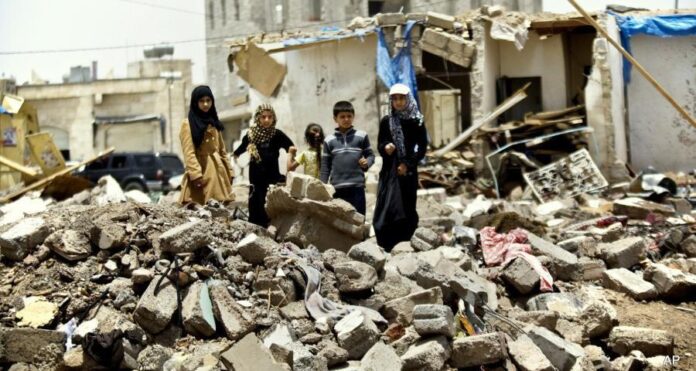
Iran: Continuation of Yemen war won’t benefit anyone

Amir Abdollahian also spoke of the Zionist regime’s presence in the Persian Gulf in an unmistakable reference to the UAE’s normalization of ties with Tel Aviv.  

He said the presence of the Israeli regime in the Persian Gulf poses a threat to all regional nations.

Abdullah bin Zayed Al Nahyan also said the UAE is trying to encourage all Yemeni sides to find a political solution with the support of the United Nations.  

The two top diplomats also discussed bilateral ties between Tehran and Abu Dhabi. 

Amir Abdollahian described ties between the two countries as positive and progressing, saying good meetings and consultations have happened between them.

The Emirati foreign minister for his part said his country is serious about expanding ties with Iran. 

Iran and the UAE support opposing sides in the Yemen war. But they have maintained their diplomatic ties despite their differences on the Yemen conflict and some other issues.
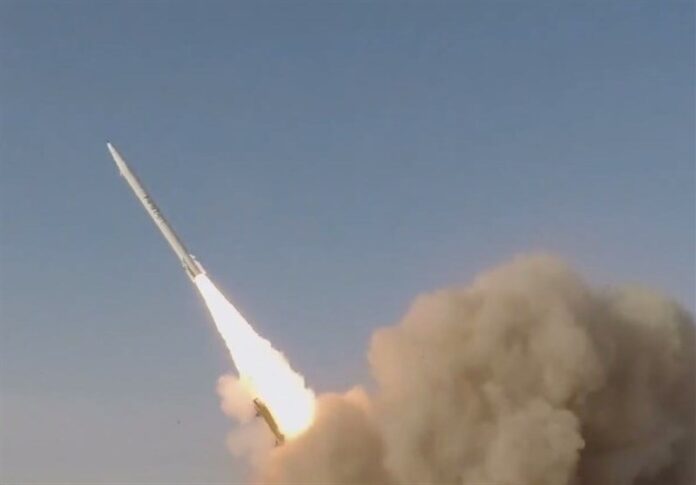
Report: Iran adds smaller, longer-ranged member to its Fateh missiles

n a report, Tasnim says the missile is yet another downsized version of Fateh 110 missile, which Iranian experts developed almost 20 years ago.

The report refers to footage from two recent military drills – Great Prophet 14 and 17 — by Iranian armed forces, saying Fath – BM 120, the fourth generation of Fateh 110 – missiles were used during the exercises.

It says, however, that while deployment of the missiles was confirmed by the armed forces and details on their specifications were published, footage shows a blunt head that was a change in the earlier design of the projectiles.

This, Tasnim says, is a new upgraded version of Fath, codenamed BM 250, which is 25 percent smaller in diameter.

The report cites new charts published by the Defense Ministry saying the new missile weighs almost half of BM 120, while maintaining 83 percent of its range.

This means Iran now has a missile in Fateh family, with an accuracy of less than 35 meters, as range more than twice BM 120 and a warhead 50 percent larger.

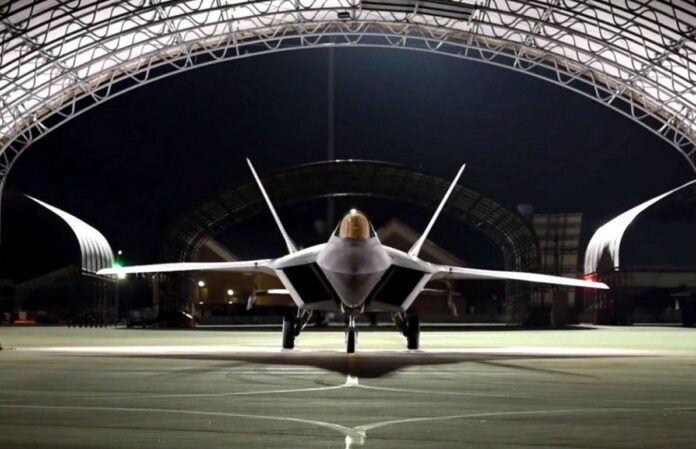
US says to deploy 5th-generation jets to region in support of UAE

“Secretary of Defense Lloyd Austin spoke today with Abu Dhabi Crown Prince Mohammed Bin Zayed Al Nahyan of the United Arab Emirates (UAE),” Pentagon Press Secretary John Kirby said Tuesday night.

“The two leaders discussed the recent Houthi attacks against the UAE that caused civilian casualties and also threatened US and Emirati armed forces stationed at Al Dhafra Air Base. The secretary reiterated his strong condemnation of these attacks, and his commitment to US-UAE strategic partnership,” he added, without referring to the crimes of the Saudi-UAE coalition on Yemeni civilians.

“The secretary reviewed a range of actions the Department of Defense is taking to support the UAE. These include continuing to provide early warning intelligence, collaborating on air defense, and sending the US Navy guided missile destroyer USS Cole to partner with the UAE Navy before making a port call in Abu Dhabi,” he continued.

“The secretary also informed the Crown Prince of his decision to deploy 5th Generation Fighter aircraft to assist the UAE against the current threat and as a clear signal that the United States stands with the UAE as a long-standing strategic partner,” Kirby stated.

The UAE is Saudi Arabia’s main ally in a 2015-present bloody war against Yemen.

Most recently, the Yemeni Armed Forces carried out three military operations, which saw them strike targets deep inside Dubai and Abu Dhabi.

Saudi Arabia and its allies launched a war against the Arab world’s most impoverished nation in March 2015. The war has been seeking to restore power in Yemen to Riyadh’s favorite officials.

The death toll of the war, now in its seventh year, will reach an estimated 377,000 by the end of 2021, according to a recent report from the UN’s Development Programme.

The fighting has seen some 80 percent of the population, or 24 million people, relying on aid and assistance, including 14.3 million who are in acute need.

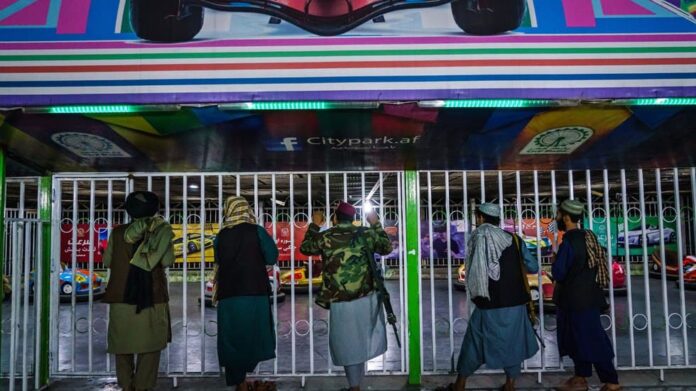
Taliban fighters not allowed entering entertainment parks with weapons

“Mujahideen of the Islamic Emirate (Taliban soldiers) are not allowed to enter amusement parks with weapons, military uniforms and vehicles,” Spokesperson Zabihullah Mujahid said in a tweet, adding “Mujahideen are obliged to abide by all the rules and regulations of amusement parks.”

The announcement comes just months after images of armed Taliban troops enjoying an amusement park on the outskirts of the Afghan capital, Kabul, prompted widespread mockery on social media. In the viral videos, which emerged after the fall of Kabul in August, Taliban troops can be seen flashing their guns as they play on the bumper cars and other rides.

The Qargha reservoir amusement park has proven particularly popular with the Taliban’s crack troops. Reuters journalists observed the fighters sipping tea, buying snacks from stalls along the shoreline, and queueing for rides.

Many of the troops had never been to Kabul before and wanted to visit the park before returning to defend the regime across the country.

The original footage was shot just weeks after the Taliban took control of Kabul on August 15 after two decades of Western-backed rule.

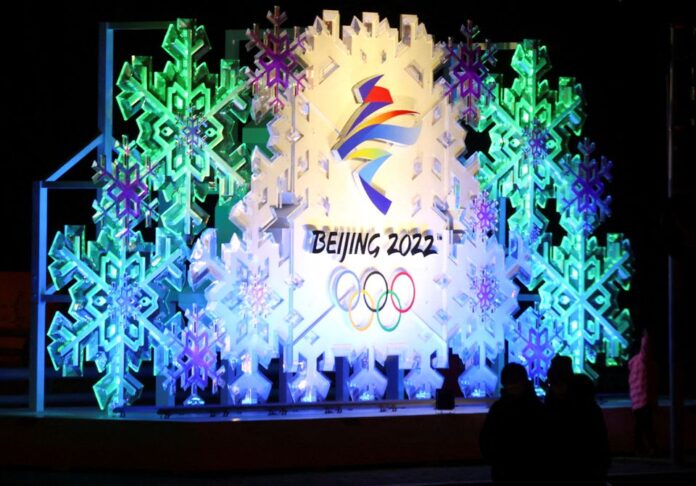
Beijing Winter Olympics: Iran caravan departs for China

Atefeh Ahmadi and Hossein Saveh Shemshaki are representing Alpine skiing team under the supervision of Bagher Kalhor.

Sattar Seyd, cross-country skiing athlete, and Mostafa Mirhashemi, cross-country skiing trainer, could not accompany the Iranian team, because they have been diagnosed with the COVID-19 disease.

Following Beijing Winter Olympics Committee’s approval, Sattar Seyd and Mostafa Mirhashemi have been replaced with Danial Saveh Shemshaki and Mohammad-Taghi Shemshaki, athlete and trainer, respectively.

The Iranian sport caravan’s motto has been announced: “Powerful like Mountain, White like Snow, Proud like Iran.”

Abbas Nazarian and Bahram Saveh Shemshaki, chairman and secretary of the Ski Federation of the Islamic Republic of Iran, dispatched to China for preliminary coordination prior to the Iranian caravan departure.

Minister of Sport and Youths of Iran Hamid Sajjadi and President of Iran’s National Olympic Committee Reza Salehi Amiri are scheduled to take part in the international event.

Beijing hosts the Winter Olympics 2022 on February 4-20.

The Islamic Republic of Iran has expressed solidarity with the People’s Republic of China in hosting this year’s Winter Olympics.

Iran Intelligence Ministry arrests terrorist group leader

Intelligence Ministry Official Website

The ministry said the terrorist, it identified as “Masmatous”, was attested one month ago.

The terrorist grouping’s commander, Jamshid Sharmahd, was earlier arrested in an operation by the Intelligence Ministry.

Tondar is the terrorist grouping, which conducted the bombing attack on Shohada congregation center, run by Rahpouyan Vesal Association, of the southern Iranian city of Shiraz in April 2008. The attack left 14 people dead and 200 others injured.

The grouping was also behind the assassination of Iranian nuclear scientist Masoud Ali Mohammadi with a bomb planted in his car in January 2010.

Masmatous was the first person, who announced the assassination on his website.

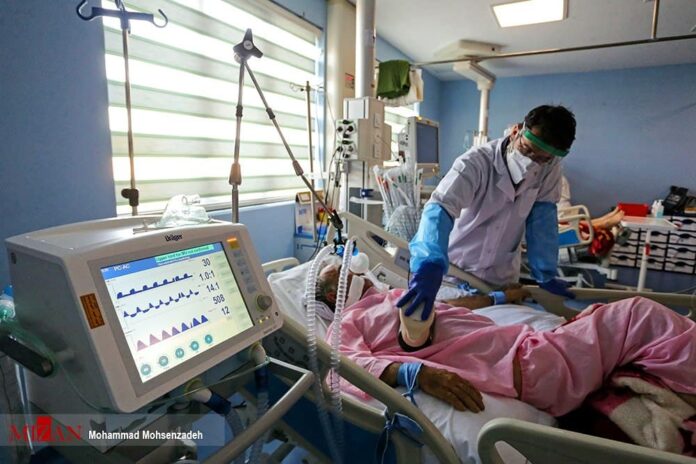
Officials caution against Omicron’s quick spread in Iran

Daily Increase in Iran's COVID-19 Cases at All-Time High Again

Alireza Oliyayi-Manesh, with Tehran’s National Committee to Combat the Coronavirus, said on Wednesday that Omicron was highly transmissible and thus, the latest wave of the pandemic in Iran had peaked quickly.

“Predictions are that daily infections will reach very high levels,” he warned, adding, however, that since the Omicron variant does not engage the lungs, it is less perilous.

“The main hazard is directed at people who are not vaccinated, or not fully vaccinated,” Oliyayi-Manesh said, advising people to receive their third doses of inoculation at the earliest.

Meanwhile, another Iranian health official warned on Wednesday that the lightning spread of the Omicron variant could lead to “a grave crisis.”

Ramin Sarrafi Foroushani, a member of the Jahad-e Daneshgahi Coronavirus Committee, said that while scientific data showed that the new variant was less of a health risk, public inattention could lead to serious problems both for citizens and the administrative apparatus of the country.

He also urged officials to reconsider plans to reopen schools and public facilities, given the fast pace of the virus’ spread.

Separately, Tehran’s Provincial Governor Mohsen Mansouri said that elementary schools in Tehran Province would hold classes remotely for one week because of the quick spread of Omicron.

He said 78 percent more people were visiting medical centers compared to the last week and 61 percent more hospitalizations were taking place.

The Health Ministry announced on Wednesday over the past 24 hours, Iran recorded 59 deaths from the coronavirus, registering an upward trend compared to the recent days.
Also, 38,160 new infections were logged, taking the overall infection toll since the pandemic began in Iran to 6,446,404.

A total of 132,563 Iranians have lost their lives to COVID-19 so far.

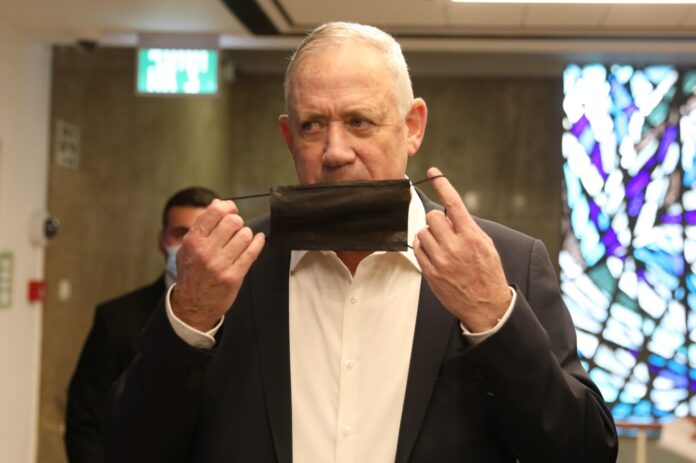
Israeli minister of military affairs makes surprise visit to Bahrain

Israeli media reported Gantz would sign a memorandum of understanding with Bahraini leaders during the two-day visit, but gave no details about the agreement.

In a statement, the Israeli Defense Ministry said Gantz flew to Bahrain on an Israeli air force plane, adding that it was the first time an Israeli defense chief had visited the Persian Gulf nation or that an Israeli military aircraft had landed there.

Bahrain and Persian Gulf neighbour the UAE normalised relations with Israel in 2020 in a U.S.-brokered deal known as the Abraham Accords that built on common commercial interests and worries about Iran. Sudan and Morocco followed suit.

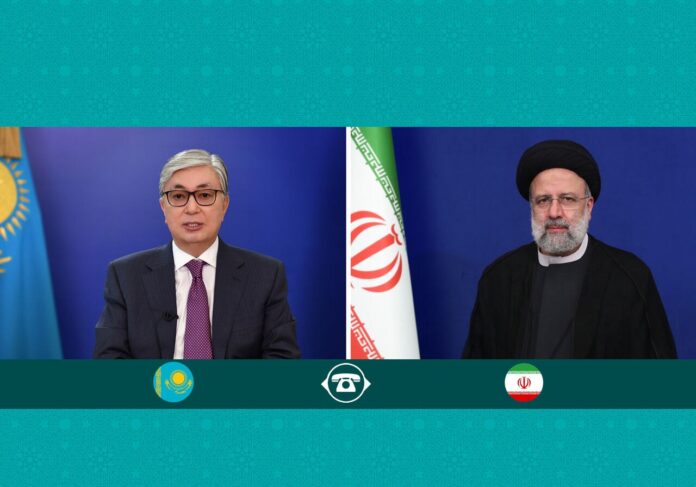
Iranian president urges efforts to boost trade ties with Kazakhstan

In a telephone conversation with his Kazakh counterpart Kassym-Jomart Tokayev, Raisi also expressed hope that a big step will be taken to improve the level of economic interaction between Tehran and Nur Sultan.

He also described the security, stability and peace in the friendly brotherly country of the Republic of Kazakhstan as important for the Islamic Republic of Iran, saying, “We support the establishment of peace and stability in the region.”

The Iranian president also spoke of his recent meeting with Tokayev on the sidelines of the Shanghani Cooperation Organization summit in Tajikistan.

He urged further efforts to boost bilateral trade.

Tokayev also said that in the 30 years since their establishment of diplomatic relations, the two countries have been able to create a desirable level of close and friendly relations with each other.

He thanked the Islamic Republic of Iran for supporting the region’s independence.

Tokayev expressed confidence that the future of bilateral relations will be very fruitful and bright.

The Kazakh president said that the growing expansion of relations with Iran, especially in the field of economic and trade cooperation, is very important for him.

Tokayev expressed hope that the forthcoming meeting of the Joint Commission on Economic Cooperation will hugely boost relations.

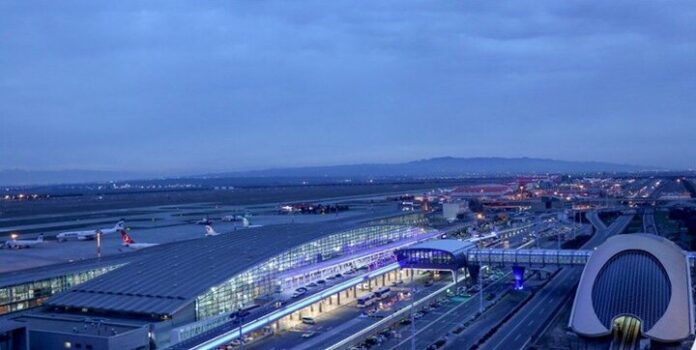
“China and Russia to invest in Iran aviation infrastructure”

“Seeing the serious limitations in development projects at some Iranian airports, including in the cities of Ahvaz, Bushehr and Mashhad, which are proportionate to demand for air travel there, there have been discussions on the need for the construction of new airports in the long term, to replace the existing airports, or implementing development projects at Imam Khomeini Airport,” managing director of the company Siavash Amirmakri told the IRIB News.

He added, there have been meetings with the Chinese side to discuss investments, which are still short of the final agreement.

He added that Iran is now self-sufficient in the creation of airport infrastructure, in terms of implementation and engineering.

Amirmakri said the negotiations with the Russian side is also focused on parts and aviation systems, the production of which is not currently possible inside the country.

“We have reached agreements [on production of airport equipment] and part of them have led to contracts,” he said.

Amirmakri also noted that the Airports and Air Navigation Company has already signed contracts with Iranian companies for production of equipment in a wide range of areas, including aviation. He said these include communication, navigation assistance and supervision systems.

Iran’s civil aviation sector has been under US sanctions targeting its purchase of any aircraft and spare parts.